Cregis Research: Bitcoin Layer2 Sector Analysis
TechFlow Selected TechFlow Selected
Cregis Research: Bitcoin Layer2 Sector Analysis
This article will introduce early and recent Layer 2 projects for Bitcoin.
 Navigating Web3 tides with focused insights
Author: 0xCregis
I. Introduction
In 2023, Bitcoin inscriptions brought new vitality and possibilities to the Bitcoin ecosystem. Then in early 2024, Bitcoin reached a historic high of $73,000 and underwent its halving event, once again capturing market attention.
Bitcoin’s proven security and network effects have attracted numerous developers who view it as a foundational blockchain layer. These developers are actively building various Layer 2 projects on top of Bitcoin’s base layer. This article will introduce both early and recent Bitcoin Layer 2 initiatives.
Why Does Bitcoin Need Layer 2?
According to the "scalability trilemma," distributed networks struggle to simultaneously achieve decentralization, security, and scalability. The Bitcoin network boasts over 75,000 core nodes, making it highly decentralized and widely recognized as the most secure blockchain. However, it can only process 3–5 transactions per second, limiting its scalability. A potential solution to this issue lies in Bitcoin Layer 2 technology, which aims to enhance Bitcoin's scalability—enabling it to handle large volumes of transactions without sacrificing speed or increasing fees.
II. Early Bitcoin Layer 2 Projects
Currently, the total value locked (TVL) across all Bitcoin Layer 2 (L2) projects represents only a small fraction of Bitcoin’s market capitalization. The combined TVL of the four most well-known L2 projects is approximately $700 million, accounting for around 0.15% of the entire L2 market. This indicates that Bitcoin’s Layer 2 ecosystem remains in its infancy—a fact especially evident when compared to Layer 2 markets built on other blockchains.
However, things are quietly changing. The Lightning Network continues steady growth, Stacks is working on major upgrades to advance Bitcoin-based smart contracts, and Rootstock is also undergoing continuous improvements. Existing L2 solutions on Bitcoin now pursue different goals—some aim to improve network scalability, while others focus on enhancing programmability.
(1) Lightning Network
As a second-layer solution for Bitcoin, the Lightning Network addresses Bitcoin’s scalability issues by increasing transaction throughput and reducing fees. Using payment channels, users conduct off-chain transactions, avoiding competition for block space on the Bitcoin blockchain and eliminating wait times associated with L1 consensus—thereby improving efficiency. When users decide to finalize their channel-based transactions, they can close the channel and settle aggregated off-chain activity onto the Bitcoin network. Current total value locked in the Lightning Network:
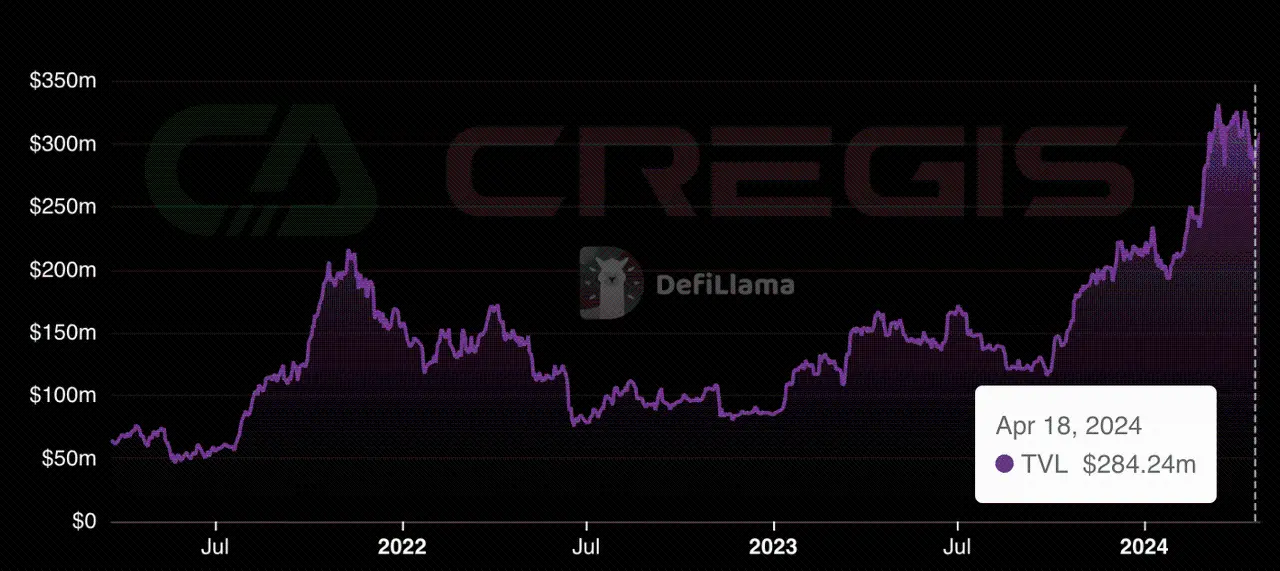
The Lightning Network is designed to support over 40 million transactions per second—far exceeding other blockchains and traditional payment systems. Moreover, it drastically reduces transaction fees, which are already extremely low and continue to decline as usage grows.
An increasing number of individuals and businesses are adopting the Lightning Network to lower costs and enhance Bitcoin’s utility. Integration at government and corporate levels has further accelerated adoption—for example, El Salvador’s government designated Bitcoin as legal tender and integrated compatibility with the state-backed Chivo Wallet. Companies like Twitter and CashApp have also added Lightning Network support to their platforms.
The market sees strong potential in the Lightning Network, attracting numerous projects and investors focused on developing the L2 ecosystem. For instance, Jack Dorsey’s Bitcoin startup Block launched a new venture fund called “c=,” dedicated to creating financing tools and services on the Lightning Network. Meanwhile, companies such as Spiral are developing the Lightning Development Kit (LDK) to improve user experience and broaden mainstream appeal. Additionally, Lightning Labs—the core team behind the network—introduced the “Taro” upgrade, leveraging Bitcoin’s Taproot improvement to enable issuance and transfer of synthetic assets, tokens, and NFTs directly on Bitcoin.
Finally, firms like Zeebeedee and Strike are negotiating fiat on-ramps with various countries, aiming to attract more users to the Lightning Network and offer international remittance services, thereby expanding its use cases.
(2) Stacks
Stacks calls itself the “Bitcoin Layer,” meaning it operates as a second-layer solution on the Bitcoin blockchain. Although not a sidechain, it leverages Bitcoin’s security through the introduction of the STX token and a consensus mechanism known as Proof-of-Transfer (PoX), which incentivizes miners and processes transactions. Stacks allows developers to build various DApps, particularly in DeFi and NFT sectors. Current total value locked in Stacks:
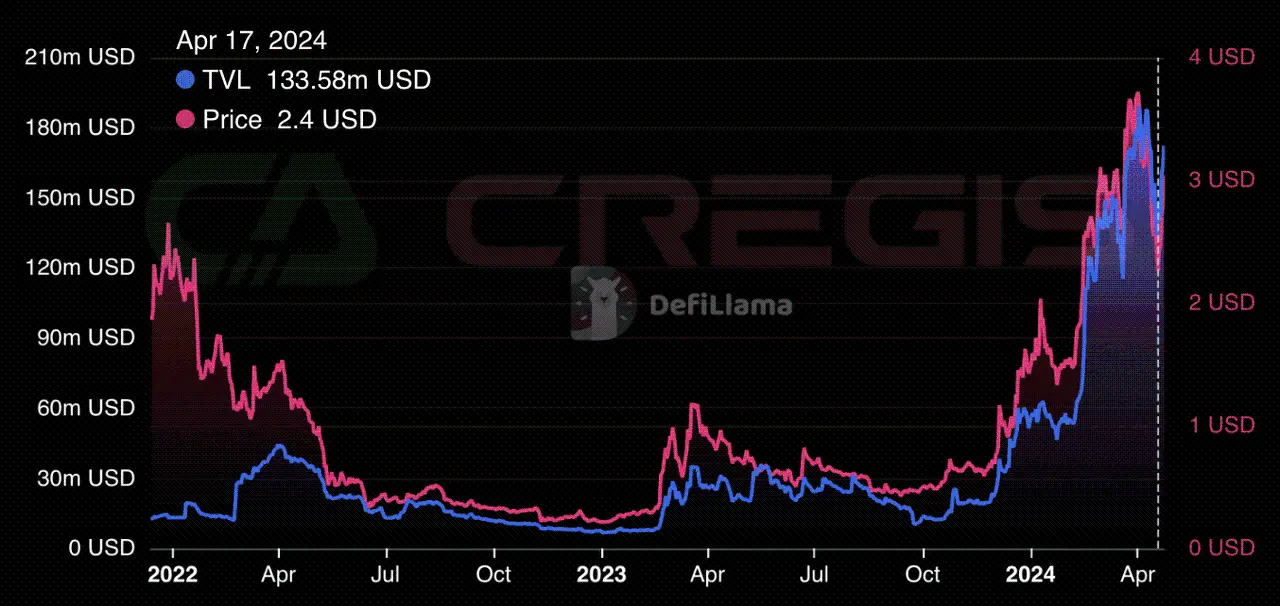
Stacks has now introduced sBTC, a Bitcoin-pegged asset allowing users to trade equivalent-value sBTC on the Stacks layer. This advancement is expected to further drive DeFi and NFT applications on Stacks and unlock capital within the Bitcoin ecosystem. Additionally, Stacks is implementing the Nakamoto upgrade to fully leverage Bitcoin’s security for finalizing transaction confirmations on the Stacks layer.
Recently, interest in Stacks has surged due to discussions around Ordinals and Runes, as well as its role in expanding Bitcoin’s use cases. Founder Muneeb Ali has been active on top cryptocurrency podcasts. Investors may be positioning themselves ahead of upcoming Stacks upgrades, with close attention being paid to sBTC and its potential impact on Bitcoin.
(3) Rootstock
Rootstock (RSK) is an EVM-compatible sidechain designed for general-purpose Bitcoin smart contracts. It uses a unique variant of Bitcoin’s Nakamoto consensus called DECOR+, enabling merged mining between RSK and Bitcoin. SmartBitcoin (RBTC), the native currency of RSK, is pegged 1:1 to Bitcoin and used to pay transaction fees. Current total value locked in Rootstock:
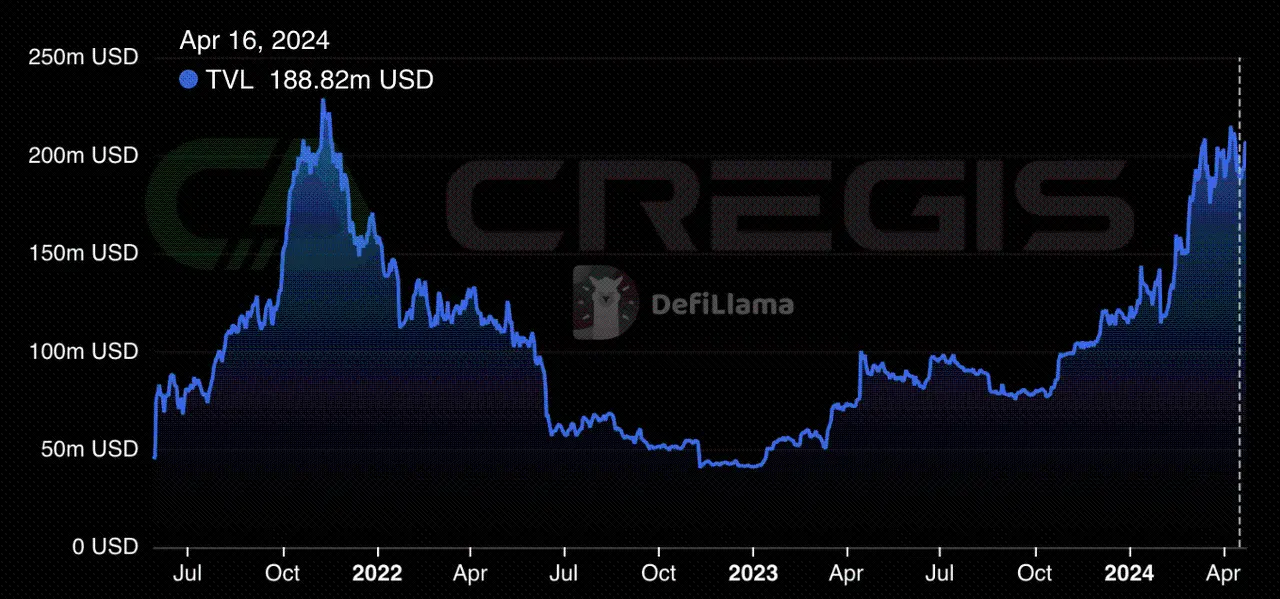
RSK connects to Bitcoin L1 via Powpeg, enabling BTC transfers between the two chains. Initially managed by a federation responsible for a multi-signature wallet, RSK later enhanced the decentralization of Powpeg. Nevertheless, some level of trust remains required, as BTC withdrawal requests need approval signatures from at least 51% of federation members. Currently, nine entities support Powpeg operations.
One key advantage of RSK is that its virtual machine (RVM) is compatible with the Ethereum Virtual Machine (EVM), meaning smart contracts can be written in Solidity. Sovryn is a notable RSK project—an unhosted smart contract platform supporting Bitcoin lending and leveraged trading. Recently, RSK announced the removal of RBTC’s supply cap, aligning its maximum supply with BTC at 21 million coins. This move holds significant implications for Bitcoin DeFi, as the previous supply limit constrained activity on RSK. Removing the cap could attract more developers and encourage greater DApp development on RSK.
Any new DApp launched on RSK deserves close monitoring, given its strong foundation for enabling DeFi on Bitcoin.
(4) Liquid Network
Liquid Network is an L2 sidechain enabling settlement and issuance of digital assets—such as stablecoins, security tokens, and other financial instruments—on top of the Bitcoin blockchain. Unlike other L2 solutions, Liquid Network is relatively centralized, relying on a federated consensus mechanism secured by 60 functionaries who validate blocks and add transactions to the Liquid sidechain.
Similar to RSK, Liquid Network features a token called “L-BTC,” pegged 1:1 to BTC. At the time of writing, the circulating supply of L-BTC is approximately 3,534 coins. This token primarily serves the Lightning Network, offering faster transaction speeds and higher throughput than Bitcoin’s main chain. Additionally, Liquid Network users can utilize their L-BTC in other supported applications, such as lending or purchasing security tokens.
III. New Bitcoin Layer 2 Projects
(1) BEVM
Launched in 2023, BEVM is a decentralized, EVM-compatible Bitcoin L2. Leveraging technologies enabled by the Taproot upgrade—such as Schnorr signatures—BEVM allows BTC to move from Bitcoin’s mainnet to Layer 2 in a decentralized manner. Since BEVM is EVM-compatible, all DApps running in the Ethereum ecosystem can operate on this Bitcoin Layer 2 using BTC as gas.
On November 29, 2023, BEVM released its whitepaper. Currently, BEVM has launched its precursor network ChainX. According to annual data from BEVM’s precursor network in 2023, total transaction volume reached 2.77 million, with 55,000 active addresses; TVL reached 119.56 BTC (approximately $5.09 million); and the total bridging capacity between Ethereum L2 and BEVM amounted to $11.53 million. Recently, the BEVM precursor network launched the first inscription protocol Bevscriptions, processing 3 million transactions within six hours at around 150 tps.
In December 2023, BEVM completed its first Odyssey campaign. BEVM founder Gavin (@gguoss) announced the second phase will launch on January 15, inviting 10–20 ecosystem projects to participate. The second phase will no longer use the name “Odyssey” but instead adopt “Helsinki”—named after the location of the first BTC block mined by Satoshi Nakamoto.
Currently, the BEVM ecosystem includes over 20 projects, such as OmniSwap—a cross-chain BTC DEX—and BoolNetwork—a decentralized signature protocol.
(2) B² Network
Founded in 2022, B² Network is a Bitcoin Layer 2 based on ZK-Rollup technology and EVM-compatible, enabling seamless deployment of DApps by developers from the EVM ecosystem. The project participated in ABCDE’s Bitcoin ecosystem demo day in November 2023 and ultimately received investment. According to ABCDE, B² Network’s core technical team comes from prominent Web3 open-source communities including Ethereum, Bitcoin, Cosmos, and Sui, and has received multiple grants. The team specializes in Web3 infrastructure products such as Layer 1, Layer 2, cross-chain protocols, and account abstraction, demonstrating mature engineering capabilities.
On December 18, 2023, B² Network announced the launch of its Alpha testnet MYTICA for partners and opened recruitment for ecosystem developers. Partners and developers can deploy DApps on the B² Network testnet. Its ecosystem cross-chain protocol Meson has already deployed USDC on the B² Network Alpha testnet. Meson is a cross-chain protocol emphasizing speed, stability, security, and low fees, supporting free circulation of major digital assets such as ETH, BNB, USDC, and USDT between B² Network and over 30 major public chains.
(3) Dovi
Dovi was founded in 2023 as an EVM-compatible smart contract-enabled Bitcoin Layer 2. In November 2023, Dovi officially published its whitepaper, introducing a technical framework integrating Schnorr signatures and MAST structures aimed at enhancing transaction privacy, optimizing data size, and streamlining verification processes. Furthermore, Dovi provides a flexible framework for issuing various asset types beyond Bitcoin and enables cross-chain asset transfers.
KuCoin Labs announced a strategic investment in Dovi in December 2023, and its native token DOVI was listed on KuCoin on December 12 of that year. DOVI adopted a fair launch model, with all 15 million tokens claimed within four hours of listing. As of January 15, DOVI’s fully diluted market cap was approximately $9.4 million. Users can currently stake DOVI on the official website to earn rewards.
According to Dovi’s official website, the next steps include launching a testnet, establishing a developer community and ecosystem support, and rolling out Dovi V1. These moves are expected to further grow the Dovi ecosystem and attract more developers and users.
(4) Map Protocol
Map Protocol is a highly promising project, particularly in addressing cross-chain interoperability. By leveraging Bitcoin’s security, Map Protocol offers a seamless way for assets and users on other public chains to interact with the Bitcoin network—enhancing overall blockchain ecosystem security and interoperability.
Its recent strategic investments from DWF Labs and Waterdrip Capital provide strong backing for future development, reflecting market recognition and confidence in the project.
The ongoing burn initiatives for MAP and MAPO tokens help reduce circulating supply, increase scarcity, and potentially boost token value. With a current fully diluted market cap of about $260 million, the market demonstrates confidence in Map Protocol’s potential. As adoption grows and the project matures, this figure is expected to rise further.
Overall, Map Protocol’s innovations in cross-chain interoperability and strong investor support lay a solid foundation for its future growth.
(5) Merlin Chain
Merlin Chain is a ZK-Rollup Bitcoin Layer 2 network supporting multiple native Bitcoin assets and EVM compatibility, developed by the renowned team behind BRC-420 Blue Box and Bitmap. According to its official site and research reports, Merlin is a Bitcoin Layer 2 solution integrating a ZK-Rollup network, decentralized oracle, and on-chain BTC anti-fraud module.
From Merlin Chain’s official website, we can see its bridge functionality—enabling transfer of Bitcoin-native assets to the Layer 2 network to reduce transaction fees—making it a typical example of solving immediate pain points.
This integrated approach combining ZK-Rollup, oracle, and fraud prevention modules has the potential to bring further innovation and development to the Bitcoin ecosystem, delivering more efficient and secure transaction experiences and attracting more users and developers.
(6) Bison
Bison, founded in 2023, is a Bitcoin-native zk-rollup designed to increase transaction speed and enable advanced functionalities natively on Bitcoin. Developers can leverage zk-rollups to build innovative DeFi solutions such as exchanges, lending services, and automated market makers.
Bison also participated in ABCDE’s Bitcoin ecosystem demo day. According to presentations, Bison leverages zero-knowledge proofs and Ordinals for fast, secure transactions. All data is anchored back to Bitcoin for enhanced security. Bison achieves up to 2,200 transactions per second at just 1/36 the cost of native Bitcoin transactions.
The Bison team includes core contributors from Starknet, indicating deep expertise and experience in blockchain technology—capable of building efficient and secure solutions. As Bison continues evolving within the Bitcoin ecosystem, it is expected to bring greater innovation and convenience to Bitcoin users and developers.
IV. The Next Step for Bitcoin’s Ecosystem: The Smart Contract Market
For years, Bitcoin has faced criticism over limited developer tools, slow and cumbersome infrastructure, and relatively constrained innovation compared to smart contract platforms like Ethereum, BNB Chain, and Solana. However, the landscape appears to be shifting. Developers are finally able to showcase their skills within the Bitcoin ecosystem, pushing updates around the clock and advancing Bitcoin at an unprecedented pace—all driven by organic demand. This is precisely the key point: when an ecosystem responds to real, natural user needs, those demands inherently fuel innovation and product development, creating a virtuous cycle that rapidly improves conditions.
(1) BitVM
Robin Linus, lead of the ZeroSync project, published a paper on BitVM on October 9. Simply put, BitVM is a virtual machine for the Bitcoin network. It achieves Turing completeness by executing computations off-chain and verifying them on-chain—without altering Bitcoin’s consensus rules.
There are significant differences between BitVM and Ethereum smart contracts. While Ethereum supports multi-party transactions, BitVM is currently limited to two-party interactions. Most transaction processing in BitVM occurs off-chain, minimizing impact on the underlying Bitcoin blockchain. In contrast, EVM is an on-chain engine where all operations occur within Ethereum’s native environment. BitVM acts as an optional add-on engine for Bitcoin—its operation does not require changes to Bitcoin itself. Conversely, EVM is an integral part of Ethereum; without EVM, there would be no Ethereum.
BitVM functionality relies on Bitcoin’s Taproot upgrade. It primarily uses taproot address matrices (taptrees), akin to binary circuit instructions. Within this framework, each UTXO spending condition in a Script is treated as a minimal program unit. Specific code within taproot addresses generates 0s or 1s, forming a taptree. The execution result of the entire taptree mimics binary circuit behavior—an executable binary program. Program complexity depends on the number of combined taproot addresses: more addresses mean richer pre-programmed instructions and greater computational capability.
Most BitVM processing happens off-chain. Off-chain transactions are batched and submitted to the base Bitcoin blockchain, using a validity confirmation model similar to optimistic rollups. BitVM also employs a model combining fraud proofs with challenge-response protocols to handle and verify transactions between two parties (prover and verifier). The prover initiates a computation task and sends it through a channel established with the verifier, who then confirms the computation’s validity. Once verified, the transaction is included in a batch ready for publication on the underlying Bitcoin blockchain.
(2) RGB
Maintained and updated by the LNP/BP Standards Association, RGB is a smart contract system supporting both the Bitcoin network and the Lightning Network. RGB proposes a more scalable, private, and future-oriented solution, built upon concepts introduced by Peter Todd in 2017: client-side validation and single-use seals.
The core idea of RGB is to use the Bitcoin blockchain only when necessary—leveraging proof-of-work and network decentralization solely for double-spend protection and censorship resistance. All token transfer validations are removed from global consensus and handled off-chain, verified exclusively by the recipient’s client software.
How does it work? In RGB, tokens are essentially assigned to a Bitcoin UTXO—either existing or temporarily created. To transfer tokens, you must spend that UTXO. When doing so, the Bitcoin transaction must commit to a message containing RGB payment data—specifying inputs, target UTXOs, asset IDs, amounts, the spending transaction, and any additional required data.
Specific RGB payment details are transmitted off-chain via dedicated communication channels from sender to recipient, where the latter verifies compliance with RGB protocol rules. As a result, blockchain observers gain no insight into RGB user activities.
However, validating incoming payment data alone isn’t enough to ensure the sender actually owns the assets. To guarantee transaction finality, recipients must also receive the complete transaction history of these tokens—from the current transfer all the way back to the original issuance. By verifying the full history, recipients can ensure no inflation occurred and all asset spending conditions were properly met.
Conclusion
Bitcoin Layer 2 is a crucial component of modern Web3 development. If Bitcoin wishes to maintain its status as one of the leading blockchain networks, it must offer a fast and cost-effective method for processing transactions. Fortunately, many developers have taken on the challenge of scaling Bitcoin, resulting in a diverse array of Bitcoin Layer 2 options available to those seeking lower fees and expanded functionality.
Cregis is a Web3-era solutions platform that has specialized since 2017 in providing cryptocurrency asset management tools and solutions for enterprises. To date, we have served over 3,200 clients—including exchanges, projects, crypto funds, and cross-border e-commerce companies—with average daily on-chain transaction volume exceeding $30 million. Cregis currently offers MPC wallet services and trading API integrations, and plans to fully launch VCC services and the Web3底层 asset solution Web3 Bridge in 2024, helping more Web3 teams achieve diversified crypto asset trading and management.
Join TechFlow official community to stay tuned
Telegram:https://t.me/TechFlowDaily
X (Twitter):https://x.com/TechFlowPost
X (Twitter) EN:https://x.com/BlockFlow_News