OORT: Storage + Computing Power + Model Training, Building an All-in-One DeAI Solution
TechFlow Selected TechFlow Selected
OORT: Storage + Computing Power + Model Training, Building an All-in-One DeAI Solution
Explore OORT and delve into its industry background, project mechanics, and more, to gain insights into the project's prospects and the opportunities and challenges facing the AI+DePIN sector in 2024.
 Navigating Web3 tides with focused insights
Author: TechFlow
At the end of 2023, the crypto research firm Messari expressed strong confidence in the DePIN and AI sectors in its Crypto Theses for 2024 report: DePIN and AI have naturally complementary use cases, and their convergence—DeAI—will give rise to killer applications in the crypto market.
As a de facto bellwether for the crypto market, recent trends have validated Messari’s forecast. Over the past month, AI+DePIN projects have surged, with related tokens experiencing broad price increases. The decentralized mapping project Hivemapper (HONEY) saw a monthly gain of 12.9%, while Render—a platform focused on decentralized GPU rendering—rose 149.2%. Most notably, OORT, an all-in-one decentralized AI service platform integrating storage, computing, and AI deployment/training, achieved an astonishing 352.5% monthly increase.

Image source: CoinGecko
Behind these impressive gains lie both sector-wide momentum and individual project strengths. Since launching its mainnet in November last year, OORT has maintained rapid growth: it now boasts over 31,000 global nodes across 111 countries, has raised nearly $10 million in funding, and recently announced its role as the official Storage Provider for BNB Greenfield—enhancing BNB Chain's storage capacity while building a more private, transparent, and interconnected decentralized digital ecosystem. With OORT Compute set to launch in Q2 2024, many in the AI+DePIN community view OORT as a high-potential investment opportunity.
In light of this momentum, this article dives into OORT, exploring its market positioning, operational logic, and core competitive advantages to assess its prospects and examine the broader opportunities and challenges facing the AI+DePIN sector in 2024.
Image source: Twitter @oortech
AI+DePIN: The Dominant Narrative of 2024
Ninety-five percent of capital flows in markets stem from user FOMO. Before delving into OORT’s value proposition, let us first examine the AI+DePIN sector itself, and understand how being positioned at the forefront of a trending narrative can accelerate a project’s success.
DePIN leverages blockchain technology and cryptographic incentives to connect hardware owners worldwide, motivating them to collaboratively build large-scale physical infrastructure networks. It emphasizes community ownership, transparent resource distribution, and efficient sharing. Currently, there are over 650 DePIN projects, with total market capitalization rising from $15 billion to $31.4 billion within just one month.
AI, as a key driver of 21st-century technological revolution, has entered mainstream consciousness through OpenAI’s ChatGPT. If we liken AI development to automobiles, three core components are essential: data acts as fuel; algorithms function as the control system; and computing power serves as the engine. However, in today’s largely centralized internet landscape, AI faces multiple challenges. First, AI requires vast amounts of training data, yet privacy breaches during data collection remain common—last year, OpenAI admitted that payment information of paid users might have been exposed, sparking public outcry. Second, the high cost of data processing and computational resources leads to monopolies: according to Wells Fargo, NVIDIA currently holds 98% of the data center AI market share. Furthermore, due to commercial competition, AI companies often fail to share resources or collaborate, resulting in algorithmic bias, ethical concerns, redundant development, and lack of standardization.
These very limitations help explain the surging interest in the AI+DePIN space:
On one hand, DePIN can significantly alleviate current AI bottlenecks: The decentralized value framework championed by DePIN—openness, transparency, immutability, verifiability—helps demystify AI decision-making, transforming black-box systems into understandable processes. By integrating token-based incentive models, DePIN encourages global users to contribute their data and idle computing power in exchange for rewards, drastically reducing AI development costs. In terms of privacy, technologies like zero-knowledge proofs (ZK) ensure data is usable without being visible.
On the other hand, AI serves as a powerful gateway to attract traditional capital and ignite crypto investment: While DePIN represents a new attempt to bring crypto concepts into real-world applications, AI enjoys widespread appeal among both traditional tech giants and crypto VCs. Thus, AI+DePIN becomes a compelling narrative bridging traditional finance and crypto capital. Numerous crypto KOLs have publicly predicted that AI+DePIN will succeed DeFi Summer as the primary value narrative driving this bull market. According to Messari, the DePIN market could reach $3.5 trillion by 2028, while AI in Web3 could surpass $2.8 trillion by 2030. Although there is overlap between these figures, they underscore the massive growth potential of AI+DePIN.
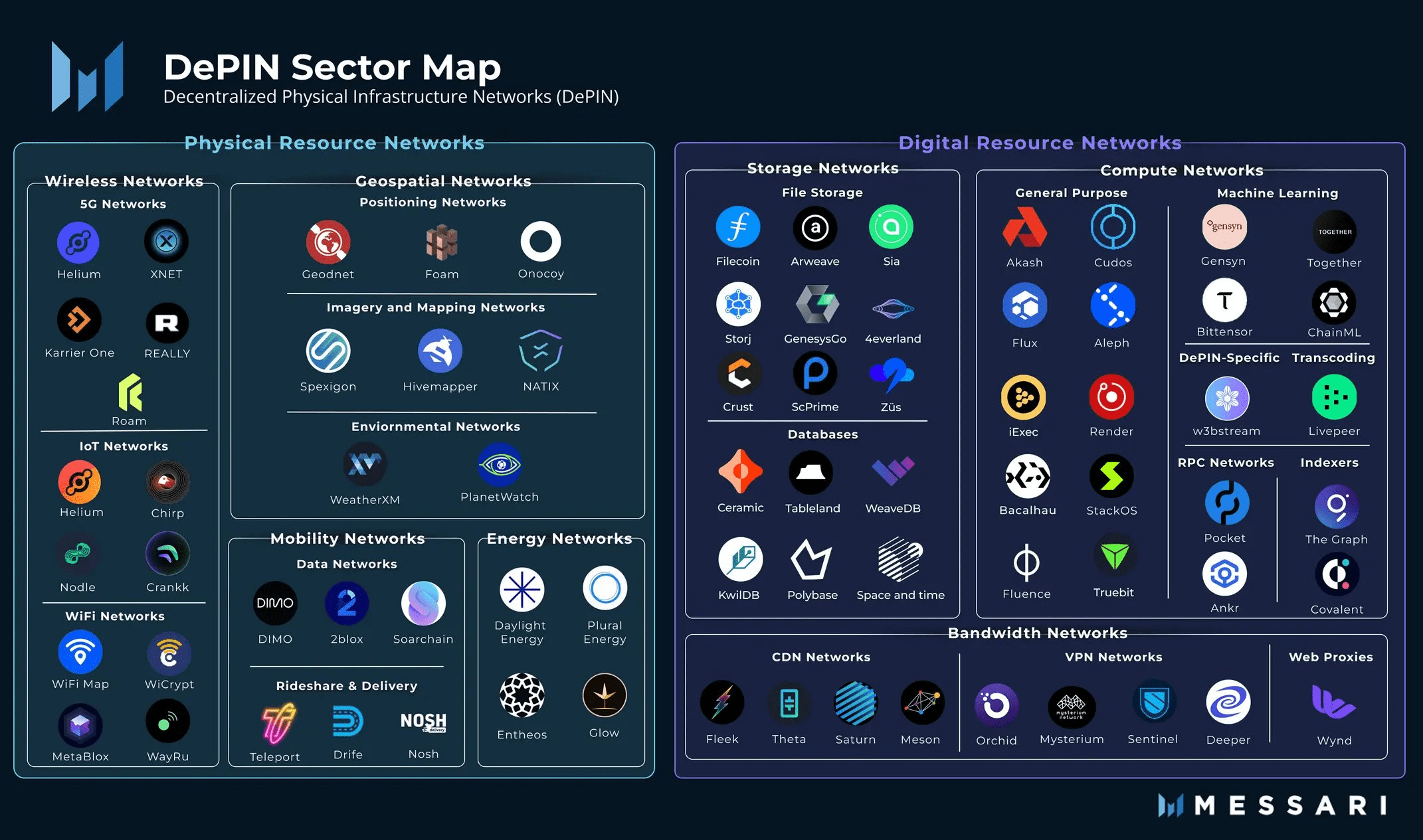
Image source: Messari
With top-tier research firms endorsing the trend and several projects delivering strong performance early in the year, AI+DePIN stands out as one of today’s hottest sectors. Yet, amid such fierce competition and immense opportunity, what enables OORT to stand apart?
Core Logic: How Does OORT Enable Decentralized AI (DeAI)?
Tommy, co-founder of Delphi Digital, once wrote: "I believe we're heading toward a world with billions of AI models—whether individuals download and personalize open-source models, or projects and companies build custom model sets for specific use cases."
This vision aligns perfectly with OORT’s mission.
In short, OORT is an all-in-one, decentralized AI solution integrating data collection, storage, preprocessing, computation, and AI model design, training, fine-tuning, and deployment. The project aims to merge AI and DePIN: using robust incentive mechanisms to encourage broad, decentralized participation, while offering every user low-barrier, low-cost, privacy-preserving AI services—ultimately building a trust-based global AI ecosystem.
But OORT recognizes that creating a world where everyone contributes, designs, and benefits from AI first requires building a foundational framework—a decentralized infrastructure layer capable of aggregating Web2 and Web3 data, and enabling truly decentralized, efficient, transparent, and cost-effective solutions for data storage, retrieval, and computation. To achieve this, OORT launched the open-source Layer 1 Olympus protocol, powered by its native OORT token to close the incentive loop.
As initial data providers, users can pay OORT tokens to unlock additional storage (though积分 and credit cards are also accepted, with discounts typically offered for OORT payments—adding tangible utility to the token). Users retain full control over whether to share their stored data, preserving privacy while earning OORT rewards.
For network stability, OORT employs an innovative three-tier node architecture:
-
Super Nodes: High-capacity public and private cloud providers like Tencent Cloud. These deliver Web2-level performance (comparable to AWS), forming the foundation for mass adoption.
-
Backup Nodes: Cold data storage nodes integrated from existing networks such as Filecoin, Storj, Crust, and Arweave—bridging Web2 and Web3 ecosystems.
-
Edge Nodes: Devices with limited storage and compute capabilities—such as personal computers, smartphones, and tablets. Edge nodes open participation to everyday users, tapping into fragmented long-tail markets and enhancing decentralization through geographic and numerical dispersion.
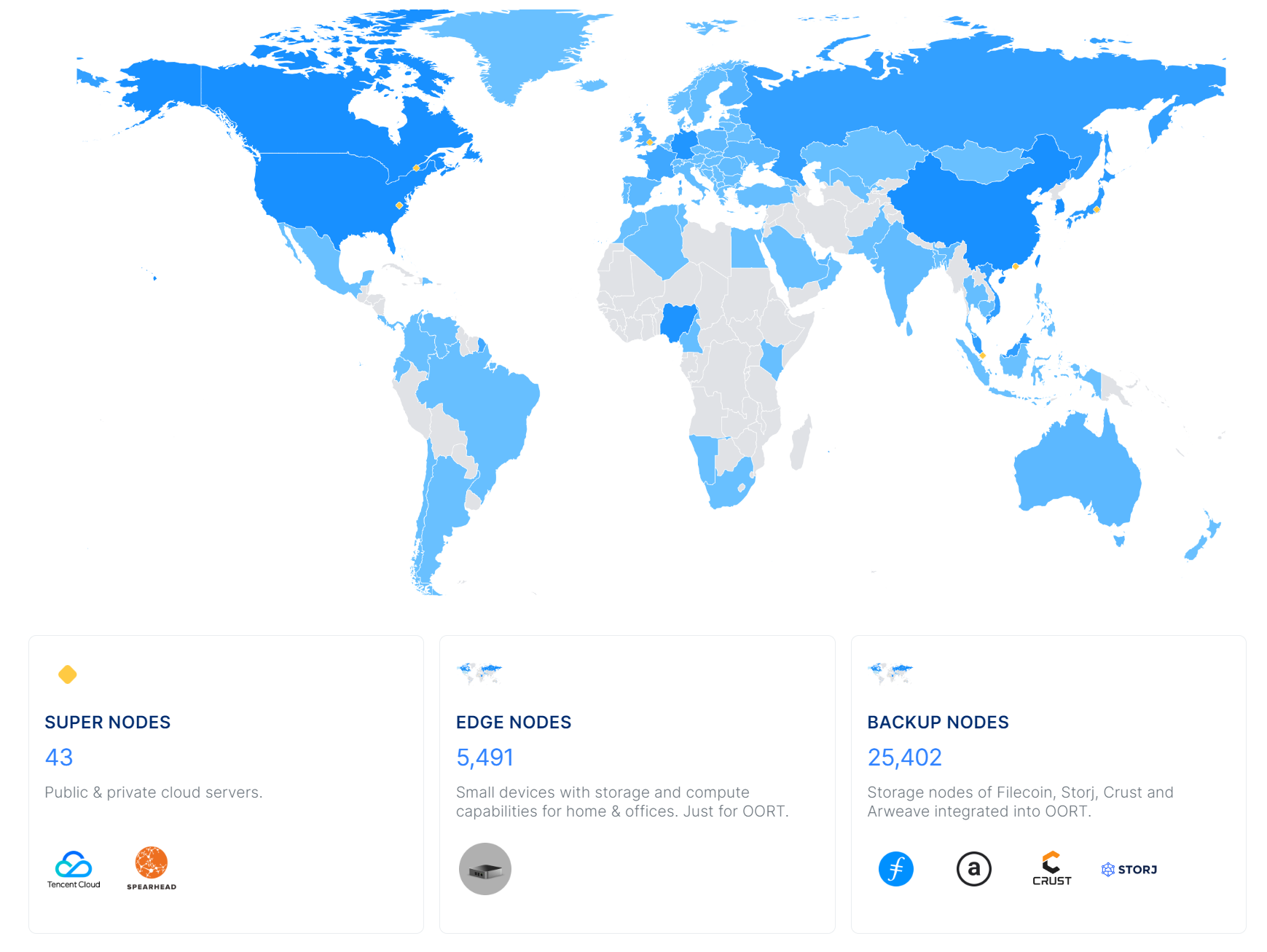
Image source: oortech.com
Of OORT’s total 2 billion token supply, 65% is allocated to reward nodes contributing storage and computing resources—a clear signal of OORT’s commitment to building decentralized infrastructure. Its focus on decentralization and edge AI also drives user engagement through hardware: users can purchase the Deimos device to join OORT Edge as edge nodes and earn rewards.
First, rewards come from Deimos mining: users opting for zero-collateral mining receive 15% of mining rewards, while those who fully stake 500 OORT tokens receive 100%. Additionally, token holders can stake their OORT to nodes, which in turn may distribute a portion of increased earnings back to supporters—creating a virtuous cycle.
Second, edge nodes providing superior storage, computing power, or bandwidth receive enhanced service rewards. For example, when users upload data, fragments are distributed across OORT infrastructure nodes; nodes fulfilling retrieval, download, or computation requests are rewarded. During retrieval, OORT edge nodes tag local data and rapidly construct distributed hash tables (DHTs) to improve file indexing efficiency. Preprocessed data is uploaded to the distributed cloud, and its hash is stored on-chain to ensure traceability and tamper resistance. OORT’s consensus mechanism, “Proof of Honesty (PoH),” patented in the U.S., ensures nodes faithfully complete assigned tasks and optimizes resource allocation in a decentralized manner.
To maintain system integrity, OORT implements penalties: if a Deimos device goes offline or collateral is withdrawn prematurely, corresponding rewards are forfeited.
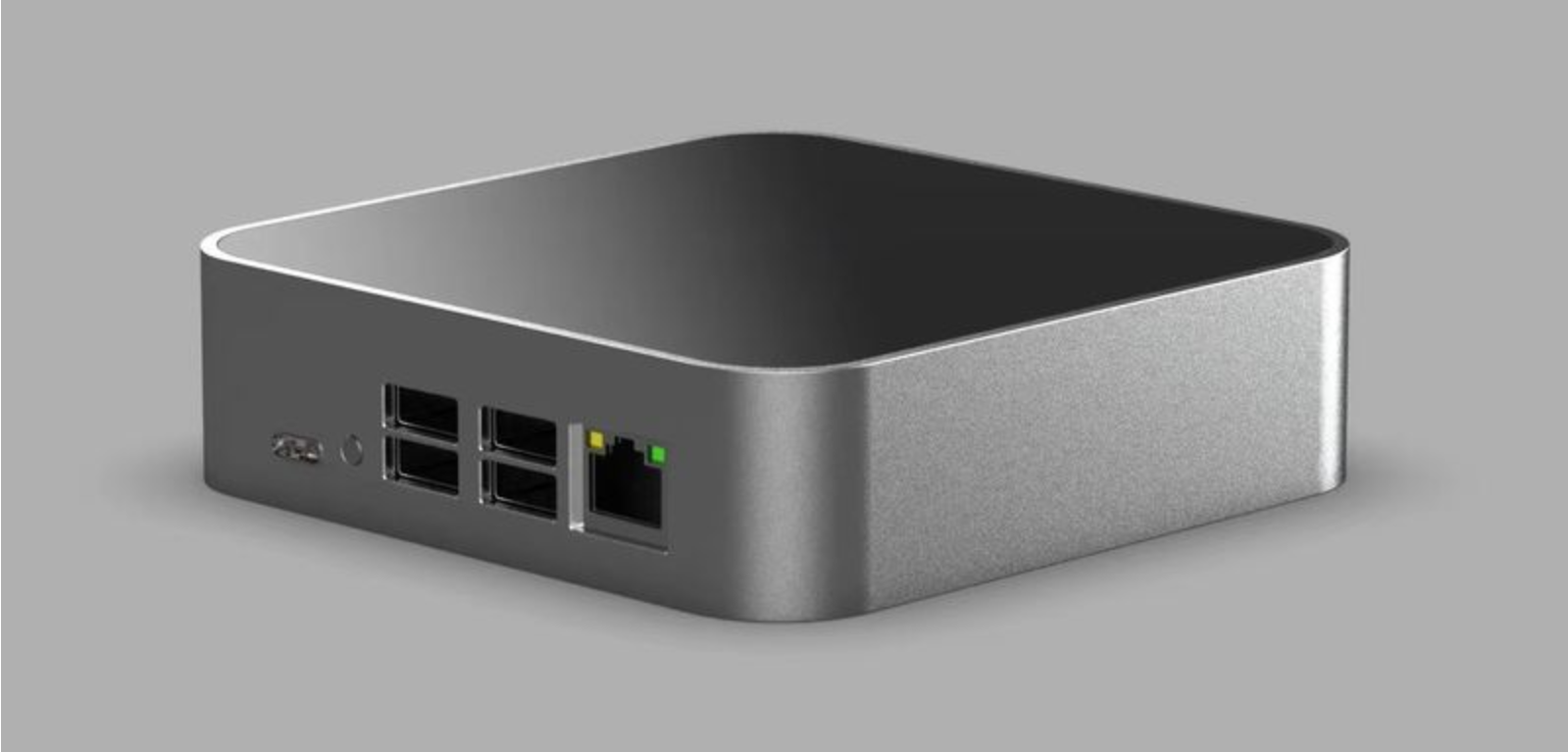
Deimos Appearance – Image source: oortech.com
Thus, a truly decentralized infrastructure layer emerges—one seamlessly connecting Web2 and Web3, unifying data storage, computation, and preprocessing. This foundation will empower future applications built on the Olympus protocol, including dApps, custom AI models, and unforeseen innovations—all benefiting from faster response times, larger-scale data analysis, stronger privacy protections, and greater operational transparency—fulfilling OORT’s promise of an end-to-end, all-in-one decentralized AI solution.
With this overarching infrastructure in place, OORT is now refining its product suite, gradually unveiling a matrix covering data storage, computing, AI deployment, and training:
OORT Storage: A Decentralized Version of Baidu Cloud
Low barrier to entry is a hallmark of OORT Storage. The user experience mirrors Web2 products: users sign up via email, log in, create folders, and upload/retrieve/download files. Beyond free quotas, users needing extra capacity can flexibly upgrade plans using积分, credit cards, or tokens. For privacy, users set file access permissions themselves. Uploaded files are split into fixed-size “chunks,” each encrypted client-side using AES-256, ensuring only the owner can access content. Encrypted chunks are then processed via erasure coding to generate parity chunks and stored distributively—enabling file reconstruction even if some chunks are lost or temporarily unavailable.
OORT Compute: Aggregating Global Long-Tail Computing Power
Running AI models demands significant computing resources. Beyond costly dedicated hardware like CPUs, GPUs, and TPUs, there lies untapped potential in the vast amount of idle computing power embedded in ordinary users’ PCs, phones, and tablets. OORT Compute matches AI workloads with this idle capacity, harnessing devices globally to provide AI data collection and preprocessing services.
OORT AI: Custom AI in Three Simple Steps
As markets grow increasingly niche, customized AI tools hold strong appeal for both enterprises and individuals. Powered by large language models (LLMs), OORT AI delivers a simple, efficient, and seamless AI creation experience: users edit their own AI via the dashboard, preview results, and even refine, optimize, and update post-deployment—completing AI customization, deployment, and training within minutes.
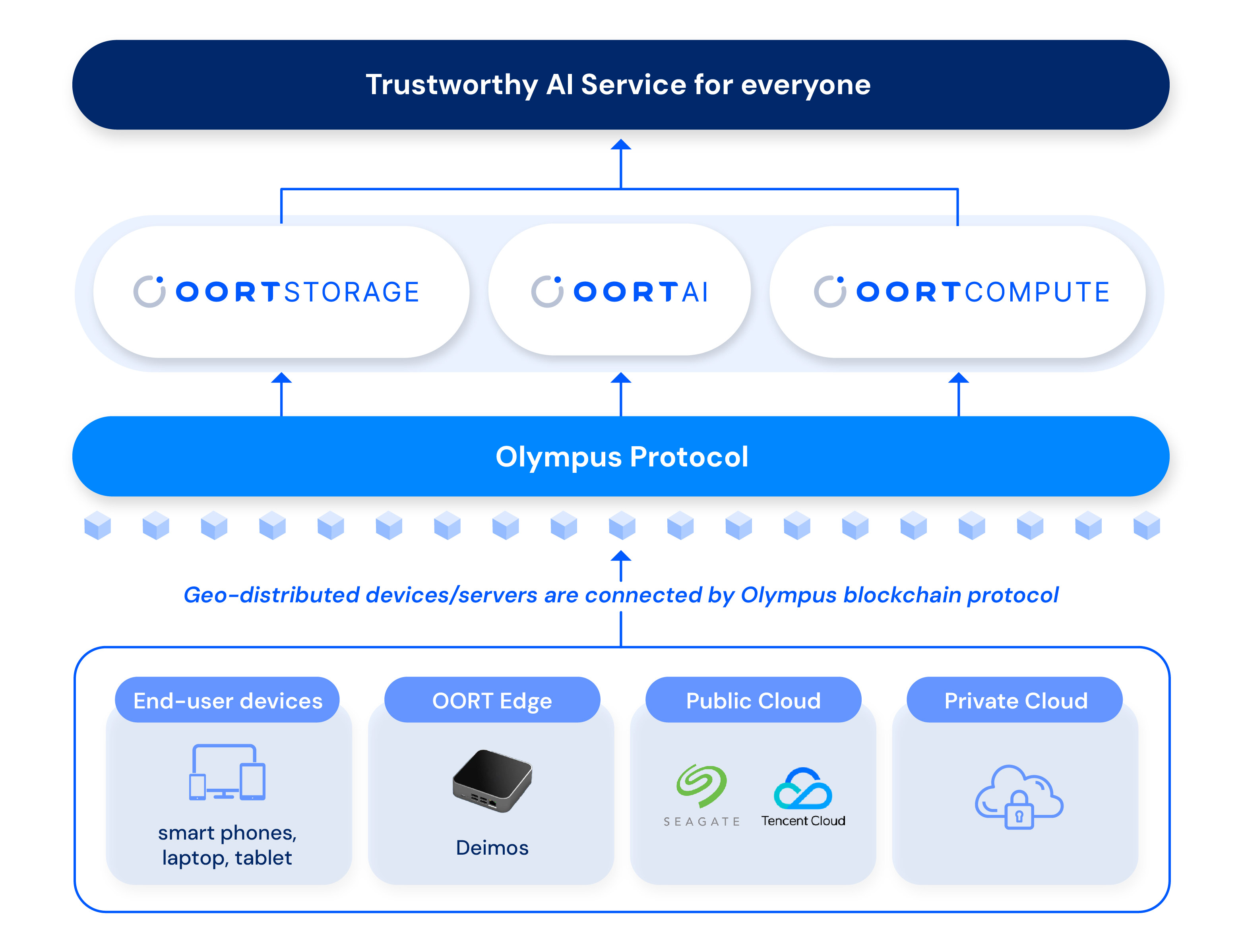
Image source: OORT Medium
After years of development, OORT Storage now integrates global server providers like Seagate and Tencent Cloud, delivering decentralized object storage with performance rivaling Amazon AWS S3—cutting costs by up to 60%. In collaboration with Lenovo Image, OORT significantly enhanced customer support operations, reducing call volume by an estimated 80% and lowering operating costs by as much as 70%, earning widespread acclaim for improving user experience. Moreover, since the Olympus mainnet launched in November, over 31,000 nodes have joined the network.
Behind these achievements lies not only OORT’s precise market positioning but also the strength of its team and product quality.
AI+DePIN Heats Up: OORT’s Breakthrough Strategy
During its rapid evolution, some newcomers to OORT have remarked: “OORT is like Filecoin (storage) + Render Network (compute) + Gensyn (model training).” While there is some truth to this analogy, it oversimplifies OORT’s unique approach:
OORT places greater emphasis on edge nodes and lowering barriers to enable broader global participation from everyday users. By serving diverse long-tail markets, it unlocks vast idle resources from personal computers, smartphones, and tablets, delivering trustworthy, decentralized, and customizable end-to-end AI services.
From a product standpoint: OORT Storage supports all file types and leverages distributed hash tables (DHTs) for faster data retrieval—crucially, it delivers enterprise-grade performance. OORT Compute incorporates ZK technology to preprocess data privately, reducing latency in device-driven decisions. OORT AI supports multimodal formats—including text, images, audio, video, and web content—and offers not just model training, but an integrated, all-in-one AI customization service encompassing creation, deployment, and training.
From a user experience perspective: by focusing on the edge long-tail market (now spanning over 31,000 global nodes), OORT achieves higher decentralization and better aligns with human-centric needs. Features like email login and fiat payment options lower entry barriers, making the UX smoother. And by covering the entire lifecycle—from data collection to processing and feeding—OORT ensures seamless integration across functions.
Since last month, OORT’s token has surged 352.5%, and its collaboration with Lenovo Image received over 90% user satisfaction—both reflecting market validation and the culmination of OORT’s multifaceted strengths. As a New York-based emerging project, OORT benefits from a strong team and extensive industry connections.
OORT CEO Dr. Max Li is a professor at Columbia University and the inventor of the PoH consensus algorithm, with deep expertise in software development, AI, and blockchain technology, holding over 200 technical patents worldwide. Other core team members hail from institutions like Columbia University, Qualcomm, AT&T, and JPMorgan Chase, collectively holding multiple U.S. patents and academic publications (including patented PoH and verifiable computing), laying a solid technical foundation for OORT’s high-quality products.
In terms of industry partnerships, OORT collaborates with both traditional tech leaders and crypto innovators: working with major internet firms like Tencent Cloud, Dell Technologies, and Lenovo Image to explore novel decentralized solutions, and partnering with Binance as a certified cloud service provider for BNB Chain, accelerating ecosystem growth. These alliances help expose OORT’s services to a broader base of Web2 and Web3 users.
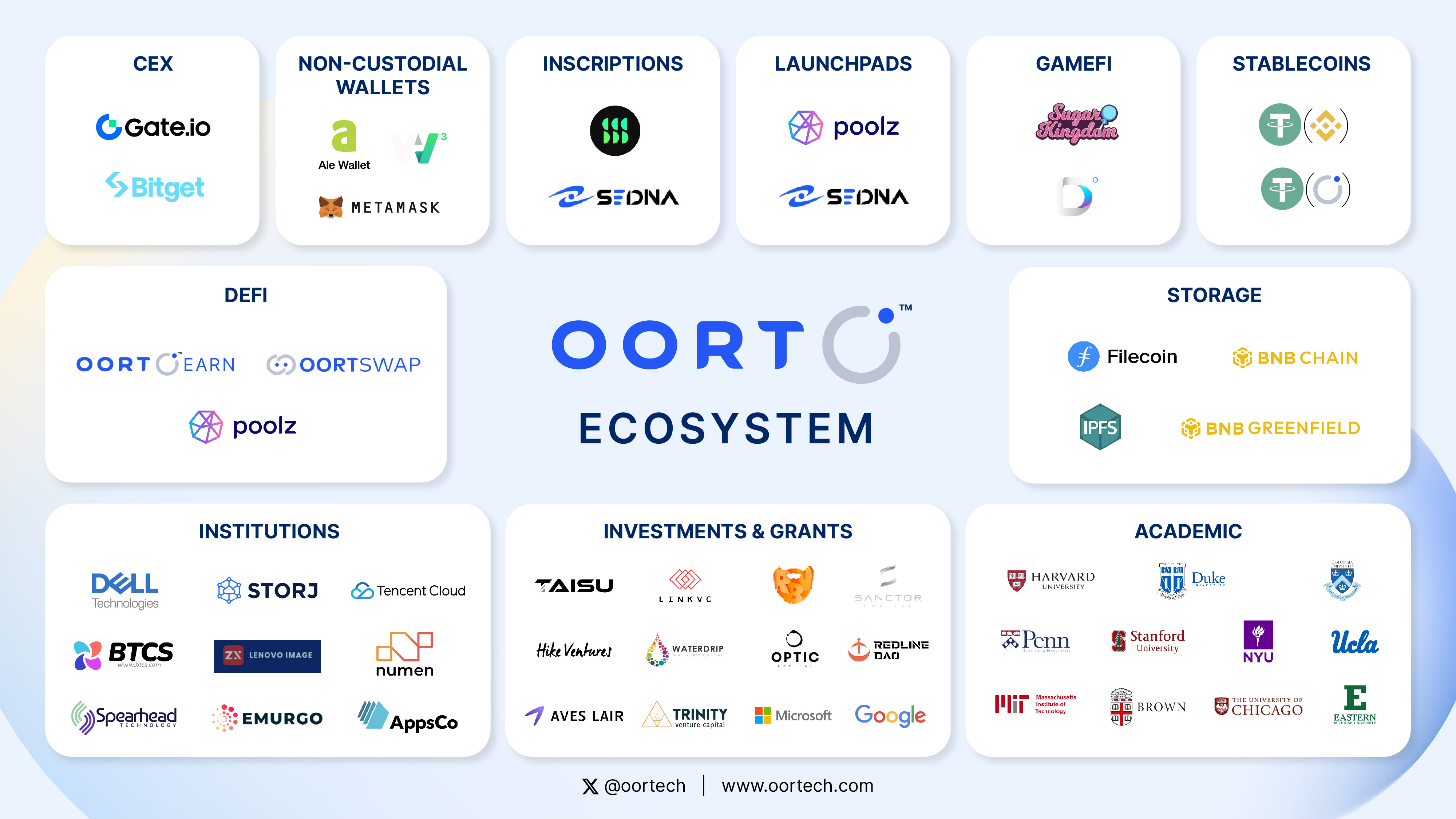
Image source: Twitter @oortech
Moreover, with years of market immersion, OORT excels at outreach:
OORT is already listed on major exchanges like Bitget and Gate.io, with plans to expand to more top-tier platforms—potentially including Binance, thanks to its role as BNB Greenfield’s official Storage Provider and deep integration with BNB Chain. Additionally, recognizing the power of community, OORT runs various engagement campaigns—meme contests, exchange “CandyBomb” events, bug bounty programs, and more.
Furthermore, OORT’s OORT Earn platform offers flexible staking plans with annual yields of 5%, 10%, 15%, and 20%—corresponding to daily, 3-month, 6-month, and 12-month lockups—encouraging long-term holding. Additional Earn benefits include exclusive airdrops from OORT ecosystem partners: the more users stake, the larger their airdrop allocations. This safeguards user interests and strengthens partner relationships. Interested users can learn more via OORT’s official website and social media channels.
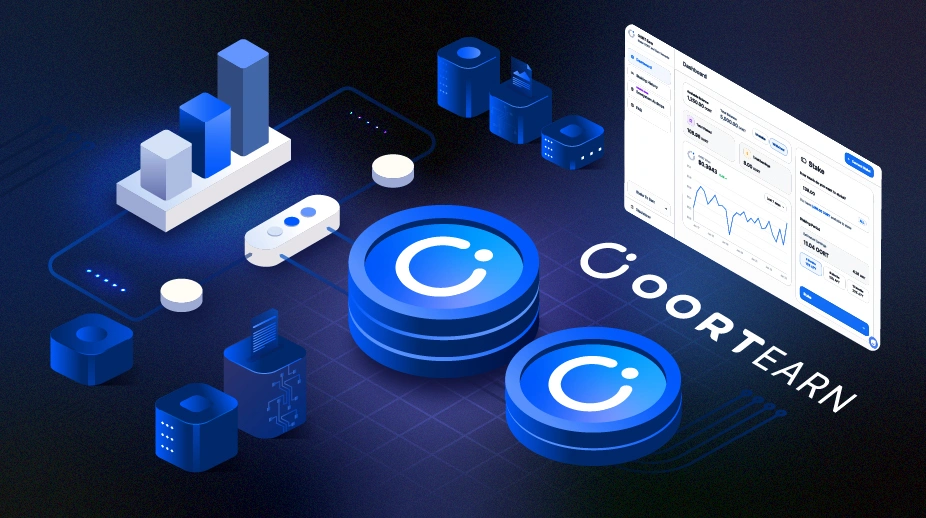
Image source: oortech.com
Strong market performance has drawn attention from top-tier investors: in January 2024, OORT completed a new funding round, attracting support not only from tech giants Microsoft and Google but also from leading crypto VCs including Taisu Ventures (formerly Emurgo/Cardano’s venture arm), Red Beard Ventures (backed by a16z), and Hike Ventures—joining earlier backers like Aves Lair, Trinity Venture Capital, LinkVC, Sanctor Capital, and Waterdrip. Total funding now exceeds $10 million. With more milestones expected in 2024, OORT is poised for another phase of accelerated growth.
Looking Ahead: Key Milestones on the Horizon
Currently, users can try OORT Storage to upload, retrieve, and download files—an experience nearly identical to using Web2 cloud drives. They can also use OORT AI to design, deploy, and train personalized AI bots, or purchase Deimos hardware through official channels to become edge nodes and earn mining rewards.
According to OORT’s social media updates, OORT Compute—a critical component of its decentralized infrastructure—is under active development and expected to launch in Q2 2024. At that time, users will be able to share idle computing power from their devices to earn tokens and experience how OORT Compute pre-processes data in a decentralized manner before uploading it on-chain.
Going forward, as more nodes join and the ecosystem expands, OORT will grow increasingly decentralized. The team will continue optimizing products, refining marketing strategies, adjusting key economic parameters, and enhancing community participation and governance—to further strengthen positive economic cycles and deliver smarter, simpler, all-in-one AI services.
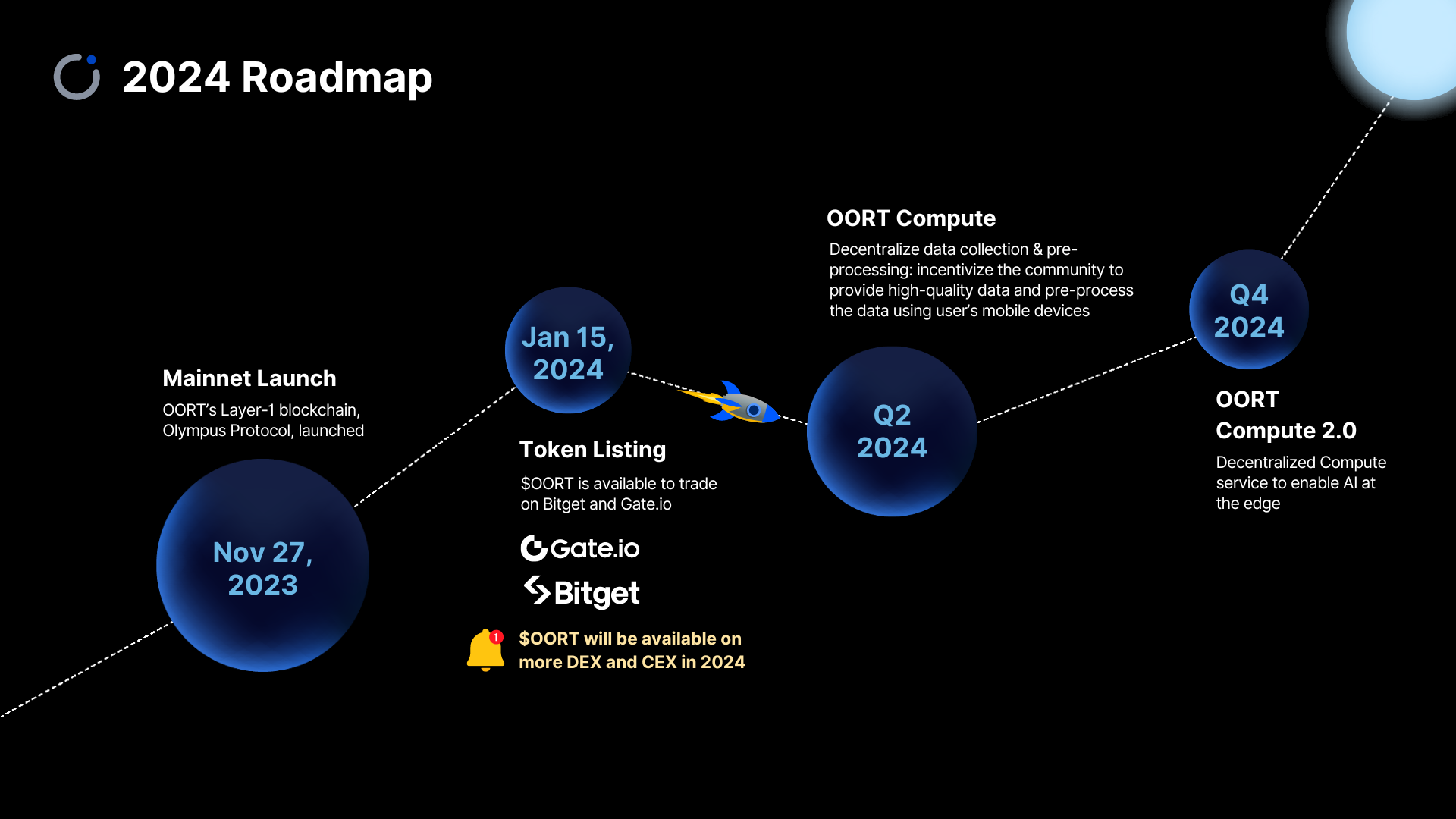
Image source: OORT Medium
Conclusion
Indeed, while community and investor enthusiasm has elevated AI+DePIN to great heights, the field remains in its infancy. In this high-potential yet fiercely competitive arena, projects are racing ahead—accelerating roadmaps and intensifying marketing to capture market share.
Yet it’s undeniable that OORT stands out as a remarkably mature project, both in design and execution. Its rapidly expanding global node count and a token price surge of over 3x reflect strong market feedback. Fueled by the AI+DePIN hype and upcoming milestones—including the launch of OORT Compute and Deimos 2.0—we look forward to OORT’s journey and the broader trajectory of the entire sector.
Join TechFlow official community to stay tuned
Telegram:https://t.me/TechFlowDaily
X (Twitter):https://x.com/TechFlowPost
X (Twitter) EN:https://x.com/BlockFlow_News
 深潮TechFlow