New Trends in the Crypto Bull Market: A Look at Promising DePIN Projects
TechFlow Selected TechFlow Selected
New Trends in the Crypto Bull Market: A Look at Promising DePIN Projects
DePIN projects are vastly different from DeFi projects, often prioritizing user growth over tokenomics.
 Navigating Web3 tides with focused insights
By dt
During this bull market, you've surely heard the term DePIN more than once. Even Vitalik Buterin, Ethereum's founder, took to Warpcast to ask the community: "Which 'DePIN' projects are most likely to actually work?"
DePIN stands for Decentralized Physical Infrastructure—projects that rely on physical hardware to deploy their decentralized networks. The GPU rental projects covered in last month’s CryptoSnap fall broadly under the DePIN umbrella. This week, Dr. DODO dives deeper into the DePIN space, spotlighting several standout projects.
DePIN Surf Accelerator
Before introducing individual projects, let’s first discuss the DePIN Surf Accelerator—a program co-founded by IoTeX, Foresight Ventures, and FutureMoney Group specifically to support early-stage DePIN ventures. The accelerator offers funding, media exposure, and crucially, mentorship from experienced entrepreneurs. IoTeX has been deeply involved in the DePIN ecosystem since the last bull run. The first cohort of DePIN Surf has already concluded its application phase, selecting four projects: Ator Network, Inferix GPU, Wayru Network, and PowerPod—all of which will be detailed below. Applications for the second cohort are now actively underway.
Ator Network
To understand ATOR, we must first look at TOR—the “The Onion Router”—a network that enables users to access a global overlay network powered by over 7,500 volunteer-run relays. This setup helps conceal users’ real IP addresses and resist surveillance or traffic analysis.
ATOR was initially created to incentivize more volunteers to run Tor relays by rewarding them with $ATOR tokens, aiming to boost the number of nodes and enhance overall privacy. However, due to concerns over centralization—given ATOR’s rapidly growing share of the network—the broader Tor community voted to exclude ATOR-operated nodes. In response, the ATOR team decided to build their own independent network from scratch.
Today, ATOR aims to become a large-scale decentralized anonymity ecosystem, empowering users to reclaim control over their privacy and data. Through a token-based incentive model, ATOR encourages more participants to operate relay nodes. To simplify node operation, the team is developing dedicated ATOR hardware—users need only plug it in and connect to the internet to become active contributors to the network.
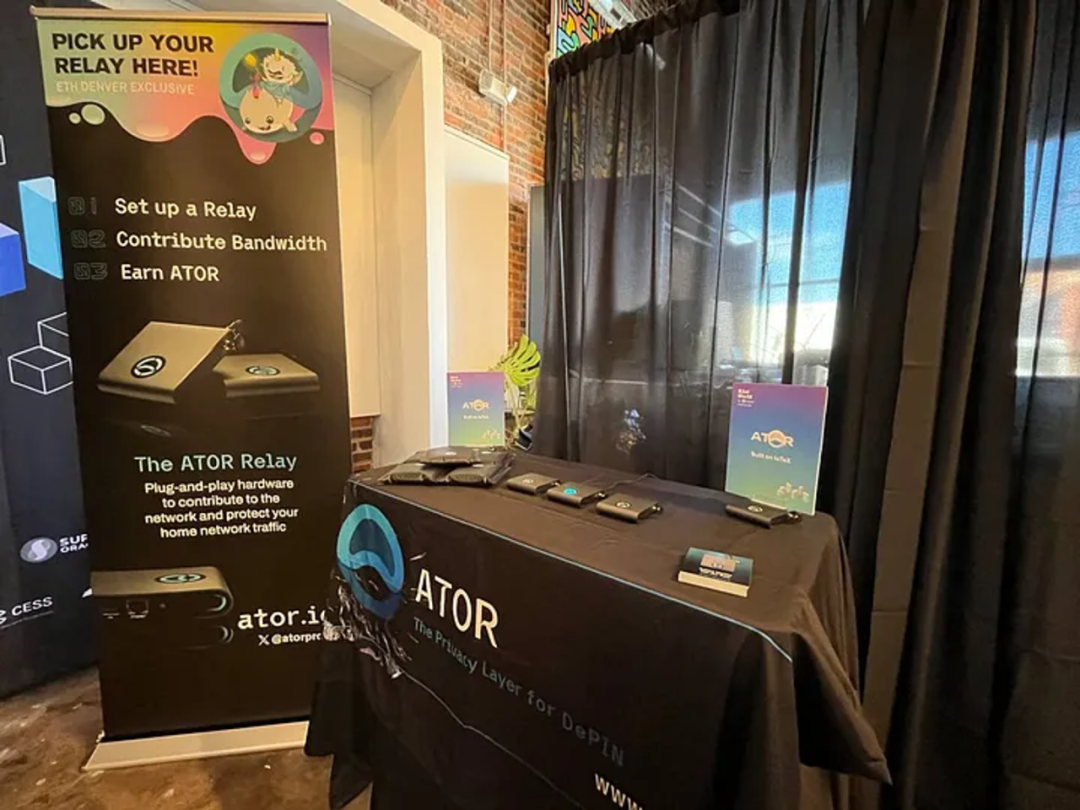
Source: https://medium.com/@atorprotocol/february-development-review-08676a4fb1c5
Inferix GPU
As the name suggests, Inferix GPU is another DePIN project focused on GPU computing power rental. It connects those who need GPU resources—such as developers and enterprises—with individuals or organizations that can provide spare GPU capacity. By leveraging blockchain and Web3 technologies, Inferix offers an on-demand GPU resource platform that lowers entry barriers and reduces costs.
Inferix introduces a Function-as-a-Service (FaaS) model, accelerating compute-intensive tasks like 3D rendering, AI training, and inference. With Inferix, developers no longer need to invest heavily in expensive GPU hardware—they can access scalable computing power on a decentralized infrastructure, significantly speeding up rendering times and improving real-time collaboration on complex projects.
Currently, Inferix is developing a plugin for Blender, with future support planned for design tools such as SketchUp and 3Ds Max, as well as game engines including Unity and Unreal Engine.
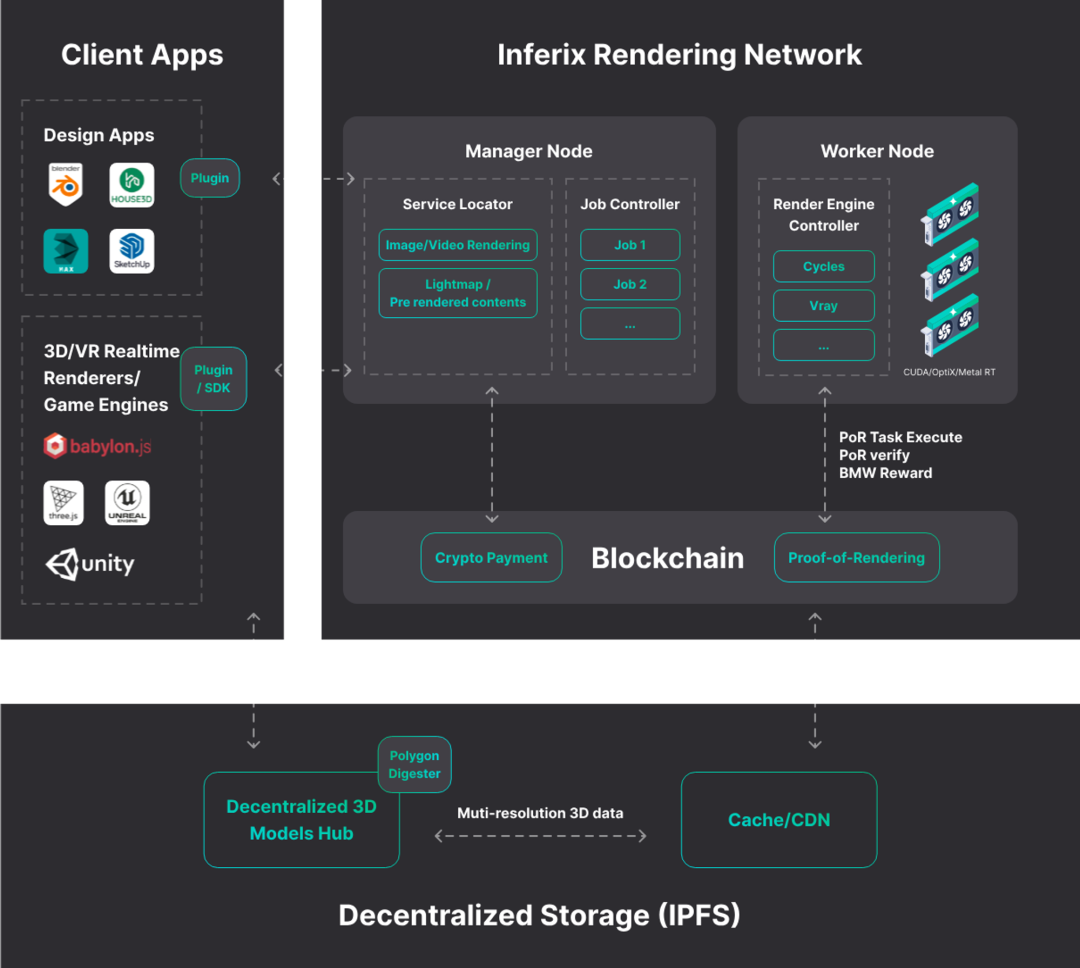
Source: https://inferix.io/
Wayru Network
Wayru Network is a decentralized wireless network aiming to provide affordable, reliable internet access to people worldwide. Using blockchain technology, it shifts control of internet access away from a few large corporations and empowers everyday individuals to become network operators. By sharing Wi-Fi connections, anyone can help build a vast, interconnected web of data transmission points. In simple terms, Wayru uses token incentives to encourage users to share their mobile data, bringing connectivity to underserved areas and overcoming the hardware limitations imposed by traditional centralized providers—creating a fairer, more inclusive system.
Beyond offering cheaper and faster internet, Wayru gives users the opportunity to participate in a transparent, token-driven ($WAYRU) network. The Wayru mobile app is already available for download, though token rewards have not yet been activated. Looking ahead, Wayru plans to roll out incentives and form partnerships with government and corporate Wi-Fi hotspots to expand network coverage further.

Source: https://twitter.com/wayrunetwork
PowerPod
PowerPod identifies a growing need for EV charging infrastructure amid the rapid expansion of the electric vehicle market. The project aims to build a decentralized EV charging network by integrating blockchain technology with real-world charging stations, redefining the user experience.
Through community ownership and incentive mechanisms, PowerPod is deploying convenient and efficient charging stations across locations, filling coverage gaps and reducing range anxiety for EV drivers. Users can not only charge their vehicles easily but also share their personal charging stations to earn passive income when their cars are idle.
PowerPod plans to release its own hardware device, allowing owners of EV chargers to integrate them into the PowerPod network and earn token rewards. Meanwhile, EV drivers can use the PowerPod mobile app to check real-time availability of all charging stations within the network, enabling smarter, time-saving decisions.
In early January 2024, PowerPod announced it had secured a $1M seed round led by Waterdrip Capital, with participation from IoTeX.
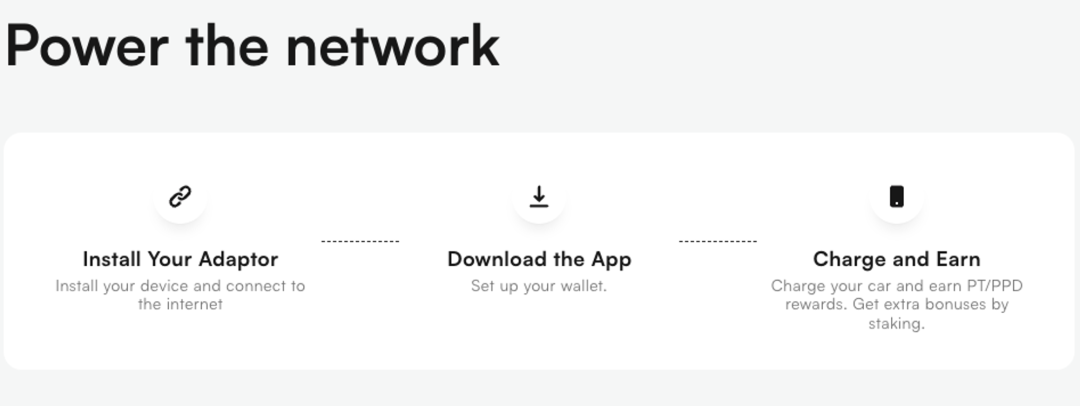
Source: https://www.powerpod.pro/
Author’s View
DePIN projects differ significantly from DeFi initiatives. They prioritize user growth and real-world integration over tokenomics, directly linking to offline use cases. Leveraging Web3’s advantage of token incentives, they aim to attract broader adoption. However, two major challenges remain. First, how to effectively promote these projects beyond crypto-native communities—without substantial marketing investment, mainstream awareness is hard to achieve. Second, finding the right balance between token subsidies and long-term sustainability is critical. On paper, DePIN projects boast compelling narratives and vast market potential. Yet in practice, there are currently no examples of DePIN applications achieving true mainstream adoption or seamless integration into daily life—especially when it comes to running nodes or supplying data. That said, the sector’s potential remains enormous. Just as Axie Infinity broke through during the last bull market, elevating blockchain gaming to new valuation heights, this cycle may see a breakout DePIN project emerge to lead the entire category forward—an evolution well worth tracking closely.
Join TechFlow official community to stay tuned
Telegram:https://t.me/TechFlowDaily
X (Twitter):https://x.com/TechFlowPost
X (Twitter) EN:https://x.com/BlockFlow_News
 Dr.DODO

![In-depth Analysis of Trade[XYZ]: How Were 92 Markets and 98% HIP-3 Trading Volume Established?](https://upload.techflowpost.com/upload/images/20260716/20260716061117965147.jpeg?x-oss-process=image/resize,p_50/quality,q_80)