








America's "Smart" is sweeping Solana
TechFlow Selected TechFlow Selected
America's "Smart" is sweeping Solana
In 2024, Solana's political meme coins resemble the era of "Salamat" from 15 years ago, when people played with Martian language and sported explosive hairstyles.
 Navigating Web3 tides with focused insights
By Peng SUN, Foresight News
Has anyone noticed that over the past week, a popular political culture phenomenon has emerged among the chaotic meme coins flooding Solana—coins with astonishing price surges that have even caught the attention of founders from zkSync, Phantom, and Messari’s Ryan Selkis.
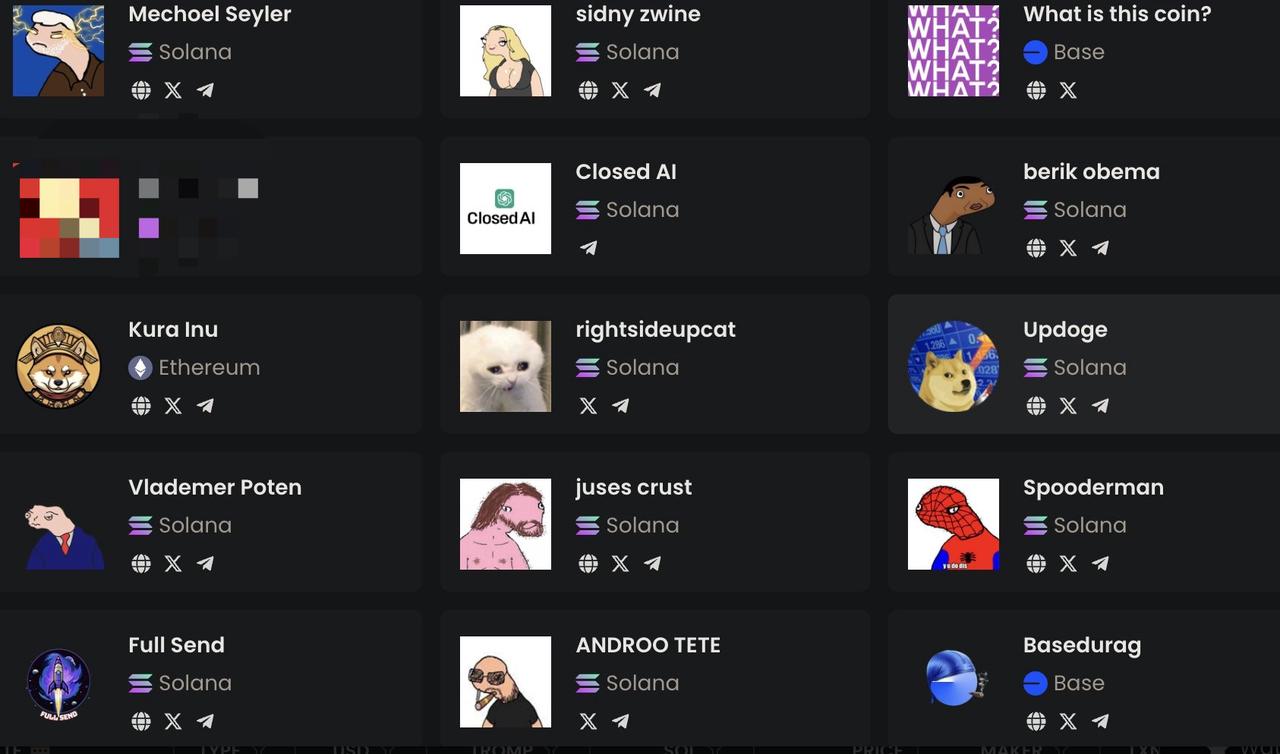
Originating from political figures, these memes have spread into entertainment, culture, business, and religion. They playfully twist English words through vowel-based (a, e, i, o, u) puns and misspellings, reminiscent of the "Martian script" popular during China's 2009-era "Sha Mat" subculture. Visually exaggerated with stretched necks and tilted heads, they embody a kind of absurd youth aesthetic.
Meme coins in this exact style emerge daily on Solana, one after another, often gaining hundreds or thousands of times in value. Examples include olen mosk (Musk), doland tremp (Trump), jeo boden (Biden), Killary Clenton (Hillary), JFK (Kennedy), berik obema (Obama), whoren (Elizabeth Warren), Puten (Putin), keem (Kim Jong-un), gery gaysler (SEC Chair Gary Gensler), LEREY (BlackRock founder Larry Fink), Benance (Binance), Chungpingzao (CZ), taylur and TelorSwif (Taylor Swift), YEEZUS (Adidas Yeezy), Kenye East (Kanye West), sidny zwine (actress Sydney Sweeney), juses crust (Jesus), and many more. I’ve noticed this meme theme has now expanded from Solana to Ethereum.
So where does this memecoin art and cultural style originate, and why has it become a shared cultural phenomenon? Today, Foresight News will analyze this trend through the lenses of memetics, political science, and history.
Sha Mat and Internet Memes
"Sha Mat" symbolizes an era long gone. During the medieval age of Chinese internet dominated by Tencent QQ, Sha Mat, non-mainstream styles, and Martian script served as identity markers and social expressions for countless teenagers. Only years later did I realize—this was actually an early form of “internet meme.”
In the Merriam-Webster Dictionary, “meme” has two definitions: first, something amusing, especially images or videos widely shared on social media; second, ideas, behaviors, styles, or practices transmitted between individuals within a culture.
Unlike today’s text-plus-emoji combos on social apps, Sha Mat’s language (Martian script) and hairstyles became collective identity markers shaped by early internet culture. As American linguist Edward Sapir once said, “Language carries meaning—it cannot exist apart from culture.” The cultural meme behind Sha Mat likely reflects young people mocking poverty amid urbanization, rebelling against family and authority.
In fact, “meme” is a concept rooted in cultural evolution, first proposed by Oxford zoologist Richard Dawkins in *The Selfish Gene*. Why cultural evolution? Let’s first understand “genes.” Dawkins argued genes are the basic units of biological evolution—“replicator genes” being life’s ancestors, competing under “survival of the fittest,” while organisms merely serve to propagate genes.
In recent years, many have joked, “Human nature is just being a repeater.” This seems like mockery of imitation and lack of innovation—but upon reflection, humanity truly is repetitive. Most human knowledge is passed orally across generations. For example, a story you hear at dinner might become your conversation starter tomorrow.
The transmission of knowledge and culture mirrors biological evolution: only the fit survive and spread widely. This is exactly what Dawkins defined as a “meme”—an extension of Darwinian theory, possessing fidelity (variability), fecundity, and longevity, much like genes. Interestingly, “meme” and “gene” even sound alike.
From an evolutionary perspective, the internet and memes are a natural match. The internet enables unprecedented reach and replication power, transcending space. “Fit” memes endure; others vanish quickly.
Take religion as another example of memetics. Among Abrahamic faiths, Islam emphasizes spreading doctrine, growing followers, and—feared in Europe—high birth rates. Once you grasp memetics, you’ll understand the viral political meme coins on Solana.
“Care About Politics, Starting With a Meme”
“Care about politics, starting with a meme”—this captures the past decade of American politics becoming increasingly gamified and entertaining in a visual society.
On March 5 last week, the U.S. marked Super Tuesday—the primary election day when the most states hold primaries and caucuses, offering strong signals about potential presidential nominees for both parties.
Among political meme coins, tremp and boden were the earliest—Donald Trump and Joe Biden being the top contenders for the 2024 Republican and Democratic nominations. As of March 11, Trump leads Republicans with 1,075 votes but hasn’t reached the 1,215 threshold; Biden leads Democrats with 1,866 votes, short of the 1,969 needed. (Real-time tracking)
Why do we see meme coins based on political figures? I believe the root lies in “the meme-ification of American politics” (The Meme-Ification of American Politics, The New Yorker).
This likely traces back to 2015–2016 and Pepe the Frog—long before the crypto dog PEPE existed.
Pepe the Frog was created by Matt Furie in 2005 in the comic *Boy’s Club*, became an internet meme in 2008, and evolved into various memes by 2014. But starting in 2015, Pepe was co-opted by the alt-right—Nazis, KKK, white-power skinheads—and linked to the 2016 U.S. election. The alt-right represents a far-right conservative movement in America advocating white supremacy, supporting Trump, and opposing immigration and multiculturalism.
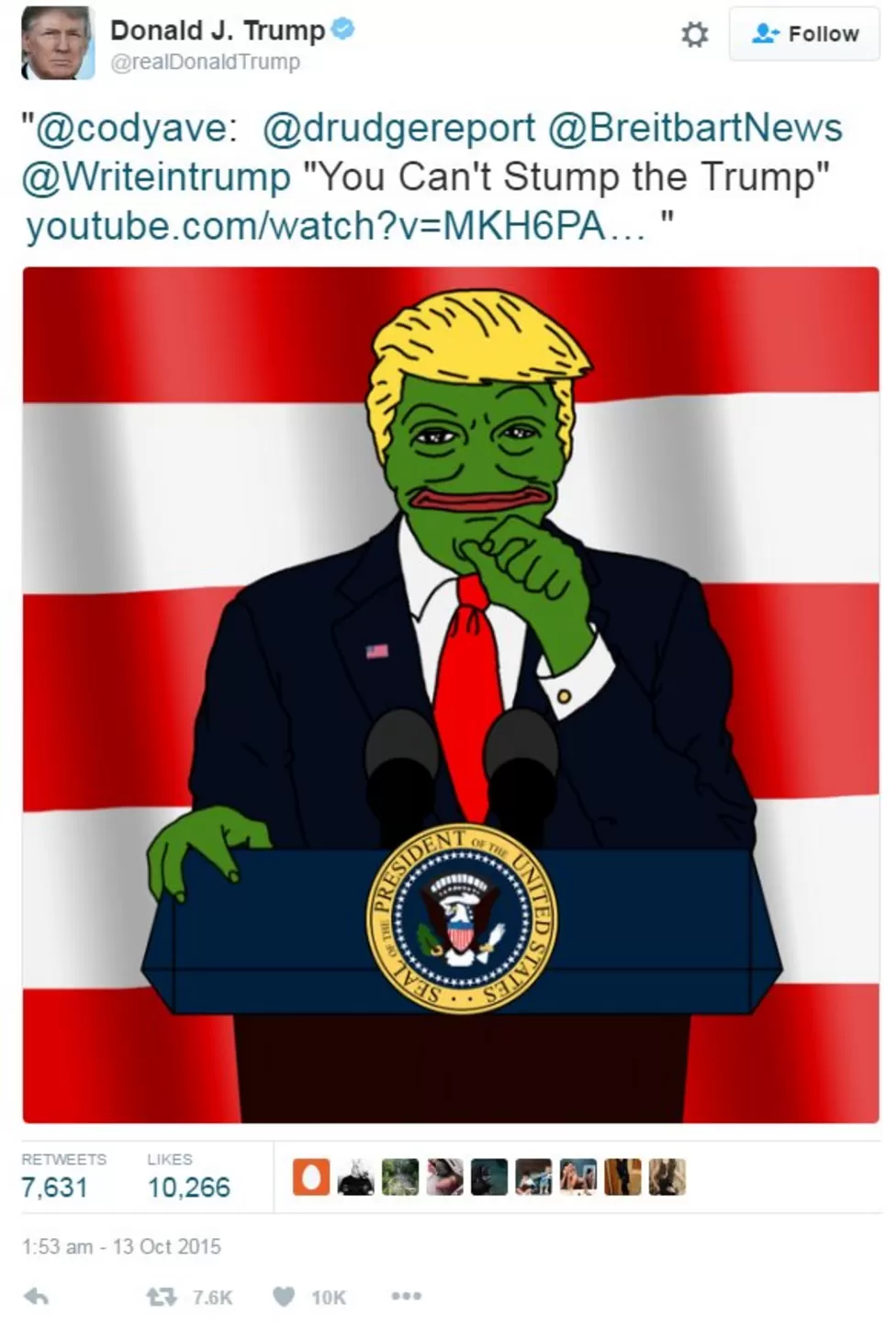
In October 2015, Trump retweeted an alt-right image of a Trump-Pepe hybrid with the caption “You can’t Stump the Trump,” expressing his political stance.
Later that September, when Pepe made headlines, Hillary Clinton claimed most Trump supporters were “a basket of deplorables,” implying racist, sexist, and other negative traits. Trump’s son then shared an edited *Expendables* movie poster on Instagram, labeling Pepe, Trump, and other conservatives as “deplorables.”
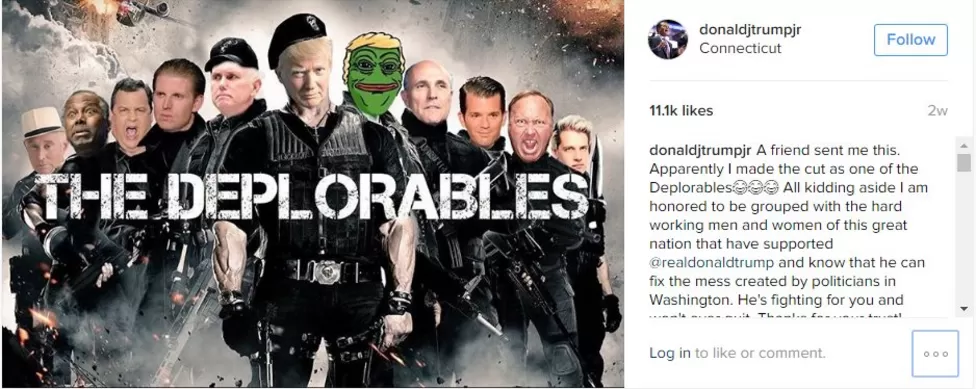
Shortly after, Hillary’s team published an article titled “Trump, Pepe, and White Supremacy: An Explanation” (now deleted), claiming “Pepe is more sinister than you think.” From then on, Pepe became socially recognized in the U.S. as a symbol of white supremacy.
In 2020, during the Biden-Trump race, the 78-year-old Biden was already meme-fied by conservatives as “elderly,” “frail,” “slow,” and “weak,” creating the impression that “Biden is too old to be president”—despite Trump being only four years younger. Crucially, Biden belongs to the moderate white mainstream advocating “calm politics,” whereas the alt-right worldview thrives on binary opposition: black vs. white, male vs. female, us vs. them.
As Gustave Le Bon wrote in *The Crowd*, groups easily fall into metaphysical dualism—simplifying the world into binaries—because thinking in opposites is emotionally satisfying. This is also why binary computers prevailed over ternary ones: understanding the world in black-and-white terms is simplest and often effective. After all, duality does reflect aspects of reality.
Further, on social media, the more extreme and polarizing a viewpoint, the greater its virality. Which side you choose matters less than the emotional release the network provides—making it easy to create widespread internet memes.
That’s how Pepe and other memes became tied to U.S. presidential elections. Yet memes themselves are a form of cartoon expression. American political cartoons date back to the late 19th century, when Thomas Nast—the father of American comics—influenced five presidential elections by supporting Lincoln, Grant, Hayes, and Cleveland, while satirizing losers. The iconic “Donkey vs. Elephant” symbolizing Democratic and Republican parties originated from Nast’s 1874 and 1877 cartoons in *Harper’s Weekly*.
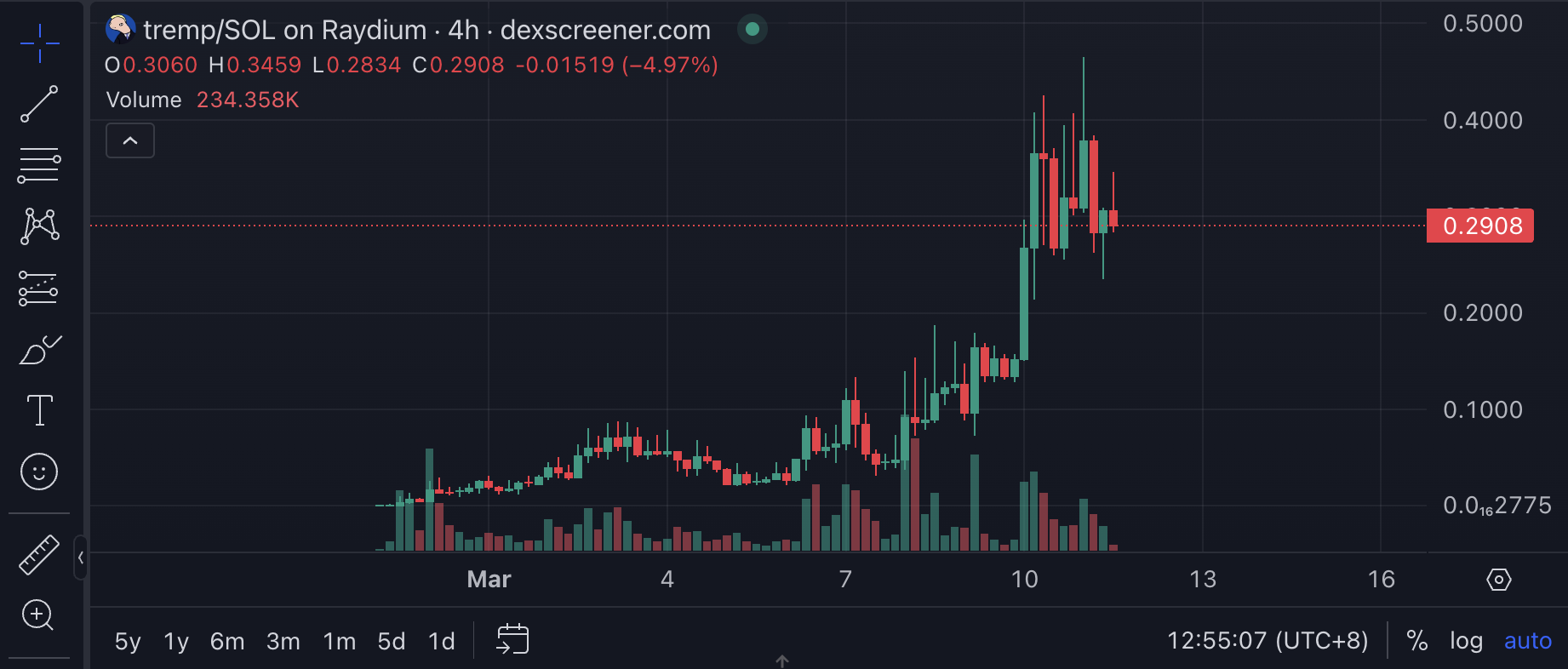
Image credit: Helen Kampion, The Donkey and Elephant, The White House.
In the internet era, political cartoons have evolved into memes. Regardless of format, they simplify complex politics into symbols catering to public curiosity and schadenfreude, using sharp, playful, ironic, or defamatory commentary to turn serious national politics and leaders into entertainment. This is a hallmark of American democracy—engaging the masses, though deepening societal divisions.
Back to Solana’s memes. Take tremp: since February 28, it has surged nearly 1,000x, now valued around $29 million.
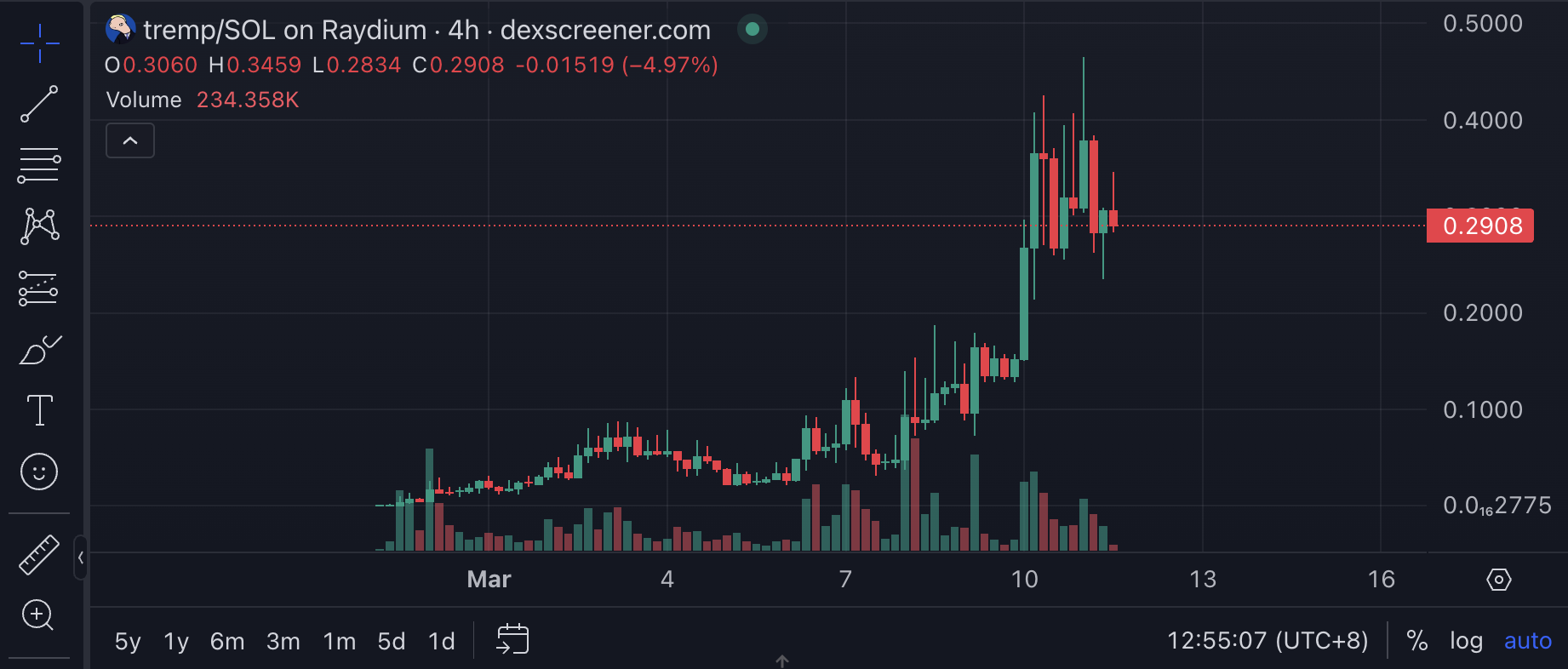
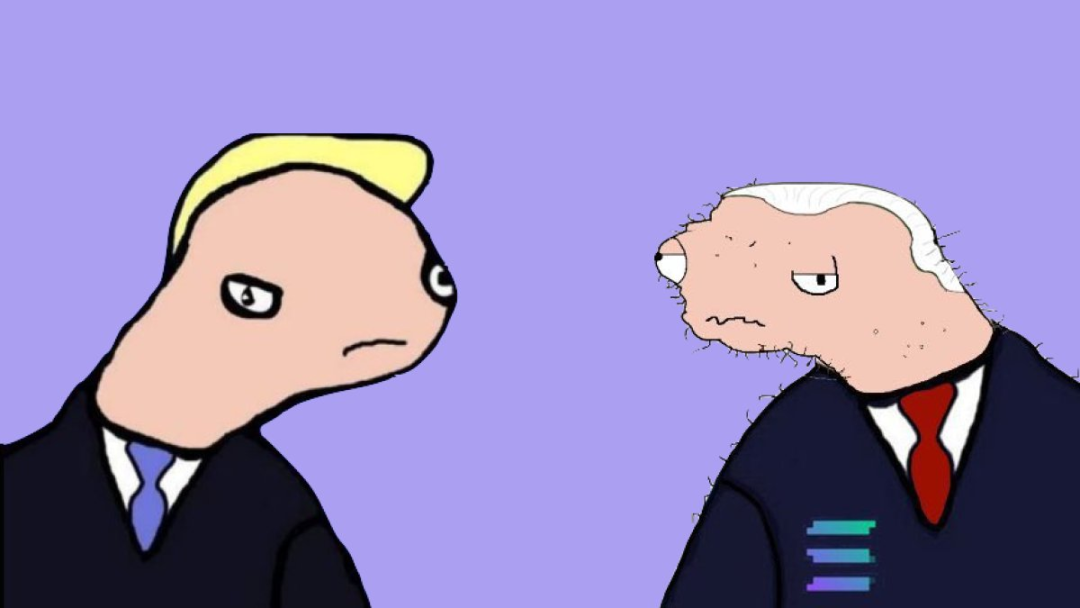
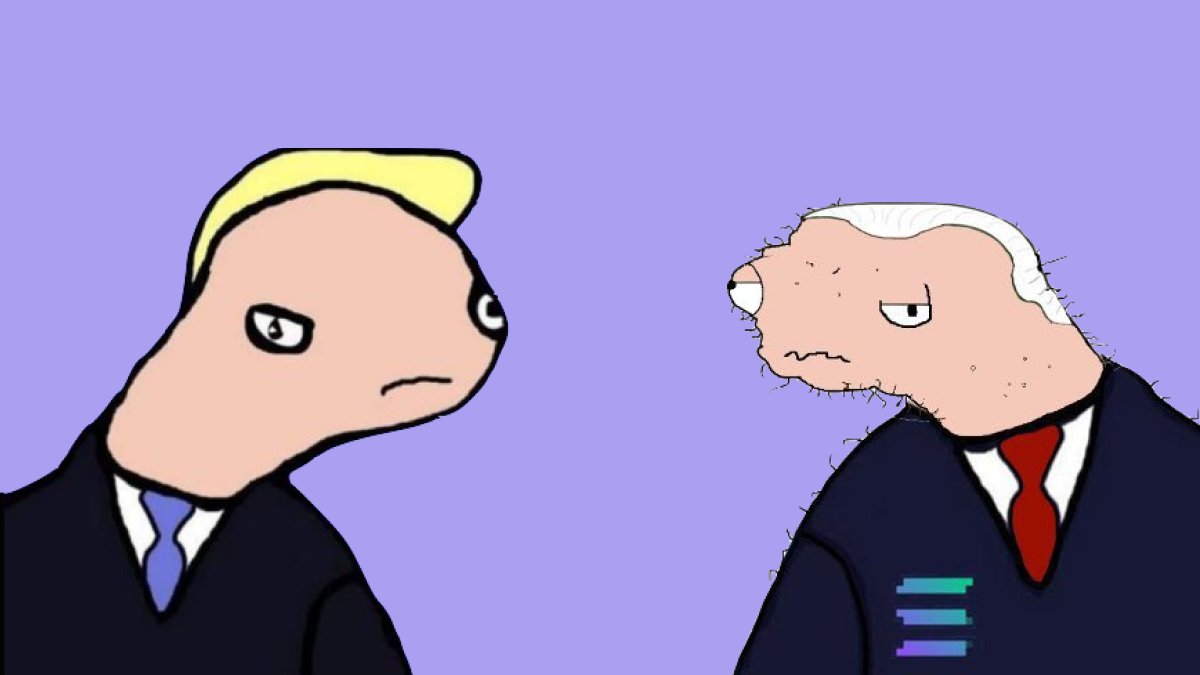
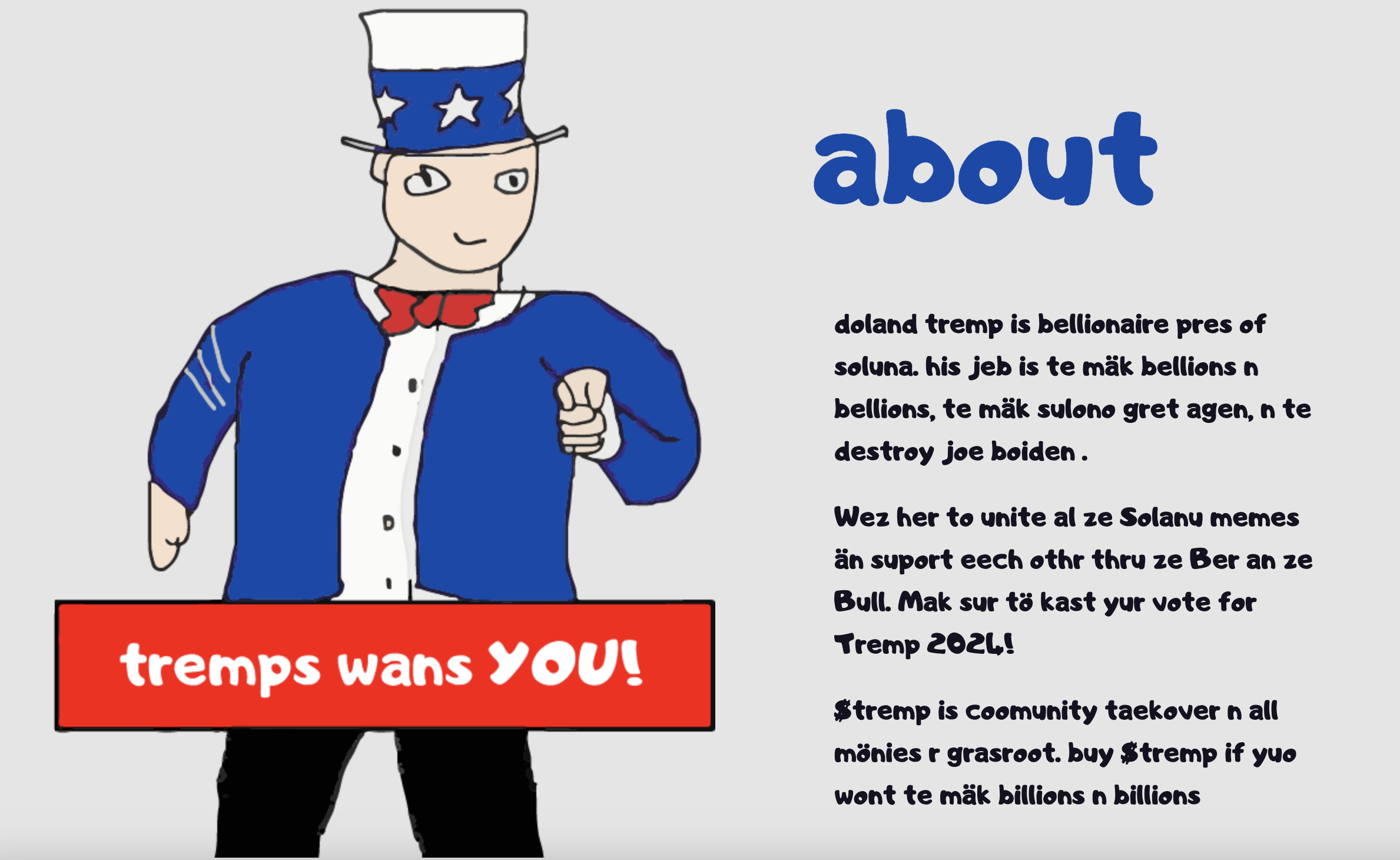
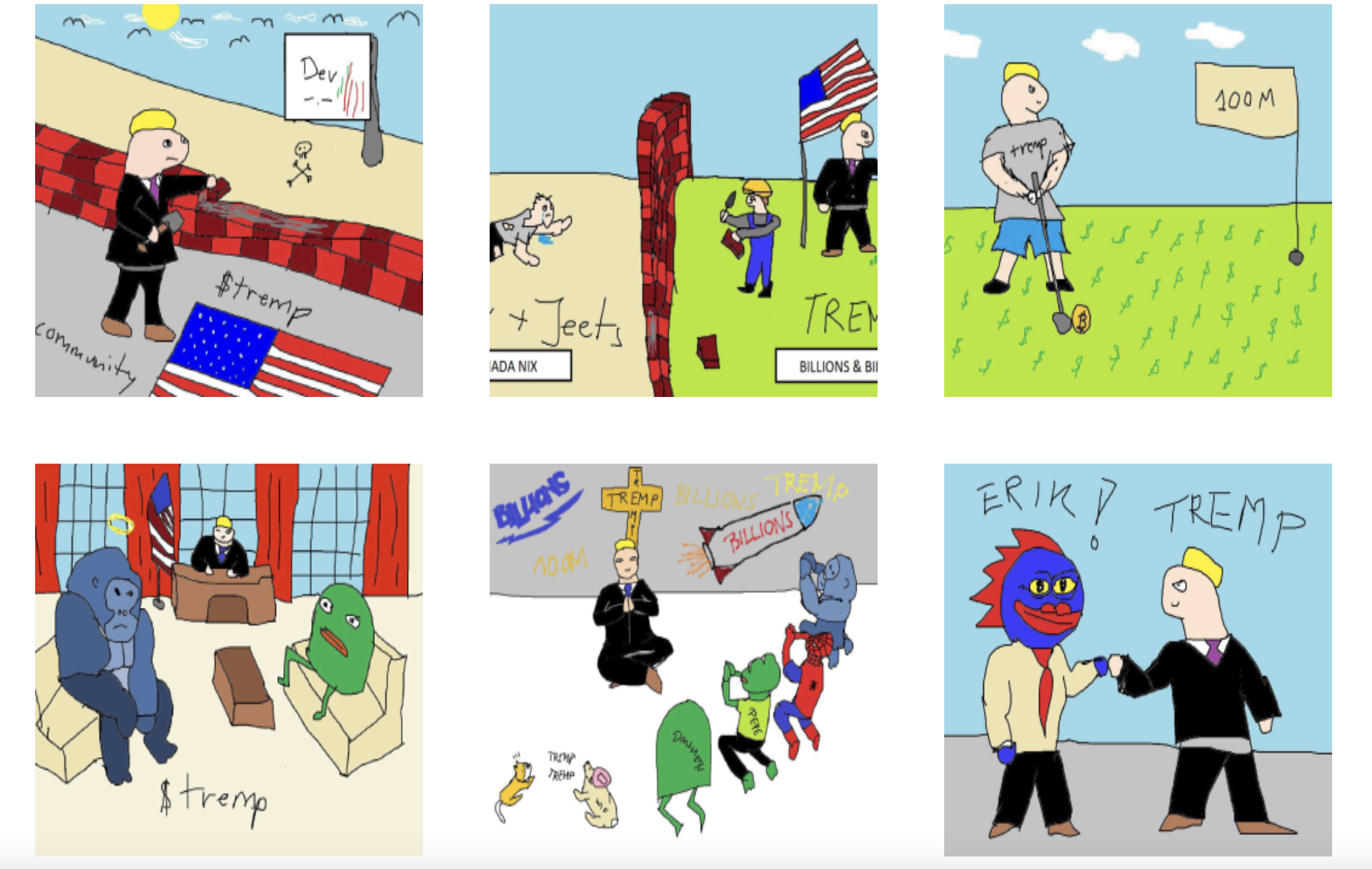
Tremp features a blond middle-aged man full of energy, with the slogan “mek memes gret agen.”
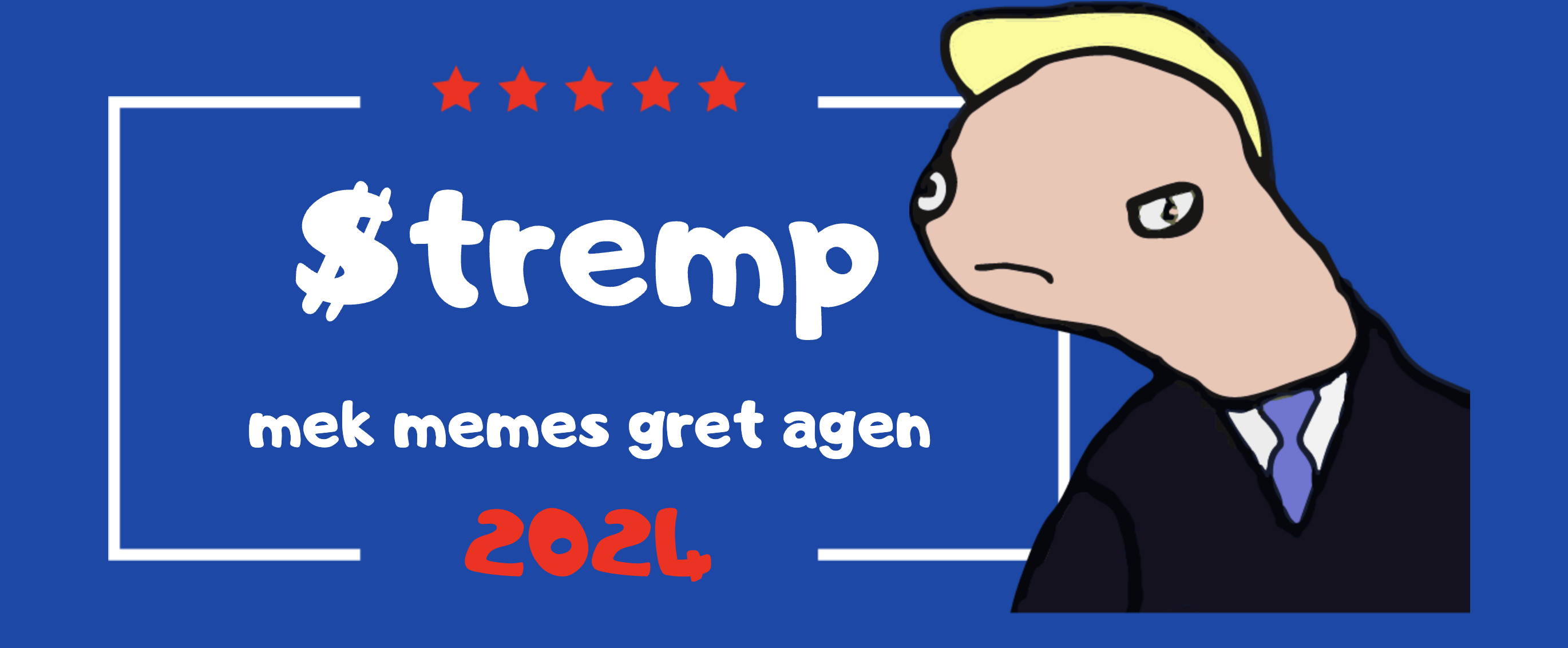
Tremp turns Trump’s presidential campaign into a meme:
-
He is the billionaire president of Solana
-
His job is to make more and more money
-
He will destroy joe boiden
-
He will unify all memes on Solana
-
Finally, give your vote to Trump 2024!
In contrast, boden appears aged and frail—perhaps a self-deprecating nod by Biden supporters, showing loyalty while using memecoins to rally votes.
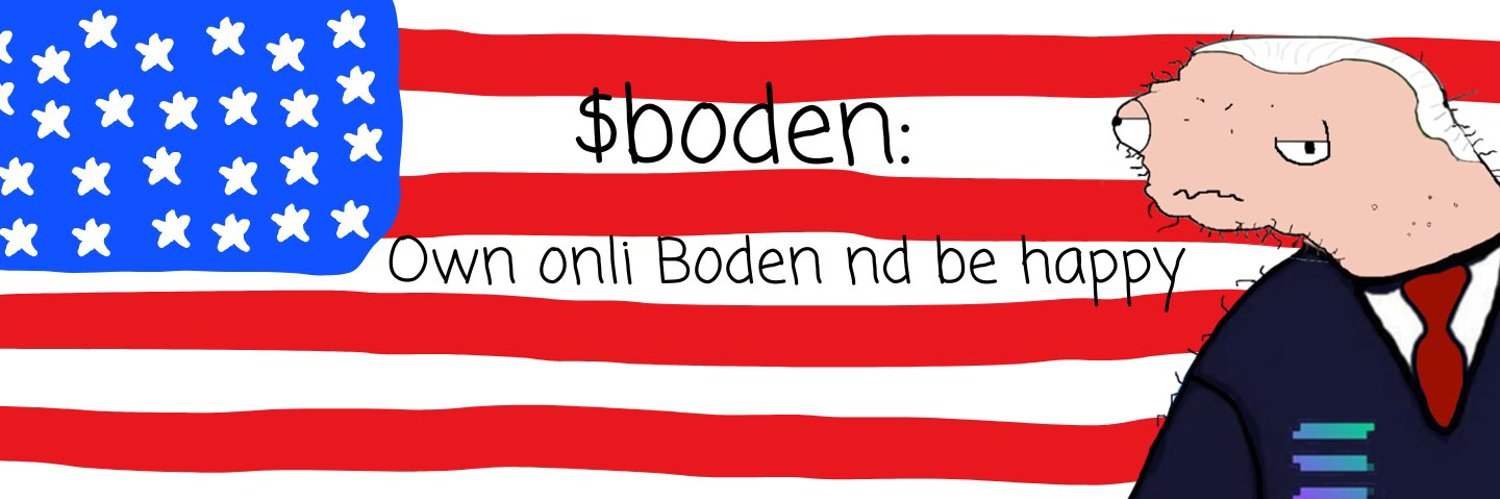
Launched on March 4, boden has also surged over 1,000x in the past week, now valued around $40 million.
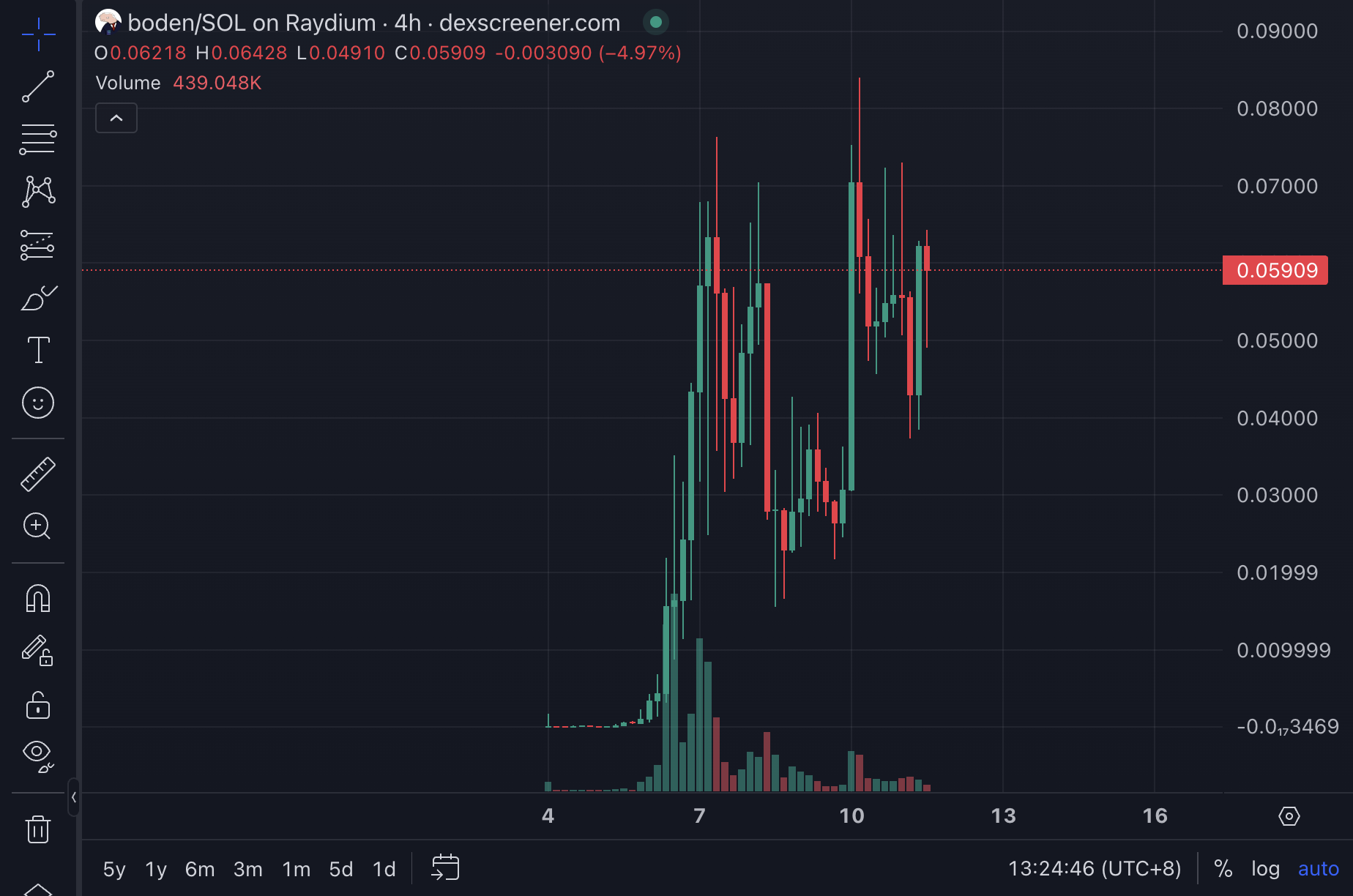
In fact, both tremp and boden are political symbols—a result of American politics turning into memes. For instance, yesterday, Messari CEO Ryan Selkis tweeted that tremp’s market cap had surpassed boden’s—prompting Phantom’s crypto wallet to comment asking if Ryan had voted for boden.
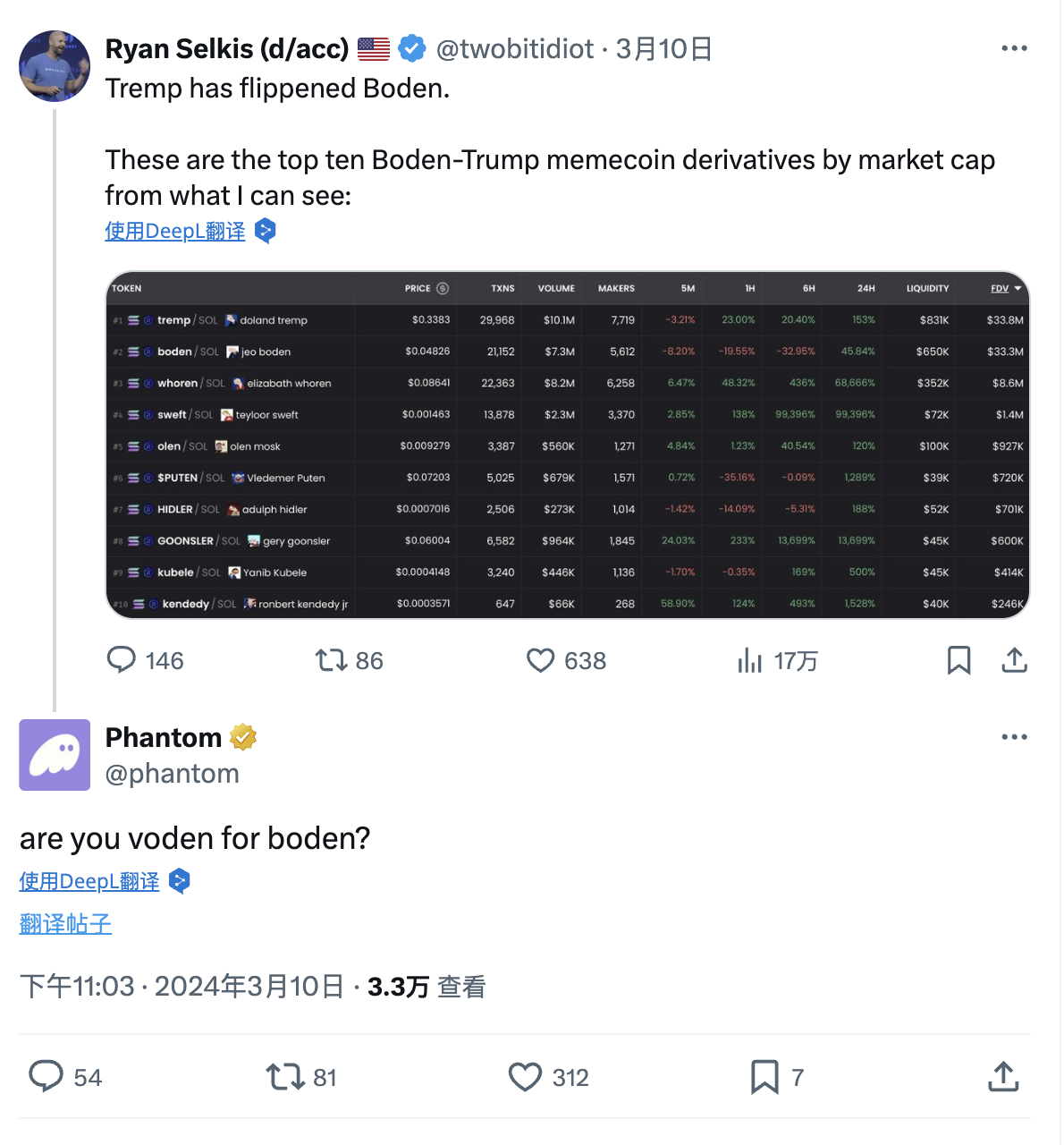
Fueled by U.S. presidential primaries, meme coins featuring global political figures—including Hillary, Obama, Kim Jong-un, JFK, Warren, Putin, and even Hitler—have appeared on Solana. Simultaneously, such memes have expanded beyond politicians into business, entertainment, culture, religion, and even criminals.
Overall, Solana’s Trump- and Biden-themed memes are inherently gamified. But memes derived from tremp and boden have shed political content, embracing pure “entertainment until death.” Most lack solid fundamentals and experience wild volatility. Yet as memes, they’ve undeniably succeeded.
Back to 2012: Misspelled Spider-Man, Viral Spoderman
Where do these misspelled Trump and Biden meme coins originate? That’s a common question.
Currently, the tilted-head anime prototype appears to be Spoderman. According to Know Your Meme, Spoderman is a misspelling of Spider-Man, first appearing on FunnyJunk on March 29, 2012, as a Microsoft Paint image—one of the ugliest versions of Spider-Man artwork. Posted by user vilfederation, it gained over 770 likes and 64,000 views in five years.
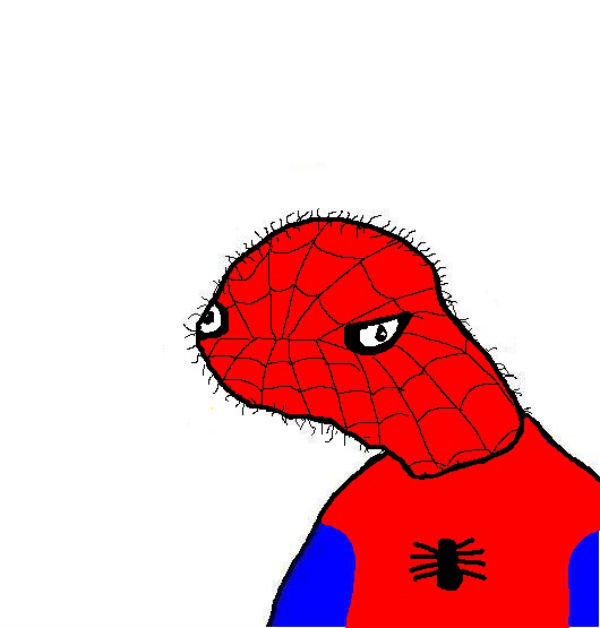
Initially, users shared Spoderman images with comments deliberately misspelling Spider-Man, Mary Jane as mari jene, and Green Goblin as grn gublyn.
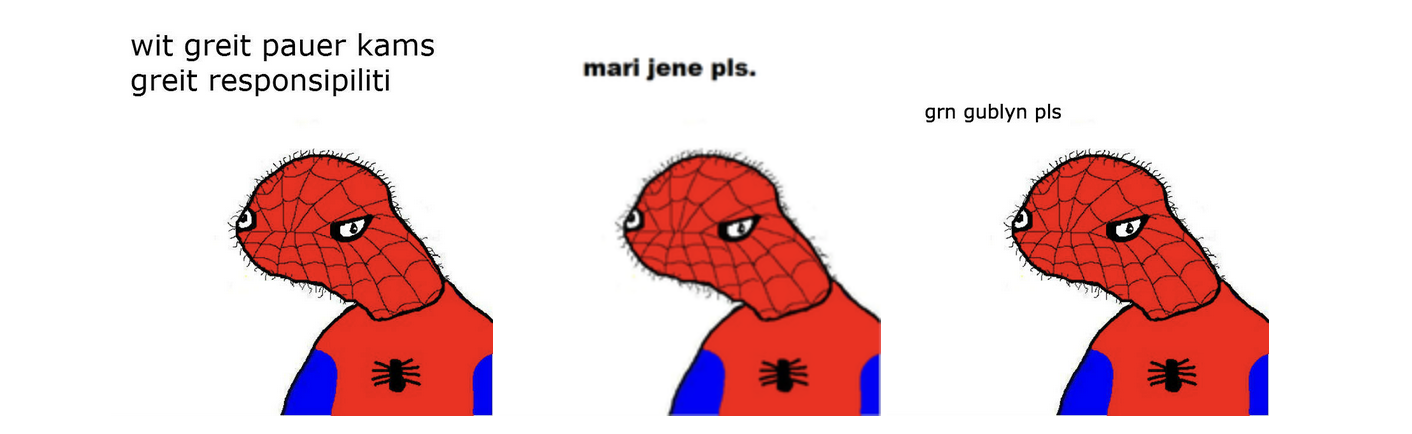
March 30 saw Spoderman appear in Dolan’s comic, posted on FunnyJunk:
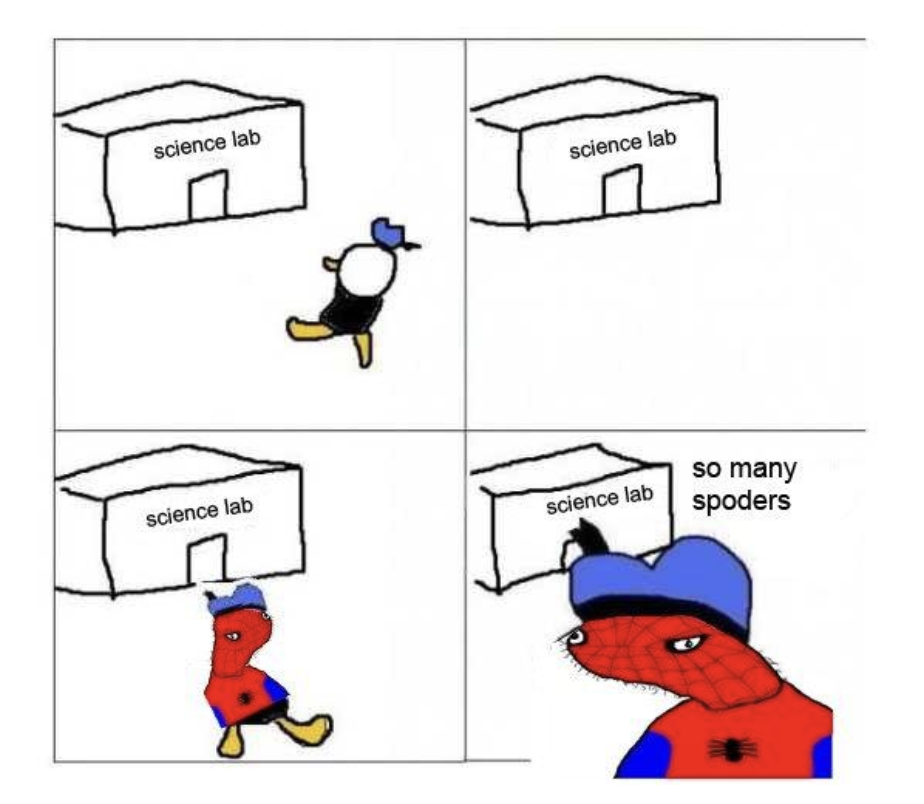
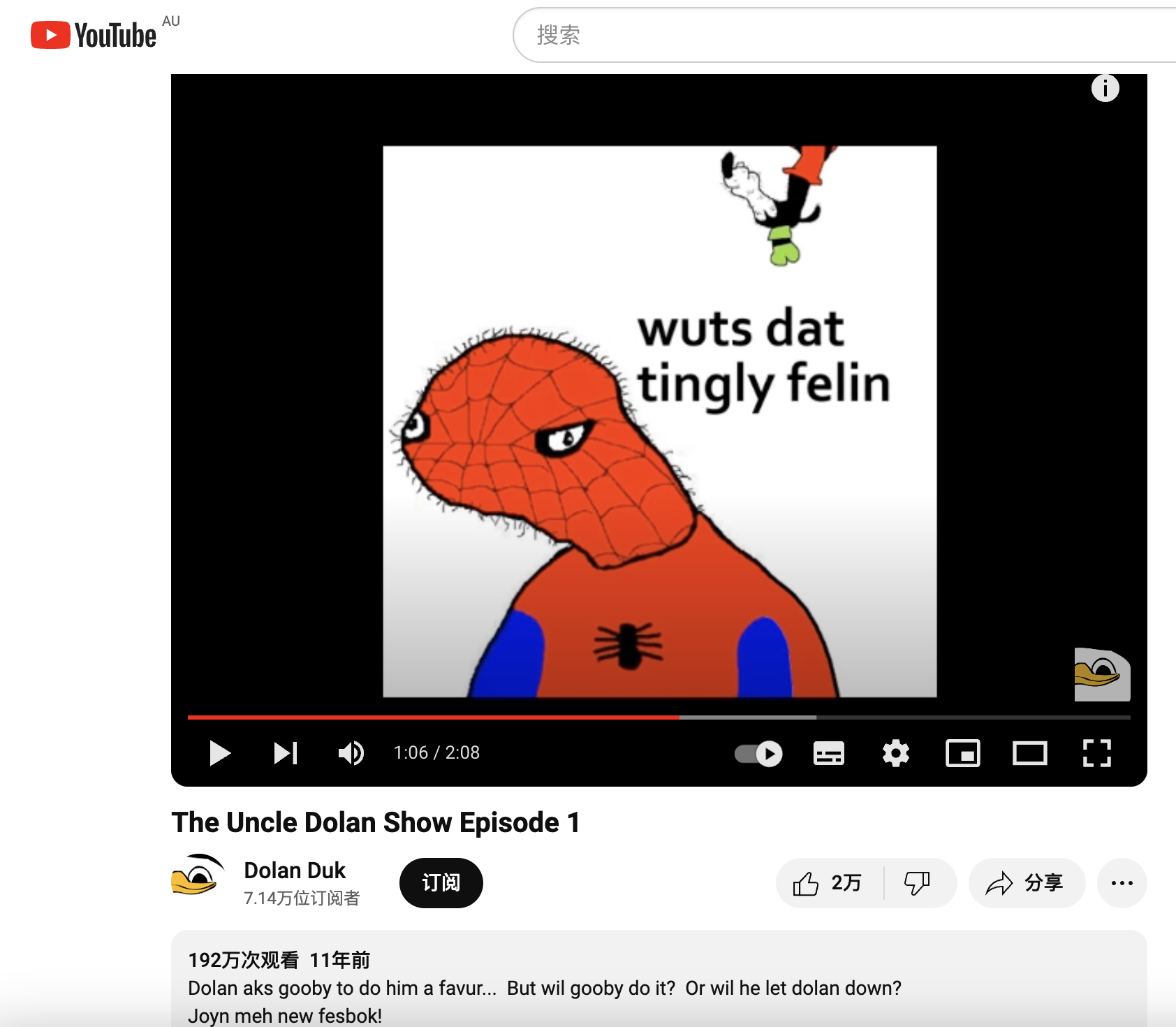
On April 12, YouTuber Dolan Duk uploaded “The Uncle Dolan Show Episode 1,” where Dolan and Gooby meet Spoderman.
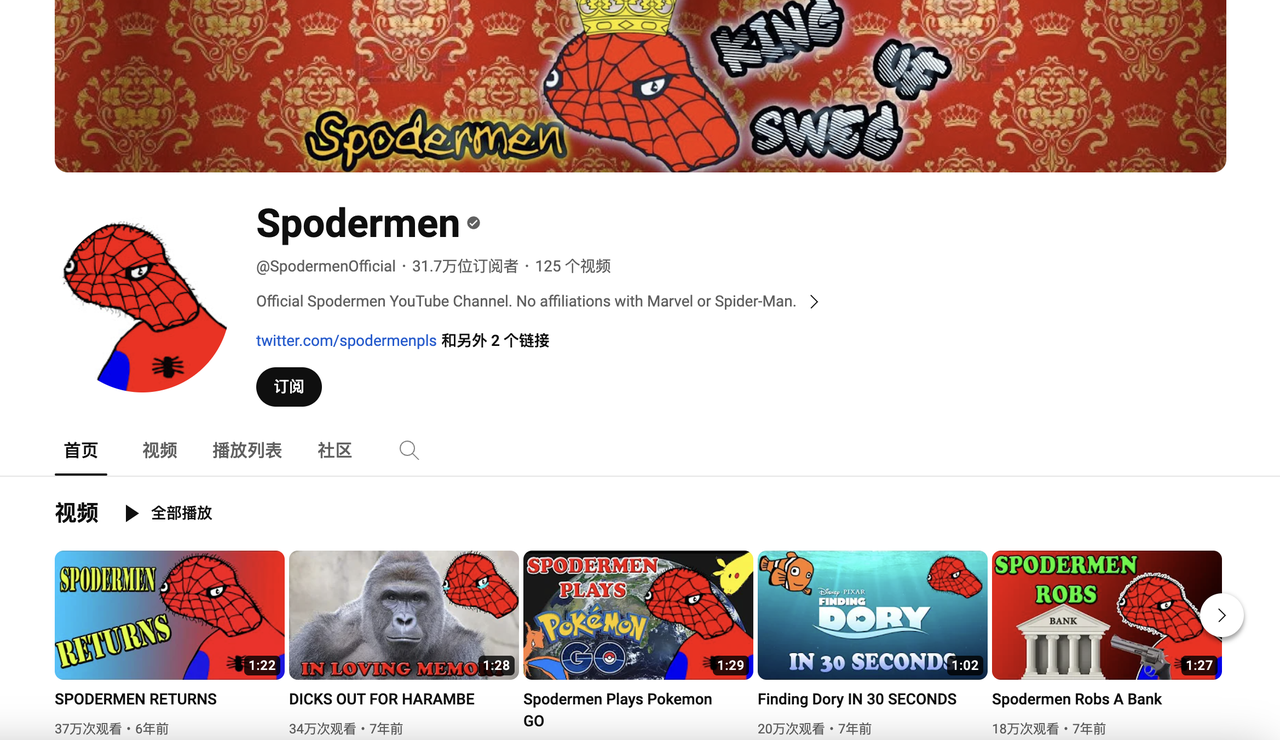
On July 23, the Spodermen YouTube channel launched, now with 317,000 subscribers. Its last video was in 2018; the first, “Spoderman Theme Song,” garnered over 680,000 views in five years.
On September 10, 2016, Behind The Meme released “What Is Spoderman? Explaining the History of the Spider-Man Meme” on YouTube, viewed over 1.25 million times.
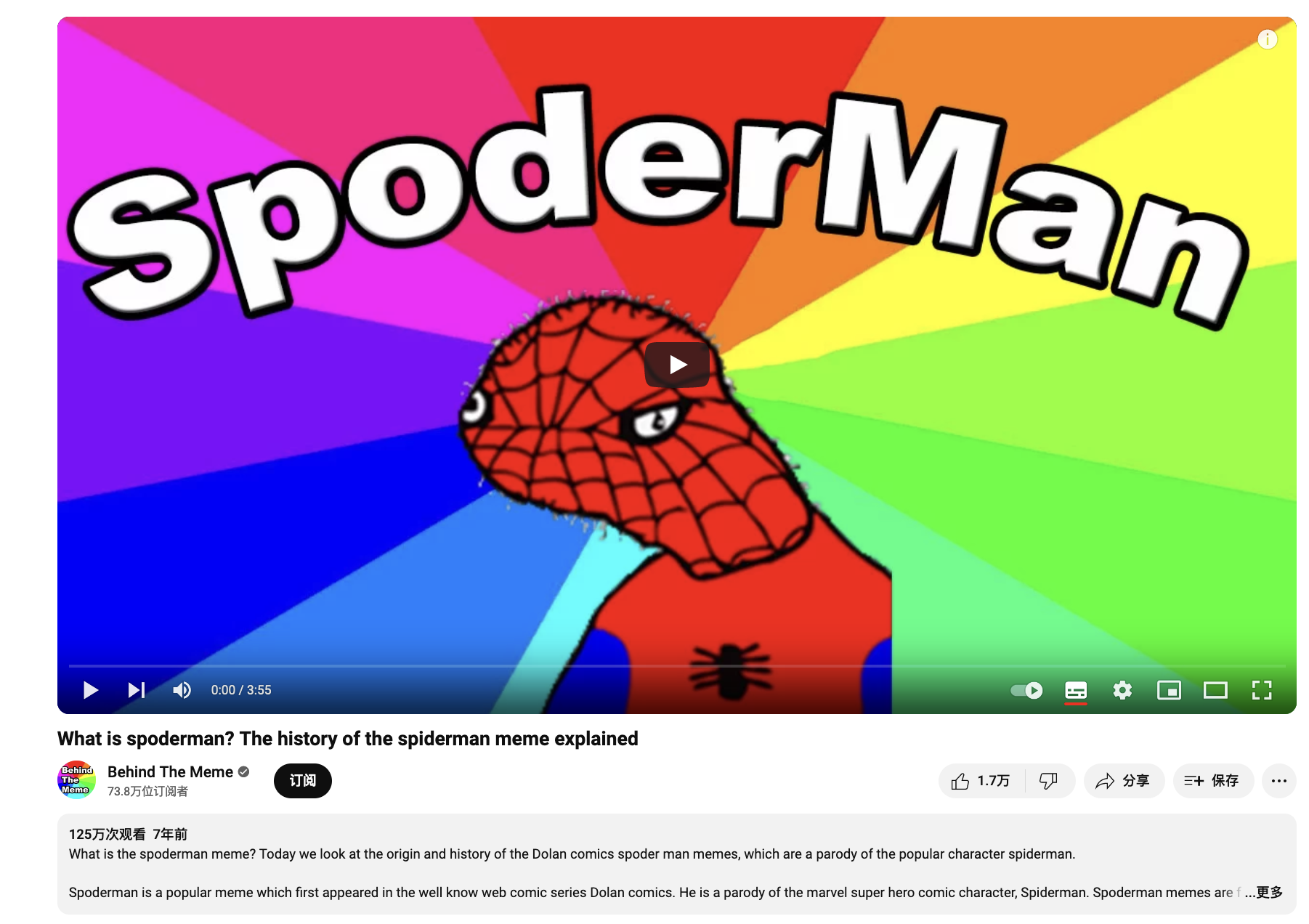
Clearly, the Spoderman meme gained wide recognition long ago. Browsing the Spodermen YouTube channel reveals its ties to U.S. politics and presidential campaigns as early as 2014.
Now that we’ve traced Spoderman’s history, let’s return to tremp and boden. If our research is correct, their origin is Spoderman—thanks to its massive influence over the past decade.
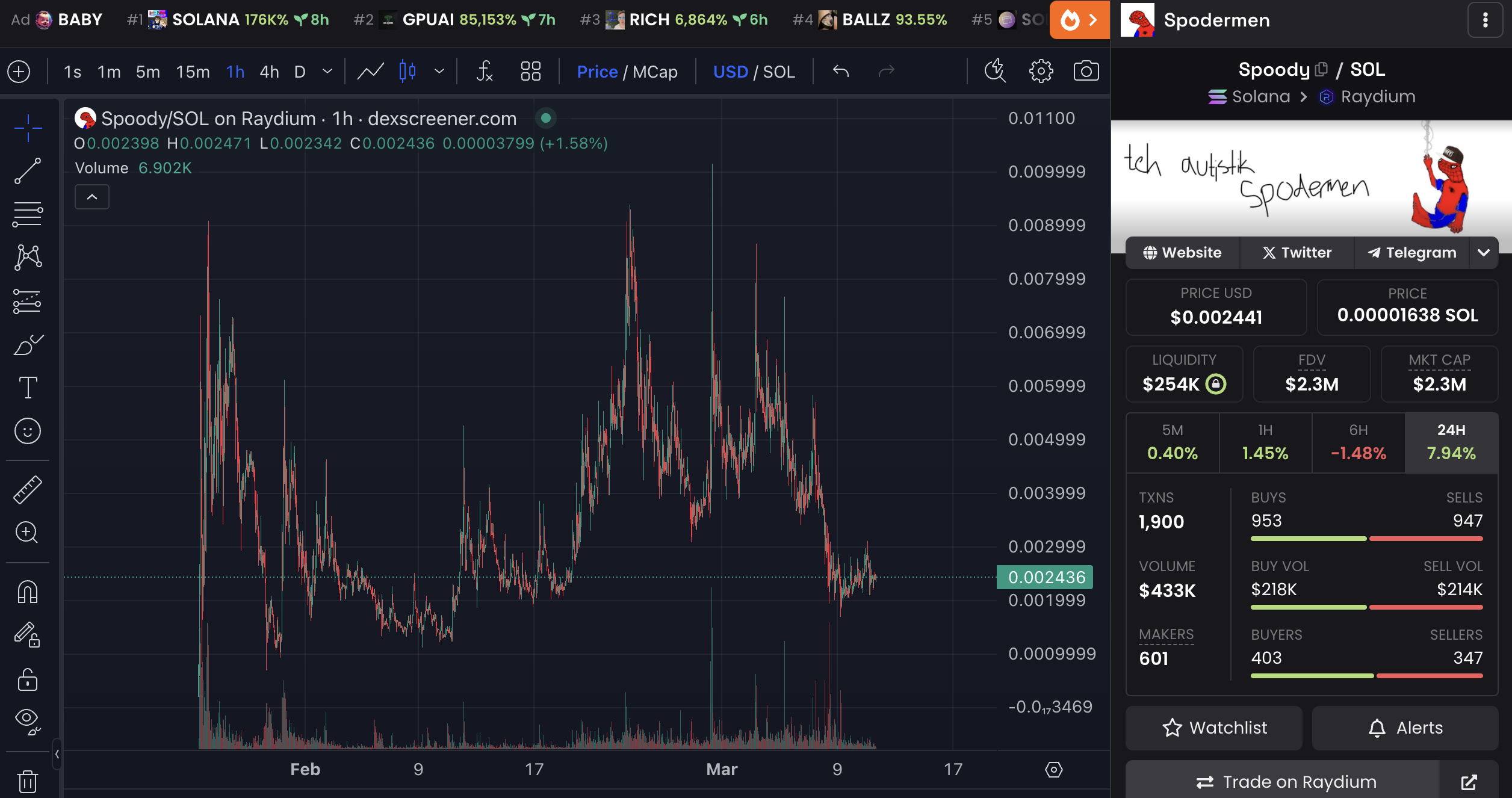
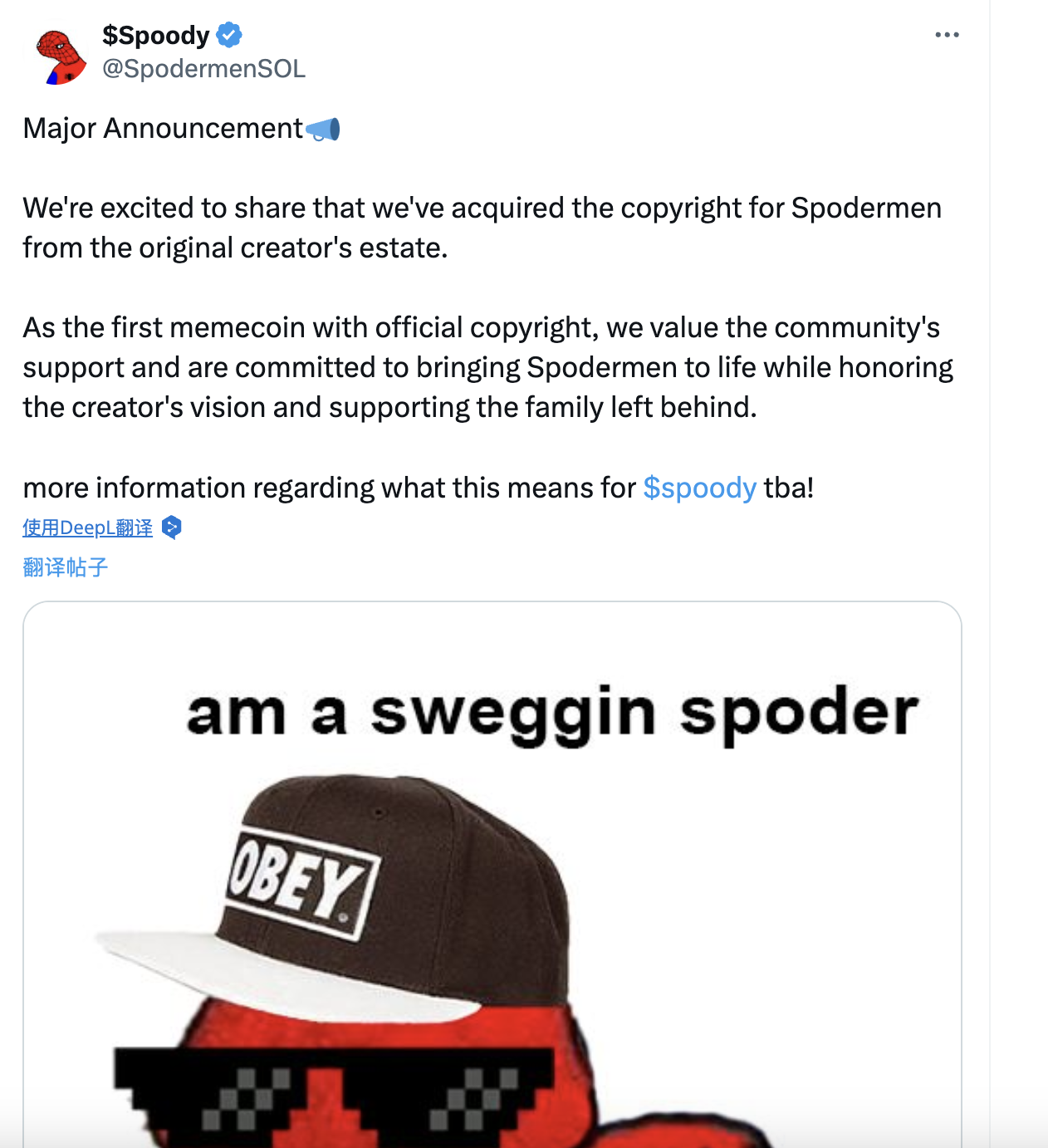
On January 24, 2024, Spoody—the Spodermen-themed meme coin on Solana—launched, peaking at nearly 100x gains, now valued at $2.3 million. Notably, on March 5, Spoody announced it acquired Spodermen’s copyright from the original creator’s estate.
Join TechFlow official community to stay tuned
Telegram:https://t.me/TechFlowDaily
X (Twitter):https://x.com/TechFlowPost
X (Twitter) EN:https://x.com/BlockFlow_News
 Foresight News







