


Cancun Approaches, Morph Leads: The Emerging Battle for L2 "Integrated EIP-4844"
Key Takeaways:
Morph's integration of EIP-4844 includes the following key aspects:
-
Implementing an Ethereum-based DA solution compatible with EIP-4844;
-
Implementing Morph’s unique optimistic-zkEVM state validation scheme compatible with EIP-4844;
-
Implementing an aggregated ZK proof scheme compatible with EIP-4844;
This gives Morph a competitive edge over other Layer 2 solutions in concrete EIP-4844 compatibility, including:
-
Cost advantages compared to solutions using external DA;
-
Security advantages over OP Rollups that have not implemented compatible state validation schemes (e.g., fraud proofs);
-
Cost advantages over ZK Rollups that have not implemented compatible aggregated ZK proofs;
As Ethereum’s most significant milestone in 2024, the Dencun upgrade is scheduled for March 13. The inclusion of EIP-4844 introduces transactions carrying blobs, which will dramatically improve the efficiency and accessibility of Ethereum L2 networks, marking a critical step toward higher scalability through Proto-Danksharding.
In this context, Morph, which is preparing to launch its Holesky testnet, plans to be among the first to offer users optimized L2 transaction experiences after integrating EIP-4844, with seamless migration to the mainnet to follow.
This article explores the technological innovations of EIP-4844, its expected impact on the Ethereum ecosystem, Morph’s efforts in EIP-4844 integration, and how it provides crucial technical support for blockchain scalability and mass adoption.
1. What is EIP-4844?
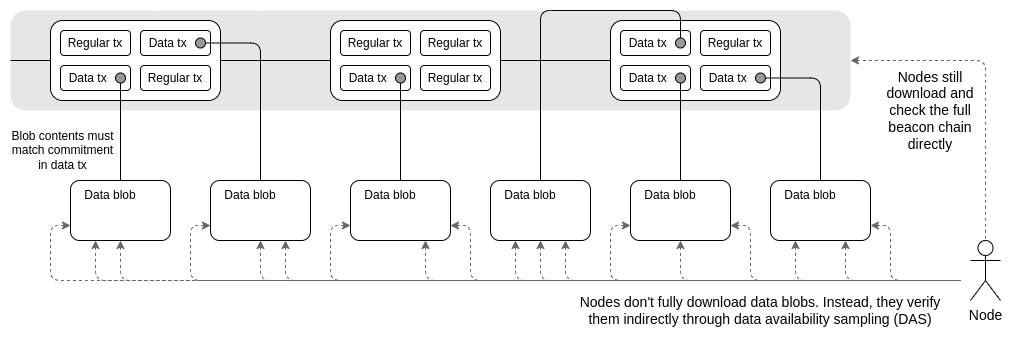
EIP-4844 is the cornerstone of Ethereum’s Dencun upgrade, introducing blob-carrying transactions, meaning future L2s will no longer rely on traditional calldata storage mechanisms.
What Are Blob-Carrying Transactions?
Blob-carrying transactions are designed to embed large volumes of transaction data into blobs, enabling massive off-chain data storage while maintaining on-chain verifiability and accessibility. This significantly reduces storage and processing burdens on the Ethereum mainnet.
In short, this mechanism directly addresses L1 cost issues related to data availability, ensuring L2 platforms can provide cheaper and faster transactions without compromising Ethereum’s security and decentralization.
Source: https://www.eip4844.com/#faq
Technological Innovation and Cost Reduction
The innovation of blob-carrying transactions lies in allowing large datasets to be stored in compressed, temporary formats, reducing data storage costs on Ethereum and paving the way for higher transaction throughput and enhanced scalability—enabling the Ethereum ecosystem to support a broader range of applications and services.
This cost optimization ultimately translates into lower gas fees for Ethereum L2 users and developers, as L1 DA costs constitute a major portion of the fees paid by L2 users.
Impact on L2 Scalability
From a data perspective, post-EIP-4844, L1-related costs in Ethereum L2 transaction fees are expected to drop by 50%–90%, potentially reaching up to 99% under ideal conditions.
Given the current rise in ETH prices and high mainnet gas fees, ETH transfer costs on L2s range from $0.5 to $1. After EIP-4844 integration, these costs are expected to fall between $0.005 and $0.1.
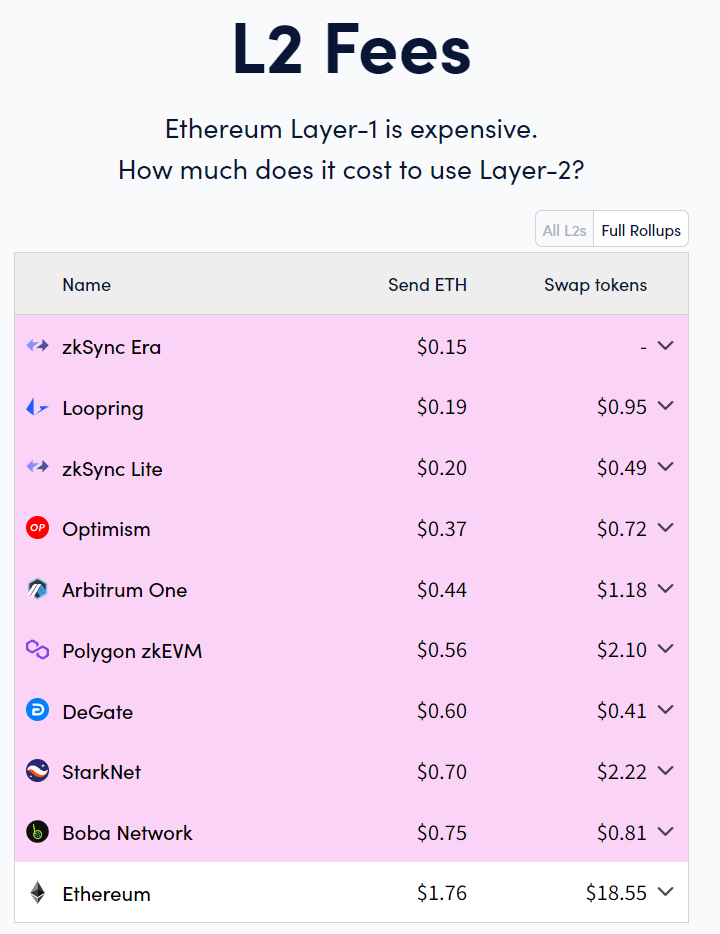
Of course, actual costs depend on various factors such as specific L2 designs, ETH price, and gas levels—we will publish detailed estimates soon.
This cost improvement is transformative, giving developers greater flexibility and efficiency when building and deploying dApps. We expect to see more complex, data-intensive, and cost-sensitive applications emerge on existing Ethereum Layer 2s, attracting a broader user base.
For end users, this means faster and cheaper transactions, along with a smoother, more responsive experience when interacting with Ethereum-based Layer 2 services.
2. Integration Progress of Major Rollups
Mainstream rollups are preparing to integrate EIP-4844 to leverage its benefits, though this process takes time and presents technical challenges—rollups must undergo mainnet hard forks or contract proxy upgrades, conduct extensive testing to ensure seamless interoperability with existing systems, and achieve consensus among developers, validators, and users through governance processes.
Specific Rollups and Their Progress
Currently, Optimism and Arbitrum have committed to adopting EIP-4844, working closely with their communities to test and deploy necessary updates.
Leading ZK-Rollups like zkSync and StarkWare are also exploring how to leverage blob-carrying transactions to further reduce costs and improve performance.
Morph’s Unique EIP-4844 Integration Approach
Unlike traditional rollups facing technical and governance hurdles, Morph’s flexible modular architecture and first-mover advantage allow it to rapidly adapt to new standards, efficiently integrating EIP-4844 and reducing the time and effort required to achieve lower DA costs and improved transaction efficiency.
3. What Impact Will L2s Using External DA Experience?
Currently, many L2s do not build their data availability layers on Ethereum, instead opting for external data availability solutions.
External DA layers typically store transaction data off-chain or on dedicated chains designed specifically for data availability (such as Celestia), offering alternatives to Ethereum’s native data availability mechanisms.
While these solutions avoid high DA costs and enhance scalability and efficiency, they operate independently of Ethereum’s core infrastructure. As a result, Ethereum-specific upgrades like EIP-4844 will not directly benefit these external DA solutions.
External DA
The emergence of external DA layers stems partly from VC influence and demand for alternative DA solutions.
However, choosing between Ethereum’s native DA layer and external DA should be based on an L2’s specific needs—considerations such as security, integration, and cost. For Morph, the strategy prioritizes security and efficiency by aligning closely with Ethereum’s infrastructure, while also monitoring potential collaboration opportunities with external DA solutions.
4. Morph’s EIP-4844 Integration Progress
Through the upcoming Morph Holesky testnet, Morph will be among the first to offer users an optimized transaction experience powered by EIP-4844, seamlessly migrating to the mainnet upon launch.
Impact on Morph Users
First and foremost, transaction costs will decrease, directly resulting from the new transaction model’s more efficient data storage and processing capabilities.
Additionally, TPS will significantly increase, aligning with Morph’s goal of supporting high-throughput, low-cost consumer applications and strongly supporting its vision.
Morph’s zkEVM 4844 Compatibility Solution
Morph’s integration of EIP-4844 includes the following key aspects:
-
Implementing an Ethereum-based DA solution compatible with EIP-4844;
-
Implementing Morph’s unique optimistic-zkEVM state validation scheme compatible with EIP-4844;
-
Implementing an aggregated ZK proof scheme compatible with EIP-4844;
This gives Morph a competitive edge over other Layer 2 solutions in concrete EIP-4844 compatibility, including:
-
Cost advantages compared to solutions using external DA;
-
Security advantages over OP Rollups that have not implemented compatible state validation schemes (e.g., fraud proofs);
-
Cost advantages over ZK Rollups that have not implemented compatible aggregated ZK proofs;
Morph will publish a technical article discussing the challenges of integrating EIP-4844 with zkEVM, including compatibility with aggregated proofs and the solutions adopted.
5. Morph’s Future Outlook
Integrating EIP-4844 marks the beginning—not the end—of Morph’s continuous optimization of the L2 experience. Moving forward, Morph will continue enhancing its suitability for consumer applications and end users.
Roadmap
Following EIP-4844 integration, Morph’s key development milestones include:
-
Mainnet Launch: Morph plans to officially launch its mainnet in Q3 2024, having deployed all promised core technologies and applications on the Holesky testnet;
-
Expanding the Ecosystem: Morph will continuously attract diverse user groups and ecosystem partners to broaden platform utility and influence;
-
Ongoing Technical Innovation: Morph plans to introduce further optimizations, committing to lower costs, higher efficiency, and enriched user experiences, realizing true consumer-grade blockchain infrastructure;
-
Building Community and Governance Frameworks: Morph will launch a series of initiatives enabling users to deeply participate in and benefit from Morph’s growth, fostering a more inclusive and participatory development process;
About Morph
Morph is a consumer-focused Layer 2 blockchain that combines the strengths of OP and ZK Rollups, delivering unparalleled scalability and security, aiming to lay the foundation for a consumer-facing, value-driven DApp ecosystem.
Through signature features such as a decentralized sequencer network, Responsive Validity Proof (RVP) system, and modular design, we aim to leverage Ethereum’s security, availability, and compatibility while providing efficient and flexible scalability.
Join TechFlow official community to stay tuned
Telegram:https://t.me/TechFlowDaily
X (Twitter):https://x.com/TechFlowPost
X (Twitter) EN:https://x.com/BlockFlow_News
 @MorphLayer


