








Farcaster Data Analysis: DEGEN Becomes Most Frequent In-App Term, Long-Form Content Gains Popularity
TechFlow Selected TechFlow Selected
Farcaster Data Analysis: DEGEN Becomes Most Frequent In-App Term, Long-Form Content Gains Popularity
How does Farcaster keep people engaged?
 Navigating Web3 tides with focused insights
Written by: Sid Shekhar
Translated by: TechFlow
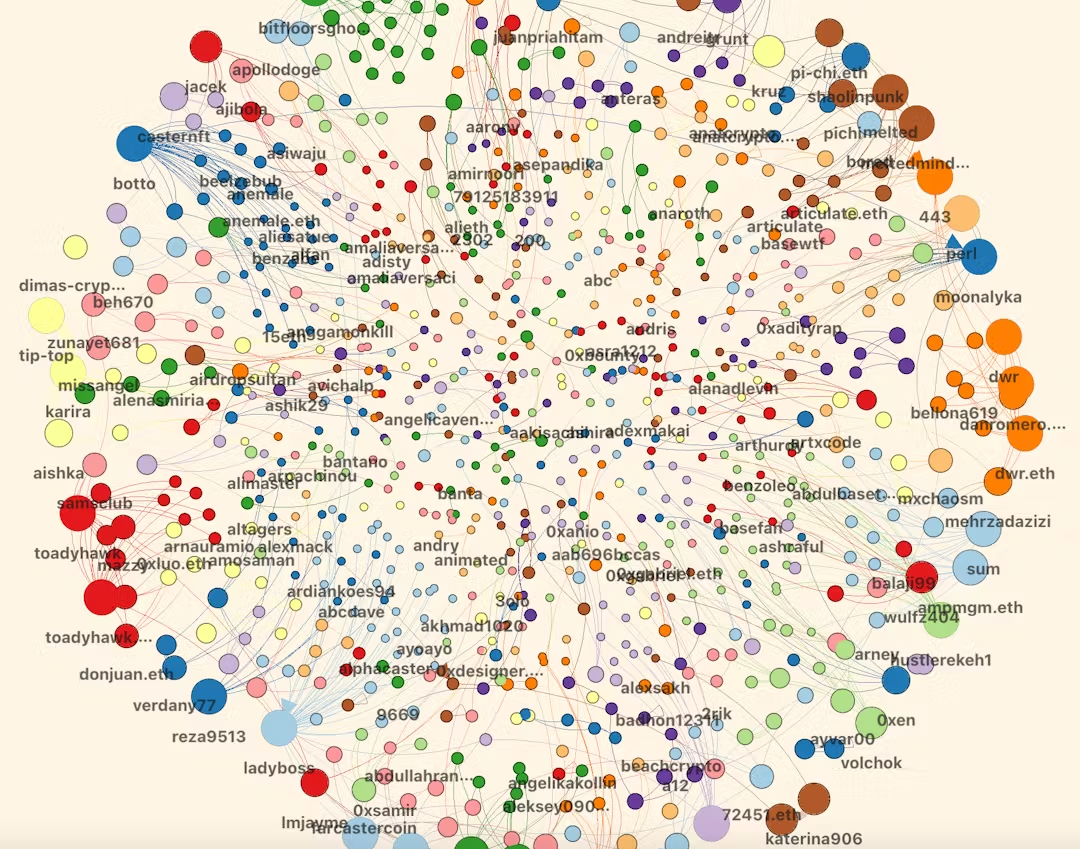
Reactions on Farcaster over the past week
Crypto has always been a community-driven movement. Communities define what matters in this industry—whether it's Bitcoin being seen as hard money or NFT projects being hailed as the next global phenomenon after Pokémon and Barbie.
Communities that form around these assets gather around shared points of interest, creating vibrant, albeit fleeting, ecosystems. While fascinating, these formations often face an inevitable challenge: shifting interests, declining engagement, and loss of attention.
The transience of attention within these groups highlights a major problem: how to sustain long-term engagement.
How does Farcaster keep people engaged?
Farcaster now has over 200,000 users. Interestingly, despite hockey-stick growth this month due to the Frame craze, daily posting volume and engagement have not significantly declined. Most crypto applications are primarily profit-driven (users chasing the next 10x or airdrop), but Farcaster feels different.
I dove into open-source post data to quantify what and who drives this culture. Here are some of my favorite Farcaster "user archetypes" (along with some interesting stats):
The Questioner
Nearly 38% of those who’ve voted have asked a question on the network. These aren’t trivial questions—they tend to be thoughtful and meaningful. At their core, users are genuinely interested in others’ opinions and invite dialogue. In sheer numbers: nearly 400,000 posts contain questions, making up about 6% of all posts!
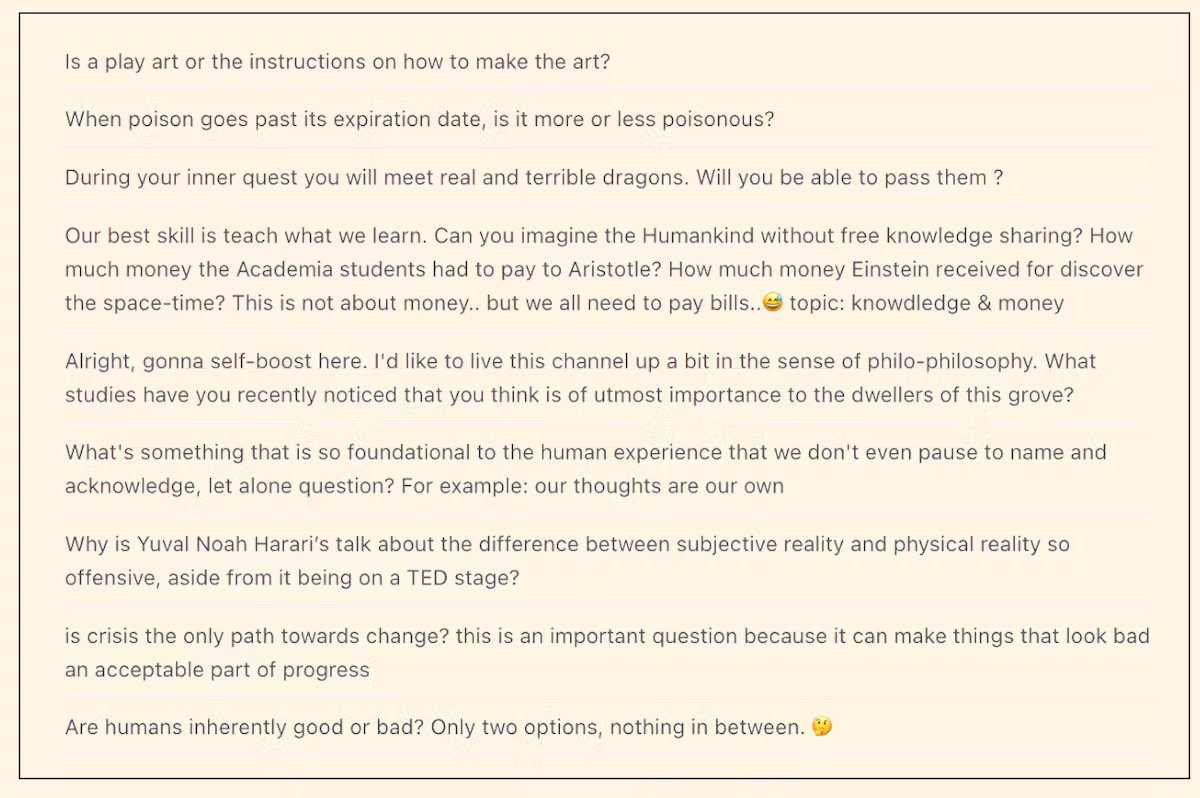
Selected questions from the /philosophy channel
The image above shows selected questions from the philosophy channel.
The Replier
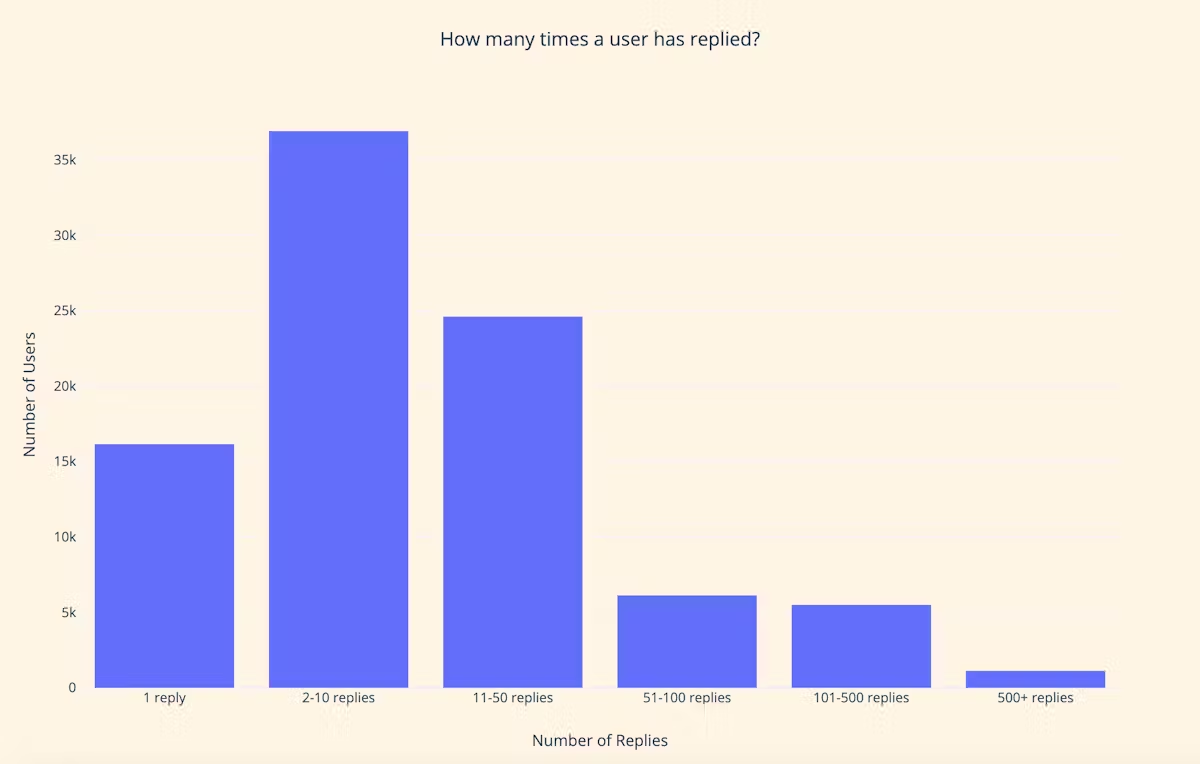
In the spirit of replyguys, a staggering 64% of posts on Farcaster are replies. When grouping users by number of replies, most appear to be repeat repliers (as shown below), with some extreme cases replying thousands of times—after only a few weeks of activity.
Long-form content gets love
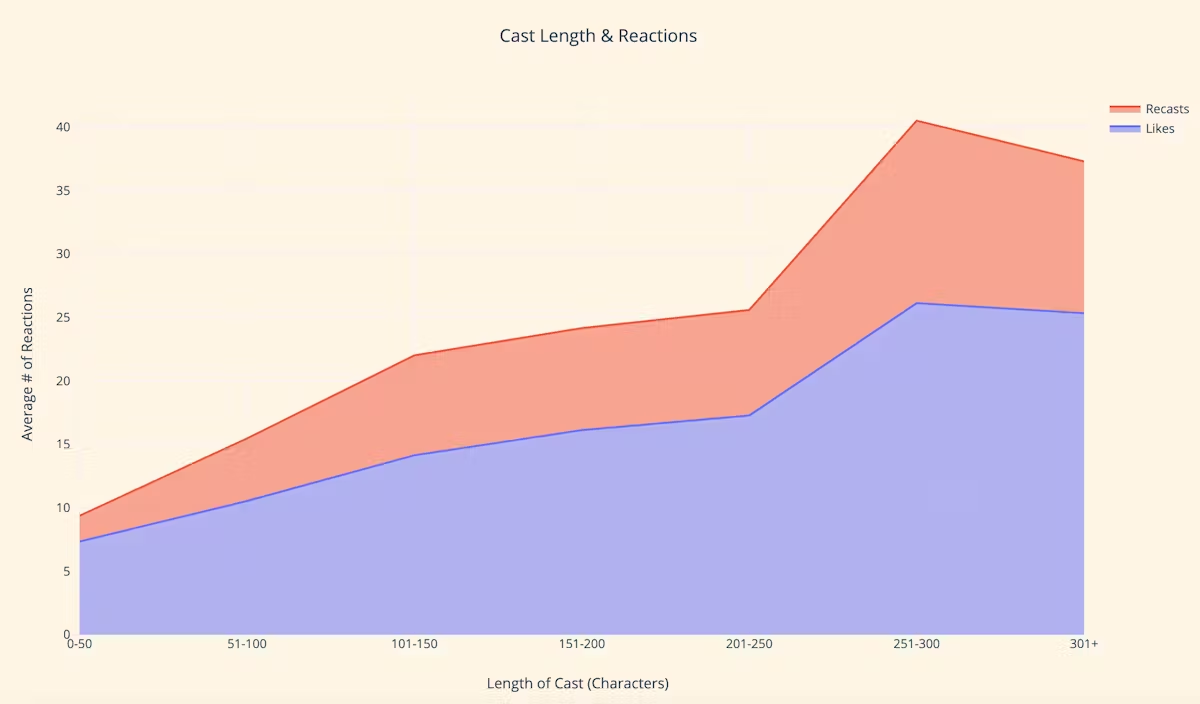
We know that posters are avid readers. It turns out the entire network also appreciates long-form writing in posts. Data shows a significant correlation between post length and user engagement: longer posts typically receive more likes and reposts. Although the average character limit per post is around 320 characters, the data suggests depth and detail resonate more strongly with Farcaster’s audience.
The Tipper
Last week, a friend and I decided to connect to Farcaster Hub’s real-time feed. After running it for a while, we realized most of our screen was flooded with $DEGEN.
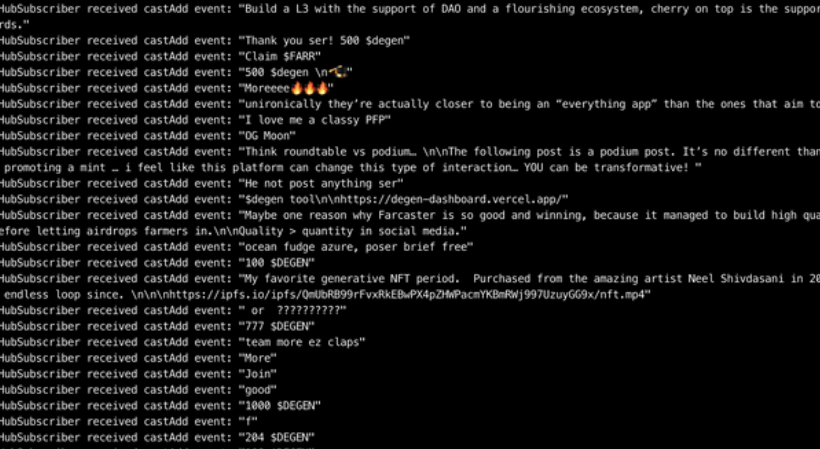
Real-time stream from Farcaster Hub to GRPC subscription
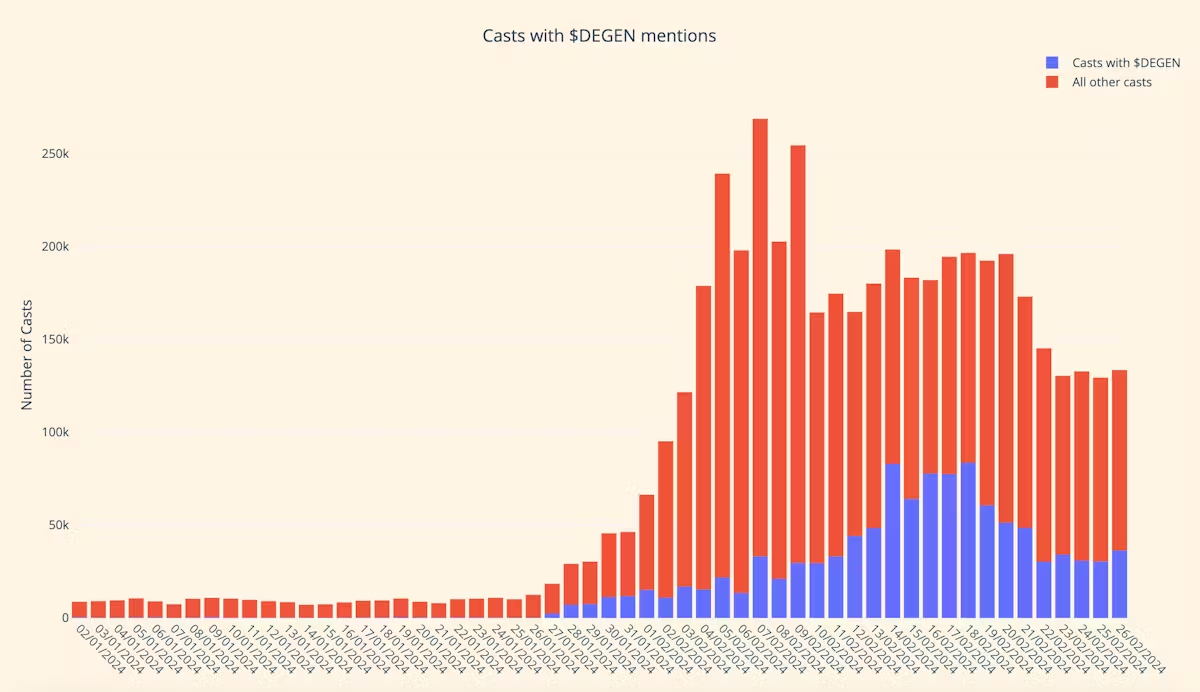
To date, the most used word on Farcaster is $DEGEN, primarily serving as a tipping currency (users can reply to a post with a number followed by $DEGEN to tip the poster). While platforms like Steemit have experimented with paying symbolic amounts for posts, tipping on social media content hasn’t been widely explored or successfully implemented at scale—until now.
Some high-level stats on this phenomenon:
Over 37,000 users have cast votes involving $DEGEN, and nearly 16% of all votes include "$DEGEN".
The Builder
Finally, let’s talk about the elephant in the room. The launch of Frames—and the subsequent “frame-ification” of NFT mints, apps, games, and more—has unlocked a wave of creative and fun experiences for users and developers alike directly within the feed. Not only has the number of Frame-enabled posts surged this year (see below), but in 2024, posts with Frames have already received nearly 22% of all likes on Farcaster.
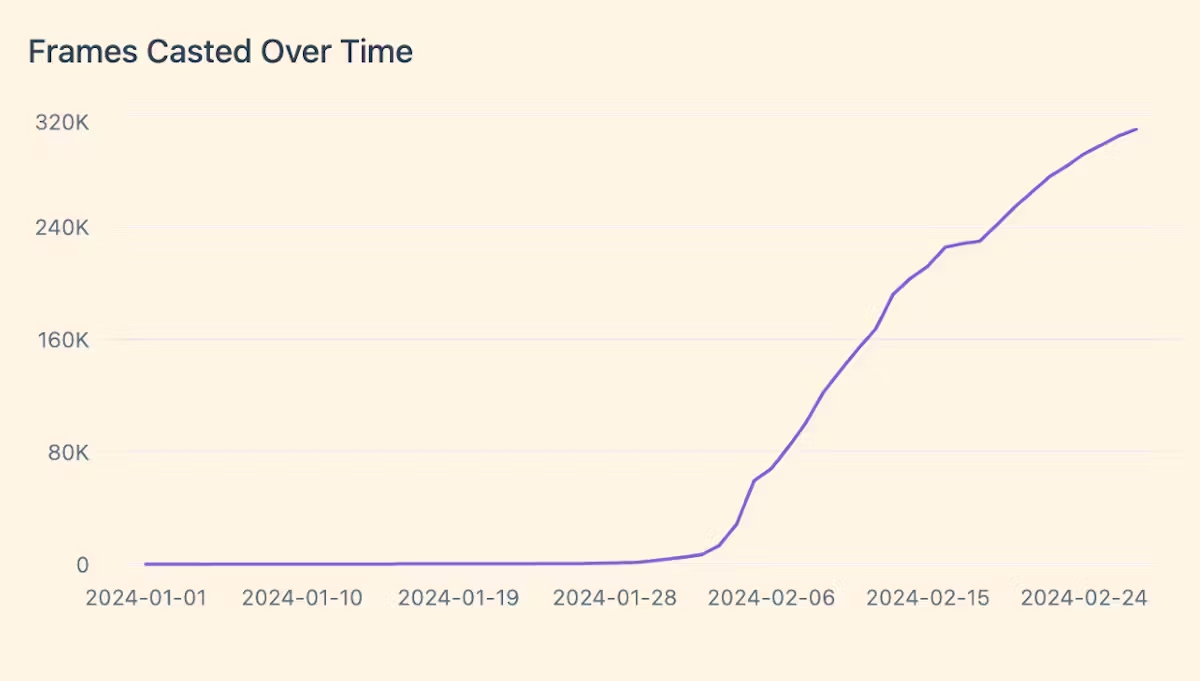
Source: https://frames.spindl.xyz/
A few takeaways
a) At this stage of growth, Farcaster’s sustained engagement stems from a core culture where people generously share their questions, answers, likes, tips, and ideas. Deep engagement > shallow engagement.
b) The underlying protocol and its social graph are open and analyzable—which is fantastic.
I may dive deeper into more of this data, including the evolving landscape of channels and how niche communities begin to merge and grow.
Join TechFlow official community to stay tuned
Telegram:https://t.me/TechFlowDaily
X (Twitter):https://x.com/TechFlowPost
X (Twitter) EN:https://x.com/BlockFlow_News
 @paragraph_xyz






