








On-Chain Tracking of Myanmar Scam Compounds: Just Two Addresses Received Nearly $100 Million in Cryptocurrency
TechFlow Selected TechFlow Selected
On-Chain Tracking of Myanmar Scam Compounds: Just Two Addresses Received Nearly $100 Million in Cryptocurrency
On-chain analysis reveals that the fraud group's extortion activities are closely intertwined with their primary operation ("pig-butchering scams").
 Navigating Web3 tides with focused insights
Author: Chainalysis& FT
Translation: Felix, PANews
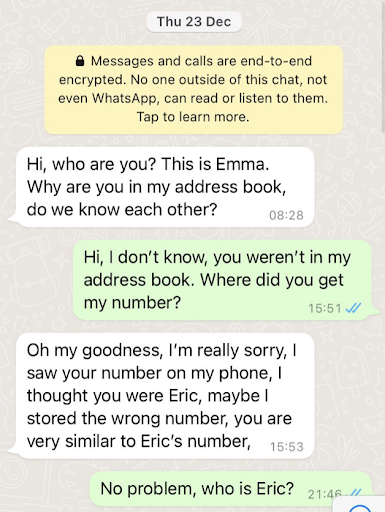
The romance scam, also known as "pig butchering," involves fraudsters "fattening up" victims to extract maximum value. This is a growing and increasingly serious issue closely tied to cryptocurrency. Scammers first establish a relationship with victims—usually romantic—typically by pretending to have sent a message to the wrong number or connecting via dating apps. As the relationship deepens, the fraudster eventually lures the victim into investing money (in cryptocurrency or fiat) into a fake investment opportunity, continually encouraging further investments until they abruptly cut off contact.
Source: CoinDesk
According to the FBI’s 2022 IC3 report, Americans lost over $700 million in "pig butchering" scams in 2022—covering both cryptocurrency and fiat currency—while losses from all types of crypto investment fraud neared $2.5 billion. These figures do not include victims from other countries such as China, whose residents are also primary targets of these scams.
While many recognize the devastating impact of "pig butchering" on victims, there is growing awareness that the scammers themselves are often exploited. As discussed in 2022 on the Chainalysis Public Key podcast with journalist Alastair McCready and recently reported by The New York Times, people across China and Southeast Asia have been kidnapped and trafficked into forced labor camps within large compounds where they are compelled to carry out "pig butchering" scams. Locations like Myawaddy in Myanmar have become hubs for such fraudulent activities due to political instability enabling criminal gangs to operate with impunity.
KK Park: Myanmar's Most Notorious "Slaughterhouse"
Chainalysis interviewed Eric Heintz, an analyst with International Justice Mission (IJM). On the ground, Eric Heintz and his team support IJM offices in assisting trafficking victims. As part of this work, they track criminal networks, monitor their recruitment activities on social media, map their locations using satellite imagery, and communicate with trafficked victims.
“The living conditions for these individuals are horrific. They’re forced to work 12 hours or more per day, beaten, tortured, or even denied food if they fail to meet scam quotas.”
Eric Heintz shared further insights about the scam operations. Typically, one company owns the land and buildings, which it rents out to other companies that actually conduct the "pig butchering" scams. According to Eric Heintz, the owners of these compounds often provide “security” for their tenants—meaning guards are deployed to prevent trafficked victims from escaping.
How do these scam groups use cryptocurrency? While it’s known that they collect cryptocurrency from victims, Eric Heintz revealed that traffickers frequently demand ransom payments from the families of the enslaved individuals in exchange for their freedom. These ransoms are typically paid in cryptocurrency. The ransom address provided by Eric Heintz to Chainalysis was given by both trafficked victims and their families. It is linked to a pig-butchering gang operating at KK Park—one of Southeast Asia’s most infamous compounds. “Some scam operations may mix illicit proceeds from scams with ransom payments made by victims’ families,” said Eric Heintz. Indeed, beyond potential ransom-related activity, the address provided by Heintz shows on-chain connections to addresses involved in scam operations.

Satellite image of KK Park
Two Addresses Alone Received Nearly $100 Million in Cryptocurrency
Before diving into on-chain analysis, it’s important to understand the background of KK Park. It is currently one of the largest and most notorious "pig butchering" hubs. Located in the town of Myawaddy, Myanmar, previously mentioned, it reportedly holds over 2,000 trafficked individuals forced into scamming. Heintz provided Chainalysis with two ransom addresses, which he said are associated with shell companies linked to a pig-butchering gang operating at KK Park. The Chainalysis Reactor diagram below illustrates some of the on-chain activity involving these addresses.
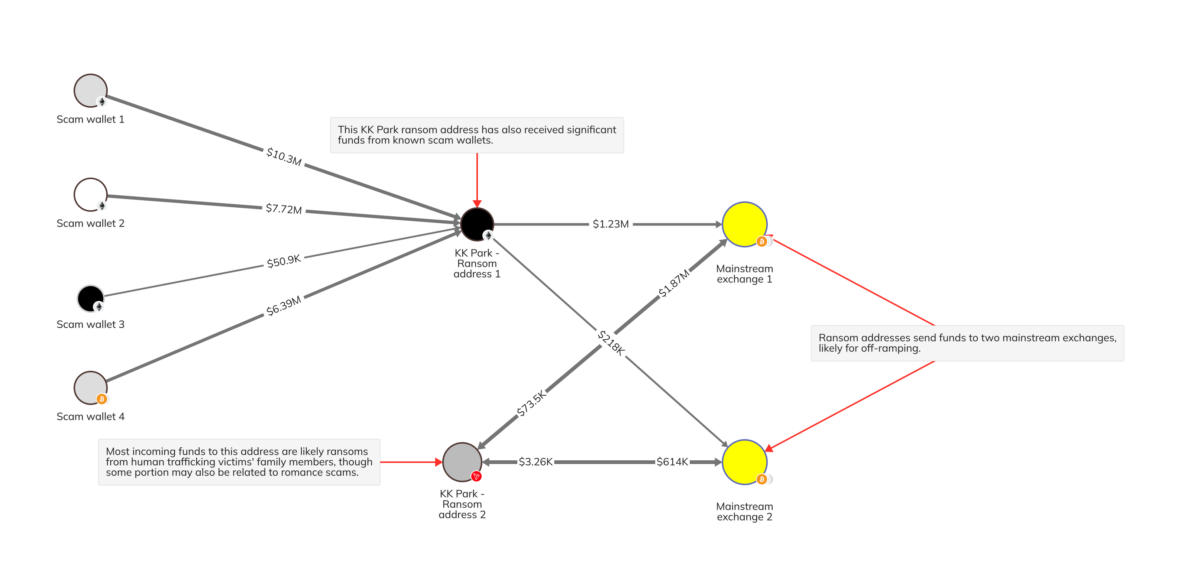
Just from the two ransom addresses provided by Heintz, millions of dollars in on-chain activity can be observed. First, although these addresses were provided to victims' families specifically for ransom payments, they have also received substantial funds from several known scam addresses.
For example, Ransom Address 1 received approximately $24.2 million in cryptocurrency from four wallets on its left that are linked to scam operations. Both ransom addresses have sent and received large volumes of funds to and from major exchanges, with some transactions likely representing ransom payments. In total, since becoming active in July 2022, these two addresses have received nearly $100 million in cryptocurrency—though it remains unclear how much comes from scams versus ransoms. Given that these are just two addresses tied to a single operation at KK Park, it suggests that scam teams within this compound are generating massive profits.
On-chain analysis reveals that extortion operations by scam gangs are tightly interwoven with their primary business ("pig butchering"). The brutal living conditions faced by trafficked victims within these compounds make the situation even more urgent—not only are hundreds of millions of dollars stolen annually from victims, but the gangs behind these scams are also operating in complete disregard for human rights.
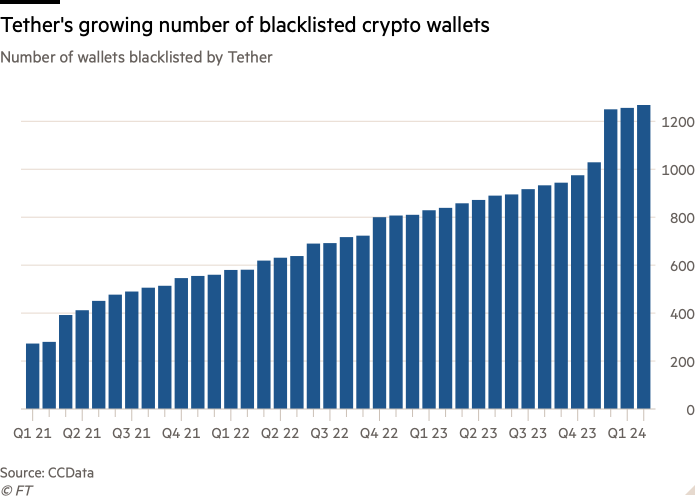
The good news is that the crypto ecosystem is taking action. In November, stablecoin issuer Tether and cryptocurrency exchange OKX announced a joint investigation with the U.S. Department of Justice. Tether froze around $225 million worth of USDT tokens linked to an international human trafficking group operating "pig butchering" scams in Southeast Asia. According to data provider CCData, Tether has blacklisted nearly 1,300 crypto wallets—a number that has surged since the company opened its platform to U.S. authorities, including the FBI, last November.
Additionally, in a late-2023 operation led by Interpol under South Korea’s coordination, authorities arrested 3,500 individuals linked to online fraud and seized $300 million in funds, including $100 million in crypto assets. Chainalysis encourages all crypto businesses to screen for scam-related activities and report them to law enforcement.
Notably, according to the Financial Times, the majority of the approximately $100 million in traced cryptocurrency transactions occurred on the Tron blockchain, a low-fee network that has grown into one of the industry’s largest.
Join TechFlow official community to stay tuned
Telegram:https://t.me/TechFlowDaily
X (Twitter):https://x.com/TechFlowPost
X (Twitter) EN:https://x.com/BlockFlow_News
 Chainalysis











