Interview with Movement Labs Founder: A New Attempt to Bring the MOVE Language to EVM
TechFlow Selected TechFlow Selected
Interview with Movement Labs Founder: A New Attempt to Bring the MOVE Language to EVM
The benefits of Move are simple: it's faster, more secure, and more scalable.
 Navigating Web3 tides with focused insights
Author: AYLO
Translation: TechFlow
Introduction
Recently, well-known crypto KOL AYLO interviewed Cooper Scanlon, founder of Movement Labs, discussing the motivations and potential impact of bringing the MOVE language to EVM.
TechFlow has compiled and translated the full interview below.
Today we’re talking about Movement. I believe many of you have heard a bit about the MOVE programming language—it’s used by Sui and Aptos. Now, Move is coming to EVM, and I think this could be a big deal.
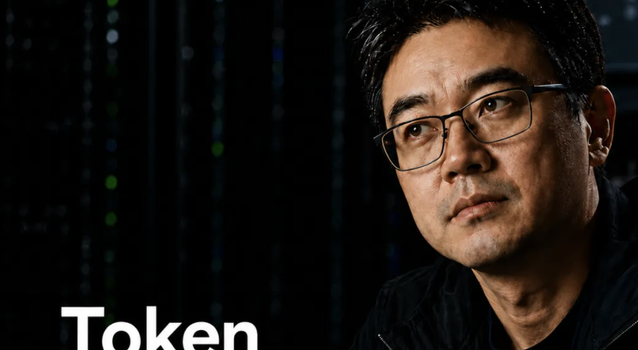
Cooper Scanlon is co-founder of Movement Labs, and I had the privilege of speaking with him.
We discussed what Movement is, analyzed the technology (M1 and M2), why Move is a superior language for blockchain developers, and I even asked him about tokens (because we all love tokens).
M2 (a zk-Move-based Ethereum rollup) will launch on mainnet this year, so I strongly recommend reading this article. There are many opportunities to join their community, and they aim to reward everyone helping spread this movement.
I’m a private investor in Movement, so I have skin in the game—but I genuinely believe making Move accessible to more developers can push the entire industry forward.
Q: What’s your crypto origin story? How did you get here?
Since I’ve always been financially tight, the idea of making money from my money was very appealing. I was interested in stocks, but never had enough capital to invest—on good days, my bank account rarely held over $100.
When I went to college and the pandemic hit, I had the chance to live off-campus and gained some disposable income.
I was initially interested in lithium investments, but then started searching for the next opportunity. I spent a lot of time on degen forums, which is how I discovered Dogecoin. I gave it a try, but found the volatility too intense, so I decided to exit—of course, right after that, the price skyrocketed. So I thought, okay, maybe there’s something real in crypto markets.
I became deeply fascinated by the underlying technology. While still in college, I committed to reading every paper, speech, and presentation related to cryptocurrency. This pushed me to understand the space dynamically and placed me in a position where growth was necessary. I was also one of the founding members of my university’s blockchain club, contributing to newsletters, research, and writing investment insights to share my market views.
I discovered an emerging language called Move, and quickly fell in love with it. I wanted to be at the forefront of the web3 era—not just another cog in a machine built by others.
Web3 is one of the few places where you can still achieve that, and I'm truly excited to do it at Movement Labs. It's an honor to help others take a seat at the table, democratize this language, and bring it to market in a way that’s native to Web3.
Q: So is the goal to make the Move language easier to use? Do you see that as your highest-level mission?
I think that’s a great way to put it. We’re integrating the next-generation smart contract language into existing blockchains—we're not introducing a new L1 or L2. You don’t need to leave your ecosystem, bridge assets, or download new wallets and infrastructure. We integrate directly. We’re collaborative, not competitive. Secondly, this movement is about developers, builders, and degens uniting under the umbrella of Move, believing we can achieve bigger and better things—especially when we do it together.

Q: Can you tell us more about M1 and what you aim to achieve?

I like to think of M1 as the “core work” of the Movement network. It enables us to reach the peak of modularity. M1 is a distributed sequencer that extends the Snowman consensus to any blockchain, any app chain, and any network within our Movement framework.
The cool thing about Snowman consensus is that unlike traditional Byzantine consensus models, where you need to poll a certain percentage of validators to achieve consensus and finality—meaning more validators lead to longer times—most Byzantine networks cap out around 100 validators because beyond that, user experience starts suffering.
Snowman uses a Gossip model where validators communicate directly with each other. This means you don't need to poll the same percentage of validators—they’re already sharing information among themselves. Querying one validator can give you attestations from multiple others. Essentially, you have a consensus model that scales logarithmically, slowing down over time as more validators are added.
Avalanche runs with over 1,000 validators while achieving sub-second finality—that’s incredibly fast. M1 extends this capability, and what’s truly exciting is that it enables Move execution, Celestia data availability, and other powerful features, along with some exciting partnerships we’ll soon announce.
With Snowman consensus, we get the fastest, most scalable consensus mechanism. Then, of course, you have your choice of settlement layer—like M2, which will be on Ethereum. We’re also excited to see other networks and blockchains integrating the Move virtual machine.
This top-tier product combines the best of different worlds in a way that benefits everyone today. We’re kind of like Amazon, delivering it all to your doorstep.
Q: Let’s dive deeper into M2. How does it fit into your ecosystem?
You can think of M2 as our mainnet—the place where applications will deploy. It will be our Move-based zero-knowledge Ethereum rollup.
M1 serves as the supporting infrastructure for M2, providing it with the best consensus mechanism, fastest finality, and scalability to further decentralize our validator set. This allows us to truly become a movement where participants can play as many roles as possible within the network.

Q: You mentioned interoperability with Cosmos. Can you elaborate on the scope of your interoperability?
We’ve always admired Cosmos’ decentralized ethos as a network. It aligns perfectly with Movement’s support for IBC and the Cosmos ecosystem. Highlighting this is our partnership with Union Movement. As part of the Move stack, we’ll have full access and compatibility with IBC. Let me introduce a new term: the Move stack is essentially how you develop on Movement. It includes all toolkits, compatibilities, connectors, and resources available to builders. With IBC integration, we can add more tools to the Move stack, which any builder on the Movement network can leverage.

This collaboration with Union is also great because it brings native USDC access to IBC-enabled apps and blockchains. So through this partnership, people gain not only IBC access but also USDC access.
For any integration between our Move stack and Union, our goal is to make applications as easy to use as possible. What we’re seeing now is cutting-edge, brand-new Move-native applications connecting with existing, battle-tested infrastructure. This not only allows these apps to scale but also enables them to collaborate and interact with many new communities and builders.
What we want to see is people from different networks, with different backgrounds, building different things, coming together to create something greater than the sum of its parts. In this sense, it’s not just about modular stacks—the execution layer, data availability layer, consensus, and settlement layer—reaching peak modularity, but also about modular applications, modular options, pushing beyond current limits. We envision that when a connection happens, it should trigger ripple effects across the entire ecosystem. This is only possible through the Move stack, and we aim to achieve this peak starting with our Movement network M1 and M2.
Q: Can you provide non-developers with more details about the Move language? How is it different from languages like Rust or Solidity? How will users benefit from its implementation?
I’d like to highlight three aspects. First, the benefits of Move. Second, the opportunity to participate in something new. Third, what makes Movement special—and how we’re incubating and launching Move in a decentralized, democratized, and Web3-native way.

Regarding Move’s benefits: it’s simply faster, safer, and more scalable. With Move, you get native parallel processing—capable of reaching 140,000 TPS—plus enhanced security features that prevent reentrancy attacks and other common vulnerabilities seen in languages like Solidity.
Another advantage: Move was developed by Meta. They had the chance to deeply analyze Solidity and Rust, investing millions of dollars and top engineering talent to create a language that’s faster, safer, easier to learn, more intuitive, and ultimately more scalable than any other.
On Move’s security, one key concept is modules. In Move, your code—including functions and operations—is organized into modules. Within these modules, you define who can access them and where assets can flow from and to.
For example, if you have a vault, an unknown external contract or wallet won’t have access. Even if someone gains access to a trusted wallet, they can’t withdraw funds to a third-party address—they can only move funds within the vault module. This offers significant security advantages, especially in an environment where we see hacks almost every other week.
Therefore, being able to plug the Move language into existing chains without facing cold-start problems—but instead collaborating—is self-evident. If you care about your asset security, why wouldn’t you use this environment?
Finally, we’re not trying to own a blockchain or infrastructure ourselves. Our goal is to build on what people are already using. That’s why we’ve developed tools like Fractal as part of our Move stack, enabling existing Solidity apps to seamlessly upgrade their codebase without leaving their network or spending countless engineering hours learning Move. We want this transition to be as smooth as possible because we believe Move should be everywhere.
Q: How easy is it to upgrade Solidity contracts to Move?

Very easy. You input your Solidity code, and out comes Move code. We’ve done extensive function mapping and created standardized layers to make the process seamless. For edge cases, we’re continuously improving. When applications integrate with Movement, we also assign a dedicated solutions engineer to resolve any issues. Of course, this is ongoing work—and quite revolutionary. We’ve already seen great teams go through this process, such as Gogo Pool and Benqi (two of the largest lending protocols on Avalanche).
Q: What are you doing to attract new projects to build on M2? What channels have you set up for new applications?
We’re seeing Move builders get extremely excited about expanding their accessibility and achieving stronger metrics needed for growth and success. Additionally, we offer significant financial support to teams building with us—whether applications or those creating frameworks or public goods. We’ll also assist teams with TVL. Many exciting announcements are coming, including special programs where teams can apply for guaranteed TVL on day one of mainnet—even before any token launch, should a token exist in the future. So in practice, our focus is ensuring builders have substantial network share and everything they need. We support them in every way—fundraising, community growth, understanding their TVL sources.
Q: What will the Movement token look like in terms of governance and ownership?
The really cool thing about Movement network token opportunities is that first, it acts like an L1 token. Think of it similarly to Ether or Sol—an energy source, medium of exchange, and entry point into the network. What sets it apart is scalability. As we support more blockchains and ecosystems, entirely new projects and communities will be able to use this token, which is exciting from a scalability standpoint.
Moreover, if Ethereum has a bad day, ETH might suffer too—same for any traditional network or L1 token. But our vision of a ubiquitous ecosystem offers more stability through hedging across multiple ecosystems and networks. Drawing an analogy to carbon or phosphorus cycles, this token is like carbon or phosphorus—it represents the flow of value within the ecosystem. If there’s a token, my belief is that it should come from applications, participants, communities, artists—everyone involved in the network.
Q: Can you talk about how your validators will work?
Details about staking requirements and what this will look like will be released shortly before our mainnet launch. I can say that we’ve noticed becoming a validator on many chains is extremely difficult—not just due to hardware, but often requiring large financial commitments—$10k, $100k, or even millions. That’s not our goal. We want our network to be significantly more accessible not just in participation, but in becoming core participants like validators. We’re working on making validation much more accessible through some very innovative and interesting approaches. Unfortunately, that’s all I can share for now.
Q: Are there any projects building on the Movement ecosystem that you think people should watch?
Yes, absolutely. Many cool teams are building on the Movement network. In particular, there are teams developing cutting-edge solutions in Move that may not be feasible in other languages or on lower-performance chains.
One team we’re especially excited about is Xebra. They’re building a perpetuals protocol powered by Move, launching on top of Movement. Interest Protocol is building a Move-based lending platform. There’s also a cool wallet called Desig that you can use to get started and build some cool products. We also have Razor DAO, another wallet project—what’s great is that it’s a genesis project, launching on our network for the first time. Another wallet to watch is Nightly.
Another upcoming project is Guilder. Think Tinder for gaming. With Move, you have “dynamic NFTs,” allowing you to swap NFT attributes without burning and minting new ones. This mechanism isn’t tied to smart contracts but embedded within the NFT itself. Guilders is building social applications leveraging Move’s dynamic NFTs.
We’re currently preparing for testnet, so stay tuned to the Movement network page for official updates, testnet incentives or rewards, and any other news about the network and what we’re building.
Q: Looking ahead one year, what do you hope to achieve with Movement?
I hope to see a thriving ecosystem of Move developers and builders creating interconnected products. I also hope this community becomes larger and more cohesive. We constantly introduce new roles in our Discord—from Scholars to Ambassadors, Pathfinders, and various ways to engage. I hope there will be more opportunities to serve these different roles and participant types, and find more ways to involve and grow this community.
Join TechFlow official community to stay tuned
Telegram:https://t.me/TechFlowDaily
X (Twitter):https://x.com/TechFlowPost
X (Twitter) EN:https://x.com/BlockFlow_News
 @alpha_pls