GokuShow Exclusive Interview with Michael Zhao, CEO of Klickl / Senior Investor: Cryptographic Assets Are Ultimately Financial Services, and Fundamentally About Trust
TechFlow Selected TechFlow Selected
GokuShow Exclusive Interview with Michael Zhao, CEO of Klickl / Senior Investor: Cryptographic Assets Are Ultimately Financial Services, and Fundamentally About Trust
Whether in entrepreneurship or investing, Michael Zhao shares valuable insights and experiences in this interview.
 Navigating Web3 tides with focused insights
About GokuShow:
GokuShow is a program dedicated to interviewing Web3 entrepreneurs, initiated by Web3 influencer GoKu (@Gokunocool). It aims to provide a stage for all Web3 founders to showcase themselves, understand their behind-the-scenes stories, and create a warm, human-centered show.
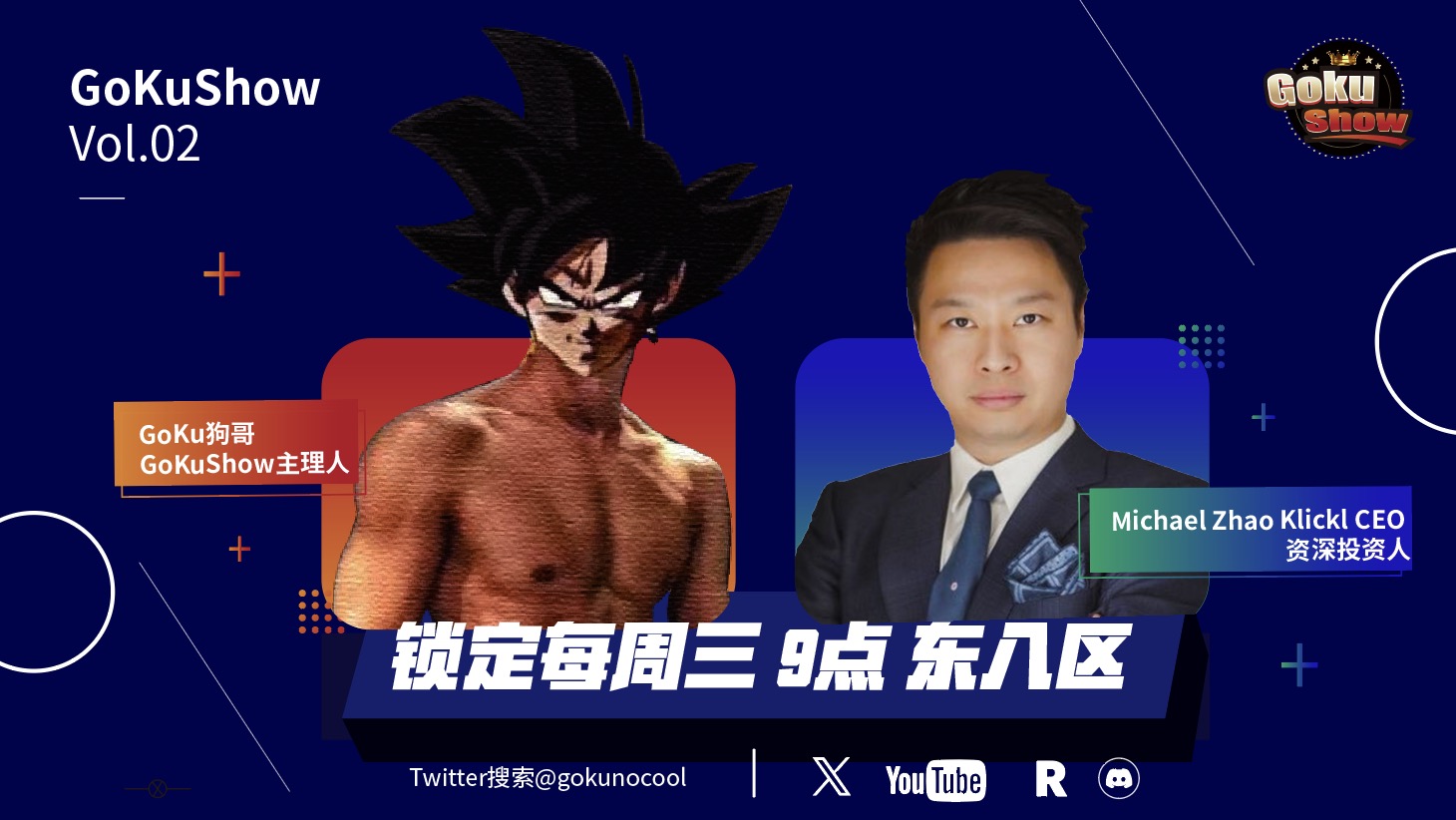
Host: GoKu
Guest: Michael Zhao | linkedin
Project: Klickl
Based in the United Arab Emirates (UAE), Klickl is a licensed institution offering crypto asset custody, trading, brokerage, and related services. Regulated by the Abu Dhabi Global Market (ADGM), it has received In-Principle Approval (IPA) from ADGM’s Financial Services Regulatory Authority (FSRA) as a global virtual asset service provider. As the largest custody and payment platform in the Middle East and North Africa (MENA) region, Klickl also holds a European VASP crypto license, enabling it to operate as a broker-dealer and offer digital asset custody, providing professional digital asset trading and other related services to users.
Michael Zhao, CEO of Klickl, began his career in traditional finance and ventured into the Middle East to build his Web3 business. Today, he is not only the core founder of Klickl but also established his own C1 Fund, focusing on secondary market investments. To further strengthen the entrepreneurial community in Dubai, he launched the region's first golf-based social venue.
Whether in entrepreneurship or investment, multifaceted Michael Zhao shared invaluable insights during this interview:
Highlights:
-
Why launch Klickl in the Middle East? Traditional banking services here are underdeveloped with poor user experience. The region remains cautious about blockchain adoption, creating a blue ocean opportunity in payments. As a regional player, we aim to serve not just local markets but even extend our reach to African nations.
-
At its core, crypto assets are financial services—trust is fundamental.
-
Our key challenge is how to use the most native traffic and simplest methods to keep users engaged on our platform long-term.
-
The biggest culture shock in the Middle East is its high liquidity and transactional nature. Our goal is to transform what was once a city full of money into a livable home for families, making the region a strong social hub.
-
Entrepreneurship requires seeing big opportunities while executing small tasks.
-
Make difficult decisions—do what’s right.
-
The greatest risk is not embracing risk.
The following content is transcribed from the live GokuShow interview:
I. Embracing Regulation to Accelerate Industry Growth
GoKu: Please share your entrepreneurial journey and explain why you chose to start a business in the Middle East.
Michael: We previously worked in traditional financial services. I started at UBS Investment Bank, working across the U.S., Singapore, and Hong Kong, engaging in various financial sectors. Later, I transitioned into a regulatory role, working at a central bank. In 2015, I entered the blockchain industry. As a trader, I was open to any volatile product—Bitcoin and Ethereum were excellent instruments. Then we began investing, launching exchanges, wallets, and custody services, gradually scaling up. However, after the pandemic, global blockchain regulations evolved. While Hong Kong and Singapore showed strong momentum, competition among startups became intense. Therefore, we identified the Middle East as a highly promising region.
Interestingly, our arrival in the Middle East was accidental. At the time, we were based in Hong Kong when we received an invitation to exhibit at GITEX, a major fintech exhibition in the region. This was November 2020, early in the pandemic. When we arrived, we realized the Middle East wasn’t at all what we imagined. Especially in Dubai, we saw entrepreneurs from diverse ethnic backgrounds, and the local regulatory framework was surprisingly mature. That’s when we decided to consider settling here and began studying local laws and policies.
GoKu: I heard you used to be a bank president. How do you view the crypto industry?
Michael: In traditional finance—whether commercial or investment banking—I’ve always operated from a regulatory perspective. Entering blockchain, our background gave us deep insight into risk, compliance, and regulation. The market evolves rapidly, and events like FTX and 3AC highlighted systemic risks. Afterward, regulators worldwide intensified focus on risk control and compliance. Our experience allows better dialogue with regulators. Many Web3 practitioners believe decentralization is ideal and want to escape centralization and oversight. But I see it as a gradual process. We can’t shift overnight from centralized finance to fully decentralized systems. Therefore, embracing regulation thoughtfully will accelerate industry growth and bring more participants into the ecosystem.
II. Unlocking the Blue Ocean: Building a Tri-Functional Payment Product
GoKu: Why did you decide to launch Klickl?
Michael: We kept asking: how can we clearly define our product and service? When Klickl started, we were a new startup entering the Middle East. Despite being a hotspot attracting capital, trading flows, and talent, basic financial services remain underdeveloped. In mature Asian markets, people expect digital banking and comprehensive foreign exchange services from home. But in the Middle East, traditional banking lags significantly and delivers poor user experiences. Moreover, due to the region’s gray-zone status, there's great caution around fund transfers and crypto adoption. So, if we could easily offer a global account combining card services and a compliant digital wallet—a triple-play solution—it would be highly competitive.
Building on that, we shaped Klickl’s early vision. Traditionally, many businesses were regional—Hong Kong companies serving only Hong Kong, Singapore firms focused locally. But Web3, blockchain, and open banking are converging fast. We saw a chance to become a cross-border service provider, serving broader markets. That’s why we’re committed to growing here and replicating UAE-compliant services across GCC countries and even into Africa.
GoKu: Klickl’s business strategy is impressive—starting as a regional leader and expanding outward. With rising cryptocurrency market share and ETF developments, new opportunities emerge. Can you walk us through Klickl’s business architecture?
Michael: Trust is paramount. But trust in financial products is costly to build. We secured ADGM’s FSRA Virtual Asset Custodian license and Virtual Asset Broker-Dealer license, allowing us to legally and compliantly hold digital assets and instill market confidence. We offer global accounts, card services, and regulated crypto custody and wallets—enhancing user experience. Unlike fintechs like Revolut, we have strong local licensing and credibility. We follow a low-risk model serving both retail and institutional clients. Once we acquire traffic, retention becomes very sticky.
GoKu: What are the specific B2B use cases for global accounts?
Michael: More and more enterprises—whether settling in USD or other currencies—are seeking compliant frameworks to partner with banks and access multi-currency accounts. Chinese cross-border e-commerce companies like Airwallex and XTransfer need multi-currency accounts for settlement and payments.
On top of trust, we launched three popular products. First is a multi-currency iBank account, usable with crypto top-ups, supporting Visa, Mastercard, and UnionPay International cards, plus a compliant crypto wallet. This enables individuals and SMEs to manage funds efficiently at low cost—clearing, paying, collecting, disbursing. It’s one of our core offerings.
Second is “Klickl for You.” Targeting the Middle East and Africa, once users adopt our first product, we offer value-added services: Earned (yield on deposits), lending based on transaction behavior, and future lifestyle services. Though operating in Web3, we apply many Web2 principles—traffic, payments, product, operations. We aim to attract native traffic in the most intuitive way and keep users engaged long-term through diversified offerings.
In the Middle East, the biggest cultural shock is its extreme liquidity and transactional mindset. We studied Dubai’s strategic plan—to transform a city built on money into a family-friendly home. Concurrently, another need emerged: building a lasting social platform. A few years ago, we launched a golf-based social platform. For locals, Asian entrepreneurs all look similar—yellow skin, black eyes—just as we struggle to distinguish locals in white robes. Every Asian founder tells their story, but locals often lack a basis for trust. So a key entrepreneurial lesson here is: seize big opportunities, execute small actions. Strategy meets execution. Small wins are easier to deliver. For example, we created the Middle East’s first indoor golf club, using golf to drive foot traffic, curate high-quality members, and generate added value. Initially, no one believed it would work. But step by step, we designed, built, and opened. When local partners saw our delivery, they trusted we could fulfill bigger promises.
This small project earned us trust. With that foundation, we could then propose building a compliant digital asset bank—and they believed us, because we had already delivered. So for global entrepreneurs entering a new region, this is a crucial adjustment.
III. Embracing Risk and Finding Long-Term Partners
GoKu: Any major moves recently in the Middle East?
Michael: We’re planning to launch a global series of golf tournaments designed for the digital asset and Web3 industry—called Web3 Open. Many in this space play golf, often called “Green Weed”—a state similar to the hustle of entrepreneurship. We’ll connect Dubai’s 14 outdoor golf courses with our indoor platform, hosting the industry’s first golf event on March 1st, bringing people together through sports and networking. We hope this becomes global—starting in Dubai, then expanding to Singapore, Hong Kong, New York, and London.
Through these small initiatives, we unite entrepreneurs passionate about this industry. Conferences are valuable, but we believe golf offers a more relaxed environment for meaningful connections and unexpected collaborations.
GoKu: How do you find co-founders?
Michael: In the Middle East, ideas flow daily. But the real challenge is execution. No one person can possess every skill. When choosing partners, I consider three factors:
1) Complementarity. Partners should fill gaps and help achieve shared goals.
2) During interviews, I often ask: “What excites you in life?” This reveals character. I want partners aligned in vision who can move forward step by step. Projects may fail, directions may shift—but having like-minded teammates creates precious energy and resilience.
Let me share a story. Early on, our exchange didn’t perform as well as others. In 2020, we seized a great opportunity—acquired a digital asset firm and successfully listed on Nasdaq. Bitcoin was at $60K. I remember standing in Times Square in my pajamas, feeling like I owned the world. But soon after, the market crashed. Crypto entered a bear cycle, and U.S. markets weakened. By mid-last year, we faced a choice: withdraw to protect assets. Discussing with our board and advisors—seasoned veterans—they unanimously voted against self-interest. They said: make the hard but right decision. We’d rather lose money than damage our reputation—because only then do we have a future.
Finding great partners means sharing such journeys—winning together, losing together. Sometimes, even without success, making tough, ethical choices matters most. In the end, we returned all investors’ capital. They supported and respected us, saying we’d done everything possible—no one could’ve done better.
Later, many institutions reached out, recognizing our integrity. Based on that trust, we raised more capital and launched C1 Fund, focused on secondary market assets. I deeply respect my partners. Whether in Hong Kong, New York, or Dubai, they always come prepared, energetic, and committed—their dedication constantly inspires me.
GoKu: How do you manage multiple projects simultaneously?
Michael: The world is changing—Russia-Ukraine war, GASA, U.S. elections. Amid volatility, we focus on the Middle East to serve future global markets—and we keep learning to avoid missing opportunities. Without knowing the full path, we can broaden our scope, since some areas overlap.
For example, we can see our “left atrium” as golf lifestyle—meeting friends through small projects; the “right atrium” as Klickl’s financial services, like the C1 Fund. Together, we learn how to integrate resources and partnerships. It’s a dynamic process.
We need not just teams, but collaborative spirit—that’s the secret to industry progress. Apple doesn’t make batteries or motherboards; it integrates best partners and focuses on innovation. Similarly, Klickl has core licenses and regional strength, but globally, we won’t do everything ourselves. Instead, we partner with top players in each region. Only by embracing healthy competition and openness can we move faster.
Fortunately, regulation here is open-minded, listening to market needs while managing risk. Last year, I spoke with SwissBorg’s founder—we agreed the biggest risk is refusing to take risks. We don’t need to jump from 0 to 100. We can advance step by step. As market participants, sometimes we reduce risk—from 100 to 50. Meanwhile, regulators should slightly increase risk tolerance. This balance allows coordination between innovators and supervisors.
For any project to last, one thing matters most: “value capture.” For example, at my parking lot, many women can’t reach the card reader without getting out. A friend gifted me a tool that extends reach—now they can stay in the car, elegantly stop, swipe, beep, and go. That’s a powerful value capture point. In Web3 entrepreneurship, don’t obsess over economic models, incentive tokens, or NFTs. Instead, simplify. Focus on finding that real value capture. Second, after launching an MVP, ask: will customers feel pain when they lose your product? One golf member said, “This is amazing—I wish I could live here so I never have to rent again.”
GoKu: Any advice on cost control?
Michael: Cost control depends on financial health—whether you're well-funded or not. When cash-strapped, companies naturally control costs—or face failure. But when flush with capital, many overspend. In Web3, personnel, server, and security costs are unavoidable. Costs fall into fixed and variable. We must assess: if a cost doesn’t impact the product, can we eliminate it? As founders, stay optimistic about the market—but pessimistic about operations.
IV. The Key to Entrepreneurship Is “Value Capture”—You Can Start a Business Anywhere
GoKu: Would you recommend new startups to launch in the Middle East?
Michael: I’m not discouraging it. As digital nomads in blockchain, we can start anywhere. When choosing a location, align with your strengths—not trends. Ask: “Where is my value capture?” and “Where can I maximize it?” For instance, if licensing builds trust, Singapore might be ideal. But post-FTX, licenses are harder to get and less impactful. Licenses are just one benchmark regulators use. Strong execution matters more. Location is just an extra advantage.
GoKu: Your thoughts on Chinese entrepreneurs?
Michael: We have many local Middle Eastern team members. Compared to Asians, they may be less proactive. But I don’t see “hustle” negatively. Studying markets, innovating products, acquiring traffic, and efficient operations—all drive maximum value. Many successful Chinese entrepreneurs thrive here—like Yala, a great public company founded by Chinese. In new energy, more Chinese founders are showcasing talent. It’s healthy competition.
GoKu: One practical tip for Web3 founders?
Michael:
1) Entrepreneurs need bold visions—but execute on small details. Don’t stretch your product line too thin. Focus on solving one real problem. A fintech company in Australia paid $1 billion for Loom, a simple screen-recording app. Starting small and scaling is a powerful model to learn from.
2) During execution, embrace change and seize turning points. Instagram revived itself by discovering the popularity of beauty filters. You won’t nail every feature on day one. Execution is iterative. Be ready, act, and adapt as you validate.
Join TechFlow official community to stay tuned
Telegram:https://t.me/TechFlowDaily
X (Twitter):https://x.com/TechFlowPost
X (Twitter) EN:https://x.com/BlockFlow_News
 @gokunocool