








Opinion: Don't fear debate—cryptocurrency thrives because of it
TechFlow Selected TechFlow Selected
Opinion: Don't fear debate—cryptocurrency thrives because of it
The antidote to narrative consistency and the key to breakthrough innovation lie not only in competition, but also in debate.
 Navigating Web3 tides with focused insights
Author: Carlos
Translation: Luffy, Foresight News
If René Girard (note: René Girard was a French philosopher who introduced the concept of mimetic desire) were alive today, he would smile fondly at cryptocurrency. Not because of our technological progress or our mission to bank the unbanked and liberate the internet from corporate control, but because the participants in this grand online game exemplify Girard’s theories. Girard coined the term "mimetic desire," a phenomenon that spreads like a virus throughout the crypto industry.
Narrative consistency plagues cryptocurrency.
Brands and social media followings are built by telling people what they want to hear. A simple tweet saying “ETH to 10K” or LIWIFHAT will capture far more attention from the Ethereum community than any new EIP. “DAOs are the future of work,” “music NFTs will kill record labels,” “de-banking”—it's not that we don’t believe in what we say, but making bold statements is easier than critically examining their meaning and flaws. Once people hear a new narrative—“consumer crypto,” “Web3 social,” “on-chain media”—intentionality disappears.
This is largely due to the nature of social media, but it’s not the only factor, nor even the most important one. Competition validates theory, but in a public, 24/7 operating ecosystem, it’s argumentation that drives us forward.
I believe the antidote to narrative inconsistency and the key to breakthrough innovation isn’t just competition—it’s argumentation.
Crypto Needs More Debate
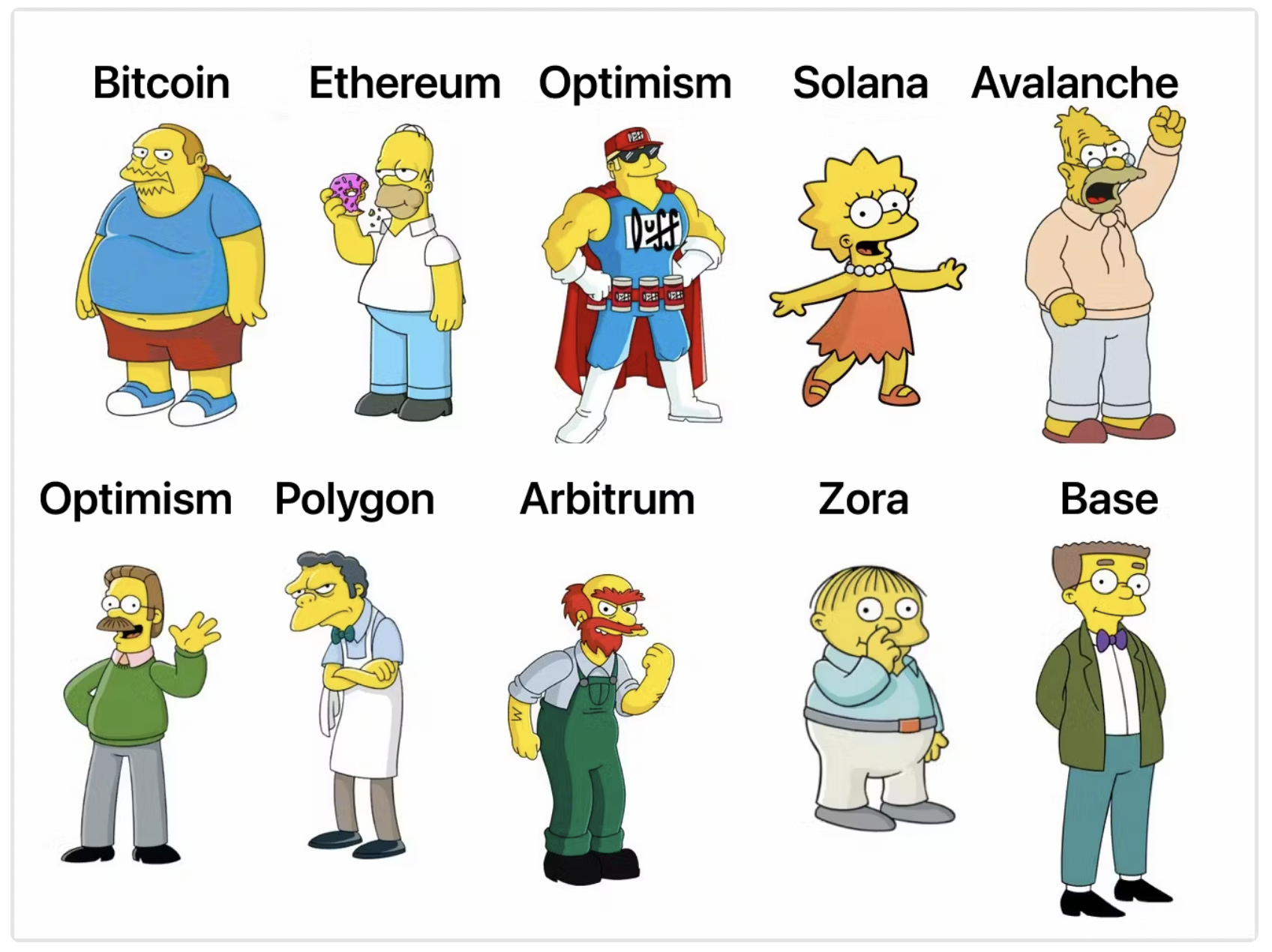
The difference between competition and debate lies not just in conflict, but in its public nature—which, in most cases, is driven by clashes of community sentiment. Debate doesn’t have to be malicious, but it must be loud. It implies real stakes in the game, whether social or financial. Conviction runs high, and you risk being publicly proven wrong—something people will go to great lengths to achieve.
Historically, crypto lore is filled with debates: BTC vs BCH, ETH vs ETC, Punks vs Apes, Uniswap vs Sushiswap—and so on.
Take UNI/SUSHI as an example. Sushiswap began as a fork of Uniswap, launching a vampire attack by incentivizing liquidity providers with SUSHI tokens (remember that unique fair launch?). At one point, Sushiswap even surpassed Uniswap in daily trading volume. Ultimately, Uniswap responded with the UNI airdrop, quickly reclaiming its position as the top DEX and driving major innovations in decentralized exchanges—innovations I believe were instrumental in challenging centralized exchange dominance. The vampire attack sparked intense public battles both within and between communities (such as the dumping of founder tokens by Sushiswap), but in hindsight, the ecosystem emerged more useful and mature.
So perhaps the “secret sauce” of crypto debate includes:
-
Progressive community action
-
Right timing
-
Key players
-
Strong narratives and counter-narratives
-
Financial incentives
More recently, Solana’s resurgence has triggered fierce clashes between the ETH and SOL communities. Naturally, different L1s compete, but the debate only intensified once Solana started “winning” across various metrics. Ansem became a central figure in this debate, causing some Ethereum influencers to distance themselves. Yet, this very debate forced Ethereum builders and users to seriously reevaluate their priorities, driving improvements in user experience at both the chain and application levels.
More Examples
OpenSea and Blur offer another excellent case. Blur launched a token incentive model encouraging listings and trades on its platform, combining strong UX to gradually erode OpenSea’s dominance in Ethereum NFT trading. This battle also sparked widespread discussion about the importance and enforceability of NFT royalties. While Blur wasn’t the first to stop paying creator royalties, it was undoubtedly the loudest and most successful—triggering broad debate and community action.
Then there was the debate between Nouns and Nouns forks, which forced the community to reassess how treasury funds should be spent and what Nouns’ broader purpose should be. The result? A stronger community—but not without intense public debate over the nature of “diffusion,” and significant ETH leaving the DAO treasury.
A real debate requires two sides and public struggle. For example, after browser wallets launched, Rainbow began using points to attract and retain Metamask users—but the Metamask community remained indifferent.
I eagerly anticipate how certain debated narratives and topics in crypto will unfold:
-
Narratives around on-chain economies, especially L2 economies.
-
The evolution of social feeds in Web3.
-
User acquisition strategies via wallets.
-
Integration and evolution of music primitives.
-
Dynamics of Web3 publications.
Finally

Toilet paper orientation (source)
Cryptocurrency is a public arena. While we may indeed be “early” in some respects, we’re not so early that we can afford to avoid competition and debate. A public arena can be a toxic space of mimetic desire—or a productive space of constructive argumentation. We should choose the latter.
“We’ll all make it” does not mean “we all have to agree.” We succeed by choosing the best path forward. May the best meme win.
Join TechFlow official community to stay tuned
Telegram:https://t.me/TechFlowDaily
X (Twitter):https://x.com/TechFlowPost
X (Twitter) EN:https://x.com/BlockFlow_News
 @carlosecgomes











