








What enables Stride to rise rapidly and become the leading staking protocol in the Cosmos ecosystem?
TechFlow Selected TechFlow Selected
What enables Stride to rise rapidly and become the leading staking protocol in the Cosmos ecosystem?
Stride's total TVL has exceeded $100 million.
 Navigating Web3 tides with focused insights
Author: James Ho, Partner at Modular Capital
Translation: 1912212.eth, Foresight News
Editor's Note: On February 2, 2024, Stride, a liquid staking protocol in the Cosmos ecosystem, completed a $4 million strategic funding round led by DBA, with participation from 1confirmation, Road Capital, Modular Capital, Imperator, Chorus One, and others. The funding aims to accelerate Stride’s development within the Celestia ecosystem. Notably, on the same day, Stride achieved a record high total value locked (TVL) exceeding $100 million.
Main Text:
Stride is a staking protocol in the Cosmos ecosystem, currently holding over 90% market share with a TVL exceeding $60 million. It supports multiple Cosmos chains, including ATOM (Cosmos Hub), OSMO (Osmosis), INJ (Injective), JUNO (Juno), among others.
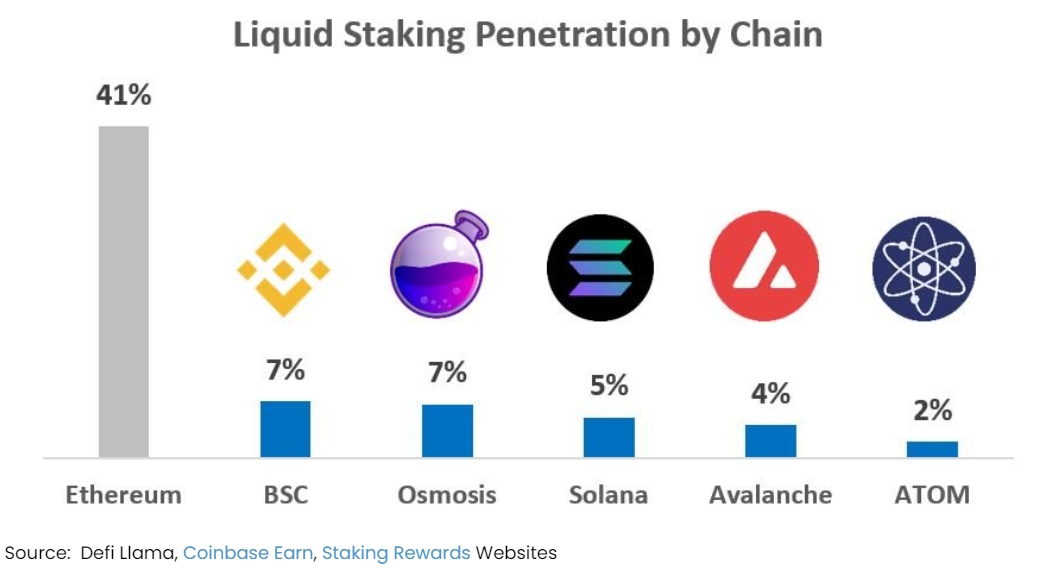
Staking adoption in the Cosmos ecosystem remains in early stages. On Ethereum, 41% of ETH staking is conducted through staking service providers such as Lido, Rocket Pool, Frax, and Coinbase. In contrast, only 2% of total ATOM supply and 7% of total OSMO supply are currently staked, indicating significant room for future growth.
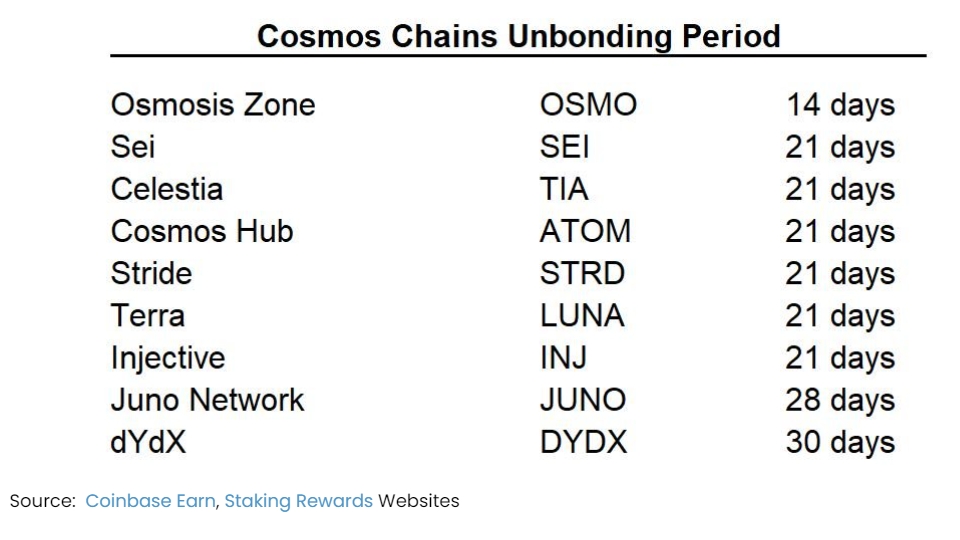
Liquid staking tokens (LSTs) offer strong appeal due to their ability to enhance capital efficiency of staked assets. By issuing staking derivatives such as stOSMO and stATOM, Stride enables users to earn staking rewards while freely utilizing these assets across DeFi applications. Additionally, most Cosmos chains impose long unstaking periods—ranging from 14 to 30 days—during which users must wait before accessing their funds. Stride’s LSTs allow users to immediately sell their staked positions on open markets, albeit with some market slippage.
As a category, liquid staking exhibits powerful network effects, often leading to winner-take-all dynamics. Lido dominates Ethereum’s LST market with nearly 80% share, largely due to deep liquidity provided for its stETH token, reinforcing user preference over competitors. Given Stride’s current >90% market share in the Cosmos ecosystem and growing momentum, we expect similar network effects to solidify its leadership position.
Stride plans to support liquid staking pairs for new Cosmos-based chains such as Celestia (TIA) and dYdX (Editor's note: now supports TIA and DYDX). These networks collectively have a market cap exceeding $10 billion, significantly expanding Stride’s addressable market within the Cosmos ecosystem.
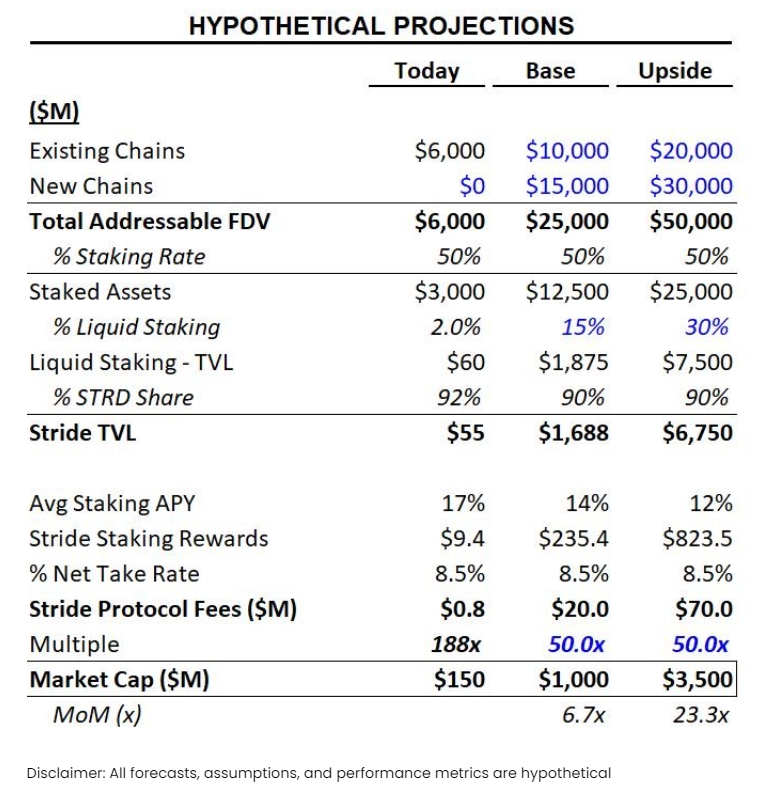
As the overall market capitalization of the Cosmos ecosystem grows from its current $5–6 billion to an estimated $20–50 billion, Stride could generate fee revenues between $20 million and $70 million annually. Assuming a 15–30% staking penetration rate and sustained 90% market dominance, applying a 50x revenue multiple suggests Stride’s valuation could reach $1–3 billion or more.
Proof-of-Stake (PoS)
Proof-of-Stake (PoS) is a consensus mechanism used to validate transactions and produce new blocks. Historically, Ethereum relied on Proof-of-Work (PoW), where miners secured the network by expending computational resources (GPUs and electricity) to solve cryptographic puzzles—a model still used by Bitcoin today.
After years of planning, Ethereum completed “The Merge” in September 2022, transitioning from PoW to PoS. Most public blockchains have shifted toward PoS for security and anti-Sybil attack models due to several key advantages:
-
Energy Efficiency: PoW secures the network by consuming real-world resources (computation and power), whereas PoS leverages the economic value of native network assets (ETH, SOL, AVAX, ATOM). This reduces energy consumption by over 99.9% compared to PoW networks.
-
Network Alignment: PoW relies on economic incentives—issuing new tokens to reward miners who spend real-world capital. However, miners typically sell newly minted tokens immediately (e.g., BTC) to cover operational costs. In contrast, PoS aligns network security with asset owners (holders and buyers of native tokens), creating stronger alignment among stakeholders who are incentivized to maintain network integrity.
-
Economic Sustainability: Under PoW, achieving $1 worth of security requires approximately $1 in real-world expenditure (mining hardware and electricity), necessitating continuous issuance. In PoS, validators incur minimal real-world costs and require only a fraction of issuance (typically 3–10%) to compensate for illiquidity risk. This results in $0.03–$0.10 spent per dollar of economic security—a far more sustainable long-term model. After transitioning to PoS, Ethereum reduced annual issuance for network security by over 80%.
Today, nearly all major public blockchains ranked by TVL use PoS for security, including Ethereum, Solana, Avalanche, Polkadot, and Cosmos Hub.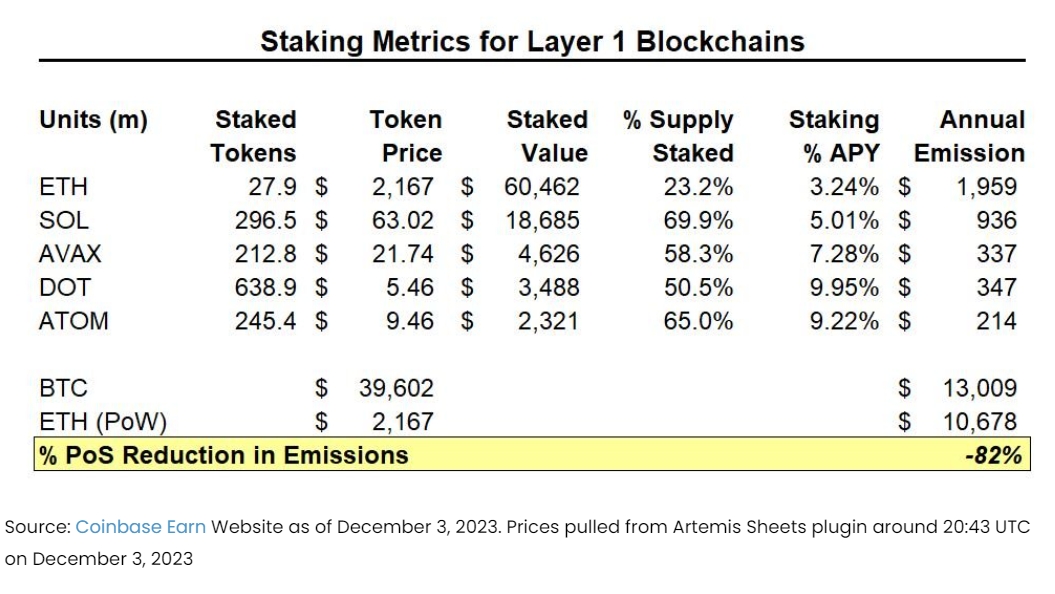
Concept of Liquid Staking
Liquid staking is a major category in DeFi, with Lido being the most successful example. Lido has become the largest protocol in crypto by TVL, exceeding $20 billion and accounting for nearly one-third of all staked ETH. Lido earns over $80 million in annual fees.
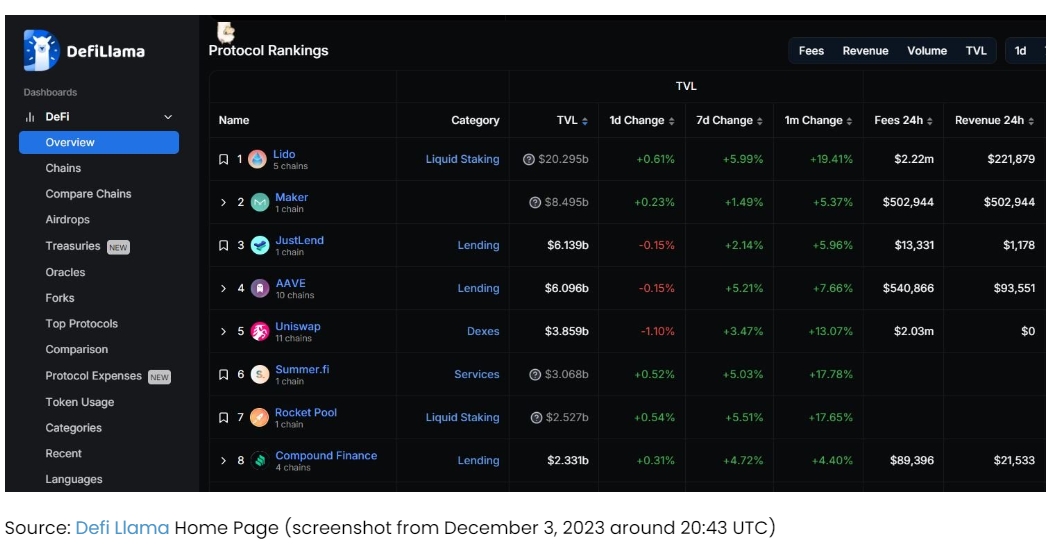
In simple terms, Lido deposits ETH into smart contracts and delegates it to a set of node operators (such as Figment, Stakefish, Everstake, Blockdaemon) that stake on behalf of the protocol.
When users deposit ETH into Lido, they receive stETH. This token represents both the initial deposit and ongoing staking rewards. stETH can be used in various ways:
-
Borrowing: Users can use stETH as collateral on lending platforms like Aave to borrow stablecoins such as USDC.
-
AMM Liquidity Provision: Users can provide liquidity using stETH on decentralized exchanges like Uniswap and Curve. For instance, the wstETH/ETH pool on Curve generates ~2% APY in trading fees—on top of the 3–4% staking yield from Lido.
-
Yield Hedging: Users can deposit stETH into Pendle (a native yield-deFi primitive) to lock in future yields for a fixed period.
-
Open Market Sale: Normally, users must wait for Ethereum’s withdrawal queue to unstake ETH, which may take days or weeks. To avoid waiting, users can sell stETH directly on secondary markets. Selling 1,000 stETH (~$2.2M) incurs about 10–15 bps of slippage.
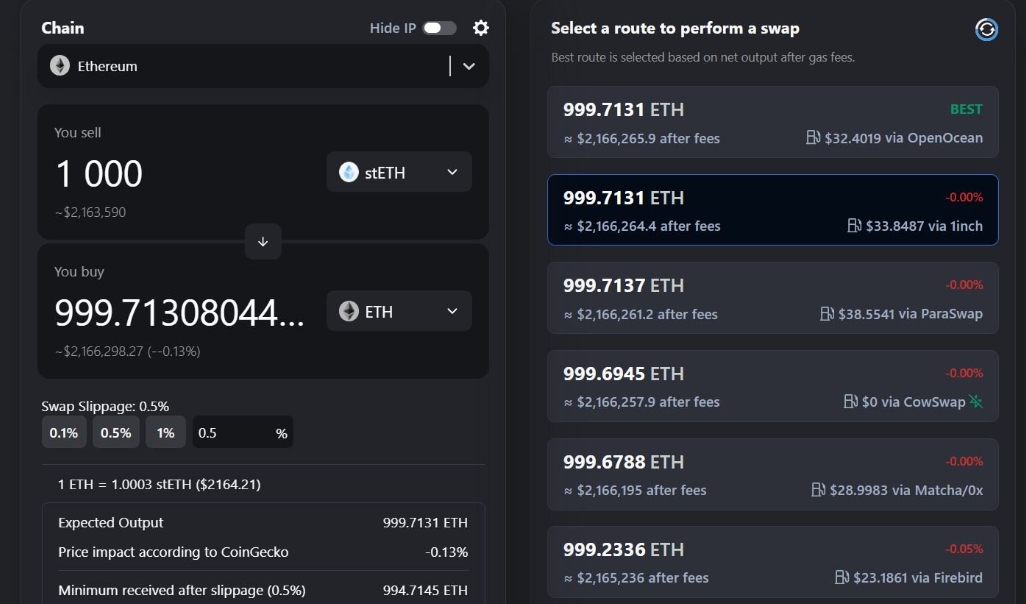
Like many other DeFi primitives, any DeFi protocol can integrate stETH (as Aave, Uniswap, Curve, and Pendle have done). Each integration adds utility and demand for liquid staking users.
By securing over $20 billion in assets, Lido earns over $80 million in annual fees ($40+ million accruing to the Lido DAO), supporting a fully diluted valuation (FDV) above $2 billion (top 35 tokens by market cap). Notably, liquid staking tends toward winner-takes-all dynamics. Lido controls nearly 80% of Ethereum’s LST market, while its closest competitor, Rocket Pool, manages nearly ten times less ETH (Rocket Pool: $2B vs Lido: $18B).
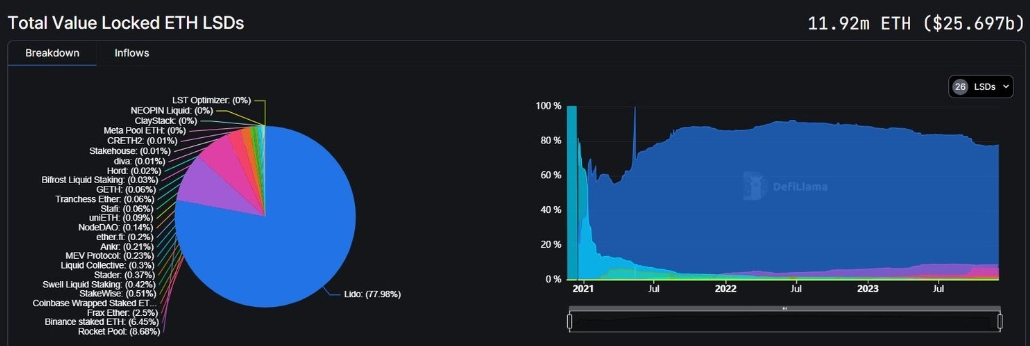
These network effects are driven by several factors:
-
Deep Liquidity of Lido’s stETH vs Other LSTs: On Curve—the primary DEX for stable assets—the stETH/ETH pool holds $220 million in TVL and offers ~2% APY in liquidity rewards. In comparison, the rETH/ETH pool has only $8 million in TVL. Greater liquidity depth allows stETH holders to exit positions with lower slippage and market impact—a critical value proposition for any LST.
-
Security & Lindy Effect: Annual yields from staking are relatively low (3–4%). Therefore, protocol-level security—preventing bugs in minting/redeeming stETH for ETH—is paramount. Users favor protocols with the longest proven security track record.
-
DeFi Integration: Leading LSTs enjoy broader integrations across DeFi (lending, AMMs, yield protocols, derivative collateral), increasing their utility relative to smaller alternatives. Currently, 36% of stETH is actively deployed in DeFi liquidity pools and lending markets.
These network effects reinforce Lido’s dominance, capturing nearly one-third of all staked ETH and steadily increasing its share over the past 2–3 years. As the percentage of staked ETH continues to rise, Lido benefits disproportionately. Indeed, Lido’s dominance has prompted calls for scrutiny of its systemic importance on Ethereum, including proposals for dual-token governance (LDO + stETH) to better align Lido DAO with broader Ethereum/stETH holder interests.
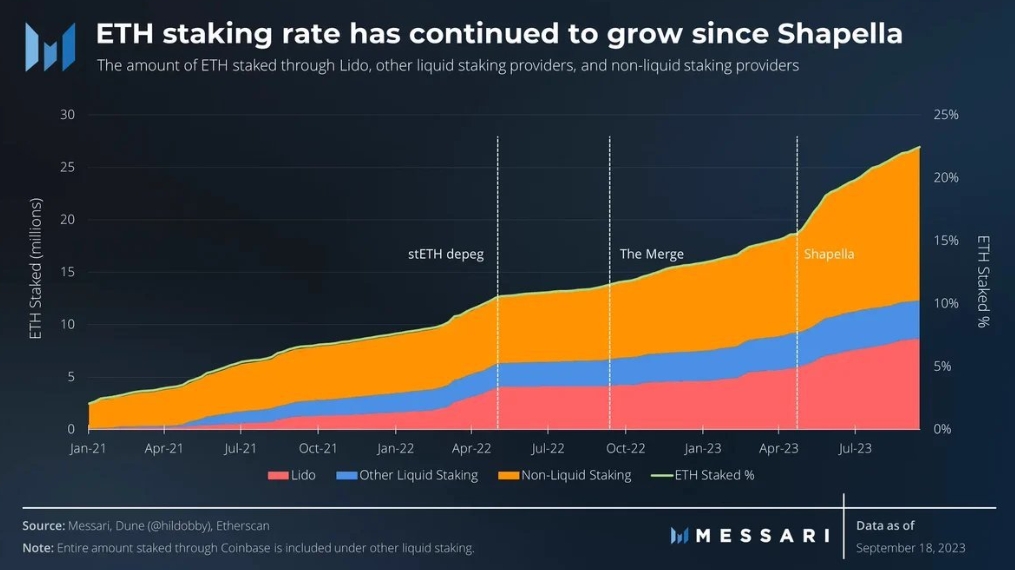
Given Lido’s success (>$2B FDV protocol) and strong network effects in the LST space, similar efforts have emerged across other Layer 1 ecosystems—including Solana (Marinade, Jito), Avalanche (BENQI), BNB Chain (Binance, Stader), and Cosmos (Stride).
Liquid staking penetration varies widely by ecosystem. Ethereum leads with 41%, while most others remain in the 2–7% range.
Unlike other major L1 ecosystems, Cosmos was designed as the “Internet of Blockchains.” Cosmos provides an open-source SDK (Cosmos SDK), enabling developers to build and launch custom blockchains. The first chain built on this framework was Cosmos Hub (ATOM, $2.7B market cap). ATOM serves as the economic hub connecting and securing other chains in the Cosmos ecosystem.
Over time, numerous public chains have launched using the Cosmos SDK, including Osmosis (AMM), Injective (DeFi-focused chain), Sei (DeFi-focused chain), Celestia (data availability layer), dYdX (perpetuals exchange), Kujira (Cosmos DeFi), Terra (formerly home to UST stablecoin, now defunct). Each operates as a standalone PoS blockchain secured by its own validator set and consensus mechanism. Thus, each chain has its own native token (OSMO, INJ, SEI, TIA, DYDX, KUJI, LUNA) used to secure the network—similar to how ETH, SOL, and AVAX secure their respective blockchains.
Most Cosmos chains use variants of BFT (Byzantine Fault Tolerance), achieving finality when 2/3 of nodes agree on block state. Consequently, most rely on delegated proof-of-stake models that limit the number of validators to ensure fast finality (within seconds). In contrast, Ethereum imposes no validator cap (approximately 880,000 validators as of December 3, 2023, each with 32 ETH), also requiring 2/3 majority for finality but resulting in much longer finality times (~13 minutes).
A key feature of the Cosmos ecosystem is IBC (Inter-Blockchain Communication), a trustless bridging standard between Cosmos chains. IBC handles data transmission and authentication. By defining common standards across Cosmos-based chains, IBC enables trustless interoperability without additional security assumptions—unlike bridges connecting non-Cosmos chains, which rely on multisig (Multichain), optimistic proofs (Synapse), or active validator sets (Axelar). This capability is why Cosmos is known as the “Internet of Blockchains,” enabling seamless communication and composability.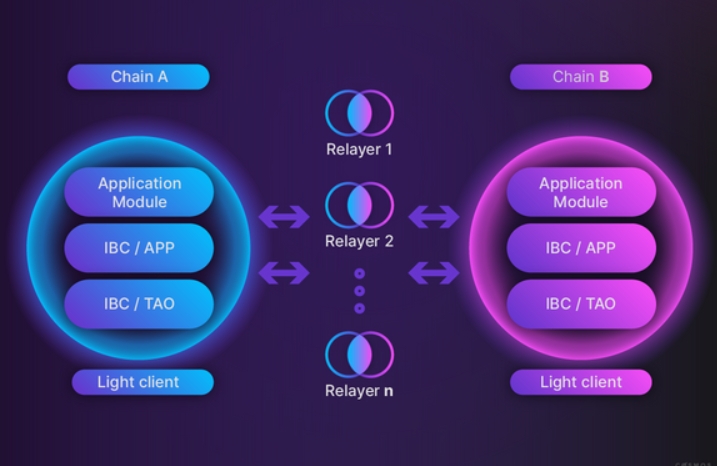
Like other PoS blockchains, Cosmos chains enforce unstaking periods for staked tokens. These range from a minimum of 14 days (Osmosis) to a maximum of 30 days (dYdX), with most averaging 21 days. During this time, staked assets cannot be used in DeFi (lending, liquidity provision, yield hedging), and users face long delays if they wish to sell.
Introduction to Stride
Stride is a rapidly emerging liquid staking protocol in the Cosmos ecosystem. Founded in June 2022 by Vishal Talasani, Aidan Salzmann, and Riley Edmunds, the team raised a $6.7 million seed round from prominent investors including North Island VC, Distributed Global, and Pantera Capital.
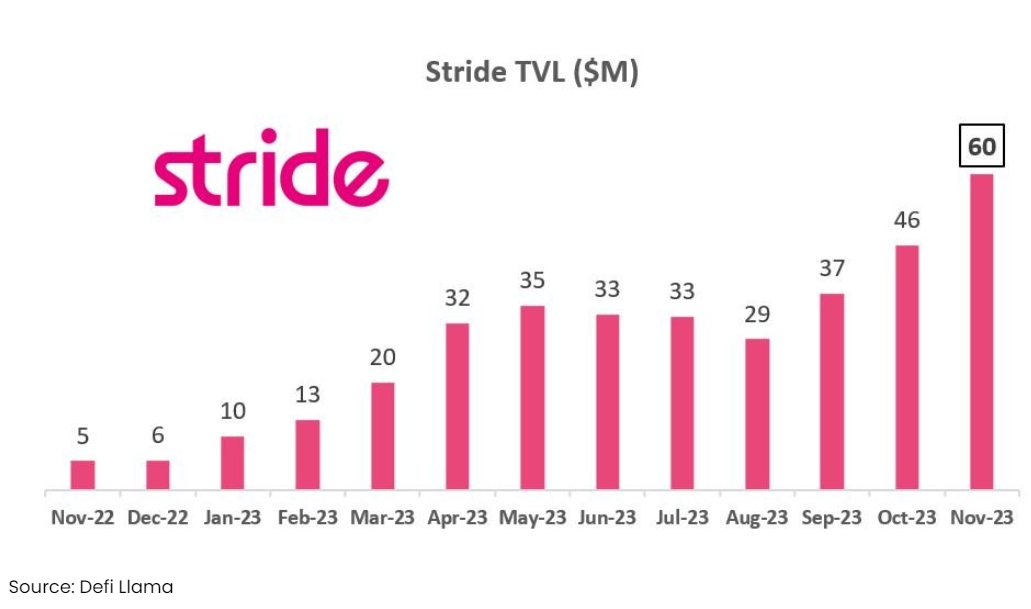
Stride launched its mainnet in September 2022 and has grown to over $60 million in TVL over the past year. It supports all major Cosmos chains and tokens—including ATOM, OSMO, INJ, and JUNO—and plans to add support for Celestia and dYdX.
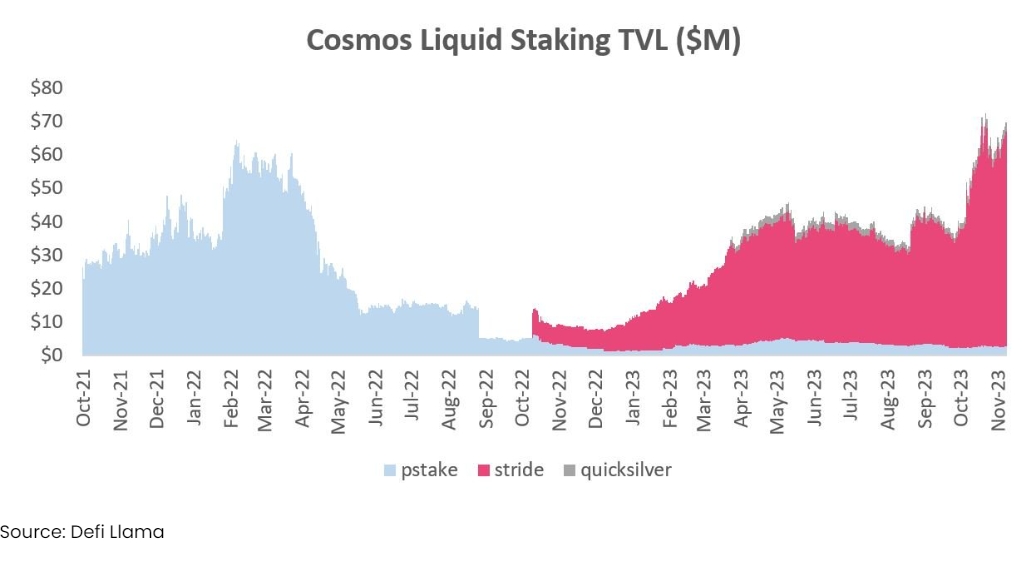
There are three primary players in Cosmos liquid staking: Stride, pStake, and Quicksilver.
pStake was the first mover, launching in February 2022 and quickly attracting $60 million in TVL via airdrops and stkOSMO support. However, during the bear market and over the past 18 months, Stride has surged ahead and surpassed pStake in TVL.
Quicksilver is another emerging player but has struggled to grow beyond $2–3 million in TVL.
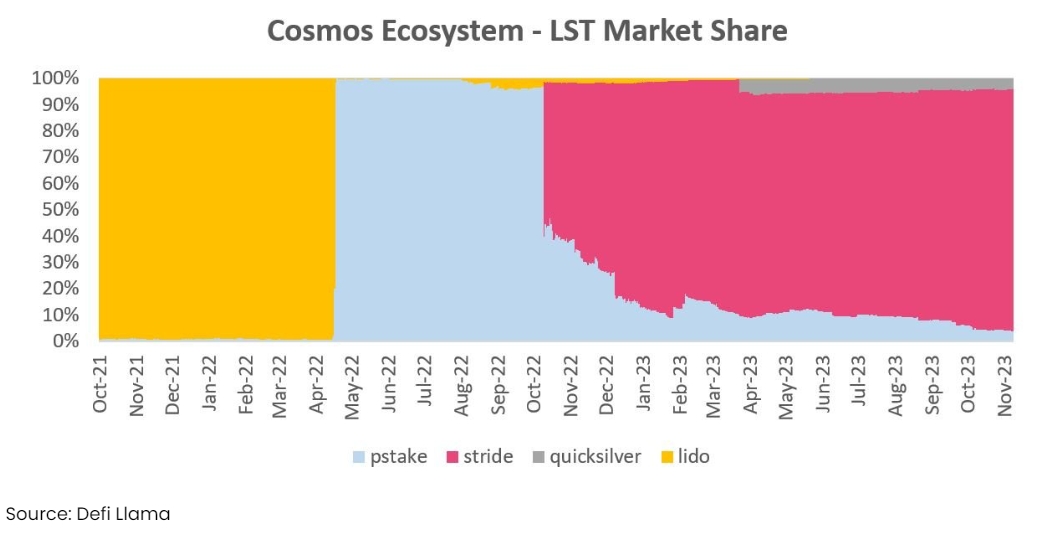
Currently, Stride dominates the Cosmos liquid staking market (LST market), commanding over 90% of LST TVL.
pStake and Quicksilver each hold around 4% share.
It should be noted that Lido once controlled nearly 100% of liquid staked assets in the Cosmos ecosystem through its LUNA LST, which peaked at almost $10 billion TVL on April 6, 2022. However, on May 10, 2022, LUNA entered a death spiral and collapsed to near zero following UST depegging and infinite minting of LUNA. Subsequently, Lido discontinued support for Terra and refocused entirely on Ethereum. Today, Lido holds no LSTs in the Cosmos ecosystem and has no known plans to re-enter.
Staking penetration in the Cosmos ecosystem remains in early stages—only 2% for ATOM and 7% for OSMO. Currently, these two chains account for over 85% of Stride’s TVL. Compared to Ethereum’s 41% penetration (and rising), this suggests 5–20x headroom for growth even before factoring in newly supported chains and upcoming expansions (Celestia, dYdX).
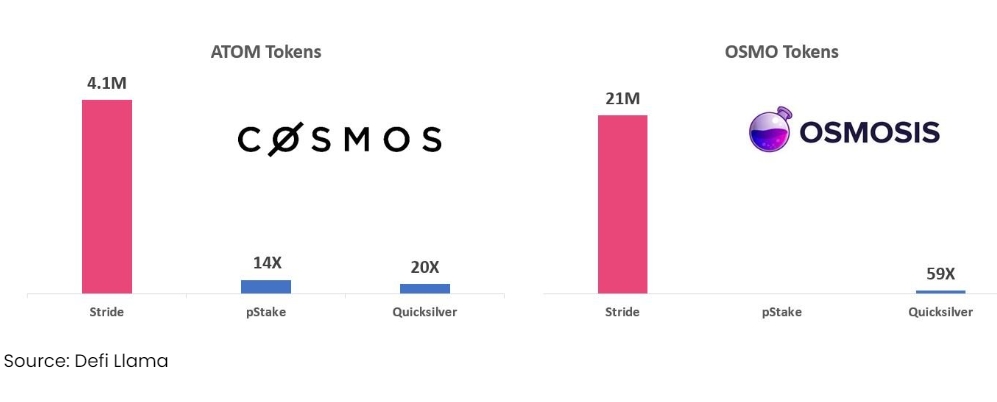
Stride holds 14–20x more staked ATOM than its two competitors combined (over 85% market share), and 59x more OSMO than Quicksilver (over 95% share). This leadership position is highly compelling, and we believe it will persist over time.
Stride also holds over 95% market share across other LSTs, including INJ, EVMOS, and JUNO.
In our view, Stride’s success stems from multiple factors:
-
Broad Chain Support: Stride supports 10 chains in the Cosmos ecosystem. Since launching in February 2022, pStake has only added support for two assets (ATOM and XPRT).
-
Ecosystem Alignment: Stride is deeply integrated with the Cosmos ecosystem. Starting July 19, 2023, Stride began leveraging ATOM (Cosmos Hub) for economic security—meaning staked ATOM holders secure the Stride blockchain and participate in block production. In return, Stride shares 15% of its emissions and protocol revenue with ATOM stakers.
-
Stronger Economic Security: Using ATOM for consensus gives Stride significantly greater economic security compared to pStake (market cap under $10M). Furthermore, Stride’s chain design is minimalist, with no planned non-LST products on its roadmap, simplifying security considerations.
-
Network Effects: As Stride reaches critical mass in asset support across Cosmos, network effects begin to emerge. Enabling IBC support for new Cosmos chains requires minimal code changes, allowing Stride’s scale and track record to make it the preferred and safest partner for new chains like Celestia and dYdX launching their LSTs.
-
Deep AMM Liquidity: Stride maintains significantly deeper liquidity in AMM pools compared to competitors. For example, the stATOM pool on Osmosis exceeds $17 million in liquidity, while pStake’s stkATOM pool remains below $1 million. Much of this liquidity comes from “protocol-owned liquidity” (POL) contributions by partner chains—for instance, Osmosis deployed $11 million in OSMO to the stOSMO pool, and Juno contributed $1.65 million in JUNO to the stJUNO pool—reducing Stride’s need for external incentives.
-
DeFi Integration: Stride’s LSTs are now usable across various Cosmos applications, including Umee ($6.5M TVL), Shade ($3M), Kujira ($1.5M), Mars ($1M), and others. These integrations increase utility and strengthen network effects. Stride’s focus solely on LSTs—without competing in other DeFi sectors—also facilitates wider adoption and integration.
Stride charges a 10% fee on staking revenue collected through the protocol. Of this, 8.5% goes to the Stride protocol (distributed to STRD stakers), and 1.5% is shared with ATOM/Cosmos Hub to provide economic security for the Stride blockchain.
There are important differences between Cosmos and Ethereum regarding staking economics:
-
Validator Fees: On Ethereum, each validator requires 32 ETH to activate. Hence, Lido charges a 10% fee (same as Stride), but pays 5% to node operators, retaining only 5% for the DAO. In contrast, Cosmos uses delegated PoS models where delegators simply assign stakes to existing large validators—eliminating extra coordination and cost-sharing with validators. This results in higher net margins, making Stride a more profitable liquid staking protocol from a fee perspective.
-
Staking Yields: Cosmos chains typically launch with higher emission and inflation rates. For example, ATOM offers ~18% APY, OSMO ~9%, JUNO ~15%, and INJ ~15%. In contrast, Ethereum’s current staking yield is only 3–4%. Higher yields naturally encourage greater LST adoption and make LSTs more attractive when deployed into DeFi protocols.
With TVL growing from $5 million to $60 million over the past year and average staking APY around 16%, Stride’s annualized revenue has reached nearly $1 million.
We believe the following upcoming developments in the Cosmos ecosystem will drive Stride’s growth and present compelling investment opportunities in the next 6–12 months. Stride has already expressed intent to support liquid staking for dYdX and Celestia via stDYDX and stTIA tokens.
-
dYdX ($3–4B FDV): dYdX is the largest decentralized derivatives exchange, with over $400B in trading volume and ~$100M in annualized fee revenue. dYdX is developing product upgrades (v4), migrating its trading platform from StarkEx to a custom-built Cosmos chain. Crucially, trading fees will now accrue to staked DYDX holders (with a 30-day unbonding period). As decentralized perpetual markets grow from 1–2% penetration toward spot-like levels (~30%), dYdX could become one of the highest-FDV chains in the Cosmos ecosystem. On November 21, 2023, Stride announced plans to launch stDYDX and issued 250,000 STRD to incentivize early adoption.
-
Celestia ($800M–$900M FDV): Celestia is a leading data availability (DA) layer and part of Ethereum’s modular scaling roadmap. It launched mainnet on October 31, 2023. As Ethereum and its L2s grow in usage, Celestia stands to benefit. Stride has submitted a proposal to Celestia’s governance body to initiate support for its LST (stTIA).
-
Akash (> $400M FDV): Akash is a decentralized compute marketplace recently focused on GPU resources. Since launching GPU mainnet in September, Akash has scaled to ~200 GPUs, generating ~$500K–$1M in annualized GMV. Importantly, a portion of Akash’s 20% revenue share will be distributed to stakers along with annual token emissions.
-
Noble (Native USDC on Cosmos): Circle recently launched native USDC on Cosmos via Noble, an application-specific chain built for native asset issuance. Currently, over $30 million in Noble USDC exists on Cosmos. As demand flows in from dYdX, Celestia, Akash, and others, issuance of Noble USDC on Cosmos could grow substantially, boosting activity across other Cosmos apps like Osmosis—which accounts for a large portion of Stride’s TVL.
Long-term, dYdX and Celestia represent an opportunity for Stride to access over $10 billion in FDV—compared to ~$6 billion from currently supported chains. We believe these additions, alongside continued LST penetration on existing chains (ATOM, OSMO, etc.), will serve as powerful drivers of Stride’s future growth.
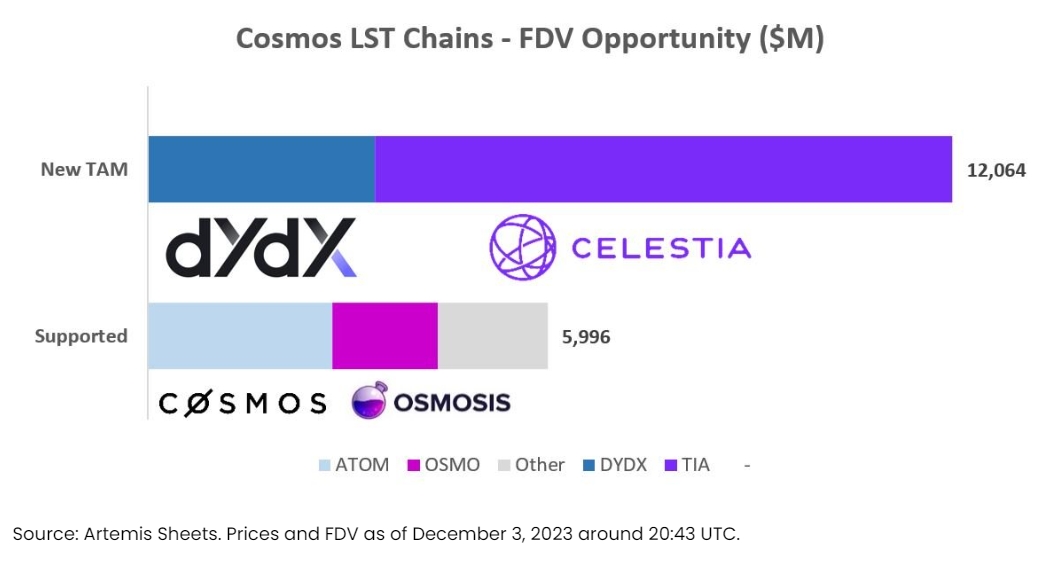
Going forward, Stride aims to be the pioneer for new Cosmos chains. So long as the IBC/Cosmos SDK remains attractive for developers building app-chains, Stride can continue supporting, partnering with, and benefiting from the growth of new ecosystems.
Valuation and Scenario Analysis
Below, we outline several scenarios based on key drivers for Stride. Our base assumptions include:
-
Stride FDV Growth: We project Stride’s FDV to grow from $6B to $25B. Currently, Stride derives ~$6B FDV from existing chains (primarily ATOM, OSMO, INJ). We assume this grows to $10B over one market cycle. Stride is developing support for dYdX and Celestia (TIA), which together represent nearly $10B FDV today. Given our bullish outlook, we assume their combined FDV increases by 50% to $15B.
-
Stable Staking Ratios: Average staking ratios across Cosmos chains remain stable at ~50%. No significant changes for major existing chains like OSMO and ATOM.
-
dYdX and Celestia Staking Drivers: dYdX’s new product returns fees to token holders, likely driving staking ratios comparable to other L1s/Cosmos chains. Over 16 million dYdX tokens are already staked. Celestia (TIA) requires a robust validator set to secure its DA layer, potentially leading to high staking adoption.
-
Growth in Liquid Staking Penetration: On Ethereum, liquid staking accounts for 41% of all staked ETH (with LDO alone capturing >30%). As overall activity in the Cosmos ecosystem expands (DeFi, AMMs, lending, perpetuals), we expect LST penetration to grow significantly—from current 2% to 15%, still well below Ethereum. Given longer unstaking periods in Cosmos (21+ days), this creates stronger tailwinds for LST adoption.
-
Market Share Stability: LST markets tend toward winner-takes-all dynamics, as seen with Lido on Ethereum. Since January 1, 2023, Stride’s market share has grown from 72% to 92%, and we expect it to maintain dominance.
-
Stride Maintains Current Fee Structure: We believe Stride may gain modest pricing power in the future, but do not assume this in base or optimistic cases. Thus, we maintain an 8.5% net revenue share assumption. Based on these assumptions, we can construct financial projections and valuation models to evaluate Stride’s potential under different market conditions.
-
Investment Risks and Mitigation Strategies for Stride
In our investment in Stride, we actively monitor several key risks and have developed corresponding mitigation strategies.
-
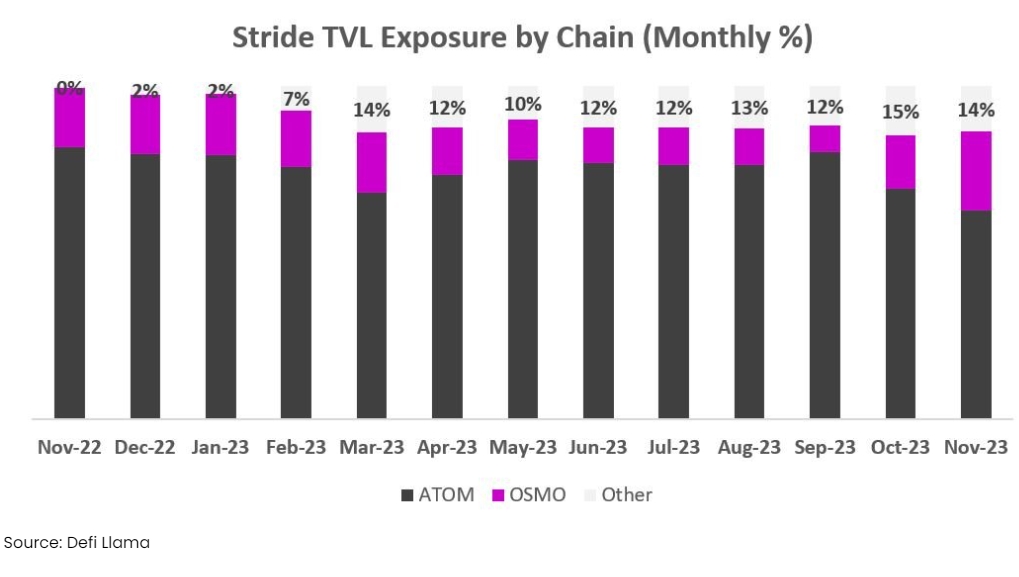
Exposure to Cosmos Ecosystem: Currently, over 85% of Stride’s TVL is concentrated in just two Cosmos chains—ATOM (63%) and OSMO (24%). This makes Stride’s performance closely tied to these projects and their token valuations. As Stride expands to support new chains with distinct demand drivers (e.g., dYdX linked to perpetuals, Celestia to Ethereum rollup DA needs), we expect this concentration risk to decrease over time. Since early 2023, Stride’s non-ATOM/OSMO TVL share has grown from 2% to 14–15%.
-
Competition Risk: While liquid staking often leads to winner-take-all outcomes, the Cosmos LST market remains nascent, with only ~2% penetration. The ecosystem has seen shifts in leadership—Lido and pStake both lost share amid changing market conditions (LUNA collapse, bear market). There remains a risk that Stride fails to maintain dominance in Cosmos liquid staking. Recently, new entrants like Milky Way are attempting to compete with Celestia’s LST (TIA).
-
Osmosis Superfluid Staking: Osmosis introduced Superfluid Staking in early 2022, allowing liquidity providers on its DEX to earn OSMO staking rewards while providing AMM liquidity. While not identical to liquid staking, it could serve as an alternative to Stride’s stOSMO (which accounts for 22% of TVL). However, Superfluid Staking only grants LPs 75% of full staking rewards (after Stride’s 10% fee), making Stride’s offering superior. Moreover, despite this competition over the past 12–18 months, Stride has succeeded in the OSMO ecosystem (achieving 8% liquid staking penetration, higher than ATOM).
Special thanks: We gratefully acknowledge Vishal Talasani (Co-founder of Stride), Jeff Kuan (Axelar), Paul Veradittakit (Pantera Capital), and Cody Poh (Spartan Group) for their review and valuable feedback.
Join TechFlow official community to stay tuned
Telegram:https://t.me/TechFlowDaily
X (Twitter):https://x.com/TechFlowPost
X (Twitter) EN:https://x.com/BlockFlow_News
 @Modular_Capital


