








Metis: The Dark Horse in Layer2 Competition, Riding the MEME Narrative?
TechFlow Selected TechFlow Selected
Metis: The Dark Horse in Layer2 Competition, Riding the MEME Narrative?
The biggest recent hype surrounding Layer2 is undoubtedly the Cancun upgrade, but this will not create a unique advantage for Metis—it will benefit the ecosystem broadly.
 Navigating Web3 tides with focused insights
Author: YBB Capital Researcher Ac-Core
Preface:
Layer2 is generally perceived as an Ethereum-aligned scaling solution. However, due to market rumors suggesting that Metis's founding team includes "Vitalik Buterin’s mother or close friend," Metis has been labeled a meme-driven Layer2—a direct challenge to investors’ faith in Ethereum orthodoxy. Yet blockchain remains fundamentally a fusion of “code and finance.” From an investment perspective, technology and markets are perpetually intertwined yet divergent forces. Can Metis leverage the centralized sequencer issues of other Rollups and their tightly controlled economic models to stand out among numerous Layer2 solutions?
About Metis
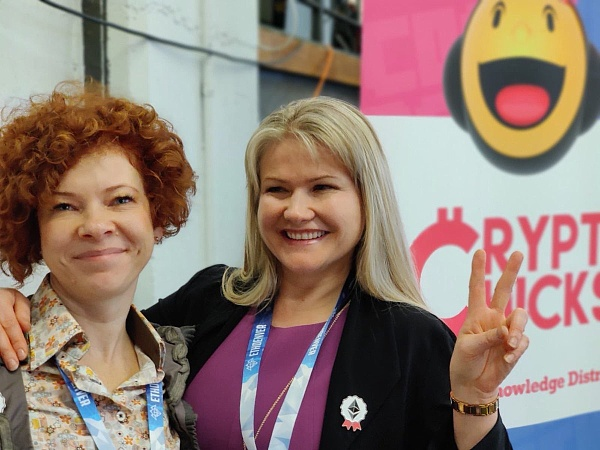
(Left: Natalia Ameline, Right: Elena Sinelnikova)
The origin of its meme status stems from information on Metis’s official website: Metis co-founder and CEO Elena Sinelnikova has long promoted blockchain education and outreach. She is also a co-founder of CryptoChicks, the world’s largest non-profit educational community for women in blockchain. Natalia Ameline, another co-founder of CryptoChicks, is the mother of Ethereum founder Vitalik Buterin. Additionally, Vitalik Buterin’s father, Dmitry Buterin, founded Blockgeeks, a blockchain education company focused on developing blockchain-related courses. The Metis Network was established in 2018 and launched in May 2021.
Metis is an Ethereum-based Layer2 and one of the earliest forks of Optimism. It operates similarly to other Layer2 solutions but stands out as the first successful implementation of decentralized sequencers within an Optimistic Rollup framework. The network employs a Proof-of-Stake Sequencer Pool mechanism to ensure continuous availability and censorship resistance, incorporating fee-sharing and sequencer staking. These sequencers determine transaction ordering and must obtain signatures from at least two-thirds of the sequencer pool before submitting data to Layer1. To prevent malicious behavior, Metis introduces verifiers who conduct random sampling checks to confirm that sequencers correctly order transactions.
While MPC (Multi-Party Computation) offers advantages in privacy protection and decentralization, it presents notable drawbacks in consensus-dependent blockchain networks. Without relay nodes to distribute information, communication rounds increase significantly, driving up network communication costs. Metis addresses this by transforming the single-point sequencer into a sequencer pool, achieving decentralization through node staking and rotation mechanisms, enabling decentralized sequencers to reach consensus via signing. Although this may result in network costs not being substantially lower than Layer1, it mitigates MEV risks and eliminates single points of failure, while distributing rewards to stakers.
Recent rapid growth in Metis TVL has drawn attention to the importance of decentralized sequencers. According to L2BEAT data, Metis ranks fifth among OP-based Layer2 networks by TVL. Metis’s decentralized sequencer design aims not only to proactively distribute value but also to demonstrate how native Layer2 tokens can capture economic value.
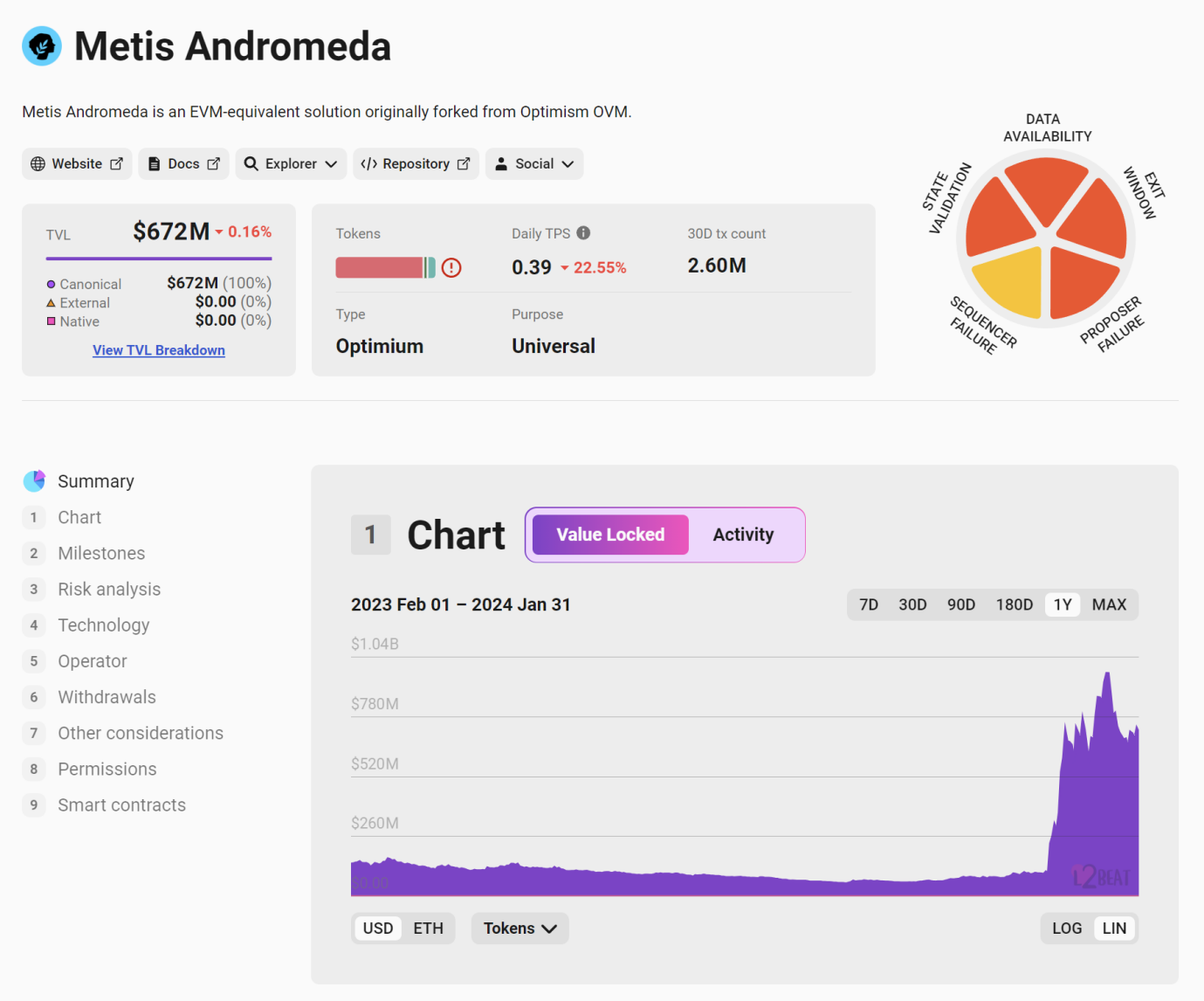
Image source: L2BEAT, data as of 24/02/01
Three Key Elements of Rollup
Rollup is one of several Layer2 scaling solutions, also known as rollups. Its core principle involves offloading transaction computation and storage from Ethereum mainnet (Layer1) to Layer2 for processing and compression, then uploading the compressed data back to Ethereum, thereby enhancing scalability.
Rollups are categorized into ZK Rollups and Optimistic Rollups based on how they ensure validity (correctness) of compressed data. They involve off-chain computation, bundling transactions every few minutes and posting them on-chain for batch verification and accounting—hence the name "rollup." While commonly referred to as Rollup chains, the off-chain portion isn't a full blockchain. Literally, a Rollup bundles multiple transactions into a single Rollup transaction; all nodes receiving this transaction accept only the execution results without re-executing the bundled logic.
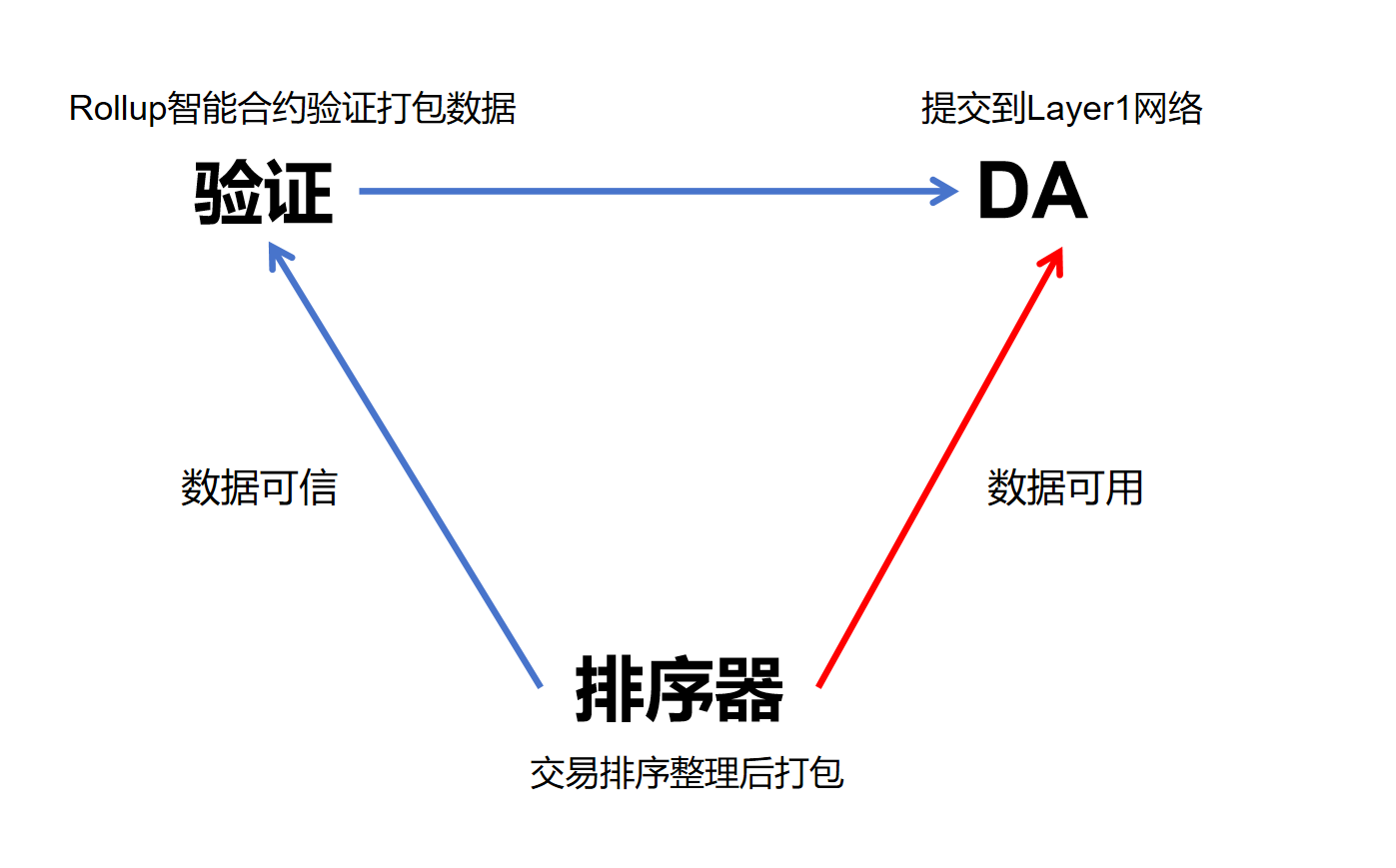
Image source: Ac-Core original
● Sequencer
The sequencer is responsible for ordering, organizing, and batching transactions on Layer2 before submitting them to the Layer1 network. Most current Layer2 projects rely on a single sequencer (often operated by the project team), which poses two security risks: 1) Single point of failure—if the sequencer fails due to attack or technical issues, the entire network halts; 2) Scalability limitations—a single sequencer may struggle with growing transaction volumes.
● Verification
Transaction batches submitted by sequencers require verification. Currently, most Ethereum Rollups use Ethereum smart contracts to verify data integrity. Two primary methods exist: ZK Rollup (Zero-Knowledge Proof Rollup) and Optimistic Rollup (Optimistic Rollup). For example:
ZK Rollup:
Verification Method: ZK Rollup uses zero-knowledge proofs to validate the correctness of all transactions executed on Layer2. Zero-knowledge proofs allow validators to confirm validity without knowing transaction details;
Privacy Protection: ZK Rollup emphasizes user privacy because what is submitted to Layer1 is a cryptographic “proof” rather than detailed transaction data. Actual transactions occur on Layer2, while Layer1 only verifies the validity of the zero-knowledge proof.
Optimistic Rollup:
Verification Method: Optimistic Rollup adopts an “optimistic” approach—assuming all transactions are valid unless challenged. Verification occurs via fraud proofs, where someone submits evidence on Layer1 proving a Layer2 transaction violated rules;
Real-Time Performance: Since transactions are assumed valid, Layer2 processing is fast, with verification triggered only when disputes arise.
● DA (Data Availability)
DA refers to data availability—the requirement that state data for every off-chain transaction be publicly published so others can access and utilize it. Some Layer2s write transaction state data directly onto Ethereum Layer1 to achieve DA. Others store critical data on third-party blockchains, relying on data trustworthiness. Examples include:
DA in Optimistic Rollup: Ensures all Layer2 transaction data is available on Layer1. If data is unavailable, anyone can raise a dispute on Layer1, preventing potential tampering or omissions;
Commitment in ZK Rollup: All computations and storage happen on Layer2, but only final results (called Commitments) are submitted to Layer1. Zero-knowledge proofs verify these Commitments’ correctness.
Note: In ZK Rollup, "Commitment" focuses on verifying the correctness of computed results on Layer2, whereas "data availability" ensures Layer1 can access all Layer2 transaction data. These concepts complement each other to maintain system security and reliability.
Among the three key Rollup components, the sequencer is considered the most critical. It handles off-chain transaction sorting and compression on Layer2. Because this process involves trust in data validity, ensuring data availability is crucial. However, when the sequencer itself becomes decentralized, the urgency around data trust and availability verification may diminish.
Metis Decentralized Sequencer Based on PoS Consensus
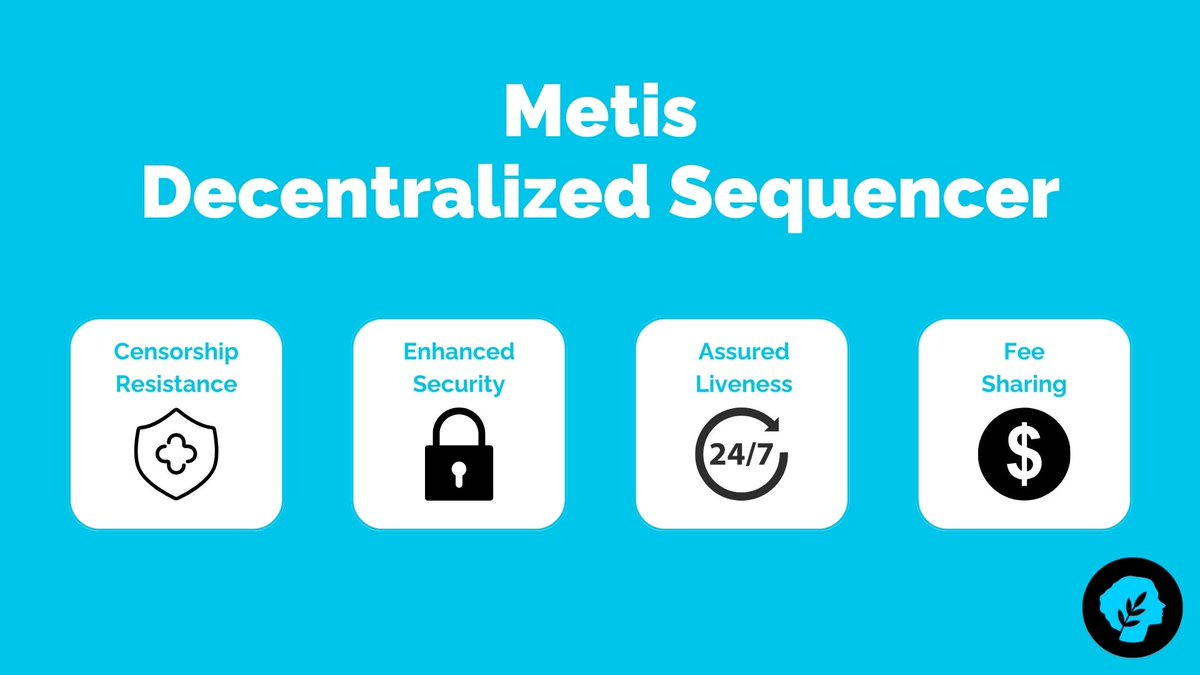
Image source: Metis L2
● Sequencer Selection
On Metis, users who stake $METIS become eligible to run nodes. Their weight is calculated based on the amount staked, and the algorithm assigns each node a specific range. Metis Rollup improves upon the "transaction data verification module" by introducing a new role—"verifier"—on Layer2, incentivizing quick validation through competitive mining. Similar to PoS-based Layer1 networks, Metis requires nodes to validate transactions. As such, data packaged and sent from Metis to Layer1 faces no disputes, eliminating delays during asset withdrawals from Metis to Ethereum mainnet.
Compared to standard Optimistic Rollups, a key distinction is that withdrawing assets from Metis to Ethereum Layer1 takes only minutes or hours—highlighting Metis Rollup’s superior efficiency and speed. Overall, nodes with higher stakes have greater chances of joining the sequencer pool, though randomness is also factored in.
● MPC (Multi-Party Computation) in Sequencers
Metis achieves sequencer decentralization through three key roles: Admin, Sequencer, and PoS-based consensus layer.
Admin: Responsible for setting key network parameters and managing eligibility for sequencers entering the pool. Protocol teams no longer hold absolute control; instead, proposals are reviewed and executed by the admin. A major challenge in decentralization lies in managing sequencers in a decentralized yet efficient manner;
Sequencer: Metis uses TSS (Threshold Signature Scheme)-based MPC to manage multi-sequencer signing rights. Each sequencer proposes a batch, and all sequencers participate in signing via MPC. If more than 2/3 sign, the batch is deemed valid and can be submitted to the L1 Rollup contract. The MPC signature process is managed by another contract within the PoS network. When the PoS network detects no MPC address, it triggers the MPC module to generate keys;
PoS-Based Consensus Layer: This layer manages the contract governing sequencer signing rights, monitors the MPC address, and triggers key generation. Generated keys are sharded and distributed to each sequencer in the pool for MPC signing. This module covers full key lifecycle management—including multisig generation, key re-sharing, application signing, and signature deletion.
TSS is chosen for its high fault tolerance and flexibility. Unlike traditional multisig, TSS does not require on-chain validation of each individual signature. Instead, it aggregates all participants' signatures and performs unified verification, improving confirmation speed. Furthermore, communication between PoS nodes uses a dedicated Tendermint channel, while MPC runtime communication relies on the libp2p protocol. This entire architecture is designed for efficient, secure decentralized sequencer management.
● Metis Sequencer Transaction Flow
1. User initiates a transaction; 2. Transaction forwarded to network sequencer nodes; 3. Block generation: Sequencer creates a block upon validating transactions; 4. Finalization: MPC nodes merge blocks and forward them to the Ethereum main chain.
● MetisEDF
The Metis Ecosystem Development Fund (MetisEDF) provides financial support across multiple areas, including incentivizing protocol development and deployment, liquidity provision, security audits, and liquidity mining programs. Allocations include:
Sequencer Mining: 65.4% (3 million $METIS / >$260M);
Ecosystem Grants: 34.6% (1.6 million $METIS / >$140M).
Problems with Centralized Sequencers
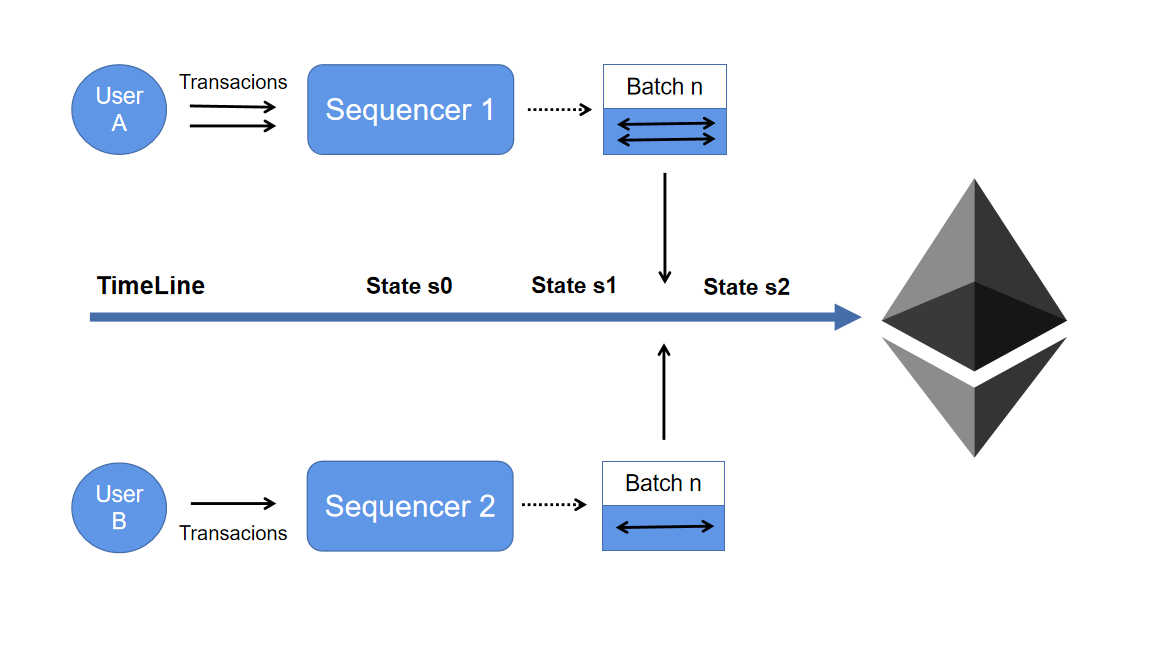
Image source: Ac-Core original
Ethereum works by having every node store and execute every transaction submitted by users—an extremely secure but costly model, necessitating scaling via Rollup solutions. Simply put, Rollup = a set of contracts on Layer1 + a Layer2 network of its own nodes, i.e., on-chain smart contracts + off-chain aggregators, relying on Ethereum for settlement, consensus, and data availability, while handling execution independently.
● On-chain smart contracts mean the trust model relies on Ethereum smart contracts, inheriting Ethereum’s security;
● Off-chain aggregators execute and bundle transactions off-chain, compress large volumes of transactions, and post them to Ethereum mainnet for faster, cheaper operations.
A Layer2 network consists of many components, with the sequencer being the most important. It receives Layer2 transaction requests, determines execution order, batches transactions, and sends them to the Rollup’s Layer1 contract. Currently, all Ethereum Layer2 Rollups use centralized sequencers—Metis gains a first-mover advantage by pioneering decentralized sequencers.
Layer2 full nodes can obtain transaction sequences in two ways: directly from the sequencer or by reading batches posted by the sequencer to Layer1. The latter offers stronger immutability. Since transaction execution alters the blockchain ledger state, Layer2 full nodes must synchronize both transaction order and ledger state with the sequencer to ensure consistency. Thus, the sequencer’s role extends beyond sending transaction batches to Layer1—it must also transmit updated state results (StateRoot/StateDiff) to Layer1. In simple terms, the sequencer processes and orders transactions into blocks added to the blockchain, handling batched transactions and publishing them to Layer1 smart contracts.
For Layer2 full nodes, once they obtain the initial StateRoot and transaction sequence from Layer1 Rollup, they can reconstruct the Layer2 ledger and compute the latest StateRoot. Conversely, if the locally computed StateRoot differs from the one published by the sequencer on Layer1, it indicates fraudulent behavior by the sequencer. Hence, Layer1 is inherently more decentralized, trustless, and secure compared to Layer2’s internal network.
In the case of Optimistic Rollup, Layer2 full nodes can submit fraud proofs to show that data published by the sequencer on Layer1 is incorrect. However, for systems like Optimism lacking active fraud proofs, if the sequencer operator wishes to steal user assets on Layer2, they could simply forge transactions transferring users’ funds to their own address, then use the Rollup’s built-in bridge to move stolen assets to Layer1.
Our View on Metis
Image source: Chaindebrief
The biggest recent hype in the Layer2 space is undoubtedly the Cancun upgrade—but this benefits all Layer2s equally, not uniquely Metis. Setting aside market sentiment around "Vitalik Buterin’s mother/friend," Metis’s key differentiator lies in its decentralized sequencer and decentralized economic model. Its TVL trend reflects broader market confidence in Metis.
Unlike other Layer2s that retain tight fiscal control, Metis distributes more revenue back to users. Most OP Rollups operate under strong central control, issuing OP tokens to stimulate ecosystem activity and profit from gas spreads. In contrast, Metis shares revenue with stakers through competitive participation, unleashing the financialization potential of Layer2 infrastructure and capturing significant market attention.
Meme attributes represent culture and socio-economic factors. When investing in memes, beyond expectations of 10x, 100x, or even 1000x returns, much comes down to认同 and appreciation for the narrative and associated elements. Ultimately, price action is king—Metis’s rising TVL reflects market validation of its investment thesis. Regarding meme characteristics, viewed from a market rather than technical standpoint, our view is: if inscriptions test public chain performance, memes serve as a litmus test for market acceptance.
Join TechFlow official community to stay tuned
Telegram:https://t.me/TechFlowDaily
X (Twitter):https://x.com/TechFlowPost
X (Twitter) EN:https://x.com/BlockFlow_News
 @YBBCapital







