
Pufaer’s Three Killer Features: Binance-Invested Project Set to Launch Staking
TechFlow Selected TechFlow Selected
Pufaer’s Three Killer Features: Binance-Invested Project Set to Launch Staking
Puffer has now launched its first Campaign event, "Crunchy Carrot," where participants have the chance to earn event points.
 Navigating Web3 tides with focused insights
By angelilu, Foresight News
The launch of EigenLayer has opened a new frontier in Ethereum's ecosystem—liquid restaking—and the market is actively searching for high-potential projects with strong wealth effects within this emerging sector. Puffer Finance, which recently secured strategic investment from Binance Labs, has drawn significant attention from both the market and the community.
"Liquidity" remains a key driver of innovation and growth. EigenLayer recently announced it will reopen its LST restaking window and eliminate previous LST caps—a move that will undoubtedly accelerate development in the Ethereum staking space. At the same time, Puffer has also unveiled major progress: it will open token staking this week, allowing users to stake ETH, stETH, USDT, and USDC while earning rewards in both Puffer and EigenLayer points. Puffer has already launched its first campaign, "Crunchy Carrot," where participants can earn activity points. The SlowMist team will audit the campaign to enhance security and transparency.
What is Puffer?
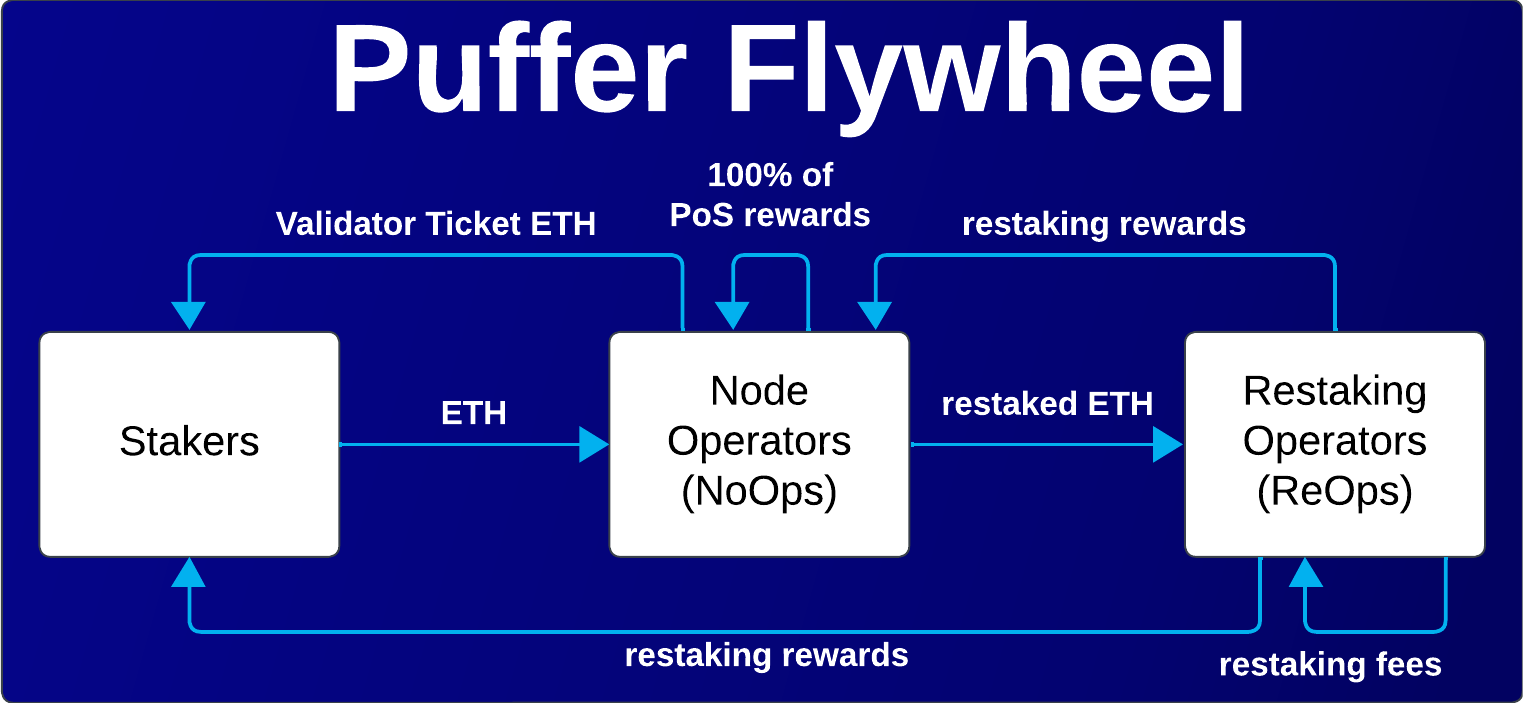
Puffer is a permissionless native Liquid Restaking Protocol (nLRP) built on EigenLayer. It aims to serve three main groups: Node Operators (NoOps), Restaking Operators (ReOps), and ETH stakers. ReOps are primarily responsible for running AVSs and may also function as NoOps. Nodes in the protocol leverage Puffer’s anti-slashing technology to participate in node validation and operate AVSs at a cost as low as 1 ETH, simultaneously accumulating PoS rewards and additional restaking rewards from AVS operations. Users who stake ETH directly on Puffer receive pufETH on a 1:1 basis, enabling them to earn both Ethereum validation rewards and restaking rewards.
What Problem Does Puffer Solve?
Puffer Finance primarily aims to lower the barrier to entry for validators in Ethereum’s Proof-of-Stake (PoS) network and counteract the trend toward centralization. Although Ethereum’s transition to PoS reduced hardware requirements, the 32 ETH staking threshold and operational complexity still prevent most ordinary users from participating. Becoming a full node operator involves hardware costs, maintenance, and ongoing operational expenses—challenges that are especially daunting for individuals and small operators without economies of scale, leading to their gradual decline in network representation.
While liquid staking solutions like Lido and Rocket Pool allow average users to participate in staking with lower capital, these platforms haven’t fundamentally resolved the centralization issue. The most critical node operations remain concentrated among a few large operators, exacerbating Ethereum’s centralization trend.
According to Dune data, Lido currently leads the Ethereum staking market with a 31.7% share, followed by centralized exchanges like Coinbase and Binance, holding 14.9% and 3.9% respectively. This level of centralization poses clear risks to Ethereum’s long-term health.
How Does Puffer Address These Issues?
Puffer Finance was designed from the outset with decentralization as a core principle. From its testnet phase, Puffer adopts a fully open, permissionless model, allowing anyone to join its node validation network. Additionally, Puffer implements a “Burst Threshold” mechanism, voluntarily capping its share of Ethereum’s total validator set at no more than 22%, aiming to prevent excessive centralization of the network.
Lowering the Barrier for Node Operators
For node operators, Puffer reduces the required collateral to just 1 ETH (or 2 ETH without using anti-slashing protection), significantly lowering the entry barrier and enabling broader participation by non-institutional operators.
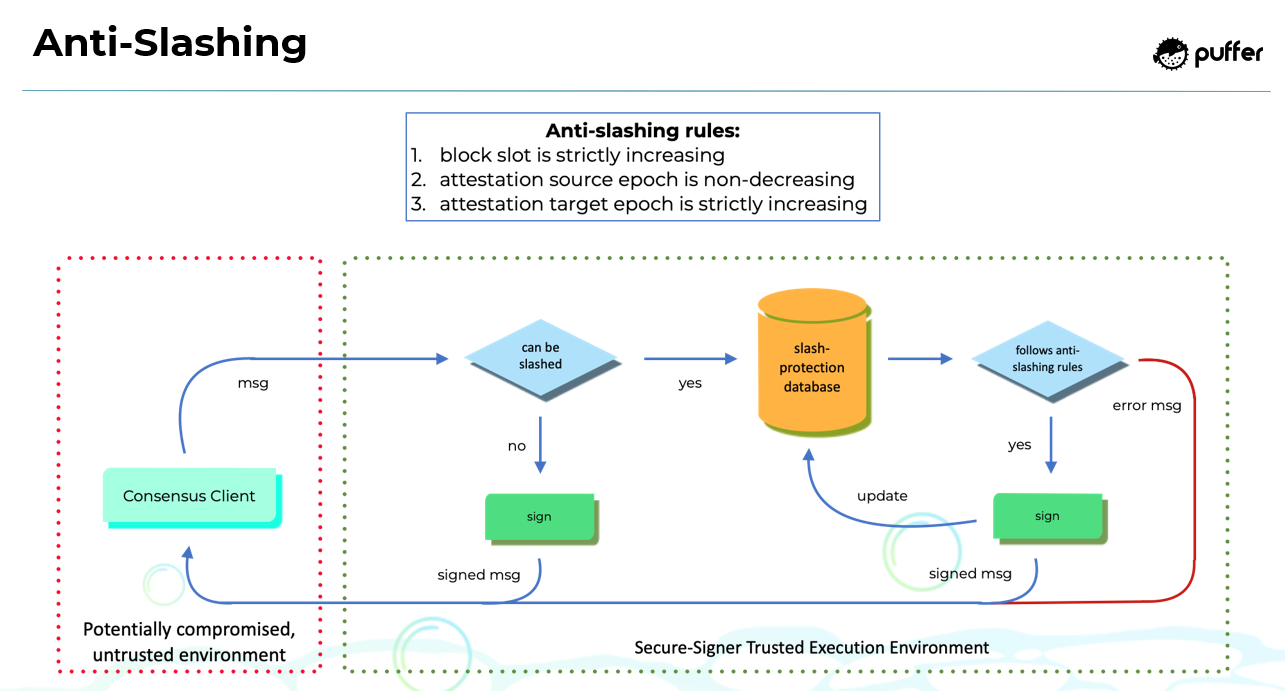
How can Puffer reduce collateral to 1 ETH without compromising Ethereum’s security? The answer lies in its Secure-Signer technology, developed with funding from the Ethereum Foundation. Secure-Signer is a remote signing tool that uses Intel SGX as a Trusted Execution Environment (TEE) to manage validator keys on behalf of consensus clients. Validators cannot access their private keys under normal conditions—the keys are stored in secure enclaves, preventing accidental double-signing and protecting solo stakers from slashing penalties. This provides the essential technical infrastructure for ordinary users to run validator nodes safely.
This technology not only enables more individuals to run nodes with less capital but also allows the same amount of capital to support more validator nodes—improving capital efficiency and strengthening Ethereum’s decentralization. Major professional node operators such as HashQuark and InfStones have formed strategic partnerships with Puffer, united by the goal of building a permissionless liquid staking protocol and preserving Ethereum’s decentralization.
Built on EigenLayer for Enhanced Yields
There is strong market demand and confidence in EigenLayer’s liquid restaking services. Historical data shows that every time EigenLayer opens its LST restaking window, demand surges rapidly, often reaching capacity immediately. In just six restaking windows, EigenLayer has successfully attracted $1.8 billion in funds.
Because Puffer is built on EigenLayer, NoOps can natively restake ETH from the beacon chain via EigenLayer, earning both Ethereum PoS rewards and additional rewards from Active Validation Services (AVSs). These AVS rewards come from supporting various systems such as oracles and data availability (DA) layers, enabling NoOps to generate multiple income streams from a single capital commitment—greatly improving yield and hardware utilization efficiency.
For ETH stakers on Puffer, depositing ETH once and holding the 1:1 minted liquidity token pufETH allows them to earn both PoS and restaking rewards. Furthermore, pufETH can be used in other DeFi protocols to further boost yields.
"Validator Ticket" Mechanism to Reduce Risk
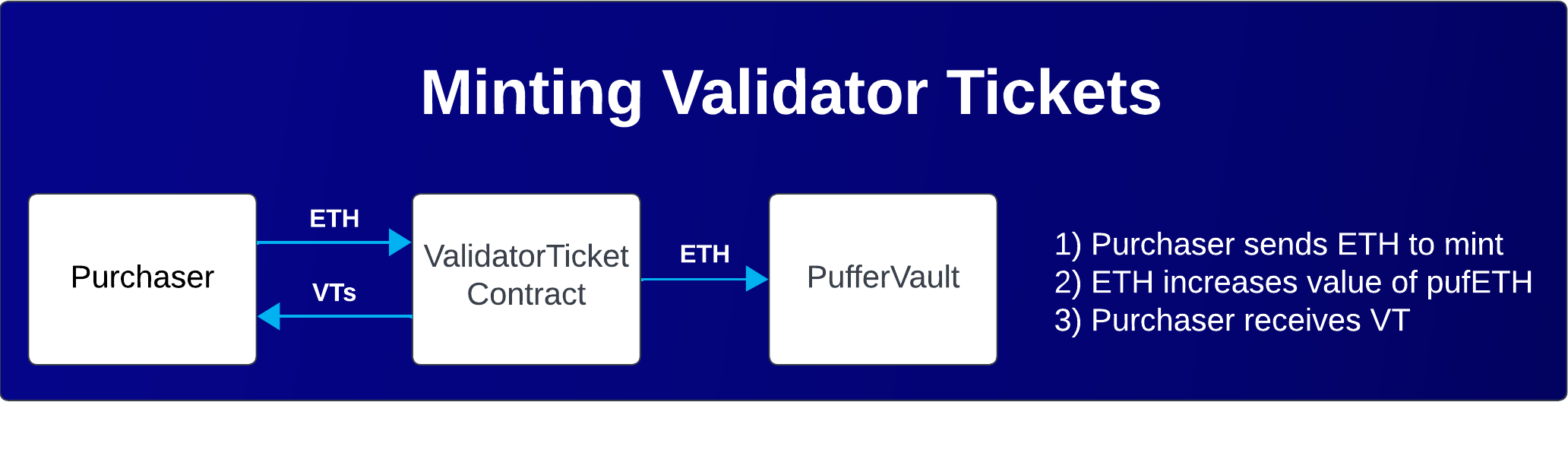
A key innovation ensuring smooth cooperation between NoOps and stakers in a permissionless environment is Puffer’s “Validator Ticket” mechanism, evolved from its previously announced “Smoothing Commitments.” Under this system, NoOps must pre-pay a non-refundable smoothing commitment fee to obtain a “ticket” to become a Puffer node operator. The fee amount equals the estimated PoS rewards over a future period. This means stakers on Puffer receive several months of PoS rewards upfront. This prepayment model ensures that low-cost NoOps are incentivized to perform reliably, reducing risks associated with poor performance or MEV theft.
Puffer Funding
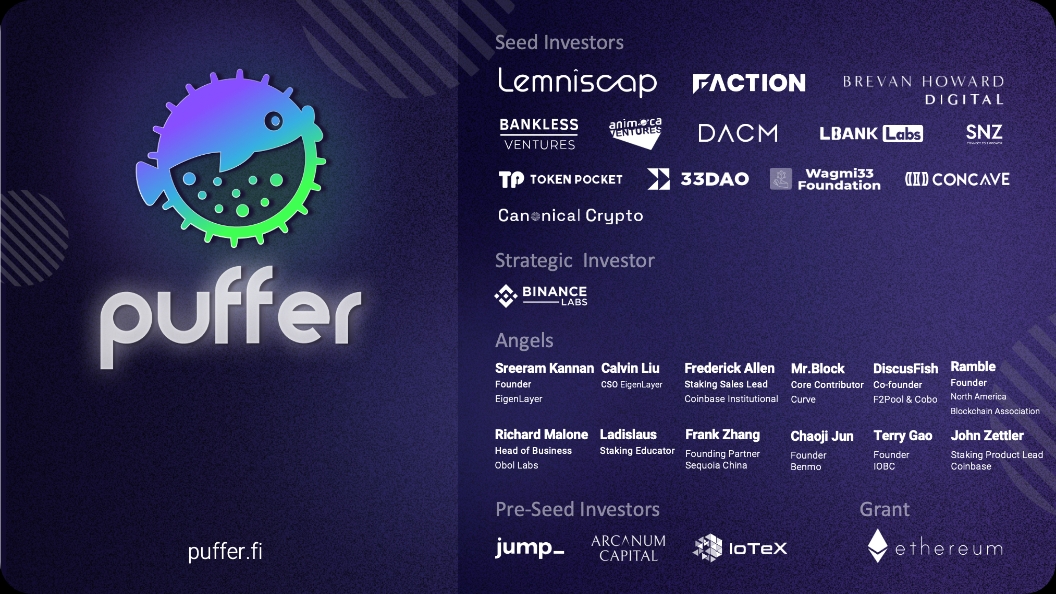
Yesterday, Binance Labs announced a strategic investment in Puffer Finance, further boosting its visibility. For a project not yet officially launched, funding is a key indicator of long-term potential and stability. Beyond this round, Puffer has disclosed a total funding of approximately $6.15 million, reflecting strong institutional backing and market trust. The project has previously received grants from the Ethereum Foundation and raised funds in two rounds from institutions including Jump Crypto, Brevan Howard Digital, Bankless Ventures, and Animoca Ventures, as well as angel investors such as Lightspeed partner Anand Iyer, EigenLayer founder Sreeram Kannan, Coinbase Staking lead Frederick Allen, and Cobo co-founder Shenyu.
Puffer’s Dual-Token Governance Model
Puffer’s design includes two tokens: the liquid staking token pufETH and the governance token PUFI. Users who stake ETH on Puffer receive pufETH, while PUFI will be used for voting within the Puffer DAO. The detailed tokenomics have not yet been disclosed.
Summary
Ethereum’s centralization has long been a concern within the blockchain community, potentially weakening network security, censorship resistance, and resilience against single points of failure. Lido’s dominant market position has intensified concerns about the future of decentralization. As such, there is an urgent need for more protocols like Puffer Finance. Leveraging innovations such as Secure-Signer technology, EigenLayer integration, the “Validator Ticket” mechanism, and the “Burst Threshold,” Puffer is delivering a differentiated and highly competitive solution to the decentralized staking landscape.
Join TechFlow official community to stay tuned
Telegram:https://t.me/TechFlowDaily
X (Twitter):https://x.com/TechFlowPost
X (Twitter) EN:https://x.com/BlockFlow_News
 Foresight News