SEI Founder Jeff Interview: A Further-Improved V2 Version, Better Ecosystem Development and Product Experience
TechFlow Selected TechFlow Selected
SEI Founder Jeff Interview: A Further-Improved V2 Version, Better Ecosystem Development and Product Experience
V2 is by far the largest update to the current Sei blockchain.
 Navigating Web3 tides with focused insights
Author: Ignas
Translation: TechFlow
Introduction
SEI has recently become a focal point in the industry, but what truly sets it apart? Among numerous alternative Layer 1 and Layer 2 technologies, why does the SEI L1 stand out? Crypto influencer Ignas conducted direct interviews with the SEI team to explore their views on the L1 landscape, their perspectives on monolithic versus modular blockchains, and SEI's ultimate vision.
This article also discusses the following questions:
-
Has Ethereum already won the L1 race?
-
What makes SEI V2 and parallel EVM special?
-
What should we expect from SEI and its ecosystem next?
Question 1
In an era of numerous L1s and rapidly evolving L2s, what is the significance of an L1—particularly Sei? Do you agree with Polygon’s Sanket and Matter Labs’ CEO that Ethereum has already won the L1 race?
Jeff's Answer
Jay and I founded Sei Labs in 2021 when we were trying to build a decentralized exchange (DEX) and evaluating various infrastructure options: Ethereum, Avalanche, Arbitrum, Solana, even Terra!
We quickly realized that no matter which L1 or L2 we built on, we couldn’t create a DEX with a user experience competitive with Coinbase or Binance.
That’s why we created Sei. Sei’s fundamental goal is to solve the user experience problem in crypto. If Sei succeeds, applications will be able to deliver a user experience nearly indistinguishable from any Web2 competitor—which would be incredibly powerful.
SEI is the first project to parallelize the EVM, a crucial step toward solving the UX challenge. Sei takes several key innovations proven by Solana and brings them into the thriving Ethereum ecosystem.
Additionally, Sei includes several other major technical advantages such as optimistic parallelization and the dual-turbo consensus mechanism developed by the Sei Labs team.
Sei is the first project exploring EVM parallelization, potentially offering a scalable path forward for the entire Ethereum ecosystem. We hope one day the Ethereum community can leverage Sei’s open-source codebase to unlock new scalability possibilities.
It’s easy to view this industry as a zero-sum game. However, overall, crypto is still in its infancy, and we take a positive-sum perspective. Ethereum, Sei, and Layer 2s can all help scale the industry in the future.
Question 2
You recently launched Sei V2, the first parallelized EVM blockchain. But what exactly makes V2 special, and what does “parallelized blockchain” really mean? I believe few people truly understand it.
Why would dApps choose to build on Sei rather than other L1s or Ethereum L2s?
Jeff's Answer
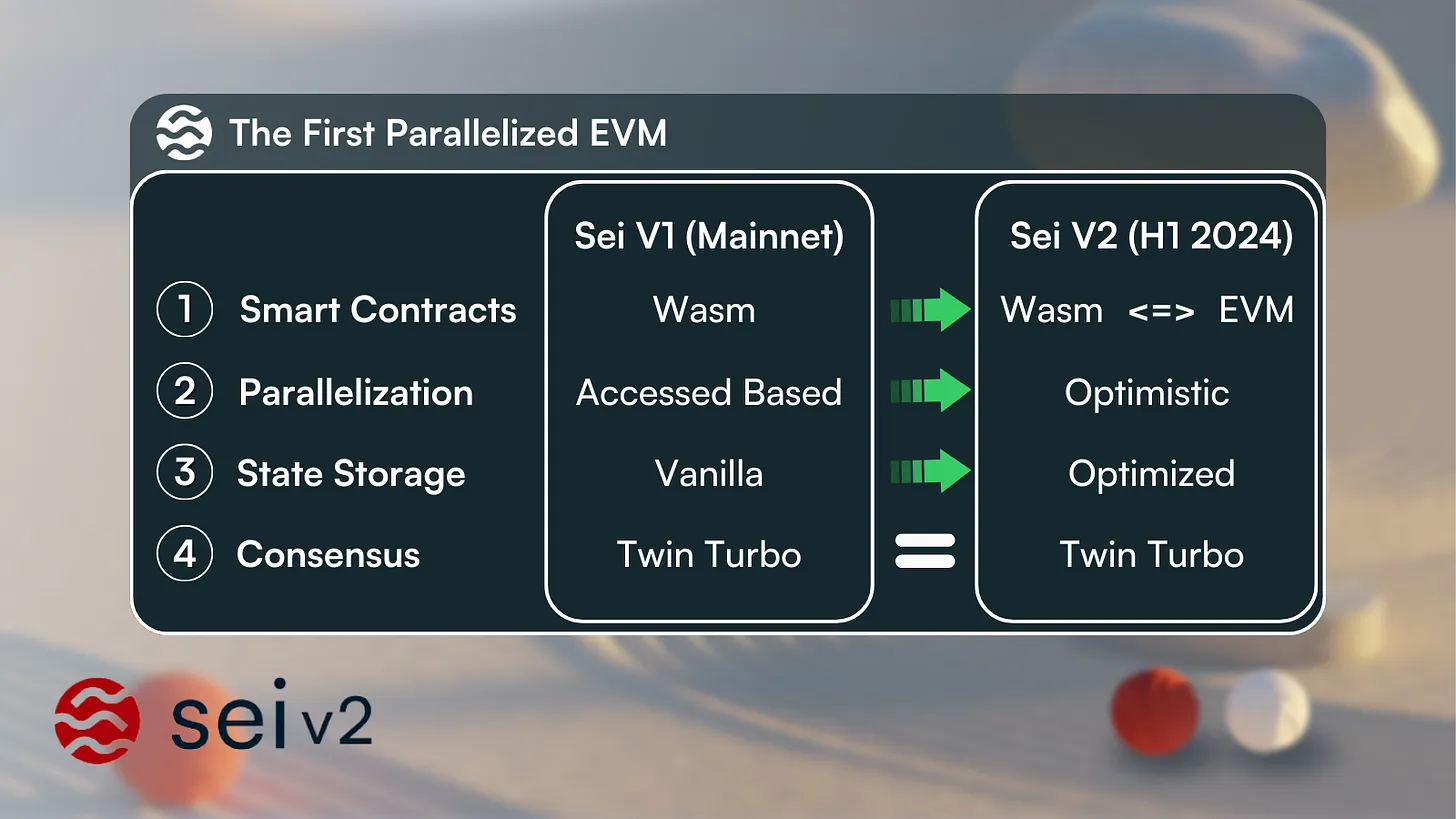
V2 is the largest update to the current Sei blockchain to date. Sei introduces four major advancements:
-
Backwards-compatible EVM: Sei uses Geth at the base layer, ensuring full EVM bytecode compatibility. In short, builders on Sei benefit from Ethereum’s vast ecosystem—including tools like MetaMask, Foundry, Remix, and Hardhat.
-
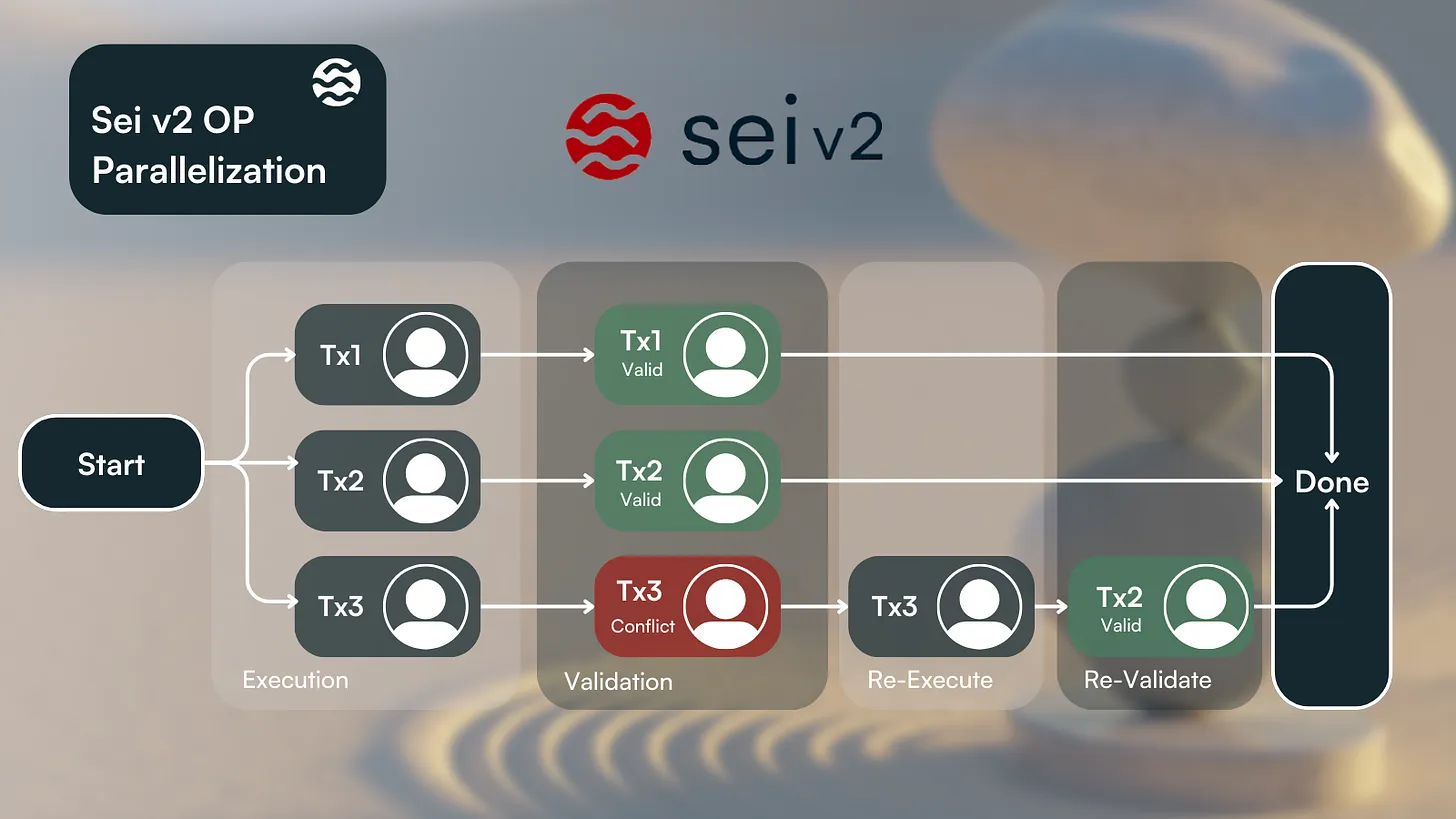
Optimistic Parallelization: Currently, most parallel chains (like Sei v1) make parallelization optional, requiring developers to do extra work to use it—work most developers don’t do. Sei v2 automatically parallelizes smart contracts, so developers don’t need to do anything.
-
SeiDB: Sei separates state commitment from state storage, reducing block processing time, minimizing state bloat, and making it faster to run new full nodes.
-
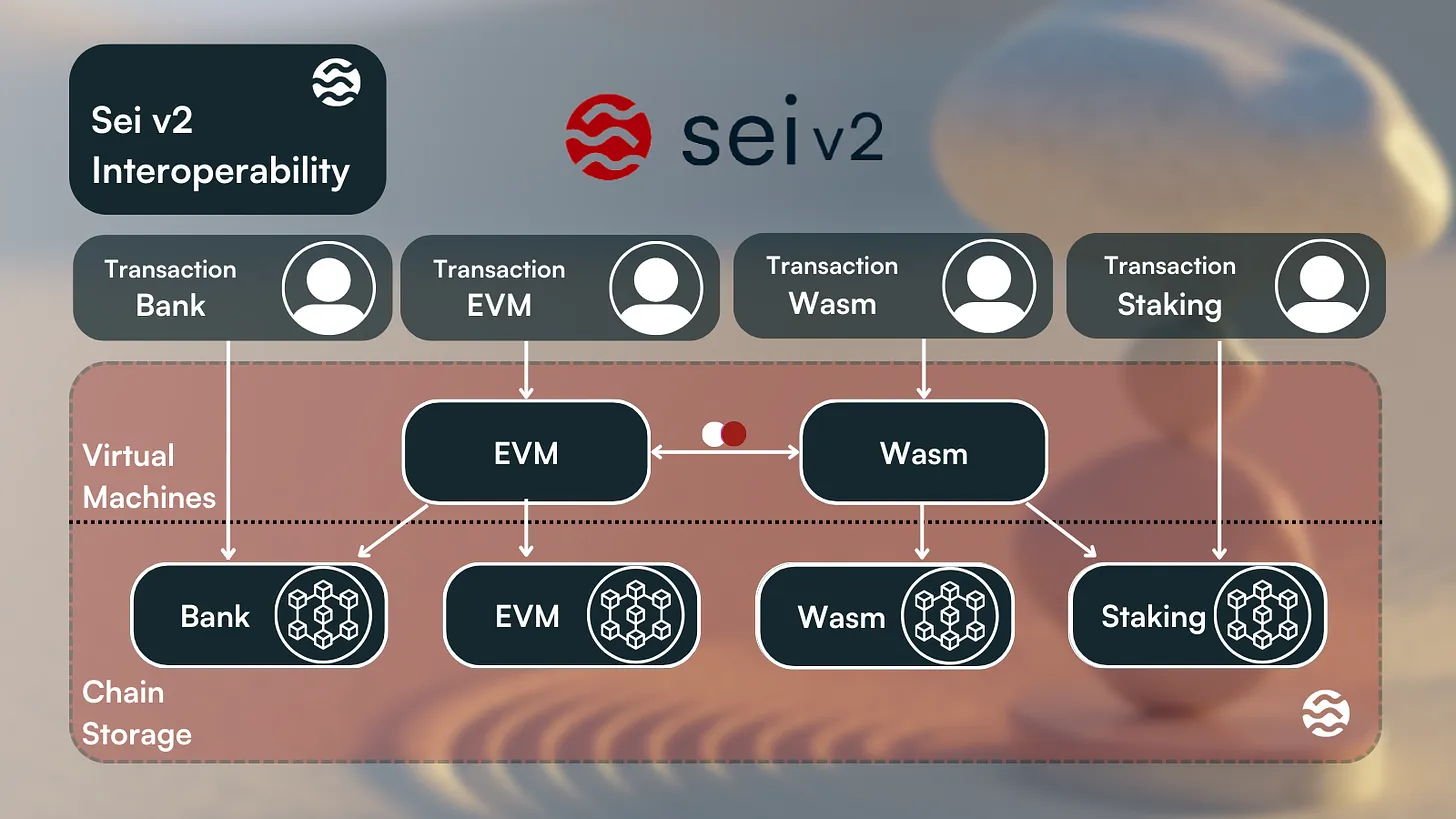
Sei V2 will allow EVM contracts to interact with existing Cosmwasm smart contracts and vice versa. This enables top builders from Cosmos and Ethereum ecosystems to collaborate.
Why choose Sei for your application?
-
Sei is the fastest L1 in history: average finality time of 390 milliseconds, making Sei multiple times faster than even the highest-performing L1s and L2s
-
Try the chain yourself—it feels increasingly close to the near-instant user experience we’re accustomed to with Web2 apps
-
-
Sei v2 inherits Sei’s battle-tested advantages, allowing global EVM developers to use familiar tools like MetaMask
-
Sei v2’s backward compatibility with EVM smart contracts allows developers to deploy audited smart contracts from EVM-compatible blockchains without code changes
-
-
The Sei community is one of the most unique in the industry. It has a tightly-knit group of members who love trying new apps and exploring new possibilities on Sei.
Question 3
Modular versus monolithic design represents two different approaches to blockchain scaling. Ethereum leads in modular scaling, launching numerous L2 solutions and an increasing number of data availability layer chains. On the other hand, Solana and Fantom have chosen the monolithic approach.
You focus on monolithic scaling. Can you explain why you made this choice? Also, I’d love to hear your thoughts on both approaches.
Jeff's Answer
Sei focuses on monolithic design.
Monolithic systems inherently have higher performance ceilings. While modular designs offer flexibility and are excellent for experimentation and iteration, they often come with significant complexity at scale.
Looking ahead, especially five years from now, I firmly believe the highest-performance infrastructures will continue to be monolithic architectures. This doesn’t diminish the value of modular approaches, particularly in innovation and specific use cases. But for raw performance and smooth operations, monolithic design will lead the way.
This isn’t a new dynamic. In Web2, monolithic architecture has been the gold standard for performance and user experience for decades. While modular approaches help during early application development and experimentation, ultimately, serving billions of users and delivering the best UX requires a monolithic architecture.
Question 4
What exciting developments are coming up for Sei and the Sei ecosystem? Can you share any upcoming dApps?
Jeff's Answer
Looking ahead, we’re preparing for the Sei v2 testnet, planned to launch around next month. The mainnet migration is scheduled for the first half of 2024, undergoing rigorous governance and audit processes to ensure maximum security and efficiency.
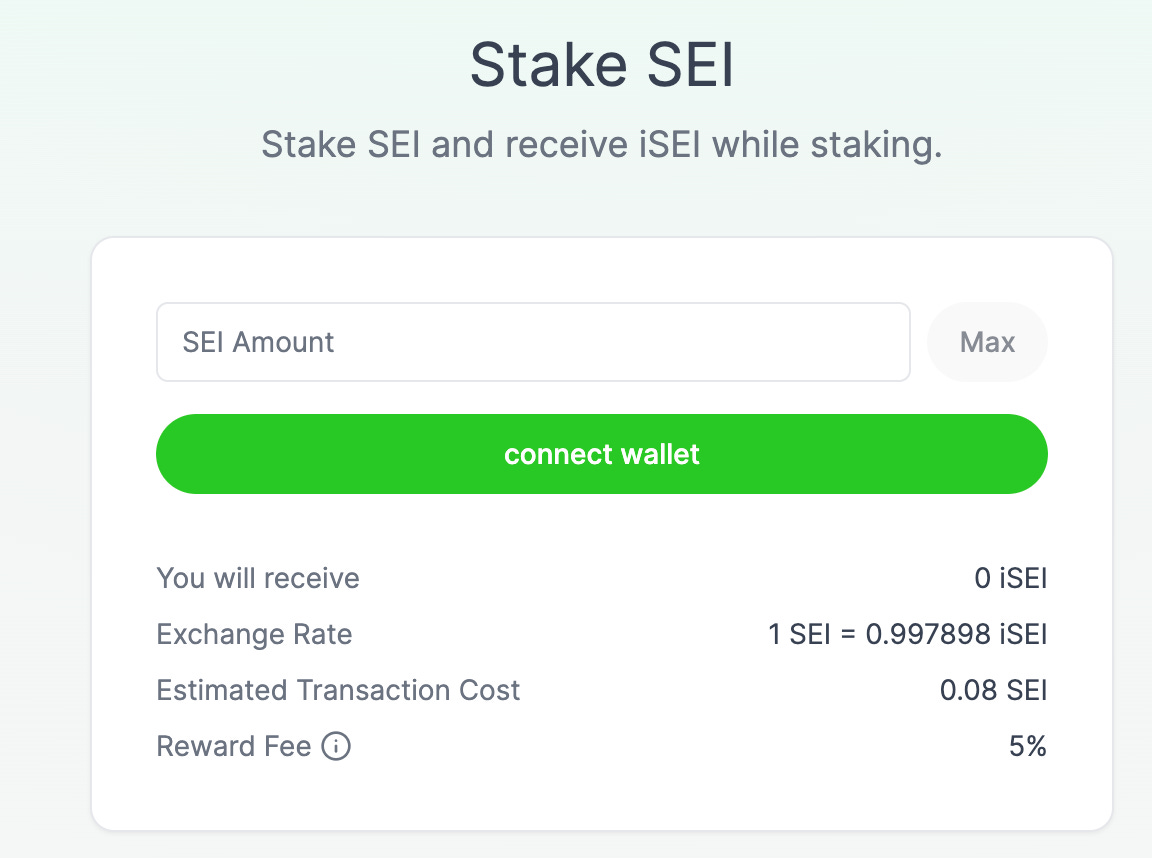
I encourage everyone to explore the currently active Sei ecosystem. Projects like Astroport, Silo Stake, Pallet, Webump, Colony, and Seiyans are leading the charge.
Question 5
What is Sei’s ultimate plan and vision?
Jeff's Answer
The Sei V2 code is complete and already live on the devnet—so great teams should come test it out!
Performance tests show impressive results: over 5,000 transactions per second (TPS), time-to-finality of 300 milliseconds, with theoretical TPS reaching approximately 12,500. When considering batched orders, this means we can handle about 28,000 operations per second.
Sei aims to combine the strengths of Ethereum with those of Solana.
Bringing together Ethereum’s incredible ecosystem and developer talent with Solana’s performance and speed innovations. This creates the ideal environment for applications to serve the next billion users.
Join TechFlow official community to stay tuned
Telegram:https://t.me/TechFlowDaily
X (Twitter):https://x.com/TechFlowPost
X (Twitter) EN:https://x.com/BlockFlow_News
 Ignas | DeFi Research