








Will the spring breeze arrive for the restaking market? A盘点 of promising projects in the restaking sector
TechFlow Selected TechFlow Selected
Will the spring breeze arrive for the restaking market? A盘点 of promising projects in the restaking sector
The next major themes in the Ethereum ecosystem are the L2 sector, which will directly benefit from the Cancun upgrade, and EigenLayer's restaking ecosystem.
 Navigating Web3 tides with focused insights
Author: Uncle Jian
I. Why is EigenLayer regaining momentum?
With the approval of Bitcoin spot ETFs, Ethereum is also seeing positive developments: rising expectations for an Ethereum spot ETF and the upcoming Cancun upgrade have reinvigorated the long-dormant Ethereum network.
Ethereum's staking levels continue to rise, increasing demand for restaking. EigenLayer allows users to restake ETH, lsdETH (liquid-staked ETH), and LP tokens on other sidechains, oracles, middleware, etc., as validators to earn additional rewards. This enables third-party projects to inherit Ethereum’s security while allowing ETH stakers to earn extra yield—creating a win-win scenario.
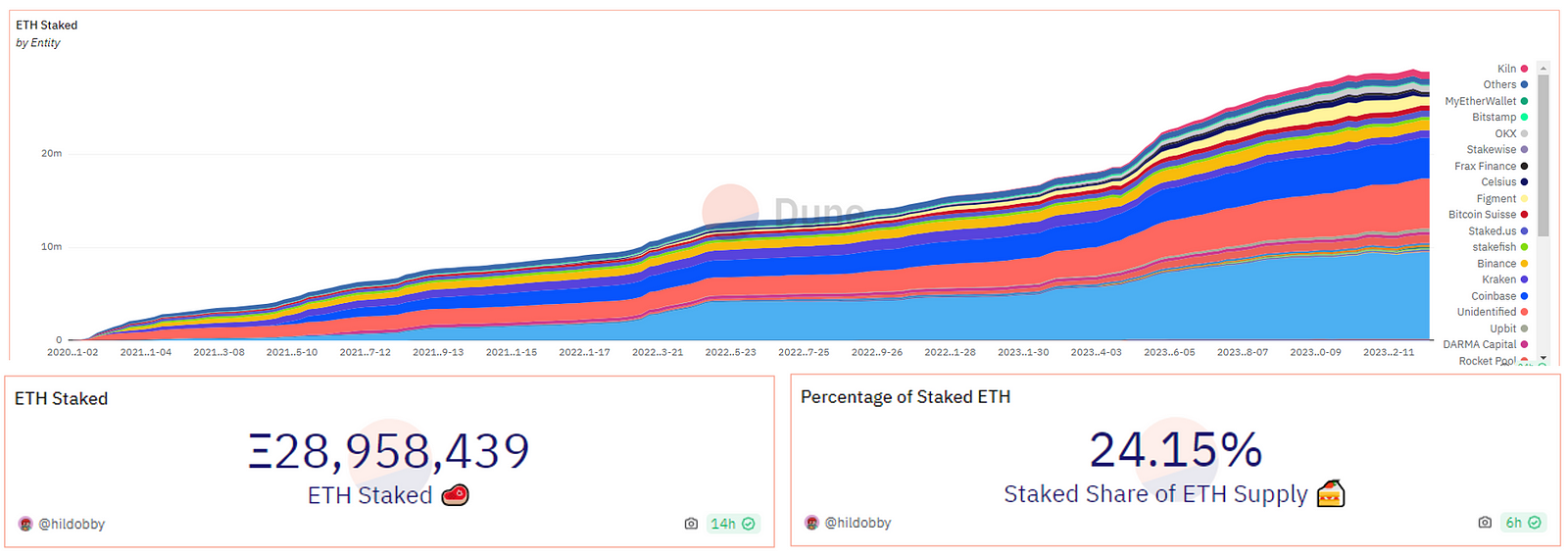 Data source: https://dune.com/hildobby/eth2-staking
The restaking trend has become a focal point in the Ethereum ecosystem following EigenLayer’s increase in LST deposit limits. In just one month, EigenLayer attracted over 500,000 ETH with a TVL exceeding $1.6 billion, becoming the 12th largest protocol on Ethereum by value locked.
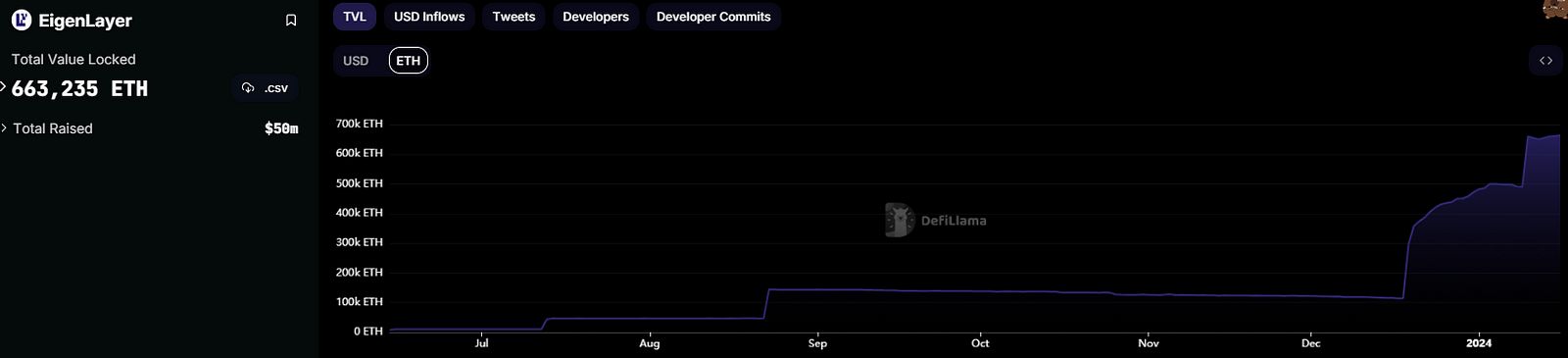 Data source: https://defillama.com/protocol/EigenLayer?denomination=ETH
Recently, EigenLayer announced it will provide restaking services for Cosmos subchains—an important development for both Ethereum and Cosmos. By enabling Cosmos chains to leverage Ethereum’s security through EigenLayer, it opens up new avenues for incremental yield for Ethereum stakers.
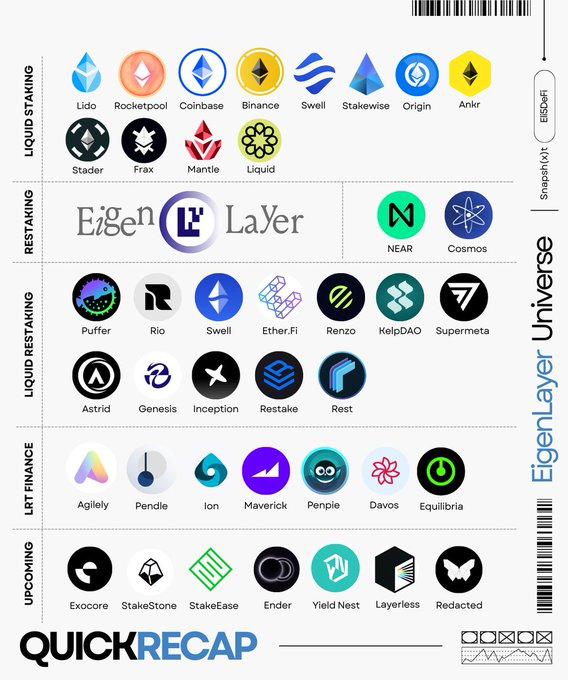
Image: EigenLayer Universe, source: https://x.com/eli5_defi/status/1746550169183846503?s=20
EigenDA, the first AVS (Actively Validated Service) using EigenLayer’s validation layer, is about to launch. Its data availability (DA) narrative has gained significant market attention, especially amid TIA’s surge following Celestia’s token release.
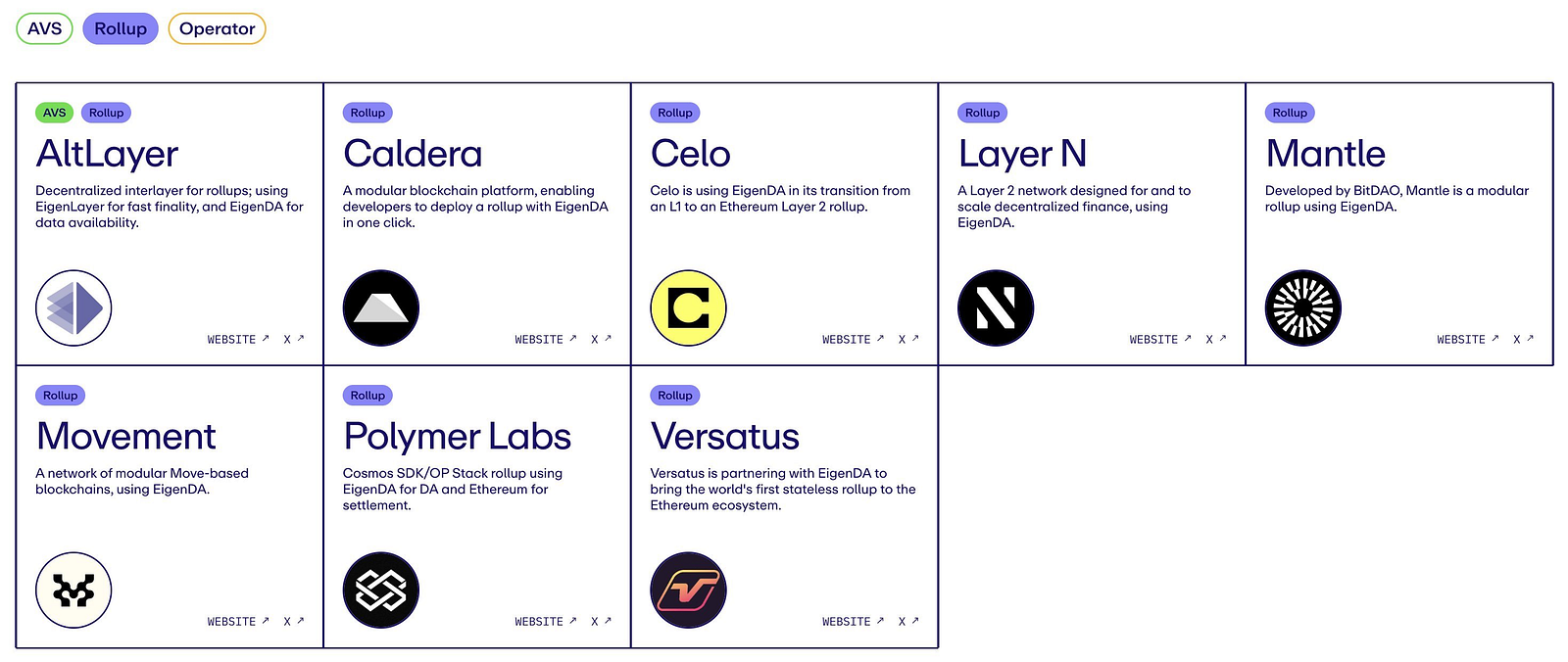 EigenDA partners, source: https://x.com/eigen_da/status/1731674794347860449?s=20
For more information on EigenLayer, refer to this article: Report | EigenLayer: Strengthening Ethereum Security and Ushering in a New Era of Staking
II. What are the promising projects in the restaking space?
Restaking isn’t limited to EigenLayer—there are numerous derivative opportunities under the restaking narrative. Here’s a brief overview of four types of restaking:
LSD Restaking: Deposit your LSTs (like stETH, cbETH) received from LSD protocols into EigenLayer for restaking.
Liquid-LSD Restaking: Use LRD protocols such as Kelp DAO to delegate your LSTs to EigenLayer via the protocol, receiving liquid restaking tokens (LRTs) as proof of deposit.
Native Restaking: Validators use the EigenPod smart contract to redirect their withdrawal credentials to EigenLayer for native restaking.
Liquid Native Restaking: Projects like ether.fi or Puffer Finance that offer small-stake node services supply ETH from their nodes to EigenLayer for restaking.
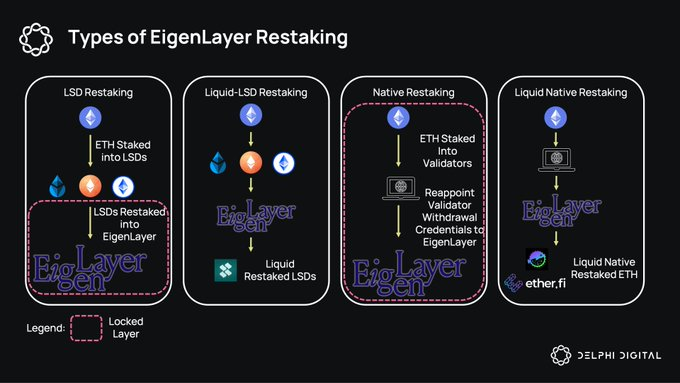
Image credit: Delphi Digital, source: https://x.com/Delphi_Digital/status/1740463277099151482?s=20
Below are five notable unbuilt restaking projects worth watching—each allows users to earn both their own project points and EigenLayer points simultaneously.
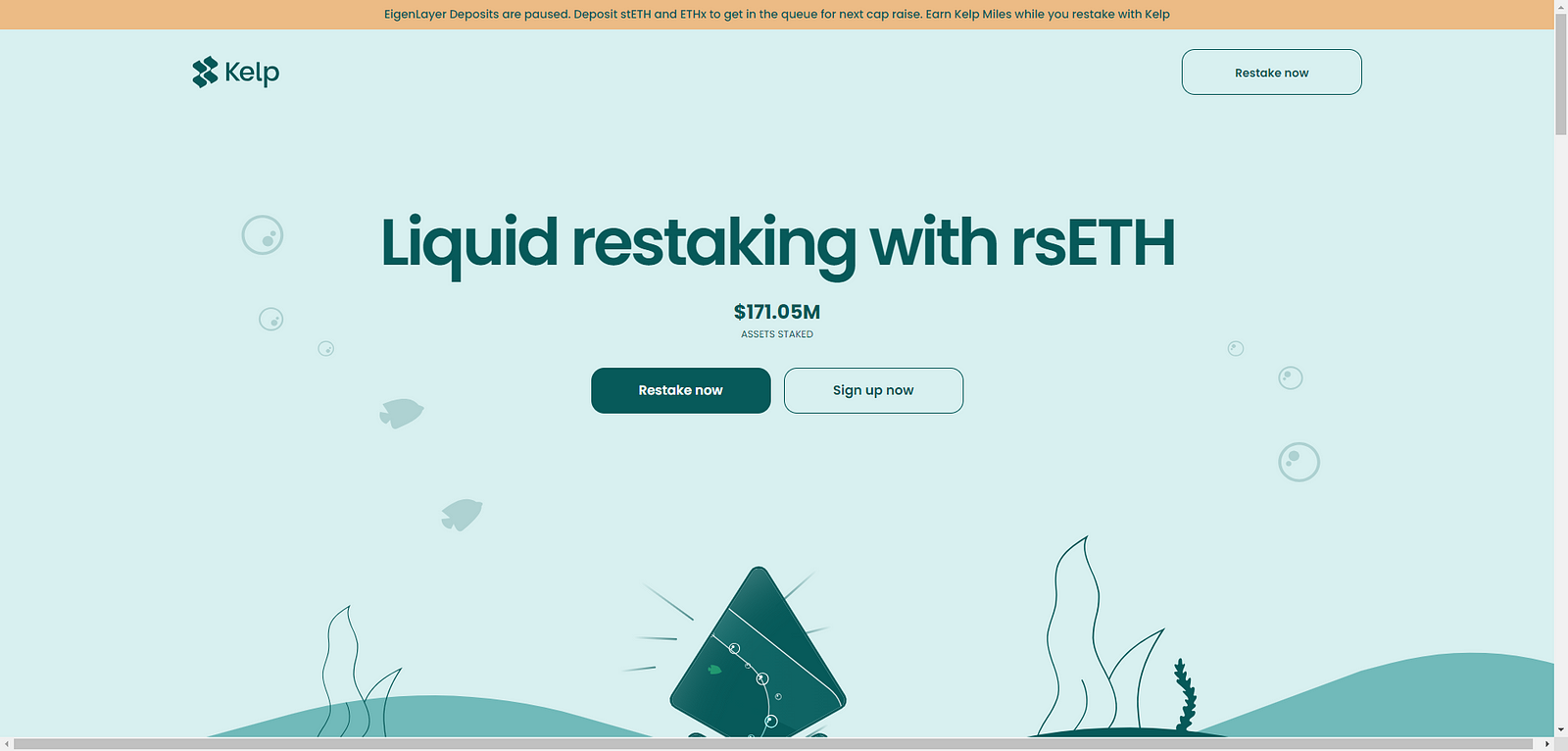
Kelp DAO
Kelp DAO is a restaking project developed by Stader Lab, a multi-chain LSD platform. It falls under the Liquid-LSD Restaking category. Currently, it supports deposits of stETH from Lido and ETHx from Stader. However, due to EigenLayer’s LST quota being full, new deposits are currently paused.
Although Stader Lab has already launched its token, Kelp DAO has introduced a points system and is expected to issue its own token in the future. Synergy between SD (Stader’s token) and Kelp DAO could be anticipated.
Swell
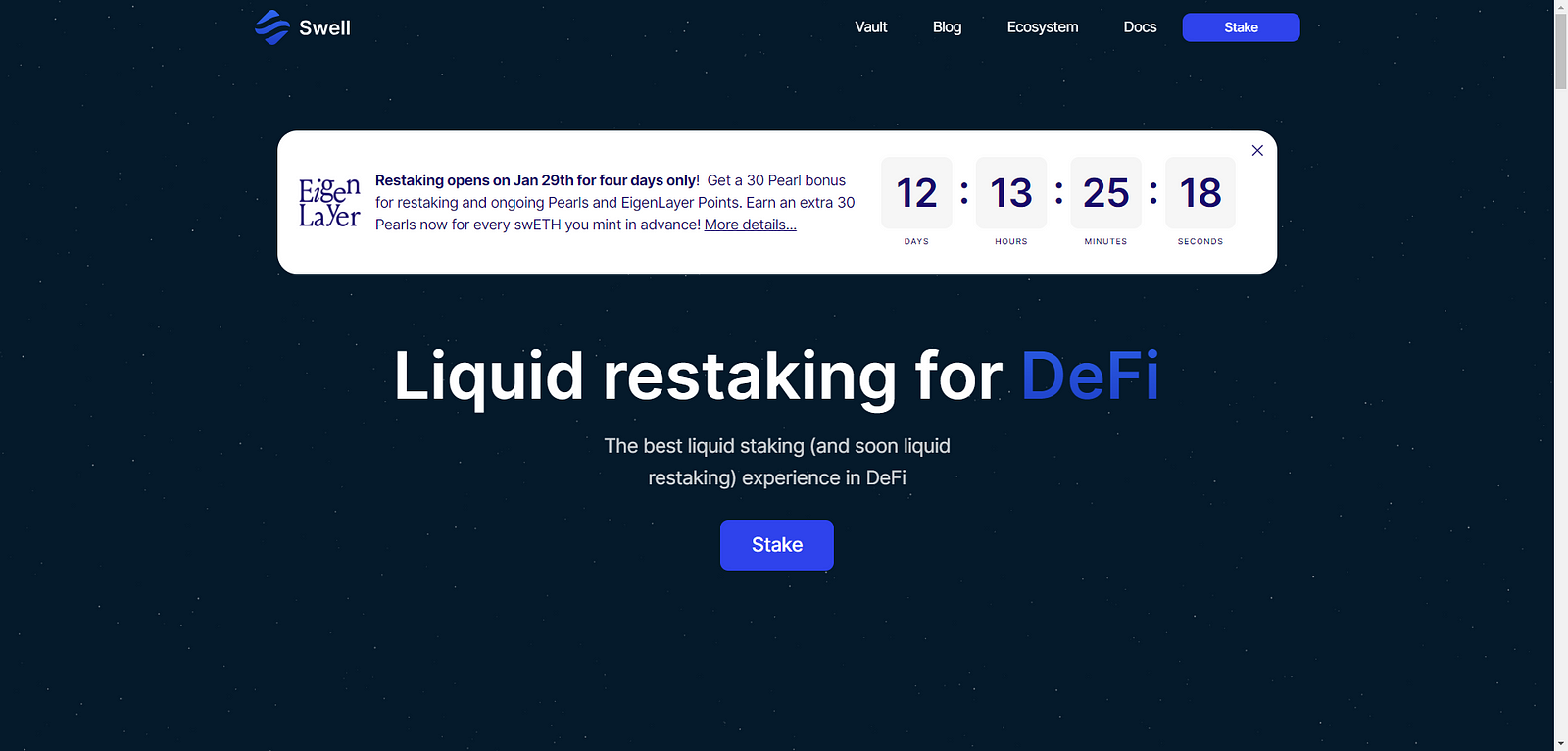
Swell is a well-established LSD protocol that recently announced its entry into the liquid restaking space, positioning itself as a Liquid Native Restaking product. With the added restaking functionality, users can deposit ETH to receive rswETH, meaning Swell is not constrained by EigenLayer’s LST deposit caps.
Since Swell has not yet launched a token and may conduct an airdrop, its LST token swETH has drawn strong interest from airdrop hunters and is currently the second-largest staked asset within EigenLayer. Previously, holding LSD earned points; now, participating in restaking also earns points.
ether.fi
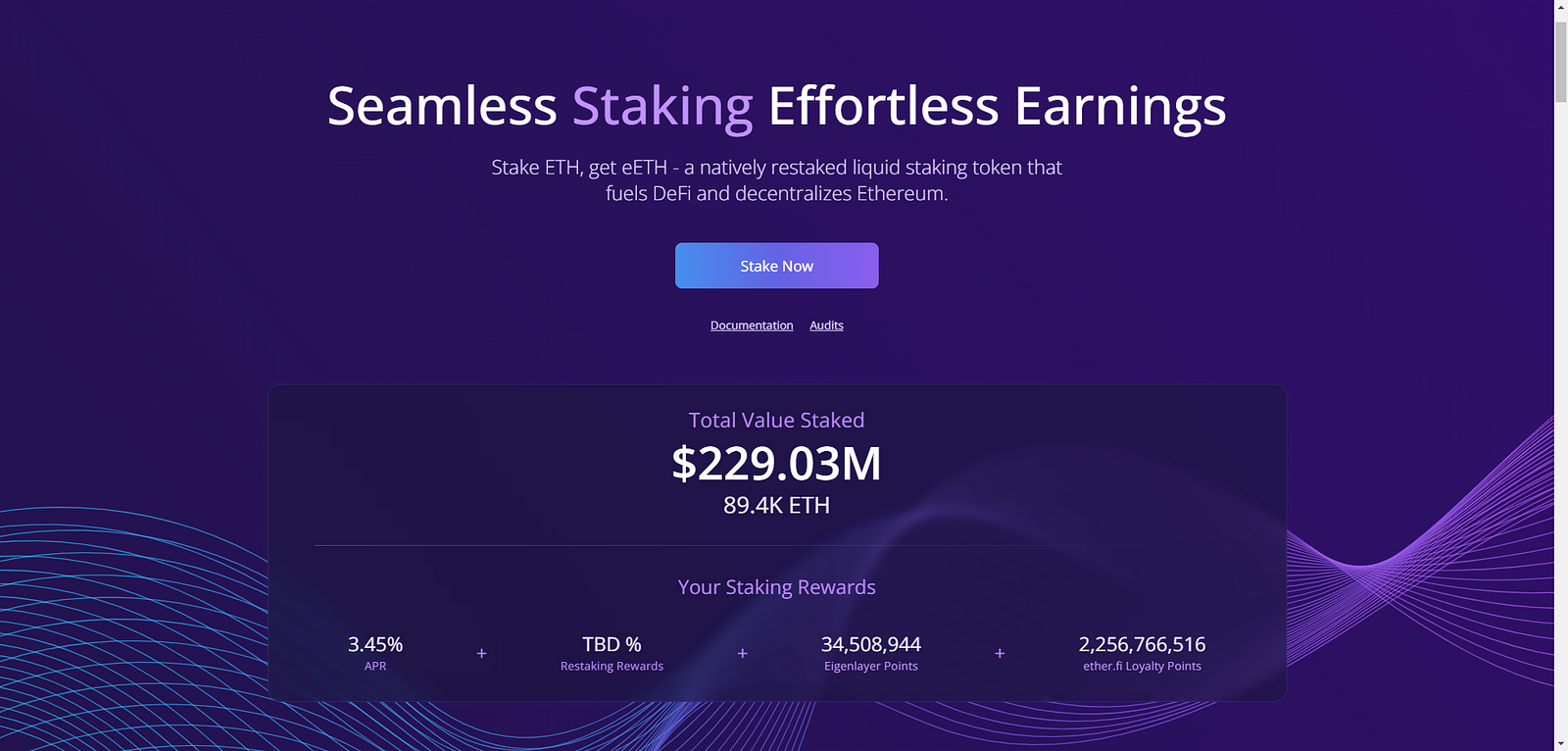
ether.fi is another Liquid Native Restaking product. It raised $5.3 million in seed funding led by Arthur Hayes, founder of BitMEX. Unlike Lido, ether.fi uses a decentralized, non-custodial approach to ETH staking and offers restaking services. As it operates via native ETH restaking, it is unaffected by EigenLayer’s LST deposit limits. Its receipt token eETH (wrapped as weETH) is among the few LRTs with existing liquidity.
Renzo
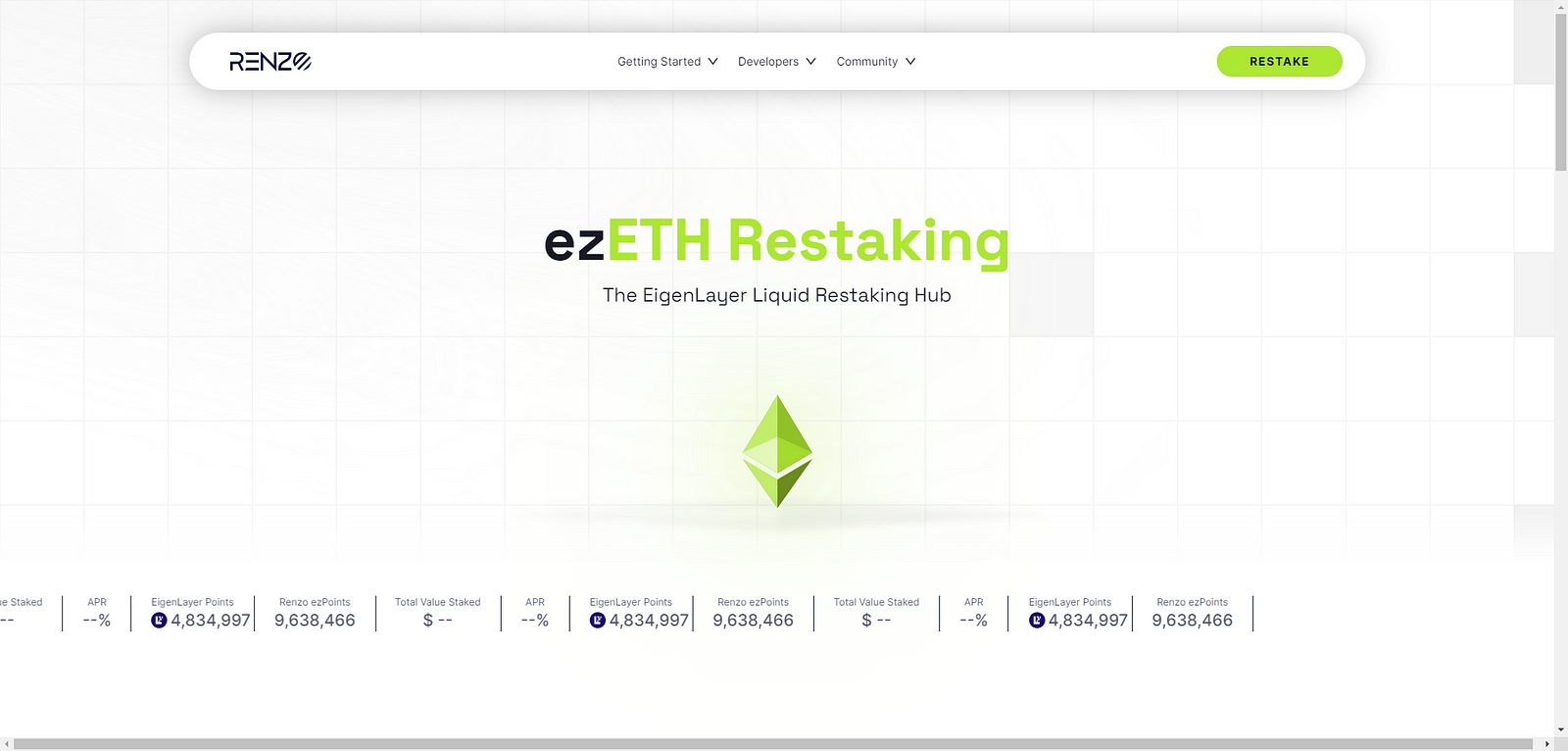
Renzo also belongs to the Liquid Native Restaking category and is not subject to EigenLayer’s LST deposit cap, so deposits remain open. However, ETH deposited into Renzo cannot currently be withdrawn, and its receipt token ezETH is non-transferable—making it effectively locked in the short term.
On January 16, Renzo announced a $3 million seed round, enhancing its credibility. Compared to similar protocols, it has relatively low total value locked, making it appear more cost-effective at present.
However, due to its referral-based point incentives, undisclosed team background, and lack of withdrawal functionality, some users have expressed skepticism and distrust.
Puffer Finance
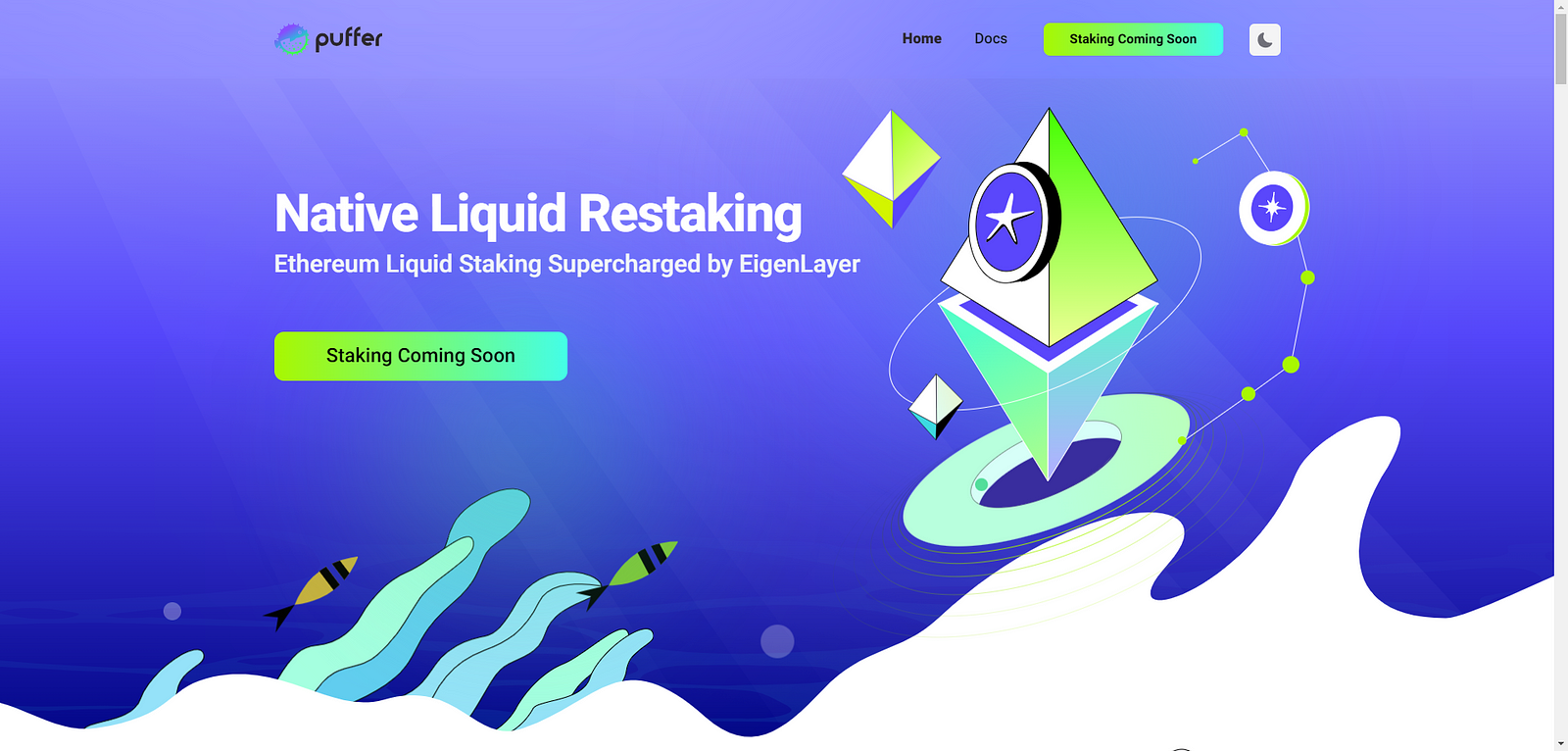
Puffer Finance is an anti-slashing liquid staking protocol, similar in nature to ether.fi and categorized as a Liquid Native Restaking product. It is currently not open for deposits. Puffer Finance secured a seed round led by Jump Crypto, raising $6.15 million in total, though its valuation remains undisclosed.
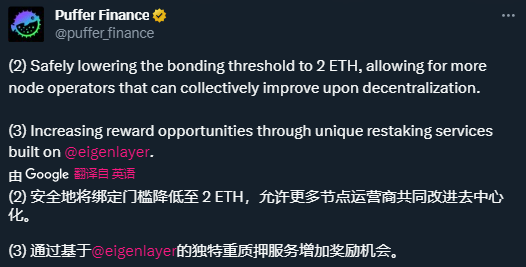
EigenLayer requires a minimum of 32 ETH per validator node to run AVS services.
Puffer lowers this threshold to under 2 ETH, aiming to attract smaller participants.
III. Alternative approach: How to participate in restaking via Pendle?
Pendle is a decentralized market for trading interest rates, offering PT (Principal Token) and YT (Yield Token) trading. Using YT trading on Pendle, users can accelerate their accumulation of ether.fi and EigenLayer points.
By entering the YT-eETH market on Pendle and purchasing YT-eETH, holders gain access to staking yields, double points from ether.fi, EigenLayer points, and Pendle trading rewards. Currently, 1 eETH can purchase approximately 11 YT-eETH tokens—effectively providing 11x leverage.
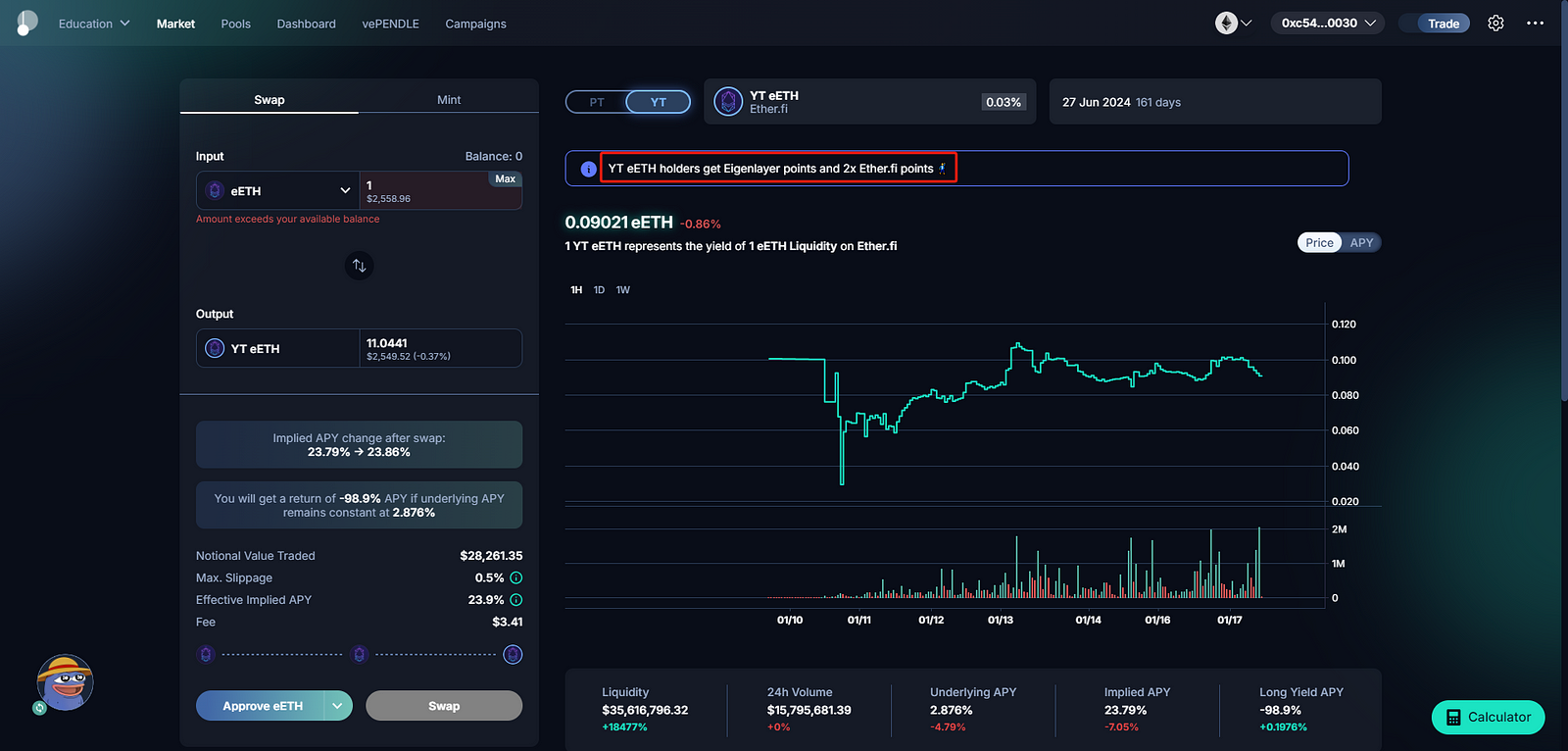
This may seem highly attractive—but understanding YT pricing mechanics reveals that YT prices decline as maturity approaches. This strategy essentially trades time for yield and points.
Alternatively, users can provide liquidity (LP) to earn these rewards with lower risk, though this comes with drawbacks such as impermanent loss and relatively lower point accrual efficiency.
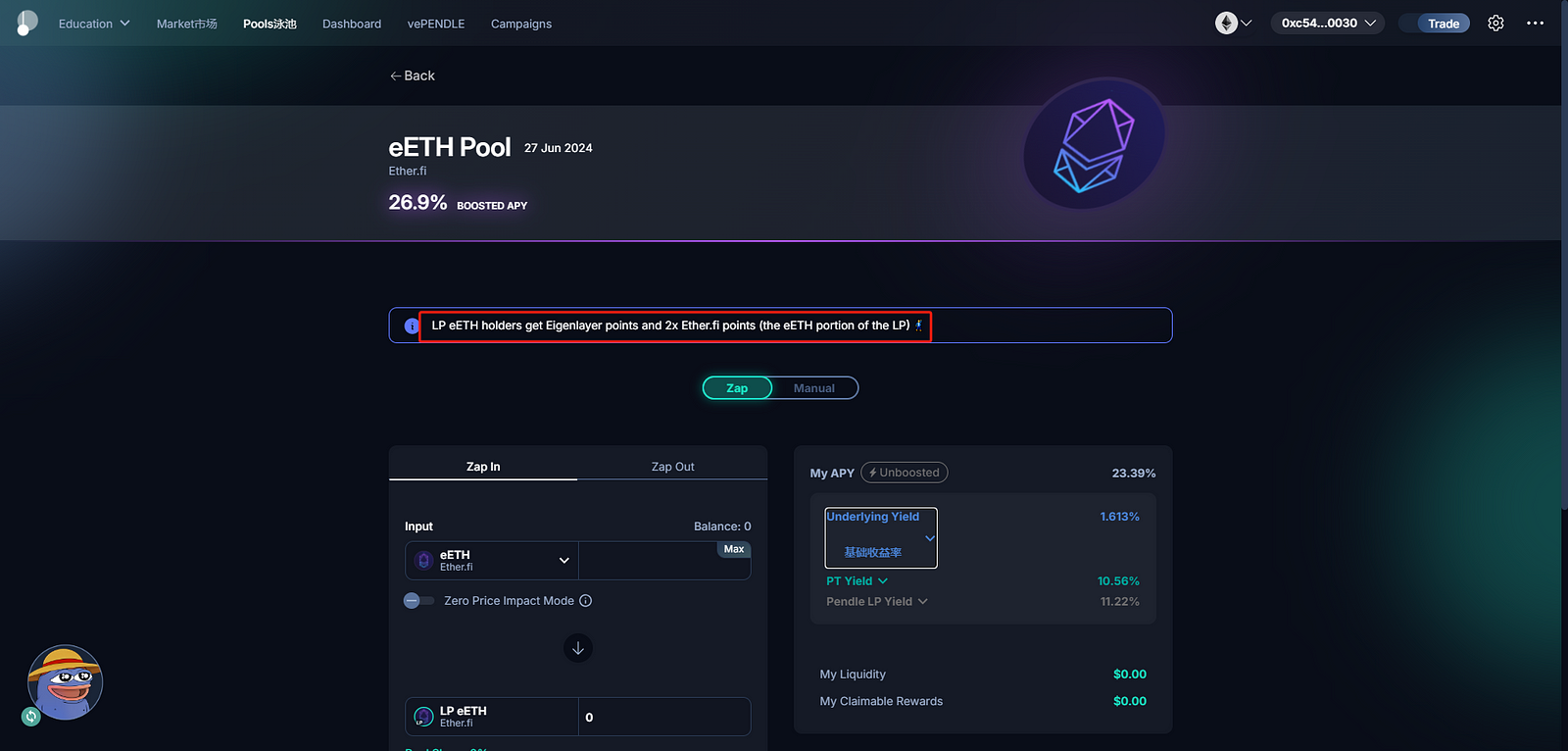
Note: If you're unfamiliar with Pendle, please study the relevant concepts before proceeding. Due to space constraints, this article cannot provide an exhaustive explanation.
IV. Risks of restaking cannot be ignored
Restaking, as an emerging concept in crypto, is gaining traction by offering stakers greater opportunities to join various networks and boost returns. EigenLayer brands itself as the “Airbnb of decentralized trust,” highlighting the appeal of this opportunity. However, restaking is not without risks—it introduces a range of potential issues that require careful consideration.
1. Slashing risk: Increased exposure to losing staked ETH due to malicious behavior.
2. Centralization risk: If too many stakers migrate to EigenLayer or similar protocols, it could create systemic risks for Ethereum.
3. Smart contract risk: Vulnerabilities in the smart contracts of various protocols.
4. Layered risk accumulation: This is the core concern with restaking—it combines existing staking risks with additional layers, creating compounded exposure.
V. Conclusion
Following the approval of Bitcoin spot ETFs, the ETH/BTC exchange rate has rebounded strongly. With catalysts like the Cancun upgrade and growing expectations for an Ethereum spot ETF, the Ethereum ecosystem is poised for recovery. The two dominant themes moving forward will be Layer 2s—direct beneficiaries of the Cancun upgrade—and the restaking ecosystem centered around EigenLayer.
Participating in restaking through the projects mentioned today represents one of the most cost-effective strategies, enabling users to earn multiple layers of rewards from a single deposit. However, note that Altlayer’s recent airdrop announcement includes rewards for EigenLayer stakers, but it remains unclear whether users who stake via protocols like Kelp DAO or Renzo will be recognized as valid EigenLayer stakers through layered attribution.
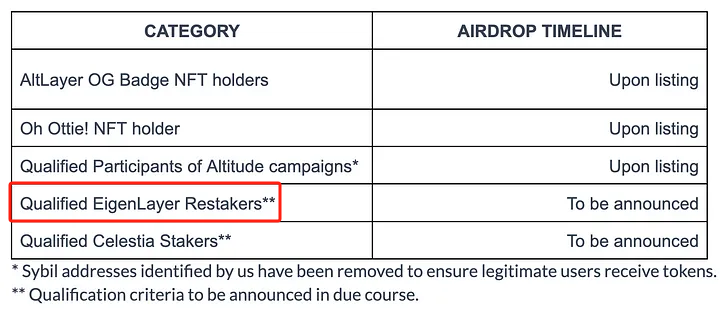
Image source: https://blog.altlayer.io/altlayers-alt-token-launch-f49bf8ac2556
Nonetheless, we must recognize that recursive restaking is fundamentally speculative leverage built on liquidity creation. While it offers higher returns, it also amplifies risks—any smart contract failure at any layer could result in user losses.
Join TechFlow official community to stay tuned
Telegram:https://t.me/TechFlowDaily
X (Twitter):https://x.com/TechFlowPost
X (Twitter) EN:https://x.com/BlockFlow_News
 @jianshubiji







