









OKX Ventures 2024 Outlook: Key Projects and Seven Predictions
TechFlow Selected TechFlow Selected
OKX Ventures 2024 Outlook: Key Projects and Seven Predictions
The best time was yesterday; the next best is now.
 Navigating Web3 tides with focused insights
Author: OKX Ventures
Over decades, Bitcoin has demonstrated immense creativity and resilience amid challenging market conditions, injecting innovative DNA into modern monetary systems, internet technologies, and finance, ultimately securing its place among mainstream global assets.
On January 11, the U.S. Securities and Exchange Commission (SEC) made a landmark decision by officially approving 11 spot Bitcoin ETFs. This milestone victory is the result of deep reflection, innovative practices, and steadfast commitment by crypto builders envisioning a digital future. Capital has played a pivotal role throughout this journey—maintaining faith and pursuit of the future even during prolonged bear markets lasting over two years. By deploying capital strategically, especially during project crises, investors have helped steer the industry forward, collectively shaping a promising digital future and serving as the most powerful engine driving continuous innovation in the crypto sector.
In 2023, the crypto industry navigated twists and turns, reaching a total market capitalization of $1.761 trillion. Bitcoin re-entered the global top 10 list of asset valuations with a market cap of $836.3 billion. Institutional fundraising saw 1,178 funding rounds totaling $9.13 billion, with OKX Ventures actively participating across the board.
During this year, OKX Ventures remained resolute during difficult periods in the primary market, doubling down逆势 and investing over $50 million annually. On one hand, it deepened collaboration with ecosystems such as Solana, Near, Polygon, and Avalanche, co-establishing ecosystem funds to support developers building core on-chain components and jointly cultivating communities. On the other hand, through hackathons hosted with Gitcoin and Blockbooster in San Jose and Hong Kong, it identified innovative high-potential projects and provided comprehensive support leveraging differentiated capabilities and resources. Additionally, OKX Ventures has gradually expanded its support for teams deploying on X1.
As the Year of the Dragon ushers in improved macroeconomic conditions aligning with the crypto innovation cycle, a new bull market looms on the horizon. With expectations of Fed rate cuts, the upcoming Ethereum Cancun upgrade, Bitcoin halving, and accelerated global adoption of BTC driven by ETFs, 2024 promises to be a bright year. As a leading investment firm in the crypto space, OKX Ventures has cast its visionary gaze upon numerous high-potential projects. After thorough research into industry innovations and shifts, it forecasts the seven most explosive sectors for 2024.
Review of Key Projects in 2023
OKX Ventures' portfolio spans core areas including infrastructure, GameFi, DeFi, Web3.0, Bitcoin ecosystem, and AI. In terms of distribution, 50% are infrastructure and DeFi projects, while 20% are GameFi initiatives—highlighting a strong emphasis on foundational infrastructure. Crypto infrastructure provides secure, efficient, and reliable operating environments for digital assets and blockchain technology. Its robustness directly impacts the industry's development and sustainability. Strong infrastructure fosters innovation, attracts more participants, and lays a solid foundation for long-term prosperity in the crypto sector.
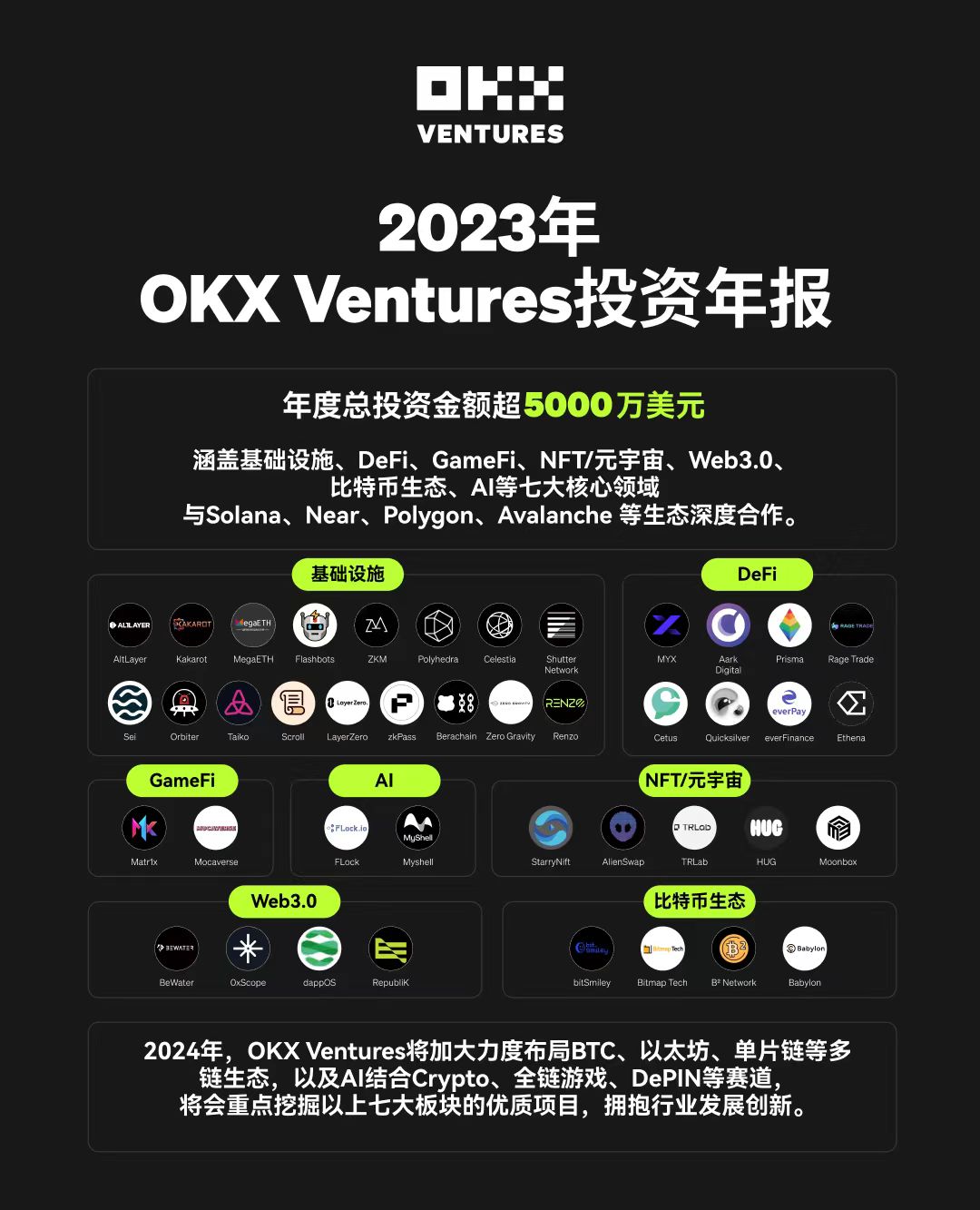
In 2023, the crypto industry gradually emerged from a slump. However, due to the prolonged two-year bear market, the primary market faced relatively tough conditions. Throughout this period, OKX Ventures continued backing high-quality entrepreneurial teams and projects, leveraging professional expertise and top-tier industry resources—including its thriving exchange ecosystem—to provide diverse, comprehensive support to promising innovative ventures, investing over $50 million last year.
Its investments included numerous standout projects such as Polyhedra, Celestia, Kakarot, MegaRollup, Altlayer, Bitsmiley, Bewater, Babylon, Cetus, Ethena, Flashbots, HUG, Moonbox, Mocaverse, Matr1x, Orbiter, RepubliK, Rage Trade, Sei, Taiko, TRLab, and ZKM.
Below, we highlight select representative innovative projects across different sectors.
1. Layer2 Scaling Solutions
Layer2 solutions have significantly enhanced the Ethereum network by improving scalability, transaction efficiency, cost-effectiveness, and reducing congestion on the main chain. Various approaches have emerged, including ZK Rollup, Optimistic Rollup, Validium, and Plasma, playing increasingly important roles in enhancing privacy protection and lowering transaction costs. Here, we focus on two projects: Scroll and Taiko.
1) Scroll: A native zkEVM Layer2 solution for Ethereum representing Type 2 zkEVM, enabling native compatibility with existing Ethereum applications and tools. Scroll processes transactions off-chain and posts concise correctness proofs on-chain, delivering higher throughput and lower costs compared to Ethereum’s base layer.
2) Taiko: A decentralized Ethereum-equivalent ZK-EVM and general-purpose ZK-Rollup designed so that developers and users of dApps built for Ethereum L1 can use Taiko without any modifications. Thus, dApps can easily deploy on L2, inherit Ethereum's security, and enjoy lower transaction fees than L1.
2. MEV Sector
MEV (Maximal Extractable Value) refers to the maximum profit miners or block producers can gain due to differences in transaction ordering, bundling, and confirmation on blockchains. While optimizing transaction order can maximize participant returns, it also raises concerns about security and network effects. Developers and communities are working together to find fairer, more efficient, and secure MEV solutions.
1) Flashbots: A leading MEV solution aimed at mitigating negative externalities and risks associated with MEV on smart contract blockchains. It promotes a permissionless, transparent, and fair ecosystem, targeting three goals: democratizing access to MEV revenue, bringing transparency to MEV activities, and redistributing MEV income.
3. Cross-Chain Sector
Cross-chain bridges solve interoperability issues between different public chains, facilitating the flow of crypto assets and applications, offering users greater choice and flexibility, thereby helping build a stronger, more diverse, and interconnected blockchain ecosystem.
1) LayerZero: A universal interoperability protocol designed for lightweight cross-chain message passing, providing trusted and guaranteed messaging with configurable trustlessness.
2) Orbiter Finance: Currently the most widely used Rollup bridge on Ethereum for transferring native Ethereum assets. It introduces an inter-chain messaging protocol that serves as an aggregation middleware for zk-rollups, improving Layer2 performance and reducing gas consumption.
4. Cosmos Ecosystem
An increasing number of high-quality projects like Celestia and Sei Network are being built on Cosmos. Cosmos is an open platform and ecosystem designed to address blockchain interoperability, enabling secure and reliable cross-chain communication between different blockchains. By offering efficient cross-chain communication and connectivity tools, Cosmos provides broader options for developers and users, with its ecosystem continuously expanding.
1) BeraChain: A Cosmos Layer1 based on EVM architecture using PoL (Proof of Liquidity) consensus, introducing a three-token system—BERA as the network gas token, HONEY as the ecosystem stablecoin, and non-transferable governance token BGT.
2) Sei Network: A high-performance Layer1 specialized in digital asset trading, boasting the industry’s shortest transaction latency (as low as 300ms), featuring a built-in Order Matching Engine (OME) to help trading apps scale and anti-MEV mechanisms resistant to front-running. Recently, its parallel EVM narrative attracted significant market attention.
5. AI + Web3 Gaming
Web3 gaming returns data ownership to players, allowing them full control and freedom to trade in-game earned crypto assets. Players can participate in game improvements, new feature development, and economic model adjustments via voting rights and receive rewards, thus engaging more deeply in the game ecosystem. The evolution of Web3 gaming drives the gaming industry toward greater openness, transparency, and user-friendliness.
Matr1x: A metaverse brand encompassing self-developed premium games or third-party collaborations, game IP development, and global esports events. Matr1x will unfold its game trilogy (Cyber Earth → Mars Migration → Interstellar Exploration) through three large-scale games sharing a unified universe: Matr1x FIRE (first-person shooter), Matr1x WAR (shooter + MMORPG), and Matr1x EVOLUTION (SOC).
6. Bitcoin Ecosystem
In 2023, the emergence of Ordinals and BRC20 revitalized the Bitcoin ecosystem, creating new narratives beyond value storage, transactions, and payments. It boosted miner revenues, alleviated concerns about reduced network security post-Bitcoin halving, and ignited flourishing inscription ecosystems across other major public chains. Bitcoin thus broke free from its "digital gold" stereotype, witnessing vibrant growth in various L2s, token protocols, and cross-chain bridges, drawing renewed market attention to the Bitcoin ecosystem.
Bitmap Tech (formerly Recursiverse): An innovative project aiming to build intelligent, decentralized, and composable digital worlds via the Ordinals network and Bitcoin Layer1. It demonstrates a firm commitment to creating valuable metaverse ecosystems, launching products like BRC420, Inception recursive indexing inscriptions, and Bitmap.Game.
B^2 Network: A Layer-2 solution built atop Bitcoin combining ZKP-based BTC rollups, writing aggregated storage and ZKPs into BTC inscriptions to achieve higher orthodoxy and usability for BTC Layer2.
Babylon: A proposed Bitcoin staking protocol allowing idle Bitcoin holders to stake their BTC to enhance the security of Proof-of-Stake (PoS) chains and earn rewards in return, aiming to integrate Bitcoin with PoS economies.
BitSmiley: The first native stablecoin project in the BTC ecosystem, a comprehensive financial protocol built on the Bitcoin blockchain as part of the Fintegra framework.
OKX Ventures’ portfolio covers hot sectors including L2, Bitcoin ecosystem, Cosmos ecosystem, and AI+Web3 gaming. By comprehensively mobilizing resources, it has provided stronger support for the development of innovative crypto projects. Its particular focus on infrastructure—including networks, protocols, and hardware—plays a crucial role in advancing and stabilizing the entire crypto ecosystem.
Seven Predictions for 2024
As a technology-driven field, the crypto industry continuously generates new technologies and solutions propelling its advancement. Committed to long-term value investing, OKX Ventures actively embraces industry innovation and change, forecasting the seven most explosive sectors for 2024.
1. BTC Scaling and Application Boom Driving Chain Activity and Network Security
Narratives around the Bitcoin halving, combined with a rate-cutting cycle and approval of spot ETFs, objectively accelerate BTC adoption. Global crypto users have grown from 5 million in 2016 to 420 million today, with Bitcoin cumulative addresses exceeding 1.2 billion. According to Token Terminal data, Bitcoin’s monthly active users stand at approximately 13.7 million, with around 17.5 million on-chain transfers—a growing trend. Additionally, with increasing on-chain data, Bitcoin’s blockchain size is now about 507GB, roughly 70% larger than three years ago.
Currently, activity within the Bitcoin ecosystem is booming. The explosion of Ordinals essentially empowered the Bitcoin network with asset issuance capabilities, driving widespread adoption of inscriptions. To date, cumulative BRC-20 transfers exceed 45.4 million, BRC-20 fees generated surpass 4,290 BTC, total inscriptions exceed 53 million, and fees from Ordinals exceed 5,383 BTC. OKX Ventures believes future Bitcoin asset issuance protocols will diversify further, supporting more native innovations. Asset innovation protocols such as Ordinals, BRC-20, RGB, Taproot Assets, Runes, Taro, and Atomicals, combined with potential new scaling solutions, will unlock greater ecological possibilities. Investments include Bitsmiley (supporting native DeFi), BabyLon (PoS scaling), and scaling projects Bitmap Tech and B^2 Network (supporting Layer2 expansion).
Numerous exciting innovations await in the Bitcoin ecosystem in 2024, significantly enhancing user privacy and transaction efficiency. Notably, advancements in the Lightning Network—such as MuSig2 single taproot channels, Payment Splitting and Switching (PSS) to improve throughput and reduce balance probing attacks, interactive multi-signature schemes (MuSig2), aggregation of multiple HTLCs to lower on-chain costs and enhance interference resistance—are noteworthy. The integration of Taproot Assets with RGB offers tokens entirely new on-chain mechanisms. Soft fork proposals like OP_VAULT and BIP324 version 2 P2P transport protocol strengthen security and privacy. Bitcoin Core’s assumeUTXO functionality aims to improve the experience for new full nodes. These innovations herald a more robust, efficient, and user-friendly Bitcoin network.
2. Ethereum Cancun Upgrade Enhances Layer2 Usability, Leading Industry Advancement
For Ethereum, 2023 was a challenging year. Amid bearish sentiment, most metrics declined compared to 2022, except TVL which rose from $4.95 billion to about $20.5 billion due to price increases, ending the year strongly with growth in several key indicators in recent months.
The number of Layer2 projects increased from around 18 to over 34, with daily active users on Layer2 surpassing Layer1. DeFi became Ethereum’s primary use case, with gas usage rising from 31% at the beginning of the year to nearly 50% by year-end—Uniswap alone accounted for 11.7% of all Ethereum transactions throughout the year. NFT-related gas usage dropped from 32% in January to 7% in December. Particularly, the Shanghai upgrade drove an 82% increase in staking volume, with over 24% of ETH staked, and expanding use cases for staked ETH becoming a vital source of credit fueling ecosystem growth.
The Cancun upgrade represents Ethereum’s biggest catalyst in 2024. Implementation of EIP-4844 Proto-Danksharding will fundamentally enhance Layer2 performance, while Blob space resolves calldata limitations. Layer2s can drastically increase the volume of transactions submitted to the mainnet per batch, delivering lower fees for users. Future Layer2 competition may center on operational capabilities and decentralization implementation, including narratives around Restaking Rollups, DA innovation, decentralized sequencers, and decentralized provers.
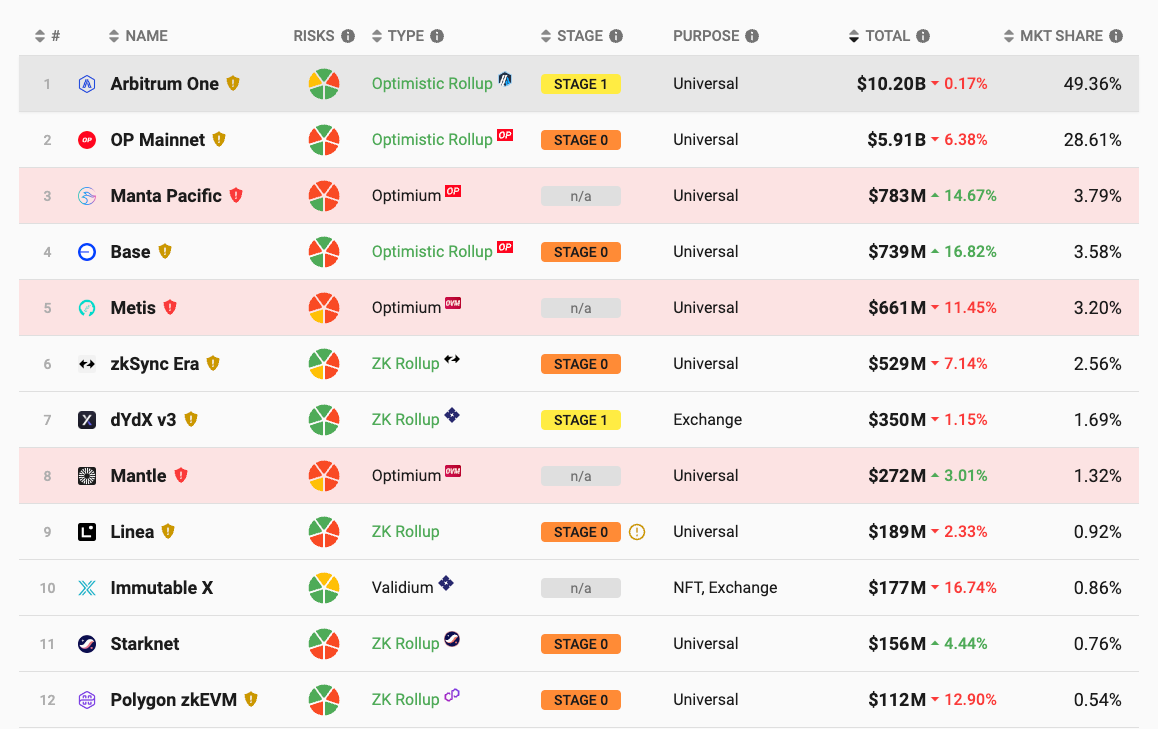
Ethereum continues leading deep industry research, tackling critical issues such as ZK applications, modularity, EOF, and account abstraction. Over recent years, the emergence of Rollup scaling solutions for Ethereum has undoubtedly been a major breakthrough. Despite market volatility and challenges from competing chains, Ethereum remains a leader in advancing deep technical research and innovation. OKX Ventures expects multiple EIPs to play key roles in Ethereum’s development next year, including ERC-4337, EIP-4844, EIP-3074, EIP-5003, Verkle Tree, and corresponding Prague/Electra upgrades. Overall, Ethereum firmly maintains its leadership in driving industry innovation, continuing to power and guide the entire blockchain sector’s development through technological research and ecosystem building.
3. Alt-Layer1 Ecosystems Represented by Solana Benefit from Industry Recovery
Rather than viewing blockchains merely as networks, they resemble individual cities. Solana and Move-based chains have stockpiled substantial new infrastructure. When more users enter the ecosystem, these “cities” reveal their advantages of low cost and high capacity. Consequently, monolithic chains like Solana and Cosmos are experiencing renewed surges, with rising developer counts, market caps, and active users.
Solana’s developer ecosystem exceeded expectations, with approximately 2,500–3,000 monthly active developers, making it the second-largest developer community in the industry. Developer retention over three months rose from 31% to over 50%, ensuring a steady influx of new developers—over half having at least three years of development experience, indicating high contribution levels and more mature applications.
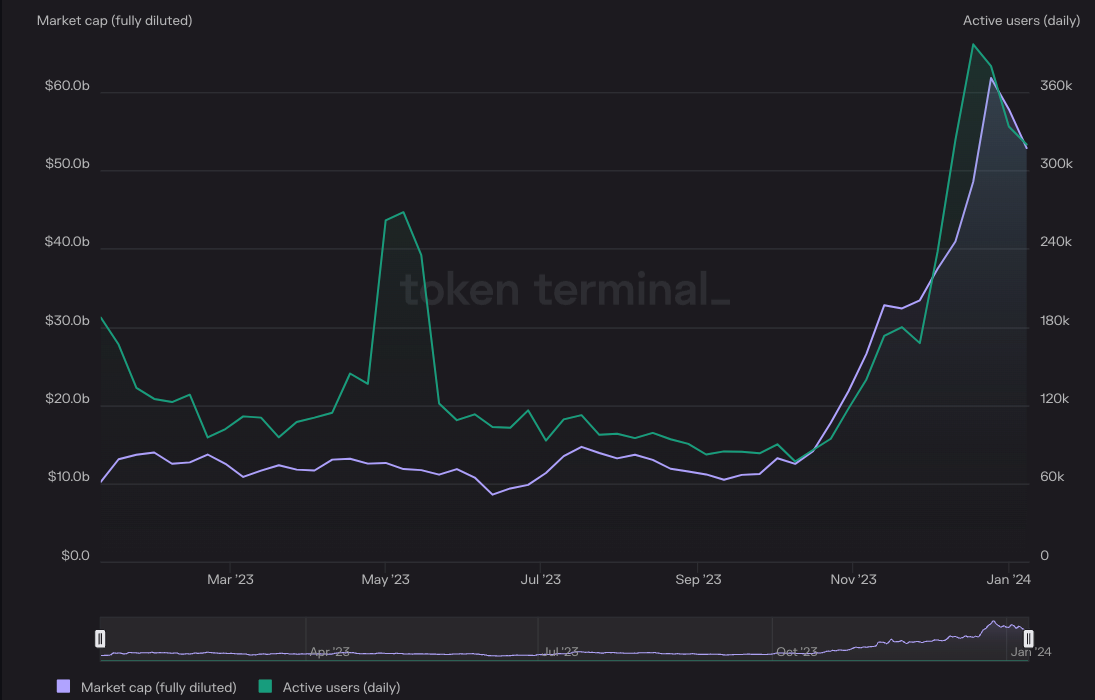
Image: Tokenterminal
Solana charges DApp teams state rent and validators vote fees, creating additional value for SOL beyond transaction fees—an alternative token value mechanism distinct from Ethereum. Shifting costs from end-users to DApp teams and infrastructure providers enhances scalability. This benefits user experience by lowering transaction costs while providing value drivers for the Solana network. Compared to Ethereum, Solana achieves superior performance metrics at the expense of higher hardware requirements. This doesn’t directly imply centralization but enables high throughput and fast transaction confirmations. Solana’s smart contracts operate through standardized structures like Metaplex, reducing due diligence burdens for users and developers, encouraging entrepreneurship, innovation, and standardization, potentially lowering costs for both parties.
The Solana ecosystem unlocks new possibilities. Projects like Teleport, Helium, and Render Network leverage Solana’s scalability and efficiency to redefine traditional models in ride-sharing, IoT communications, and GPU rendering. Solana’s role as a speed catalyst, reducing transaction fees and leveraging scalable network architecture, makes it entrepreneurs’ preferred platform for navigating a decentralized future. Seamless integration of these projects with Solana not only overcomes limitations of centralized systems but also charts a path toward more inclusive, resilient, and dynamic decentralized physical networks.
4. AI Narrative Deeply Integrates with Web3 Technology, Sparking New Applications
2022 to 2023 is hailed as the inaugural year of AI explosion. In October 2022, OpenAI launched ChatGPT, amassing 1 million users within five days. According to Delphi’s metrics, ChatGPT continually breaks records, becoming the fastest application to reach 100 million users. Against this backdrop, artificial intelligence is gradually integrating into the cryptocurrency market. According to CMC data, the market cap of the Generative AI sector has surpassed $67 billion, with trading volumes exceeding $600 million.
Crypto AI projects primarily apply to decentralized computing power, decentralized AI public chains, AI model marketplaces, AI applications, and ZKML. Among these, OKX Ventures identifies decentralized computing power, AI Agents, and AI+Web3 applications as areas warranting sustained attention.
In decentralized computing, blockchain’s decentralized nature helps reduce costs. Higher decentralization of compute nodes leads to lower unit compute prices. Introducing Web3’s unique token economic governance models into model training, inference, or optimization and allocation of computing resources offers vast potential.
AI Agents are intelligent programs capable of autonomous decision-making and execution. By simulating human roles, they enhance information exchange between blockchains and the outside world, intelligently selecting optimal cross-chain solutions tailored to user needs, breaking down current “information silos” caused by thriving but fragmented chain ecosystems, and delivering superior cross-chain experiences.
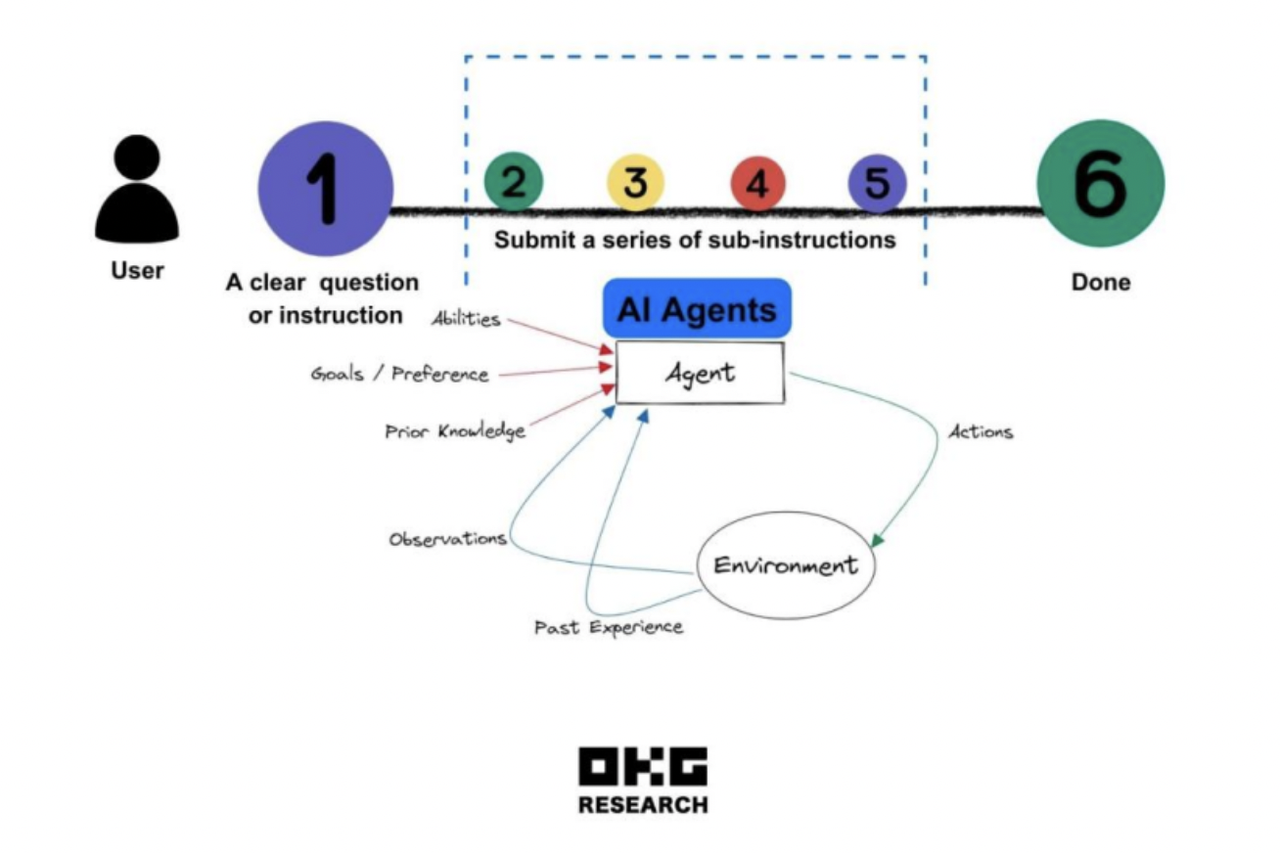
Image: OKG Research
Regarding AI + Web3 applications, AI’s strength lies in enhancing user experience and development efficiency, or integrating meaningfully with existing blockchain applications—such as combining AI with DeFi, gaming, and NFTs. The convergence of AI and Web3 technologies, supported by compliant environments, holds promise to transform current Web3 user behaviors, accelerate mass adoption, and jointly construct a trustworthy digital society.
AI is one of OKX Ventures’ key focus areas, with current investments in projects like Flock and MyShell. Taking MyShell as an example, it pioneers multimodal voice models, with over 12k stars on GitHub, 420k product registrations, 50k creators, 70k private bots, and 900 public bots—becoming a paradigm of AI Agent applications integrated with Web3.
5. Gaming Breaks New Ground with FOCG Innovation
Blockchain gaming did not explode in 2023, yet due to strong data metrics and its potential to onboard massive user bases, it remains a high-potential sector. Last year, the gaming industry disclosed 133 deals raising $1.18 billion, with the total number of gaming projects reaching approximately 2,500–3,500. According to Footprint Analytics, GameFi had 340 million total users in 2023, transaction volume exceeding $3.2 billion, and 7.4 billion transfer transactions—on-chain transaction volume from gaming projects was 23 times higher than average DeFi protocols. For instance, Sweat Economy, backed by NEAR, is one of the world’s most widely used move-to-earn mobile apps. In the past 30 days, it achieved 1.04 million unique active wallets (UAW). Currently, over 145 million users stay active and healthy while earning cryptocurrency.
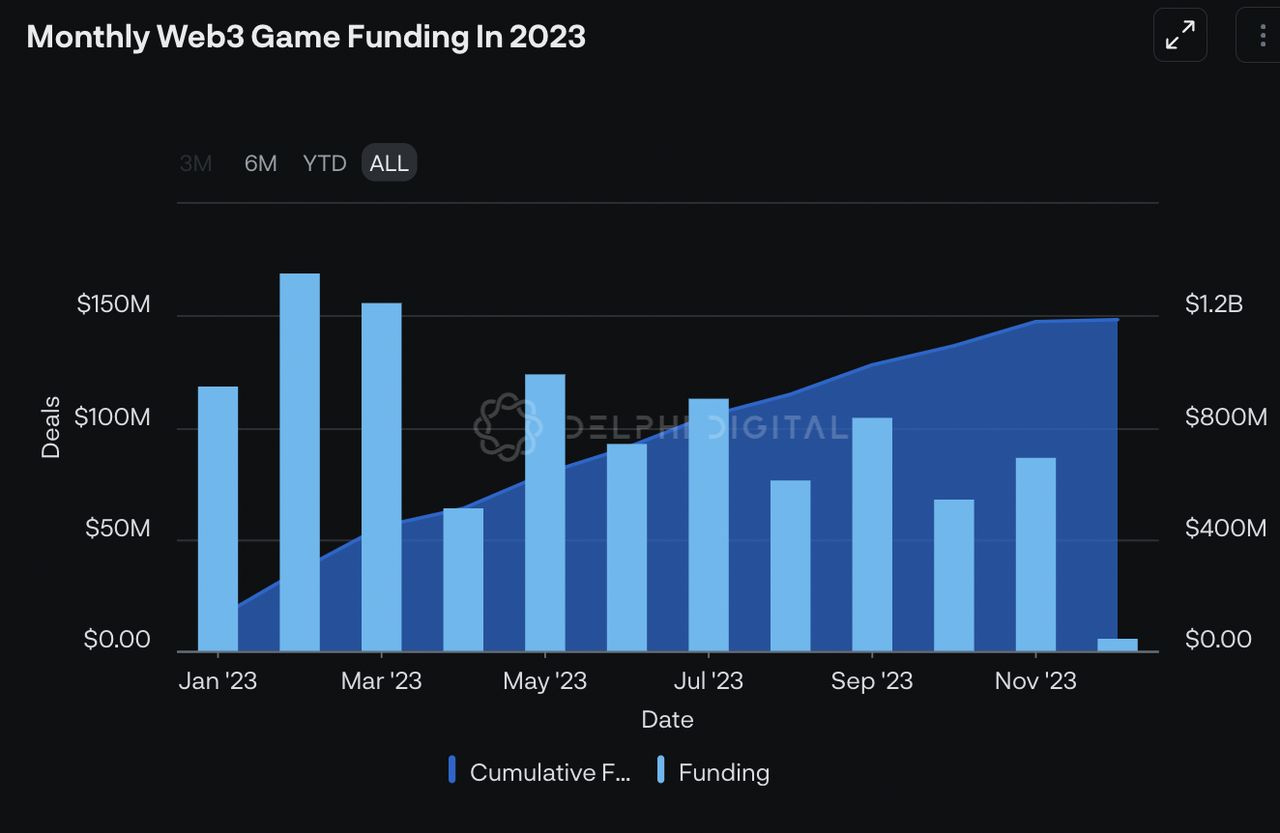
Image: Delphidigital
With the arrival of opportunities in AAA gaming, blockchain games are poised to become new growth engines. From the supply side, after a full year of development in 2023, many high-quality games are ready to launch. Imagine how AAA game IPs could help traditional gamers smoothly transition into the Web3.0 world, gradually opening a new chapter in the gaming industry. OKX Ventures anticipates a revival of blockchain gaming in 2024, triggering fierce competition for users among games. It sees strong potential in AAA games capturing user and asset value, having invested in series projects like BIG TIME, Ember Sword, and Shrapnel. For example, BIGTIME’s token launch timing was ideal—coinciding with market recovery—players earn in-game token rewards daily, and the token price achieved notable gains, marking one of its successful investments.
Looking ahead, FOCG (Fully Onchain Games)—games where assets, settlements, and game logic all occur on-chain—will emerge as a new growth frontier. FOCG creates a newer, more complex on-chain application paradigm, enabling financialization and composability. Currently in early stages, the FOCG sector remains underdeveloped and sparse in applications and assets, presenting enormous growth opportunities. OKX Ventures supports FOCG and has prioritized investments in projects like Curio to drive industry innovation. FOCG is expected to grow robustly around three pillars: engines, game content, and surrounding ecosystems like wallets and trading platforms.
6. DePIN Maintains High Growth Momentum
DePIN (Decentralized Physical Infrastructure Networks) leverages blockchain’s transparency and efficiency to manage real-world services and exploded in 2023. Currently, DePIN’s market cap exceeds $20 billion, up over 50% since the beginning of the year, with trading volume reaching $11 billion and generating approximately $15 million in annualized on-chain revenue. According to Messari’s DePIN report, there were over 650 DePIN projects in 2023, spanning six sub-sectors: computing, AI, wireless, sensors, energy, and services. Notably, DePIN revenue is utility-based rather than speculative. Unlike other cryptocurrencies that suffered 70–90% declines during bear markets, DePIN revenue fell only 20–60% from peaks—more moderate and sustainable.
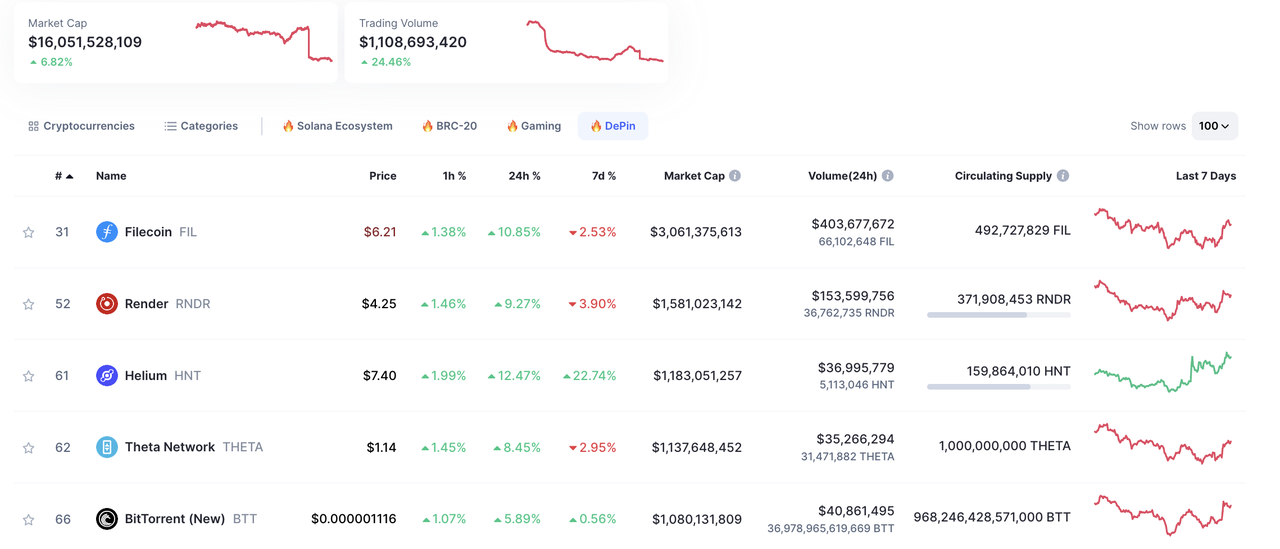
Image: Coinmarketcap
OKX Ventures believes 2024 will see DePIN projects begin deeper explorations combining AI, ZK, gaming, and other fields. For example, verifiable ZK GPU cloud services could go live on-chain within 1–2 years, services centralized providers cannot offer. In terms of narratives, OKX Ventures favors DePIN infrastructure and dedicated Layer1s tailored for DePIN.
Given advantages in high throughput, low fees, and large developer communities, most DePIN projects currently build on general-purpose chains like Solana or Polygon. Projects like Helium and Render Network have migrated to Solana, bringing substantial user bases. According to Dune data, IOTex has accumulated 440k users, and Helium on Solana has over 180k users. From user demand perspectives, dedicated Layer1s for DePIN will start launching and expanding in 2024, leading to specialized chains serving DePIN specifically.
7. Macroeconomic Outlook Improves, Entering a New Era for Crypto
With countries and regions worldwide—including El Salvador, Canada, Dubai, and Brazil—establishing and refining crypto regulatory frameworks, the industry is making significant strides toward compliance, likely gaining more favorable development conditions in 2024 and expanding its reach. Notably, the SEC’s formal approval of spot Bitcoin ETFs means traditional financial investors now officially gain exposure to Bitcoin, further catalyzing the crypto industry’s compliance and scale-up, pushing traditional finance to embrace innovation and jointly promote fairness, security, and transparency in finance.
According to Blockworks, on January 12, 2024, the first trading day of U.S. spot Bitcoin ETFs saw $4.6 billion in volume—Grayscale’s GBTC traded over $2.1 billion, BlackRock’s IBIT over $1 billion, and Fidelity’s FBTC over $680 million. Bloomberg Senior ETF Analyst Eric Balchunas noted that within two days of listing, nine issuers absorbed $1.4 billion in inflows, exceeding GBTC’s $579 million outflows, resulting in net inflows of $819 million. Whether traditional macro funds or ultra-high-net-worth individuals, they continue injecting substantial liquidity into the crypto sector. From another angle, the scale of on-chain stablecoins keeps growing, signaling sustained new capital inflows. DefiLlama reports stablecoin market cap reached a record $133 billion, with USDT at $94.9 billion, holding a 71% market share.
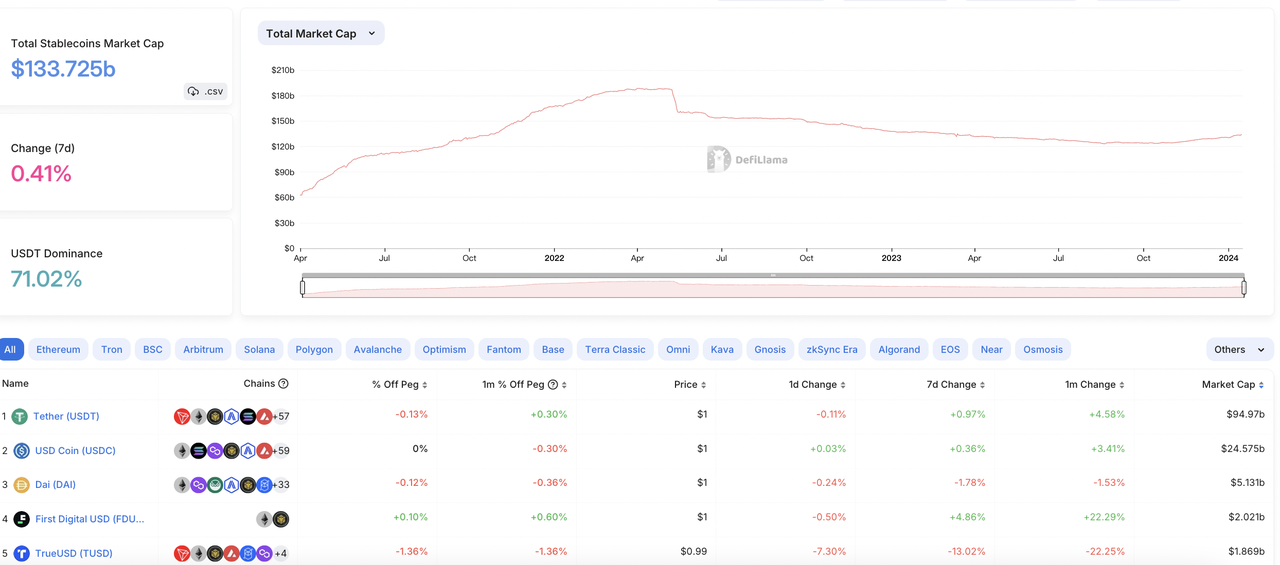
Image: DefiLlama
Backed by capital, the crypto ecosystem will accelerate toward greater maturity. Blockchain infrastructure has advanced rapidly in recent years, and VC funding has catalyzed conditions necessary for new applications and innovations. Between 2017 and 2022, approximately $73.4 billion flowed into crypto-related enterprises and projects. In 2023 alone, total fundraising reached $9.13 billion across 1,178 rounds.
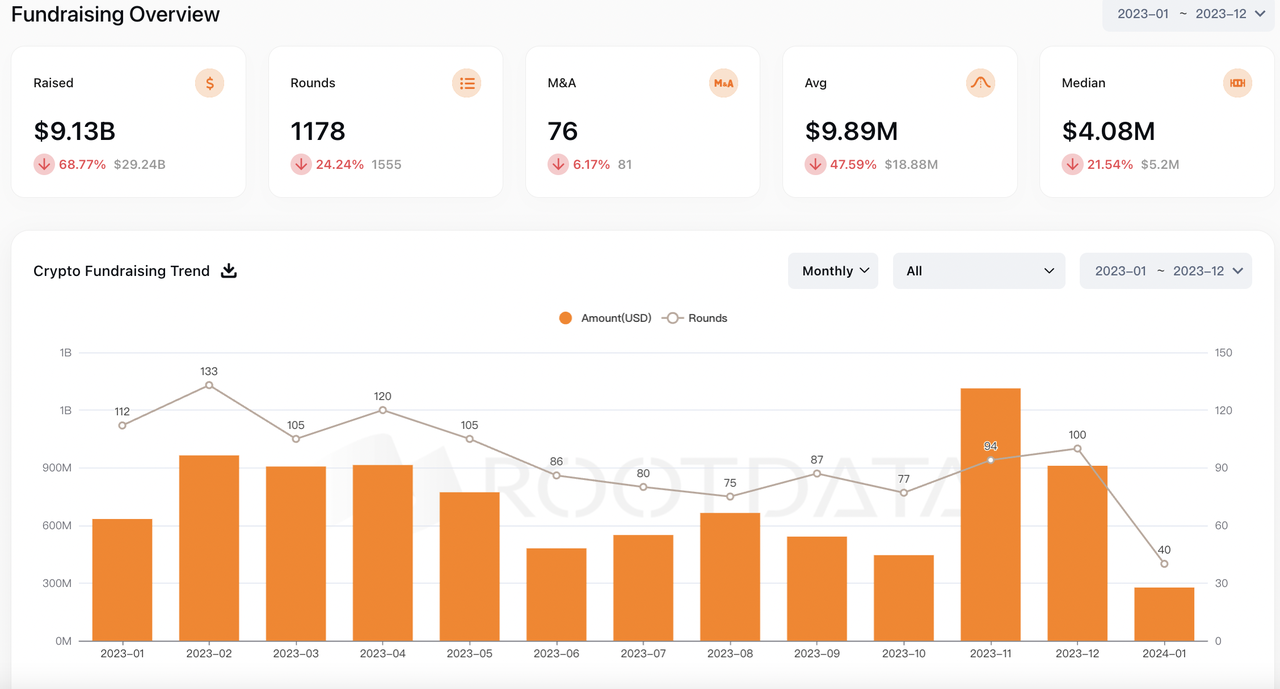
Image: ROOTDATA
From January 2020 to January 2024, funded categories beyond CeFi largely flowed into infrastructure, games, NFTs, and DeFi. These projects accumulated sufficient capital during bear markets, ensuring product delivery and positioning them as targets for the next wave of innovation.

Image: ROOTDATA
Conclusion
The rise of the crypto industry has become an engine driving massive transformations in internet technology and finance, opening doors to the future world. In this challenging and opportunity-rich domain, crypto builders have emerged as creators shaping the digital future. Their profound understanding and unique insights into blockchain technology, coupled with relentless innovation and dedication, have brought the industry tremendous success. Yet these builders remain unsatisfied, continuously pushing the boundaries forward. They contribute to open-source projects, lead startups, and actively engage in community building, driving the industry’s prosperity and growth. Their spirit of dedication not only inspires more young people to join but also injects fresh vitality into the entire crypto economy.
Furthermore, with continuous emergence of new technologies and solutions and gradual establishment of global crypto regulations, the relationship between the crypto industry and traditional finance is evolving—from competition and cooperation toward integration—enhancing market liquidity between both sides. Clearly, 2024 will elevate the crypto industry to new heights. However, large-scale liquidity inflows won’t happen overnight. The industry evolves rapidly, and emerging innovative projects urgently require professional support in funding, technology, and strategy.
As a premier investment firm, OKX Ventures remains deeply embedded at the industry forefront, committed to diverse innovations and supporting builders—high-quality startup teams and projects. Leveraging deep understanding and insights into the blockchain industry and professional post-investment management experience, it has cultivated a globally distributed team with a distinctive “innovation + empowerment” approach. Through integration and cross-sector collaboration, it connects OKX’s traffic, trading, public chains, and technical resources into a comprehensive support system, offering one-stop multi-service and resource integration to portfolio teams. Moreover, OKX Ventures is not a conventional financial investor—it plays dual roles as both “discoverer” and “empowerer,” growing alongside “entrepreneurial partners” to accelerate industry creativity and innovation.
Looking back, since Bitcoin’s inception in 2009, it has weathered multiple economic cycles and market fluctuations, repeatedly rebounding from lows to reach new highs—bolstering confidence among long-term value investors, including OKX Ventures. Amid rapidly changing markets, OKX Ventures敏锐ly senses trends, flexibly adapts strategies, and consistently doubles down on innovative industry projects, successfully navigating multiple bull and bear cycles with rich returns. Going forward, OKX Ventures will continue deepening its presence in the crypto primary market, supporting builders and high-potential startup teams and projects.
Join TechFlow official community to stay tuned
Telegram:https://t.me/TechFlowDaily
X (Twitter):https://x.com/TechFlowPost
X (Twitter) EN:https://x.com/BlockFlow_News
 OKX Ventures






