









6 Undeployed Perp DEX Projects: Innovations and Potential Opportunities
TechFlow Selected TechFlow Selected
6 Undeployed Perp DEX Projects: Innovations and Potential Opportunities
New projects in the Perp DEX赛道 still demonstrate strong innovation, and the earlier you participate, the better the results.
 Navigating Web3 tides with focused insights
Author: Jiang Haibo, PANews
Decentralized perpetual contract exchanges (commonly referred to as Perp DEXs or Perps) may be one of the few sectors with clear value and a large number of innovative projects emerging. While dYdX, GMX, Synthetix and others dominate the market, several recently popular yet unlaunched projects have shown strong competitiveness, including Aark Digital, Drift, Zeta, MYX, Hyperliquid, and Jupiter.
Most of these projects use points or similar mechanisms for cold starts, and early positioning may offer better opportunities. PANews will provide detailed coverage below.
Aark Digital
Aark Digital is an Arbitrum-based Perp DEX that announced a seed round in July led by Delphi Digital, with participation from OKX Ventures, Big Brain Holdings, and Keyrock. The specific funding amount was not disclosed.
Key features of Aark Digital include:
-
A virtual liquidity pool model where liquidity providers (LPs) still act as counterparty to traders.
-
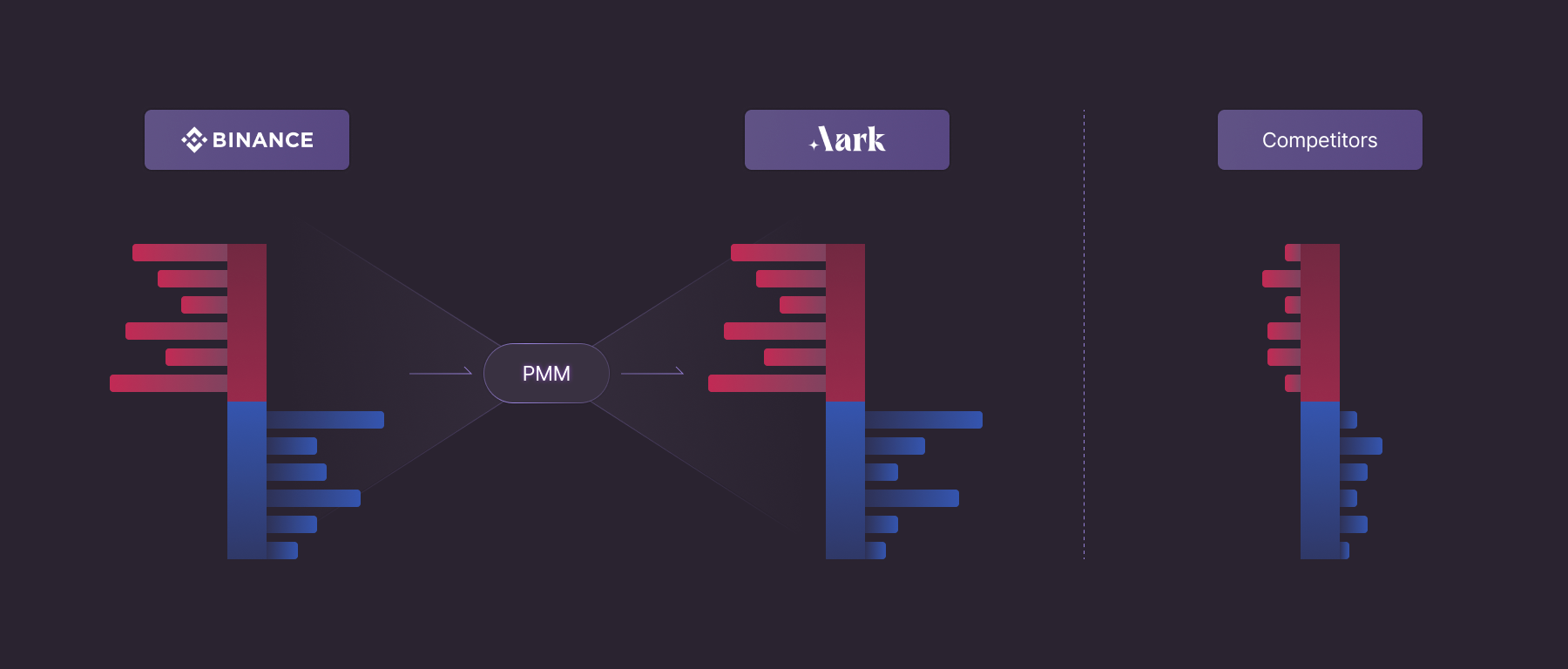
Parallel Market Maker (PMM) architecture that aggregates liquidity from both centralized exchanges (CEXs) and decentralized exchanges (DEXs). By reflecting CEX-level liquidity depth, it prevents arbitrage losses due to price manipulation and supports long-tail assets. It also uses funding fees and price impact to incentivize long-short balance.
-
Cross-margin mode supporting multiple collateral types. Assets including major stablecoins (USDC, USDT, DAI), ETH, and WBTC can be used as collateral, each with a preset weight. Users retain ownership of their collateral during trading; profit and loss are settled in USDC only upon closing positions.
-
Providing liquidity works similarly to opening a trading position, supporting leveraged liquidity and multiple collateral types.
-
Efficient settlement process. On Aark, clicking to place an order completes the trade instantly—no need to wait for wallet pop-ups or transaction signing—resolving on-chain latency and gas issues while avoiding front-running.
Overall, Aark Digital offers an exceptionally smooth user experience among Perp DEXs. To drive cold start adoption, Aark has implemented several incentives to boost liquidity and trading volume. For liquidity, there are two rounds of soft-locking programs; the ongoing second round runs from December 20 to February 20, offering 200,000 AARK tokens (from a total supply of 100 million). For trading volume, since October 11, an 18-week mining campaign has been distributing 200,000 AARK weekly.
Drift
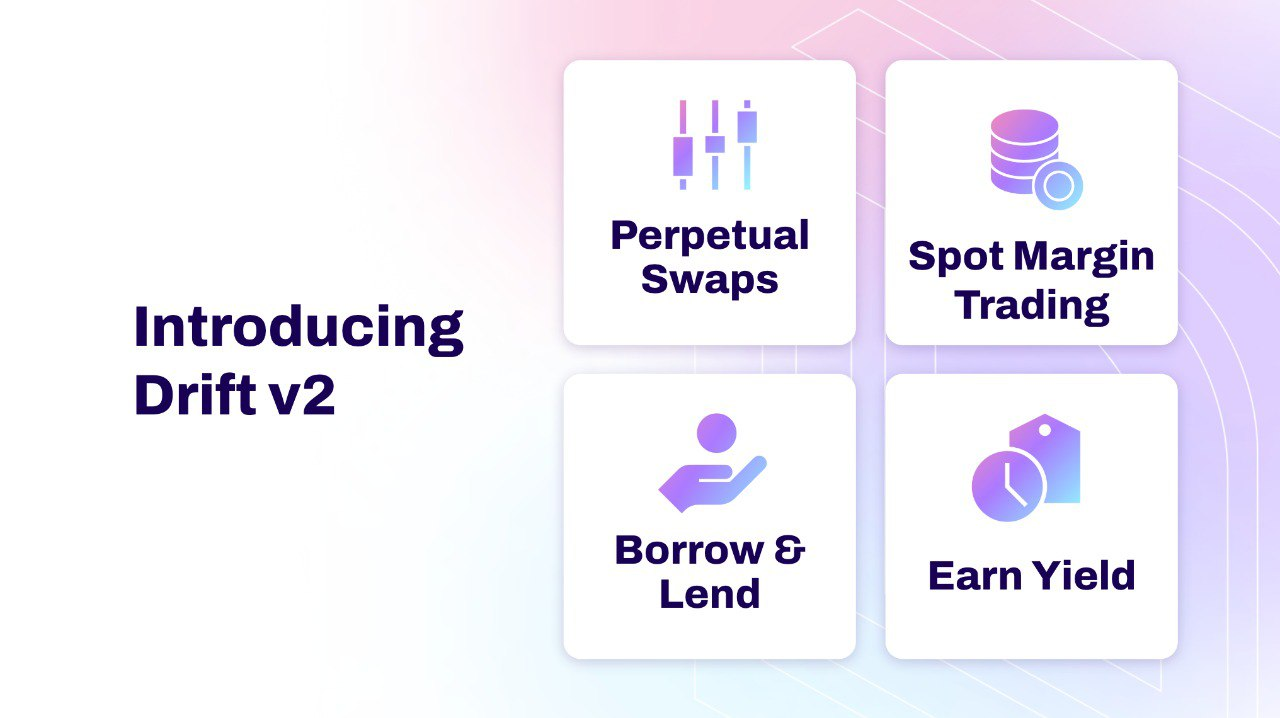
Drift is a Solana-based decentralized trading platform offering spot trading, leveraged trading, perpetual contracts, lending, and yield-earning capabilities. In 2020, the project raised $3.8 million in a round led by Multicoin Capital, with participation from Jump Capital, Alameda Research, and others.
Features of Drift include:
-
A full suite of products covering spot, leveraged, and perpetual trading.
-
Multiple liquidity mechanisms, including Virtual Automated Market Maker (Drift AMM), Decentralized Limit Order Book (DLOB), and Just-in-Time (JIT) auction liquidity, ensuring robust on-chain liquidity.
-
All trades are first routed through short-term Dutch auctions, then executed via DAMM, with limit orders on the order book serving as fallback.
-
An insurance fund receives part of protocol fees and is used primarily to cover losses when they occur. Depositing $10,000 into the insurance fund grants users a discount on trading fees.
-
Supports multiple collateral types for margin, with automatic yield generation on deposited collateral. Profits and losses are periodically settled and converted into deposits or debt, accruing interest accordingly.
-
Liquidity providers (DLP) can use leverage and risk losing all their margin. They can set up dedicated sub-accounts for liquidity provision.
-
Makers pay no fees and receive a 2 basis point rebate.
Drift is a powerful DEX and currently holds the highest TVL among Solana-based Perp DEXs. It currently runs a weekly giveaway event called Drift Draw, funded by the insurance pool, but has not clearly outlined native token incentives for traders or liquidity providers.
Zeta
Zeta is a derivatives protocol on Solana providing perpetual contract trading services. In 2021, it raised $8.5 million in a round led by Jump Capital, with participation from Electric Capital, Wintermute, Alameda Research, Solana Capital, and others.
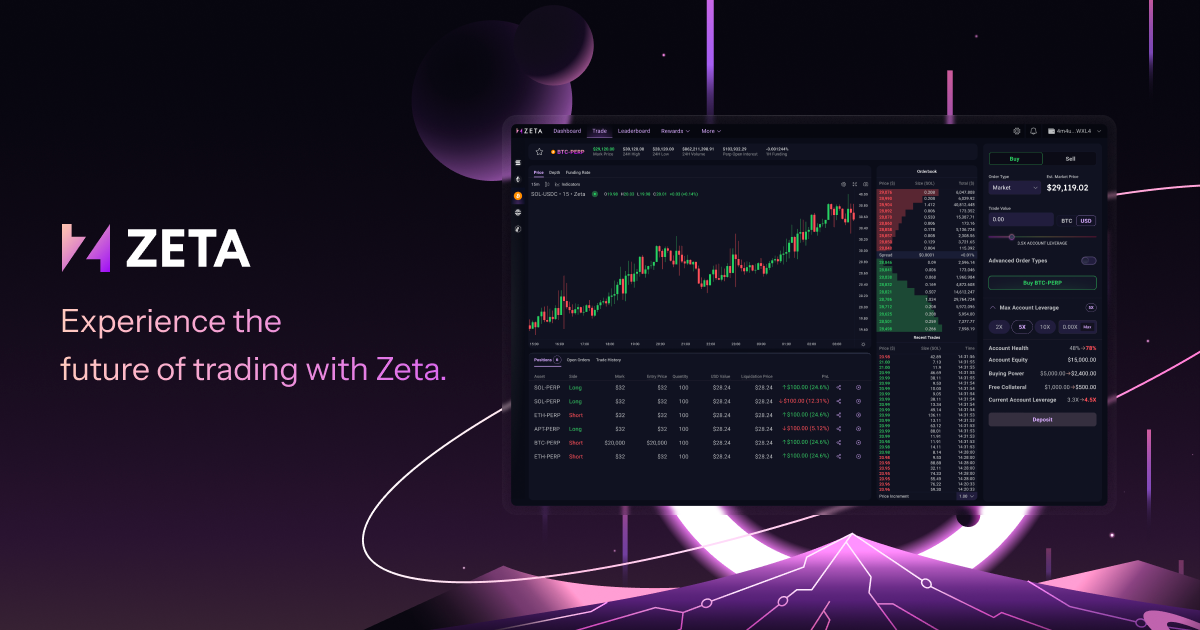
Zeta’s product is very simple—just a fully on-chain limit order book for perpetual futures trading, similar to dYdX.
Zeta currently operates a points system called Z-Score—the higher the score, the more tokens users will receive. The first season of Z-Score has ended, awarding 1 point per dollar traded as Taker. However, Taker fees are relatively high at 0.1%. Makers trade fee-free but earn no points. Zeta has also partnered with other projects to release Zeta Cards—burning a card grants double points. The second season of Z-Score is about to begin.
MYX
MYX is a highly scalable perpetual contract protocol that announced a $5 million funding round in November 2023, led by HongShan, with participation from Consensys, Hack VC, OKX Ventures, and others.
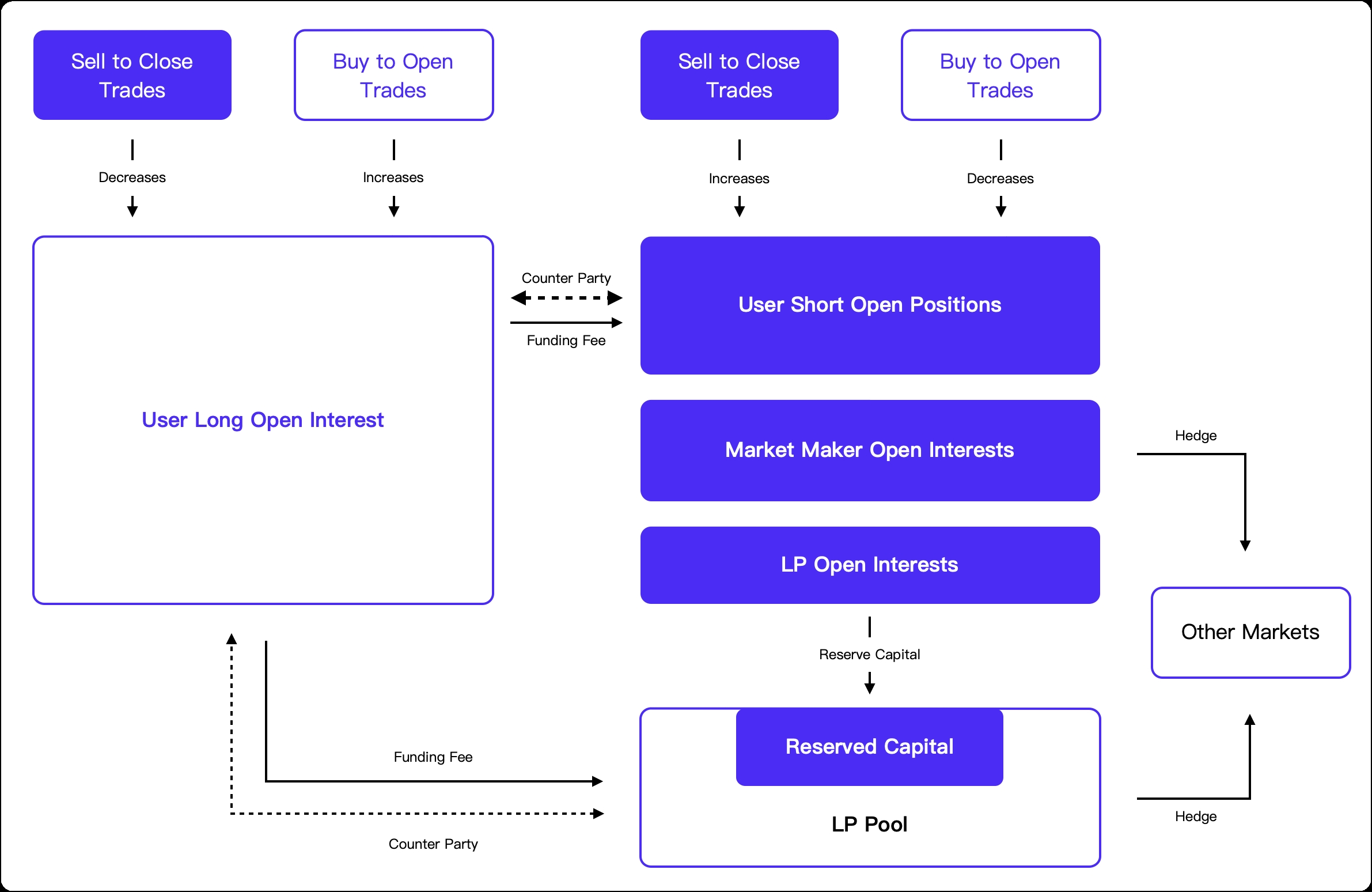
MYX directly addresses a key pain point of GMX. In most Perp DEXs, including GMX, both long and short positions consume liquidity. Once the liquidity cap is reached, open interest hits its maximum—users can only close positions, not open new ones. MYX introduces a unique matching pool mechanism with a liquidity pool still acting as counterparty. When long and short positions are balanced, LPs face no counterparty risk—MYX considers them to hold zero net exposure. If balance is maintained, open interest could theoretically grow infinitely. Only the imbalance between longs and shorts exposes LPs to risk, which is mitigated by funding fees that incentivize equilibrium.
Since open interest is no longer constrained by the size of the liquidity pool, MYX can generate higher trading volume from the same amount of liquidity, allowing trade-offs in other areas—such as achieving zero slippage and eliminating borrowing fees.
Currently, MYX is in its second test phase, and users who have joined the waitlist can earn rewards by participating.
Hyperliquid
Hyperliquid is a decentralized perpetual exchange running on its own Layer 1 blockchain, offering functionality similar to traditional centralized exchanges.
It primarily features an order book exchange using USDC as margin. One standout feature is support for many long-tail assets—possibly the only project enabling leveraged or perpetual trading of certain specific assets (like CANTO) on-chain. Additionally, Hyperliquid offers vaults with various market-making strategies such as HLP (Hyperliquidity Provider), currently showing an APR of 264%, though this may reflect recent market volatility.
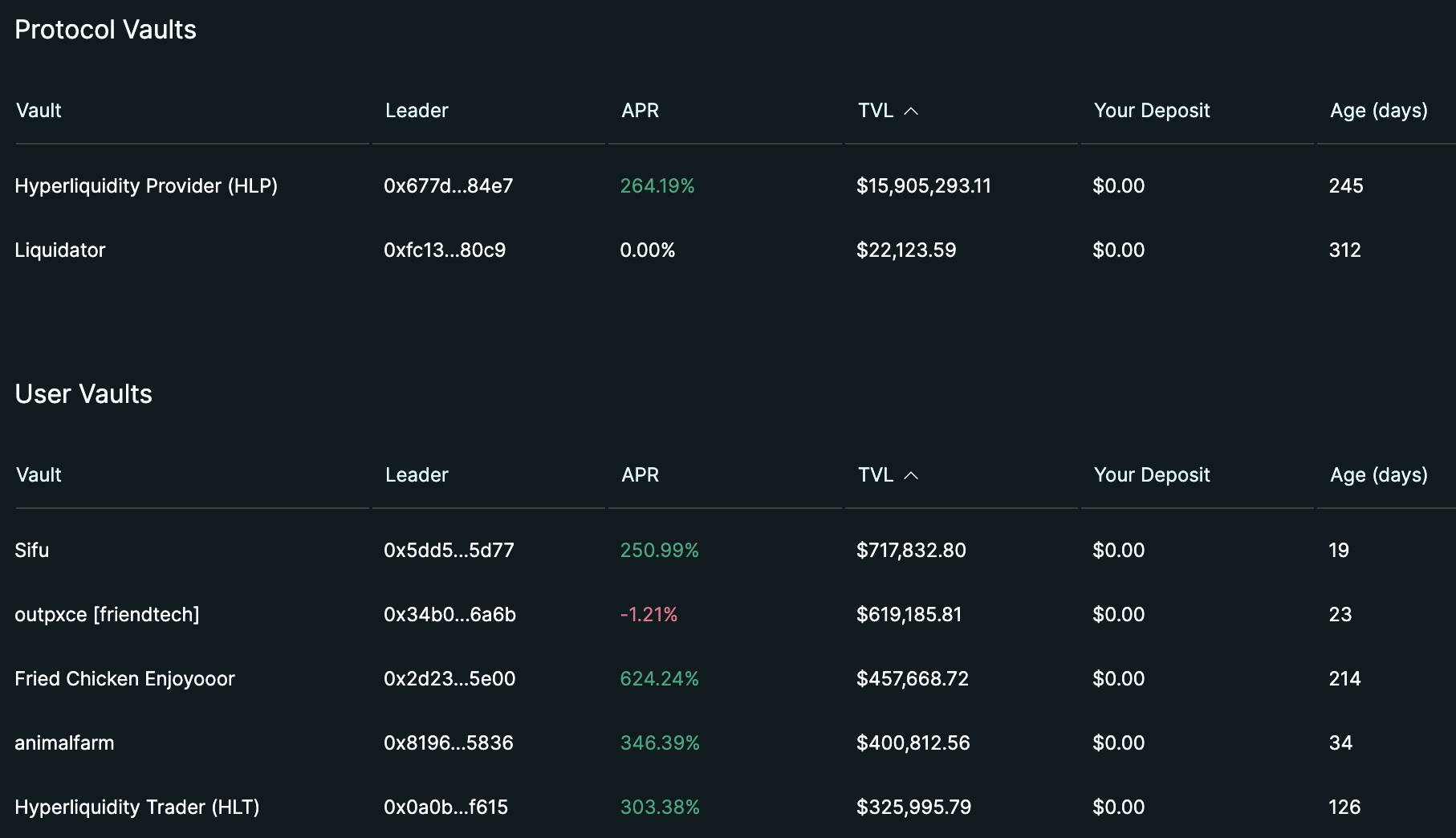
Starting November 1, Hyperliquid launched a points system, distributing 1 million points to users each week over a six-month period.
Jupiter
Jupiter's JLP is a product on Solana similar to GMX's GLP, offering perpetual contract services through a basket of assets.
While not particularly innovative, JLP has become extremely popular on Solana—its capacity consistently reaches the cap shortly after any increase. JLP often trades at a 10% premium on secondary markets, and utilization rates for SOL, BTC, and ETH perpetuals frequently hit 100%.
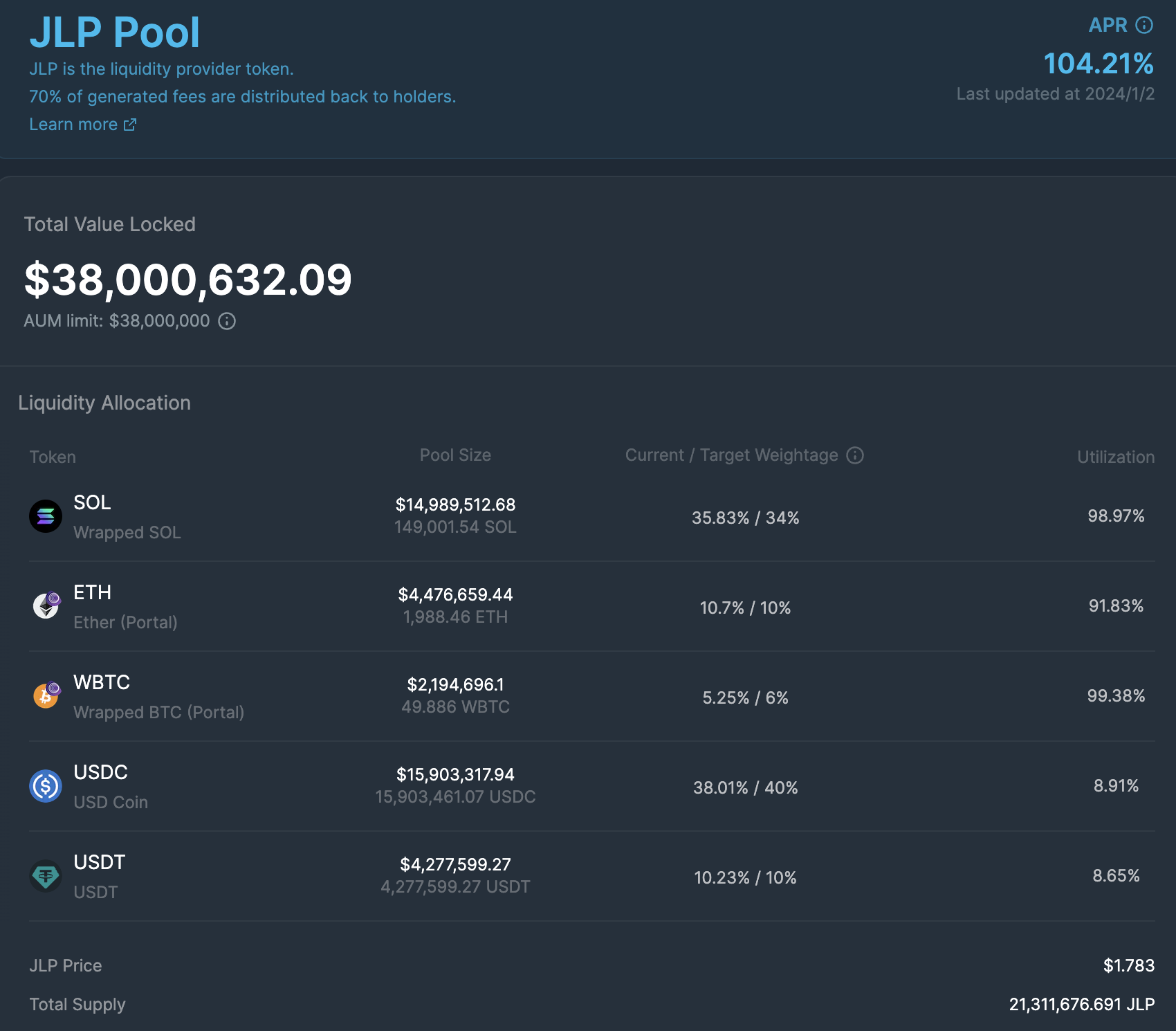
The main reason may be Jupiter’s extremely high valuation (over $6 billion on Aevo) and the fact that 40% of its tokens are allocated for airdrops. Some users buying JLP at a premium or trading on Jupiter’s perpetuals may be doing so in anticipation of potential airdrops.
Summary
Perp DEX development remains incomplete. Some projects demonstrate diversity and innovation in this space, and combined with different incentive models, one may eventually surpass current leaders like GMX or Synthetix. For users, earlier participation could yield greater benefits.
However, note that this sector frequently suffers security incidents. Even top-tier projects like dYdX, GMX, and Synthetix have experienced attacks of varying severity, albeit mostly resulting in minor financial losses. Newer projects may carry even higher risks.
Join TechFlow official community to stay tuned
Telegram:https://t.me/TechFlowDaily
X (Twitter):https://x.com/TechFlowPost
X (Twitter) EN:https://x.com/BlockFlow_News
 PANews







