Bitcoin Ecosystem Overview and Promising Projects: From Traditional Asset Allocation to Emerging Projects, BTC's Multidimensional Development Prospects
TechFlow Selected TechFlow Selected
Bitcoin Ecosystem Overview and Promising Projects: From Traditional Asset Allocation to Emerging Projects, BTC's Multidimensional Development Prospects
The improvement and development of the BTC sector has become an industry imperative and a societal inevitability.
 Navigating Web3 tides with focused insights
Author: MIIX Capital
Introduction
Thanks to the surge in popularity of Ordinals and the wealth-generation effect of inscriptions, market attention has increasingly turned toward the BTC ecosystem. It was discovered that information could be stored via the Taproot protocol and bundled on-chain as verifiable records—meaning the BTC chain can now store data and support DApp development.
As the BTC ecosystem has fully entered public awareness, upgrades based on Taproot have firmly established the foundational technical capabilities for developers to build smart contracts on BTC. This article provides an in-depth analysis of the current state and potential projects within the BTC ecosystem, contextualized by its technological evolution.
1. Sector Overview
1.1 Definition and Background
Developers have long attempted to build smart contracts on BTC due to its strong consensus and high market capitalization, theoretically offering superior security. Thus:
- In March 2023, Ordinals emerged out of nowhere, defining a numbering protocol that enables tokens and NFTs to operate stably on the BTC network.
- Subsequently, developers derived the Inscriptions protocol from Ordinals, allowing arbitrary content (such as text, images, videos, HTML files) to be attached to individual satoshis and packaged on-chain via Taproot script transactions, completing inscription minting.
This enables information storage through the Taproot protocol, which is then bundled on-chain as traceable proof—transforming BTC into a data-storing public blockchain capable of supporting DApp construction via the Taproot protocol, thereby bringing the BTC ecosystem into mainstream view.
Each BTC is divided into 100 million satoshis. Ordinals is a system that assigns a unique number to each satoshi. Satoshis are transferred from transaction inputs to outputs following a first-in-first-out principle. Both the numbering scheme and transfer mechanism rely on order—the numbering depends on the mining sequence of satoshis, while transfers depend on the order of transaction inputs and outputs.
1.2 Development Timeline
Colored Coins
In 2013, the concept of "Colored Coins" was proposed within the BTC community, enabling users to "color" small amounts of BTC by utilizing unused fields in BTC transactions to represent ownership of other assets. This allowed the BTC blockchain to support not only BTC transactions but also broader applications.
However, coloring is a protocol-level feature requiring client-side support; if a client does not recognize the protocol, it cannot identify colored UTXOs. Bitcoin-Core, the most widely used client, never adopted this protocol, limiting Colored Coins to niche usage.
Coloring refers to adding specific metadata to BTC's UTXOs, allowing differentiation between otherwise identical BTC units.
Colored Coins refer to a set of techniques using the BTC system to record creation, ownership, and transfer of non-BTC assets, enabling tracking of digital or tangible assets held by third parties and facilitating ownership trades via these tokens.
OP_RETURN
In March 2014, Bitcoin Core 0.9.0 was released, standardizing OP_RETURN outputs as valid transaction types. While nodes would relay such transactions, the release notes clarified:
“This change is not intended to encourage data storage on the blockchain. The new OP_RETURN feature creates provably prunable outputs, avoiding the use of permanently unspendable outputs for storing arbitrary data (e.g., images)—some such schemes had already been deployed, causing bloat in BTC’s UTXO set. Storing arbitrary data on-chain remains a bad idea; storing non-monetary data elsewhere is cheaper and more efficient.” (Source link)
This represented a compromise by the Bitcoin Core team to mitigate blockchain pollution caused by protocols like Colored Coins, allowing node relaying while discouraging excessive on-chain data storage.
Lightning Network
The Lightning Network was first proposed in February 2015 in the paper “The Bitcoin Lightning Network: Scalable Off-Chain Instant Payments” and launched in 2018 to address scalability issues.
It moves large volumes of transactions off-chain, only settling final states on the main chain. The basic idea involves creating off-chain payment channels between parties, with only the final settlement submitted to the mainnet. This allows numerous off-chain transactions to be recorded as single on-chain entries. However, the Lightning Network offers limited TPS improvements and remains unsuitable for smart contract deployment.
Additionally, since transactions occur off-chain and results are only finalized upon channel closure, there are security concerns during the process. Large funds remain hesitant to use Lightning, preferring direct mainnet transfers.
Taproot
The Taproot upgrade went live in November 2021 and stands as one of the most significant upgrades to the network in recent years, aimed at enhancing privacy, scalability, and utility for the first-generation blockchain.
Taproot enables batch verification of multiple signatures and transactions, fundamentally solving prior bottlenecks in transaction validation speed. It reduces block space requirements and accelerates operations, lowering the resource intensity of smart contracts and making them more practical and accessible for everyday use. This versatility opens up new possibilities for unique digital assets and advanced functionalities on the BTC network.
Most smart contract development today is now built atop the Taproot protocol. However, Taproot faces challenges, including off-chain data storage, dependency on Taproot-compatible wallets, and reliance on third-party indexing services—if users or indexers lose data, tokens may become unrecoverable.
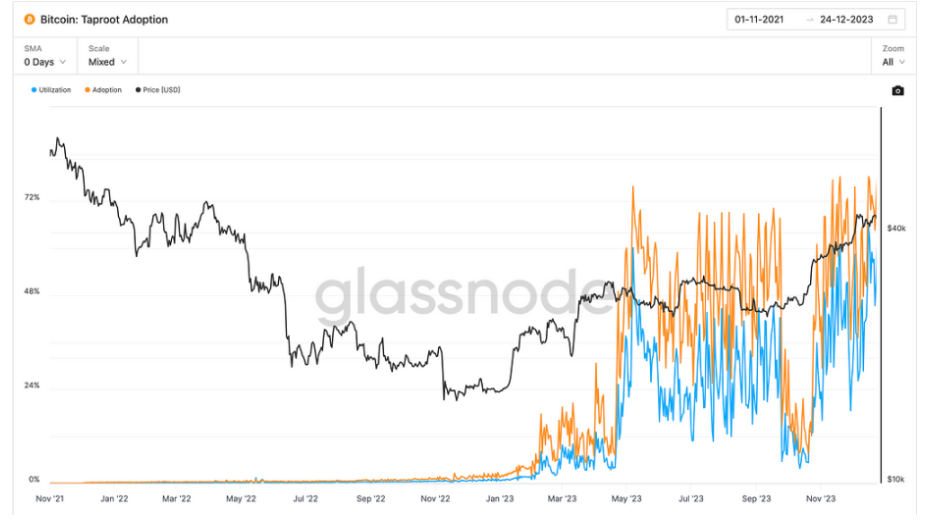
The above chart shows Taproot adoption trends. Since its launch, adoption has steadily increased. With the introduction of Ordinals in November 2022, usage surged dramatically. As of December 25, 2023, 75 out of every 100 BTC transactions were Taproot-related.
1.3 Competitive Landscape
As a public blockchain, the current ecosystem includes asset issuance (BRC-20 tokens or inscription-based tokens) and diverse smart contract applications. Fundamentally, it remains a battle among ecosystems, though no clear leader has emerged yet, given the nascent stage of development across Layer2, DeFi, GameFi, and cross-chain bridges.
The key competitive factor lies in who can first deploy a working Layer2 solution to support smart contracts—since BTC’s main chain lacks native smart contract functionality. Current interest centers around simple inscriptions and foundational infrastructure for smart contracts.
There are two schools of thought regarding BTC Layer1 token issuance: the JSON approach and Atomicals’ exclusive UTXO model.
BRC-20 and Sidechain Scaling
BRC-20 is an on-chain recording, off-chain processing token system that uses BTC as storage. For scaling this model, additional business logic can be added to off-chain indexing servers. For example, introducing new primitives beyond “mint,” “deploy,” and “transfer” under the JSON “op” field enables listing, staking, burning, and authorization functions. Combinations of these “op” commands can evolve into swap, lending, and other Inscription-Fi (inscription finance), even extending to complex socialfi and gamefi applications.
This essentially involves programming against indexers—akin to web2 server API programming—making implementation relatively easy and scalable from a single indexer. Projects like Unisat’s swap features, along with BRC100, ORC20, and Tap protocols, represent pioneers in this JSON-scaling camp, poised to drive rapid changes.
However, decentralization remains a critical concern. Programming against indexers increases server load and makes community operation harder. Complex applications require consistent consensus, ultimately pushing development toward full smart contract platforms.
Atomicals’ Layer2
Atomicals’ ARC20 tokens are directly represented by BTC UTXOs without relying on JSON updates. Direct UTXO manipulation enables novel capabilities, such as swapping ARC20 tokens with BTC or consuming one ARC20 token to generate another.
By controlling transaction inputs and outputs, ARC20 can implement basic DeFi functions (though requiring higher developer expertise). Its advantages are clear: all logic is processed directly by the BTC network, inheriting maximum security and consensus; it seamlessly integrates BTC assets without relying on third-party bridges like sidechains do.
Since ARC20 itself is not Turing-complete, Atomicals incorporated design ideas from BitVM to propose AVM—a Layer2 solution where proofs are submitted and verified on BTC Layer1 via BTC script logic. As UTXO-backed assets, ARC20 tokens naturally serve as collateral for fraud proofs in the AVM Layer2. This may represent the most suitable Layer2 architecture for BTC.
@wizzwallet, Atomicals’ development service provider, recently shared updates about AVM, suggesting progress may be faster than expected.
2. Ecosystem Landscape
2.1 Layer2 Ecosystem
Stacks
Launched in 2017, Stacks is a Layer2 public chain project focused on building upper-layer applications on BTC, primarily connected via the POX (Proof of Transfer) consensus mechanism, aiming to create a large-scale ecosystem on top of BTC.
Currently, the official Stacks website lists around 60 DApps. On Stacks, miners lock BTC, and the network selects round leaders responsible for block production. These leaders submit hashes to the mainnet and earn fees from smart contracts and transactions. Effectively, participating nodes validate both BTC and Stacks networks, earning dual rewards.
Comprehensive public data on Stacks is unavailable, and overall ecosystem growth has been lackluster. Recently, however, rising interest in inscriptions has boosted attention and TVL on Stacks.
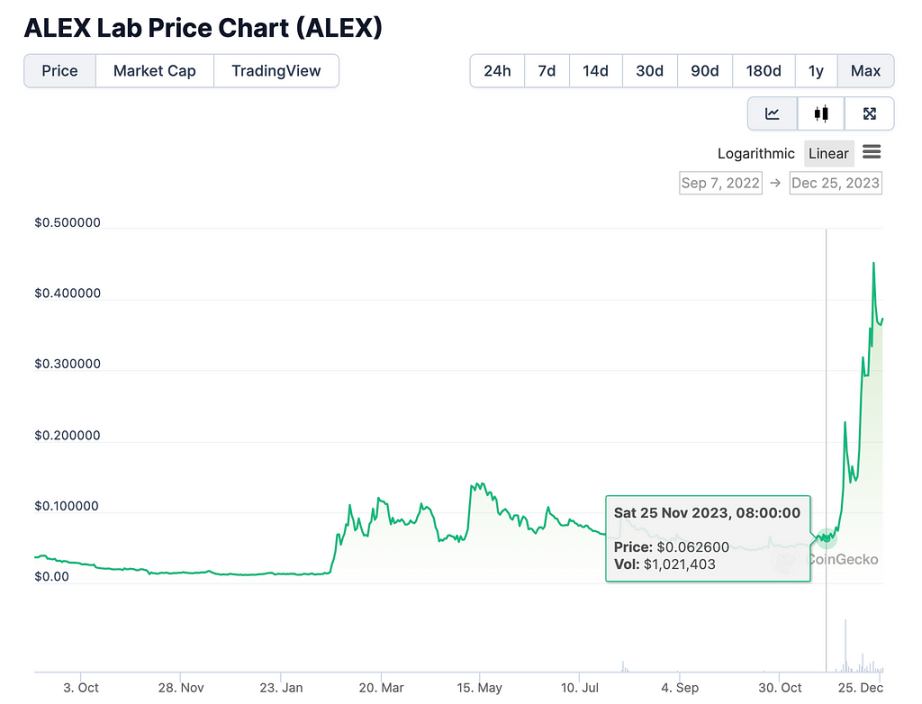
Currently, Stacks’ TVL is concentrated in ALEX, a one-stop DeFi protocol on Stacks with $45 million in TVL and a market cap of approximately $245 million.
From the data: ALEX’s market cap rose later than the general trend, typical for infrastructure-leading protocols, indicating slow capital velocity within the sector.
Rootstock
Rootstock is a BTC-based, EVM-compatible smart contract platform designed to extend BTC’s functionality—including DeFi—without compromising its core layer. The Rootstock Infrastructure Framework (RIF) supports payments, identity verification, and similar use cases.
Rootstock has seen stronger development compared to Stacks, with significantly higher TVL. This is largely because Stacks requires developers to use the new Clarity language, whereas Rootstock’s EVM compatibility makes it more developer-friendly.

Main projects in this ecosystem include MoneyOnChain, a full-service DeFi platform, and Sovryn, a lending platform. Sovryn has issued its token, currently valued at $25 million.
Liquid Network
Liquid operates similarly to the Lightning Network, with BTC on the network backed 1:1 by mainchain BTC. Once users transfer BTC to Liquid, they can leverage faster and more private transactions. Users can also issue new assets such as stablecoins and security tokens on the network.
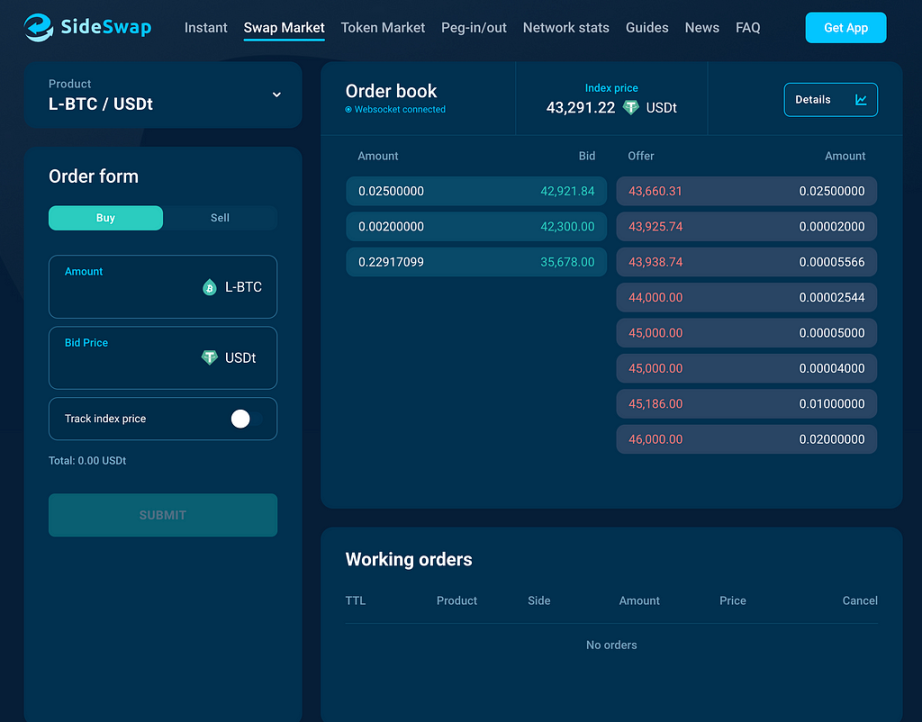
Currently, two apps are officially recommended: Hodl Hodl (a P2P lending protocol) and SideSwap. While P2P lending improves capital efficiency, liquidity remains poor (most leading lending protocols have shifted to pool-based models for better supply-demand matching).
2.2 NFT Ecosystem
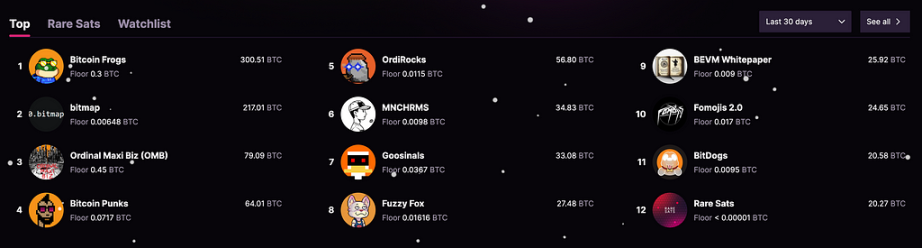
Fueled by the market hype around Ordinals, capital has begun flowing into the NFT ecosystem. Magic Eden is currently the most liquid NFT marketplace, launching its BTC NFT marketplace in March 2023 and capturing about 70% of market liquidity.
Bitcoin Frogs
On Magic Eden’s NFT marketplace, Bitcoin Frogs leads in trading volume. A pure PFP collection with 10,000 total supply, floor price at 0.3 BTC, and trading volume reaching ~950 BTC.
From the data: as BTC sector热度 gradually declines, Ordinals prices fall, and NFT market trends follow suit.
Bitmap
Bitmap is an open-source standard proposed by blockamoto on June 13, 2023, based on ordinals, aiming to establish land ownership consensus on the BTC chain.
This project is innovative. Unlike Decentraland or The Sandbox, Bitmap links blocks directly to land plots, creating natural scarcity rather than artificial scarcity set by project teams. Bitmap’s scarcity derives from the ordinal of the associated block. Most Bitmap projects are still in early exploration stages.
Bitmap is essentially a standard assigning ownership to each BTC block. Indexers or platforms can visualize block data into distinct 3D spaces, forming metaverse land parcels. For instance, per blockamoto’s proposal, block value data defines land area, and vbytes define depth. Since each block contains unique data (block number, transaction amount, count), each generates a uniquely attributed plot.
The BTC chain itself doesn’t inherently assign block ownership. Bitmap defines this ownership within its own ecosystem—this is its core. Based on this immutable foundation, indexers or developers can interpret block data differently, map various metaverse scenarios, and build unique utilities for Bitmap holders.
Ordinal Maxi Biz
The Ordinals protocol enables writing data onto individual satoshis on the BTC network, initially used for minting image-based NFTs. Later, developers used text-based inscriptions to create fungible tokens, analogous to ERC-20 tokens on Ethereum. Ordinal Maxi Biz gained prominence alongside Ordinals and the concept of rare satoshis during this NFT wave.
It leverages JSON-based ordinal inscriptions to deploy, mint, and transfer tokens. This innovation meets demand for fungible tokens on BTC—a previously missing piece—but has limitations. This is where developers build atop Ordinals to enhance infrastructure.
BRC-20 is an experimental fungible token standard using ordinal inscriptions on BTC, but unlike ERC-20, BRC-20 tokens do not use smart contracts.
Block 9 satoshi is the oldest circulating satoshi, highly sought after due to its historical and cultural significance. Notable series inscribed on Block 9 include Ordinal Maxi Biz (OMB), Green Eyes, and Timechain Collectibles Series 2.
2.3 DeFi Ecosystem
Amid the Ordinals boom, many developers began building DeFi protocols on BTC:
Bounce Finance
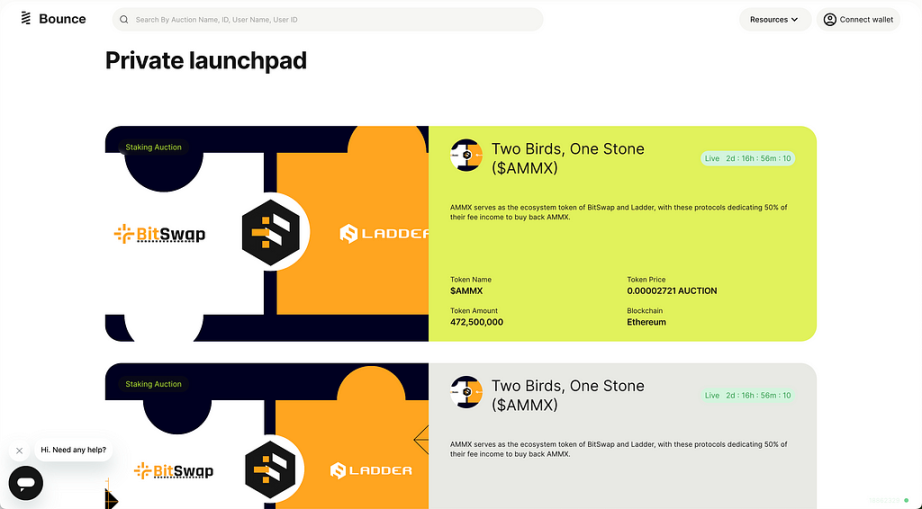
Bounce is a decentralized auction protocol for token swaps, launched in July 2020. In October 2020, Bounce was selected as part of Binance Smart Chain’s second Seed Fund cohort and is considered a Binance-affiliated project.
Founded by Ankr’s Chandler Song, Bounce has raised funding from institutions including ParaFi Capital and Blockchain Capital, as well as industry figures like Synthetix founder Kain Warwick and Aave founder Stani Kulechov.
The auction protocol recently launched Multibit, a popular cross-chain protocol, and Bitstable, a lending protocol. The groundbreaking Multibit protocol aims to unify liquidity between BTC and EVM networks. Its core product, the Multibit bridge, enables seamless token transfers across ETH, BNB, and BTC chains. This bridging mechanism enhances BRC-20 token liquidity and drives growth across the BTC ecosystem.
Multibit sold for 0.000516U at auction; as of December 25, it trades at 0.2407U—an increase of 466x—with a current market cap of $230 million.
BitStable
BitStable is a decentralized asset protocol built on the BTC network. Anyone can generate the $DAII stablecoin by collateralizing BTC ecosystem assets. BitStable features a dual-token system and cross-chain compatibility, with tokens $DAII and $BSSB. $DAII is a stablecoin (BRC-20) whose value and stability derive from robust BTC ecosystem assets, including BRC-20, RSK, and Lightning Network. In BitStable’s vision, $DAII’s cross-chain functionality will bring Ethereum communities into the BTC ecosystem. $DAII has a total supply of 1 billion. $BSSB is the governance token, used by the community to maintain the system and manage $DAII. BitStable will incentivize $BSSB holders through dividends and other mechanisms.
$BSSB has a total supply of 21 million: 50% was publicly sold via Bounce Finance, 5% allocated to the team (locked for 6 months, linearly unlocked over 15 months), 3.5% for airdrops, 36.5% for staking rewards, and 5% for LPs (indefinitely locked).
BitStable sold for 0.0546U at auction; as of December 25, 2023, it trades at $5.52—an increase of over 100x—with a current market cap of $65 million.
According to DefiLlama metrics, current TVL has risen to $83 million.
2.4 Stamp Ecosystem
The Stamp ecosystem is currently under the radar, but several projects exist, warranting brief coverage:
Stamps encode image binary data into Base64 strings embedded in transaction outputs, enabling permanent data storage—allowing NFTs to be truly stored on-chain.
Compared to Ordinals, Stamps have trade-offs: their UTXO method makes them non-prunable and thus seemingly permanent, though minting costs are higher than Ordinals; conversely, Ordinals use witness data, which is eventually prunable, resulting in lower minting costs.
In the NFT world, claiming “art is stored on-chain” as a permanence solution is often misleading. Most NFTs merely point to centrally hosted images or store data in on-chain but prunable witness fields.
Current Stamp marketplaces include OpenStamp, RareStamp, Stampscan, and StampedNinja.
3. Future Outlook
3.1 Stage Progress (Current Status)
Technically, the BTC sector remains in its infancy. Take Stacks, an early Layer2 solution launched in January 2021—its ecosystem development has been disappointing.
From DefiLlama data: ALEX, the largest DEX, sees daily trading volume of just $4.7 million—dwarfed by Uniswap’s $1.96 billion/day and PancakeSwap’s $600 million/day.
Project | Funding Amount | Investors | Notes
Tonka Finance, $2.5M — a Bitcoin inscription lending platform;
BRC20.COM, $1.5M — UTXO Management, One Block Capital, Sora Ventures, Bitcoin Frontier Fund, Owl Ventures — a Bitcoin-based DeFi protocol integrating mobile wallet, cross-chain bridge, multi-mint, marketplace, staking;
BitSmiley — ABCDE Capital, Bixin Ventures — positioning as MakerDAO + Compound for the Bitcoin ecosystem;
Unisat — LK Venture — a browser extension wallet enabling secure storage, sending, and receiving of BTC and Ordinals on the Bitcoin blockchain;
Saturn, $500K — Big Brain Holdings, UTXO Management — a non-custodial peer-to-peer order book;
DIBA — Waterdrip Capital, Draper Associates — a Bitcoin NFT marketplace enabling trading of any asset issued via Bitcoin smart contracts on Layer2 (e.g., Lightning Network);
Taproot Wizards — $7.5M — Standard Crypto, Geometry, Collider Ventures, Starkware — a Bitcoin-focused Ordinals project inspired by the original Bitcoin Wizards Reddit meme from ten years ago;
DLC.Link — $2.5M — ABCDE Capital, Bixin Ventures, Comma3 Ventures, Waterdrip Capital — building infrastructure for native Bitcoin smart contract settlements;
Xverse — $2.5M — Jump Crypto, RockawayX — a Bitcoin wallet supporting Ordinals, NFTs, DeFi, and dApps;
BTCDomain — Waterdrip Capital — a Bitcoin domain service allowing users to register names linked to their Bitcoin addresses;
Fedi — $1.7M — Ego Death Capital — developing the Fedi mobile app based on Fedimint, a Bitcoin custodial protocol;
LayerTwo Labs — $3M — a secondary blockchain interacting with the main chain, aiming to improve user experience;
Finterest — $1.5M — Polychain, 9Yards Capital — a native Bitcoin lending platform operating trustlessly on Internet Computer;
Sovryn — $5.4M — General Catalyst, Collider Ventures — a decentralized trading and lending platform built on RSK.
From a funding perspective: the BTC sector has just passed its initial explosive phase, but investment rounds remain few, amounts modest, and global Tier-1 VCs have not deeply participated (this inscription wave has mainly involved Chinese capital and users).
3.2 Advantages & Potential
BTC’s iconic status and brand-driven consensus in the industry represent its biggest advantage. The recent spotlight on premium inscriptions and their derivative value fully demonstrate its vast potential.
Consensus Advantage: Institutional BTC holders and non-native retail investors represent incremental liquidity sources, though they typically have low risk tolerance and aversion to complexity. Simplicity in BTC products enhances “capital efficiency,” enabling sustainable, reliable returns without complex operations or counterparty risks.
Solution Advantage: UTXO’s explicit dependency and relationship tracking enable parallel execution. Compared to Ethereum’s sequential account model, this allows smaller, more manageable computations to run in parallel—better suited for ZKP operations. (See Zorp, a zkVM leveraging UTXO model for high ZKP performance.)
Layer2 Potential: BRC-20 created a new asset class entirely different from FTs and NFTs. Developer participation and protocol innovation have spilled inscriptions onto other chains. Inscription Layer2s effectively lower user entry barriers, striking a compromise with BTC purists. Most importantly, full smart contract capabilities will unlock richer use cases, further unleashing BTC’s potential.
Industry Inevitability: As various sectors continuously iterate and optimize, the entire industry evolves rapidly. BTC, as the highest-consensus asset, will inevitably catch up, connect with, and integrate application projects—even if lagging slightly. With ETF approvals bringing new market inflows, BTC’s market consensus will strengthen further—this trajectory is inevitable.
Therefore, even though builders know BTC lacks advantages in smart contract development, they won’t abandon it—the imagination surrounding the BTC sector scales proportionally with its level of consensus.
3.3 Challenges & Difficulties
Insufficient Throughput: The OP_RETURN opcode allows storing up to 40 bytes of arbitrary data per BTC transaction. In contrast, EIP-4844 enables ~0.375MB of storage for Layer2—about ten times more than BTC’s OP_CODE. Even so, further Danksharding upgrades and compatibility with latest ZK-SNARKs are needed.
Non-Turing Completeness Limitation: BTC smart contracts use Script, a non-Turing complete scripting language designed to maximize network security by minimizing attack surface (e.g., eliminating reentrancy attacks). This limits flexible programming compared to Ethereum, and BTC Layer1 lacks contract verification, preventing forced withdrawal mechanisms at the base layer.
Scaling Issues: Building native BTC Layer2 solutions (like BitVM) is extremely difficult with uncertain timelines, pushing builders toward cross-chain sidechains. However, these sidechains often face centralization and security risks, falling short of Ethereum-style Rollup standards.
Narrative Simplicity: Beyond fair launches and memes, the BTC sector lacks compelling narratives to sustain market cap growth—partly explaining limited VC involvement. Builders must adopt rationality, commit sustained effort, and lay solid foundations to cultivate authentic narratives and break through current constraints.
3.4 Trend Forecast
Developers in the BTC ecosystem are divided: conservatives, primarily BTC-CORE client developers, versus radicals advocating smart contracts on BTC. Conservatives may hinder application development. For BTC Layer2, sidechains remain the dominant form for now, offering suboptimal security and decentralization.
In the medium term, with ETF approvals and a new market cycle approaching, BTC sector热度 will persist and likely see new breakthroughs, accelerating ecosystem maturity.
Long-term, BTC’s potential remains untapped. With greater VC participation and minimized developer fragmentation, infrastructure development will steadily advance, setting the stage for another explosion when conditions mature.
4. Conclusion
From a broader perspective on BTC’s value narrative: after over a decade of development, BTC’s role as a store of value is widely accepted. Regulatory developments, ETF approvals, and macroeconomic factors like interest rate cuts clearly influence its market performance, confirming BTC’s inclusion in traditional institutional portfolios.
The Ordinals boom has sparked a full revival of the BTC ecosystem. Yet fundamentally, BTC is retracing Ethereum’s path of smart contract adoption, driven heavily by speculative hype. Nevertheless, this wave has attracted numerous builders, laying the groundwork for BTC’s evolution and breaking past limitations—aligning it with broader industry trends.
As BTC’s societal recognition as a store of value grows, its derivative financial products and innovations will become increasingly diverse. Although Layer2 will ultimately face scaling challenges—and may need to retrace much of Ethereum’s journey, potentially facing even greater hurdles due to UTXO mechanics—as long as progress continues and opportunities are seized, pioneers will chart a clearer path forward for BTC.
Moreover, for the BTC sector, social attributes are as crucial as technical ones. As BTC moves toward becoming a universal currency, its social dimension will only grow stronger. Precisely for this reason, the maturation and advancement of the BTC sector have become both an industry imperative and a societal inevitability.
Other notable projects to watch:
Babylon: A bridgeless, trust-minimized BTC staking platform enabling users to earn yield on PoS chain tokens of their choice;
Papaya: A platform using STX and sBTC infrastructure to enable BTC staking;
Atomic Finance: Leverages DLCs to allow users to earn yield from self-custodied BTC;
ACRE: Another “Lido for BTC” using Threshold Network’s sidechain;
eBTC: A BTC-backed stablecoin developed by the BadgerDAO founding team on EVM.
Join TechFlow official community to stay tuned
Telegram:https://t.me/TechFlowDaily
X (Twitter):https://x.com/TechFlowPost
X (Twitter) EN:https://x.com/BlockFlow_News
 @MIIXCapital_CN