








What Is Tiny SPL, the New Token Standard Topped on Solana Founder's Twitter?
TechFlow Selected TechFlow Selected
What Is Tiny SPL, the New Token Standard Topped on Solana Founder's Twitter?
State compression is one of the reasons that attracted Helium Mobile to migrate to Solana.
 Navigating Web3 tides with focused insights
Author: Joyce
On January 3, Anatoly Yakovenko, co-founder of Solana who previously helped popularize the meme coin Silly, shared a post on his social media account promoting a new protocol called "Tiny SPL," drawing significant attention to it. According to the post, Tiny SPL is a new token standard protocol on Solana that introduces a "state compression" method, allowing users to hold tokens on Solana without paying storage rent.

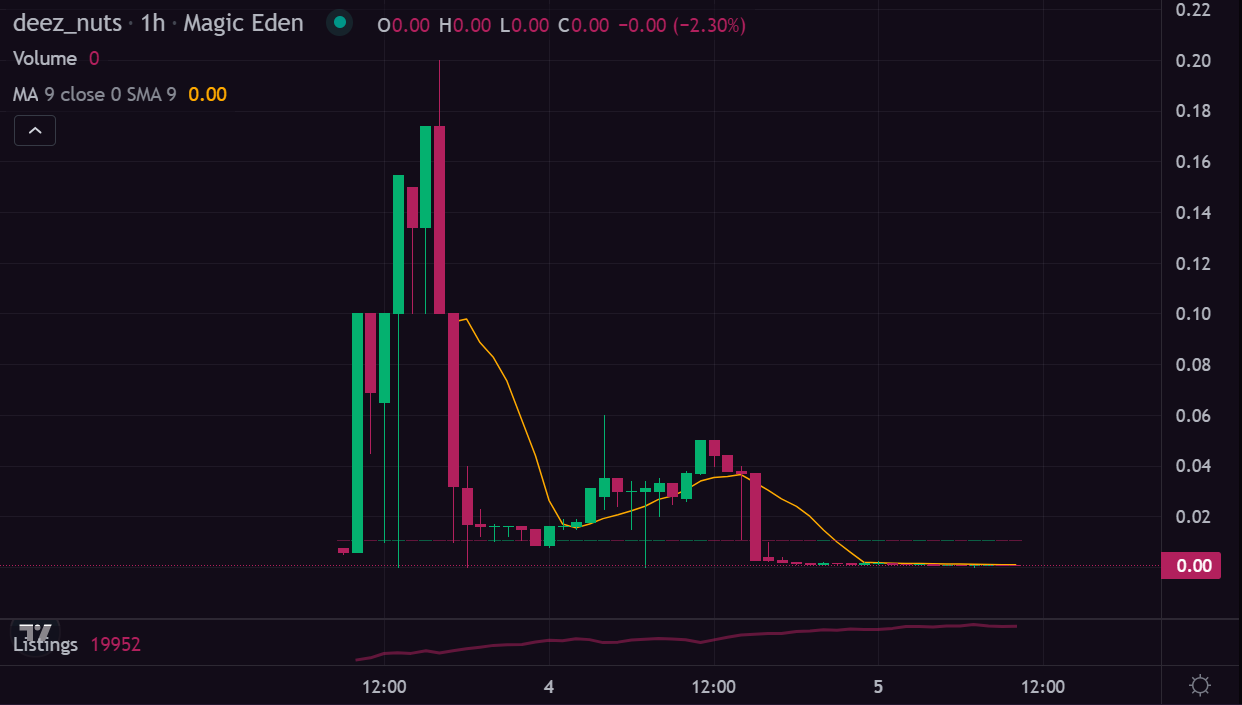
The token asset based on Tiny SPL is called "DN (Deez Nutz)." Initially available for free minting, after minting concluded, some users began trading DN on Magic Eden. The floor price briefly surpassed 0.2 SOL before sharply declining and stood at 0.00089 SOL at the time of writing.
Judging from price movements, market interest in Tiny SPL may not be strong. However, Solana co-founder Anatoly has kept the tweet about Tiny SPL pinned on his Twitter profile. The technological innovation behind Tiny SPL—state compression—was also one of the key technical highlights in the Solana ecosystem in 2023. Therefore, Tiny SPL might see further developments down the line.
Tiny SPL: A Smaller Version of SPL
Rent in Solana Accounts
Before explaining what makes Tiny SPL unique, it's important to understand the concept of "rent" within Solana’s account model. Rent differs from transaction fees. Users pay rent to store data on the Solana blockchain, while transaction fees are paid to process instructions across the network.
Unlike Ethereum, Solana charges accounts on its network a fee for storing data state—this is known as rent. Rent is charged periodically based on the size of the token balance stored in an account. If an account fails to pay rent, the system will delete it to reduce storage costs associated with inactive or unmaintained data. An account can become rent-exempt if its asset balance exceeds the minimum required to cover two years’ worth of rent.
Although, according to the official documentation, rent originates from underlying hardware storage costs—and thus is expected to decrease as technology advances and hardware becomes cheaper—users still face higher effective rent payments when SOL prices rise. For example, asset management firm VanEck noted in a valuation report on Solana that the rent cost on Solana is 0.00000348 SOL per byte. With wallet data sized at 372 bytes, each active wallet holder must retain at least 0.0026 SOL. Similarly, applications and token smart contracts must maintain these storage reserves. A program like Serum, which is approximately 340KB in size, would need to keep a balance of 2.4 SOL to avoid paying rent.
Solana’s native token standard is SPL. Tiny SPL aims to create a “smaller” version of this SPL token standard. By leveraging state compression, it enables users to own tokens without paying rent.
State Compression: The Method That Attracted Helium Mobile to Migrate to Solana
State compression is a new data storage method introduced by Solana in April 2023, significantly reducing on-chain storage costs. This technology relies on Merkle trees, compressing the verifiability of data trees into a single hash. The compression-friendly structure allows developers to store minimal data on-chain and update directly within the Solana ledger, drastically lowering data storage expenses while preserving the security and decentralization of Solana’s base layer.
The first application of state compression was in NFT minting, where it reduced the cost of minting NFTs on Solana by 2,400 to 24,000 times. According to the Solana Foundation, as of April 5, 2023, minting 1 million uncompressed NFTs on Solana cost over $250,000. In contrast, using state compression brought the cost down to approximately $110.
Last month’s trending DePIN project, Helium Mobile, minted nearly 1 million NFTs during its migration to Solana, with a total cost of only $113. This became a prime test case for state compression. These NFTs serve as network credentials for Helium, verifying hotspots and integrating various ecosystem functions such as token-gated access and permissions for hotspot owners.
Thanks to state compression, Solana now offers creators and brands a way to distribute large volumes of NFTs to broad audiences without incurring high costs. Now, Tiny SPL applies this same state compression technique to fungible token assets. Compared to tokens using the standard SPL protocol, Tiny SPL tokens do not require rent payments. Additionally, Tiny SPL tokens do not appear in a user’s wallet balance—they are visible only under the NFT section.
Interacting with Tiny SPL
In terms of user experience, managing tokens under Tiny SPL involves some unique steps. Currently, the token asset based on this protocol—"DN (Deez Nutz)"—has finished minting, so interested readers can only acquire it via secondary markets. Please note that DN has no intrinsic value; this section is solely intended to illustrate how Tiny SPL works and should not be taken as investment advice.
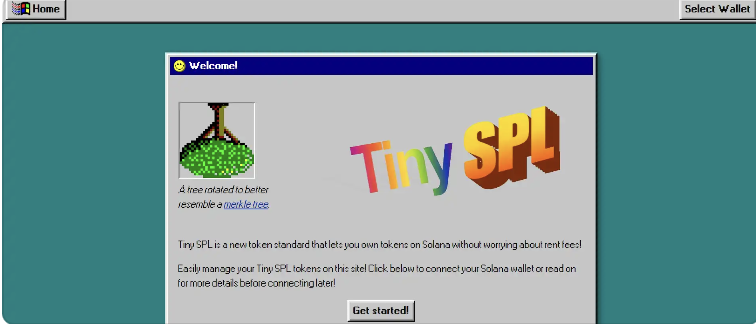
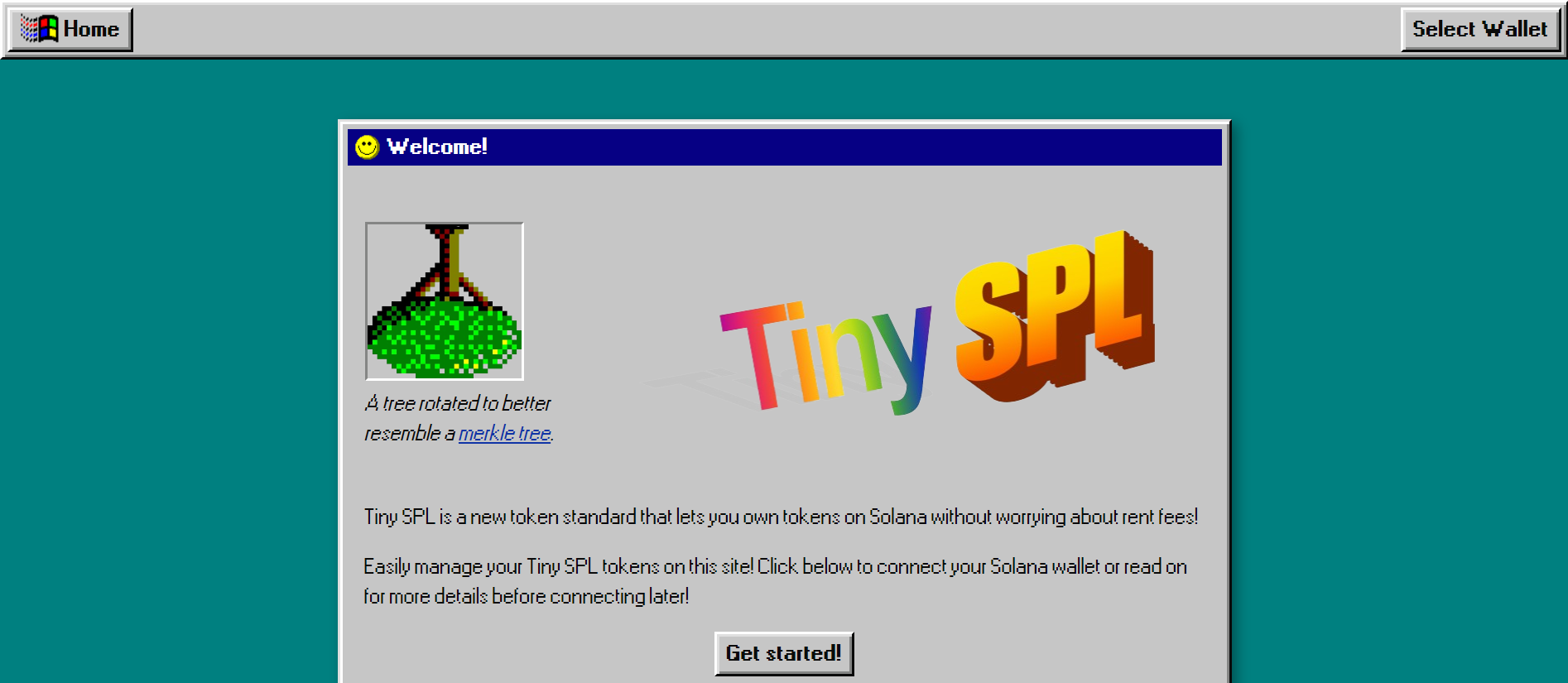
Visit the Tiny SPL website at https://tinys.pl/, click "Get started," and connect your wallet. It is recommended to use a test wallet without substantial funds.
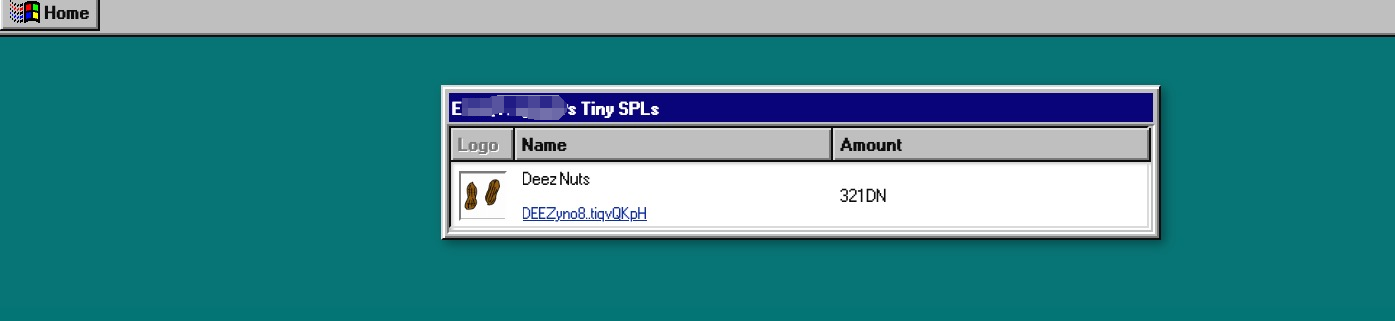
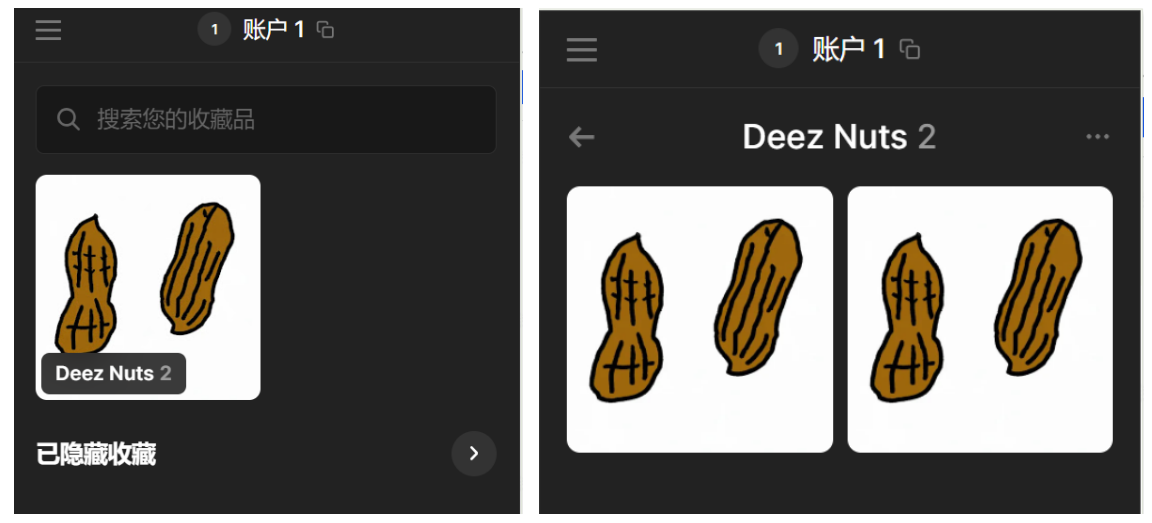
After connecting your wallet, the page will detect and display the number of Neez Nutz you own (if any). The Neez Nutz icon features two peanuts.
To trade token assets, you must first determine the quantity to transfer. In Tiny SPL, setting the amount requires going through a "split" or "merge" process.
Click on Neez Nutz to enter the token management interface. To send 1 DN, you must first split 125 DN into 124 DN and 1 DN. Here, 312 DN has already been split into 112 DN, 109 DN, and 100 DN.
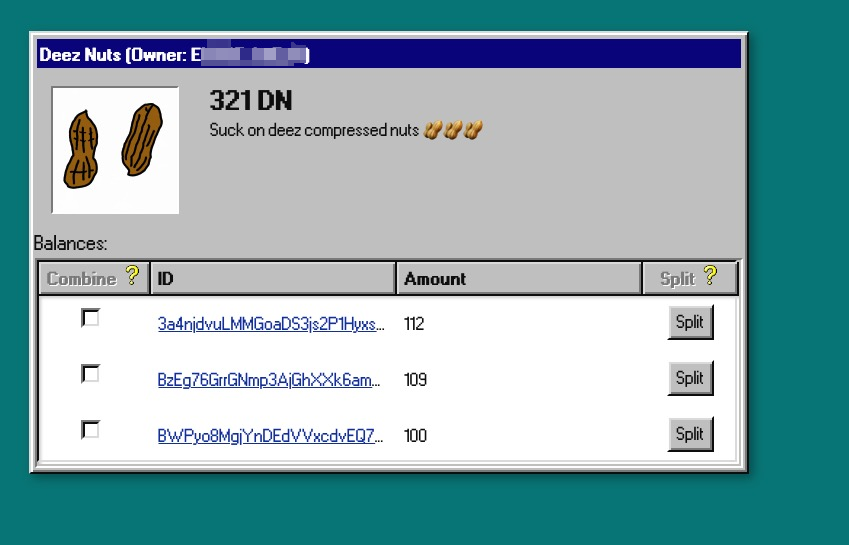
To continue splitting, select the 100 DN asset and click "Split." Enter the desired split amount in the pop-up window and confirm by clicking "Split."

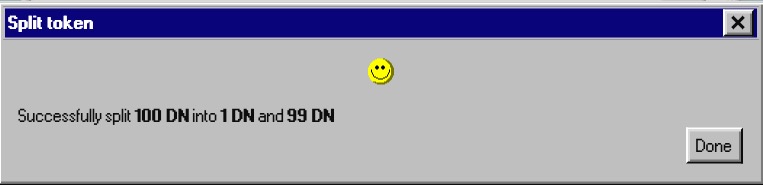
Confirm the signature in your wallet popup. You’ll notice the action shown is "Send 100 DN, receive 99 DN and 1 DN."

After confirmation, wait briefly. When the following screen appears, the split has succeeded. Click "Done" to view your split tokens.
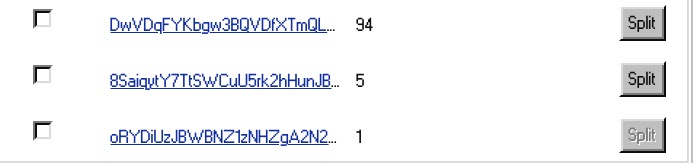
To merge Neez Nutz, select the DN tokens you wish to combine and click the "Combine" button that appears. The subsequent steps are identical to those used during splitting.
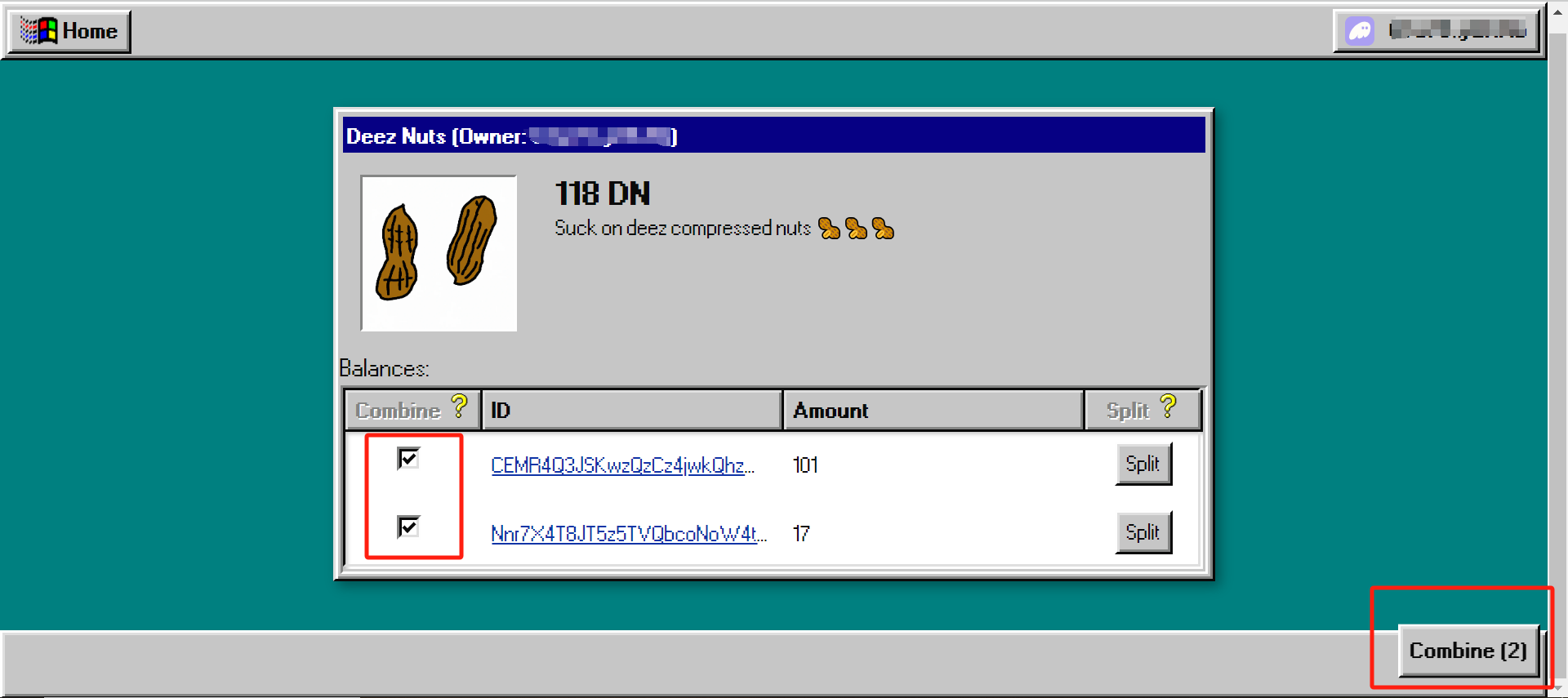
Once a split or merge is successful, it will reflect in the Neez Nutz assets displayed under the NFT tab in your wallet. The "2" here indicates there are two separate DN holdings (with different quantities), after which users can trade Deez Nuts just like any other NFT.
Endorsed by Anatoly: One to Watch
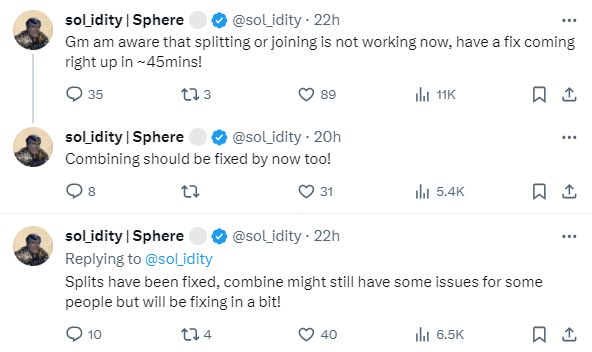
The founder of Tiny SPL, sol_idity, is also a full-stack engineer at Sphere, a Web3 payment infrastructure platform. For now, Tiny SPL appears more like a technical experiment. Shortly after launch, the split and merge functionalities encountered issues, though these have since been resolved. If Tiny SPL finds real-world utility, it could appeal to projects needing to issue massive volumes of tokens. Currently, its token Deez Nutz seems positioned more as a hybrid of meme culture and NFTs.
Beyond its innovative "state compression" technology, another reason Tiny SPL stands out is Anatoly Yakovenko’s endorsement—his act of sharing and pinning the related tweet. As a Solana co-founder, Anatoly carries notable influence in the community. The most famous example is the meme coin SILLY, which gained massive traction following Anatoly’s tweets and his dinosaur-themed avatar. SILLY became the most talked-about meme on Solana last month, delivering up to 27,000x returns for top holders.
On January 2, Anatoly replied to a tweet about a new Solana meme coin "LFG" with a dragon emoji, after which the LFG token surged over 50%, reaching an all-time high. However, it's worth noting that trading Deez Nutz is more complicated than typical meme coins, and its narrative isn’t as compelling as SILLY’s. Its long-term potential remains to be seen.
Join TechFlow official community to stay tuned
Telegram:https://t.me/TechFlowDaily
X (Twitter):https://x.com/TechFlowPost
X (Twitter) EN:https://x.com/BlockFlow_News
 BlockBeats







