








HTX Ventures 2023 Year in Review
TechFlow Selected TechFlow Selected
HTX Ventures 2023 Year in Review
As 2024 approaches, HTX Ventures stands at the forefront of transformation in the blockchain and cryptocurrency space, optimistic about the future and equipped with a clear vision.
 Navigating Web3 tides with focused insights
Authors: Haiyi, Juliet, Gigi, Jenny
Our Mission:
2023 marks a transformative era for Huobi. On the occasion of our 10th anniversary, our brand name has evolved from the familiar "Huobi" to "HTX." This change is more than just a rebranding—it reaffirms our core values. Here, H stands for the heritage of Huobi, T represents focus on TRON, and X symbolizes the platform's dynamic nature. For HTX Ventures, 2023 also signifies a series of structural upgrades—such as integrating incubation and research functions—to further optimize resource allocation and strengthen support systems for our investment and ecosystem partners.
Founded in 2018, HTX Ventures is dedicated to empowering projects that harness the cutting-edge potential of Web3 and blockchain technologies. Our investment scope spans diverse areas including DeFi, real-world assets (RWA), ZK Rollups, infrastructure, NFTs, digital identity (DID), SocialFi, education, GameFi, AI, Layer 1, and Layer 2 projects. We remain committed to maintaining leadership in technological advancement and innovation through diversified investments.
HTX Ventures upholds three core principles: business innovation, robust business models, and operational excellence. These guiding tenets are crucial in shaping our investment strategy, ensuring we back not only technologically groundbreaking projects but also those demonstrating sustainable and scalable business models. By combining technical foresight with sharp commercial acumen, we identify and nurture projects with the potential for lasting impact and growth.
We employ a comprehensive investment approach encompassing direct investments and fund investments, enabling significant expansion of our portfolio to over 200 startup projects. This diversified strategy enhances our ability to drive meaningful change across multiple domains. Each investment reflects our unwavering commitment to fostering innovation, sustainability, and excellence within Web3 and beyond.
2023 Market Overview and Outlook
Looking back at 2023, the cryptocurrency and blockchain space witnessed a series of major developments, challenges, and innovations.
Infrastructure
2023 was a breakout year for blockchain infrastructure. With increasing Web3 use cases and users, the ecosystem saw a proliferation of solutions and technical approaches, creating an intricate landscape awaiting market validation. Despite this diversity, these efforts consistently focus on three key goals: faster transaction speeds, greater decentralization, and enhanced security—all aimed at building more user-friendly blockchain networks. While infrastructure offers many talking points, here we highlight five notable topics from 2023.
Five Notable Infrastructure Developments in 2023
1. Ethereum's Development Roadmap
As the largest public blockchain, Ethereum remains a cornerstone of blockchain infrastructure, supporting numerous ecosystems such as various Rollup layer-2 networks and emerging technologies like account abstraction. Despite leading other blockchains in total value locked (TVL) and user numbers, Ethereum—and its dependent Layer 2 solutions—still face challenges including insufficient throughput and high transaction costs unsuitable for small, frequent transactions. To address these issues, Ethereum continues upgrading via hard forks to enhance performance. In mid-2022, Ethereum achieved its first major scalability milestone: The Merge, transitioning consensus from Proof-of-Work (PoW) to Proof-of-Stake (PoS). More importantly, it marked a strategic shift toward Rollups as the core scalability path.
In 2023, Ethereum underwent a significant execution-layer upgrade: Shanghai, which enabled stakers to withdraw their staked ETH and rewards. A common prediction was that large-scale withdrawals would pressure ETH prices, but instead, Ethereum demonstrated strong upward momentum post-upgrade. Crucially, the network remained stable, and staking volumes rebounded after a brief dip, reflecting renewed validator confidence.
The next critical milestone for Ethereum is the anticipated Q1 2024 "Cancun Upgrade," marking progress toward sharding-based scaling. Its key proposal, Proto-Danksharding (EIP-4844), introduces blob-carrying transactions to provide cheaper data availability for Rollups and Layer 1 interactions, significantly reducing Layer 2 transaction fees.
Later in the year, Vitalik Buterin proposed revisiting Plasma—a once-forgotten scaling solution—sparking community discussion. However, there’s no doubt that Rollup-centric scaling remains Ethereum’s dominant trajectory. The future may see Ethereum evolve into a world where Layer 2 chains serve as primary execution layers, while Ethereum itself recedes into the background as a consensus and data availability layer, providing foundational support for numerous Layer 2 networks.
2. Layer 2 Summer
Layer 2 emerged as one of the fastest-growing and most discussed sectors in 2023. Today, the market hosts numerous Layer 2 solutions; according to L2Beat, 32 active Layer 2 networks exist, primarily based on Optimistic Rollups and ZK Rollups. In terms of TVL, the overall Layer 2 sector grew nearly threefold in 2023. Dominating the landscape are Arbitrum One and OP Mainnet (Optimism), using Optimistic Rollup technology, capturing 52% and 26.5% of TVL respectively. Key factors behind their success include Arbitrum’s early EVM compatibility, enabling seamless deployment for Ethereum and other Layer 1 projects, and the timely launch of native tokens by both Arbitrum and Optimism, fueling explosive ecosystem growth. For example, following Arbitrum’s token airdrop in March, its ecosystem TVL nearly doubled. In contrast, ZK Rollup-based chains lagged slightly in token launches and EVM compatibility, slowing ecosystem development relative to Optimistic Rollup counterparts.
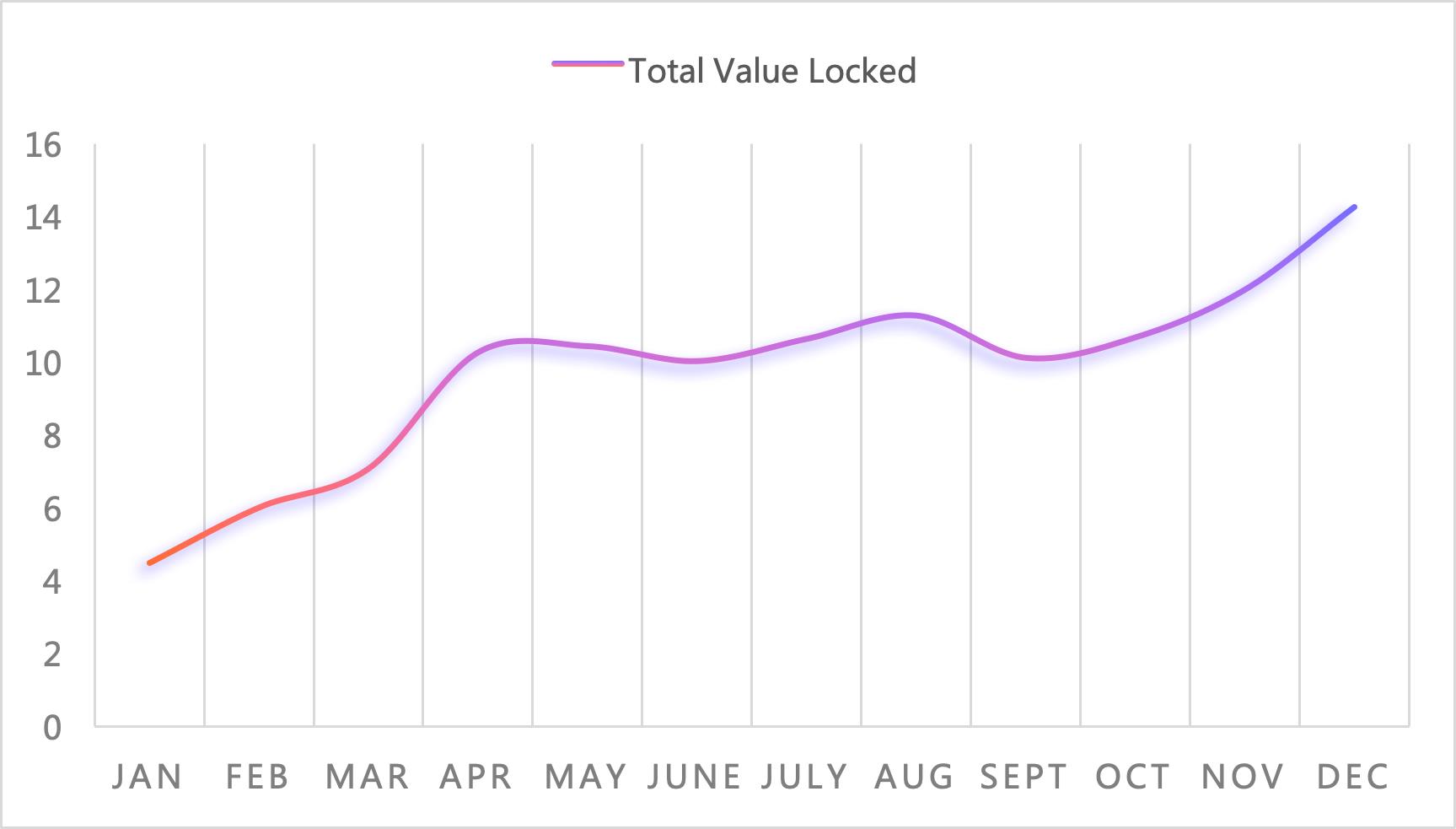
Figure 1: Layer 2 Total Value Locked
Amid the flourishing Layer 2 landscape, certain challenges have become evident. One pressing question is whether observed growth reflects genuine network vitality or merely artificial inflation. Many projects incentivize user interaction through anticipated airdrops, leading teams to invest heavily in designing anti-sybil mechanisms and attracting high-quality users. However, airdrops and token incentives act as temporary “medicines”—effective during distribution but quickly losing potency afterward if products fail to earn genuine user trust. Moreover, current Web3 users fall short of mass-market standards. Mass users tend to be less technically inclined and reluctant to move between ecosystems, whereas today’s Layer 2 users generally possess above-average knowledge and skills, raising customer acquisition and retention costs due to intense competition. User loyalty to any given chain can easily erode when rivals offer better airdrop expectations or liquidity mining rewards. A prime example is Blast, launched in Q4 by Paradigm and Blur founder Pacman. As a Layer 2 integrating native yield features, Blast sustained Layer 2 momentum into year-end, achieving $300 million TVL within weeks. Backed by star developers and institutions, and emphasizing community-driven design, Blast exemplified perfect product-market fit—offering simple, community-aligned functionality that rapidly captured market attention and capital amid competitors focused on technical superiority and user quality.
Overall, we remain optimistic about Layer 2’s future. With EIP-4844 poised to further boost Layer 2 performance, 2024 could bring innovative DeFi and non-financial dApps built on Layer 2 platforms.
3. Modular Architecture Breaking Blockchain Bottlenecks
While most public chains continue striving to be faster and cheaper in pursuit of mainstream dominance, another paradigm gained traction in 2023: modular blockchains. Strictly speaking, Rollups themselves represent a form of modularity, focusing specifically on the execution layer—the user interaction plane. This year, we saw growing interest in modular blockchains targeting the data availability (DA) layer, such as Mantle and Celestia. Mantle, as a modular Rollup, addresses Layer 2 data availability constraints imposed by Ethereum through its own DA layer. Celestia, meanwhile, provides a general-purpose modular blockchain infrastructure where chains built atop can leverage Celestia solely for data availability. Modular architectures offer greater freedom—applications or Layer 2s need not be bound by base-layer performance limits, gaining increased autonomy and customization options. Though practical use cases for modular blockchains like Celestia remain limited, we view this direction favorably.
That said, modular advancements introduce added complexity and security concerns—not only for users, who must now understand interactions across multiple modular layers beyond a single chain, but also for developers, as multi-chain integrations expose new attack surfaces.
4. The State of Appchains
Following the previous DeFi summer, appchains emerged as a novel solution to network congestion and lack of sovereignty, pioneered by dYdX—a decentralized perpetual contract platform originally deployed on Starkware. In October, we witnessed dYdX V4 go live, marking its transition from dApp to full-fledged appchain. Architecturally, dYdX adopted the Cosmos SDK, the prevailing framework for appchains, enabling customizable consensus mechanisms and cross-chain interoperability via IBC. Currently, over 70 appchains run on Cosmos, establishing it as the leading implementation model.
Key advantages of building dedicated appchains include:
- Performance Enhancement: Appchains on Cosmos can fully leverage its 10,000 TPS capacity without competing for block space, minimizing external environmental impacts.
- Cost Reduction: Transaction costs are significantly lower. For instance, dYdX V4 redesigned gas fees so users pay variable protocol fees proportional to trade volume—mimicking the experience of centralized exchanges.
- Increased Sovereignty: Greater control over aspects like smart contract upgrades, data availability, and sequencer configuration allows tailoring to specific application needs.
However, transitioning to an appchain poses challenges:
- Liquidity Fragmentation: Independent appchains make inter-protocol interaction harder. Unlike Ethereum or monolithic blockchains where composability is frictionless, appchains operate in isolation, relying solely on cross-chain bridges for external connectivity.
- Security Concerns: An appchain’s security depends directly on its own economic strength. Theoretically, security correlates with market cap—smaller projects may lack sufficient value to secure substantial assets, making them vulnerable.
Therefore, appchains aren't suitable for every project. Applications requiring frequent cross-contract interactions or with smaller market caps are better off on secure, vibrant public chains. Conversely, projects demanding fast, low-cost transactions, dissatisfied with base-layer limitations, and possessing established user bases may find appchains ideal for maximizing protocol value.
5. Account Abstraction: Unlocking the Gateway to Billions of Web3 Users
First conceptualized in 2022, account abstraction gained momentum with EIP-4337—"Account Abstraction Using Alternative Mempools"—a proposal avoiding consensus-layer changes by leveraging higher-level infrastructure. Consequently, multiple teams began developing products around this concept. At the application level, efforts focus on smart contract wallets integrating features like social login, social recovery, gas fee sponsorship, and batched transactions. Several teams—including Argent, Avocado, and Unipass—delivered functional products in 2023, introducing significant UX innovations. According to Dune Analytics, nearly 1.4 million accounts have been created under EIP-4337, generating close to 7 million UserOps (user-initiated operations). At the time of writing, monthly active smart contract accounts exceed 400,000.
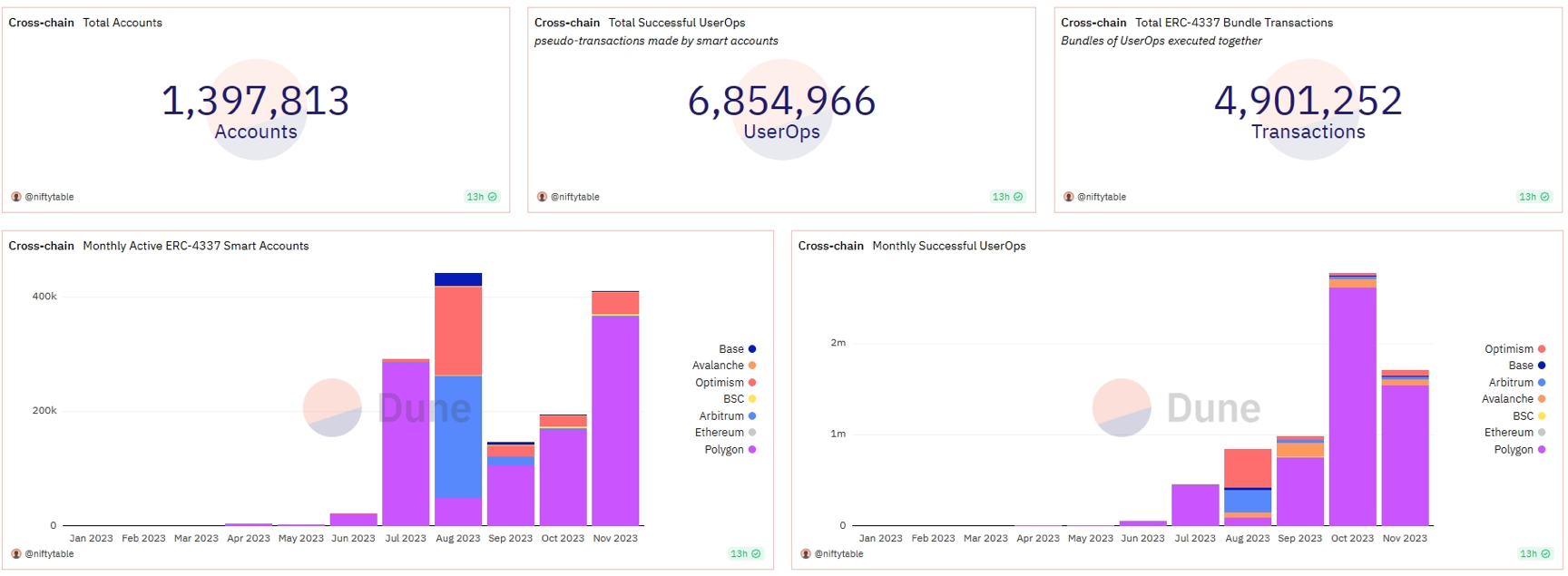
Figure 2: ERC-4337 Smart Account Adoption
Source: Dune.com
Looking ahead, we believe account abstraction holds the key to unlocking mass adoption in Web3. However, challenges remain—increased technical complexity raises security risks, and gas fees may rise. Thus, we see low-cost Layer 2 chains as the most fertile ground for advancing account abstraction.
DeFi
Compared to the multiple collapses in 2022, 2023 was a period of steady growth for decentralized finance (DeFi). The number of DeFi protocols surpassed 30 types, indicating a more segmented and specialized market. Narratives around LSD and RWA brought fresh attention and users to DeFi. Below are some notable DeFi trends worth reviewing.
Three Key DeFi Trends in 2023:
1. State of DeFi Protocols
Total value locked (TVL) in DeFi stabilized in 2023. At the time of writing, approximately $47 billion is locked in DeFi protocols—an increase of 23.6% from $38 billion at the end of 2022.
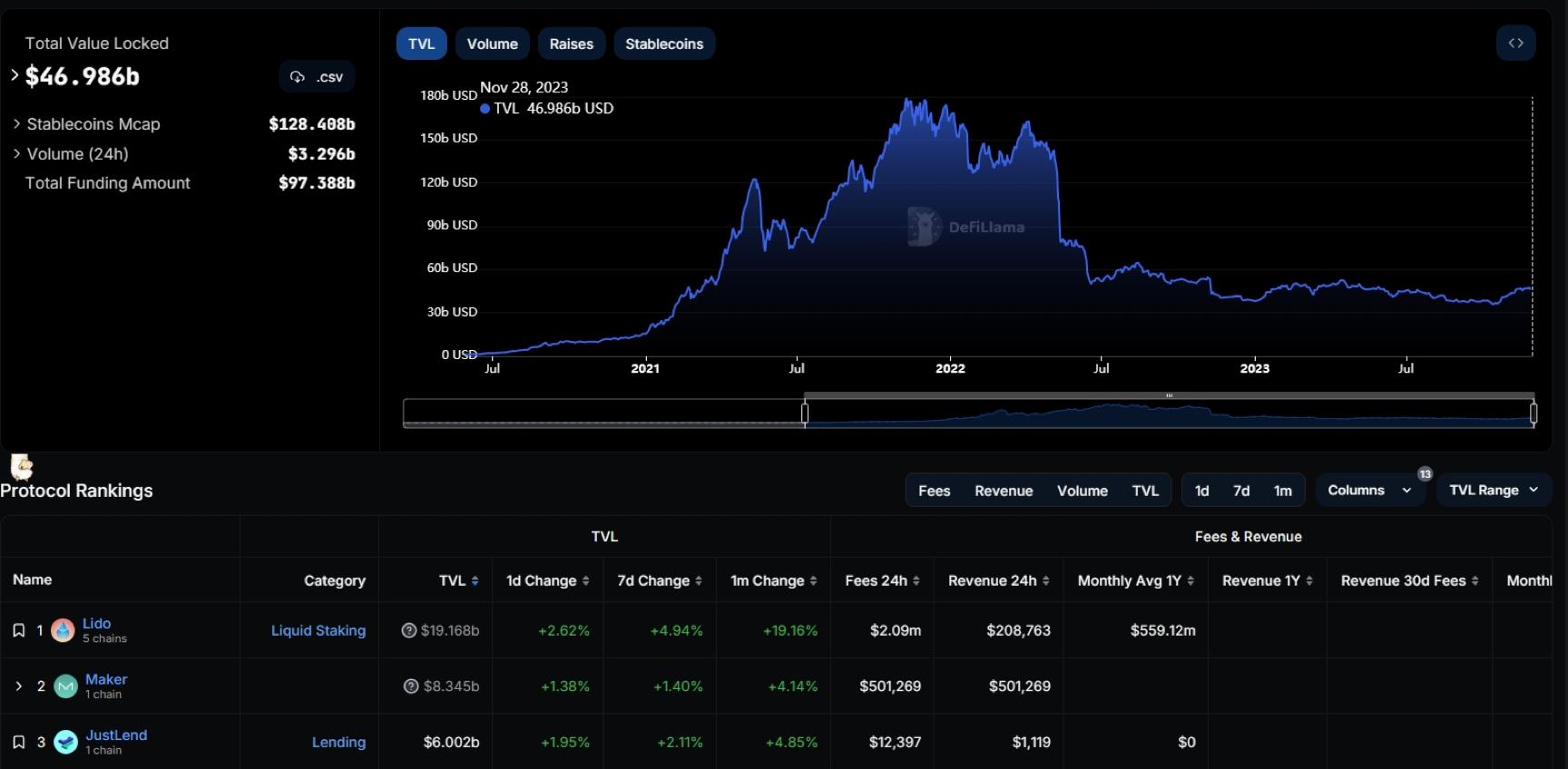
Figure 3: Total Value Locked
Source: Defillama.com
By blockchain, Ethereum leads with 56%, followed by TRON at 16%. In terms of individual projects, Lido, Maker, and Justlend rank top three in TVL, with Lido alone accounting for 41% of total DeFi TVL.
In revenue, Maker ranks first with $500k daily income. Among the top 20 revenue-generating projects, eight are exchanges or derivatives platforms, and three are lending protocols. Exchanges and lending remain the dominant value-capturing categories in DeFi, albeit highly competitive. Over 1,000 decentralized exchange protocols now operate across 234 blockchains.
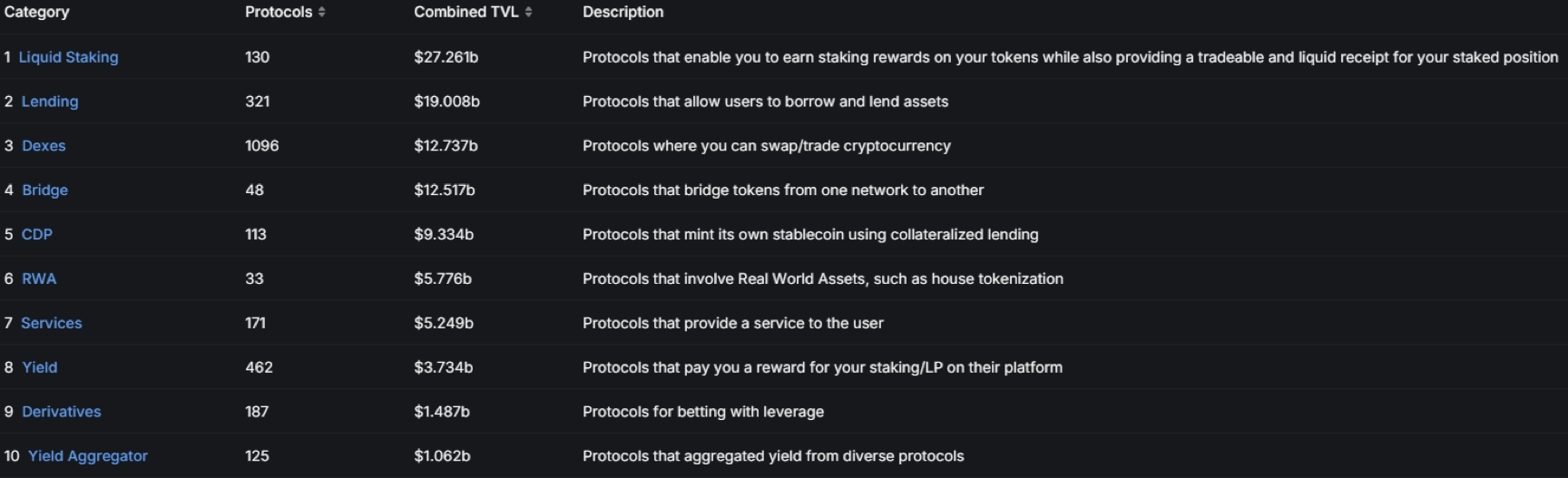
Figure 4: DeFi Categories
Source: Defillama.com
2. Real-World Assets (RWA)
RWA (Real-World Assets) emerged as a defining DeFi narrative in 2023, capturing significant attention even amid broader market sluggishness. Typically, RWA involves tokenizing real-world assets through on-chain and off-chain verification, bringing physical assets and their yields onto the blockchain. Fiat-backed stablecoins already demonstrate RWA’s utility in crypto markets. In 2023, other RWA-linked assets surged—MakerDAO’s U.S. Treasury-backed RWA reached $2.8 billion, marking a pivotal step toward large-scale RWA adoption. Avalanche also advanced its RWA ecosystem, aiming to provide institutional investors with accessible on-chain platforms.
This trend aligns with macroeconomic shifts: rising U.S. interest rates pushed Treasury yields to ~5%. Amid generally low yields in DeFi, transferring real-world returns on-chain became a natural progression. Nevertheless, advancing RWA requires robust off-chain infrastructure, regulatory clarity, and improvements in on-chain oracles, wallets, and cross-chain technologies. Regardless, the door to real-world asset tokenization is now open, and we expect to see more RWA innovation unfold in 2024.
3. Decentralized Stablecoins
USDT and USDC, the dominant stablecoins, have long faced criticism over centralization risks. Together they hold over 90% of the market share. The March depegging incident involving USDC intensified discussions about systemic vulnerabilities in centralized stablecoins. Since inception, the crypto space has continuously sought to create natively decentralized stablecoins resilient to traditional financial risks. As of November 29, over 120 overcollateralized (CDP-based) stablecoins exist. A notable 2023 trend is major DeFi protocols launching their own native decentralized stablecoins—examples include Curve’s crvUSD and Aave’s GHO. crvUSD has issued $140 million worth, while Aave minted 3.48 million GHO tokens on Ethereum. Despite challenges—GHO has yet to maintain its $1 peg—we anticipate more native crypto stablecoins emerging, gradually reducing reliance on USDT and USDC.
Bitcoin Ecosystem
As 2023 draws to a close, Bitcoin has regained strong momentum, surpassing $40,000 for the first time since last October. Markets are sending clear bullish signals regarding Bitcoin and its related assets. But can this momentum carry into next year? Or is it merely short-term speculation driven by ETF approval expectations? Today, we dive into the fundamental drivers behind Bitcoin’s latest rally and share our outlook on the future of the Bitcoin ecosystem.
Key Drivers Behind Bitcoin’s Growth:
1. Favorable Macroeconomic Environment
By late 2023, Bitcoin outperformed traditional TMT equities. Although markets have priced in expectations of declining interest rates in coming months, investors anticipate longer lags before economic recovery translates to corporate balance sheets. Meanwhile, amid geopolitical tensions and financial crises throughout 2023, investors actively sought hedging instruments. Bitcoin, with its inherent store-of-value properties, has increasingly been recognized as “digital gold” and embraced as an alternative asset class.
2. Institutional Capital Inflow Expectations
A key sentiment driver in Bitcoin trading is the active filing for spot Bitcoin ETFs by traditional asset managers—a sign of growing institutional acceptance of Bitcoin’s investment value. Approval of spot Bitcoin ETFs is expected to unlock new capital inflows and liquidity from institutional players such as authorized participants and market makers, further boosting market activity and capital efficiency.
Additionally, traditional financial institutions like Standard Chartered, Nomura (via Laser Digital), UOB, and JPMorgan Chase are proactively advancing Web3 strategies by establishing dedicated Web3 investment divisions. This reinforces institutional bullish sentiment toward Bitcoin and the broader crypto ecosystem, paving the way for additional capital inflows.
3. Bitcoin Halving
The next Bitcoin halving is scheduled for Q2 2024. Occurring every four years, the halving cuts mining block rewards in half, significantly lowering Bitcoin’s inflation rate. Historically, markets expect Bitcoin prices to reach all-time highs within six months post-halving. With institutional capital inflows anticipated, demand has already outpaced supply, further driving price appreciation.
4. Innovative Breakthroughs in the Bitcoin Ecosystem
Bitcoin’s PoW blockchain was initially designed for value transfer and lacked composability. Recent technical breakthroughs—driven by standards like Taproot and Ordinals—have enhanced Bitcoin’s programmability, composability, and transaction efficiency. These advances unlock new potentials in trustless staking, complex DeFi strategies, and gaming applications. As a deeply entrenched blue-chip cryptocurrency, Bitcoin stands poised for broader adoption with continued technological progress.
Driven by these factors, we are bullish on Bitcoin’s growth over the next year. A year of active product development highlights several key areas to watch:
- Developer SDKs & Marketplaces: Oyl, Unisat
- ZK Rollups: Bison, Chainway, Alpen Labs
- EVM L2 / Scaling Solutions: Botanix Labs, B2 Networks, Bitcoin Wizard
- Sidechains: Liquid Network, Threshold Network
- Staking: Babylon
Collectively, these developments reflect a vibrant and evolving Bitcoin ecosystem, laying a solid foundation for sustained growth and innovation in the foreseeable future.
SocialFi
Since 2021, SocialFi has gradually entered the spotlight in the crypto space. Similar to blockchain games in its social and entertainment appeal, it’s seen as a potential gateway for massive Web3 user onboarding. Compared to the relatively quiet 2021–2022 period, 2023 saw notable innovation in SocialFi designs and mechanics, attracting significant traffic. As shown below, the SocialFi sector experienced healthy growth over the past year, with leading projects recording nearly 4 million cumulative wallet interactions. New entrants like Galxe, Friend.Tech, and Sismo also captured substantial attention.
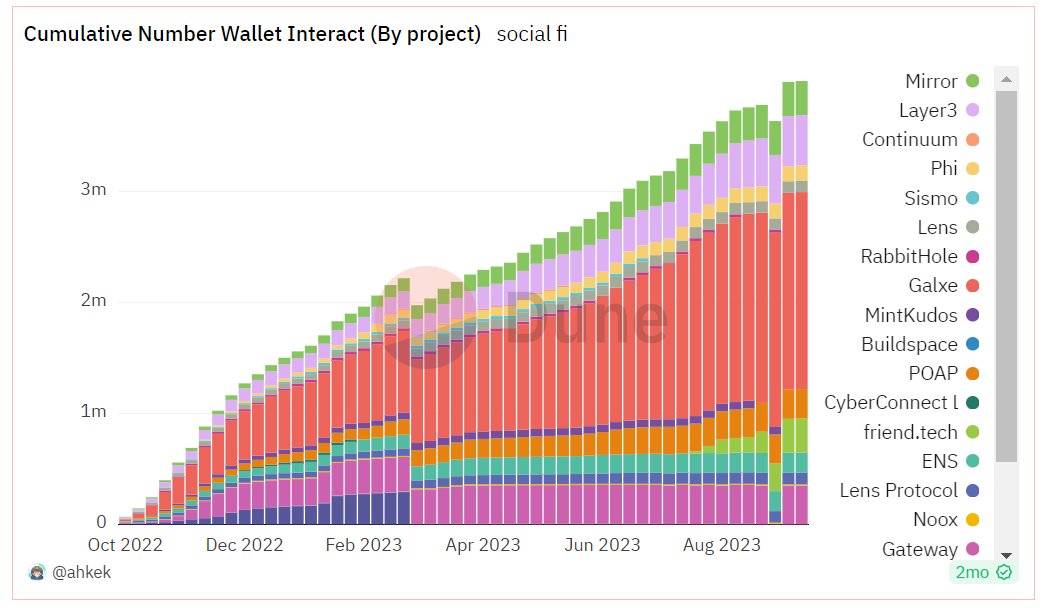
Figure 5: Cumulative Wallet Interactions by Project
Source: dune.com
By chain, most SocialFi interactions occur on Polygon and Base, while others attract relatively little social traffic. Beyond reliable networks, fast processing, and low fees, Polygon has spent the past 1–2 years cultivating a rich ecosystem of games and NFTs, expanding its audience through partnerships with major Web2 IPs, thereby attracting broad interest from inside and outside crypto, resulting in consistent SocialFi traffic growth. Base, fueled by Friend.Tech’s surge, currently commands roughly half of SocialFi traffic. Other chains like Ethereum and BNB show comparatively slower social engagement growth.
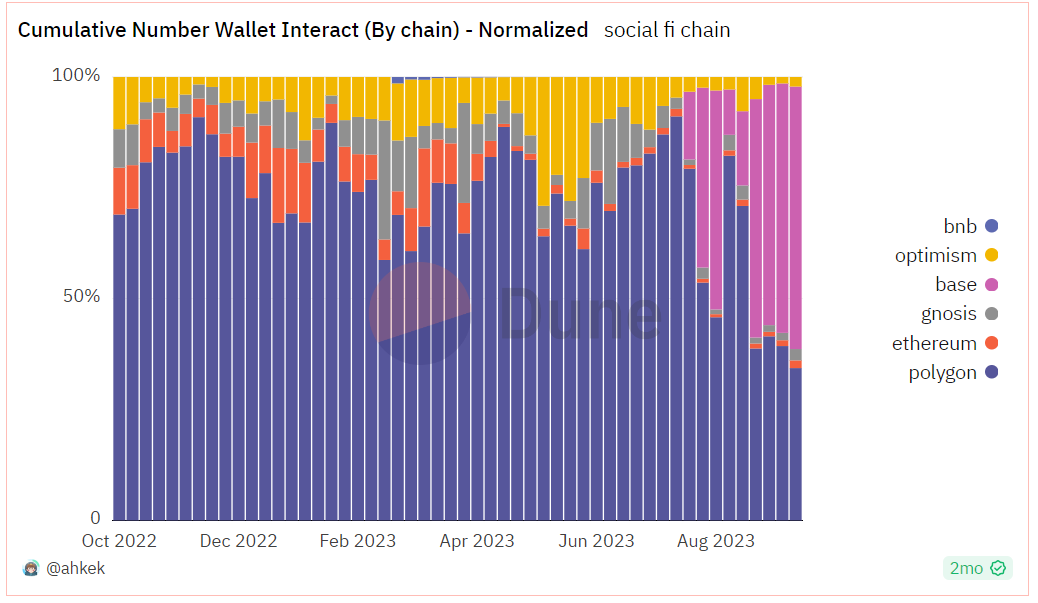
Figure 6: Cumulative Wallet Interactions by Chain
Source: dune.com
Currently, SocialFi projects follow three main development paths:
1. Social Infrastructure
Social infrastructure forms the foundational tools for the entire SocialFi ecosystem. Unified, simple, and accessible infrastructure lowers user entry barriers, reduces fragmentation between dApps, and helps accumulate users and data. Projects like Galxe, Lens, and CyberConnect engage users and onboard dApps from multiple angles, becoming key traffic gateways and interfaces in Web3 SocialFi. As the ecosystem matures, this segment is poised for phased traffic growth.
2. Social DApps
Social DApps represent the largest category in the SocialFi ecosystem, showing a highly diverse and vibrant landscape. They range from forums and fan platforms to video streaming, social games, and identity systems. As the most direct user-facing projects, some achieved remarkable success in 2023—Friend.Tech being the standout, leveraging clever economic design and capital backing to break through in user acquisition. It now serves as a valuable reference for future SocialFi projects. Current development focuses on censorship resistance and engaging gameplay mechanics, catering to privacy and gamification demands. This space hosts numerous developers and active users, potentially harboring the alpha projects of the next bull market. Other notable projects include Farcaster, Nostr, and RepubliK. Most social DApps are in mid-stage development—live or in testing—with potential waves of mainnet launches and token releases expected as infrastructure matures.
3. Social Bots
Social bots emerged as another traffic-driving force in 2023. These include trading bots, yield-farming bots, and Q&A bots, represented by Unibot, Banana Bot, Wagie Bot, and LootBot. Built primarily on Telegram—a messaging platform with 800 million monthly active users—they deliver crypto services within a familiar Web2 interface. As Web2-native bridges to Web3, they dramatically lower entry barriers, tapping into vast untapped user pools. Their convenience creates strong market demand and promising growth prospects. Like gaming and social DApps, social bots are likely to be a key growth vector in the next bull cycle.
Overall, Web3 SocialFi remains in early-to-mid stages of development, dependent on maturing infrastructure such as cross-chain communication, data storage, lower transaction costs, and regulatory clarity. Current project types include social infrastructure, social DApps, social bots, and other tools. Among these, social DApps are the most numerous and diverse, holding the greatest potential to spawn breakout projects in the next bull market. With many developers actively building Web3 social products and increasing investor interest, market热度 continues to rise with high-profile launches and token emissions. While opportunities abound, challenges remain—including immature infrastructure, user growth bottlenecks, and regulatory uncertainties. Overall, we expect 2024 to witness a wave of mature, launched, and tokenized SocialFi projects, offering strong investment potential and growth prospects.
GameFi
In 2021, the gaming sector attracted massive traffic and capital. However, 2022 saw a sharp downturn as diminishing wealth effects crippled play-to-earn models reliant on grinding for income. Throughout 2023, the GameFi sector maintained relative stability. Having emerged during the bull market, tokenized blockchain games underwent prolonged consolidation during the bear market, while most games funded at the peak of the cycle neared completion. We anticipate strong traffic generation and solid project performance from GameFi in this cycle.
According to Footprint Analytics (data截至 December 1, 2023), the GameFi market shows sustained growth: over 2,600 blockchain game contracts exist, with circulating market cap exceeding $6.5 billion, daily trading volume over $6 million, and daily active addresses surpassing 1 million—indicating continued activity despite the bear market.
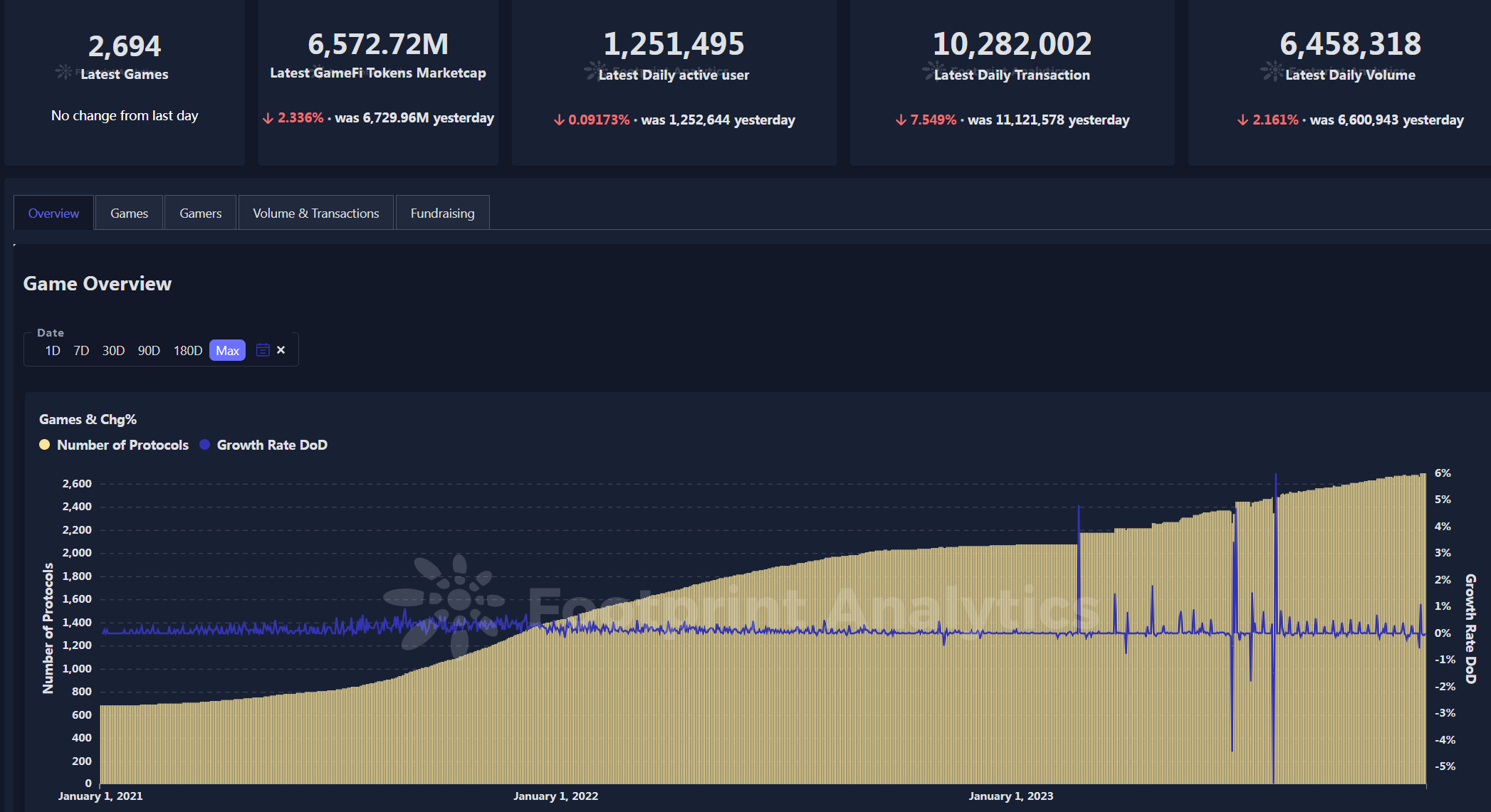
Figure 7: Number of Gaming Protocols and Growth Rate
Source: footprint.network
In terms of ecosystems, daily active addresses exceed one million, with Wax dominating absolute traffic. Thanks to low interaction costs and fast settlement, Wax has retained top market share through bull and bear cycles. Other chains like Near, Celo, and Polygon also hold notable shares.
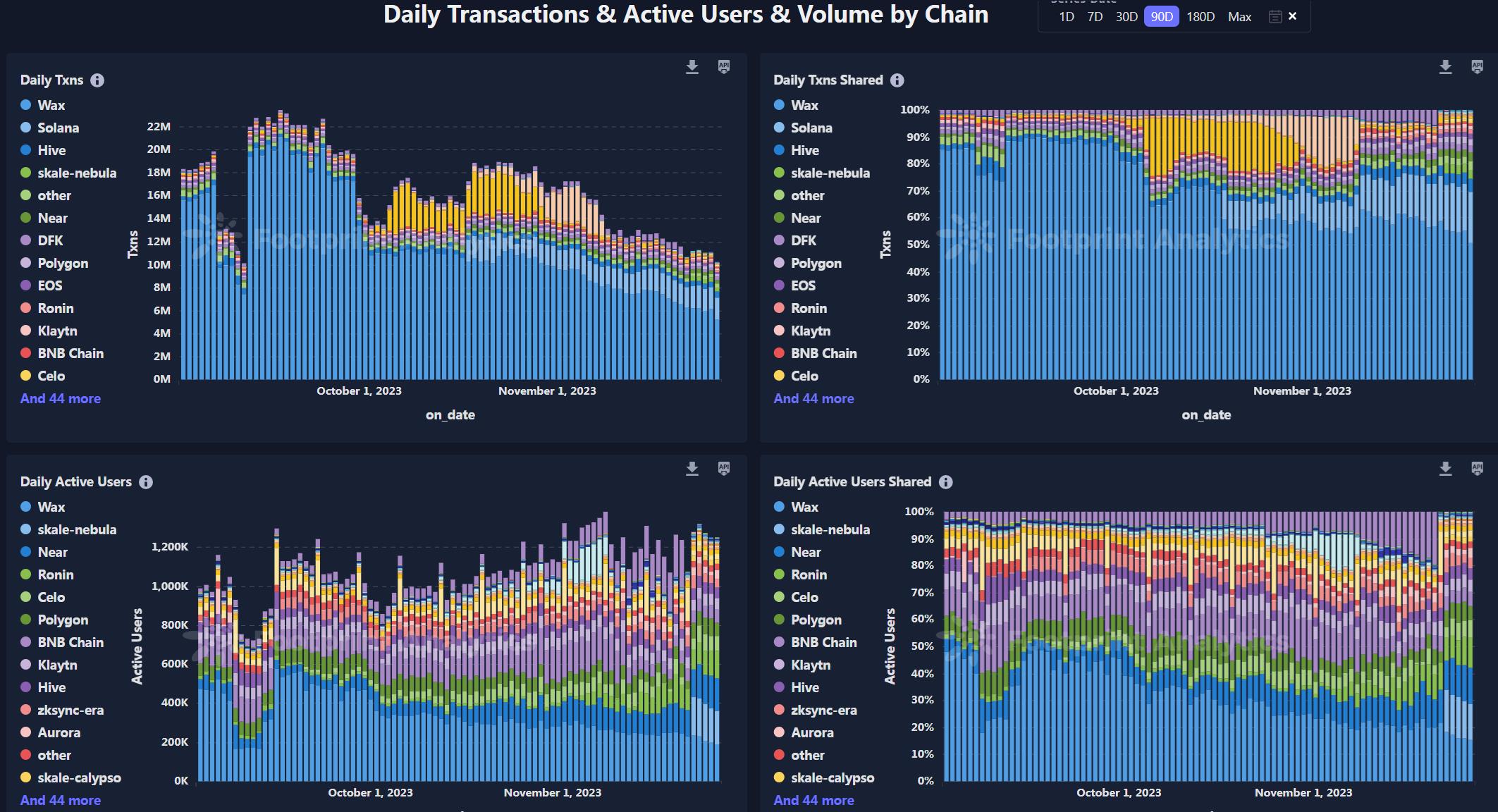
Figure 8: Daily Transactions, Active Users, and Chain-Specific Volume
Source: footprint.network
Regarding project development, 2023 saw growth compared to 2022, benefiting from maturation of prior bull-market startups. BNB remains the most active gaming ecosystem, followed by Polygon, Ethereum, and Wax in deployment volume.
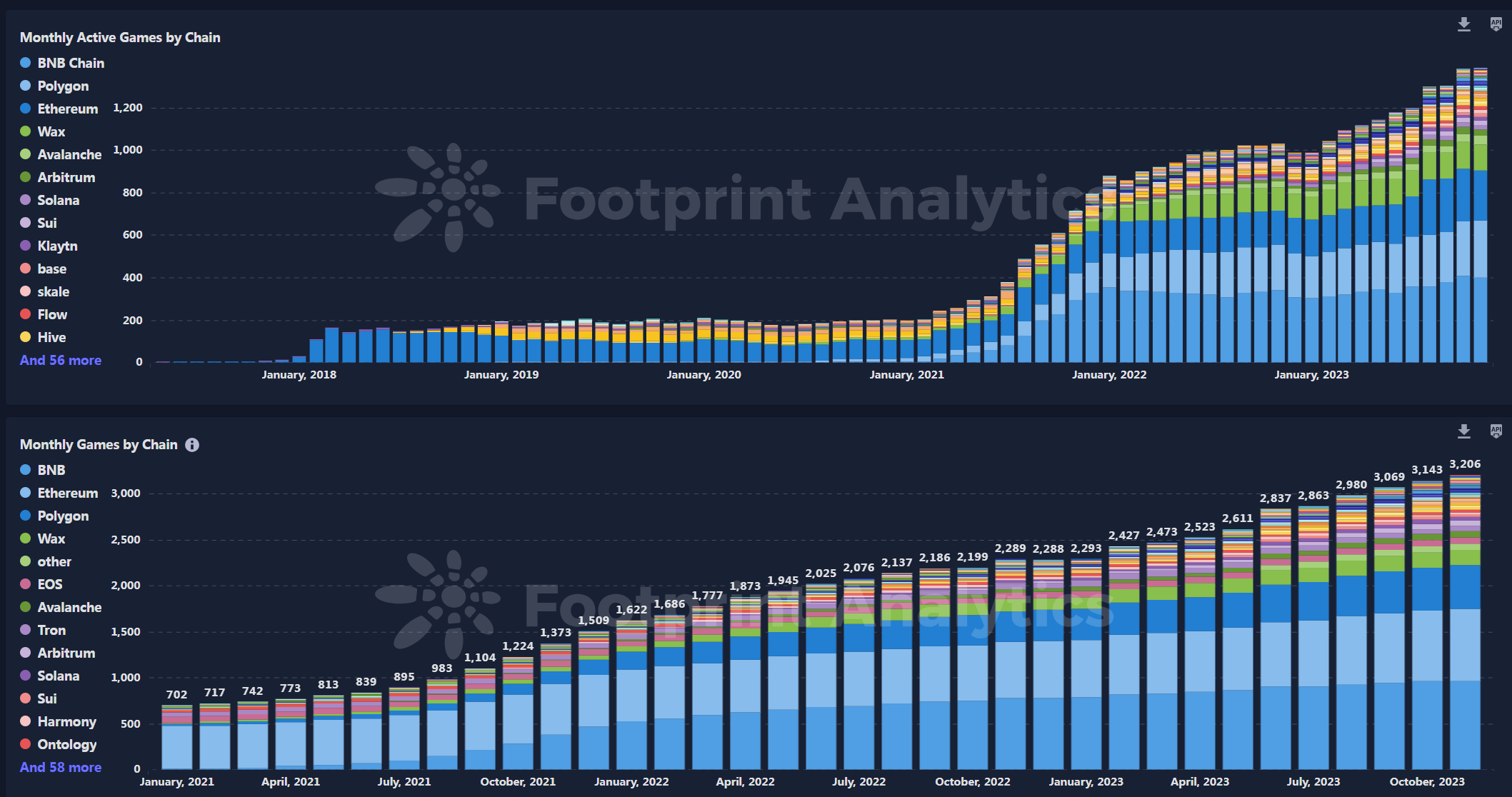
Figure 9: Monthly Active Games by Chain
Source: footprint.network
Overall, the GameFi ecosystem advanced steadily in 2023 and is well-positioned for strong performance in the next bull market. Unlike the previous token-economics-driven cycle, the next bull run may shift focus from earning to entertainment, pricing in long-term fun and engagement. As one of Web3’s most anticipated user-onboarding channels, the next cycle could break usability barriers, enabling seamless experiences for Web2 users. Beyond traditional on-chain games, high-quality 3A titles and fully on-chain games became focal points during this bear market. AAA games, with superior production and gameplay, could drive significant user growth, while fully on-chain experimentation may enable new asset interactions and gameplay mechanics, enriching game design and player experience.
Outlook for 2024
As 2024 approaches, HTX Ventures stands at the forefront of blockchain and crypto innovation, optimistic and clear-eyed about the future. Key trends set to shape the crypto landscape in the coming year include:
- Trading Innovation: The emergence of sophisticated trading bots and new trading infrastructure signals continuous evolution in market mechanisms, pointing toward more dynamic and efficient interactions.
- Layer 2 Evolution: Driven by the anticipated Cancun upgrade, fierce competition among Layer 2 solutions may yield major breakthroughs in scalability and efficiency, reinforcing their pivotal role.
- Web3 and X-Fi Dynamics: The success of authentic Web3 platforms like Friend.tech reflects a holistic integration of social and gaming elements into crypto.
- Convergence with Traditional Finance: Growing discourse around Bitcoin ETFs and RWAs—especially the potential approval of spot Bitcoin ETFs—highlights deepening integration between traditional finance and crypto, heralding a new era of growth and mainstream recognition.
In 2024, HTX Ventures will continue leading these advancements, leveraging our expertise to support and strengthen projects at the forefront of technological innovation and strategically positioned for long-term impact and success. We remain optimistic about the year ahead, confident that these trends will catalyze meaningful progress and unlock new opportunities in the ever-evolving crypto landscape.
About HTX Ventures:
HTX Ventures is the global investment arm of HTX (formerly Huobi), integrating investment, incubation, and research to identify the world’s most exceptional and promising teams. As a decade-long pioneer in the blockchain industry, HTX Ventures excels at identifying cutting-edge technologies and emerging business models. To advance the blockchain ecosystem, we provide comprehensive support—including funding, resources, and strategic guidance—to portfolio projects.
To date, HTX Ventures supports over 200 projects across multiple blockchain sectors, with select high-quality projects listed on the HTX exchange. Additionally, as one of the most active fund-of-funds (FOF) investors, HTX Ventures collaborates with leading global blockchain funds such as IVC, Shima Capital, and Animoca Brands to jointly promote ecosystem development.
Join TechFlow official community to stay tuned
Telegram:https://t.me/TechFlowDaily
X (Twitter):https://x.com/TechFlowPost
X (Twitter) EN:https://x.com/BlockFlow_News
 @Ventures_HTX









