Let's talk about Brother Sun, speaking up for entrepreneurs
TechFlow Selected TechFlow Selected
Let's talk about Brother Sun, speaking up for entrepreneurs
Only Brother Sun stands alone on the front, fighting like Don Quixote.
 Navigating Web3 tides with focused insights
By Serious Finance
A friend recently forwarded me an article about Sun Yuchun (Sunna). I didn't expect a well-known startup media outlet to publish such a biased piece. So let's take a moment to talk about Sunna, investment, career choices—and also speak up for entrepreneurs.
01 The Right Way to Approach Sunna
I wonder: if I were a journalist—even one who had Sunna’s WeChat and direct access—how would I go about requesting a coffee meeting or interview?
Unless we were very close, or unless I myself were the head of a major media organization, I wouldn’t be so unprofessional as to message him directly while he’s in Singapore with something like, “Want to treat us to coffee as our host?” Especially not during Token 2049 in Singapore.
Have you ever considered how many invitations Sunna might receive during Token 2049? How many speaking engagements? How many prior commitments has he already declined? His schedule—and every detail within it—might not even be fully under his own control.
Put differently, imagine you had Wang Jianlin’s WeChat. Would you really message him that way?
I doubt Mr. Wang would reply to ordinary community members or journalists with messages like, “We’ll confirm your trip to Singapore within this week,” or “Hope I won’t be a poor host.” Wouldn’t he simply ignore such messages altogether? At least Sunna responded politely.
In fact, Sunna had already politely declined the interview request before the journalist even arrived in Singapore. No specific meeting was ever scheduled—so where is the broken promise?
So what is the proper approach? If it’s an interview, follow proper channels. Once someone has declined your request, showing up unannounced and then publishing a highly subjective article after failing to force a meeting—that feels like an abuse of media power, doesn’t it?
02 On Work-Life Balance
As an internet industry professional, I remember during my onboarding training—before 2010—the team leader told new hires that internet workers must be ready to respond 7*24.
In the internet world, service outages, external emergencies, or hacker attacks don’t care whether it’s the weekend or 3 a.m. Being online 24/7 is a basic professional standard for internet practitioners.
Everyone has the freedom to pursue work-life balance, but 7*24 responsiveness is, in my view, a core professional value in the internet industry. I expect my team to uphold this value too. If they can’t, they shouldn’t join the internet sector—or startups at all.
Startup founders aren’t villains. They don’t deliberately harass people at night. Typically, urgent midnight requests arise only when: (1) there’s a genuine emergency; (2) the person holds a critical role with no immediate backup; or (3) there’s real trust—you’re relied upon to handle the issue without complaint.
From the perspective of getting things done, "work-life balance" isn’t even a valid debate. Different industries and companies naturally have different expectations. This is fundamentally a career choice. You can choose a job with balance, or one requiring constant availability. Once chosen, commit fully. Don’t complain. If you can’t, leave. It’s that simple.
On the contrary, public reports have noted that “not overworking” is a cultural hallmark of TRON. Sun Yuchun rarely bothers employees—especially frontline staff—without reason. That’s precisely why many long-time employees stay with TRON despite offers from competitors.
03 On the Cultivation of Investors
The article repeatedly mentions “cutting leeks”—using emotional anecdotes and clearly adopting a retail investor’s perspective.
As a startup-focused media, I’d suggest focusing more on investor education: adults must take full responsibility for their investments. Profits reflect your insight; losses mean you swallow them silently. Don’t blame others for being “scythes.”
Even China’s mature A-share market saw multiple “3,000-point defense battles” in 2023 before finally breaking below. The Shanghai Composite fell over 5.5% for the year, and ChiNext dropped more than 20%. One blue-chip stock lost over 60% in value.
If you chase high returns by entering the high-risk crypto space, then complain about volatility—what’s the point?
Capital markets are never gentle—not just crypto. As stated in *The Great Game: The Emergence of Wall Street as a World Power*, Chapter 6: “Who can blame them—they only did what they loved.” That’s the nature of capital.
Regarding the HSR and TRX exchange, let’s skip debating the authenticity of the online narratives and look at outcomes instead.
To outsiders, exchanging TRX for HSR seemed like trading U.S. dollars for Zimbabwean currency—or Alibaba shares for a startup’s tokens. But actually, the analogy was reversed. History proved TRX to be the dollar, and HSR the Zimbabwean currency. Six years later, TRON’s native token TRX has survived bull and bear cycles, remaining among the top ten cryptocurrencies by market cap globally (according to the latest CoinMarketCap rankings, excluding stablecoins USDT and USDC, TRON ranks exactly tenth), with a current market cap of $926 million.
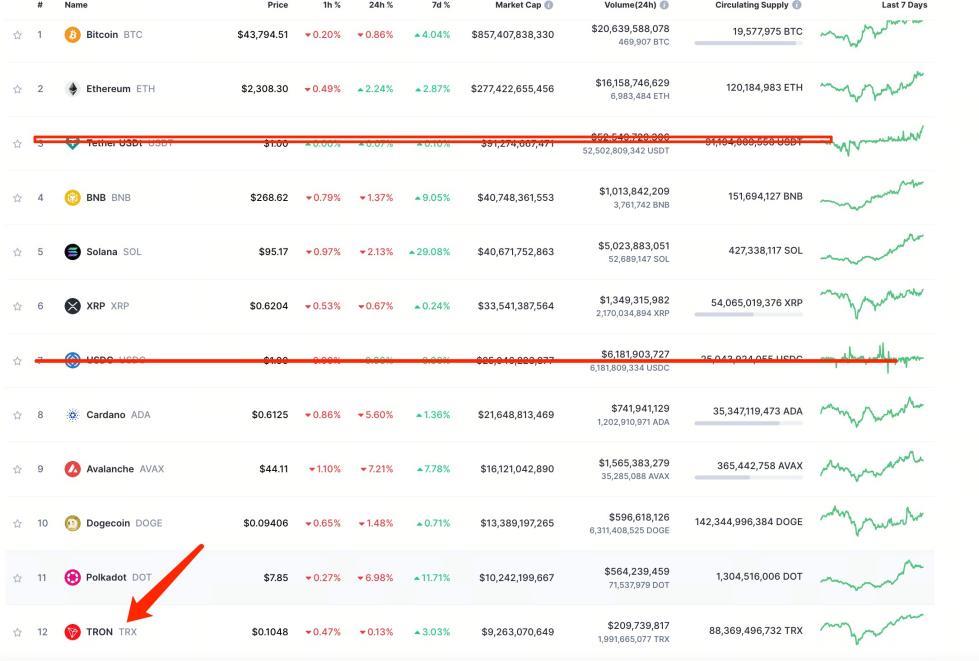
As mentioned in the article, the 333 million TRX exchanged for HSR is now worth $33 million and remains highly liquid. Meanwhile, that blockchain celebrity’s HSR? You can’t even find a place to trade it anymore.
If the narrative were true, perhaps Sunna saw from the beginning that their visions diverged—one aiming to contribute meaningfully to the industry, the other merely cashing in like any other celebrity launching a token.
This top-ten success wasn’t built purely on “cutting leeks.” To think so insults the intelligence of global blockchain participants.
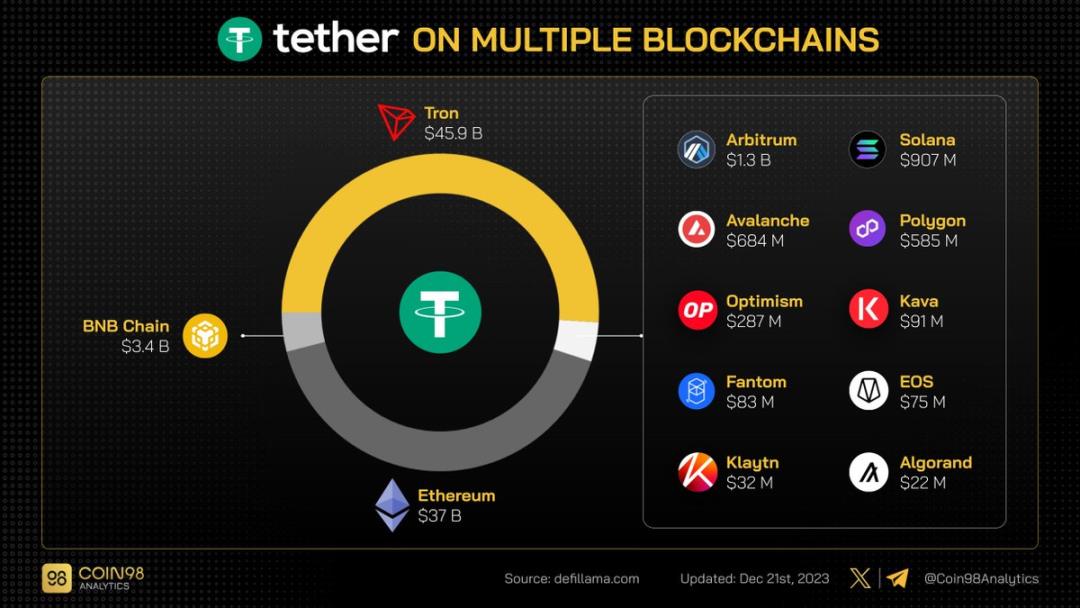
TRON is already the leading public chain for stablecoin USDT circulation:
And the most widely used public chain by users:
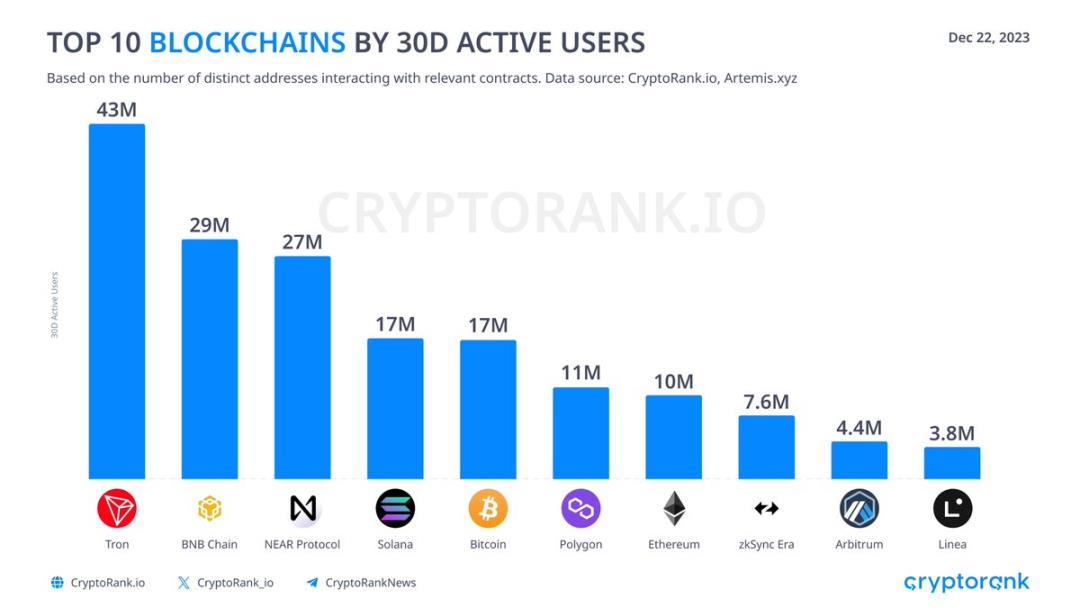
As for the alleged “needle-pricking” behavior blamed on Sunna based solely on anonymous retail complaints online, this clearly lacks journalistic objectivity and rigor.
Media should guide readers either to avoid risks and steer clear of high-risk investments, or to take responsibility for their own decisions, or to adopt sound investment methods—managing positions and setting stop-losses.
What kind of investment environment are we fostering if individuals scream for rights protection when they lose, and institutions use their financial muscle to demand buybacks from founders and startups? Whether individual or institutional, if no one wants to bear risk and everyone demands guaranteed profits—where in the world does such a deal exist? Isn’t this behavior indistinguishable from infantilism? What kind of toxic entrepreneurial and investment culture—and social风气—will this breed?
04 On Shrewdness and Hard Work
According to the article, Sunna’s dedication—no entertainment, no indulgence in food, no custom yachts, mansions, or diamond-encrusted supercars—means he’s entered a lonely planet, “seemingly having no special hobbies beyond making money.” Worse still, in the reporter’s words, this becomes “pathological.”
Reading between the lines, I can reasonably suspect the writer intentionally steers readers toward the impression that Sunna cares only about money—even portraying him as a miser.
But in reality, Sunna is far from stingy. He simply operates differently. There’s nothing wrong with that—certainly not a disease. Just different from the average person.
Sunna’s generosity shows in examples: bidding $4.57 million for Warren Buffett’s lunch, spending $28 million on a Blue Origin spaceflight ticket, collecting art worth around $1 billion, investing hundreds of millions to acquire the struggling Huobi Group, and reportedly acquiring Xu Jiayin’s former ACJ330 private jet—once valued at 1.5 billion RMB—for less than $100 million. The article itself mentions Sunna’s entourage for security and his monthly rent of nearly 100,000 Singapore dollars for a luxury residence.
Based on these facts, it’s reasonable to conclude: this Sunna is definitely not cheap. I believe he rewards hardworking, valuable employees generously. But he won’t waste money just for reputation or hand out benefits indiscriminately.
Why? Because this is the shrewdness of the wealthy, the businessman, the entrepreneur. A private jet means efficiency—especially for frequent business travelers. Flying on your own schedule avoids commercial flight delays and layovers, drastically improving travel efficiency. Yachts are ideal for social and networking events, helping build and maintain business relationships and personal friendships.
As written in *The Snowball: Warren Buffett and the Business of Life*: “Warren particularly dislikes buying real estate—he sees spending money on property as wasteful, offering no appreciable return.” What is a house to Buffett? It’s just a matter of philosophy. We wouldn’t say Buffett’s refusal to upgrade his home for decades is pathological, would we?
Perhaps Sunna doesn’t value leisure, or lacks a suitable circle to enjoy it with—this may indeed contribute to his loneliness, or the chill at the summit. Yet despite immense wealth, he continues to work relentlessly. There’s nothing wrong with that. In fact, top entrepreneurs are often like this. Musk still works like a founder.
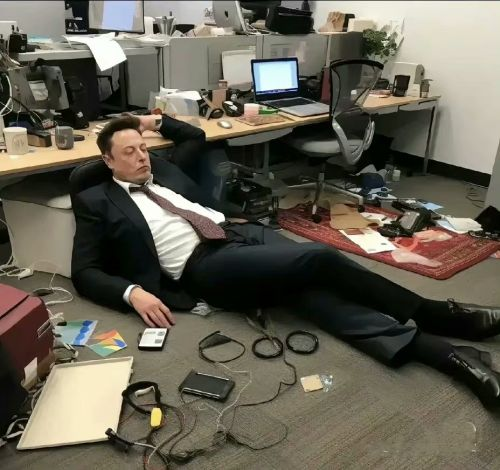
Why do we admire Musk sleeping on the factory floor—as passionate and idealistic—but label Sunna as “sick”? I truly don’t understand.
Musk’s ideals are indeed grand—Earth’s energy crisis, Mars colonization. But isn’t building a financial free port for 8 billion people also a worthy goal that demands relentless effort?
05 Toward Greater Openness and Inclusiveness
We can’t deny that Sunna may seem inconsiderate or out of sync with others. But who among us is perfect in personality? Sunna’s idol is Musk. And in Musk’s circle, we see many labeled selfish or cold-blooded—longtime assistants fired abruptly. Yet that doesn’t make it wrong. Everyone has their own evaluation framework.
We also can’t deny Sunna’s extreme activity on social media. Is it wrong for an entrepreneur to promote their business and personal brand, to ride trends and gain visibility? Look at the recent Oriental Selection incident—wasn’t Luo Yonghao thrilled, posting opinion after opinion? Frankly, I found Luo’s behavior somewhat like kicking someone when they’re down.
But I believe the real Sunna isn’t as portrayed in the article. In his video accounts, positive messages abound. At Hong Kong’s Web3 conference, he repeatedly expressed hope that such events could one day be held in Beijing and Shanghai. When the movie *Creation of the Gods* went viral, he happily said he hoped Chinese culture could influence the world more. Behind those words and the expressions while saying them—I see warmth.
In person, Sunna is easy to get along with. Many so-called “big shots,” whose net worth may be only 1/10 or 1/100 of Sunna’s, are often extremely slow—or completely unresponsive—in online communication. Sunna, however, frequently replies promptly, often faster than most so-called leaders. Face-to-face, he doesn’t create pressure; conversations with him are relaxed and natural. Unlike some “big shots” whose aloof attitudes make interactions unpleasant.
When evaluating a person, focus on their strengths. Sunna wrote in *This World Is Both Cruel and Kind*—published in 2017—that he made money from Bitcoin in his early twenties. Just that alone—seeing it, learning it, following it—outperforms buying property in Beijing or Shanghai in 2009, doesn’t it?
A media outlet claiming to be “exclusive, deep, forward-looking, capturing business opportunities for the top 1%”—should consider how to legitimize the blockchain industry. Chinese players are already marginalized in today’s blockchain space. Media should amplify positive stories. More practically, even for the sake of helping readers correctly assess current investment opportunities.
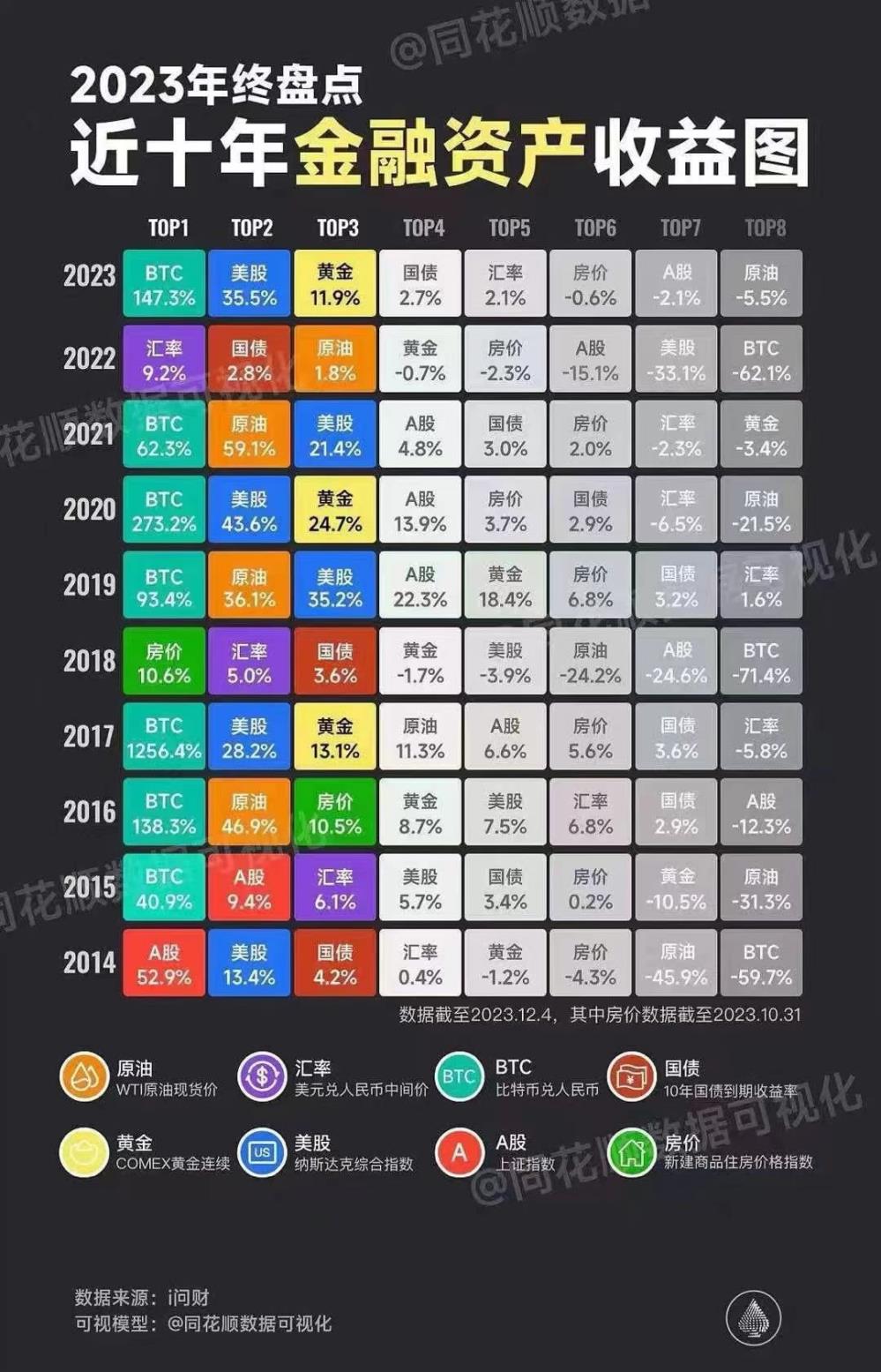
Instead of acting like an irrational investor upset over losses, using personal emotions to demonize blockchain—like an old monk warning young monks that “women are tigers”—media should prevent readers from misunderstanding emerging industries, missing wave after wave of opportunity, or receiving flawed investor education trapped behind cognitive walls.
Today, across industries—semiconductors, AI, and blockchain—white-dominated discourse is building walls, even blockading Chinese communities. In blockchain today, Chinese influence is fading: Mumu has fully withdrawn, Xu stays mostly behind the scenes, CZ stands tall but battered by Western forces. Only Sunna remains standing like Don Quixote, fighting alone.
Entrepreneurial ecosystems and media should support rare talents with greater inclusiveness, back innovation, encourage entrepreneurship. Personality differences shouldn’t define character judgments. Focus more on achievements and contributions. View issues from broader perspectives. Founders’ pressures and efforts shouldn’t be criticized. With higher vision, recognize that competition in blockchain may also be racial and cultural. Offer encouragement when it’s needed most, not pile on when someone’s down. Talk to failed entrepreneurs from past years. Advocate for founders against today’s toxic trend of forced buybacks in startup investing. That would be far more valuable than ganging up on the few remaining Chinese blockchain leaders who still have a voice.
Join TechFlow official community to stay tuned
Telegram:https://t.me/TechFlowDaily
X (Twitter):https://x.com/TechFlowPost
X (Twitter) EN:https://x.com/BlockFlow_News