








Understanding the Fate and Revolution of Digital Identity
TechFlow Selected TechFlow Selected
Understanding the Fate and Revolution of Digital Identity
As one of the key applications in the blockchain field, digital identity holds tremendous potential and promising development prospects.
 Navigating Web3 tides with focused insights
Author: Kyle Liu, Investment Manager at Bing Ventures
It remains unclear which vertical within Web3 social will take off. Currently, even leading Web3 social products lack traction compared to their Web2 counterparts. However, there is good reason to believe that in the long run, Web3 social will surpass Web2. The reason is simple: while Web2 applications accumulate data independently, they benefit from strong network effects. Yet when Web2 products accumulate data in silos, Web3 applications use and contribute to a shared data ledger, thus enjoying network effects at the ecosystem level rather than at the application level as in Web2. We will soon see which combination of protocols and applications can turn this vision into reality.
Challenges Facing Current Digital Identity Solutions
Security and Privacy Protection Issues
Digital identities typically require data to be stored and processed across multiple nodes, creating potential security vulnerabilities and risks of data breaches. Additionally, digital identity systems must address how to ensure secure user authentication, prevent malicious attacks, and implement data encryption and access control. Moreover, privacy protection is a critical concern, as these projects often need to collect and process users' personal information.
Short Timeframe for Users to Build Reputation
Building a digital identity involves evaluating users’ on-chain behaviors to form corresponding reputation scores. However, such evaluations require long-term credit accumulation, making on-chain reputation systems largely ineffective for new users or those newly entering a specific domain.
Data Complexity and Classification Difficulties
On-chain, massive numbers of operations are recorded every second. How an identity system categorizes these actions—grouping them into transactions, NFT mints, interactions with third-party dApps—and then displays them under each identity’s address or domain is an extremely complex process.
Lack of Interoperability Among Reputation Systems
Ecosystems centered around public blockchains are growing rapidly, yet interoperability between chains remains extremely limited. Building a reputation system within a single ecosystem is far easier than establishing one across the entire crypto world. Enhancing cross-chain interoperability will be a key challenge moving forward.
Lack of Scalability
Since digital identity systems often store and process data across multiple nodes, performance may degrade as user count and data volume grow. Additional challenges include managing large datasets, ensuring data consistency, and enabling efficient data access.
Building a New Decentralized Identity Verification System
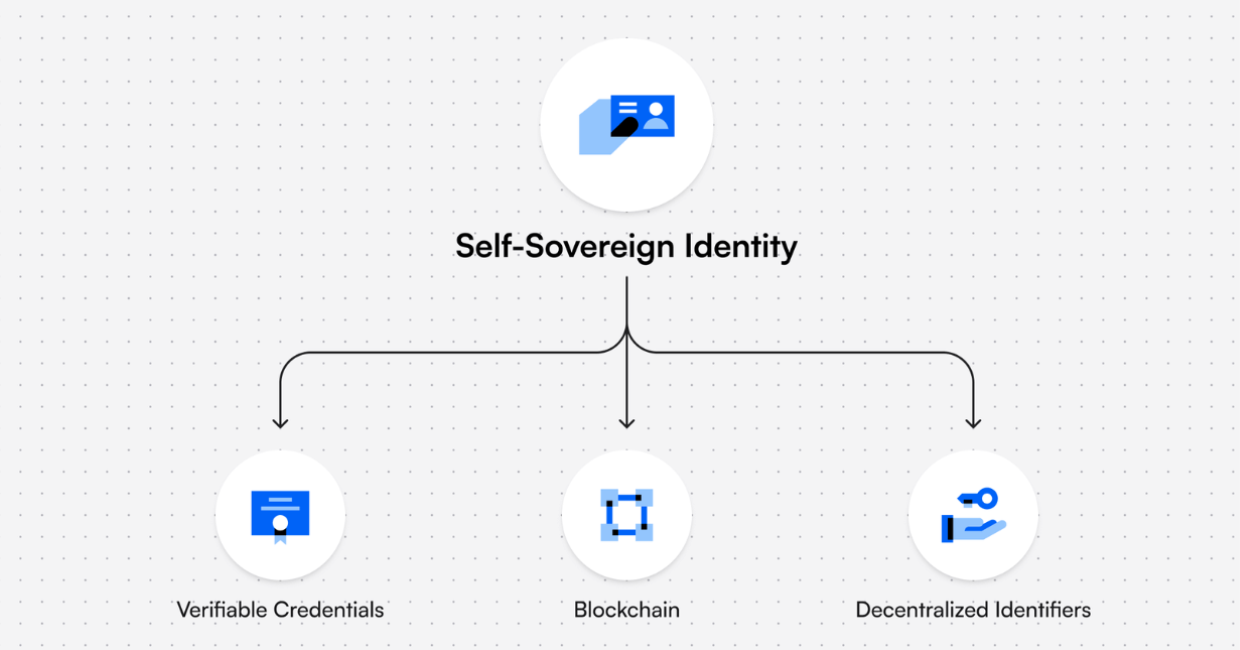
In today's crypto market, major projects building identity solutions can generally be categorized into five types based on use cases and implementation methods: 1) Data/Behavior Tagging; 2) DeFi Credit Scoring; 3) Badges/Proofs; 4) Privacy-Preserving Proofs; 5) Identity Resumes. This article analyzes the prospects of this sector by examining its various sub-trends.
Standardization Trend: Modularity + Interoperability
Within Web3, the central discussion revolves around identity ownership and interoperability. In traditional Web2, interoperability is primarily achieved through federated identity management, linking information across identity systems, and via single sign-on (SSO). The core issue here is that identity data is controlled by organizations, companies, and service providers—not by individuals themselves, who lack ownership and access control. In contrast, Web3 identity solutions center on a user-owned model.
Sismo
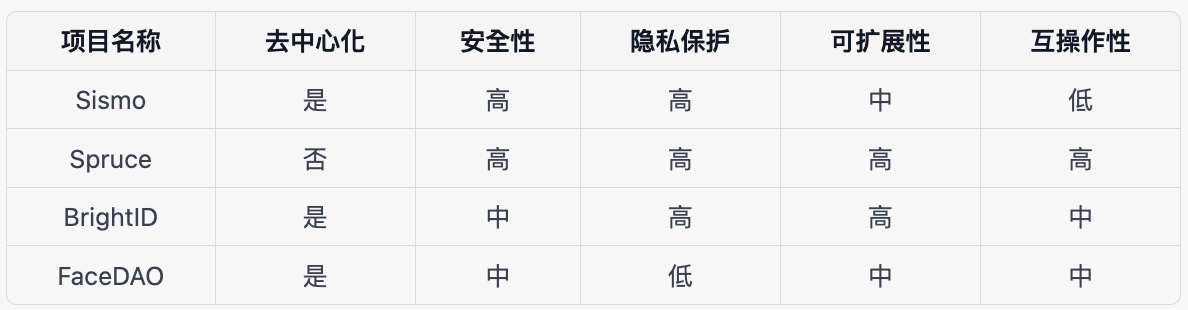
Sismo is a modular proof protocol built on Polygon, focusing on decentralization, privacy, and usability by issuing proofs in the form of non-transferable badges. Its key feature is using zero-knowledge proofs to award badges to users’ other accounts (such as ENS, Twitter, or GitHub), helping build Ethereum profiles. Users can also aggregate their reputations into public profiles while keeping details private.
Sismo allows users to apply for ZK attestations and use Sismo’s SDK. Developers can now leverage Sismo attestations to target specific user groups. The platform is currently in Alpha testing. Use cases include anonymously proving NFT ownership without revealing which BAYC is held or which Ethereum account (and its full history) owns it. ZK badges can also grant access to holder-exclusive communities. In DeFi, users could obtain loans at better interest rates using ZK badges without disclosing transaction details.
Spruce
Spruce is a digital identity company focused on advancing identity verification while protecting user privacy, aiming to rebuild trustworthy interactions between enterprises and governments. Spruce integrates with existing identity and data infrastructure in enterprise environments, including identity servers, internal resource APIs, key management systems, ERPs, and cloud services.
The Ethereum Foundation and Ethereum Name Service (ENS) have announced support for Spruce’s proposed secure login system using Ethereum, allowing users to log in via cryptographic identifiers (e.g., their Ethereum wallet address). With Spruce’s system, users can verify their identity without sharing personal data with third parties.
Enhancing User Experience: Decentralized Governance + Privacy Protection
Compared to Web2, enhancing user experience is even more crucial for decentralized digital identity projects. In Web2, identity verification and data storage are centralized, meaning personal data resides on central servers vulnerable to hacking and misuse. In contrast, decentralized identity projects store identity and data across distributed networks, offering greater security and privacy.
BrightID
BrightID is a decentralized, anonymous social platform that addresses identity uniqueness by constructing and analyzing social graphs. Users can prove their unique identity to applications without maintaining multiple accounts. Meanwhile, apps don’t need to collect personal identity information or collaborate with centralized entities, thereby enhancing user privacy.
BrightID uses peer-to-peer encryption to transmit any personal information—including text and photos—avoiding data storage on networks. Its official token is BRIGHT, with a maximum supply of 100 million and an initial supply of 25 million. Up to 10 million tokens are released annually by BrightDAO. Use cases for Bright Token include liquidity mining, governance and voting, bug bounties, and faucet test rewards.
FaceDAO
FaceDAO is an anonymous social network built on a decentralized blockchain, using facial recognition as a login barrier to protect user privacy. It employs private keys and DIDs as data carriers, giving users absolute control over their data. To incentivize contributions to the platform’s ecosystem, FaceDAO issues token rewards and operates as a decentralized autonomous organization, allowing users to participate in governance decisions.
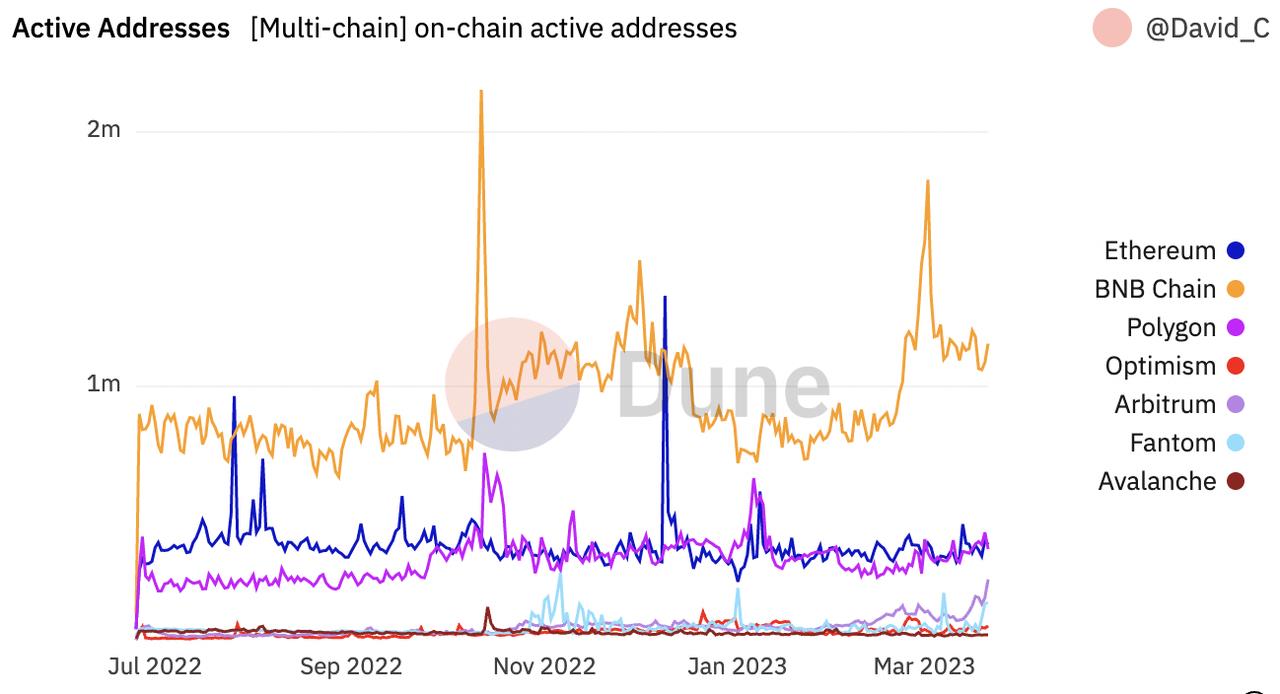
Within less than three months of launch, FaceDAO has attracted over 500,000 real community members. According to official data, the top three countries by user count are Indonesia, Bangladesh, and India, collectively accounting for 80% of the platform’s users. Large numbers of users from other developing countries like Nigeria, Vietnam, and the Philippines are also joining FaceDAO.
Future Directions for Web3 Identity Systems
Clear and Comprehensive On-Chain Identity Graphs
A key focus in Web3 is decentralized social. Identity systems can help users build more comprehensive personal profiles, making on-chain social graphs clearer and more visible. By showcasing skills and loyalty to NFTs, protocols, and ecosystems through various certifications, users can express their reputation across the broader social graph, facilitating further activities.
Higher Levels of Privacy Protection
On-chain reputation is built on credibility, but some users may not want to expose all their behavioral data. Therefore, while constructing on-chain reputation, privacy protection must also be considered. This requires more flexible and secure identity verification methods, along with better tools for users to manage and control their data.
Solutions Enabling Decentralized Identity Verification
Current digital identity projects remain relatively narrow in scope and have yet to establish a foundational architecture, being built mostly to meet specific market demands. As DID technology advances and consensus around on-chain reputation grows, a mature on-chain reputation system is likely to emerge. However, no killer application has appeared yet, and the path to mass adoption remains unclear.
Still, we can draw one conclusion about current digital identity efforts: Web3 digital identity still cannot directly compete with Web2 in terms of user experience. Rather than competing head-on with Web2 applications, it would be wiser to leverage Web3’s unique ecosystems in DeFi, NFTs, and other verticals to deliver innovative, valuable tools. Projects worth watching should exhibit the following traits:
-
Seamless account portability. An individual’s online identity should not be owned by companies that are unaccountable to their users. Users should be able to seamlessly transfer their accounts between providers without losing data or social graphs.
-
Strong interoperability. The world needs a diverse, interconnected marketplace of services to ensure healthy competition. Interoperability should feel as natural as the web itself. While different interoperability frameworks serve different needs, their essence should be to increase user benefits.
-
Secure privacy networks. The recurring popularity of anonymous social platforms in traditional internet highlights strong demand for privacy. Yet, Web2 has proven incapable of nurturing major breakthroughs in this area. Fortunately, Web3 offers a fresh experimental ground.
In summary, future decentralized digital identity systems will evolve toward greater standardization, stronger interoperability, enhanced privacy protection, superior user experience, and democratic, transparent governance. Web3 digital identity is still in the experimental phase and has yet to achieve significant success. But if projects deeply design “verifier” models, unlock the value of “proof economies,” and integrate social, wallet, investment, and even intelligence-sharing functionalities, could these magical new models become the breakthrough we’re waiting for? Only time will tell.
Join TechFlow official community to stay tuned
Telegram:https://t.me/TechFlowDaily
X (Twitter):https://x.com/TechFlowPost
X (Twitter) EN:https://x.com/BlockFlow_News
 Bing Ventures







