









Rust-based Layer 1 Blockchains Clash with EVM, Solana and SUI Converge—When Will Polkadot Catch Up?
TechFlow Selected TechFlow Selected
Rust-based Layer 1 Blockchains Clash with EVM, Solana and SUI Converge—When Will Polkadot Catch Up?
So where did Polkadot go? Maybe it got lost inside the big house.
 Navigating Web3 tides with focused insights
Author: Zuo Ye
After the two major Move-language blockchains, Aptos and Sui, each rose rapidly, their ecosystems remained barren and underdeveloped. This has long left people confused: why have these Meta-born chains, born with silver spoons in their mouths, ended up relying on "selling tokens" to sustain their luxurious lifestyles?
Solana’s Solend suddenly “moved in” to Sui—a chain famously branded as a “gaming chain” yet lacking actual games. The reason is simple: they’re family, so of course they support each other. After all, the real threat isn’t each other, but the giant known as Ethereum.
SUI’s Roar: Building Games Is Less Important Than DeFi
Forming alliances against Ethereum has become the current strategic offensive for alternative Layer 1s. In response, the EVM-based ecosystem—comprising a swarm of L1/L2/L3 chains stacked like beds upon beds—has adopted a layered defensive posture, building high walls and stockpiling resources in an attempt to protect its throne.
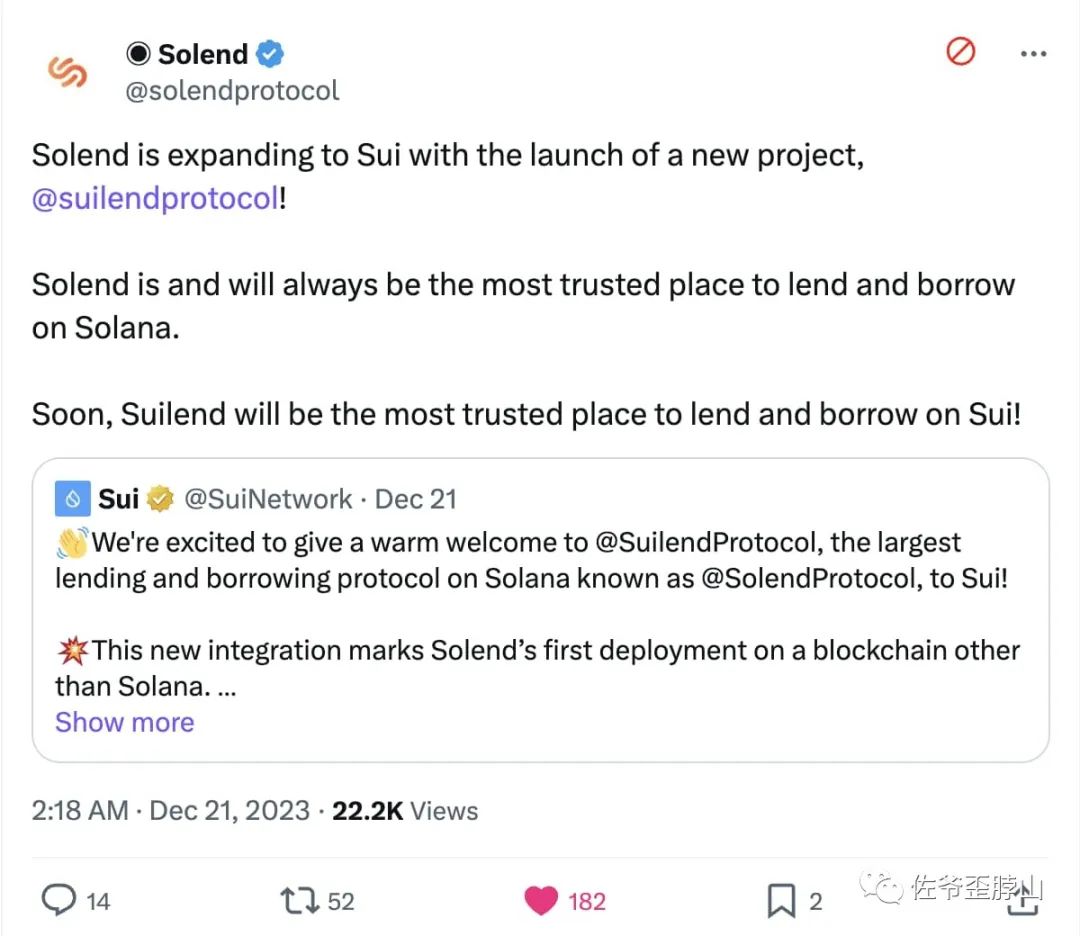
Now, Solana's Solend unexpectedly breaks through by launching Suilend, a lending product on Sui. Two things are puzzling: Why did a Solana-based project choose not to go the EVM-compatible route, but instead join the Sui (Move) ecosystem? And secondly, is Sui now abandoning gaming to focus on DeFi?
To answer this, consider the following two data points:
-
Solana’s total value locked (TVL) surpassed $1.5 billion
-
SUI’s TVL exceeded $200 million
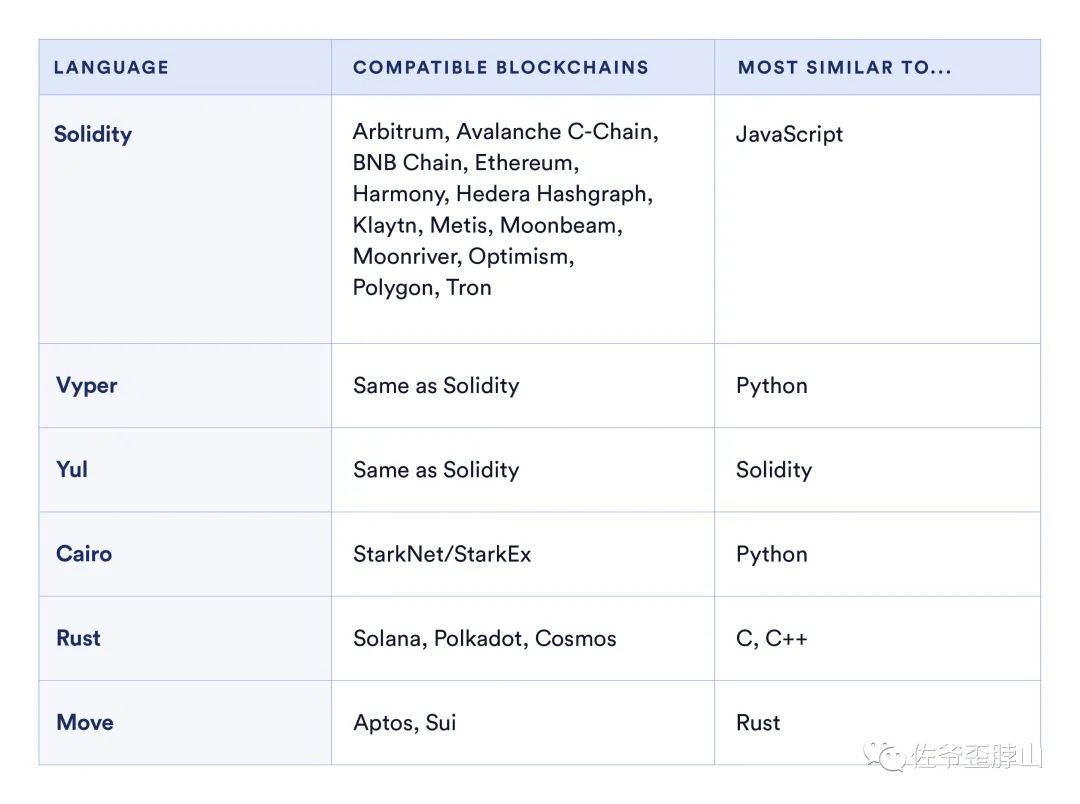
Relationships Among Common Blockchain Programming Languages
Image Source: Chainlink Blog
Additionally, here’s some background knowledge (not entirely precise): Move is essentially a variant of Rust. As Solana puts it, their relationship is akin to that between the ancient Chinese states of Qin and Zhao—both descended from the same clan, with no reproductive isolation, free to intermarry. Therefore:
-
Rust developers from the Solana ecosystem face much lower migration costs moving to Move-based chains like Sui than switching to EVM;
-
Move-based blockchains follow a general-purpose paradigm, also pursuing high-performance L1s, so Sui naturally supports Solana’s charge;
-
Sui continues to unlock tokens, with 4 million $SUI scheduled to unlock on the 31st of this month. Pumping the price earlier helps mitigate potential sell-off pressure.
This broadly outlines the current strategic landscape among Layer 1s (and L2s). Chains like Solana share common roots, battling Ethereum’s L2 dominance without yet reaching its doorstep.
In the Name of Move, Acting Through Rust
TechFlow reported yesterday that parallelized EVM will become a mainstream technical trend next year, even citing Polygon’s former co-founder as validation. I should point out that parallelization is not new—it has long been used in computer science—and it’s not new to blockchain either. At least, Sui has been built around parallel computing from day one.

Simply put, parallelization is like traffic diversion during congestion—whether by widening lanes or building overpasses. Under the latest technologies, replacing gasoline cars with electric smart vehicles and optimizing route planning altogether is another fresh approach.
Let’s leave the technical discussion there—just a reflection: Sui was ahead of its time, becoming a prophet. Being one step early makes you a visionary; three steps too soon, and you fall into oblivion. Technical superiority often doesn’t beat a good pump in effectiveness.
Thinking of Sui reminds me of Starcoin, the early Chinese-made Move + PoW public chain. It was one of the first outside Meta (Facebook) to adopt Move for blockchain development, but missed the surge wave and has since become a relic of history. @jolestar was once part of Starcoin—I hope Chinese builders can make new strides in the Move space.
Move is essentially a variant of Rust. Now, Solana and Sui are beginning ecosystem collaboration. However, Aptos, Polkadot, and Cosmos haven’t joined in force yet. If these chains unite against the EVM ecosystem, they could expand Solana’s application reach and offer future projects viable alternatives beyond the overcrowded Ethereum sphere.
In the increasingly vibrant Alt L1 space, Polkadot was the first breakout "Ethereum killer," followed by Cosmos. Yet Polkadot suffered from its peculiar parachain auctions, while Cosmos was lifted sky-high by Luna-UST only to crash back down. Technologically, however, both laid the groundwork for early Rust-based development paradigms, until Solana stabilized the field.
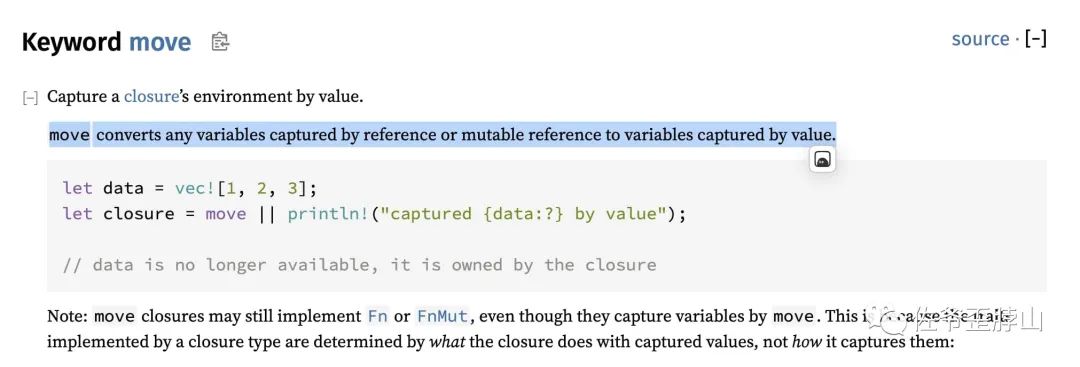
Looking back at the initial spotlight on Move-based blockchains, many couldn’t understand how a programming language became synonymous with entire chains. In fact, “Move” itself is a keyword in Rust. Rather than saying Sui’s CTO Sam Blackshear invented the Move language, it’s more accurate to say he re-engineered Rust.
Notably, Huawei is also a sponsor of the Rust Foundation. Suddenly, these curious knowledge points connect—China’s early start in Rust exploration ended up arriving late to the party.
Where Did Polkadot Go?
A grand alliance of Rust (Move) languages cannot afford to exclude Polkadot, yet in this wave, Polkadot has underperformed—perhaps because Gavin Wood became wealthy too early, losing the drive to push forward under pressure.
We might rephrase the question: Why did EVM form a robust ecosystem while the Rust stack did not?
Previously, people blamed systemic issues—Rust being hard to learn, fewer developers, insufficient users and TVL, low project retention and user conversion rates, and so on.
But everything changed after Solana’s rise.
It turned out the missing piece was a leading figure. EVM had an absolute core and ballast: Ethereum’s excellence created the industry’s second most trusted asset, ETH, which stabilized developers in the EVM ecosystem, giving them the patience to endure market cycles. After multiple bull and bear markets, competing ecosystems were either absorbed or overtaken. That’s the true picture—before others believe in you, you must first prove yourself.
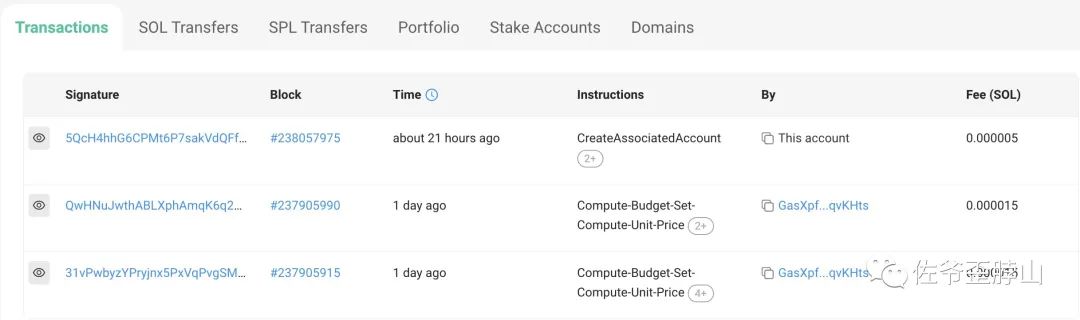
Most Solana projects are native. Take DEXs as an example: if you’ve used Raydium, you’d be amazed by the experience—executing a $1,000 trade nearly instantly, with fees practically zero. Faced with such clear advantages in cost and speed, all accusations of being a “data center chain” vanish. Since they’re all PoS anyway, why not pick one that’s faster and cheaper?
So where did Polkadot go? Maybe it got lost inside its own big house.
Conclusion
This article may seem to be about Sui, but it’s really about opportunities within the Rust ecosystem. We once caught a glimpse of it—much like early Ethereum, where capital and miners helped it grow strong. But eventually, the West rose while the East declined, leaving us as mere tools.
I hope developers and investors seize this opportunity and Buidl the future!
Join TechFlow official community to stay tuned
Telegram:https://t.me/TechFlowDaily
X (Twitter):https://x.com/TechFlowPost
X (Twitter) EN:https://x.com/BlockFlow_News
 @zuoyeweb3









