








Positioning for the Next Narrative: The Rise of Parallel EVMs – Which Projects Are Worth Watching?
TechFlow Selected TechFlow Selected
Positioning for the Next Narrative: The Rise of Parallel EVMs – Which Projects Are Worth Watching?
2024 will be the year of parallel EVM.
 Navigating Web3 tides with focused insights
Author: David, TechFlow
Narratives in the crypto market always follow a cycle of cause and effect.
In recent months, as inscriptions on the Bitcoin ecosystem have exploded, capital spillover and FOMO sentiment have led to inscriptions blooming across other chains as well—yet this has also brought negative consequences:
Due to the excessive number and variety of inscriptions, multiple blockchain networks—including Arbitrum, Avalanche, Cronos, zkSync, and The Open Network—have experienced performance overload.
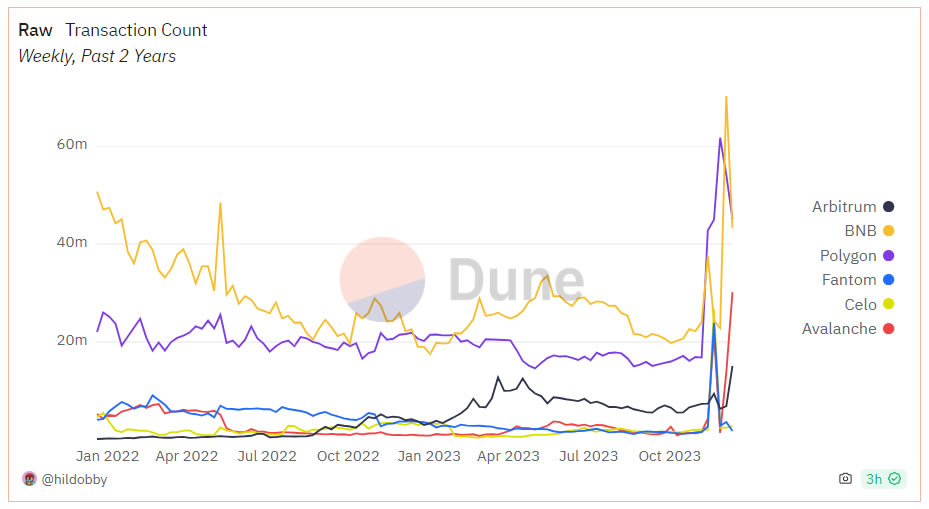
As a result of the inscription frenzy, the market has once again begun re-evaluating EVM performance issues.
At the same time, a new narrative around optimizing EVM performance is emerging—Parallel EVM.
JD, former co-founder of Polygon, recently stated on social media that he anticipates every L2 will rebrand itself in 2024 with the label "Parallel EVM".

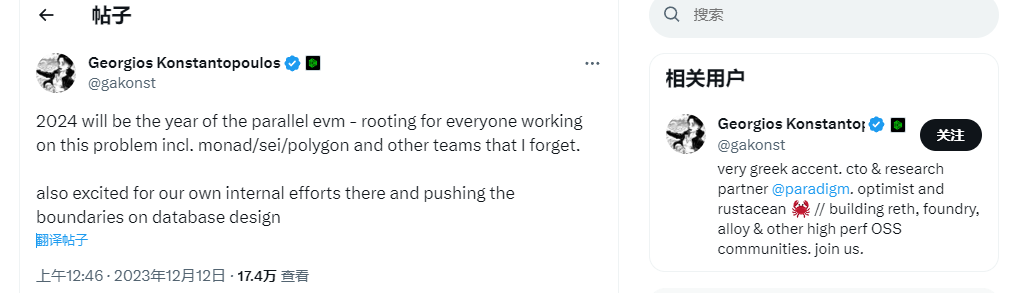
Meanwhile, Georgios, CTO at Paradigm, believes that 2024 will be the "Year of Parallel EVM," and confirmed that Paradigm is internally exploring and designing related technologies.
Why is there so much optimism around Parallel EVM?
Beyond the immediate trigger of inscriptions overloading EVM chains, improving EVM performance remains an ongoing theme in crypto—new public chains, OP-style L2s, ZK-style L2s, and others are all narratives and projects born from EVM optimization, and they often receive higher valuations.
However, these narratives are relatively mature now, leaving little room for hype. As such, Parallel EVM—a fresh approach to enhancing EVM performance—is naturally gaining attention during this bull market.
Returning to the core concept: what exactly is Parallel EVM? How is it implemented? And which projects should we watch early?
In this article, we aim to answer these questions.
Parallel Execution: More Efficient
So, what is Parallel EVM?
Parallel EVM (Ethereum Virtual Machine) is a concept aimed at improving the performance and efficiency of the existing EVM.
As widely known, the EVM is Ethereum's core component responsible for executing smart contracts and processing transactions.
The current EVM design includes a critical feature to maintain network consistency and security:
Transactions are executed sequentially.
Sequential execution ensures transactions and smart contracts run in a deterministic order, making blockchain state management and prediction easier. This design prioritizes security and reduces potential complexities and vulnerabilities associated with parallel execution.
However, under high load, this can lead to network congestion and delays.

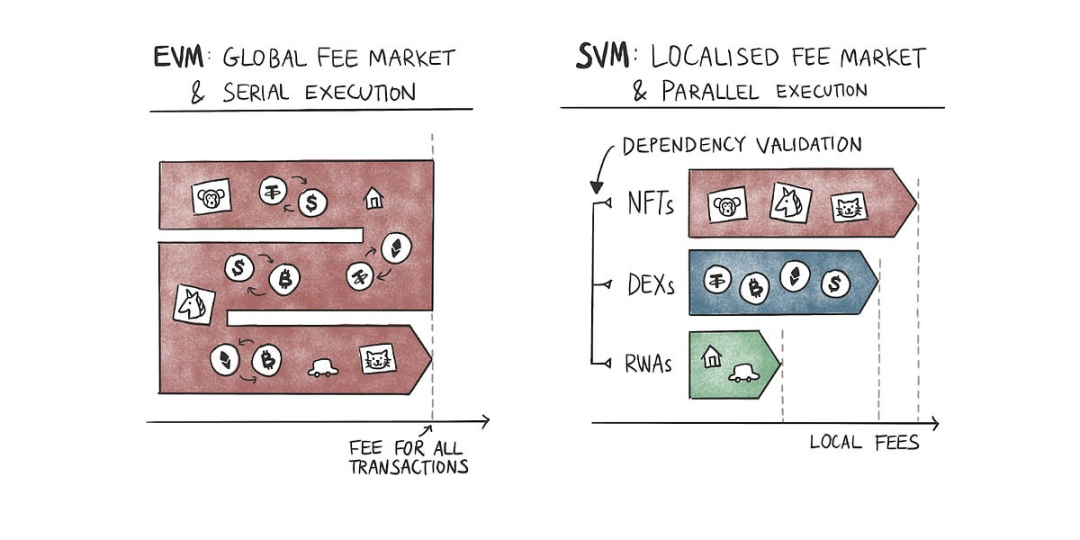
Imagine the original EVM design as vehicles moving one after another on a single-lane road, each constrained by the speed of the vehicle ahead; if one vehicle (transaction) slows down or stalls, all following vehicles get stuck.
Parallel EVM, by contrast, is like expanding that single lane into a multi-lane highway, allowing multiple vehicles to move simultaneously.
Technically speaking, Parallel EVM enables different independent transactions or smart contracts to execute concurrently, greatly increasing EVM processing speed and system throughput.
So, how can Parallel EVM be achieved?
We won't dive too deeply into technical details here but will outline general approaches to Parallel EVM processing:
-
Partitioning or Sharding: Grouping transactions so they can be executed in parallel. This means different transactions can run simultaneously on separate processing units instead of one after another. Solana’s SVM uses similar logic.
-
Optimized Algorithms: Developing new scheduling algorithms and optimization techniques to efficiently manage and execute parallel tasks while maintaining transaction correctness and order.
-
Security and Consistency Guarantees: Implementing complex synchronization mechanisms and consistency models to ensure system security and data integrity even under parallel processing.
In short, by processing transactions in parallel, EVM can handle significantly more transactions simultaneously, dramatically increasing TPS, reducing network congestion, and improving scalability.
Several projects are already exploring Parallel EVM designs, though their implementation methods vary. Below, we'll introduce and review key projects.
Independent Approach: Building a Standalone L1 as a Parallel EVM
Since Ethereum’s EVM currently executes transactions sequentially, the most straightforward path toward Parallel EVM is clear:
Leave Ethereum behind and build a standalone Layer 1 blockchain designed for parallel EVM execution.
Representative projects: Monad and Sei.
Monad: A Native Parallel EVM L1
Monad is a blockchain project dedicated to solving the scalability limitations of traditional EVM. It adopts a parallel execution strategy while maintaining Ethereum compatibility, aiming to enhance blockchain performance through faster transaction processing and improved system efficiency.
By enabling parallel execution, Monad aims to drastically increase transaction throughput, resolving congestion issues faced by existing EVM chains under heavy loads, with a long-term goal of achieving up to 400,000 TPS—approaching physical bandwidth limits.
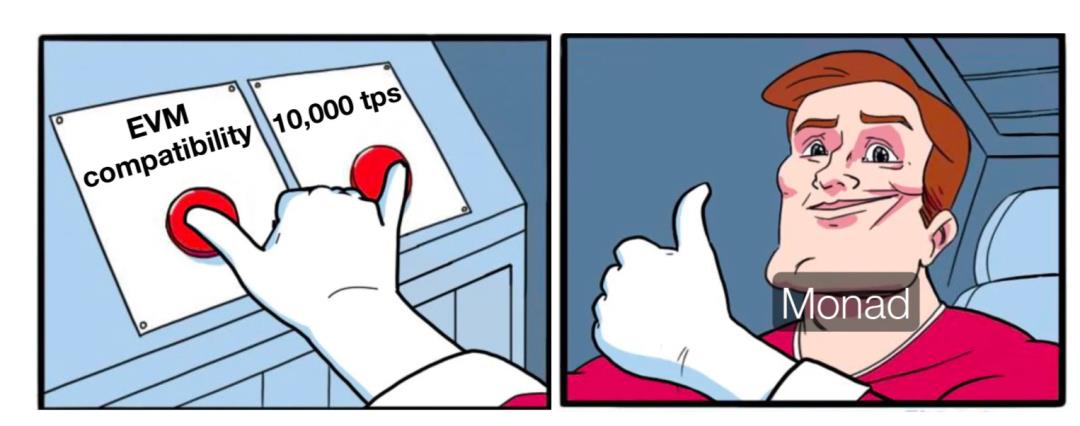
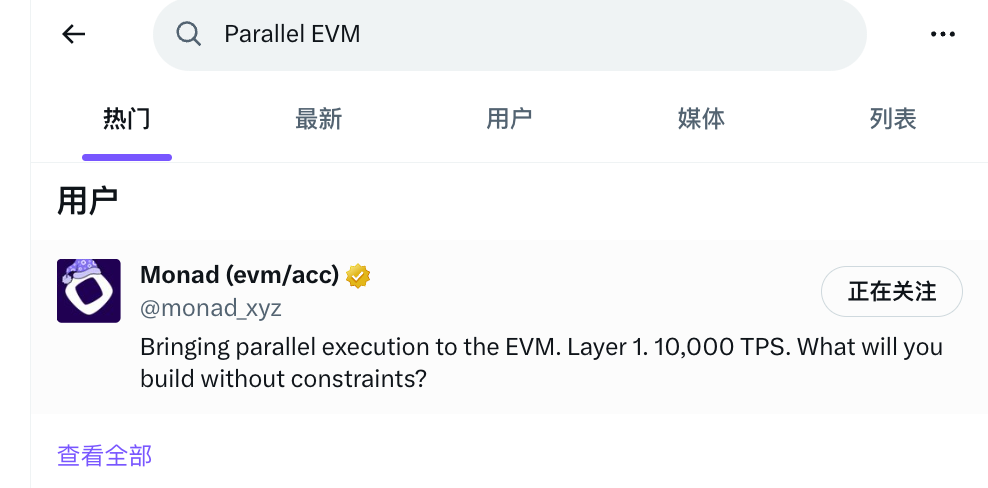
Notably, if you search “Parallel EVM” on Twitter, the first project appearing in trending results is often Monad—highlighting its effective marketing alignment with the Parallel EVM narrative.
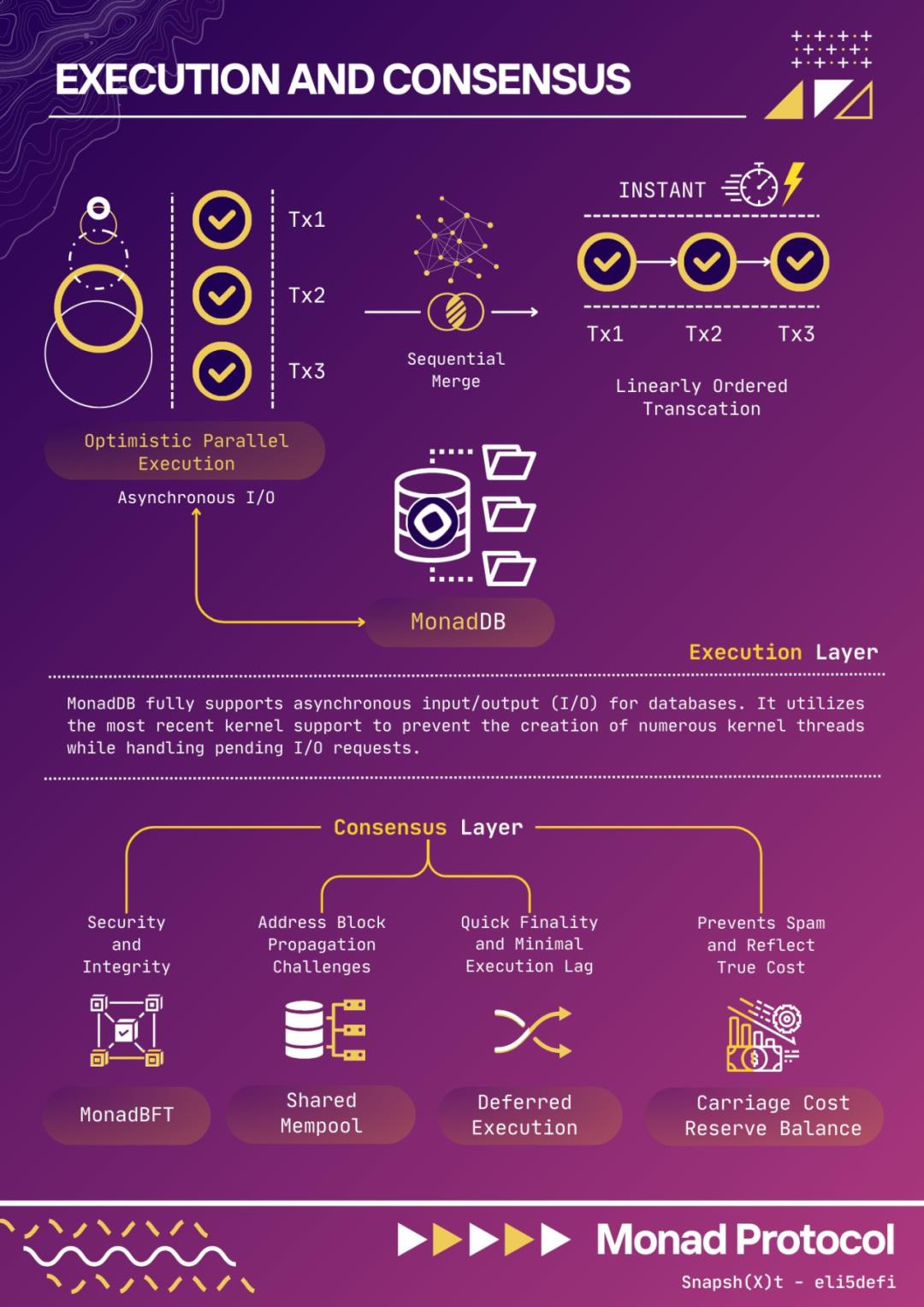
How does Monad specifically achieve parallel transaction processing?
Monad’s parallel execution strategy centers on identifying and running transactions without shared dependencies in parallel. While both Monad and Ethereum organize blocks as linear sequences of transactions, Monad optimizes execution to allow parallel processing when final outcomes remain unaffected. This strategy relies on several key technologies:
-
Optimistic Execution: Starting subsequent transactions before prior ones finish. This may lead to dependency conflicts, but by tracking input-output comparisons, the system re-executes any inconsistent transactions to ensure correctness.
-
Scheduling and Dependencies: To minimize redundant re-execution, Monad uses static code analysis to predict inter-transaction dependencies and intelligently schedules execution to optimize parallelism.
-
State Merging: Despite parallel execution, each transaction’s updated state must eventually be merged in sequence to preserve overall block state consistency.
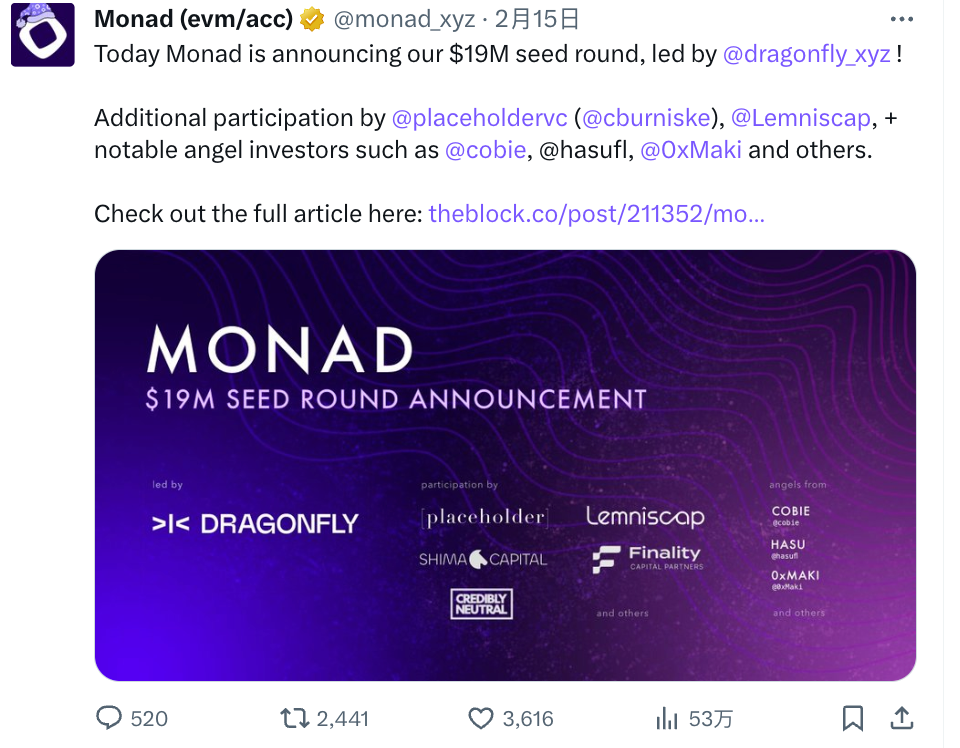
On the funding front, Monad stands out. In February this year, its official Twitter announced a $19 million seed round led by Dragonfly, with individual investors including prominent figures like Cobie and Hasu.
Additionally, the founder is Keone Hon, former research lead at Jump Trading. Given the project hasn’t launched a token yet—and considering Jump Trading’s expertise in trading and market-making—the future token performance could be promising.
(Further Reading: Interview with Monad Labs CEO: From Traditional Finance to the Future, Exploring the Role of Public Chains in On-chain Finance)
In September, Monad Labs released a technical document revealing the native token would be named MON—but later removed that section, suggesting the token name might change.
With major funding, a market-making background, a new L1, and the Parallel EVM narrative—all combined—Monad is inevitably attracting significant attention and expectations.
However, its actual Parallel EVM performance remains unproven and awaits validation through testnet data and mainnet operation.
Sei: Parallel EVM Scheduled for V2 Upgrade
Sei is an open-source Layer 1 blockchain optimized specifically for trading, aiming to provide advanced infrastructure for various trading applications, including DeFi, NFT markets, and gaming DEXs.
It's well known that Sei isn't a new project. Its mainnet was ready by August this year, and its previous V1 version already featured trading-specific optimizations such as frontrunning protection and batch order processing, aimed at enhancing transaction security and efficiency.
(Further Reading: Sei Network: A Layer 1 Blockchain Breaking DEX Scalability Limits)
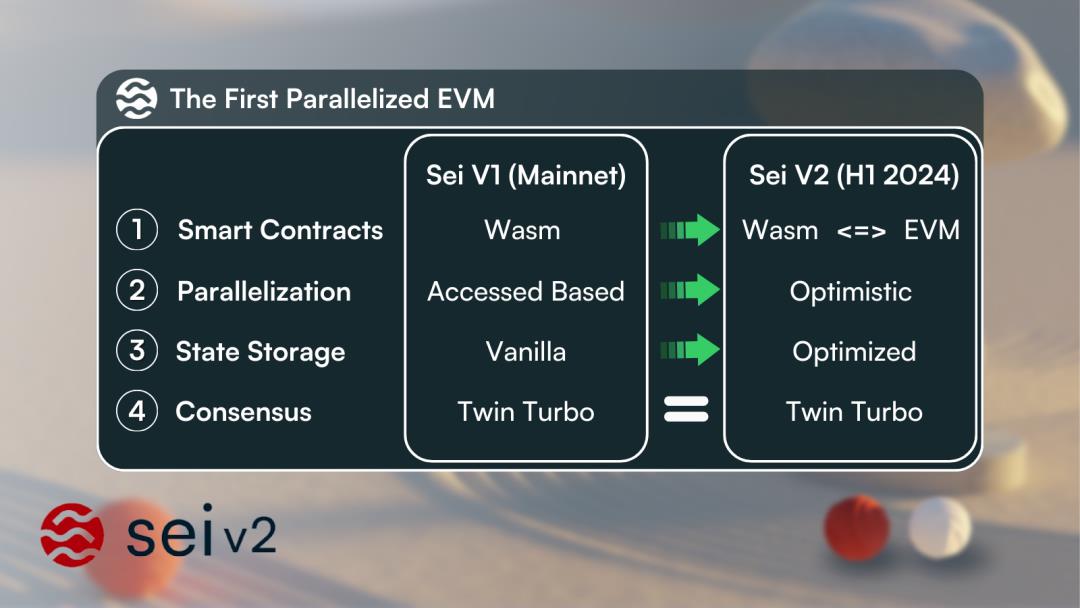
In its latest V2 upgrade (expected in early 2024), Sei will implement Parallel EVM.
-
Optimistic Parallelization: Sei employs optimistic parallelization, allowing the chain to execute all transactions in parallel. When transactions access the same state, the system tracks storage segments touched by each transaction, and conflicting ones are re-executed sequentially until conflicts resolve.
-
Geth Compatibility: As part of the core Sei binary, Sei nodes automatically import Geth—the Go implementation of the Ethereum Virtual Machine—to process Ethereum transactions, updating results via a special interface created for EVM on Sei.
-
SeiDB Storage Optimization: Sei redesigned its storage interface using more efficient data structures and databases to optimize read/write performance and reduce state bloat.
Together, these technologies form the core of Sei v2, making it not only a fully parallelized EVM but also highly performant and compatible. Moreover, by enabling seamless interaction between Cosmwasm and EVM smart contracts, Sei offers a diversified execution environment, broadening its applicability and appeal.
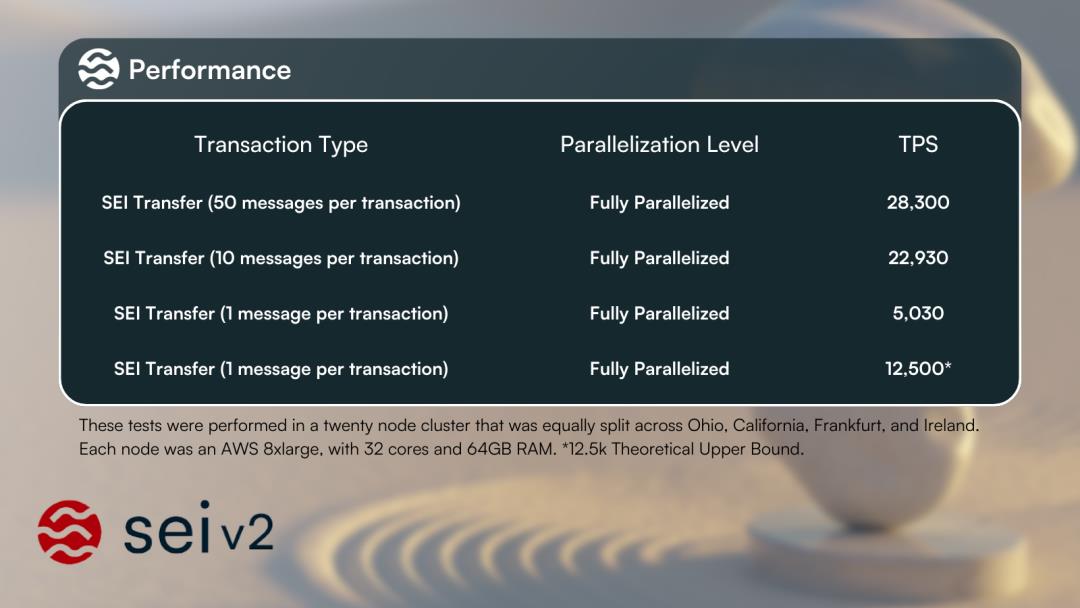
According to test data from documentation, Sei achieved peak TPS of approximately 28,300 under parallel transaction processing. Theoretically, this shows Parallel EVM significantly outperforms current L1s. We hope real-world performance doesn’t fall too far short.
(Further Reading: Technical Deep Dive on Sei v2)
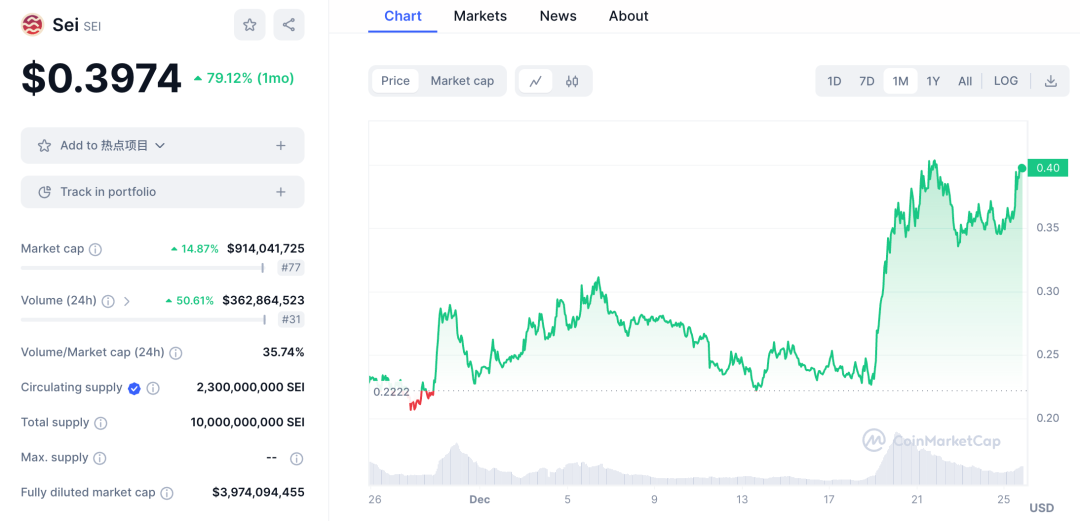
On the token side, SEI surged 80% in the past month—an impressive gain given its large market cap. As the Parallel EVM narrative continues, the token may see further gains, though likely driven more by beta than pure alpha.
Middle Ground: L2s Combining Other Chains’ Capabilities with EVM
Unlike the independent L1 approach above, some L2 projects offer alternative solutions for Parallel EVM:
Leveraging the performance of other chains or virtual machines to assist Ethereum transaction execution.
Representative projects: Neon, Eclipse, Lumio.
Neon: An L2 Bringing EVM to Solana’s Ecosystem
Neon EVM is the first parallelized Ethereum Virtual Machine built on the Solana blockchain, aiming to improve blockchain efficiency and scalability through parallel transaction processing.
Its standout feature is cross-ecosystem operation: developers can leverage Solana’s parallel execution architecture to scale Ethereum dApps, optimizing network efficiency, speeding up transactions, lowering costs, and maintaining EVM compatibility.
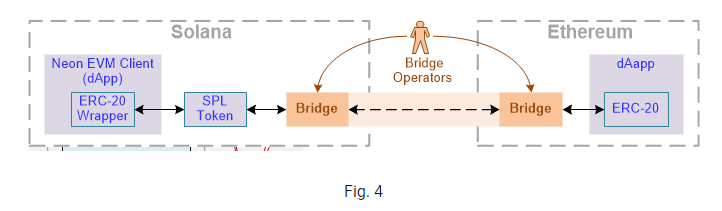
In practice, Neon converts Ethereum transactions into Solana transactions, submitting them to Solana validators, which execute and update the Neon program’s state on Solana. The process can be simplified as follows:
-
Users sign transactions sent to a proxy. The proxy is a Solana account running an EVM emulator responsible for executing Neon transactions.
-
The proxy requests blockchain state from Solana and tests Neon transaction execution on Solana’s state.
-
Based on received data, the proxy forms a new Solana transaction according to Solana rules and sends it along with payload data for processing.
-
Finally, per Ethereum rules, the transaction is sent back to Neon for signature verification; once validated, it’s executed in parallel on Solana.
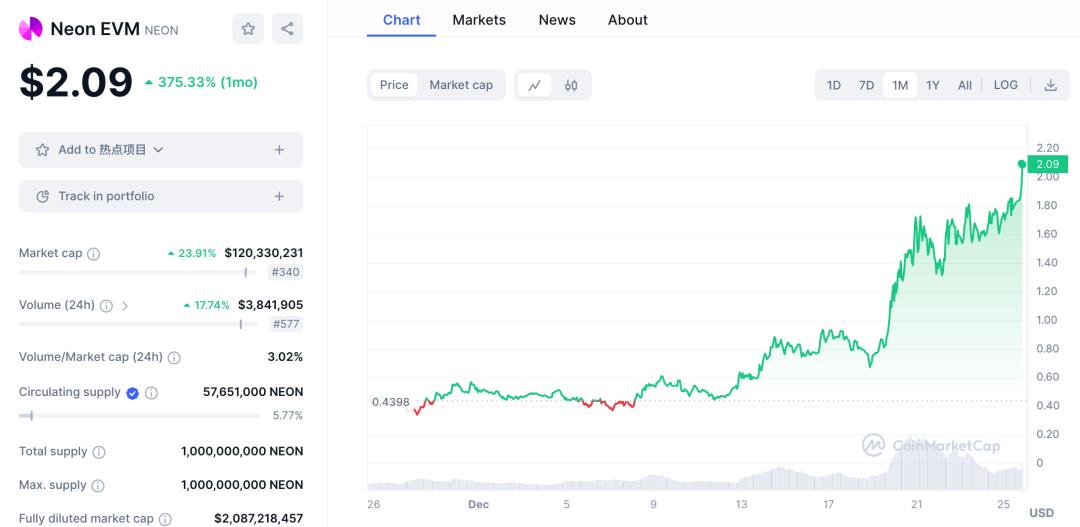
In terms of token performance, NEON has seen a 3x increase in the past month, though its market cap remains significantly lower than SEI’s. Considering Solana’s ecosystem recovery and associated token momentum, NEON—as the sole Parallel EVM in Solana’s ecosystem—remains worth watching.
Eclipse: An L2 Bringing SVM to Ethereum’s Ecosystem
Faced with EVM’s sequential execution bottleneck, Neon’s approach is bringing EVM to Solana. Conversely, bringing SVM to Ethereum achieves similar ends.
Eclipse Mainnet is a universal L2 solution that brings SVM to Ethereum, combining Ethereum settlement, Solana Virtual Machine (SVM) execution, Celestia data availability, and RISC Zero zero-knowledge proofs.
The project aims to provide a massively parallel execution environment where multiple operations occur simultaneously, boosting network throughput and efficiency while reducing congestion and fees. With this architecture, Eclipse seeks to enhance dApp scalability and user experience.
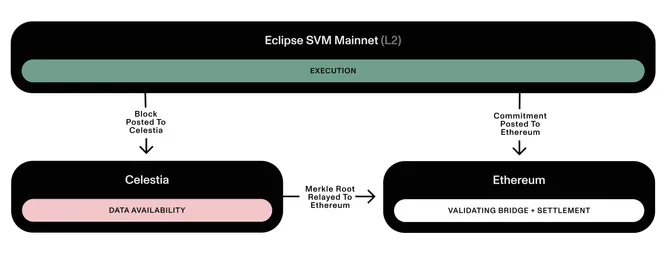
Specifically, Eclipse achieves Parallel EVM via Solana Virtual Machine (SVM) and its Sealevel runtime.
SVM allows parallel transaction execution, especially when transactions don’t affect overlapping states. This way, SVM scales performance directly with available hardware cores, enabling optimized parallel execution. This design allows Eclipse to greatly boost processing speed and network throughput while cutting congestion and costs.
(Further Reading: Podcast Notes: Interview with Eclipse Co-founder—How Can Solana’s SVM Become an Ethereum L2?)
Simply put, Eclipse’s design logic is: execution happens in Solana’s SVM, while settlement remains on Ethereum.
On the funding side, Eclipse raised $15 million in 2022 from Polychain, Polygon Ventures, Tribe Capital, Infinity Ventures Crypto, CoinList, and others.
Co-founder & CEO Neel Somani previously worked at Airbnb, Two Sigma, and Oasis Labs. Chief Commercial Officer Vijay was formerly Head of Business Development at Uniswap and dYdX.
On December 13, Eclipse launched its testnet. The first 1,000 developers deploying contracts will receive commemorative NFTs. Since no token has been issued yet—and given its strong funding background—active engagement and close monitoring of its social channels could yield valuable airdrop opportunities.
Lumio: An L2 Using Move and Aptos for Transaction Processing
Recently launched Lumio is another L2 with product design tied to the Parallel EVM narrative.
Lumio aims to use Aptos as an Ethereum L2—an OP Rollup-based solution that leverages Aptos for transaction processing and Ethereum for settlement.
Compared to other L2s, Lumio’s official materials highlight the following performance advantages:
-
Gas costs are 3–4 orders of magnitude lower than existing L2s ($0.1 vs $0.0006);
-
TPS is 1–2 orders of magnitude higher (1K vs 30K);
-
High-performance, secure execution layer suitable for enterprise applications—ideal for Web2 apps transitioning to Web3;
-
Cross-VM calls between Move and EVM.
On funding, Pontem—the organization behind the project—raised $4.5 million in 2021 led by Mechanism Capital and Kenetic Capital, with participation from Animoca and Bixin. The new Lumio L2 is reportedly preparing to announce fresh funding soon.
Additionally, Pontem focuses on building Move and EVM-compatible products. Since Facebook’s Libra days, it has been developing with Move and is one of the earliest projects in the Aptos ecosystem.
As other public chains recover, if Aptos benefits from capital spillover, Lumio—tied to the Parallel EVM narrative—could also attract attention. Currently, neither Pontem nor Lumio has issued tokens. With the Lumio testnet live, active interaction may lead to airdrop opportunities.
Polygon Miden: An Old L2, New Virtual Machine
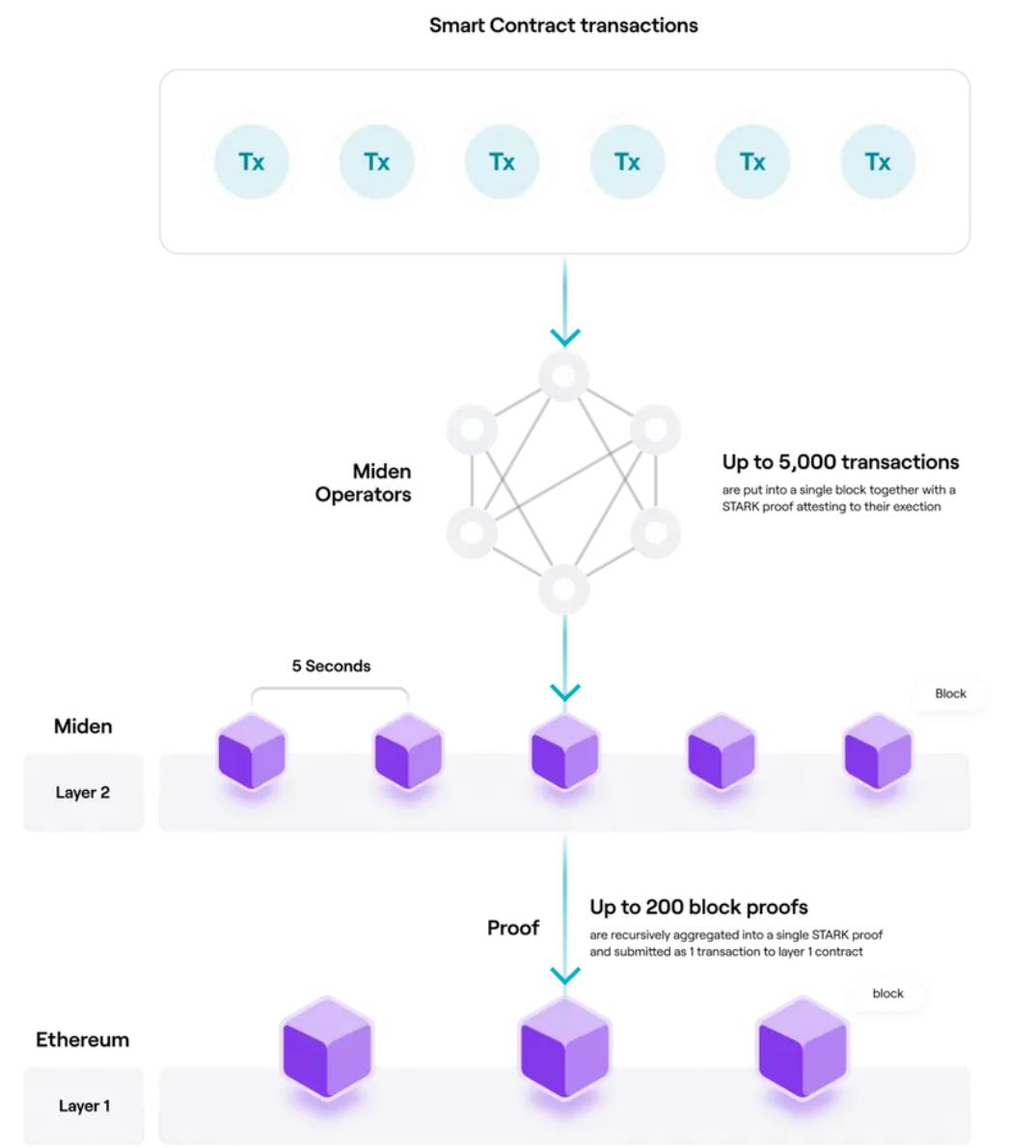
Polygon Miden is an under-development zero-knowledge (zk) Rollup running on the Miden VM. This virtual machine prioritizes zk-friendliness over direct EVM compatibility. As a zk Rollup, it aims to enhance privacy and scalability for the Polygon network.
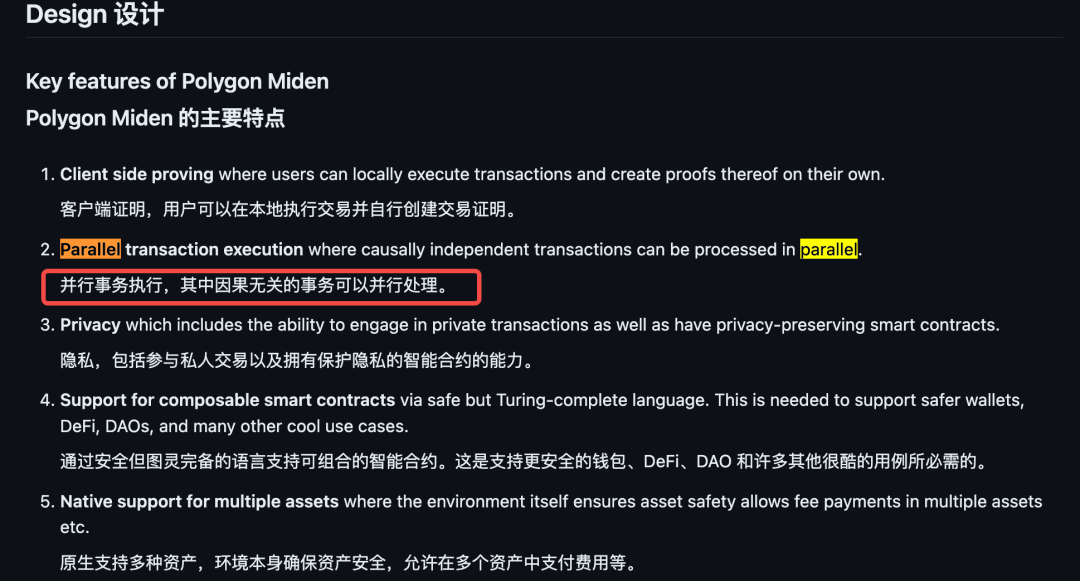
According to Polygon Miden’s GitHub page, it supports parallel transaction execution—capable of processing causally independent transactions in parallel.
How is this achieved?
Miden achieves verifiability by relaxing traditional blockchain transparency requirements, using zero-knowledge proofs to let users execute smart contracts locally and generate proofs, which the network then quickly verifies.
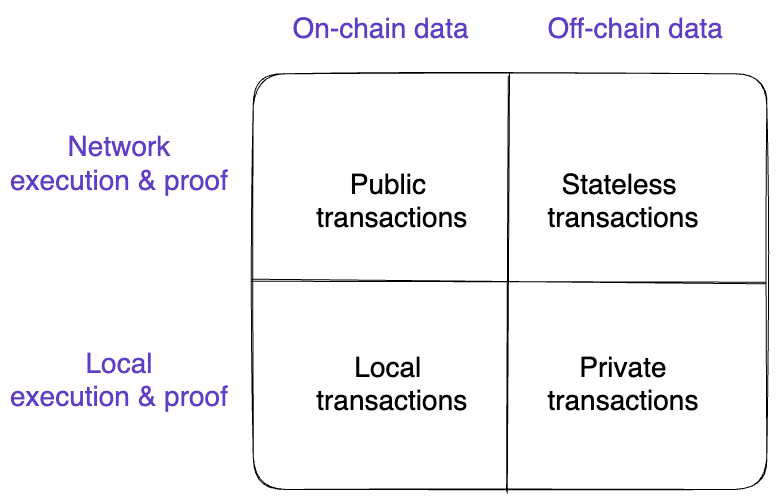
This approach reduces computational overhead and naturally enables transaction parallelization, boosting overall processing efficiency and speed.
Project tweets indicate Miden is still in development with limited information disclosed. Given Polygon’s broader L2 strategy—including sidechains, zk-STARKs, and SDKs—Parallel EVM isn’t its primary focus.
Considering Polygon as a successful L2 has already been priced in, we believe Miden’s design only loosely aligns with the Parallel EVM narrative. Polygon isn’t actively promoting this angle, and since MATIC can no longer deliver alpha returns, its token performance likely won’t be closely tied to the Parallel EVM story.
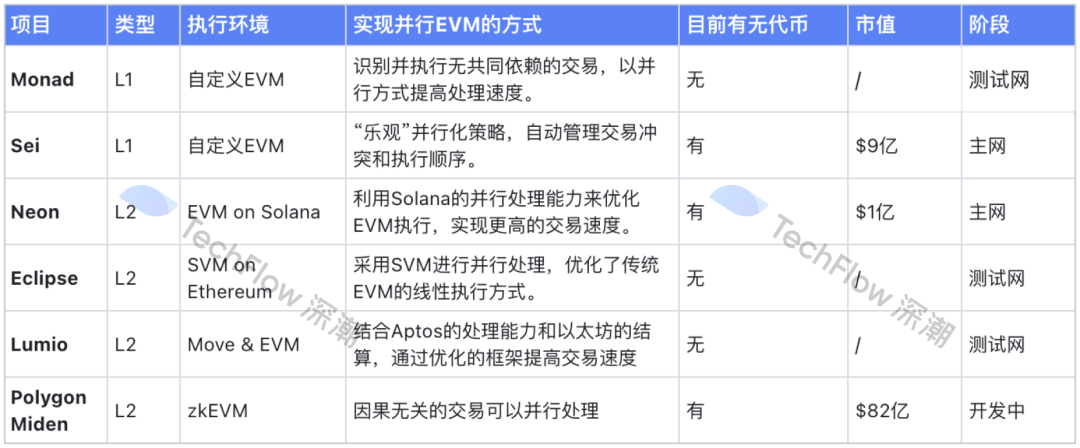
Finally, we summarize all projects tied to the Parallel EVM narrative in the table below for reader reference.
As mentioned at the beginning, narratives are always in flux.
The Parallel EVM narrative is gaining traction, but whether it sustains momentum depends on two factors: first, real technical breakthroughs from various L1s and L2s; second, close monitoring of project developments. With Ethereum’s upcoming Cancun upgrade expected in Q1 next year—which will optimize EVM performance—the Parallel EVM narrative may reach another peak.
Join TechFlow official community to stay tuned
Telegram:https://t.me/TechFlowDaily
X (Twitter):https://x.com/TechFlowPost
X (Twitter) EN:https://x.com/BlockFlow_News
 深潮TechFlow


