Bitcoin Renaissance: The Evolution and Constancy of Value and Consensus
TechFlow Selected TechFlow Selected
Bitcoin Renaissance: The Evolution and Constancy of Value and Consensus
Market trends rise and fall, but Bitcoin remains the unchanging anchor of value storage.
 Navigating Web3 tides with focused insights
Author: Wendy, IOSG Ventures
The Ship of Theseus, also known as the Theseus Paradox, is a metaphysical thought experiment concerning identity. In the 1st century, the Greek writer Plutarch posed the question: If the planks of Theseus' ship gradually rot and are replaced over time until none of the original wood remains, is it still the same ship? If not, at which point did it cease to be the same? And if it is still the same, how can that be explained when all its components have changed?
Aristotle proposed resolving this using his four causes. The material cause refers to the physical substance; the formal cause refers to the design and form, which determines what something fundamentally is. According to the formal cause, the Ship of Theseus remains the same vessel because although its materials have changed, its purpose and form remain unchanged.
TL, DR
-
Macro Trend: Bitcoin serves as the totem of the crypto world, with value storage being its core function. As broader social consensus strengthens—driven by institutional adoption, ETF expectations, the upcoming halving, and interest rate cut forecasts—its price continues to rise, signaling a quiet shift in narrative dominance. We anticipate that prices will remain stable or increase over the long term, reflecting growing market recognition of Bitcoin’s role as a store of value.
-
Technical Ecosystem: The surge of Ordinals has drawn attention back to the Bitcoin ecosystem, offering retail investors a new way to participate. However, current activity remains largely speculative. While speculation undeniably fuels industry growth, emotional hype-driven trends are unsustainable. The wealth effect generates significant bubbles and noise. As a Tier-1 institutional investor, we recognize the risks of speculation and maintain cautious optimism toward emerging ecosystem developments, supporting builders who create meaningful and valuable projects.
Bitcoin's Value Consensus: A Spark That Can Start a Prairie Fire
In 2008, a user named Satoshi Nakamoto posted a paper titled "Bitcoin: A Peer-to-Peer Electronic Cash System" on a private cryptography mailing list. From that moment, the gears of a new world began turning. He later developed the earliest system for Bitcoin issuance, transactions, and account management. Two years later, on May 22, 2010, Laszlo Hanyecz used the Bitcoin Talk forum to purchase two Papa John’s pizzas for 10,000 BTC. Though just two pizzas, this transaction became a landmark moment symbolizing Bitcoin’s emergent value.
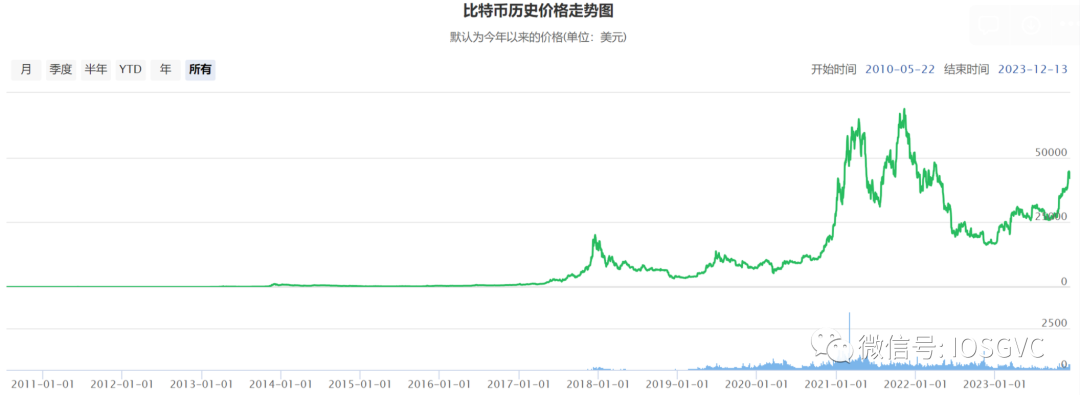
When did Bitcoin gain value? Was it when Satoshi first introduced it, or when someone exchanged 10,000 BTC for two pizzas? Just as we cannot pinpoint exactly which replaced plank transforms the Ship of Theseus into a different ship, we cannot identify the precise moment Bitcoin acquired value. William Stanley Jevons, in *Money and the Mechanism of Exchange* (1875), analyzed four functions of money: medium of exchange, unit of account, store of value, and standard for deferred payment. For years, debates around Bitcoin focused primarily on the latter two—especially its ability to store value—with critics arguing that its volatility disqualifies it as real money. Today, standing at the doorstep of ETF approval, Bitcoin is increasingly accepted by mainstream financial institutions. Its narrative has evolved from a niche geek experiment into a globally recognized financial product and monetary asset.
From a macro perspective, the confluence of the halving, ETF anticipation, and rate cut expectations has boosted market confidence. Meanwhile, various explorations within the Bitcoin ecosystem—including recent retail enthusiasm for the Ordinals ecosystem—are built upon Bitcoin’s established value. This also indicates that rising prices in the tens of thousands of dollars mean pure value storage is no longer the primary investment motive for average individuals. Pricing power and narrative control are gradually shifting toward institutional players.
Ordinals: A Carnival Built Upon Digital Gold
Within this evolving narrative, the emergence and popularity of the Ordinals ecosystem early this year seemed inevitable. With Bitcoin’s price consistently high, its value-storage function is no longer the top priority for ordinary retail investors. Participating in the most elite crypto narrative at minimal cost becomes an irresistible temptation. Meme-driven speculation with high potential returns caused gas fees on-chain to skyrocket, enriching miners in the process.
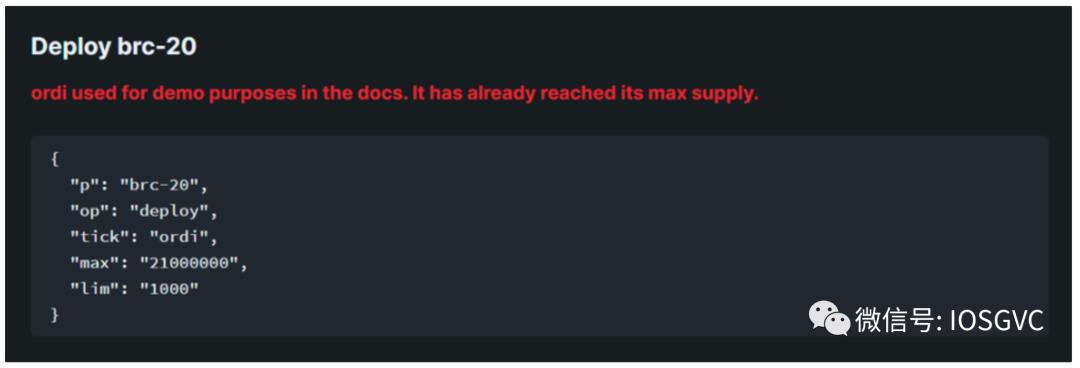
At the end of last year, Bitcoin core contributor Casey Rodarmor launched the Ordinals protocol, introducing the concepts of "ordinals" and "inscriptions," giving birth to NFTs on the Bitcoin network. On March 8, 2023, Domo proposed using JSON-formatted Ordinal inscriptions to deploy token contracts, mint tokens, and enable transfers.
Simply put, Ordinals assign unique numbers to satoshis—the smallest unit of Bitcoin—and track these numbered sats, enabling record-keeping and traceability. By engraving data into inscriptions, sats become inscribed assets. Tracking the sat numbers associated with inscriptions enables storage, recording, and trading of these digital artifacts.
BRC-20 defines a specific data format inscribed onto sats, establishing rules for deploying, minting, and transferring BRC-20 tokens. This created the BRC-20 token standard. Following this format allows deployment, minting, and transfer of BRC-20 tokens, all governed by the “First is First” principle—priority goes to earlier deployments and mints. However, this leads to technical limitations and operational friction: indexing relies heavily on centralized exchanges, and users must mint inscription assets before transferring them, making the process cumbersome and inefficient. Beyond BRC-20, other protocols like Arc20, Runes, and Tap have emerged, aiming to innovate technically.
$ORDI, the first experimental BRC-20 token deployed by Domo, became a unique meme. Its massive wealth effect triggered FOMO among users, fueling a wave of memecoin speculation. After creation, any Bitcoin holder could mint BRC-20 tokens by paying only gas fees—effectively allowing fair access to the “primary market.” This low-cost, high-potential-return model ignited widespread speculative fervor.
As centralized exchanges like Binance listed BRC-20 memecoins (e.g., ORDI, SATS), market sentiment and attention intensified. Over the past month, the top three BRC-20 tokens on OKX’s Ordinals marketplace were all memecoins, indicating that emotions and speculative noise continue to dominate—a sign of inflated valuations and high risk.
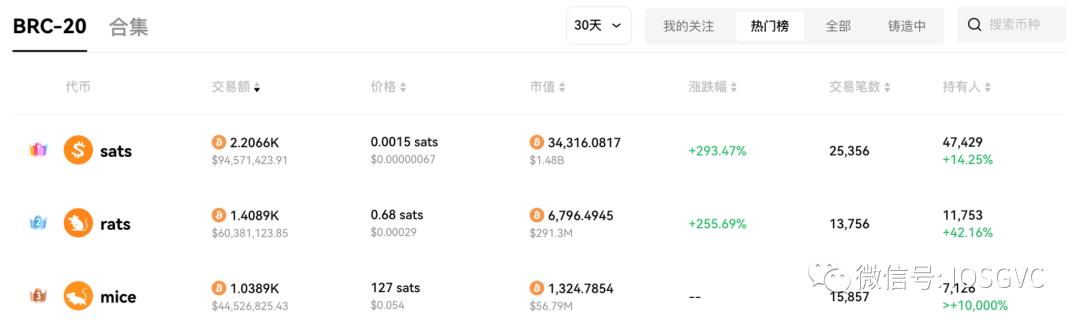
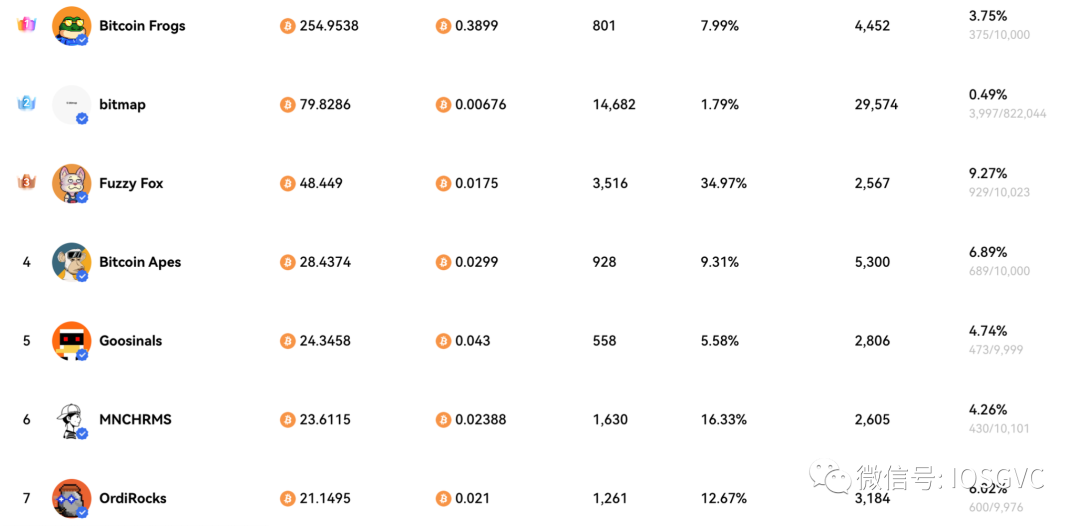
For Ordinals NFTs, comparing 30-day versus 7-day trading volumes reveals high volatility. The top ten projects show uneven trading distribution over a month, with high turnover during FOMO periods but poor liquidity once the excitement fades.
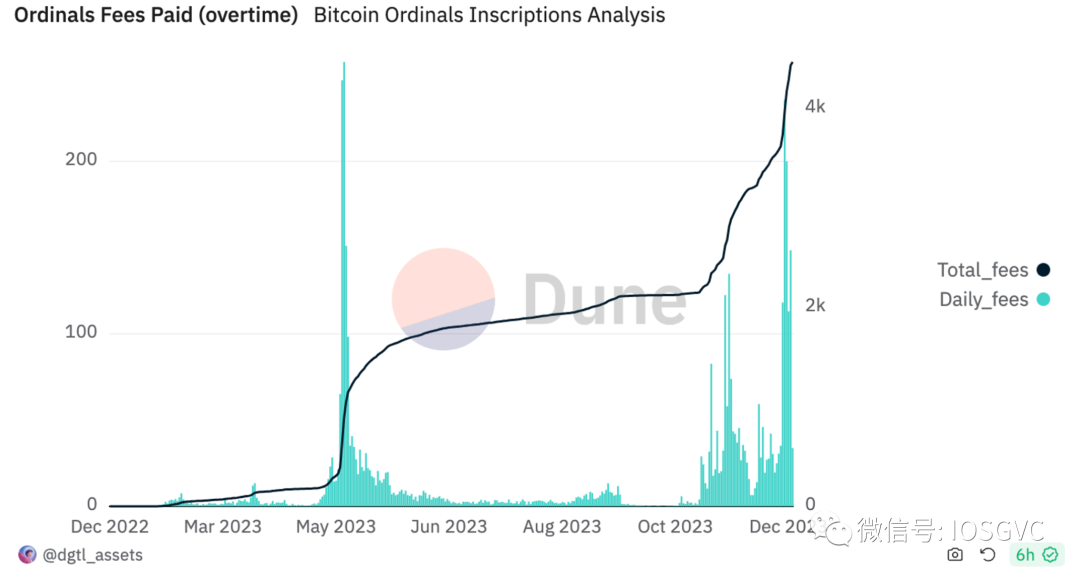
For miners, with the Bitcoin halving approaching and block rewards set to decrease, increased transaction fees from Ordinals activities align perfectly with their interests. Since Ordinals went live on the mainnet earlier this year, inscription fees alone have exceeded 4,000 BTC.
On the other hand, BRC-20 tokens currently lack practical utility. After one cycle, few “fair launches” survive. Those that endure tend to be well-established projects with proven track records and solid funding structures. Long-term projects require sustained capital and risk-taking. Short-lived “fair launches” cannot support enduring ecosystem development. While memes and speculation generate wealth effects, moving beyond hype to support protocols with genuine value propositions and real-world applications becomes a crucial responsibility for stakeholders in the space.
Exploration: A Flourishing Ecosystem, Value Yet to Be Proven
Following the market frenzy sparked by Ordinals, more Bitcoin-based technologies and asset issuance protocols have gained attention. Currently, Bitcoin ecosystem development follows two main trends: one focuses on creating new asset issuance protocols such as Ordinals, Atomicals, and Runes; the other explores Bitcoin scaling solutions to improve base-layer performance, including Lightning Network, Stacks, RGB, and BitVM.
-
Atomicals:
An atomic protocol supporting fungible tokens (ARC20 standard), NFTs, Realms, and the conceptual Atomicals Virtual Machine (AVM). Unlike Ordinals, Atomicals does not rely on third-party sorters for asset transaction ordering. It supports creation (minting), transfer, and upgrading of various digital assets, including native NFTs, games, digital identities, domains, and social networks. It currently enjoys support from the Unisat marketplace.
-
Runes:
Casey Rodarmor introduced Runes, a new alternative token protocol based on Bitcoin, positioning it as a potential successor to BRC-20. Rodarmor argues that while existing FT protocols like BRC-20, RGB, Counterparty, and Taproot exist, many are overly complex and deliver poor user experiences. Although BRC-20 is simple, it floods the chain with useless data, consuming valuable block space. Runes aims to be a lightweight, UTXO-based FT protocol that offers better usability, potentially attracting users away from less efficient cross-chain alternatives and redirecting developer and user focus back to Bitcoin itself.
-
PIPE:
Developed by Benny, inspired by Casey’s Runes protocol and Domo’s BRC-20 standard built on Ordinals, PIPE is an asset issuance framework comprising Trac Core, Tap, and Pipe (collectively known as TTP or Trac Systems).
-
SRC-20:
Launched in March 2023 by Mike In Space, the Bitcoin Stamps system initially started as a proof-of-concept on Counterparty. After protocol upgrades, Stamps fully migrated to Bitcoin and was rebranded SRC-20 in summer 2023. The key architectural difference between Stamps and Ordinals lies in metadata storage: Stamps stores metadata within multisig UTXOs, whereas Ordinals embeds metadata in the “witness” section of Bitcoin transactions. However, this design makes Stamps significantly more expensive to mint.
-
CBRC20
Starting from version v0.10.0, the Ordinals protocol introduced fields for defining “metaprotocol” and “metadata.” These additions drastically reduce the number of bytes required for BRC-20 deployment/minting/transfers, lowering costs and simplifying indexing.
-
RGB:
RGB is a scalable and privacy-preserving smart contract system designed for Bitcoin and the Lightning Network. Its goal is to run complex smart contracts atop UTXOs and integrate them into the Bitcoin ecosystem. Officially described as a suite of scalable and confidential smart contract protocols for Bitcoin and Lightning, it enables asset issuance, transfer, and broader rights management.
-
Lightning:
The Lightning Network is a Layer-2 scaling solution for Bitcoin aimed at addressing scalability and transaction speed issues. It is a smart contract-based payment protocol where participants open multisignature payment channels and conduct instant, low-cost microtransactions off-chain.
-
BitVM
On October 9, Robin Linus, lead of the ZeroSync project, published a whitepaper titled *BitVM: Compute Anything On Bitcoin*, proposing a Turing-complete contract solution for Bitcoin without altering network consensus. BitVM allows verification of any computable function on Bitcoin, enabling developers to run complex contracts without modifying Bitcoin’s fundamental rules.
Another interesting observation is the geographical expansion of the Bitcoin mania led by inscriptions. While initially driven by Asian teams like Unisat and OKX, more Western developers and teams are now joining—for example, CBRC-20 is primarily led by Western communities, and ALEX, a one-stop DeFi platform for Bitcoin, announced that its oracle will support Stacks inscription standard STX20. Most of these efforts remain early-stage, with both technology and product-market fit yet to be validated. Thus, it remains uncertain which protocols will survive and thrive long-term.
Opposition: The Battle for Bitcoin’s Soul
To conservative Bitcoin maximalists, this so-called “boom” in the Bitcoin ecosystem is far from celebratory. Ordinals work by embedding data within individual Bitcoin transactions, potentially consuming vast amounts of block space. This forces miners to store exponentially larger UTXO sets, impacting network processing speed and increasing transaction costs. Moreover, meaningless inscription and transfer data become permanently etched onto the Bitcoin blockchain.
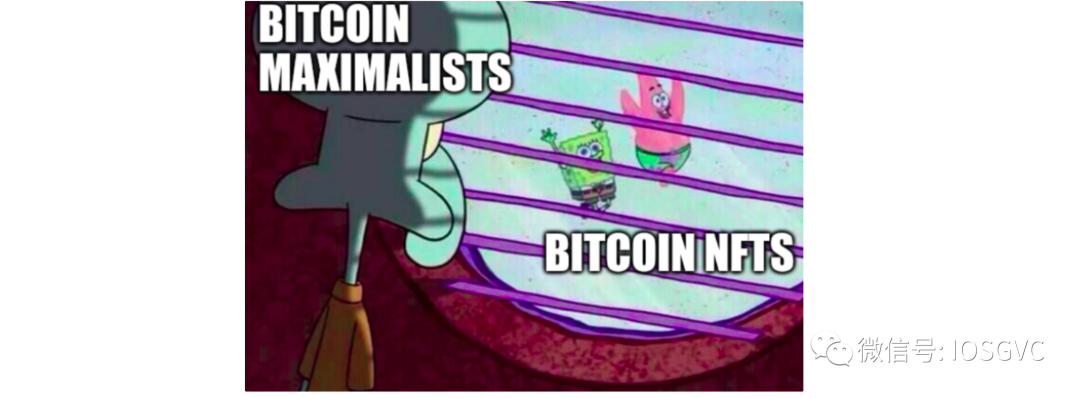
Bitcoin core developer Luke Dashjr openly called inscriptions an attack on Bitcoin and stated he would use a “patched” version of Bitcoin Knots to filter inscription transactions in his Ocean mining pool. Peter McCormack, founder of the podcast *What Bitcoin Did*, noted that these “new assets” issued on Bitcoin inflate transaction fees without benefiting regular Bitcoin users. High fees reduce the number of people who can afford to hold Bitcoin on-chain and complicate opening channels on Lightning. However, Casey Rodarmor, creator of Ordinals, views Bitcoin inscriptions as a solution to Bitcoin’s security challenges: through transaction fee incentives, miners will remain motivated to secure the network even as block rewards dwindle to zero in the future.
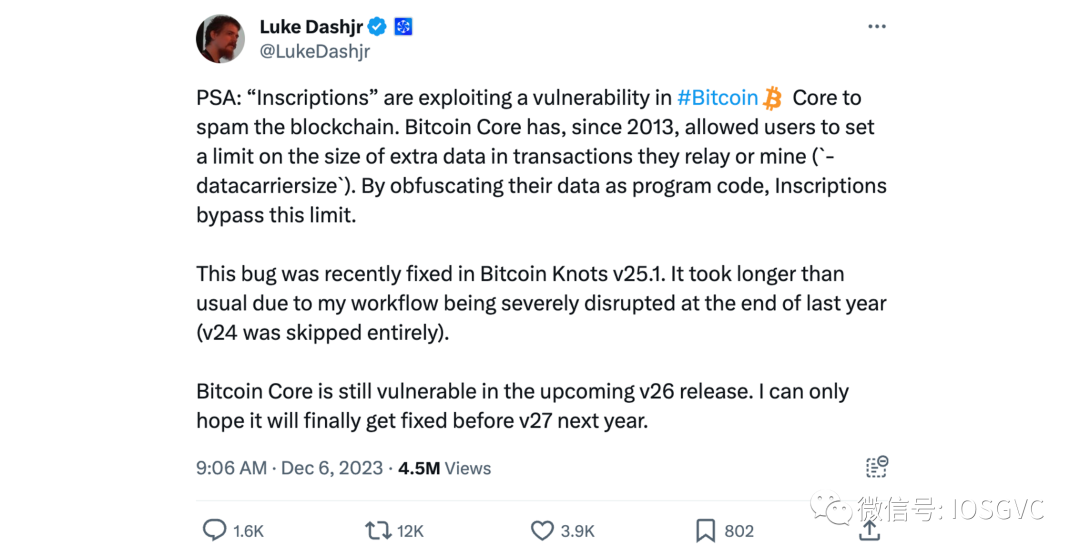
To Bitcoin “purists,” existing technical “limitations” are not flaws. The value of digital gold does not lie in high TPS or large block sizes, but in over a decade of secure operation and accumulated social consensus. Looking back at the historical block size debate—from SegWit via the Hong Kong Agreement to the hard fork that created BCH—discussions about Bitcoin’s scalability persist. Both large-block and small-block advocates have compelling arguments, but so far, the conservative, stability-focused approach remains dominant. As @mindao aptly put it, balancing technological ambition with human desire is a challenge every holder, trader, miner, and exchange must confront. Without a stable, unchanging technical foundation, Bitcoin cannot serve as ultimate value storage. High fees may be nothing more than a fleeting illusion.
Macro Trends: Halving, ETFs, and Rate Cuts
When miners validate transactions and successfully add a new block to the Bitcoin blockchain, they receive a fixed amount of Bitcoin as a block reward. Every 21,000 blocks mined, this reward is halved. The next halving is expected in April 2024, when the total block count reaches 740,000. At that point, the block reward will drop from 6.25 BTC to 3.125 BTC.
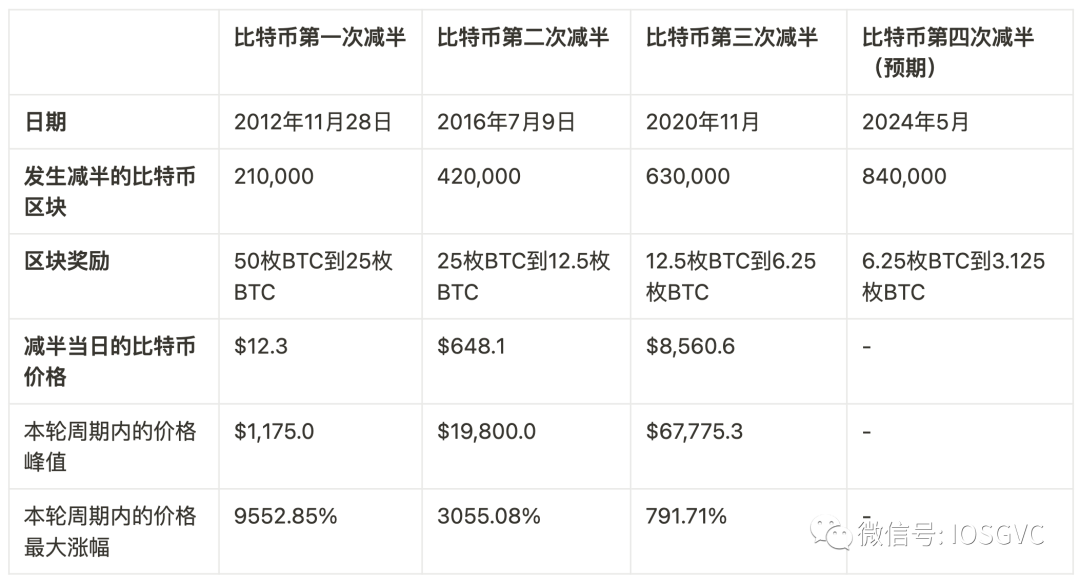
Historically, each halving has triggered significant price increases in Bitcoin, often catalyzing bull markets across the entire crypto space. Economically, the halving reinforces Bitcoin’s scarcity, strengthening its position as a store of value.
As more Bitcoin ETF applications emerge and progress, institutional involvement and regulatory compliance are increasingly seen as bullish signals. Massive capital inflows can bypass wallets, private keys, and complex cryptography, directly fueling the crypto economy. Bitcoin ETFs are sprouting up worldwide—in Canada, Brazil, Dubai—but the U.S. Securities and Exchange Commission (SEC) has rejected all spot Bitcoin ETF applications to date. Spot ETFs offer direct exposure to Bitcoin rather than futures contracts. The SEC repeatedly cites concerns about potential market manipulation in cryptocurrency trading.
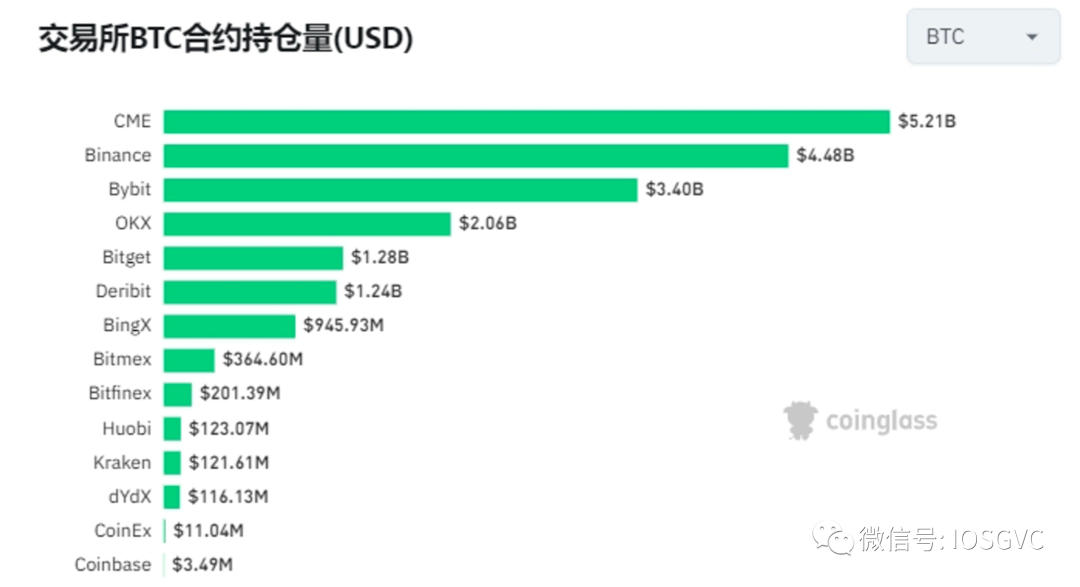
On December 11, 2023, according to Coinglass data, CME Group’s Bitcoin futures contract open interest surpassed all cryptocurrency CEXs, ranking first globally—the first time since March 2021. CME’s Bitcoin futures open interest stood at 120,500 BTC, valued at $5.226 billion. Founded in 1848, CME is the world’s first futures exchange and began offering Bitcoin futures in late 2017.
Multiple major asset managers have filed Bitcoin ETF applications, serving as key indicators boosting market sentiment. Javier Rodriguez-Alarcon, Chief Commercial Officer at digital asset platform XBTO, said: “If BlackRock gets approved, it could open the door for many wealth management and asset management firms to hold even small positions in Bitcoin—it could be game-changing.” But not everyone agrees. Longtime crypto believers argue that a financial revolution is being reduced to a mere credential for Wall Street acceptance. Charles Story, Growth Lead at crypto index platform Future, stated: “It’s a crazy betrayal of crypto’s core principles, a surrender to traditional finance, a capitulation of our ideals.”
Arthur Hayes also warned that if Bitcoin ETFs become too successful, they could destroy Bitcoin. The Bitcoin network requires active maintenance by miners. Post-halving, miner income increasingly depends on transaction fees. If Bitcoin is merely held passively for long-term storage, network activity declines, undermining miner incentives to maintain the network.
Rate cut expectations represent another major macro factor driving positive market performance. At the Federal Open Market Committee (FOMC) meeting on December 13, 2023, the U.S. Federal Reserve held rates steady—the third consecutive pause. In its accompanying economic projections, participants forecast three rate cuts in 2024.
Clearly, improving macro conditions have quietly shifted Bitcoin’s narrative: from a niche, decentralized payment and accounting method beloved by tech enthusiasts to a value-backed currency gaining acceptance from mainstream institutions and regulators.
Conclusion
Amid the Renaissance of the Bitcoin ecosystem, taking a higher-level, long-term view reveals that after more than a decade of evolution, Bitcoin’s function as a store of value has gained broad recognition. Macroeconomic factors such as regulation, ETF approvals, and interest rate cuts now clearly influence its market behavior—signaling that institutions have become integral to the Bitcoin landscape. For Bitcoin, social attributes are as critical as technical ones, and as it moves toward becoming a universal currency, these social characteristics will grow ever stronger.
With rising prices and halving anticipation, Ordinals offer retail investors a low-cost entry point into the Bitcoin narrative—making the current market frenzy an inevitability born of circumstance. Yet beneath the froth and noise, it’s clear that most memecoin valuations are propped up by low liquidity and emotion. Speculative games of musical chairs are inherently unsustainable.
As Bitcoin’s societal recognition as a store of value deepens, its衍生 financial products and innovations will multiply, fluctuating with market sentiment. True value assessment requires robust network effects and sufficient time for maturation.
Join TechFlow official community to stay tuned
Telegram:https://t.me/TechFlowDaily
X (Twitter):https://x.com/TechFlowPost
X (Twitter) EN:https://x.com/BlockFlow_News
 IOSG Ventures