









Is the low cost of ZKP a false proposition when viewed from Aztec?
TechFlow Selected TechFlow Selected
Is the low cost of ZKP a false proposition when viewed from Aztec?
The cost advantage of ZKP is not absolute, but depends on the specific application scenario.
 Navigating Web3 tides with focused insights
Author: Kyle Liu, Investment Manager at Bing Ventures
Introduction: As zero-knowledge proof (ZKP) technology continues to evolve, there is growing interest in the relationship between its cost and performance. Implementing and maintaining ZKP systems requires significant computational resources and algorithmic optimization. These computations can lead to high costs, especially when handling large-scale data and complex operations. Therefore, the cost advantage of ZKPs is not absolute but depends heavily on specific application scenarios.
Against the backdrop of Aztec Connect's forced shutdown, we believe it’s necessary to re-evaluate the claimed cost advantages of ZKP technology. While ZKPs are promoted as highly private solutions, the temporary failure of Aztec Connect at least demonstrates that this technology currently faces substantial challenges in terms of cost.
If ZKP technology truly offered a cost advantage, why couldn't Aztec Connect achieve sustainability in operation? More intriguingly, Aztec has encouraged the community to fork, deploy, and operate new versions of Aztec Connect. This suggests the enormous resources required to independently run Aztec Connect, further deepening our skepticism about the cost-effectiveness of ZKPs. If the cost advantage of ZKPs were real, why would such massive community investment be needed to keep the project alive?
Therefore, we need to carefully reassess the purported cost advantages of ZKP technology. Perhaps the cost advantage of ZKPs is merely an overhyped illusion, while the reality may be far more complex. When pursuing cost efficiency, it's not enough to optimize just one aspect—we must comprehensively consider the balance between overall system performance and total cost. For example, reducing computational costs might increase communication overhead, or using more efficient algorithms could require more sophisticated hardware support. Hence, for any given project, a thorough cost-benefit analysis is essential, weighing various optimization strategies to find the optimal balance point.

The Broken Cost Myth
First, let's define the cost structure of ZKPs. Currently, definitions vary widely and lack standardization, including aspects like hardware cost, computation cost, verification cost, and storage cost. From our perspective, adhering to the native principles of ZKPs, this article focuses on two core components: communication cost and computational cost. Communication cost refers to the expense of exchanging information between the prover and verifier, while computational cost refers to the processing effort required by both parties. These two costs are central to ZKP competitiveness, as they directly impact the efficiency and security of proof generation and verification. If either cost is too high, the efficiency of proving and verifying drops, negatively affecting overall system performance.
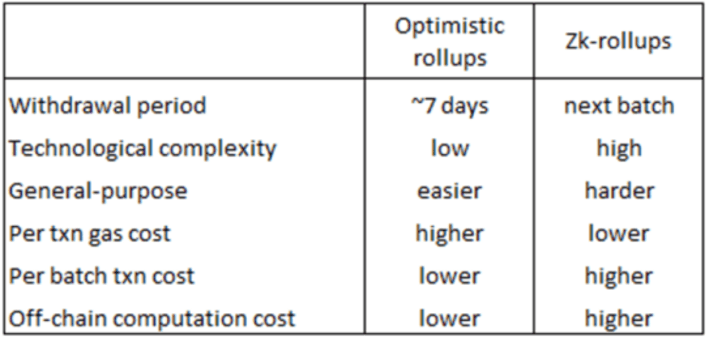
Now turning to Aztec’s privacy architecture, we must recognize that Aztec’s rollup approach differs significantly from other ZK-based Layer 2 solutions. Unlike aggregating multiple transactions into a single proof, Aztec generates a separate proof for each individual transaction before bundling them. This method results in every transaction requiring its own independent proof, increasing both computational cost and gas fees—making Aztec’s gas fees higher than those of other rollup schemes.
Moreover, only the privacy proofs generated locally by users are truly non-leaking zero-knowledge proofs; internal and external rollup proofs built atop them aren’t necessarily zero-knowledge. This blurs the privacy advantage of ZKPs and further questions the feasibility of their cost benefits. The gateway design of Aztec Connect itself is relatively bulky, aggregating transactions onto Layer 1 and utilizing the Aztec Bridge Contract to manage fund pooling and DeFi function calls. However, this gateway model may only allow fee-sharing under certain types of transactions and imposes limitations on deployment flexibility for third-party projects.
Cost-Effectiveness That’s Hard to Measure
The relationship between cost and performance is complex and dynamic. Generally, lower costs can enhance performance by reducing computational and communication overhead, thereby improving overall system efficiency. However, excessively prioritizing low cost can degrade performance due to insufficient allocation of computational and communication resources. Thus, ZKP systems must strike an appropriate balance between cost and performance to meet the diverse needs of different applications.
Zero-knowledge proofs involve validating claims across participants through message exchanges, making communication cost a critical factor. To reduce communication cost, efficient protocols and compression algorithms can be employed to minimize message size and transmission time. Particularly for Layer 2 projects like Aztec, cross-chain communication involves transferring messages and data across different blockchain networks—an inherently costly process due to network latency and interaction overhead. For large-scale omnichain DApp development, the volume of message passing increases substantially, placing greater pressure on communication costs.
Generating and verifying zero-knowledge proofs requires extensive computation. To lower computational costs, optimized algorithms and data structures can eliminate unnecessary steps and reduce memory usage. Additionally, parallel and distributed computing techniques can distribute tasks across multiple nodes to improve efficiency. Verification on the target chain is relatively cheap, but generating proofs on the source chain incurs significant computational costs—especially with traditional verification methods, where costs become unaffordable for end users.
More Effective Cost Control Strategies
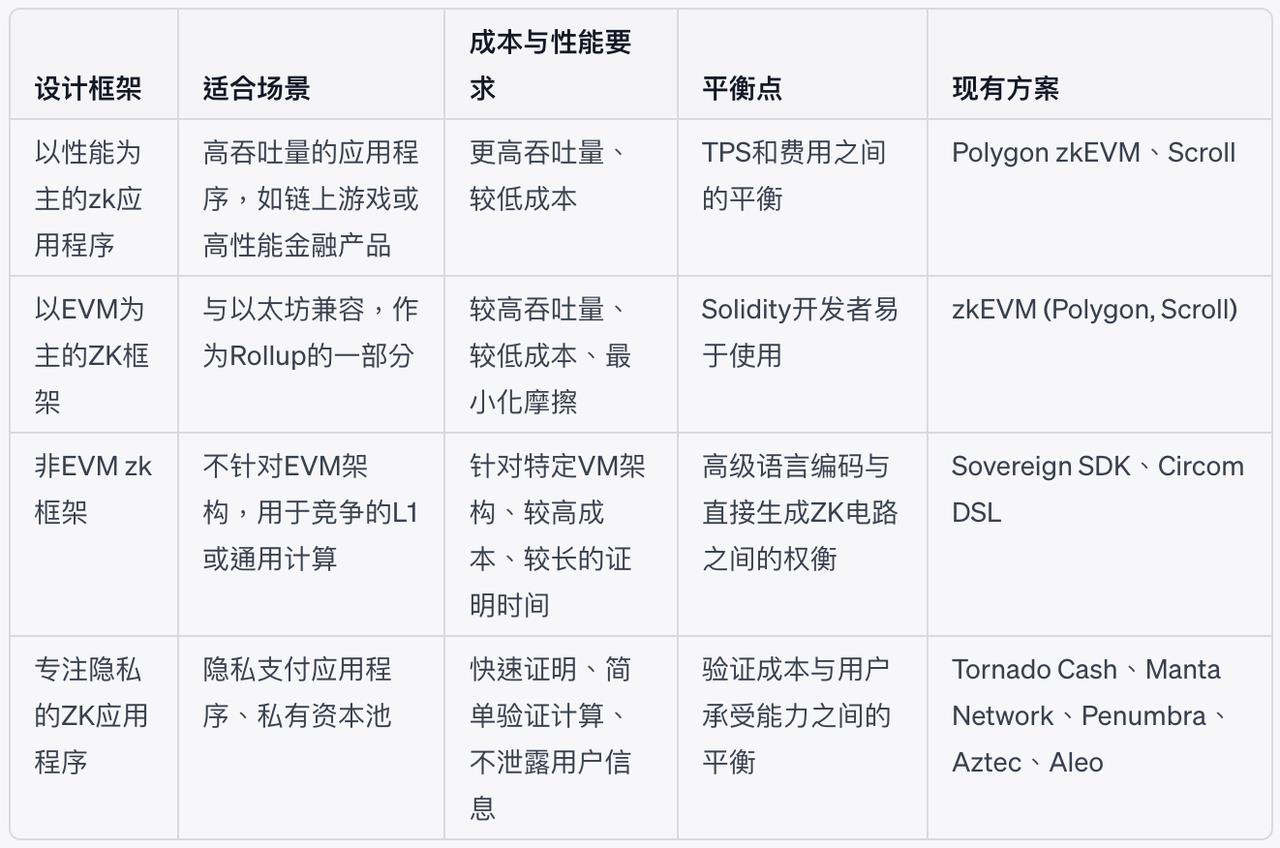
We believe that as technology advances, communication cost may no longer be the primary bottleneck. Ongoing progress in modern communication technologies indicates a consistent downward trend in communication expenses. Therefore, focusing more attention on optimizing computational cost could yield more meaningful gains. Nevertheless, as these protocols scale, communication cost will remain an important consideration, necessitating flexible evaluation based on specific use cases.
At the same time, we must understand that computational cost optimization extends beyond just algorithmic improvements. In addition to refining protocol-level algorithms, innovations in specialized hardware, distributed computing, and even deep learning offer promising avenues for reducing computational burden. These approaches demand long-term research and empirical validation but hold the potential for breakthrough-level performance gains and cost advantages. We believe the following directions deserve particular attention in future ZKP competition:
-
High performance with low computational cost: A ZKP project offering both high performance and low computational cost will stand out. This means being able to generate and verify proofs efficiently without compromising security or privacy. Such a project would have broad application potential and be capable of meeting large-scale real-world demands. There are already various ZKP proof systems, each with unique strengths and limitations. We favor projects focused on innovating and improving proof systems—enhancing efficiency, lowering computational costs, and strengthening security. Developers should explore more efficient ZKP constructions and better-optimized verification algorithms to enable faster, more reliable proof generation and validation processes.
-
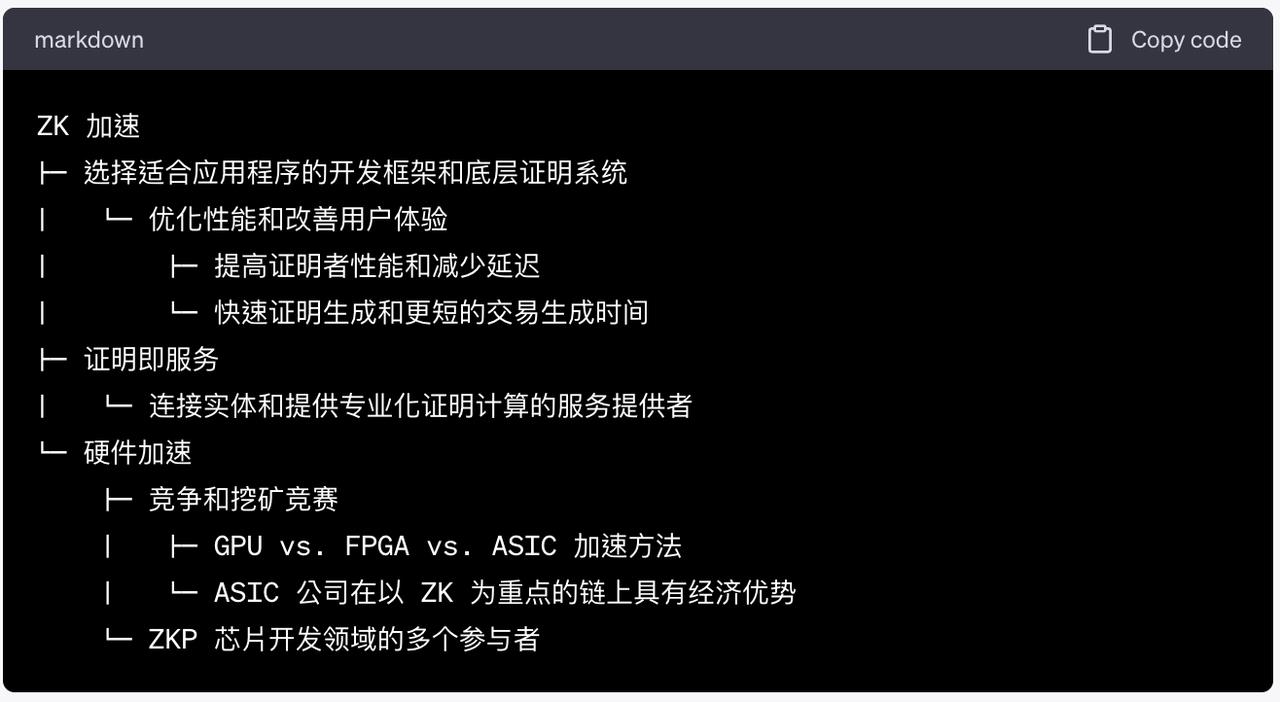
A successful ZKP project must be deployable in the real world. This means accounting for practical constraints and delivering usable solutions. Considerations such as compatibility with existing infrastructure, ease of integration, and user-friendliness are crucial. Leveraging dedicated hardware to accelerate ZKP computation is a key research direction. Future work can focus on innovations in hardware acceleration, such as FPGA (Field-Programmable Gate Array) or ASIC (Application-Specific Integrated Circuit) designs. By harnessing custom hardware, ZKP systems can achieve superior performance and efficiency, enabling robust support for large-scale deployments and real-time applications.
-
Solving security issues: Security is paramount in ZKP systems. Security vulnerabilities represent the biggest hidden cost—such as defending against attacks, ensuring secure parameter setup, and guaranteeing randomness. Only by continuously enhancing the security of ZKP systems can their reliability and trustworthiness in practical applications be ensured, providing users with stronger protection and privacy guarantees. This concern must permeate the entire design process involving cost and performance trade-offs.
In summary, a promising ZKP project should exhibit high performance with low computational cost, practical applicability, security and trustworthiness, real-world deployability, and end-to-end security. We foresee that ongoing advancements in ZKP technology will open broader application prospects for privacy protection and verification performance. When evaluating the cost-effectiveness of ZKP projects, multiple factors must be considered—including computational resources, security requirements, performance demands, and the complexity of implementation and maintenance. In some cases, ZKPs may deliver significant privacy and security benefits that justify higher costs. In others, however, the costs may outweigh the actual value delivered.
Join TechFlow official community to stay tuned
Telegram:https://t.me/TechFlowDaily
X (Twitter):https://x.com/TechFlowPost
X (Twitter) EN:https://x.com/BlockFlow_News
 Bing Ventures







