









Will 2024 be a bull market? 6 factors driving new narratives in Bitcoin, Ethereum, Web3, and crypto AI
TechFlow Selected TechFlow Selected
Will 2024 be a bull market? 6 factors driving new narratives in Bitcoin, Ethereum, Web3, and crypto AI
This time, it may not just be a passing hype, but a turning point capable of transforming the global financial industry through technologies like artificial intelligence.
 Navigating Web3 tides with focused insights
Author: MetaSecond.AI
Translation: Huo Huo
The past two years have been challenging since the end of the largest crypto bull market at the end of 2021. Rising inflation prompted central banks to raise interest rates, causing Web3 funding, NFT prices, and enthusiasm around the metaverse—all tied to billions in investor capital—to vanish. Fraud and cyberattacks involving platforms like FTX and Luna led to a crypto crash, custodial bankruptcies, and a series of criminal arrests. As a result, self-custody became the only sensible choice for crypto enthusiasts in 2023.
However, despite these setbacks, crypto is preparing for a potential new bull run in 2024 and 2025, driven by various positive factors and trends. This time, it may not just be temporary hype, but a pivotal moment capable of transforming the global financial industry through technologies such as artificial intelligence.
This optimistic outlook isn't shared solely by crypto enthusiasts—some analysts also foresee a potential crypto bull market on the horizon. However, they differ in their views on the timing, potential outcomes, and possible catalysts that could trigger this phenomenon.
In this article, we will explore major upcoming events with the potential to unleash the largest growth wave in cryptocurrency history. We will also examine the challenges that could pose significant obstacles to a broad crypto recovery.
Bitcoin Halving (April 2024)
In the crypto space, despite differing opinions from fans of ETH and Solana, one thing remains undisputed: Bitcoin reigns supreme. As the pioneering crypto asset, Bitcoin is entering a new year with a series of positive developments, the most important being the Bitcoin halving.
The Bitcoin halving, in short, occurs roughly every four years (approximately every 210,000 blocks) within the Bitcoin network, at which point the reward given to BTC block producers is cut in half. This means the number of newly minted BTC decreases, making Bitcoin scarcer and thereby increasing its value. This event holds great significance for the crypto community, although opinions vary regarding its impact on the broader crypto and financial sectors. Yet, markets often form their own judgments.
As shown in the chart below, each halving in 2012, 2016, and 2020 profoundly influenced the market in subsequent years, driving Bitcoin's price to astronomical levels.
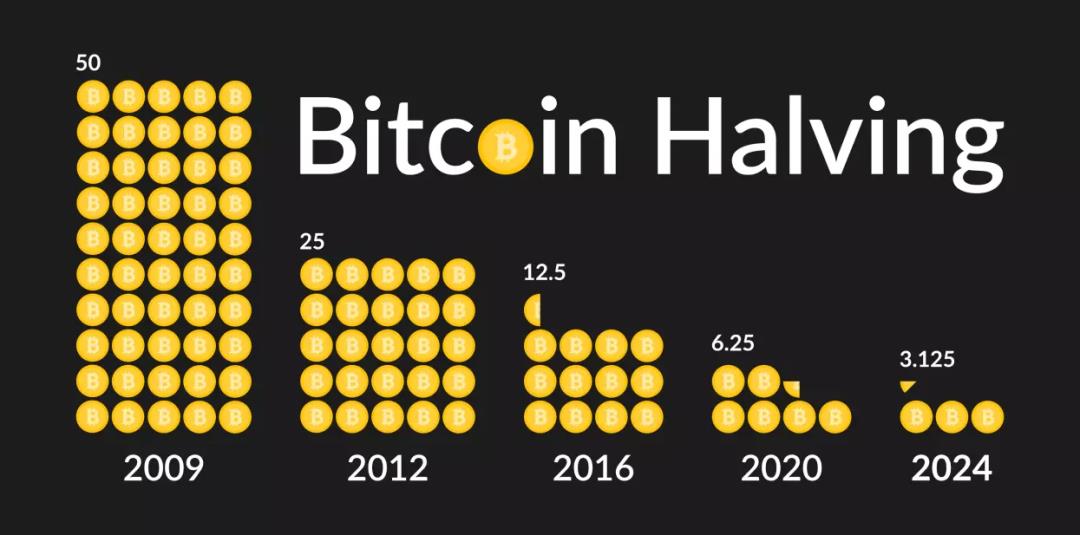
After next year’s halving, each block will reward only 3.125 BTC, and this amount will halve again in 2028 and beyond. In 2024, miners, institutional investors, and retail investors are expected to begin accumulating Bitcoin sats (the smallest unit), leading once again to a significant supply shock.
In the crypto world, few things can be predicted simply and accurately. It's crucial not to treat the Bitcoin halving merely as a reason to invest in BTC. Financial markets typically anticipate future events; as anticipation for the halving builds, unexpected developments may occur before or after the event, especially considering renewed attention from major traditional financial institutions toward crypto.
Notably, two major crypto events in 2021—Coinbase’s public listing and El Salvador officially adopting BTC as legal tender—coincided with peak cycle prices of $63,000 and $69,000 respectively, followed by sharp price declines.
However, the halving is more than just a news event—it marks a fundamental change in Bitcoin’s mining and issuance process. Over 19 million Bitcoins are already in circulation, with fewer than 2 million remaining until the final satoshi is mined around 2140. Thus, now is the time to accumulate Bitcoin at relatively lower costs.
BlackRock ETF
BlackRock, an asset management giant overseeing $9 trillion in assets, has filed an application for a spot Bitcoin exchange-traded fund (ETF). Given BlackRock’s strong track record in the ETF space (with a success rate of 576:1), this move is highly likely to gain approval from the U.S. SEC (Securities and Exchange Commission). If approved, this ETF could significantly boost Bitcoin’s visibility and promote mainstream adoption by establishing it as a recognized and secure asset class—one that regulated institutions can safely custody and trade, similar to ordinary stocks.
A spot Bitcoin ETF has long been anticipated by Bitcoin supporters for several compelling reasons:
1) It could attract both retail and institutional investors;
2) It has the potential to drive widespread Bitcoin adoption, increase liquidity, reduce volatility, and possibly lead to more predictable price movements;
3) Perhaps most importantly, its regulated nature carries strong appeal, as government oversight can directly prevent illicit financial activities orchestrated by bad actors.
The managing director of Morgan Creek Digital believes BlackRock won’t be the only player in the Bitcoin ETF space. The SEC may also approve similar ETF proposals from other global asset managers such as ARK Invest and Fidelity in the near future.
Ethereum Sharding Upgrade
Cheaper and faster transactions are key drivers for the widespread adoption of decentralized platforms. As the dominant force in the industry, Ethereum recognizes the importance of achieving these goals to support the growing Web3 ecosystem, which demands faster and more affordable decentralized solutions. While Ethereum’s current Layer-2 Roll-up solutions demonstrate their ability to process data quickly and securely, they often come with high costs, diminishing some of their advantages.
To address this issue, Ethereum is actively researching a range of solutions. The first step is ProtoDanksharding (also known as EIP-4844), designed to reduce Roll-up costs by introducing “data blobs.” These blobs store on-chain data valid only for a limited period, typically one to three months. By avoiding permanent storage of this data on Ethereum, substantial cost savings can be achieved.
Currently, over 90% of Roll-up costs stem from maintaining massive data volumes, regardless of whether they are actively used. Under the new approach, the responsibility for storing Roll-up data falls to entities that actually need it, such as indexing services and DEXs/CEXs.
Once implemented, the introduction of data blobs is expected to greatly enhance Ethereum’s processing capacity and lower transaction costs. ProtoDanksharding is targeted for launch by the end of 2023, named after its developers. Following this initial phase, Ethereum plans to advance toward Danksharding, aiming to achieve millions of transactions per second.
If successful, these upgrades promise significant benefits, potentially attracting a wave of new decentralized applications (dApps) to the Ethereum platform.
New Narratives Led by Crypto AI and Inscriptions
The rise of artificial intelligence (AI) in 2023 has driven significant price increases for blockchain platforms integrating AI technology. Leading projects in the crypto AI sector include SingularityNET, Phala Network, and Cortex. Integrating AI as a core feature is expected to enhance the appeal of crypto-based platforms, generating higher demand for their digital assets.
As blockchain and AI continue to converge within the Web3 ecosystem, along with the emergence of new metaverse narratives, digital asset technologies specifically designed for these use cases are expected to regain prominence.
Additionally, this year witnessed controversial new use cases emerge on Bitcoin following its Taproot upgrade. The introduction of the BRC-20 token standard and Bitcoin ordinals created new demand for block space on the Bitcoin network, driving up transaction fees and pushing Bitcoin’s price above $30,000 in the first quarter. While this development sparked debate and controversy, it also demonstrated Bitcoin’s evolving dynamics and potential as a multifunctional asset.
Macroeconomic Recovery
According to S&P Global, a leading credit rating and financial analysis provider, crypto correlates with macroeconomic conditions. It's no surprise that risk assets like Bitcoin suffer when central banks raise interest rates to combat inflation.
The post-pandemic slump in 2020 showed that volatile assets such as cryptocurrencies and equities can surge in value when governments implement economic stimulus measures and maintain low interest rates to revive struggling markets, attracting fresh capital.
As recession looms, central banks and regulators may ease monetary policy in 2024 or 2025 after reaching their inflation targets. This move aims to create jobs and prevent economic collapse (according to Arthur Hayes, such an unfortunate scenario might not occur until around 2026). Increased money supply implies further investment in cryptocurrencies like Bitcoin, both as speculative investments and as inflation-hedging stores of value.
S&P Global also offers another interesting perspective: government actions aren’t always the main driver behind crypto growth. When recessions stem from flawed fiscal policies, the public often turns to digital assets as a safe haven. This choice seems logical, as decentralized assets operate independently of government control or influence. However, recent volatility in crypto asset prices shows that digital assets are currently far from being reliable safe-haven instruments.
Regulation
High-Profile Crypto Scandals
-
The FTX scandal and Celsius bankruptcy severely damaged the reputation of the crypto industry. As a result, public attention has refocused on the security and legitimacy of cryptocurrencies.
-
These incidents, along with other crypto-related hacks and fraud cases, have prompted regulatory responses, with authorities proposing stricter regulations for this rapidly growing industry.
-
Another high-profile crypto fraud case or prosecution could lead to even stricter legal actions by regulators and other government bodies.
New U.S. President
-
With U.S. President Joe Biden and former President Donald Trump officially announcing their campaigns, their positions could impact the anticipated crypto bull market (also referred to as "winnability").
-
In some respects, both candidates have shown support for cryptocurrencies. For example, President Biden signed an executive order directing exploration of a regulatory framework for decentralized assets. Similarly, former President Trump has ventured into NFTs and reportedly holds $2.8 million worth of Ether.
-
Although these are positive signs for the future of crypto, it’s important to note that their stances may shift depending on public sentiment.
-
Given their significant influence and the office they’re vying for, any negative remarks they make about crypto in the future could adversely affect the crypto bull market.
SEC and Regulation
-
Unfortunately, the FTX scandal has provided financial regulators like the SEC with potential grounds to shut down or heavily restrict crypto operations and their underlying entities. Over the past year or two, the SEC and its chair Gary Gensler have actively targeted crypto projects they deem securities (such as XRP and HEX) and CEXs they believe violate U.S. laws (like Binance and Coinbase).
-
However, during the U.S. election period, due to high stakes involved, Gensler and his team may become less active. It's also worth noting that Gensler acknowledges Bitcoin is not a security and recognizes Bitcoin’s pivotal role at the beginning and end of every bull cycle. Moreover, regulatory improvements are expected globally—from the EU to Asia, and across the DeFi landscape.
Conclusion
Based on the factors discussed in this article, along with many others not covered, the crypto world holds immense potential in 2024. Digital asset classes, represented by Bitcoin and Ethereum, could once again become the hottest commodities in the world. However, the road ahead remains long, and many holders often lose hope before conditions begin to improve.
To endure until then and make rational, non-emotional investment decisions requires tremendous determination and resilience. Markets will undoubtedly fluctuate again, as market manipulators and institutions attempt to exploit vulnerable retail investors for profit. At this point, the best course of action is to stay informed, remain vigilant against misconduct to protect our assets, and avoid irrational investments.
If you plan to invest, conduct thorough research, identify trends from past cycles and emerging narratives. Additionally, it’s crucial to invest only what you can afford to lose, as this reduces the likelihood of emotion-driven decisions. Dollar-cost averaging over time can also help achieve a more stable average purchase price.
Join TechFlow official community to stay tuned
Telegram:https://t.me/TechFlowDaily
X (Twitter):https://x.com/TechFlowPost
X (Twitter) EN:https://x.com/BlockFlow_News
 白话区块链
白话区块链









