IOSG Research | Can Big Time Lead a New Paradigm for Crypto Gaming Economies?
TechFlow Selected TechFlow Selected
IOSG Research | Can Big Time Lead a New Paradigm for Crypto Gaming Economies?
Iteration and updates will be a lasting theme for Bigtime.
 Navigating Web3 tides with focused insights
Author: Fiona, IOSG Ventures
Special thanks to Da Cheng, former Bigtime Chinese Community Lead; Da Hong Niu, Bigtime Community Ambassador; Jocy; and the IOSG team for their support and suggestions!
All figures in this article are estimates. IOSG is an angel investor in Bigtime, and Fiona is a Bigtime player—both have financial interests involved. Views expressed here do not constitute recommendations or investment advice. Investing carries risks; readers should conduct their own research (DYOR).
It has been two months since Bigtime officially launched its play-to-earn version (pre-season), and there are already numerous analyses available. However, these vary in perspective: P2E players focus on “lower yields,” “finding hourglass merchants,” and “changes in refueling prices,” while token traders care about “net deflation” and “burn rates.” As early investors in the gaming sector and in Bigtime—with some understanding of P2E mechanics—we aim to objectively outline the game’s economic characteristics, helping more people understand this highly innovative GameFi product from different angles.
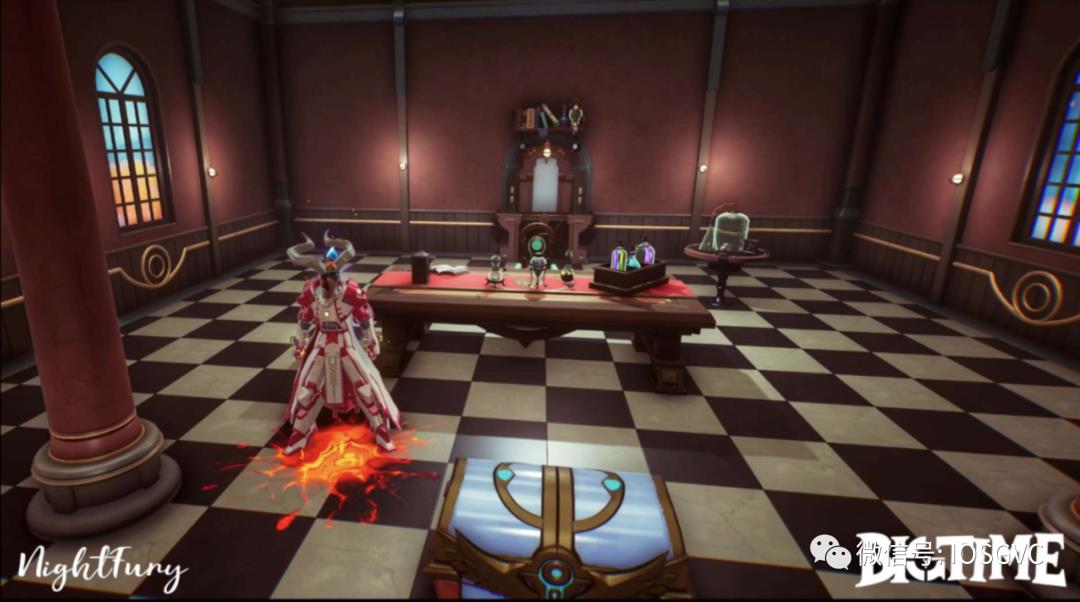
Gradual Improvement of the Game Ecosystem
W Labs provided a solid overview of economic models during the last blockchain gaming cycle (single/multi-token designs, gold vs. token standards), so we won’t repeat that here. Strictly speaking, Bigtime follows a single-token model where the token serves as the core reward for players. This design was common in previous-cycle blockchain games but often failed due to unsustainable burn mechanisms unable to keep up with emissions—leading to token price curves resembling normal distributions. Bigtime introduces unique improvements. Setting aside gameplay, let's examine the economy alone.
Bigtime’s basic economic framework involves various player roles (dungeon runners, hourglass traders, gear manufacturers, and other minor intermediaries) engaging in corresponding in-game and economic activities. Crystals (gold-standard currency) serve as the primary cost. Through intermediaries like hourglass traders, value eventually circulates back as token rewards. Parameters must be carefully tuned to ensure interdependence and balance among roles.
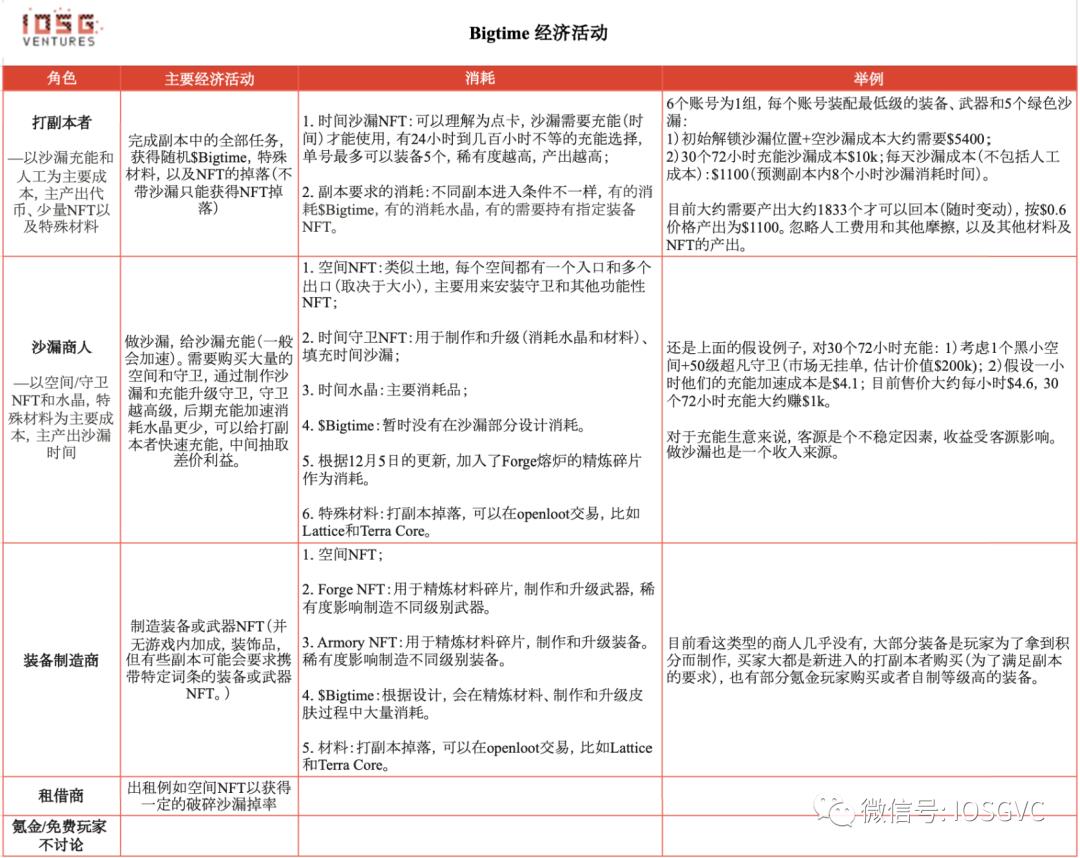
Note: All numbers in examples are estimates and assumptions, subject to change—provided for reference only
Source: IOSG Ventures,
https://docs.google.com/spreadsheets/d/1H1R9EJTRtZs_dUXERRQCzn1WsCJi7SqOgX8JCpA3iGA/edit#gid=0
Role: Dungeon Runners (main costs: hourglass refueling and labor; main outputs: $Bigtime tokens, small amounts of NFTs, and special materials)
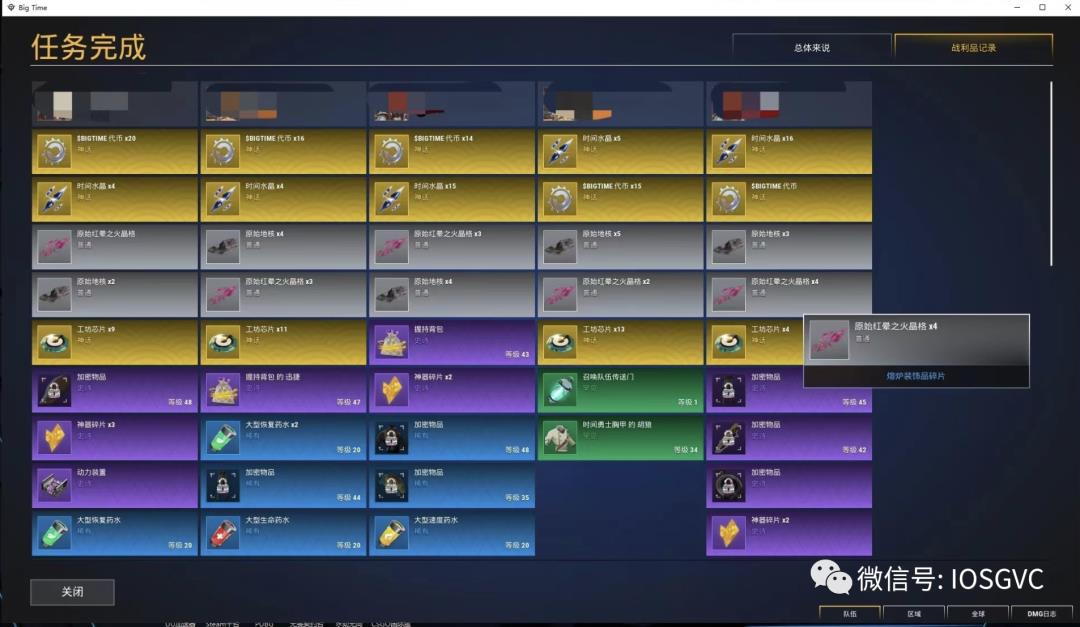
Main Economic Activity: Completing all tasks within dungeons to receive random drops of $Bigtime, special materials, and NFTs (without using an hourglass, only NFT drops can be obtained)
Costs:
-
Time Hourglass NFTs: Function like game time cards. Hourglasses require energy ("time") to activate, with refuel durations ranging from 24 hours to several hundred hours. Up to five can be equipped per account. Higher rarity means higher output.
-
Dungeon entry requirements: Vary by dungeon—some consume $Bigtime, others use crystals, and some require specific equipment NFTs.
Example:
A group of six accounts, each equipped with base-level gear, weapons, and five green hourglasses: 1) Initial unlocking of hourglass slots plus empty hourglass cost ≈ $5,400; 2) Cost of 30x 72-hour refuels ≈ $10k; Daily hourglass cost (excluding labor): ~$1,100 (estimated 8-hour consumption per run). Approximately 1,833 tokens needed to break even (variable), generating $1,100 at $0.6/token. Labor costs, friction, and additional material/NFT outputs are ignored here.
Role: Hourglass Merchants (main costs: Space/Guardian NFTs, Crystals, special materials; main output: hourglass time)
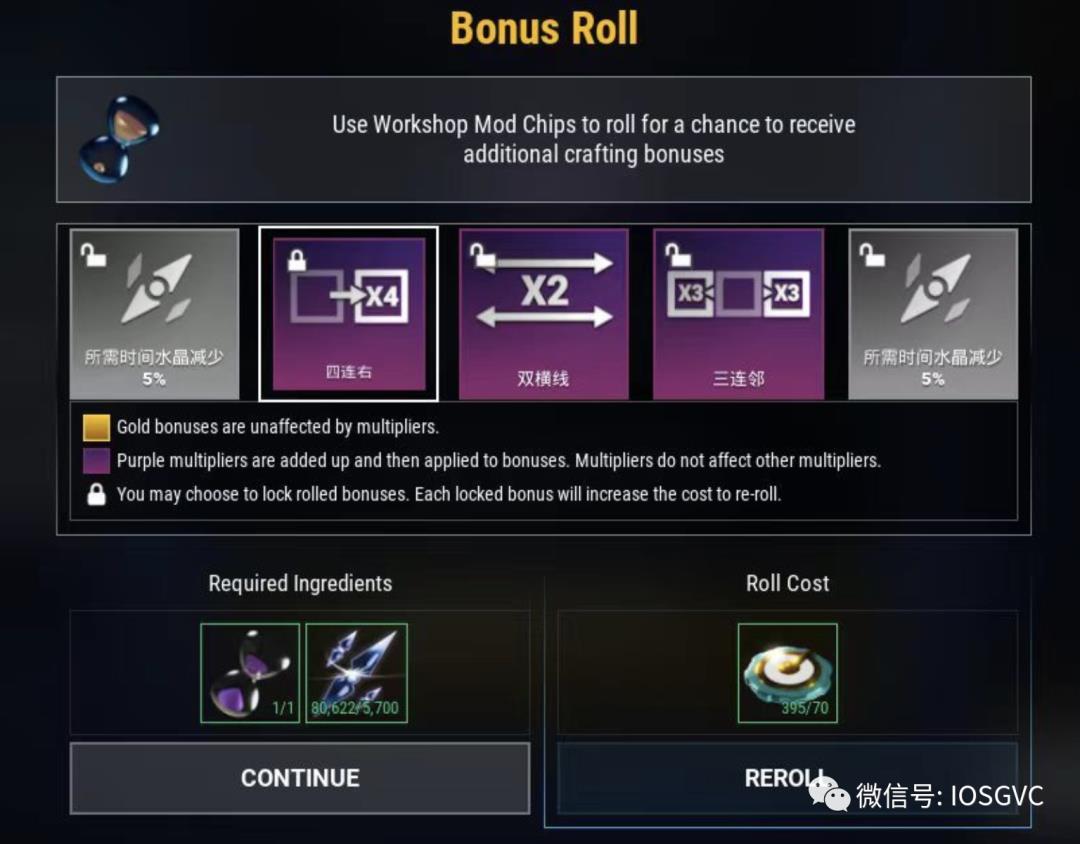
Main Economic Activity: Crafting hourglasses and refueling them (often accelerated). Requires purchasing large quantities of land and guardians. By crafting hourglasses and upgrading guardians (using crystals and materials), higher-tier guardians reduce crystal costs for future accelerations. They provide fast refueling services to dungeon runners, profiting from the price spread.
Costs:
-
Space NFTs: Analogous to virtual land. Each space has one entrance and multiple exits (depending on size), used to install guardians and functional NFTs.
-
Time Guardian NFTs: Used to craft and upgrade (consuming crystals and materials), filling time hourglasses.
-
Time Crystals: Primary consumable resource.
-
$Bigtime: Currently no designed usage in the hourglass system.
-
As of December 5 update, Forge fragments were added as new cost items.
-
Special Materials: Dropped from dungeons, tradable on OpenLoot (e.g., Lattice, Terra Core).
Example:
Using the same hypothetical case above, for 30x 72-hour refuels: 1) Assume one black micro-space + level 50 legendary guardian (no market listings, estimated value ~$200k); 2) Refuel acceleration cost ~$4.1/hour. Current selling price ~$4.6/hour → profit ~$1k for 30x 72-hour refuels. Customer acquisition remains unstable, affecting revenue. Crafting hourglasses also generates income.
Role: Gear Manufacturers
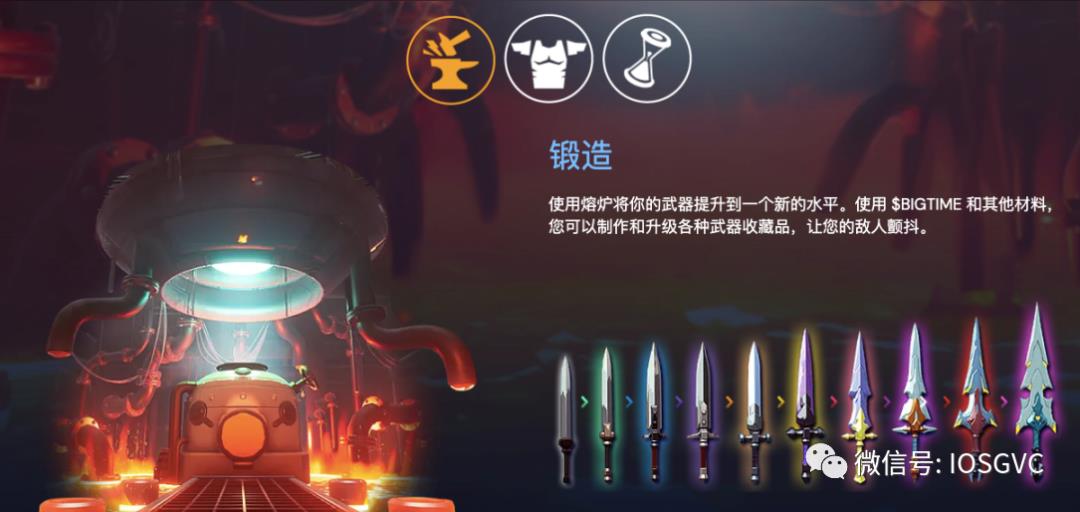
Main Economic Activity: Manufacturing equipment or weapon NFTs (purely cosmetic, no in-game stat bonuses, though certain dungeons may require specific gear/weapon traits).
Costs:
-
Space NFTs;
-
Forge NFTs: Used to refine material fragments, craft, and upgrade weapons. Rarity affects ability to produce higher-tier weapons.
-
Armory NFTs: Used to refine material fragments, craft, and upgrade gear. Rarity determines maximum gear tier producible.
-
$Bigtime: According to design, heavily consumed during material refining, skin crafting, and upgrades.
-
Materials: Dropped from dungeons, tradable on OpenLoot (e.g., Lattice, Terra Core).
Example:
Currently, few such merchants exist. Most gear is crafted by players seeking leaderboard points. Buyers are mostly new dungeon runners (to meet dungeon requirements), along with some high-spending players purchasing or self-producing high-level gear.
Evolution of the Player Value Chain
Over time, the economic significance of different roles becomes increasingly evident. Bigtime aims to guide players through competitive phases across their journey.
Phase One: Dungeon Runners Dominate the Economy
October 7 (start of Broken Hourglass drops, marking official P2E launch) to October 18 (first major economic adjustment)
During this period, dungeon runners dominated the economy. Hourglass merchants had not yet emerged because refueling costs were extremely low—roughly 1/20 of current levels. On October 18, the team increased refueling costs significantly, making it impossible for dungeon runners to afford both refueling and farming simultaneously. Additionally, the cost of crafting hourglasses was raised after the team noticed most Time Guardians were occupied crafting hourglasses, causing supply to surge beyond expectations.
These changes encouraged role specialization, distributing tasks (crafting, refueling, dismantling) more evenly among guardians. High refueling costs and scarce guardians created conditions for the emergence of hourglass merchants, pushing the economy into the next phase.
Phase Two: Interdependence and Balance Between Dungeon Runners and Hourglass Merchants
October 18 to December 7 update
Hourglass merchants operate like water sellers, supplying the key P2E input—hourglass time—thus greatly influencing dungeon runners’ profitability. Prior to December 7, merchant costs were largely independent of dungeon runners’ earnings. However, the December 7 economic update made their interdependence clearer. The update introduced decorative item refinement materials as new costs, with raw materials primarily sourced from dungeon drops and refined via Forges and Armories. Now, merchants’ costs are tied to dungeon runners’ outputs. More importantly, this update incentivizes the growth of gear manufacturers, whose products will become crucial in the future economy.
Phase Three: Integrated Economic Cycle Involving Dungeon Runners, Hourglass Merchants, and Gear Manufacturers
Future Outlook
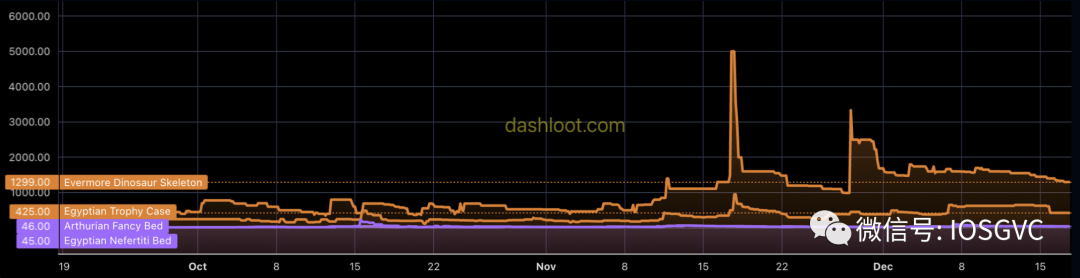
Beyond necessary economic controls and adjustments, this phase critically depends on attracting high-spending players. This requires a much larger player base. Community ambassador Da Hong Niu estimates at least 100,000 players are needed to kickstart the skin economy. While official active user numbers aren't public, leaderboard data and unique payout addresses suggest daily active users are currently around 5k–10k. Compared to top-tier blockchain games during the last bull market (Stepn: 300k, Axie: 2M), there remains significant room for growth. The path is challenging, but early signs are visible: liquidity and top 4 rarest decorative items (no stat benefits, minimal in-game utility) have seen price increases since pre-season, suggesting a small number of whales may already be entering.
Distribution Is Critical Under Strong Economic Control
Since the game economy is still in its early stages, frequent and significant economic adjustments by the team are inevitable. While short-term disruptions occur, long-term stability benefits. Official control manifests in several ways:
-
Repeated adjustments across economic layers—such as multiple tweaks to hourglass refueling costs and the addition of special material sinks requiring in-game activity for drops—aim to continuously rebalance incentives between hourglass merchants and dungeon runners.
-
Strict control over $Bigtime emissions: Tokens can only be obtained from dungeon drops, breaking broken hourglasses (rare and random, negligible volume), or airdrops. Beyond player count, drop rates are tightly controlled by the team, meaning P2E returns are inherently volatile.
-
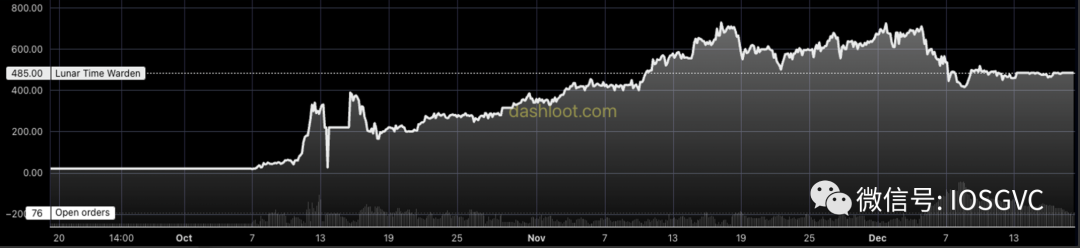
Monitoring in-game balance: Recently, Guardian NFTs (used to craft hourglasses) surged in price—from $50 for basic white guardians to a peak of $729. The community suspected large buyers were attempting to monopolize the hourglass trade to gain pricing power. Upon detection, the team responded with postcard airdrops and increased blind box drop rates for guardians, gradually stabilizing prices by increasing supply.
In tightly controlled economies, fair distribution is paramount. Historically, many GameFi teams hold both economic control and privileged token allocations—an inherent conflict. From our first conversation with the Bigtime team two years ago, the founder insisted tokens would only originate from gameplay, with zero allocations for investors or team members, and no token sales of any kind. This distribution model is exceptionally rare—and remarkably fair. Throughout the token’s lifecycle, circulation remains strictly limited and transparent, with no massive unlocks from insiders.
Iteration and Updates Will Be Bigtime’s Long-Term Theme
Bigtime has introduced many complex elements into its economy: time crystals, hourglass refueling, tokens, decorative fragments, etc. Over time, under the premise of fair distribution, this dense, intricate, and interconnected system requires constant rebalancing. For example, pricing thresholds for Time Guardians and Hourglass NFTs affect new player inflow; slowing asset issuance positively impacts token prices, and so on.
Bigtime’s revenue is not tied to its token. The team does not wish to overly influence token price. Although they lack direct economic alignment with players (no token exposure), combined revenues from crystal sales, NFT sales, and marketplace fees generate strong company-level profits—providing stable long-term incentives without relying on token dumps. Development funding remains unaffected by crypto market cycles (similar to traditional game studios). Since pre-season began, the team has sold four blind box rounds, raising approximately $7.85 million. With most items not yet on-chain, we can only estimate roughly:
1) Assuming 1 token per 50 crystals, crystal-related income ≈ $5 million;
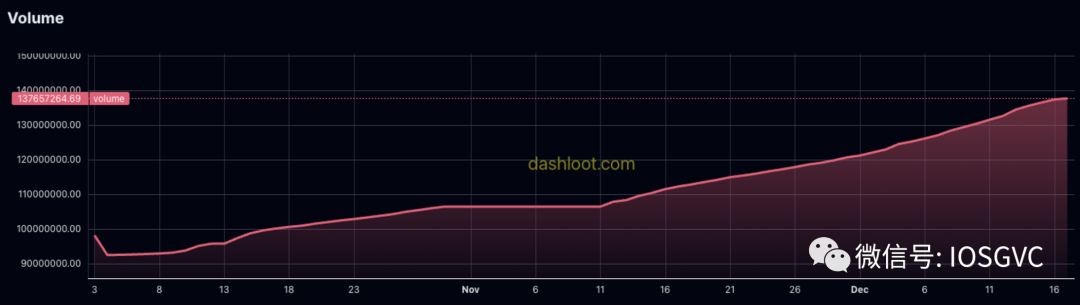
2) Based on ~$45 million total marketplace trading volume (since pre-season) and 5% platform fee (ignoring 3.5% token withdrawal fee), this segment contributes ~$2 million. We estimate total pre-season revenue over two months approached $15 million, with stable and recurring income (marketplace fees + crystals) around $7 million.
At this recurring revenue level, annualized income ≈ $42 million. Accounting for bull market premiums and conservative assumptions (50% sustainability), projected annual revenue for the next two years is ~$20 million.
Long-term, attracting high-spending players as end consumers within the economic chain remains a major challenge. Web2 users are hard to onboard, and cosmetic/skin economies aren't yet functional. Forges and Armories hold little value, while essential P2E assets (Guardians, Hourglasses) remain expensive—resulting in a distorted asset market. Insufficient token sinks further weaken demand. Solving this requires scaling the player base significantly. A positive sign: furniture markets in spaces show rising prices, and many new players are willing to pay for aesthetics. The next phase should encourage growth among gear manufacturers. Adding stat benefits to cosmetics or exclusive rights for spenders could offer short-term boosts. But ultimately, sustained player growth is essential. In the end, both the team and players/token holders share the same goal: more people playing and the game thriving long-term. On this point, incentives are fully aligned.
Join TechFlow official community to stay tuned
Telegram:https://t.me/TechFlowDaily
X (Twitter):https://x.com/TechFlowPost
X (Twitter) EN:https://x.com/BlockFlow_News
 IOSG Ventures