Tokenized Funds Go Mainstream: Asia and the U.S. Lead Adoption Race
TechFlow Selected TechFlow Selected
Tokenized Funds Go Mainstream: Asia and the U.S. Lead Adoption Race
External factors are the biggest barrier to digital asset adoption.
 Navigating Web3 tides with focused insights
Authors: Calastone, Global Custodian
Translation: Block unicorn

The mainstreaming of tokenized assets is advancing rapidly, with asset managers worldwide growing increasingly optimistic about implementation timelines and internal adoption capabilities, according to a new survey conducted by Calastone, the world’s largest fund network, in collaboration with Global Custodian. The findings show that firms in Asia and the U.S. are leading the way in launching commercially viable tokenized products.
Asian Firms Optimistic About Near-Term Launch of Tokenized Funds
Survey data clearly indicates that amid intensifying competition, incorporating tokenized funds into product offerings is a key priority for asset managers globally. An overwhelming majority of participants emphasized they expect this to become a commercial reality within three years or less.
Further analysis reveals that, overall, firms headquartered in the U.S. and Asia are most optimistic about bringing tokenized products to market within a short timeframe—67% and 61% of respondents respectively believe it's possible within one year. In the case of Asia, nearly 86% of firms anticipate achieving this within three years.
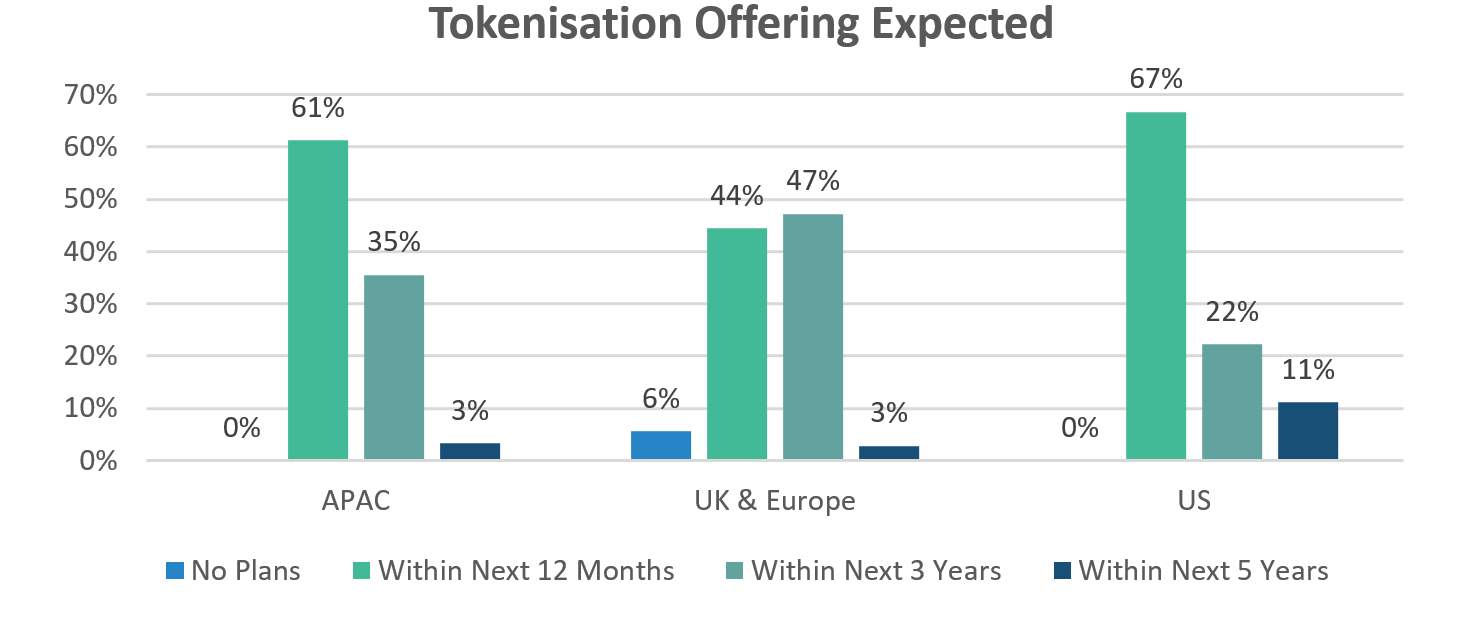
Asia and U.S. Lead in Fund Tokenization
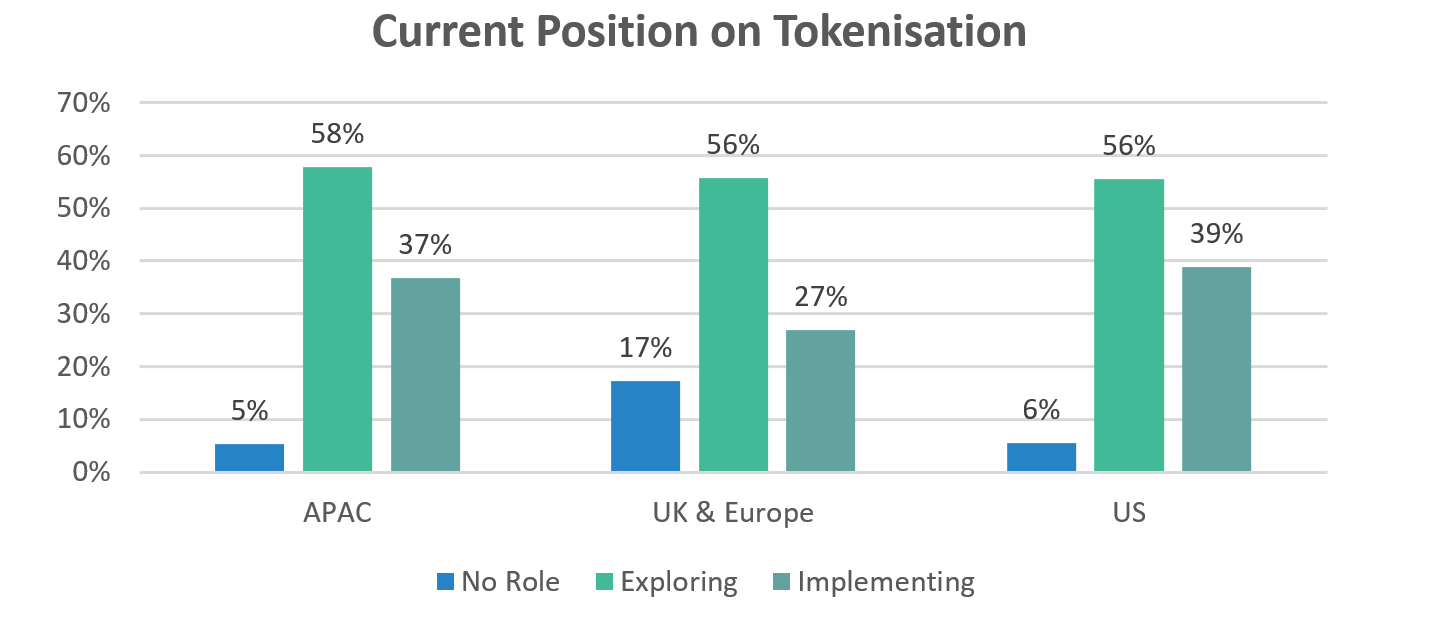
When asked about their current stance on tokenization and its potential impact on daily operations, only a small minority (around 10%) said they currently see no role for the technology in their business. Perhaps more impressively, over 50% stated they are actively exploring applications in specific areas. When it comes to implementing tangible tokenization initiatives, firms in the U.S. and Asia again lead at the regional level—nearly 40% in both regions report actively rolling out such projects within their businesses.
Although many participants manage multiple products across asset classes, the data suggests that while tokenization initiatives are being applied across investment portfolios, firms working in fixed income and private assets are the most advanced in driving implementation.
“Our clients in Asia are not just anticipating the rise of tokenized funds—they are actively paving the way,” said Justin Christopher, Head of Asia at Calastone. “This survey shows that asset managers in the region are eager to harness the benefits of tokenization and are preparing at a remarkable pace, already achieving scalable implementation in product development, distribution, and trading. Proactive efforts by governments and the private sector in the region to form collaborative initiatives, such as Singapore’s Project Guardian, have played a critical role in supporting Asia’s leadership position on the global stage.”
Personalized Investment Experiences for Asia’s UHNW Clients
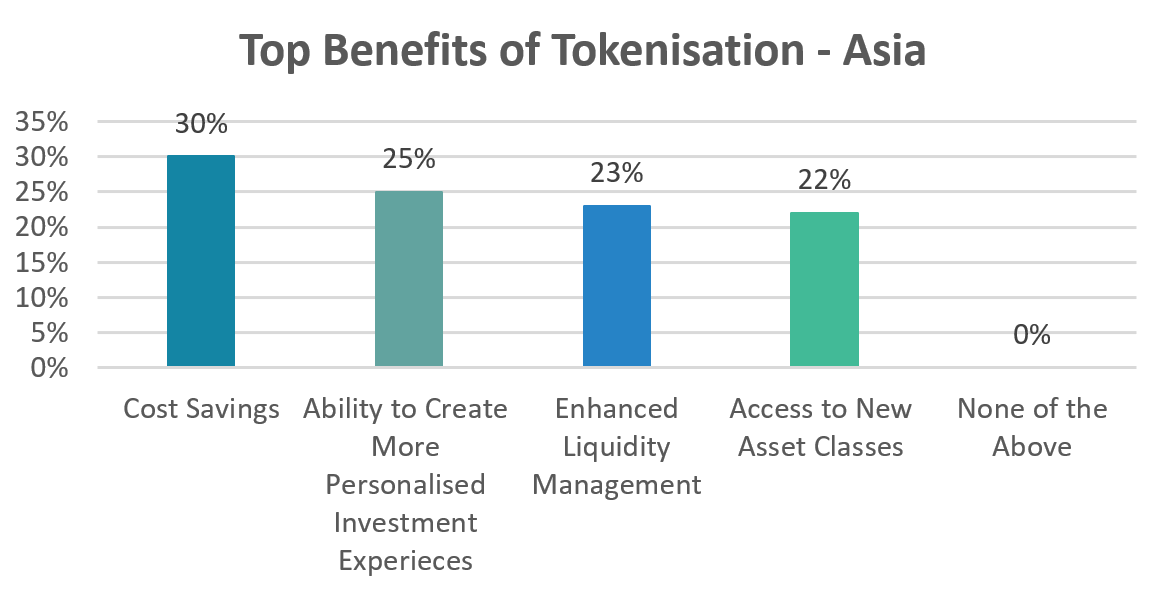
Overall, the survey confirms a growing consensus around the perceived client benefits of tokenization—from cost reduction and enhanced liquidity to access to new asset classes and the creation of more personalized investment experiences. When asked to select the top two benefits they personally consider most important, responses were largely balanced, with roughly one-quarter of total responses pointing to each of the four options.
While respondents in Asia do view cost reduction as the greatest benefit of tokenization, they are more likely than their regional peers to identify developing more customized investment solutions as a key advantage—particularly to better serve ultra-high-net-worth (UHNW) clients. Around 25% of firms in the region cited this as an important factor, compared to 23% globally.
External Factors Are the Biggest Barrier to Digital Asset Adoption
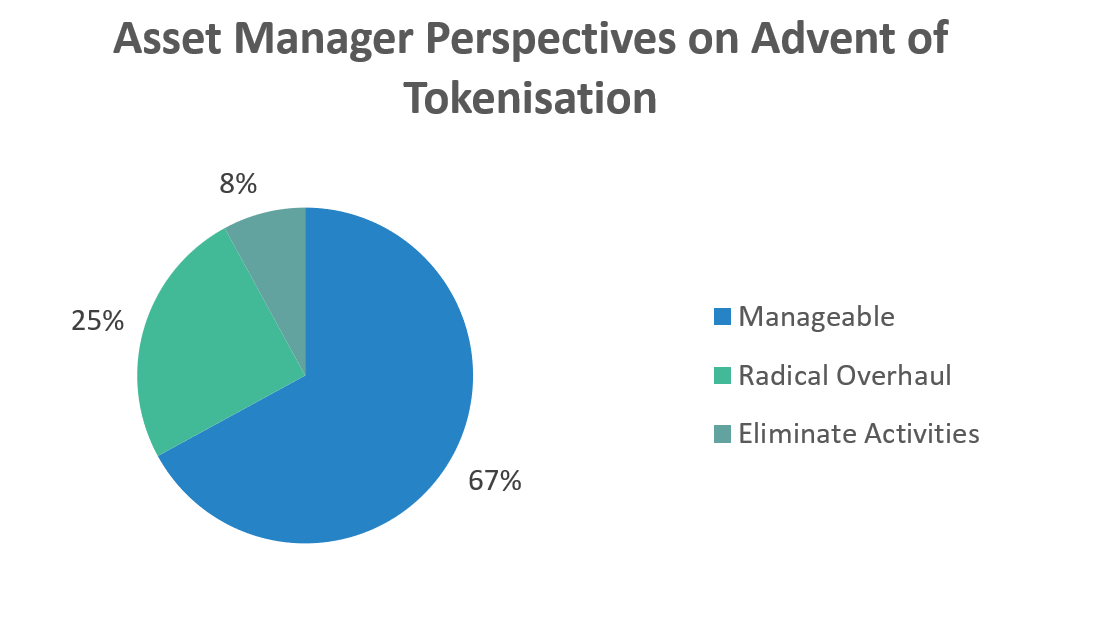
Positively, a majority (67%) of asset managers indicated they expect to leverage existing technologies and expertise to manage the rollout of tokenized investment instruments. Practically speaking, this signals rising confidence among firms in executing their tokenization strategies in the coming years. This may be partly due to growing internal understanding and knowledge in the field, as well as expanding capabilities among technology partners and administrative service providers.
The most commonly cited obstacles to institutional participation in digital assets are the lack of central bank digital currencies (CBDCs), which over 80% of respondents listed as either the top or second-biggest barrier, followed by regulatory uncertainty. This appears to support the view that firms are becoming increasingly capable of managing or overcoming challenges, either directly or through partnerships.
Looking ahead, Christopher explained: “Institutional adoption of digital asset integration in Asia is undoubtedly rising, along with firms’ ability to manage and orchestrate this transformation. However, the process is not without challenges. To fully unlock the potential of the digital asset ecosystem, we continue to advocate for broader industry collaboration.”
Survey Methodology
The data cited in this press release is based on findings from a global survey conducted by Calastone in close collaboration with Global Custodian during the third quarter of 2023. The study aimed to assess the fund industry’s adoption of and attitudes toward asset tokenization.
Of the 141 participants in the survey, the majority (80%) were asset management firms, with the remainder comprising other industry stakeholders including fund administrators, custodians, and management companies (Mancos). To ensure a broad range of regional perspectives, respondents were drawn from the U.S. (16%), Asia (35%), and the UK and Europe (49%).
Data was collected via an online survey featuring multiple-choice and constructed-response questions. Figures cited in this press release are derived from analysis of this data.
Join TechFlow official community to stay tuned
Telegram:https://t.me/TechFlowDaily
X (Twitter):https://x.com/TechFlowPost
X (Twitter) EN:https://x.com/BlockFlow_News
 @CalastoneLtd