7 Major Upcoming Protocol Launches and Upgrades: Catalysts for Massive Gains in the Bull Market
TechFlow Selected TechFlow Selected
7 Major Upcoming Protocol Launches and Upgrades: Catalysts for Massive Gains in the Bull Market
With the launch of Frax v3, FRAX is moving away from its algorithmic stablecoin regime and transitioning to 100% collateralization.
 Navigating Web3 tides with focused insights
Author: Ignas
Translation: TechFlow
The cryptocurrency market is warming up. The question arises: what should we invest in?
Certain tokens like MUBI have shown high returns, but require sharp insight and close attention to community trends for timely investment. However, there are other tokens that can deliver strong returns over a longer period because they're tied to innovations in Web3 technology. These projects allow us to spot them before price increases and then invest.
Below is my list of 10 protocols I'm watching closely as they approach major launches. I'll follow their upcoming developments and explain why I find them interesting.
1. Frax V3 and Fraxchain
In rankings by nonprofit stablecoin rating agencies, Frax is rated D-level (unsafe).
According to the report, Frax's instability stems from being collateralized by the volatile FXS token, excessive reliance on centralized assets (USDC), and significant control by the core team over voting rights and monetary policy.
Like DAI, FRAX lost its dollar peg during USDC depeg events, but now Frax is undergoing a transformation via v3.
Frax v3 is rolling out gradually, with sFRAX already live. The sFRAX annual yield attempts to track the Federal Reserve's Interest on Reserve Balances (IORB) rate using an IORB oracle—essentially a "risk-free rate" on-chain.
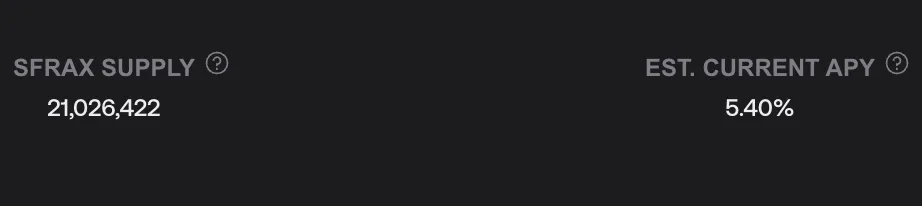
Current annual yield is 5.4%, with approximately 22 million FRAX staked.
With the rollout of Frax v3, FRAX is transitioning away from algorithmic stablecoins toward 100% collateralization. FRAX will maintain its dollar peg via Chainlink oracles and governance approval.
Then comes the launch of BAMM (Borrowing AMM). Michael, founder of Curve, called Frax’s BAMM “the biggest innovation in DeFi since crvUSD.”
BAMM allows users to leverage any token without relying on oracles. It operates within its ecosystem, internally managing asset prices and liquidity to prevent bad debt and ensure solvency. BAMM enables efficient capital use and increases demand for FRAX. See this thread for details.
Honestly, I still don’t fully understand how it works, so I hope to dive deeper once more details emerge.
There are also FXBs—debt utility tokens that can be converted into Frax after a certain period. You can buy FXBs at a discount and later convert them to Frax for low-risk profit.
Interestingly, both Frax and Maker started from different points but are now shifting from USDC to embrace RWA. RWA allows protocols to move away from leveraged-based stablecoin cycles and offers more predictable yields.
Another commonality between the two protocols (Frax and Maker) is that both are launching their own native blockchains.
MakerDAO is exploring forking Solana, while Frax is building a hybrid OP and zk Rollup that will use frxETH as its gas token (though all Frax stablecoins may eventually be supported). I applaud Frax’s innovative steps toward decentralization, which set Fraxchain apart from other L2s. Fraxchain is already on testnet—you can try its tutorial via Frax Telegram.
Why am I bullish on this project?
Frax is building a premium blockchain ecosystem. With further upgrades and technological innovations, the veFXS token will gain greater value.
These developments take time, so I believe the current market price (FXS market cap at $647 million) hasn't yet priced in the upcoming RWA + L2 + BAMM upgrades. If these events are anticipated, prices could rise.
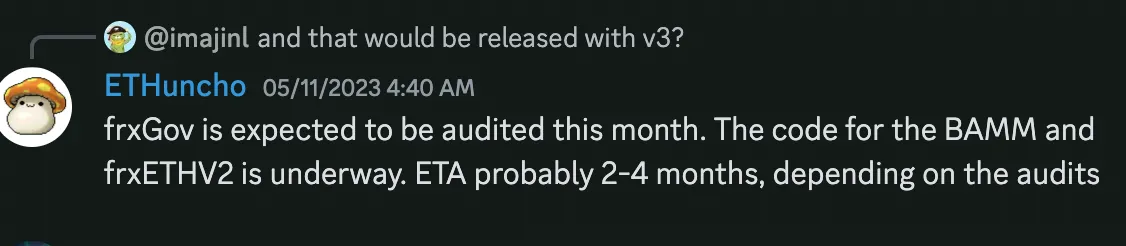
sFRAX is live, Fraxchain is on testnet, and BAMM/frxETH v2 code is underway, expected to complete in 2–4 months.
2. Synthetix Andromeda Version and Eliminating SNX Inflation
Synthetix is gradually upgrading to V3 to address multiple pain points, but two stand out to me:
-
Multi-collateral pricing: V3 is collateral-agnostic, allowing any collateral to back synthetic assets. V2 only allowed SNX. This will boost sUSD liquidity and expand markets supported by Synthetix.
-
Synthetix Loans: Users can now deposit collateral to mint sUSD without exposure to debt pool risk, interest, or issuance fees.
The upcoming Andromeda release this month includes Core V3 and Perps V3 on Base, using USD as collateral.
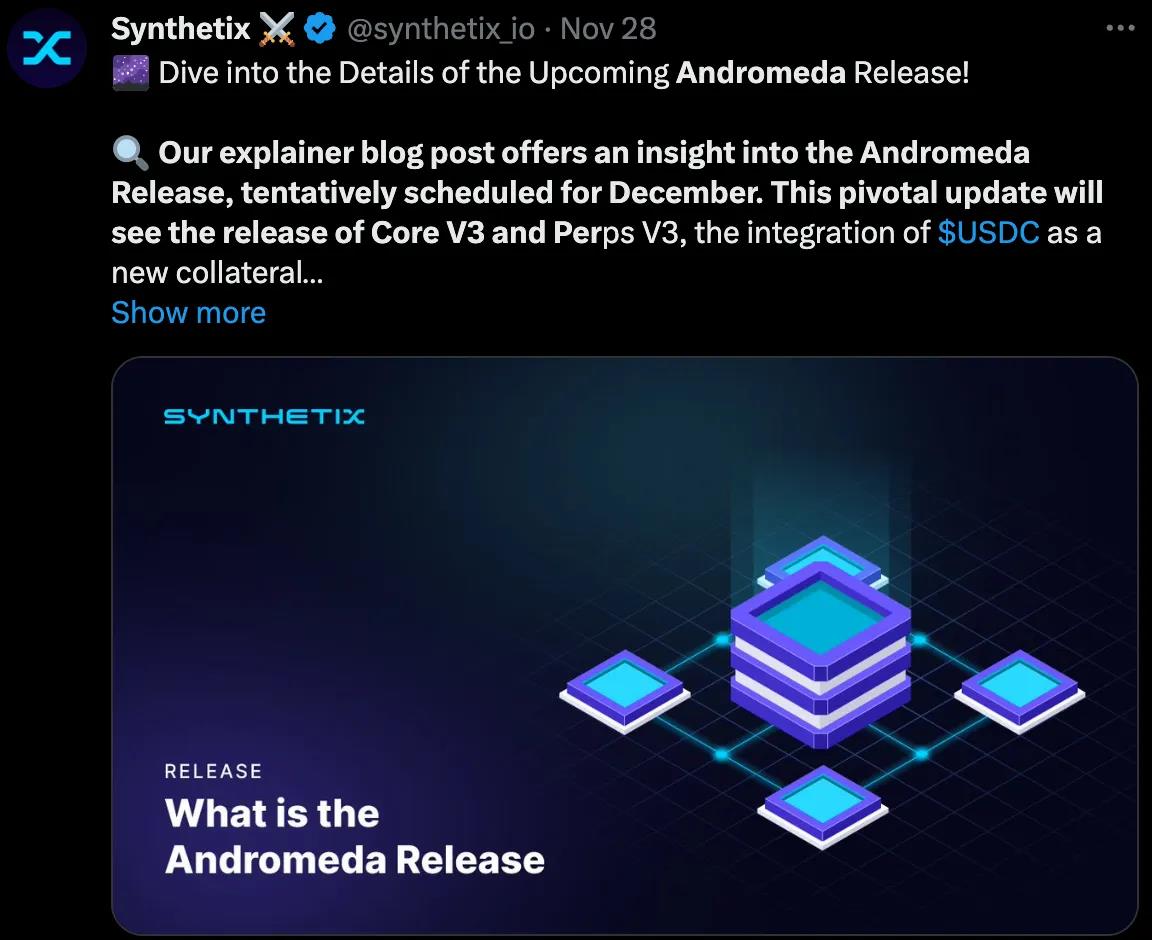
Previously, Synthetix relied solely on sUSD, but adding USDC should attract more users and LPs. However, USDC is used for front-end integration; Synthetix wraps it into sUSD for backend contracts.
Andromeda is exclusive to Base and a key upgrade, as it will test demand for USDC as collateral, LP yields, and generated fees/volume.
Multiple Synthetix ecosystem protocols (like Polynomial, Kwenta, Infinex, and dHEDGE) have confirmed deployments on Base, meaning more activity on Coinbase’s L2.
Why am I bullish on this project?
The Synthetix DAO voted to allocate 50% of fees earned on Base to SNX buybacks and burns, so higher fees create upward pressure on SNX.
More importantly, Synthetix’s founder has proposed ending SNX token inflation.
Initially, inflation incentivized staking and boosted liquidity, but over time its effectiveness has diminished. The proposal argues that making SNX deflationary by halting inflation better aligns with the network’s future, including potential new developments and shifts in primary collateral.
Therefore, the Base deployment is a critical test for SNX, and I’ll be closely watching volume and the proposed elimination of inflation.
3. Fluid in Instadapp
I’m bullish on the Instadapp ecosystem.
The team has launched several products like Instadapp Pro, Lite, and Avocado, but the most important product is about to launch.
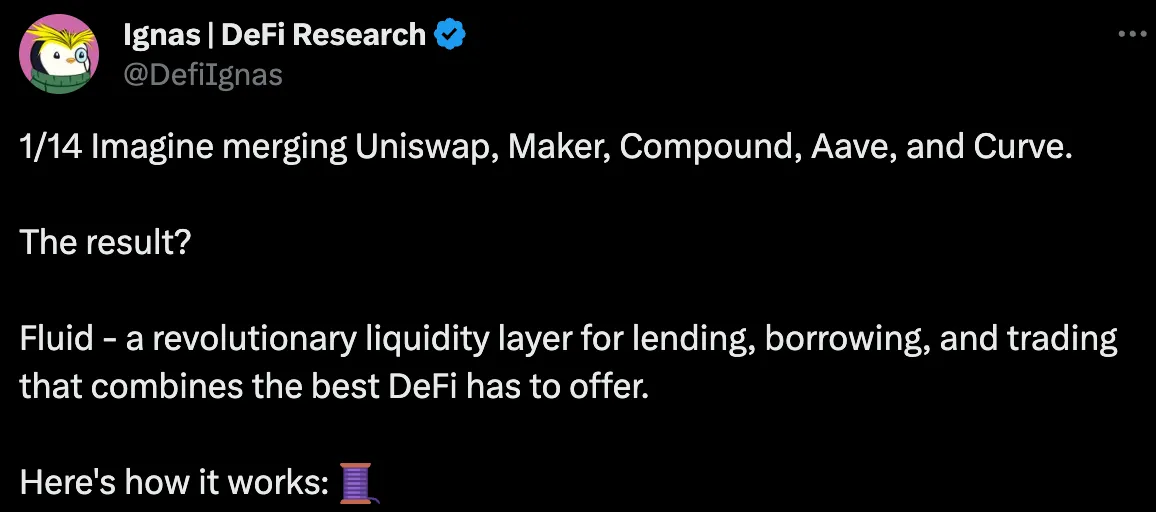
Instadapp combines the strengths of Uniswap, Maker, Compound, Aave, and Curve, revolutionizing borrowing and trading through Fluid.
Below is my Twitter thread on Fluid, summarizing its key innovations.
-
Lenders can borrow up to 95% LTV against ETH, with liquidation penalties reduced to 0.1%
-
Partial liquidations only remove the amount needed to restore health
-
Liquidity layer aggregates liquidity across all protocols, so users don’t need to withdraw liquidity every time they upgrade
-
Smart debt and smart collateral: earn yield on your collateral or reduce debt from trading fees generated. Traders can now trade on top of their debt, reducing it instead of increasing it via fees.
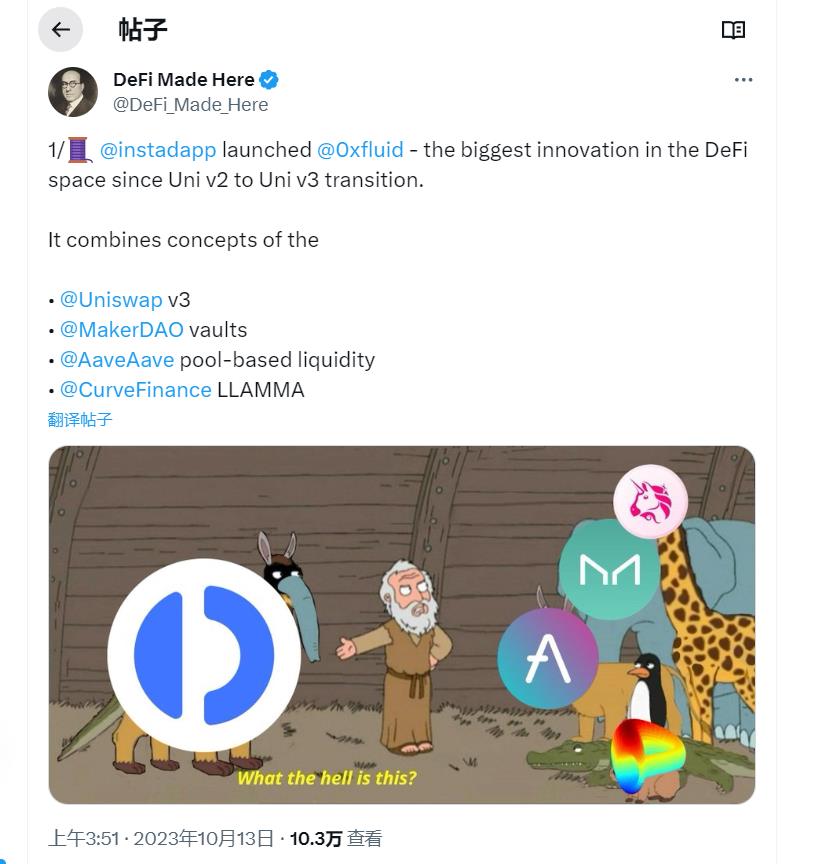
Another post by DeFi Made Here explains why he believes “Fluid is the biggest innovation in DeFi since Uni v2 to Uni v3.”
Why am I bullish on this project?
Clearly, as an ambassador for Instadapp, I have personal bias. But we can’t ignore Fluid’s significant innovation. With Fluid (and Avocado), Instadapp will evolve from a “middleware” protocol (an aggregator of other DeFi protocols) and the role of the INST token will strengthen.
INST will manage Fluid similarly to how Aave and other lending protocols operate.
Fluid is expected to launch mid-December with a $500k bug bounty, followed by public release in mid-January.
4. Eigenlayer + LRT
If you’re a regular reader, you know why I’m bullish on Eigenlayer—but now we have a clearer timeline.
Eigenlayer has launched its second-stage testnet, giving restakers like you the opportunity to delegate to operators.
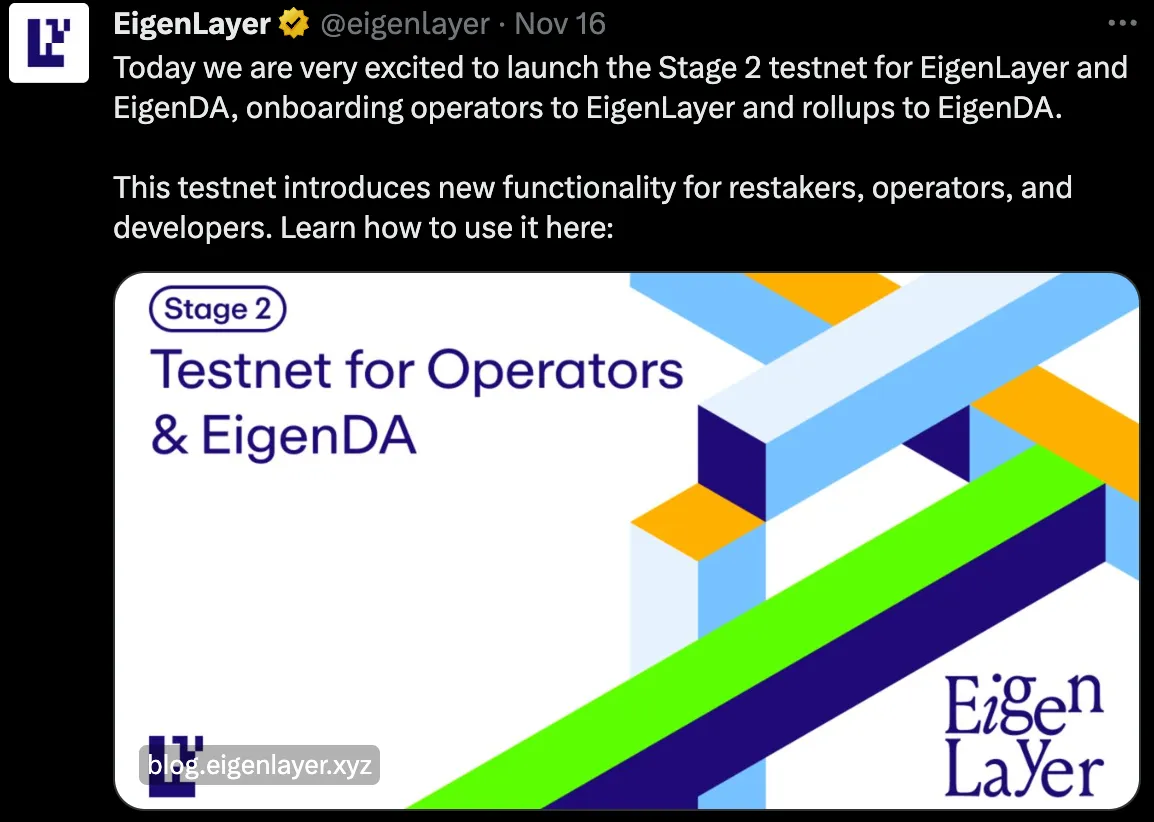
These operators will validate Actively Validated Services (AVS), which is the foundation of my bullishness on LRT (Liquid Restaking Tokens).
Currently, EigenDA is the first and only AVS. Rollups can integrate EigenDA to improve throughput.
As new AVSs emerge, we’ll see expanded use cases for Ethereum’s shared security model. Examples include:
-
Ethos: Cosmos hub rebooted for Ethereum
-
Witness Chain: Proof-of-diligence defense and proof-of-location for physical decentralization
-
Hyperlane: Inter-chain messaging (bridging) for rollup issuance
-
Espresso Systems: Decentralized sequencers for rollup transactions
-
Blockless: Infrastructure for network-neutral apps (nnApps) that run on any L1/L2 blockchain, free from specific chain constraints.
Multiple AVSs will launch their own tokens to incentivize operators and restakers to delegate ETH to them.
But things get complicated when deciding which AVS to support. As a restaker, you must choose operators that validate AVSs.
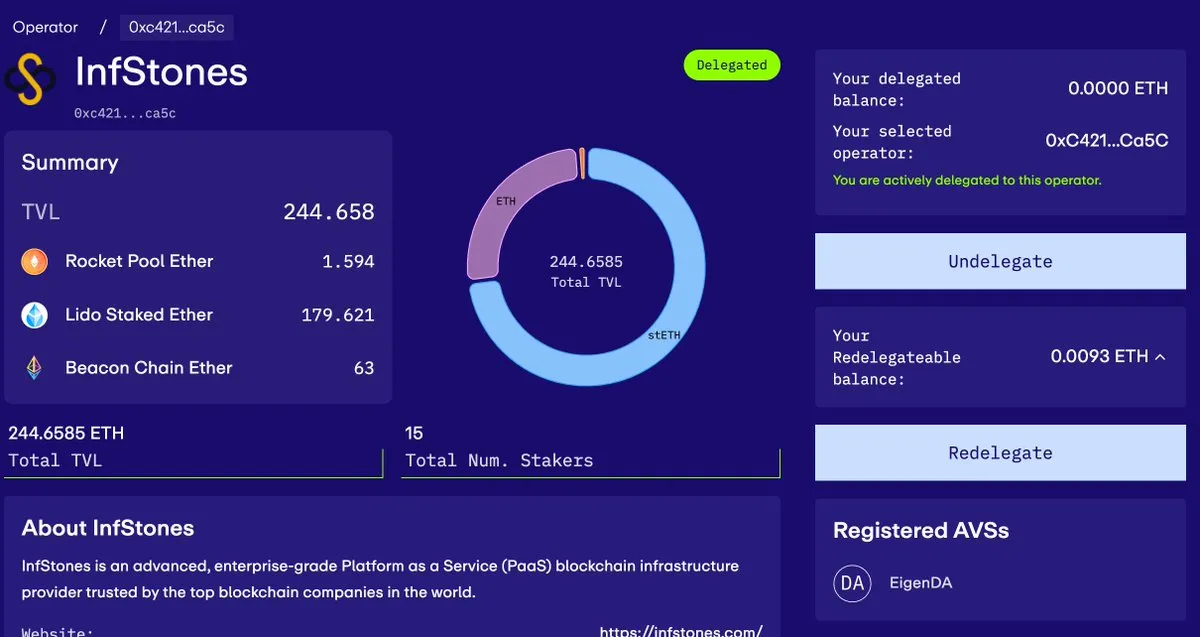
Currently, there are 107 operators on testnet, with more expected. So how do you pick the operator with the best risk-reward ratio?
This is where Liquid Restaking Tokens (LRT) come in. Instead of staking directly through Eigenlayer, you deposit funds into an LRT protocol. However, LRTs still require managers to select operators and manage risk—meaning new protocol tokens will be airdropped and offer higher yields.
With LRT, we could achieve Ethereum staking yield (~5%), Eigenlayer restaking rewards from AVS (~10%), and LRT protocol token emissions (~10%+). Excluding initial airdrops, this results in ~25% annual ETH yield.
It’s too early to say which LRT protocol will dominate, but Ether.fi appears to be leading.
Why am I bullish on this project?
Restaking + LRT narrative, because it has three key elements I look for in projects: 1) Innovative tech, 2) Token creation opportunities, 3) Compelling narrative.
I believe restaking and LRT implementation will make ETH a more attractive asset to buy and hold, potentially helping ETH catch up with BTC and altcoins. That said, this is not risk-free yield!
Unfortunately, we still need to wait. Stage 2 mainnet launches in H1 2024, Stage 3 later in 2024—when more AVSs arrive (that’s when the real fun begins).
5. Uniswap V4
Uniswap V4 introduces a "singleton" contract that consolidates all pools into one framework, reducing pool creation gas costs by 99% and making multi-pool swaps cheaper.
In fact, you can already experience the benefits of the "singleton" contract via Ambient Finance. I’m always amazed at how low the gas fees are.
Uniswap V4 makes the list thanks to "Hooks," which turn Uniswap V4 into more of a platform.
Hooks in Uniswap V4 are essentially programmable contracts that activate at different stages of a liquidity pool’s lifecycle. Think of them as “plugins” that execute custom code during key pool events—such as limit orders on-chain, time-weighted market making, depositing out-of-range liquidity into lending protocols, auto-compounding LP fees into LP positions, etc.
In fact, Instadapp has already teased a no-liquidation lending protocol using v4 Hooks, with 0% liquidation penalty.
Why am I bullish on this project?
Uniswap with V4 Hooks will become the liquidity hub of DeFi—stronger than ever. Remember, protocols face liquidity challenges at launch, but with Hooks, developers can use Uniswap as their liquidity base to launch new protocols and tokens.
This could bring even more liquidity to Uniswap, possibly drawing liquidity from other DEXs.
Since V4 will launch under a business license, forks won’t be allowed until 2027. As multiple dApps launch on Uniswap, it could capture more market share. Hopefully, the Uniswap DAO and builder community can find ways to return value to UNI holders.
But we must wait until Q1 2025 for the Cancun Ethereum upgrade, which includes EIP-1153 (transient storage)—critical for lowering Uniswap V4 network costs. Learn more here.
Perhaps betting on UNI around the Cancun upgrade could be a solid short-term strategy.
6. Stacks Nakamoto Upgrade
My view on Stacks is simple—I recently shared it on X.
Stacks ecosystem tokens have performed well, driven by three major innovations:
-
Stacks Nakamoto Release: Will reduce transaction finality from current 10m–30m to ~5s
-
sBTC: Non-custodial, trust-minimized BTC-pegged asset enabling smart contracts to write back to Bitcoin
-
Growth of BTCfi: Ordinals, BRC20, etc.
Stacks expects to launch the upgrade in Q1 2024.
The biggest beneficiaries may be Alex Lab, the liquidity hub of Stacks DeFi, offering BRC20 orderbook trading, bridging between BTC/BRC20 and Bitcoin, and EVM chains.
Why am I bullish on this project?
If you’ve read my previous article on the three factors behind booming crypto ecosystems, you’ll notice Stacks meets all three: user attention and capital concentrated on few assets, plus more tokens coming.
Three factors behind booming crypto ecosystems:
-
Technological innovation
-
Token creation opportunities
-
Compelling narrative
Reducing transaction speed to 5s and bringing BTC liquidity, combined with the BTCfi narrative, makes Stacks’ future highly promising.
Additionally, compared to its unique value proposition, Stacks’ market cap remains relatively low, while Alex Lab acts as a leveraged bet on STX. The Q1 2025 upgrade is also on the horizon.
7. Growth of Monolithic L1s: Fantom 2.0 Upgrade and SEI V2
Let me explain why I grouped FTM and SEI together. Two reasons:
First, the modular vs. monolithic scaling debate is one of the most compelling narratives in this bull cycle. Growing disappointment exists around scaling Ethereum via L2 solutions.
Issues include compromises on decentralization, security, worse user experience, and questionable L2 (e.g., Blast) airdrop farming methods.
Moreover, L2 tokens lack strong value propositions for investors. Recent ARB “staking” from treasury funds highlighted the limitations in L2 DAOs’ tokenomic creativity.
Security and network interoperability may improve in the future, and tokenomics could evolve with truly native decentralized L2s and potential revenue sharing.
But currently, even with L2s, gas fees remain too high for smaller transactions. We’ll likely need L3 or L4 layers.
However, such technical leaps may not materialize in this bull run. For maximum security, we might end up paying high gas on Ethereum, or rotating funds across L2s via third-party bridges to farm airdrops—since no one wants to wait 7 days for withdrawals on optimistic rollups.
Now, monolithic blockchains have their own issues—mainly compromised decentralization due to limited node count or high hardware costs.
But since Ethereum has paused or slowed L1 scaling, can modular design solve these problems before current monolithic chains improve their decentralization?
This is where Fantom’s Sonic upgrade comes in. It delivers 2k+ TPS and 1.1s finality—without sharding or L2s. The team targets next-gen dApps like GameFi.
Why am I bullish on this project?
I’m bullish on Ethereum and also on Solana as its main competitor. But Fantom is innovating anew to benefit from the monolithic scaling narrative.
Next spring, I hope to see dApps actually being built on Fantom—that will be the key follow-up.
Then there’s SEI V2
I know many dislike it—or can’t even distinguish SEI from SUI or Aptos. But I keep an open mind on SEI (like FTM) because it perfectly fits my view on modular vs. monolithic evolution.
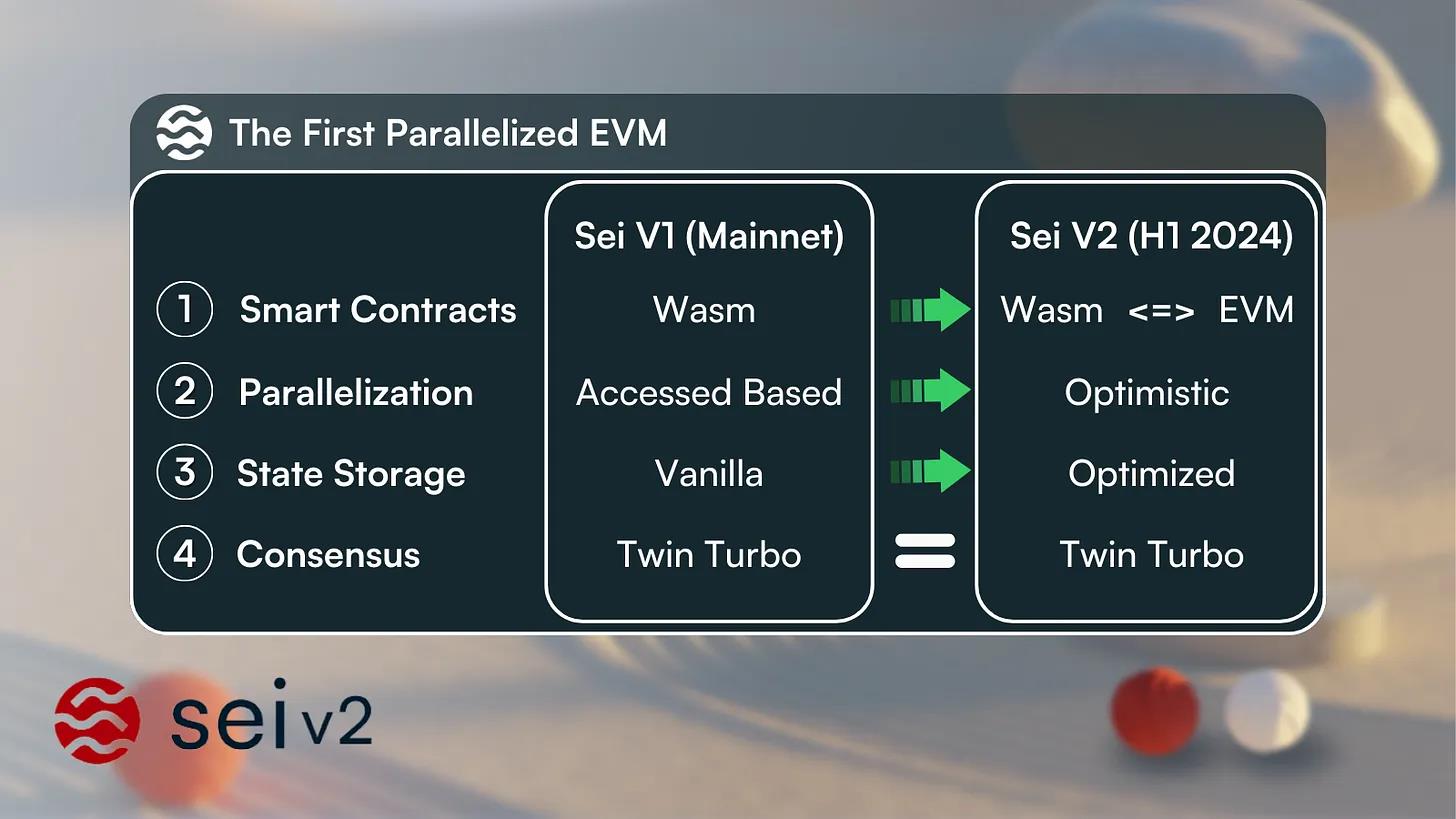
You can read the full SEI v2 upgrade, but the highlights are:
-
EVM with parallelization support, benefiting dApp ecosystems as developers can redeploy EVM smart contracts directly onto SEI.
-
390ms finality (already live on mainnet)
-
12.5k theoretical TPS
Why am I bullish on this project?
In the last bull cycle, L1 speed was king—and I believe this cycle will reignite the L1 wars just as fiercely.
Like Fantom, Sei is built for scalable tech ecosystems, but currently has the lowest market cap among the three, with large token unlocks not starting until Q3 2025.
Join TechFlow official community to stay tuned
Telegram:https://t.me/TechFlowDaily
X (Twitter):https://x.com/TechFlowPost
X (Twitter) EN:https://x.com/BlockFlow_News
 Ignas | DeFi Research