









Everything You Need to Know: Spot and Futures ETFs for BTC/ETH
TechFlow Selected TechFlow Selected
Everything You Need to Know: Spot and Futures ETFs for BTC/ETH
Understanding the differences between spot ETFs and futures ETFs, as well as which investors they suit and the key investment considerations, is crucial.
 Navigating Web3 tides with focused insights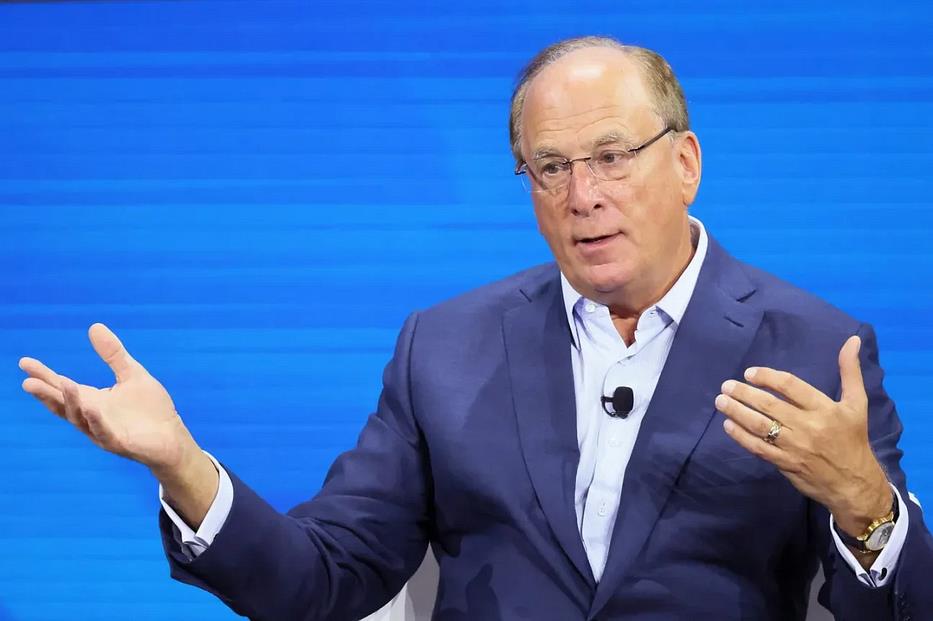
BlackRock CEO Larry Fink is further stepping into the crypto world through spot ETF applications
I. Introduction
On the evening of November 9, regulatory filings showed that BlackRock, the world's largest asset management firm, registered an Ethereum Trust (iShares Ethereum Trust) in Delaware. This marks BlackRock’s first step toward applying for a spot Ether ETF. Previously, seven days before filing its Bitcoin spot ETF application with the SEC, BlackRock similarly registered the iShares Bitcoin Trust.
According to the filing, BlackRock continues to select Coinbase, the U.S. cryptocurrency exchange, as custodian for the ETH held by this product, while an unnamed third party will hold its cash. BlackRock has also signed a market surveillance agreement with Coinbase. Based on previous experience with Bitcoin spot ETF applications, such regulatory sharing agreements appear to be key to gaining approval from the U.S. Securities and Exchange Commission (SEC).
To preempt potential objections from the SEC regarding monitoring arrangements, BlackRock noted in its application letter that CME Group's ether futures prices—operated under the Chicago Mercantile Exchange (CME)—align closely with spot ETH prices (and there are already ETFs holding these futures). It argues that either CME can monitor fraud in both futures ETFs and spot markets, or no surveillance mechanism can effectively detect misconduct across any product type.
BlackRock’s application has further boosted market confidence in a spot ETH ETF. Immediately after the news broke, ETH prices surged nearly 10%, rising from $1,880 to briefly surpass $2,100. According to public information, five other spot Ethereum ETF applications are currently pending: VanEck, ARK Invest/21Shares, Hashdex, Invesco US/Galaxy, and Grayscale’s conversion filing for ETHE. Notably, the U.S. Securities and Exchange Commission has not yet approved any spot ETF application for crypto assets (though optimism is growing, approvals remain outstanding).
II. What Is an ETF?
An exchange-traded fund (ETF) is an investment fund traded on stock exchanges like individual stocks. These funds typically hold a diversified portfolio of assets such as equities, commodities, or cryptocurrencies, aiming to track the performance of a specific index or underlying asset.
For example, a S&P 500 Index ETF holds shares of companies listed in the S&P 500 Index, striving to mirror the index’s performance. If components of the index change, the ETF manager adjusts the fund’s holdings accordingly to continue tracking the index’s composition and returns.
Unlike mutual funds, which calculate their net asset value (NAV) once at the end of each trading day, ETFs trade throughout the day on securities exchanges at market prices that fluctuate based on supply and demand.
Although an ETF’s NAV is recalculated multiple times during the trading day, investors still transact using market prices. Compared to mutual funds, this offers greater liquidity and flexibility. Additionally, investors can employ various trading strategies such as short selling or margin trading, which are uncommon with mutual funds.
What Is a Bitcoin ETF?
In the evolving landscape of cryptocurrency investing, Bitcoin ETFs have emerged as a significant financial instrument. A Bitcoin exchange-traded fund (ETF) allows investors exposure to Bitcoin price movements without directly owning or managing Bitcoin itself—an approach favored by certain investors.
Bitcoin ETFs hold either Bitcoin or contracts linked to Bitcoin’s price and trade on traditional stock exchanges like company shares. As the cryptocurrency market matures, interest in Bitcoin ETFs has surged, particularly around two main types: Bitcoin spot ETFs and Bitcoin futures ETFs. These cater to different investment strategies and risk profiles.
What Is a Bitcoin Spot ETF?
A Bitcoin spot ETF is an exchange-traded fund that directly holds Bitcoin as its underlying asset. This means the performance of a spot ETF is directly tied to the real-time value of the Bitcoin it holds. When investors buy shares of a spot ETF, they are essentially gaining exposure to Bitcoin without personally holding it.
For instance, suppose a Bitcoin spot ETF called “BTC-one” holds 10,000 Bitcoins and has issued one million shares. Then theoretically, each share represents 0.01 Bitcoins. This implies BTC-One’s performance tracks the real-time value of the Bitcoin it holds.
Pros and Cons of Bitcoin Spot ETFs
Investing in a Bitcoin spot ETF offers several advantages. It enables investors to gain exposure to Bitcoin price fluctuations without managing or storing Bitcoin, thereby eliminating concerns about security and digital wallets. Moreover, since these ETFs trade on traditional stock exchanges, they bring Bitcoin into a regulated framework, increasing trust among a broader audience. Finally, for traditional investors, investing via a Bitcoin spot ETF is simpler because it operates within the familiar structure of stock trading.
However, as with any investment, Bitcoin spot ETFs carry potential risks. The value of a Bitcoin spot ETF will fluctuate along with Bitcoin’s price. Additionally, due to fees or management inefficiencies, the ETF’s performance may not perfectly match Bitcoin’s price movement. Although ETFs integrate Bitcoin more closely with traditional finance and regulation, the cryptocurrency market remains volatile. Lastly, trading ETFs involves additional costs compared to trading spot cryptocurrencies. ETF-related fees can reach up to 2.5%, whereas spot crypto trading fees are typically much lower.
Note: Spot Ethereum ETFs or other crypto spot ETFs operate similarly to Bitcoin spot ETFs, and their pros and cons are largely comparable.
What Is a Bitcoin Futures ETF?
A Bitcoin futures ETF is an exchange-traded fund that does not directly hold Bitcoin. Instead, it invests in Bitcoin futures contracts—agreements to buy or sell Bitcoin at a predetermined price on a future date. This allows investors to speculate on Bitcoin’s future price movements without actually holding Bitcoin.
Suppose there is a Bitcoin futures ETF named “BitFutures,” whose primary goal is to track Bitcoin’s future price by purchasing Bitcoin futures contracts. BitFutures ETF is established and managed by a financial institution. Assume BitFutures plans to purchase 1,000 Bitcoin futures contracts, each representing the right to buy one Bitcoin at $55,000 three months later.
To raise capital for buying these contracts, “BitFutures” issues ten million shares, each representing ownership of potential profits (or losses) from these futures contracts. This means each share represents 0.0001 ownership of each futures contract.
Investors can purchase BitFutures shares on regular stock exchanges just like shares of other companies. If the market believes Bitcoin’s price will be significantly higher than $55,000 in three months, these shares might trade at a premium. Conversely, if sentiment is bearish, the shares could trade at a discount.
Assume BitFutures trades at $10 per share. An investor who believes Bitcoin’s price will rise over the next three months spends $10,000 to buy 1,000 shares. Three months later, if the futures contracts are profitable, the value of BitFutures shares is likely to increase. If the investor’s prediction is correct and the share price rises to $12, the investment would now be worth $12,000, yielding a $2,000 profit.
Essentially, when you purchase shares of a Bitcoin futures ETF like BitFutures, you are indirectly betting on Bitcoin’s future price without directly owning the cryptocurrency or the futures contract. Instead, you’re buying a portion of a fund that owns those contracts. Note: Ethereum futures ETFs function similarly to Bitcoin futures ETFs.
Pros and Cons of Bitcoin Futures ETFs
The advantages of Bitcoin futures ETFs are similar to those of Bitcoin spot ETFs. They allow investors to gain exposure to Bitcoin price movements without purchasing or managing Bitcoin directly. Bitcoin futures ETFs also operate in a regulated environment, meaning they must comply with standards set by financial regulators. Furthermore, they offer higher liquidity compared to other investment tools, allowing investors to easily buy and sell ETF shares on traditional stock exchanges.
One drawback or risk of Bitcoin futures ETFs is that they do not provide direct exposure to Bitcoin. Investors in a Bitcoin futures ETF do not directly own Bitcoin but instead hold shares in a fund invested in futures contracts. Because the futures market is complex and the ETF’s performance is linked to it, Bitcoin futures ETFs are relatively complicated. In addition to extra management fees that reduce returns, the value of a Bitcoin futures ETF may not always move in lockstep with Bitcoin’s price. Finally, Bitcoin futures ETFs face counterparty risk, where the other party in a futures contract may fail to fulfill its obligations.
Key Differences Between Bitcoin Spot ETFs and Bitcoin Futures ETFs
The main differences between Bitcoin spot ETFs and Bitcoin futures ETFs are summarized below (note: these distinctions largely apply if the underlying asset is Ether or another asset).
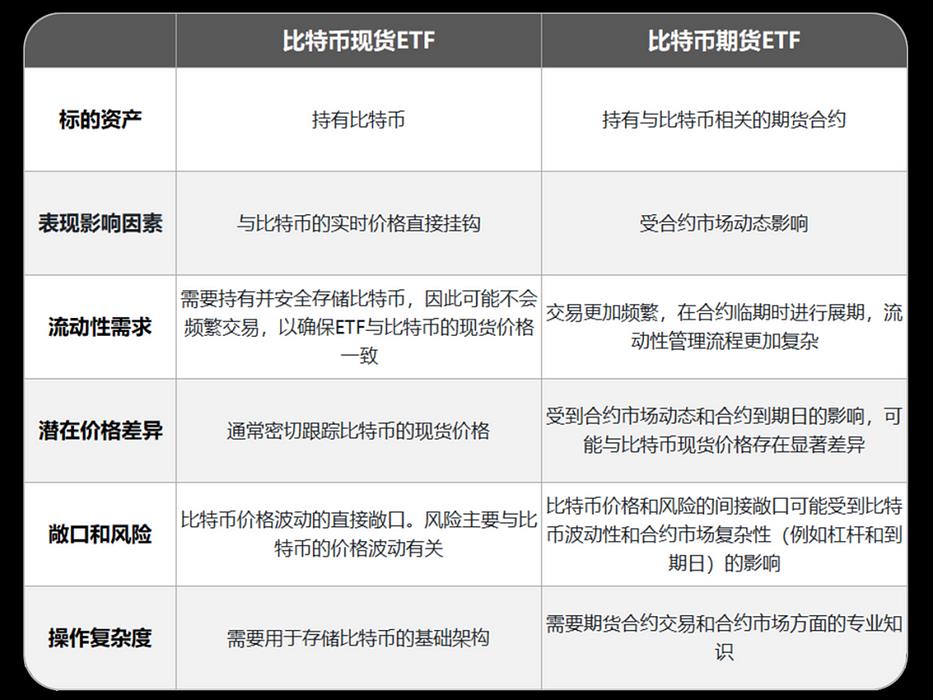
Main Differences Between Bitcoin ETFs and Ethereum ETFs
It’s important to remember that BlackRock’s spot Ethereum ETF won’t launch for several months at the earliest—and there’s no guarantee it will be approved. The SEC has up to 240 days to decide whether to approve the product, potentially delaying the launch until next fall. Additionally, it’s crucial to note the key regulatory differences between Bitcoin and Ethereum, which could cause further delays.
While nearly all parties, including the SEC, agree that Bitcoin is not a security and falls outside its jurisdiction, Ethereum’s status is murkier. Indeed, SEC Chair Gary Gensler has repeatedly been evasive on this issue, including during a high-profile confrontation with House Financial Services Committee Chairman Patrick McHenry (R-NC) over whether he considers Ethereum a security. Notably, however, Ethereum has not been listed as an unregistered security in any SEC lawsuits against exchanges like Coinbase and Binance.
While this distinction may not directly determine whether Ethereum can be included in an ETF, such debates could still slow down the process. If exchanges were required to delist tokens, it could harm global liquidity and regulation, making markets more fragile. The SEC may also want to observe how spot Bitcoin ETFs perform before approving products tracking other assets.
Ethereum occupies a unique position in the crypto world, straddling the line between a safe-haven/value storage token and a higher-beta, more volatile asset across the broader crypto industry. This means its value proposition combines safe-haven attributes with growth-oriented characteristics. This hybrid model has been validated in recent years, with Ethereum outperforming Bitcoin.
However, with growing interest in spot Bitcoin ETFs, the narrative reversed in 2023. Now, investors see Bitcoin as the best way to re-enter the crypto space following the brutal year of 2022. Ethereum has clearly lagged behind Bitcoin in price, and core fundamentals such as network usage and active participants have seen little change over the past year.
All of this suggests a bleak outlook for Ethereum in the months leading up to any ETF approval. Although it has begun rising modestly alongside Bitcoin, its actual monthly volatility is at the lowest level in nearly five years. Even in a bull market, Ethereum’s implied volatility (the market’s expectation of future volatility) trails behind Bitcoin’s.
III. Application Process and Global ETF Landscape
Which Institutions Are Applying for ETFs and Their Backgrounds?
For years, the spot Bitcoin ETF has been considered the "holy grail" of the crypto industry.
An ETF is a publicly traded investment vehicle that tracks the value of an underlying asset; in the case of a Bitcoin ETF, that asset is Bitcoin. Advocates argue that the complexity of exchanges, crypto wallets, and private keys still poses a major barrier to entry for newcomers, and Bitcoin ETFs would allow average users to gain Bitcoin exposure without actually holding cryptocurrency themselves.
Bitcoin ETFs have proliferated worldwide in countries like Canada, Brazil, and Dubai. In October 2021, ProShares’ Bitcoin futures ETF launched on the New York Stock Exchange. However, so far, the U.S. Securities and Exchange Commission (SEC) has rejected all spot Bitcoin ETF applications. Unlike futures-based ETFs, spot ETFs offer direct investment in Bitcoin. The SEC has repeatedly cited concerns about potential market manipulation in cryptocurrency trading.
Yet spurred by BlackRock’s entry, multiple financial firms have joined the race for new spot ETF approvals. Below is a list of current spot Bitcoin ETF applicants (based on public data as of 2023):
1. Ark Invest

Ark Invest, led by “Cathie Wood,” filed an application for the Ark 21 Shares ETF in June 2021. Ark Invest partnered with Swiss ETF provider 21 Shares AG to launch the ARK 21 Shares Bitcoin ETF; if approved, it would trade on Cboe’s BZX Exchange under the ticker ARKB.
The company was also the first to disclose its Bitcoin ETF fee, stating in documents it plans to pay 21 Shares 0.95%, which will cover operational expenses.
Ark Invest has invested in cryptocurrency exchange Coinbase, Grayscale Bitcoin Trust, and payment processor Square, which holds over 8,000 Bitcoins on its balance sheet. Cathie Wood is a passionate Bitcoin advocate, believing cryptocurrencies represent “a new asset class” and could become a reserve currency.
Ark Invest’s ETF was rejected in early 2022. The company immediately refiled and was rejected again in January 2023. Ark Invest is now submitting its third application.
2. BlackRock

On June 15, BlackRock, the world’s largest asset manager (with over $9 trillion in assets under management as of Q1 2023), shocked both traditional finance and the crypto industry by filing a spot Bitcoin ETF application. The filing proposed Coinbase as the cryptocurrency custodian and spot market data provider, and Bank of New York Mellon as the cash custodian.
Eric Balchunas, senior ETF analyst at Bloomberg, said the product is technically structured as a trust but functionally constitutes a “real deal”—a spot market ETF. Balchunas noted that BlackRock has frequently clashed with the SEC over launching ETFs, yet boasts a success rate of 575 to 1.
BlackRock’s ETF application received endorsement from Bob Diamond, former CEO of Barclays, and triggered new filings from WisdomTree, Invesco, and Valkyrie with the SEC, while helping push Bitcoin back above $30,000 in June 2023.
3. Bitwise

Bitwise Asset Management submitted a new rule-change application to the U.S. SEC on June 16, seeking approval for its planned Bitwise Bitcoin ETP Trust.
The U.S. SEC had previously rejected Bitwise’s spot Bitcoin ETF application in June 2022, citing insufficient surveillance-sharing mechanisms, lack of protection against market manipulation, and failure to demonstrate sufficient market size.
In April this year, Matt Hougan, Chief Investment Officer at Bitwise, said that while spot Bitcoin ETFs are “excellent” for investors long-term, Bitwise might wait for clearer regulations before launching another ETF.
In the newly filed documents, Bitwise stated the SEC should approve, reject, or initiate further proceedings on its proposed rule changes within 45–90 days. The application was published by the New York Stock Exchange (NYSE) but has not yet been processed by the SEC, meaning the actual deadline remains unclear.
4. Galaxy Digital & Invesco
Galaxy Digital and Invesco jointly filed for a Bitcoin ETF on September 22, 2021, named the Invesco Galaxy Bitcoin ETF. According to the filing, their ETF would also be “physically backed” by Bitcoin rather than derivatives like futures. Invesco Capital Management LLC is the applicant, though it remains unclear which entity would custody the Bitcoin.
The sponsor is a wholly owned subsidiary of Invesco Ltd., which ranks as the fourth-largest ETF provider in the U.S.—a credential that may aid the application process. John Hoffman, Invesco’s Head of U.S. ETF Strategy, said: “For those of us who’ve been in ETFs for a long time, this feels very similar to the early days of ETFs—late 1990s, early 2000s.”
This product is the first in a series of crypto ETFs the two companies hope to list in the U.S. market.
5. WisdomTree

New York-based asset manager WisdomTree already has experience operating a Bitcoin ETF; it launched one on Switzerland’s SIX Exchange in 2019. It entered the U.S. Bitcoin ETF race in March 2021, filing an S-1 form proposing to list the WisdomTree Bitcoin Trust on Cboe bZx Exchange under the ticker BTCW.
Since then, the SEC has repeatedly delayed action, first soliciting public feedback on the proposal, then announcing it needed more time to consider “issues raised” in comment letters.
The SEC rejected WisdomTree’s application at the end of 2021, around the same time it also rejected similar applications from Valkyrie and Kryptoin. Shortly after BlackRock filed its application, WisdomTree submitted a new one in mid-2023.
6. Valkyrie Investments

As a newer player, asset manager Valkyrie filed its first Bitcoin ETF application in January 2021. The ETF would reference the Chicago Mercantile Exchange’s (CME) Bitcoin reference rate and trade on the NYSE Arca. The company wrote in its proposal that it “provides investors with an efficient means to implement various investment strategies.” Xapo, a crypto custodian, would handle custody and cold storage of the fund’s Bitcoin.
In the filing, Valkyrie addressed cryptocurrency volatility—one of the SEC’s main concerns about Bitcoin ETFs. It stated in its risk assessment: “The potential consequences of a Bitcoin exchange failure could adversely affect the value of the shares.”
Unsurprisingly, the SEC delayed its decision on Valkyrie’s application, along with those from Kryptoin, WisdomTree, and Global X, ultimately rejecting Valkyrie and Kryptoin’s applications around Christmas 2021.
In early 2022, Valkyrie successfully obtained SEC approval for its Bitcoin mining ETF. The fund is backed by companies averaging 77% renewable energy use, including industry heavyweights such as Argo Blockchain, Bitfarms, Cleanspark, Hive Blockchain, and Stronghold Digital Mining.
7. Fidelity

Financial services giant Fidelity, which manages approximately $11 trillion in assets, filed its application on June 29, registering the ETF under the name Wise Origin Bitcoin Trust. According to the filing, Fidelity Digital Assets would “be responsible for custodying the trust’s Bitcoin.”
Unlike BlackRock, Fidelity had previously attempted to launch a spot Bitcoin ETF. The company filed the Wise Origin Bitcoin Trust application in 2021—a proposed ETF ultimately rejected by the SEC in January 2022. That rejection came just two months after Fidelity successfully launched a spot Bitcoin ETF in Canada.
Fidelity has been involved in crypto for years. It launched Fidelity Digital Assets in 2018, offering institutional investors such as hedge funds, family offices, and market intermediaries cryptocurrency custody and trade execution services. In April 2022, it launched the Fidelity Crypto Industry and Digital Payments ETF (FDIG) and the Fidelity Metaverse ETF (FMET).
8. Grayscale

Cryptocurrency investment fund manager Grayscale’s GBTC Bitcoin Trust manages over 600,000 BTC (worth nearly $20 billion at today’s prices). In October 2021, it formally began the process of converting into a spot ETF.
If successful, Grayscale would be able to charge lower management fees and facilitate easier inflows and outflows of capital. Grayscale first applied to launch a Bitcoin ETF in 2016 but withdrew the application a year later, stating, “We believe the regulatory environment for digital assets has not yet developed enough to successfully bring such a product to market.”
The absence of a mature Bitcoin ETF has created problems for Grayscale and the broader Bitcoin market. GBTC filled the void, meeting most of the U.S. institutional demand for Bitcoin. However, its shares sometimes trade at a negative premium, below the per-share value of the underlying Bitcoin, yet the fund does not allow redemption of shares for Bitcoin itself, so the market cannot organically resolve this discrepancy. If a Bitcoin ETF is approved, investors could redeem shares at any time. This could prevent negative premiums and help keep share prices aligned with the value of the underlying token.
Grayscale has long been laying the groundwork for a Bitcoin ETF, hiring ETF experts and signing agreements with Bank of New York Mellon, which would serve as a service provider for GBTC. If converted into an ETF, Bank of New York Mellon would provide transfer agency and ETF services.
In June 2022, the SEC rejected Grayscale’s application, claiming the company did not do enough to prevent potential fraud. Grayscale immediately sued the regulator, calling the rejection “illogical.”
Recent reports indicate the U.S. Securities and Exchange Commission (SEC) has begun discussions with Grayscale about converting the Grayscale BTC Trust (GBTC) into a spot BTC ETF. This follows Grayscale’s recent courtroom victory over the SEC and could have significant implications for the crypto market.
A Long and Winding Road Toward Light

The path to a Bitcoin ETF has been long. Since the Winklevoss twins first applied for a Bitcoin-like trust in 2013, the U.S. Securities and Exchange Commission (SEC) has consistently delayed the idea. Over the past few years, it has repeatedly postponed decisions on multiple Bitcoin ETF proposals, prompting firms like VanEck to withdraw applications due to fears of rejection.
The SEC’s primary concerns about approving a Bitcoin ETF involve lack of transparency in trading information, market manipulation, and Bitcoin’s unique properties compared to other financial assets (e.g., what happens during a hard fork), as well as worries about insufficient market liquidity.
Sui Chung, CEO of cryptocurrency index provider CF Benchmarks, told Decrypt that early Bitcoin ETF applicants (like the Winklevoss brothers) were mostly startups—even well-funded ones. But now, applicants come from a new generation better prepared to address these challenges.
“I think many areas where the SEC previously expressed concern involved filers lacking deep experience in the ETF market, especially regarding the volatility of crypto markets and how they synchronize with stock markets through ETF structures,” he added. He noted that if properly constructed, a Bitcoin ETF is no different from any other ETF listed on a stock exchange.
In August 2021, SEC Chair Gary Gensler indicated during a hearing that he was “particularly looking forward” to reviewing “Bitcoin futures ETFs limited to those traded on CME,” suggesting a preference for Bitcoin futures ETFs. This sparked a wave of applications for physically-backed Bitcoin ETFs, with firms like Galaxy Digital and VanEck submitting proposals.
Gensler reiterated his interest in Bitcoin futures ETFs in a speech prepared for the Financial Times’ “Future of Asset Management in North America” conference in September 2021. Gensler said earlier that year, “Some open-end mutual funds have launched investments in Bitcoin futures traded on the Chicago Mercantile Exchange (CME).”
The SEC chair noted the agency had received numerous Bitcoin futures ETF filings under the Investment Company Act of 1940 (so-called “40 Act”). Gensler said, “Combined with other federal securities laws, the ‘40 Act’ provides important investor protections for mutual funds and ETFs.” He added, “I look forward to staff reviewing such filings.”
In October 2021, the long wait finally ended as the first Bitcoin futures ETF launched on the New York Stock Exchange. The ProShares BTC Futures ETF nearly broke all debut ETF trading records, with nearly $1 billion traded on its first day.
Global Bitcoin ETFs
Despite sluggish progress in the U.S., other countries have moved aggressively ahead. Multiple Bitcoin ETFs now operate in countries like Canada and Brazil. Europe hosts many exchange-traded notes (ETNs), which are very similar financial instruments.
Despite repeated rejections and delays, the crypto industry remains optimistic. BlackRock’s June 2023 filing reignited hope. After BlackRock submitted its application, Eric Balchunas, senior ETF analyst at Bloomberg, said the move “undoubtedly injected fresh energy and renewed optimism into the entire Bitcoin ETF race.”
IV. Impacts of ETF Approval
The approval of a U.S. spot Bitcoin ETF is a landmark event for the entire crypto industry. While the final approval timeline remains uncertain, we can make reasonable predictions about some of the potential impacts. On one hand, the Bitcoin and broader crypto markets are highly sensitive to news about spot ETF approvals—the recent market volatility serves as strong evidence. On the other hand, a Bitcoin spot ETF would greatly enhance accessibility and compliance for Bitcoin exposure, potentially bringing massive inflows of new capital into the crypto market, significantly benefiting the industry’s long-term development. Estimates suggest ETFs could impact Bitcoin prices by 2.9%-3.3%, with projected growth of 27%-31% in the first year after approval. A Bitcoin bull market is expected to officially begin in July 2024, with potential new inflows ranging between $125 billion and $450 billion, heralding the arrival of a multi-trillion-dollar crypto financial market.
A Highly Sensitive Crypto Market
The sensitivity of the BTC market—and the broader crypto market—to news related to U.S. Bitcoin spot ETFs has been well demonstrated, especially amid prolonged bearish sentiment. Over recent months, major market themes have centered on developments around Bitcoin and its spot ETF. Starting with BlackRock’s submission of the spot Bitcoin ETF application in June, every subsequent piece of positive news about spot Bitcoin ETF approval has clearly translated into activity on Bitcoin’s secondary market, highlighting the crypto market’s high sensitivity to institutional moves. Despite some rumors being debunked as false, Bitcoin trading activity remains robust, with BTC currently hovering around $35,000.
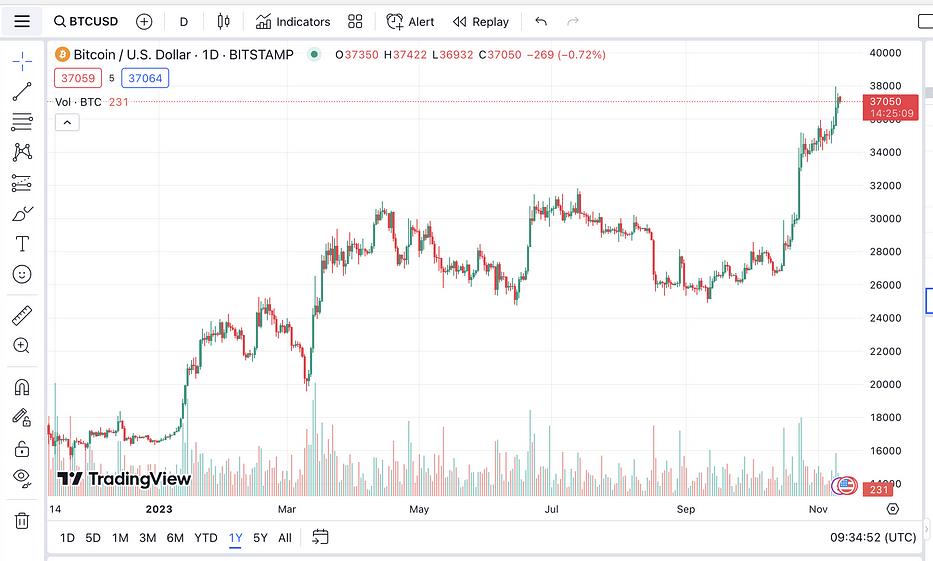
(Figure) Bitcoin price trend over the past six months / Data source: TradingView
Lessons from the Development of Gold ETFs
Bitcoin is often called “digital gold,” and the connection between gold and Bitcoin as stores of value is clear. Therefore, studying the approval process and historical price trends of gold ETFs is highly meaningful for predicting the future trajectory of Bitcoin ETFs. Key milestones and price movements before and after gold ETF approval include:
March 2003: Physical Gold, the world’s first gold ETF, launched in Sydney, Australia. Following this, gold prices rose sharply and continued climbing until the U.S. ETF began trading.
October 2004: The SEC approved the first U.S. gold ETF, StreetTracks Gold Trust (GLD). Gold prices continued a slight upward momentum after approval.
November 2004: The U.S. gold ETF GLD officially started trading on the New York Stock Exchange (NYSE). About two months after GLD began trading, the market dropped roughly 9%, briefly falling below the price at the time of ETF approval. After nearly eight months of consolidation, gold entered a rapid uptrend.

(Figure) Spot gold price movements before and after ETF listing / Source: Caijing Eleven People
Gold ETF approval allowed more traders to invest via ETFs without needing to store physical metal or rely on bank custody. In the following years, gold ETFs triggered subscription booms globally, becoming mainstream investment vehicles and attracting massive inflows. It is widely believed that gold ETF approval directly fueled the subsequent decade-long bull market in gold. Of course, gold’s strong performance was also supported by a relatively stable economic environment and accommodative monetary policy.
Drawing lessons from the history of gold ETFs, we can make preliminary forecasts about Bitcoin ETF price movements before and after approval:
Stage 1: Before U.S. spot Bitcoin ETF approval, sustained market expectations will act as a positive catalyst;
Stage 2: After official U.S. spot Bitcoin ETF approval, the market may experience a modest rally;
Stage 3: Shortly after the U.S. spot Bitcoin ETF begins trading, a peak may be followed by a sharp decline, possibly even dropping below pre-approval levels, entering a consolidation phase to absorb more capital before accelerating upward;
Stage 4: In the long run, the launch of a U.S. spot Bitcoin ETF will open the floodgates for traditional capital, serving as a major catalyst for a Bitcoin bull market.
Impact of Spot ETF Approval on BTC Market Size
Based on research into institutional investor distribution among publicly traded companies with Bitcoin exposure and market caps exceeding $1 billion, incomplete estimates show total institutional holdings in these companies exceed $60 billion. Major holders include internationally renowned asset managers such as Vanguard, BlackRock, and Morgan Stanley. Given these asset managers already offer Bitcoin-related services to clients, a shift of 10% to 20% of their equity positions into direct BTC ETF exposure is plausible, estimating AUM between $6 billion and $12 billion.
From a macro perspective, according to recent analysis by Galaxy Digital Research, the U.S. wealth management sector could be the most accessible and immediate market for a BTC ETF, thus receiving the greatest net new access upon approval. As of October 2023, total assets under management by U.S. traditional broker-dealers ($27 trillion), banks ($11 trillion), and RIAs ($9 trillion) amount to $48.3 trillion.
Galaxy categorized and projected adoption speeds across various channels in this industry. Assuming 10% of available assets in each wealth channel adopt Bitcoin, with an average allocation of 1%—equivalent to a 1‰ ultimate conversion—the conclusion is that nearly $80 billion could flow into Bitcoin spot ETFs cumulatively over three years.
Matt Hougan, CEO of Bitwise, a well-known crypto index fund manager, recently stated that if a spot Bitcoin ETF is approved, its scale could quickly reach tens of billions of dollars. He believes the product could achieve $5 billion in its first year and attract approximately $50 billion in five years. With the U.S. ETF market currently totaling around $7 trillion, his estimate suggests Bitcoin ETFs could capture about 1% of that size—$70 billion. Currently, GBTC (Grayscale Bitcoin Trust) already holds $20 billion, leaving about $50 billion in potential room.
Therefore, initial inflows into a BTC spot ETF on the order of tens of billions of dollars are reasonable, although the actual pace of capital inflow will depend on market conditions at the time of approval and preferences of institutional and retail investors.
Impact of Spot ETF Approval on BTC Price
In its recent report “Size Sizing the Market for a Bitcoin ETF,” Galaxy Digital offered highly insightful projections on how ETF inflows could impact BTC prices. However, due to the time-sensitive nature of the forecast, BTC prices have since risen over 30% from the time of writing, rendering some parameters outdated. We have updated and statistically refined Galaxy’s estimation model accordingly.
Currently, gold’s total market cap is about 19.74 times that of Bitcoin’s circulating market cap. Based on assumptions, equivalent dollar inflows would impact the Bitcoin market approximately 7.3 times more than the gold market. This estimate, based solely on capital inflows, excludes short-term FOMO-driven buying, Bitcoin halving events, macro policy interventions, and other uncontrollable factors affecting price volatility.
Potential Demand and Long-Term Trends for Bitcoin ETFs
As the path toward Bitcoin ETF listing becomes clearer and institutional participation increases, Bitcoin’s role as a powerful financial fortress in the global landscape grows increasingly evident. With Bitcoin’s next halving approaching in 2024, its annual inflation rate will fall below that of gold, making it one of the scarcest value assets. Due to Bitcoin’s fixed supply and four-year halving cycle, its high scarcity and reliable store-of-value properties have driven historically low exchange rates against depreciating fiat currencies such as the Argentine peso, Nigerian naira, and Turkish lira. Spot ETFs will further enhance Bitcoin’s compliance and liquidity—features never before seen—expanding the overall total addressable market (TAM) for Bitcoin ETFs.
Given this latent strong demand, it is expected that in the short term, other global and international markets will follow the U.S. lead, approving and offering similar spot Bitcoin or Ethereum ETF products to broader investors. Traditional investment and wealth management institutions will inevitably add Bitcoin exposure to their investment strategies (e.g., sovereign, mutual, closed-end, and private funds).
In the long run, the target market for Bitcoin investment products could expand further to all third-party managed assets (approximately $126 trillion AUM according to McKinsey) and even more broadly to global wealth (estimated at $454 trillion by UBS). Based on these market sizes, assuming unchanged parameters from Galaxy’s earlier assumption (10% of funds adopting Bitcoin, average allocation of 1%, i.e., 1‰ conversion), potential new inflows into Bitcoin investment products could range between $125 billion and $450 billion over an extended period—a non-negligible scale of hundreds of billions. Viewed more broadly against the size of gold’s overall asset base, a multi-trillion-dollar crypto financial market is on the horizon.
Prediction: Possible Timing for the Next Bull Market
Recent price movements indicate the market has already priced in part of the bullish expectations. Combining historical patterns of gold ETFs, Bitcoin’s halving schedule and past market behavior, and the Federal Reserve’s macroeconomic policy effects, we offer a rough forecast for the timing of spot Bitcoin ETF approval and the start of the crypto bull market:
January 2024: The U.S. SEC is expected to approve spot Bitcoin ETF applications, coinciding with the Federal Reserve pausing rate hikes or markets no longer pricing in further tightening. This could drive a test rally in Bitcoin in January. Prior to that, November 2023 may see sustained gains as positive expectations
Join TechFlow official community to stay tuned
Telegram:https://t.me/TechFlowDaily
X (Twitter):https://x.com/TechFlowPost
X (Twitter) EN:https://x.com/BlockFlow_News
 @MIIXCapital_CN







