








Bordering the Real World: Exploring Native DePIN Projects on Solana
TechFlow Selected TechFlow Selected
Bordering the Real World: Exploring Native DePIN Projects on Solana
Some older DePin projects are also flocking to Solana.
 Navigating Web3 tides with focused insights
Written by: TechFlow
DePIN, or Decentralized Physical Infrastructure Networks, relies on token incentives for its operation and maintenance. In fact, this is not a new concept—since 2017, various blockchain-based hardware infrastructure projects have continuously emerged, yet they have never become central to the crypto narrative.
But why is DePIN being revisited this year? We’re seeing Messari name DePIN as one of the most important areas in crypto investment over the next decade.
I believe there are two main reasons:
1) With technological maturation, infrastructure has significantly improved compared to earlier years, laying a solid technical foundation for DePIN;
2) While Bitcoin’s mainstream breakout has brought new traffic, ordinary people still tend to trust things they can see with their own eyes. NFTs were one such example; DePIN is another.
Recently, DePIN project prices have been highly volatile. Notably, Hivemapper on the Solana ecosystem surged an astonishing 233.4% over the past seven days. Solana places significant emphasis on DePIN, and CoinEx’s latest analysis indicates that Solana's ecosystem focus centers on DeFi, Memecoins, and DePIN.
Established DePIN projects are increasingly gravitating toward Solana. For instance, Render Network—the largest GPU computing DePIN project—voted to expand from Polygon to the Solana blockchain. Additionally, the wireless network Helium successfully migrated to Solana, minting nearly one million NFTs during the transition.
These signs suggest growing attention will be focused on DePIN within the Solana ecosystem.
Early participation often means greater profit opportunities. Let’s explore the native DePIN landscape on Solana.
1. Hivemapper
Hivemapper is a blockchain-based mapping network that collects data via Hivemapper dashcams. Contributors who collect data are known as "map contributors." Thanks to its permissionless nature and token incentives, it outperforms current Web2 solutions in efficiency. To date, Hivemapper has mapped nearly 90 million kilometers.
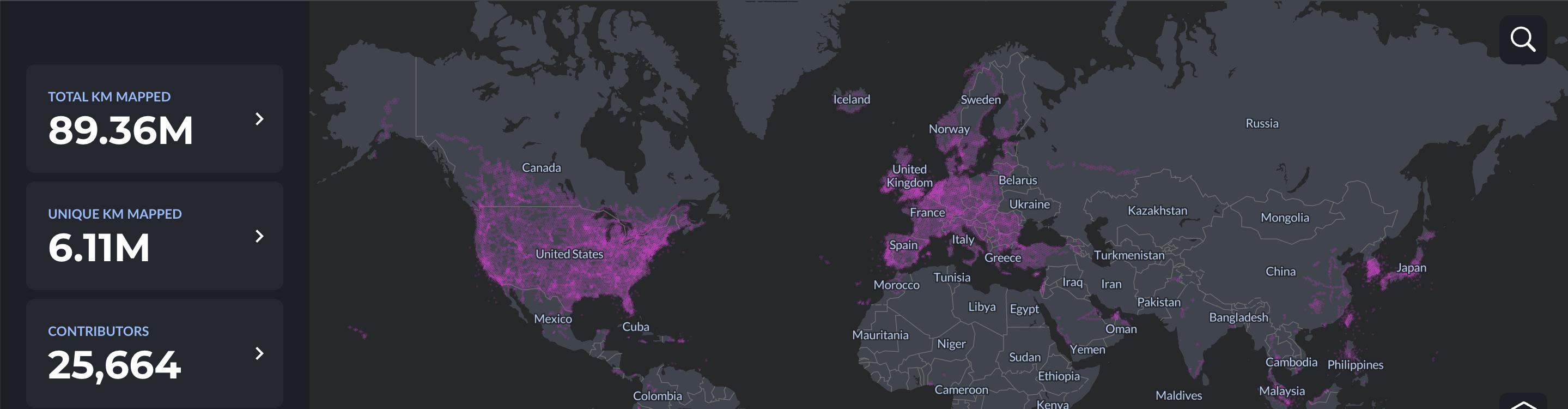
Street view data captured by Hivemapper dashcams is uploaded to the project’s database, filtered through AI, and ultimately provided to map manufacturers, autonomous driving companies, and other data users—referred to as "map consumers."
Founded in 2015, Hivemapper last raised funds in a Series A round on April 5, 2022, securing $18 million led by Multicoin Capital.
HONEY is Hivemapper’s native token, rewarding map contributors for continuously adding fresh, updated information—this is how new tokens are generated. Map consumers are the primary spenders of the token; they must burn HONEY to access APIs. Burned tokens are then re-minted to increase rewards for contributors.
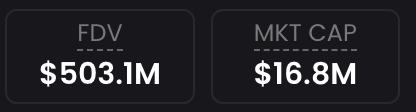
HONEY is a typical Solana ecosystem token, evident from the large gap between its FDV and market cap shown in the chart below. Despite a total supply of 10 billion HONEY, due to its incentive mining mechanism, fewer than 200 million have been mined so far—contributing to the massive disparity between FDV and market cap.
In the future, the team can control the mining release schedule to stabilize and grow the token’s value.
2. Teleport
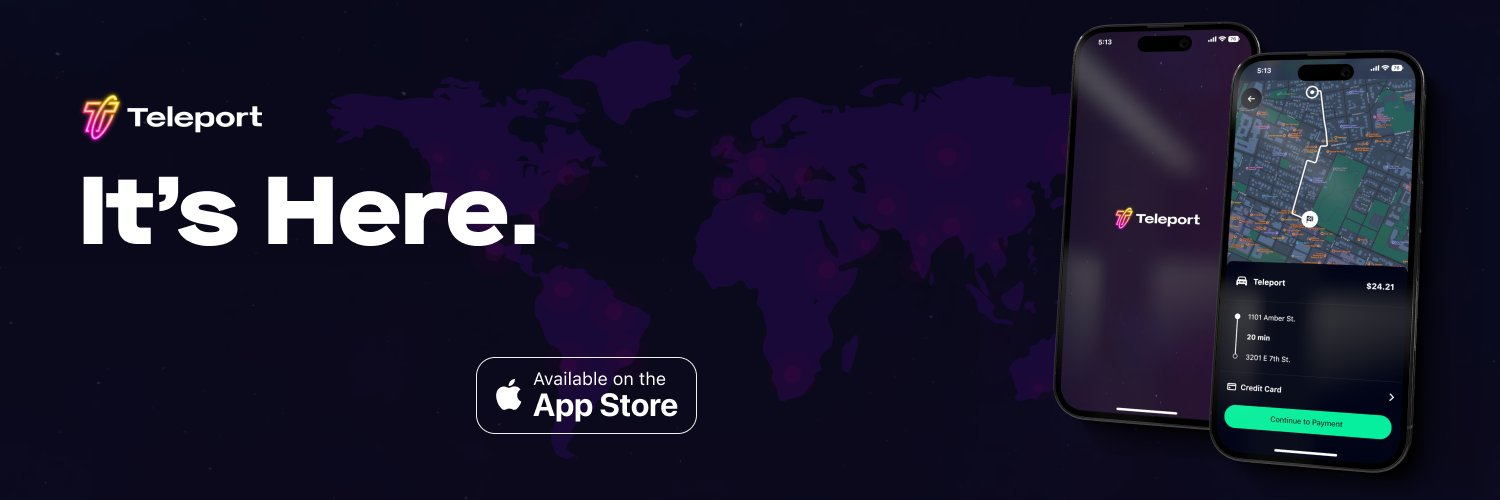
With decentralized maps comes decentralized ride-sharing. Teleport is precisely such a solution and is already available on the Apple App Store.
Teleport is a permissionless ride-sharing app owned and governed by drivers, passengers, and developers. On October 27, 2022, Teleport secured $9 million in seed funding co-led by Foundation Capital and Road Capital.
Teleport founder Paul Bohm views Uber as “essentially a monopoly—highly centralized.” In the ride-sharing industry, platform commissions often exceed 40%, money that doesn’t go to drivers or passengers but instead flows to multinational intermediaries like Uber.
Thus, Teleport has built the Shared Mobility Protocol (TRIP), benefiting drivers, passengers, and local economies while enabling participant-driven governance. For example, centralized ride-sharing services typically prevent markets from setting fair prices; instead, companies like Uber set prices to maximize extracted value. Redesigning ride-sharing as a decentralized system allows participants to choose from multiple interoperable apps and servers offered by different providers. More money goes to drivers, passengers pay less per ride, and more capital remains within local economies.
The TRIP protocol will first be implemented on the Teleport platform. Those contributing to network operations and development will earn TRIP rewards, automatically distributed by the protocol. Some TRIP rewards may take the form of NFTs—for example, earning an achievement like “Circle the City.”
These TRIP rewards also represent participation and voting rights within the network. General governance—including protocol upgrades, authorization process changes, and adjustments to core network parameters—requires voting.
Currently, the project has not launched a token. Follow the official Twitter for updates.
3. Tekkon
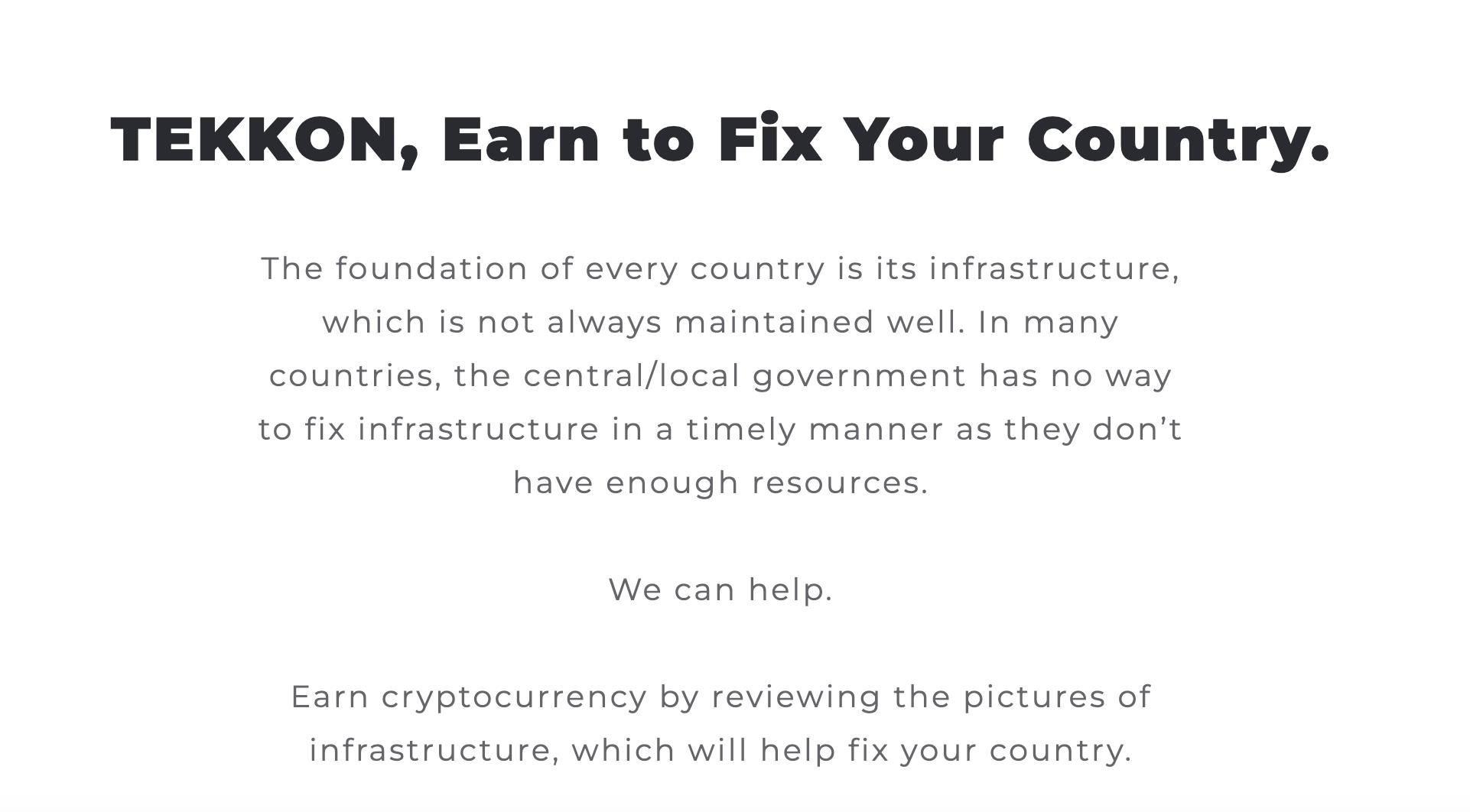
Tekkon is a Japanese project that rewards users with tokens for photographing local infrastructure—such as utility poles and manhole covers—or reporting damaged infrastructure, helping improve their communities. As the image above states, “Fix your city while making money.” Enthusiastic users affectionately call this process “Fix and Earn.”
Tekkon was launched at the end of last year by Takashi Kato through the nonprofit Whole Earth Foundation. The Japanese entrepreneur previously founded Fracta Inc., a startup using software to identify vulnerabilities in urban water supply networks, helping cities, utilities, and construction firms detect pipe corrosion before excavation.
Thanks to token incentives, the app has gained strong traction in the Philippines, where locals have formed organized groups to document damaged infrastructure, calling themselves “infrastructure hunters.” According to prior Bloomberg reports, Tekkon has over 128,000 active users, with 90,000 coming from the Philippines, uploading around 30,000 photos daily.
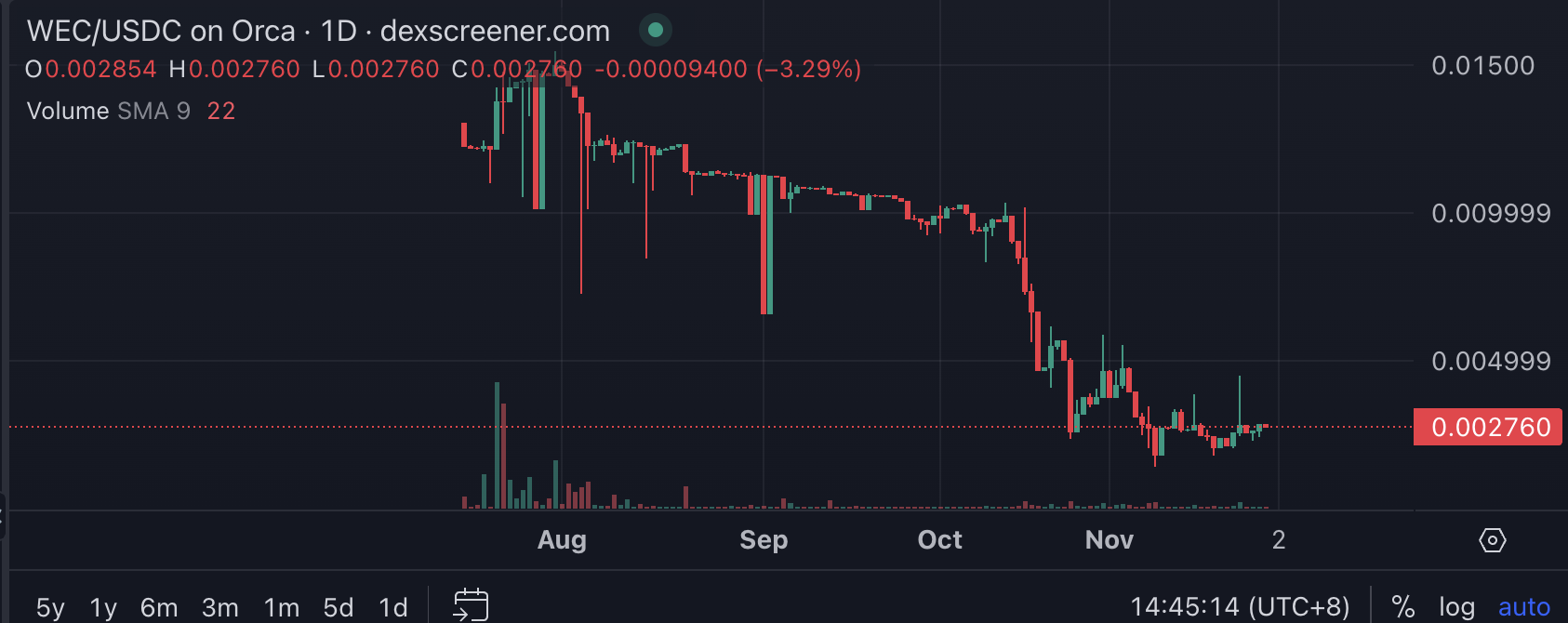
Whole Earth Coin (WEC) is Tekkon’s reward token. In Japan, WEC can be exchanged for cash via Line Pay.
The initial supply is 300 million, with no hard cap. When the initial tokens are exhausted and user growth continues, the system will mint additional tokens to reward users. Of the initial 300 million tokens: 20% are allocated to ecosystem development, 20% to in-app Fix and Earn rewards, 25% to public sale, 15% to private sale, and 20% to the founding team.
WEC includes a burning mechanism within the app—for actions like upgrades or skipping cooldown periods—resulting in token destruction. However, lack of robust use cases remains one of WEC’s weaknesses. Relying solely on in-app burns may not keep pace with token issuance. Moreover, the large initial allocation creates selling pressure, reflected in its price chart.
Tekkon has committed to expanding token utility and building a complete ecosystem flywheel—for example, allowing utility companies to purchase infrastructure photo data using WEC, which could then be burned or redistributed to further reward infrastructure hunters, thereby attracting more utility partners. This indicates Tekkon’s plan to build a more comprehensive and sustainable ecosystem.
4. Helium

As a decentralized wireless hotspot network, Helium is considered the OG of the DePIN sector, with roots tracing back to 2013, having operated as an L1 chain for years.
On April 20, 2023, Helium announced the completion of its migration to the Solana network (HIP 70). Developers expressed preference for Solana due to its vast ecosystem, rich developer base, diverse applications, teams, and lower costs and faster speeds compared to other blockchains.
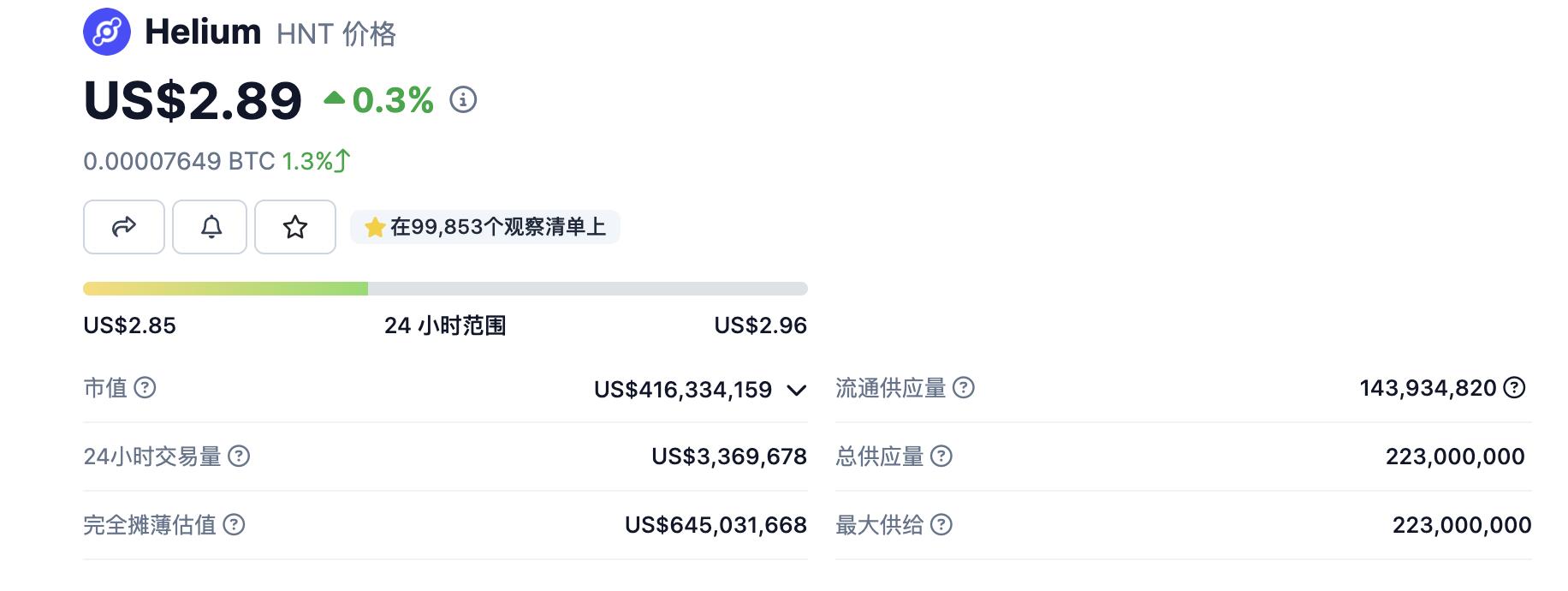
Helium Network Token (HNT) is the native cryptocurrency of the Helium network, with no pre-mine and a maximum supply of 223 million. The only way to pay for data transmission on the Helium network is by burning HNT to obtain Data Credits (DC). Data Credits are priced at a fixed rate in USD (1 DC = $0.00001), are non-transferable, and can only be used by their original owner.
Previously, deploying hotspots earned HNT rewards. However, after HIP-52, the native HNT token is no longer mined by LoRaWAN or 5G hotspots. Instead, two new tokens were introduced: IOT, the protocol token for the Helium IoT network, and MOBILE, the protocol token for the Helium Mobile network.
This multi-token model enables separate governance for each wireless network, allowing DAOs to make better decisions. Each subnetwork can independently manage its Proof-of-Coverage rules, data pricing, and hotspot mining reward distribution.
After deploying or covering networks and earning IOT or MOBILE tokens, users can exchange these network tokens for HNT. This architecture provides a floor value for the network tokens.
Currently, Helium has a market cap of approximately $420 million, making it the largest DePIN project in the Solana ecosystem.
Join TechFlow official community to stay tuned
Telegram:https://t.me/TechFlowDaily
X (Twitter):https://x.com/TechFlowPost
X (Twitter) EN:https://x.com/BlockFlow_News
 深潮TechFlow


