
Solana Airdrop Season Arrives, Driving Key Momentum for Ecosystem Recovery
TechFlow Selected TechFlow Selected
Solana Airdrop Season Arrives, Driving Key Momentum for Ecosystem Recovery
Solana's airdrop season could mark the beginning of its DeFi ecosystem revival.
 Navigating Web3 tides with focused insights
Written by: Jack Inabinet
Translated by: TechFlow

Solana's airdrop season has arrived.
Earlier this month, oracle network Pyth and DEX aggregator Jupiter launched their airdrops, while Jito—the largest tokenless protocol on Solana and its leading liquid staking platform—announced its token on Monday.
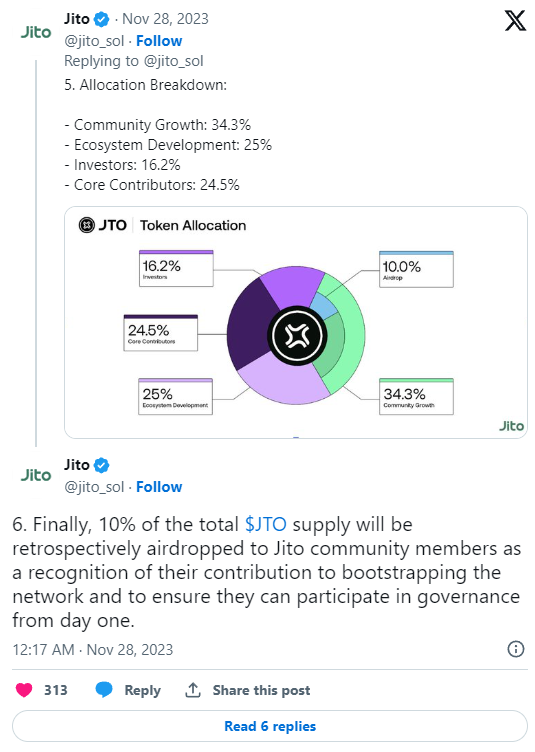
These airdrops are injecting wealth into Solana’s DeFi ecosystem, aiming to reinvigorate TVL across the network.
Today, we’ll examine the impact of these airdrops and explore whether this marks just the beginning of a broader Solana airdrop frenzy.
Underperforming TVL
Despite SOL’s price surging over 500% this year, Solana’s TVL performance has been relatively weak.
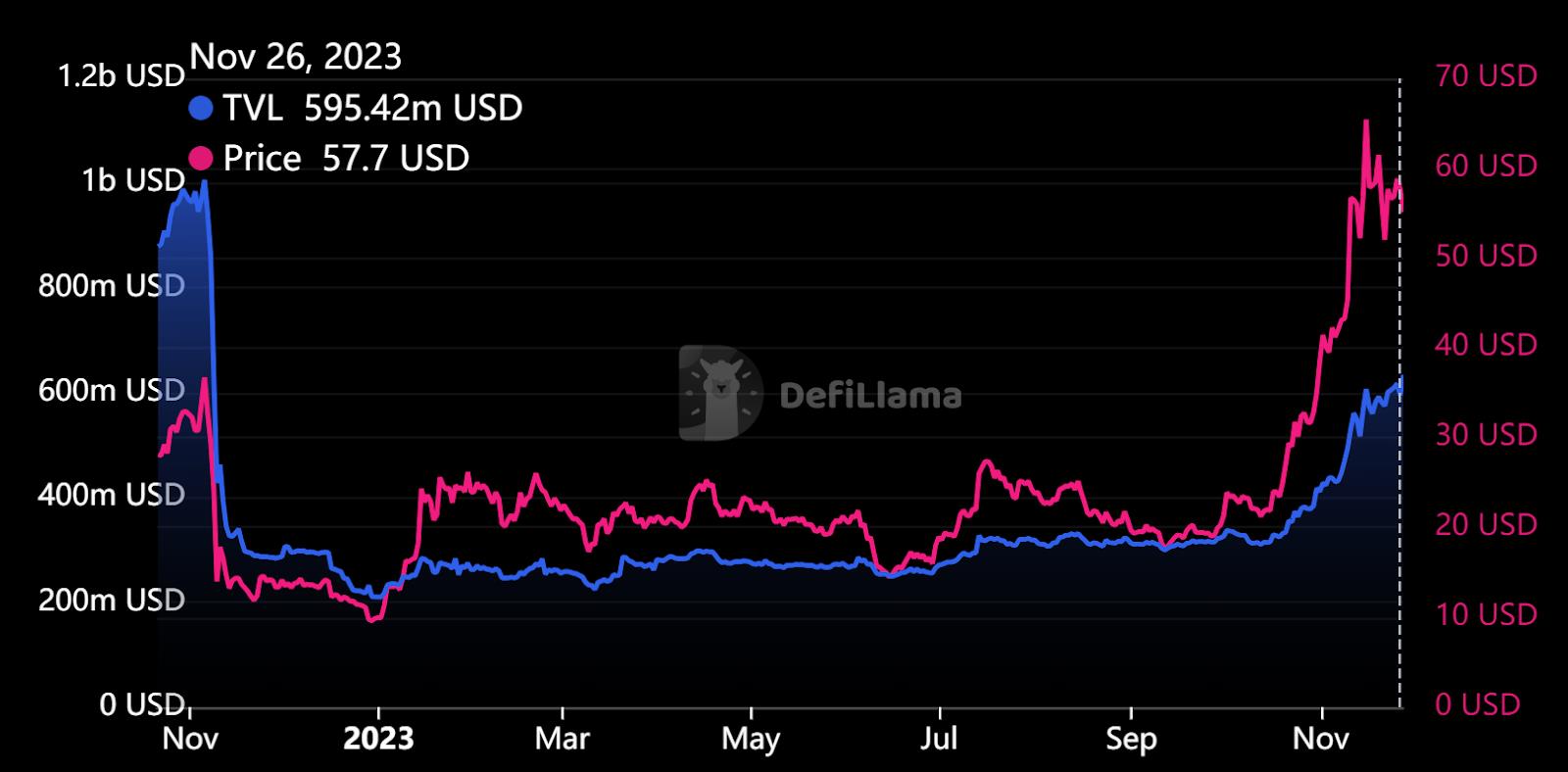
While dollar-denominated TVL on Solana has increased by around 200%, which may seem impressive, it still remains below pre-FTX collapse levels. Moreover, SOL-denominated TVL has actually declined by 45% this year.
Solana’s Next Chapter
Top Solana protocols are distributing tokens via airdrops to their most active on-chain users. As newly acquired token liquidity flows across the Solana ecosystem, the resulting injection of capital should help boost valuations throughout the network.
The arrival of airdrops may not cause TVL to outpace price gains—since the two metrics are positively correlated—but it should provide upward momentum for both, potentially becoming the real catalyst for SOL-denominated TVL growth in 2024.
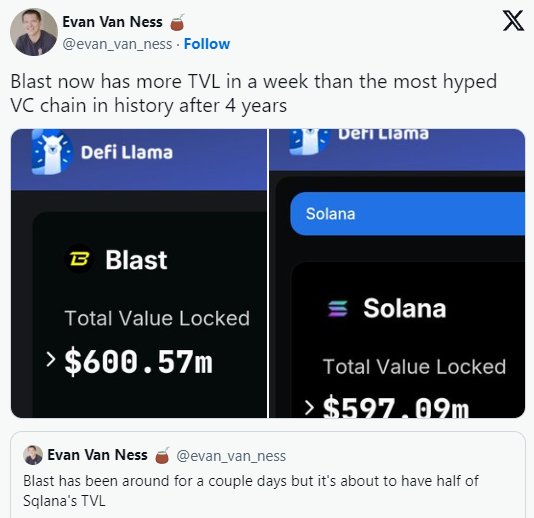
The ability of airdrops to attract TVL was demonstrated during Blast’s rise, when the L2 surpassed Solana’s TVL shortly after launch.
Airdrops are a key component in kickstarting the Solana Supercycle and one of the simplest ways to bring users onto the chain.
Users from EVM chains are eligible for the Pyth airdrop. However, to claim it, they must download a native Solana wallet to receive their Solana-native assets, which can then be used within native Solana DeFi protocols. EVM recipients of the PYTH airdrop could represent new users for Solana.
Airdropped tokens also help draw attention to projects, reminding users and developers that high-quality applications exist on-chain. This strengthens Solana’s position as a viable ecosystem and a legitimate alternative to Ethereum.
Key Takeaways
Solana’s airdrop season could mark the beginning of a DeFi ecosystem revival, but this outcome is far from guaranteed. While top-tier projects may be preparing for large-scale airdrops, the number of innovative Solana protocols with sufficient token supplies available for distribution remains extremely limited.
Currently, liquidity remains concentrated on Ethereum. Protocols like Blast have attracted hundreds of millions in TVL based solely on vague promises of future airdrops and questionable innovation, incentivizing developers to build there instead. As a result, Solana faces an uphill battle for protocols, liquidity, and users.
With its low-fee environment, global state machine, and ability to achieve consensus at lightning speed, Solana is uniquely positioned to unlock entirely new categories of applications impossible on Ethereum.
While the hype cycle around airdrops—and the associated wealth effect—may be enough to attract new participants to Solana and support key metrics, long-term success will require Solana to cultivate its own robust DeFi ecosystem and support a wide array of protocols ready to distribute tokens.
Perhaps airdrops will catalyze another wave of Solana protocol development; however, unfortunately, the depth of current tokenless protocols on the network remains shallow, significantly limiting the potential benefits airdrops could bring to the Solana ecosystem.
Join TechFlow official community to stay tuned
Telegram:https://t.me/TechFlowDaily
X (Twitter):https://x.com/TechFlowPost
X (Twitter) EN:https://x.com/BlockFlow_News
 Bankless