








RWA + Gaming: Will It Be the Engine of This Bull Market?
TechFlow Selected TechFlow Selected
RWA + Gaming: Will It Be the Engine of This Bull Market?
As one of the most functional and scenario-driven application areas for blockchain technology, gaming is naturally positioned to become a bridge connecting blockchain technology and RWA.
 Navigating Web3 tides with focused insights
Authors: Guage & Brian, Gua Tian Lab W Labs
This article was initially written in early November 2023. As of today, November 28, BTC has repeatedly attempted to break through and stabilize above the 38,000 price zone—a key area of concentrated holdings. The fourth new narrative mentioned in this article—“Bitcoin ecosystem”—has become the leading sector driving this bull market surge. Ordi, listed on Binance, has surged fourfold within just 10 days. Then comes the question: will RWA (Real World Assets), highlighted as the third new narrative in this article, also get its moment to shine in this bull cycle? And what sparks might emerge when it collides with gaming?

1. Has the Bull Market Arrived?
Looking back from November 2025, two years into the future, one might be amazed to realize that October 23, 2023 could mark a defining starting point for this bull market: within 24 hours, BTC rocketed from 30,000U to 34,000U. Many who had heavily invested around 20,000U are now celebrating: “See? I told you the crypto bull market would come!” Meanwhile, those who missed the entry remain skeptical: “There’s no sign of fresh capital on-chain yet, and stablecoin supply like USDT remains low. This is just a fake rally fueled by ETF speculation—it’ll correct soon!”

The bullish argument rests clearly on three major catalysts expected to sustain the bull run:
-
Bitcoin ETFs accelerating institutional inflows;
-
The May 2024 Bitcoin halving, pushing mining costs above $28,000;
-
An end to U.S. rate hikes, possibly followed by rate cuts.
Regardless of whether this is a real or fake bull market, one thing keeps me thinking: to sustain a genuine bull run lasting at least 12 months, the industry must evolve with new narratives. Among the three catalysts above, the first and third are external forces. The second—the quadrennial halving—is a rule written into Bitcoin’s whitepaper known to everyone since day one. So what new industry narratives will truly drive this bull market? Without internal innovation, relying solely on external news and policy tailwinds, any rally will likely be short-lived.
Let’s revisit the last bull market’s trajectory: it began in July 2020 with DeFi Summer, as BTC took off from around 10,000U. DeFi represented a major innovation—using smart contracts to simulate parts of the traditional financial system: collateralized lending, decentralized exchanges, derivatives, etc. Then came endorsements from influencers like Elon Musk. Next emerged NFTs and GameFi 1.0, products that allowed newcomers to enter crypto without mastering complex DeFi concepts, offering fun and even life-changing gains. Finally, the rise of the metaverse concept culminated in Facebook rebranding to Meta. The bull market peaked in November 2021, with BTC reaching 69,000U.
2. New Narratives of This Bull Market
Notice how DeFi, NFTs, GameFi 1.0, and the metaverse were all native innovations fueling the previous bull run. What about this cycle? What are the new evolutionary drivers—what we call “new narratives”? Here’s our summary:
-
SocialFi: Decentralized social platforms, exemplified by Friend.Tech’s sudden breakout;
-
GameFi 2.0: Web2.5 games where assets are on-chain but gameplay remains centralized, focusing on strong gameplay enhanced by tokenized assets;
-
RWA (Real World Assets): A massive sector capable of bridging traditional finance (“old money”) with crypto. Recently highlighted in Hong Kong’s crypto circles, DePIN is also part of the broader RWA space;
-
The rise of the Bitcoin ecosystem: BTC is increasingly seen across Web2 and Web3 as a digital store of value akin to gold. Why not build on it? After all, gold has spawned countless financial derivatives—why not Bitcoin?
Today, we’ll focus on RWA—the third point above—because I believe RWA is an extension of DeFi, the previous cycle’s engine. Think about it: DeFi used code to generate virtual tokens and simulate financial systems via smart contracts. It’s like children playing house—with roles, props, and routines—but does it impact the real world? Not really. Outside observers still see most cryptocurrencies as “air,” except BTC, which has some recognition in Web2. So what meaning do complex operations built on “air” really have?
Does that mean DeFi is meaningless? Not at all. Rather, DeFi was only the first half of this larger narrative. It laid the foundation—the kitchen, tools, and chefs—now waiting only for ingredients. That’s why I see RWA as the second half of DeFi, much like how *A Chinese Odyssey*’s two films—*Pandora’s Box* and *The King of Hearts*—must be viewed together for full appreciation.
3. How to Unlock RWA
What exactly is RWA? Short for Real World Assets, fully translated as “tokenization of real-world assets.” RWA can be categorized by underlying asset types into tangible and intangible forms. Tangible assets include real estate, commodities, art, etc.; intangible ones include bonds, stocks, carbon credits, etc. Since RWA relies on real-world assets, it requires off-chain legal processes for ownership verification and valuation, followed by tokenization via DeFi protocols and circulation on-chain, with oracles monitoring changes in asset value.
RWA already has practical use cases. Stablecoins like USDT and USDC are themselves RWA examples. Others include physical asset projects like “Satoshi Island” and financial assets such as this year’s trending RWA U.S. Treasury bonds. These represent tokenized on-chain assets backed by real-world equivalents. Interestingly, Bitcoin ETFs follow a reverse financial RWA model: Web2 capital uses compliant ETF products to gain exposure to Bitcoin. In contrast, RWA Treasuries allow Web3 capital to invest in U.S. bonds without exiting the ecosystem, earning ~5% annual returns.
The STO (Security Token Offering) boom of 2018 was an early attempt at RWA, spawning numerous Web3 startups aiming to tokenize traditional assets compliantly—projects like tZERO, Polymath, Aspen—and pilot cases such as Aspen REIT and Resolute.Fund Fundament Group. However, due to market conditions, economic cycles, and regulatory hurdles, the STO market failed to scale as envisioned.
Current RWA models are relatively simple: asset tokenization similar to securitization, enabling crypto capital (e.g., stablecoins) to own rights or yields from real-world physical or financial assets. These are mostly one-to-one mappings, still constrained by real-world legal frameworks. To make RWA more dynamic and inclusive, we need better-designed user experiences—what we call foundational RWA infrastructure—which we believe will shine brightly in this bull market.
Imagine entering a Monopoly- or The Sims-style game world, connecting your wallet, and using in-game tokens or stablecoins to buy Tesla stock, enjoying perks directly from Elon Musk. Or while virtually touring a city, purchasing shares of landmark REITs and becoming a real estate investor. Wouldn’t that be exciting? Of course, we’re focusing here on user experience; integrating with real securities regulators and navigating legal compliance will require skilled project teams.
Broadly speaking, these RWA application scenarios fall under the metaverse umbrella, but they are harder-core in terms of security and Web2 integration, warranting their own distinct narrative. Currently, gamified RWA appears best positioned to attract users—not only linking Web3 wallet assets to the real world but also giving Web2 users a taste of Web3’s unique advantages: no paperwork, just wallet connection; transparent, real-time holdings; and instant tradability.
So how do we help Web2 users smoothly transition into Web3 and embrace the RWA + gaming model? Let’s empathize: what challenges and desires would a typical Web2 user face when stepping into an RWA + Web3 or proto-metaverse world?
First, they’d feel overwhelmed by unfamiliar Web3 concepts—blockchains, wallets, DeFi—seemingly simple but deeply complex with no clear learning path. Then, drawn by stories of overnight wealth, they’d want to jump in but fear getting rekt, so they seek guidance and reliable investment insights. Lastly, they desire genuinely enjoyable gameplay and hope their virtual identity unlocks exclusive real-world experiences—bridging online prestige with offline rituals.
This vision may sound idealistic, but it reflects the genuine, fundamental aspirations of most Web2 users entering Web3. Are there existing products or games meeting—or partially fulfilling—these needs? We scoured the market and found several promising examples worth sharing.
4. RWA + Gaming Case Studies
1. DeFi Kingdom
Want to learn Web3 but find reading articles, whitepapers, and doing research boring? Is there a product where you can learn while playing? Yes—and DeFi Kingdom is one such project.
DeFi Kingdom, a product from the last bull market, is a Play-to-Earn game built on the Harmony blockchain. But it’s more than a game—it’s also a DEX and an NFT marketplace. Its entire map visually gamifies DeFi and NFT functionalities. For example, in Gardens, users provide liquidity via Druid to earn Jewel tokens. In Marketplace, players buy the game’s main token Jewel and stake it in the Jeweler Bank to receive xJewel, gaining governance rights and voting power. Traders can swap Jewel, Harmony tokens, stablecoins, and other major cryptocurrencies.
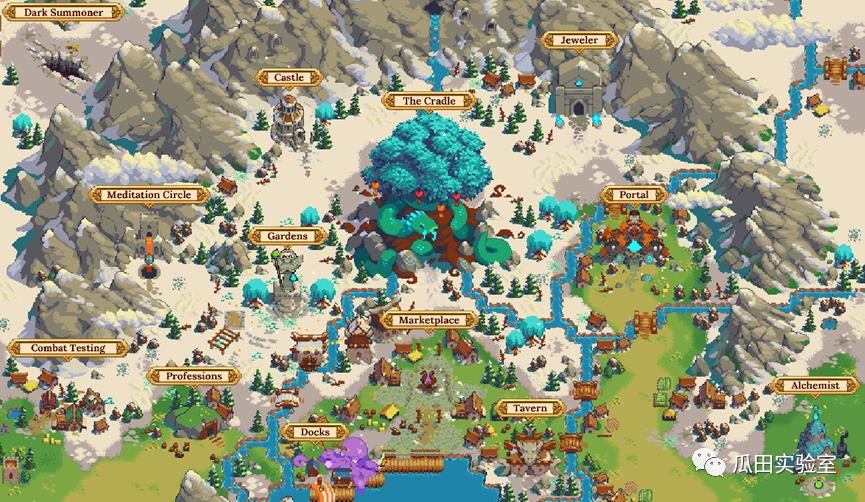
Another core component revolves around hero NFTs: blind box purchases, quest rewards, PVP battles, etc. Players can buy or rent heroes at the Tavern and breed them to produce offspring. Heroes have attributes like lineage, class, rarity, and stats, which influence their offspring. Higher lineage allows more breeding attempts at lower costs. Offspring traits follow probabilistic distributions, requiring strategic understanding. With heroes, players undertake tasks like Garden Guard, Jewel Mining, and Dungeon Raids to protect gardens or discover treasures. They can also form trios for regular tournaments and prizes.
Later updates introduced land, buildings, equipment, and enhanced PVP, forming a richer game ecosystem. Overall, DeFi Kingdom successfully integrates DEX and NFT marketplace functions into gameplay. Players learn, use, and experience DeFi and NFT trading hands-on while earning tokens through Play-to-Earn, staking, and mining—a true multi-benefit design.
But like many games, excessive financialization led to a death spiral. According to Defi Llama, the game’s TVL peaked above $900 million in early 2022, making it Harmony’s top traffic driver. But as the bull market faded, TVL dropped to around $2.2 million—just 0.2% of its peak.
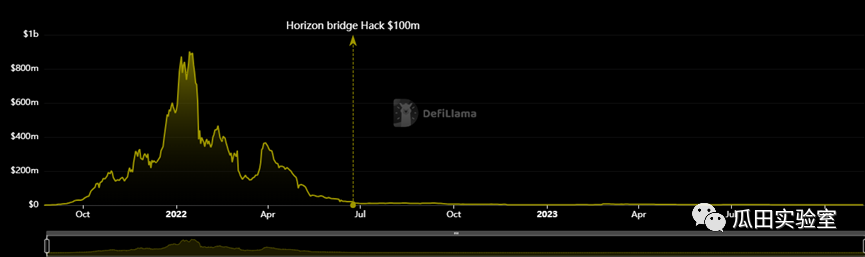
DeFi Kingdom pioneered the gamification of DEX and NFT markets, profoundly influencing the Web3 landscape. Similarly, RWA + gaming needs seamless integration—embedding RWA into engaging game environments so players unconsciously learn financial concepts and participate in investment simulations. That would be a groundbreaking leap for RWA.
2. Monopoly-Style Board Games
Real estate is one of RWA’s primary asset classes, naturally evoking Monopoly-style games. Most readers likely played Monopoly variants—digital or physical—at some point. Like in Web2, Monopoly-style games remain popular in Web3. Two notable titles today are Meta World (Richman 2) and Mhaya.
Richman 2 is a new title from Netmarble, South Korea’s largest mobile game developer. It’s a property-building strategy board game based on classic Monopoly mechanics—rolling dice, building houses, upgrading properties, collecting tolls, and winning. It adds Web3 elements: players connect Web3 wallets to exchange for diamonds, then convert them into crystals and in-game items.
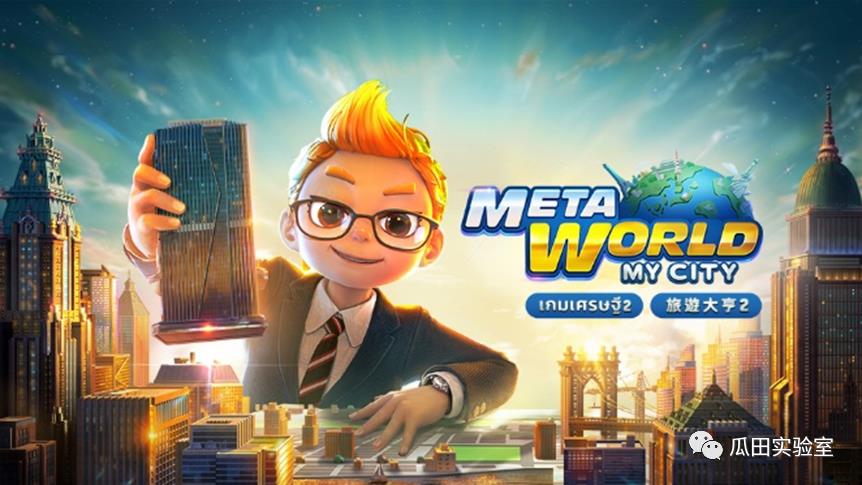
The game’s highlight is a virtual island feature where players build real estate for passive income—the higher the property value, the greater the yield. Owning land NFTs grants additional token rewards. Players earn trophies through gameplay and competitions; more trophies unlock higher investment tiers and boost earnings. Hero characters unlock progressively, offering bonuses like special dice rolls or free constructions.
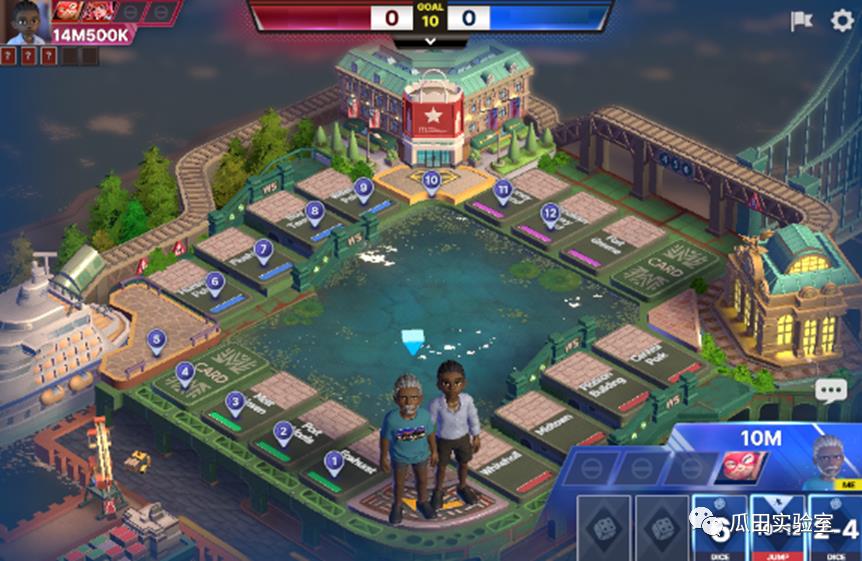
Overall, Richman 2 stands out in Web3 for its high production quality—graphics, smoothness, and gameplay closely match traditional Web2 standards. Adding Web3 elements ignited player enthusiasm for earning. Community forums show many actively strategizing to maximize profits, achieving solid returns.
Mhaya, another Monopoly-style game, is still in closed beta. It raised $5 million in a Pre-A round earlier this year and recently completed an NFT airdrop with four tiers (F1–F4), each offering different values, staking yields, and output rates. High-tier NFTs are generated in-game and offer exponentially higher productivity.
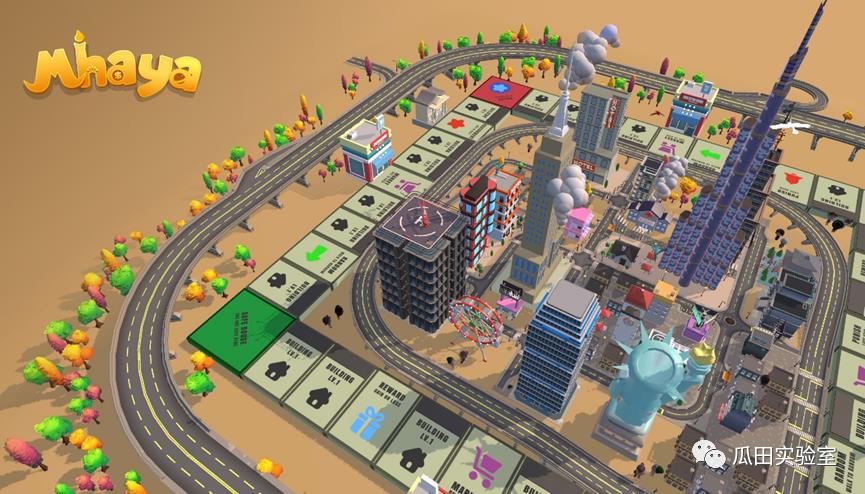
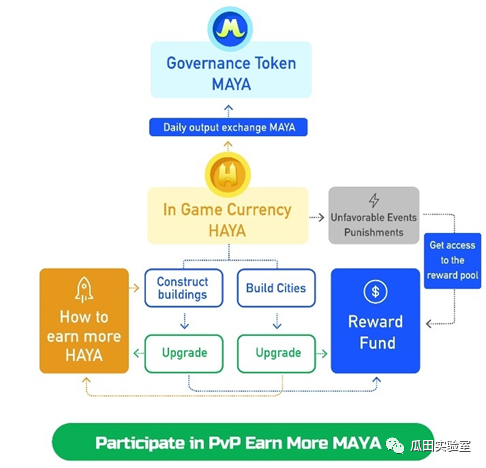
Mhaya emphasizes free access, ease of use, earning potential, and anti-monopoly design. It offers single-player and multiplayer modes, allowing players to build structures, collect tokens, explore lucky events, and create cities. The game includes transparent, randomized reward mechanisms. Of 40 total events, 82.5% are favorable, 2.5% negative, and 15% random. When triggering random events, players have a 64.44% chance of favorable outcomes versus 35.56% unfavorable. Profits mainly come from constructing buildings—commercial or wonder types—with higher-level buildings yielding bigger rewards. Stepping on a building cell grants HAYA tokens, with amounts determined by character and building levels.
The game features two tokens: MAYA (governance) and HAYA (in-game currency). HAYA is earned through gameplay and staking. A standout design is the dual pool system—free (10% of total supply) and staking (60%)—showing strong commitment. The large staking incentive encourages long-term holding, reducing sell pressure. Character NFTs can be obtained via MAYA, with different tiers offering varying output rates.
These two high-profile Monopoly-style games exemplify Web3’s financial simulation genre. Such games are ideal candidates for RWA integration, given their real estate investment framework and potential for Web3 enhancement to combine fun with earning. However, their weakness lies in prioritizing entertainment over education—they don’t realistically simulate actual investment processes or details. In short, they remain purely fictional games, lacking real-world real estate linkage, educational depth, or true RWA functionality.
3. AssetClub
Recently, a game called AssetClub caught attention. At first glance, it seems like another Monopoly-style Web3 board game. But after trying the beta version, I realized it’s actually a digital version of the Cashflow board game. Many may recall attending offline Cashflow seminars—popularized by books like *Rich Dad Poor Dad*—where a single session lasts 2–3 hours. Yet participants remain deeply engaged, simulating investments, wealth growth, and life events. Each game feels like living a parallel life. At the end, reflections bring joy, regret, and nostalgia—imagining how different choices at key moments could have changed outcomes. AssetClub digitizes this experience, compressing gameplay into 10–20 minutes per session.

AssetClub features a board-game interface, but unlike Monopoly’s goal of building properties and collecting tolls, its objective is achieving financial freedom—monthly investment income exceeding monthly expenses. The game faithfully simulates 40 golden years from age 25 to 65, guiding players from fresh graduates to professionals experiencing career progression, marriage, parenthood, and investment journeys, ultimately striving for financial independence. Emphasizing randomness, each move lands on unpredictable events, and map layouts vary—ensuring unique experiences and diverse life reflections every time.
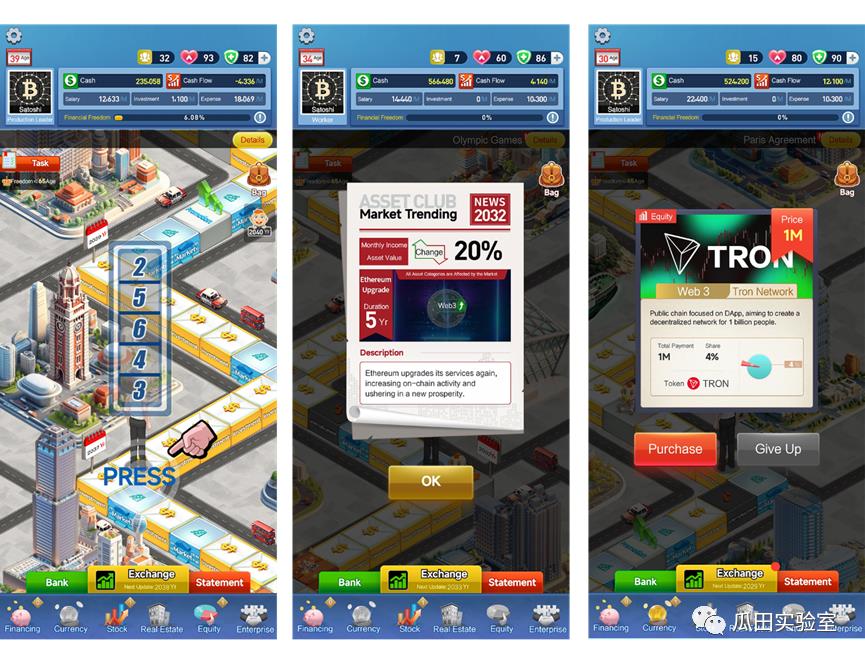
Another key feature is its integration of Web3 knowledge—through quizzes, simulated investments, and cryptocurrency trading—enabling rapid exposure to Web3 concepts and hands-on familiarity. Through simulated asset fluctuations, players intuitively engage with assets of interest, anticipating opportunities and risks ahead of real investment.
Tokenomics include two tokens: ACC and FLC. ACC is the in-game currency, used for drawing professions, battling, buying items and gear. FLC serves as the governance token, conferring staking, voting, and platform revenue-sharing rights.
Beyond gameplay, the project aims to build a global investor community—a decentralized, borderless, shared investment world where users learn, share, explore, and practice digital assets. This ties back to the first new narrative mentioned earlier: SocialFi.
More notably, unlike the previous Monopoly-style games, AssetClub intends to execute real RWA initiatives. The founding team previously worked in Web2 financial education and is now leveraging AssetClub to bridge their existing real-world networks—establishing fast-track investment channels (brokers, banks, advisors)—and using gameplay data and player preferences to recommend personalized investment products. In the future, players might directly trade global stocks and bonds using cryptocurrencies within AssetClub.
Going forward, the team plans to enrich game assets by linking them to real-world benefits—hosting investment meetups, cocktail parties, VIP services—to attract Web2 users and achieve true reverse breakout.
Overall, AssetClub is a game-based financial education platform at its core, with investment resource integration as its essence. Players practice Web3 investment strategies, reflect on life lessons, uncover wealth insights in community discussions, and strengthen connections between virtual and real worlds. Conceptually innovative, AssetClub holds the greatest potential to break through with RWA + gaming fusion—an exemplary case of this bull market’s new narrative. The project has completed a seed round, though details remain unannounced. It will soon launch on Google Play and App Store—worth checking out for interested readers.
5. Conclusion and Outlook
In this in-depth research piece, we examined favorable conditions for the upcoming bull market, compared them with the previous cycle’s foundations, outlined four new narratives for this bull run, and analyzed the evolution of the RWA sector. Finally, through four case studies—DeFi Kingdom, Richman 2 + Mhaya, and AssetClub—we explored potential breakout models for RWA + gaming.
RWA isn’t a new idea. Since blockchain’s inception, people have sought to empower real economies and finance using its transparent, immutable transaction features. Yet after years of effort, only payment and transaction use cases have achieved mainstream adoption. Within RWA’s vast landscape of real-world assets, which category will next break through? Some say U.S. Treasuries—the most standardized financial product. Others say real estate—the most critical bridge to the physical world. We believe beyond financial and tangible assets, integrating Web2 business models is another crucial frontier.
On another front, gaming—as one of blockchain’s most functional and scenario-driven applications—naturally holds potential to bridge blockchain technology and RWA. By gamifying complex, dry financial principles into vivid, entertaining formats, games enhance user understanding and engagement. DeFi Kingdom exemplifies DEX gamification; Richman 2 and Mhaya represent real estate investment simulation; AssetClub takes a broader approach—appearing as a wealth simulation game but aiming to become a Web3 investment, networking, and resource-integration platform. Each model holds breakout potential in finance, real estate, and integrated investing, respectively.
In the opportunity-rich Web3 space, achieving financial freedom remains a top aspiration. Just like in games, life itself is a journey of progress. We hope readers continue self-education, seize the new RWA narrative in this bull market, and achieve personal breakthroughs.
Join TechFlow official community to stay tuned
Telegram:https://t.me/TechFlowDaily
X (Twitter):https://x.com/TechFlowPost
X (Twitter) EN:https://x.com/BlockFlow_News
 瓜田实验室W Labs






