Ultimate Guide to "Digital Nomad Visas": Over 40 Countries Across 5 Continents to Kickstart Your Digital Nomad Journey
TechFlow Selected TechFlow Selected
Ultimate Guide to "Digital Nomad Visas": Over 40 Countries Across 5 Continents to Kickstart Your Digital Nomad Journey
"Digital Nomad Visa" is a reciprocal and mutually supportive visa system.
 Navigating Web3 tides with focused insights
By Freya&Liang

Do you want to become a digital nomad?
Answering Zoom calls in the Sahara Desert, opening your laptop for work by the sea in Lisbon, diving and swimming after work in Bali...
According to research reports, the global number of "digital nomads" reached 35 million in 2022. After the pandemic, remote working has gradually gained popularity, and in emerging fields such as Web3, digital nomads have already become the norm.
However, there's always one hurdle standing in front of digital nomads—the visa. Tourist visas usually only allow stays of 30-90 days, making it difficult for digital nomads to live long-term in a given country or region.
Fortunately, to accommodate this trend, multiple countries have introduced measures to promote remote work and the development of “digital nomads,” launching long-stay “Digital Nomad Visas.”
According to Forbes, by the end of 2022, more than 40 countries worldwide had launched Digital Nomad Visas. Currently, at least 15 European countries—including Germany, Spain, Greece, Croatia, Estonia, Latvia, and the Czech Republic—have successively released digital nomad visas, remote worker visas, or self-employment visas suitable for remote work. In addition, countries like Japan are also accelerating their rollout.
Among them, the most popular are Schengen countries in Europe such as Portugal, Spain, and Estonia. Obtaining a digital nomad visa from any one of these countries allows you to reside across all 27 Schengen nations. Many countries grant permanent residency (green card) after five years of continuous residence.
So, how do you apply for a digital nomad visa? Which countries currently offer such visas? What are the specific requirements? And what should you keep in mind when living locally?
To answer these questions, TechFlow has compiled a comprehensive guide on Digital Nomad Visas, covering over 40 countries across five continents.
Overall, applying for a digital nomad visa typically requires meeting the following basic conditions:
-
A passport valid for several months beyond the application period;
-
Age 18 or older;
-
Passing a criminal background check from your home country;
-
Proof of self-employment or remote work capability, generally requiring work for overseas employers or clients without competing with local job opportunities;
-
Income/savings proof: Standards vary by country, generally requiring personal monthly income between €1,500–5,000 or savings of $10,000–20,000; if accompanied by family members, income requirements increase proportionally;
-
Visa fee payment: $40–3,000 per person;
-
Paying taxes according to local residency policies;
-
Providing accommodation proof or rental agreement;
-
Possession of health or travel insurance.
Europe
Portugal

Thanks to its relatively affordable cost of living, pleasant climate, and favorable tax policies, Portugal has gradually become a hub for digital nomads in Europe—and also a center for Web3 in Europe. For example, Lisbon hosts a large number of Web3 professionals.
Previously, digital nomads mainly applied for the D7 visa in Portugal. In October 2022, Portugal officially launched its dedicated “digital nomad” visa.
Upon successful application, digital nomads can legally reside and work in Portugal for one year, though two-year visas are also available—requiring applicants to apply for long-term residency at immigration offices upon arrival.
With this visa, you gain free access to other Schengen countries. As long as you meet eligibility criteria and have no criminal record or misconduct, you may renew the visa, up to a maximum of five years. After five years of legal residence, you can apply for permanent residency.
How to apply? The following conditions must be met:
-
Citizen of a non-EU country;
-
Minimum remote income of €3,040 per month (+50% with spouse, +30% per dependent child);
-
No criminal record;
-
Proof of accommodation in Portugal for one year (rental or purchase);
-
Long-term contract for remote work with a company registered outside Portugal;
-
Health insurance covering the entire duration of stay.
Remote income is central to the entire digital nomad visa application process. Applicants must demonstrate stable and sufficient remote income. Stable income documentation is easiest to verify. If the applicant is a shareholder in a company, income can also be proven via dividends.
Typically, the Portuguese digital nomad visa application process takes up to four months. However, some mainland Chinese passport holders report that applications from within China are relatively difficult due to stricter scrutiny, particularly regarding adequate tax documentation.
Estonia

Estonia, one of the Baltic states, consists of a mainland portion and about 2,222 islands in the Baltic Sea, featuring a humid continental climate.
Known for its digital governance, Estonia was the first country globally to launch an official digital nomad visa. The visa permits a one-year stay, allowing digital nomads to remotely work for any employer registered outside Estonia.
Holders receive an Estonian e-Residency ID, enabling online registration of foreign companies, bank account applications, and other services—particularly convenient for independent developers. With advanced IT infrastructure and Schengen Area access, this visa offers broad mobility.
The visa costs €100. Applicants must either work remotely for a company registered outside Estonia, own a business abroad, or operate as freelancers serving foreign clients, and must submit proof of monthly income of at least €4,500 over the past six months and ongoing.
If staying longer than 183 days/year, visa holders must pay taxes in Estonia. The rule is: first pay taxes in your home country, then approximately 22% on remaining income in Estonia.
One holder reported being asked the following during the interview:
-
Why are you applying for this visa?
-
Why not apply for a tourist visa?
-
Tell us about your current company’s business.
-
Describe your personal background.
-
What do you plan to do once you arrive?
Spain

The Spanish digital nomad visa is valid for one year and can be renewed for up to five years total. After five years, applicants may apply for permanent residency.
This visa is intended for those working remotely for companies outside Spain, although income from Spanish-based companies cannot exceed 20% of total earnings.
Application requirements:
1. Applicants must be freelancers with foreign clients or employees of companies based outside Spain, having held the position for at least one year prior to application, with at least three months of remote work experience in the role (freelancers may have Spanish clients but not exceeding 20% of total clients or income);
2. Monthly income of at least €2,334 (double Spain’s national minimum wage; +25% per accompanying family member);
3. Must hold a bachelor’s, master’s, vocational training, or business school degree and be considered a highly skilled professional, or have worked professionally in their field of study for the past three years;
4. Must not have resided in Spain for five consecutive years.
For the first four years of residence, individuals earning less than €600,000 annually are taxed at only 24%.
Some Spanish digital nomads complain about bureaucracy, slow processes, low English proficiency, unclean urban environments, high taxes, and relatively low IT salaries (around €2,000 net). On the plus side, the weather, food, holidays, and presence of Chinese communities are appreciated.
Croatia

On January 1, 2021, Croatia launched its digital nomad visa, allowing foreigners to live and work remotely while enjoying the lifestyle. The government waives personal income tax for digital nomads, and holders may bring immediate family members.
The visa allows stays of six months to one year. It cannot be extended upon expiration but can be re-applied for six months after expiry.
Visa fees range from €75 to €155. Applicants must work remotely as freelancers, employees, or entrepreneurs for companies registered outside Croatia. They must provide income proof showing at least €2,539.31 per month (~$2,737.43), or bank deposits of at least €30,471 (~$32,849).
Note: This visa does not lead to Croatian permanent residency, as applicants must leave Croatia for six months after each permit expires. Also, if you cannot enter Croatia visa-free or don’t yet hold a valid visa, you cannot apply online—you must go through a local embassy.
Romania

Romania ranks among the EU countries with the fastest fixed broadband internet speeds and offers a relatively affordable cost of living. Visa holders may reside for at least one year and renew for another year.
In Romania, you will not be considered a tax resident as a digital nomad if you spend fewer than 183 days in the country within any consecutive 12-month period.
Applicants must prove remote work for a company registered outside Romania, as a freelancer or business owner, with a required income of €3,700/month and health insurance coverage of at least €30,000 during their stay.
Currently, Romania is an EU member but not part of the Schengen Area—though it is expected to join soon.
Hungary

Budapest has long attracted adventurous remote workers. Since Hungary is part of the Schengen Area, visa holders can travel visa-free to all 27 Schengen countries.
The Hungarian digital nomad visa is only available to non-EU nationals. Holders may stay for one year, with an option to renew for another year. However, it is an individual residence permit—spouses or family members cannot be included. Married applicants’ spouses must separately apply for a White Card and meet eligibility criteria.
Third-country nationals who can enter Hungary visa-free may apply online. Those requiring an entry visa must apply through a local Hungarian embassy or consulate. Applicants must submit proof of employment or self-employment with a company registered outside Hungary, along with six months of income documentation totaling €2,000.
Germany

Although Germany does not have a dedicated digital nomad visa, it offers a Freelance Visa—a residence permit allowing foreign freelancers and self-employed individuals to live and work in Germany for six months to three years.
Applicants pay a €100 visa fee and must prove financial self-sufficiency. Germany requires remote workers to pay taxes and recommends applicants have multiple clients.
Due to German language requirements and extensive documentation needs—including bank statements, portfolios, and professional qualifications (e.g., diplomas)—the application process is more complex than in other EU countries. Applicants must also register with the German tax office and submit relevant paperwork.
Norway

Norway offers an Independent Contractor Visa for digital nomads and remote workers, allowing non-EU or EEA foreigners to live and work in Norway for up to two years. Applicants must have a sole proprietorship registered outside Norway and at least one Norwegian client. Holders must pay local taxes and obtain a VAT number during their stay.
The visa costs €600. Applicants must submit proof of self-employment with a business established outside Norway, annual income of at least €35,719, and a contract with a Norwegian client.
Norway also offers the Svalbard Digital Nomad Visa. Svalbard is Norway’s northernmost territory, offering views of glaciers, reindeer, polar bears, Arctic foxes, and the Northern Lights. The Svalbard Digital Nomad Visa is valid for life—once obtained, you can stay indefinitely.
Malta

Malta, a small island nation in Europe, is estimated to host around 1,000 digital nomads, mostly EU citizens. The Maltese digital nomad visa is typically valid for one year and renewable. Applicants may bring spouses, dependents, and even pets.
The visa costs €300 (including family members). Applicants must work as employees or freelancers or own a business outside Malta, with a minimum monthly income of €2,700, supported by three months of income records and bank statements.
Currently, the visa can only be applied for through embassies—not online.
Cyprus
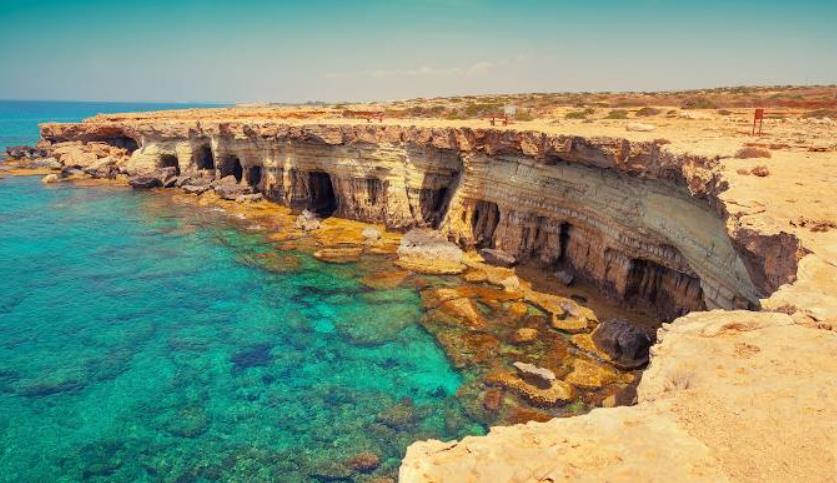
Cyprus’ digital nomad visa grants British citizens and other non-EU nationals the right to reside and work remotely on the island for 12 months. The visa can be extended for up to 24 months and allows inclusion of spouses and dependents.
Holders must spend at least 60 days per year in Cyprus and cannot leave the country for more than three months at a time. If residing in Cyprus for more than 183 days in a year, they will be considered tax residents unless already tax residents elsewhere, in which case they must pay taxes in Cyprus.
Cyprus has increased the number of available visas from 100 to 500. The application fee is €70. Required documents include remote employment contracts or business papers, proof of monthly post-tax income of €3,500 (€4,200 with spouse, €4,830 with spouse and one dependent; +15% per additional dependent), and €30,000 in health and accident insurance.
Georgia

Citizens from 95 countries can enter Georgia visa-free and stay up to 365 days. Residing for 180 days in a year makes one a tax resident. If annual income is below $155,000, only a 1% tax applies.
Applying for the Georgian digital nomad visa is fully online and takes less than two weeks. There is no fee. Applicants must provide proof of $2,000 monthly income or $24,000 in savings.
Greece

The Greek digital nomad visa is valid for one to two years and allows inclusion of spouses and dependents. Holders do not need to pay taxes in Greece even if staying over 183 days, provided their remote work has no economic ties to Greece.
If a Greek entry visa is required, applicants must apply for the digital nomad visa from their country of residence. The initial visa is valid for 12 months. Those eligible for visa-free entry (e.g., U.S., Canadian, Australian passport holders) only need to apply for a two-year residence permit. As part of the Schengen Area, the visa allows visa-free travel to 27 European countries, but applicants must reside in Greece for at least six months during the validity period.
Applicants must submit proof of remote work and demonstrate a minimum monthly income of €3,500 (€4,200 with spouse, €4,830 with spouse and one dependent; +15% per additional dependent).
If self-employed, the company must be registered outside Greece. Applicants must state the nature of business activities and company address during application.
Czech Republic

The Czech visa is valid for one year and can be renewed into a two-year residence permit. Spouses and immediate family may accompany the holder, but they may not seek local employment during their stay.
There is no application fee. Applicants must be citizens of the U.S., UK, Australia, Canada, New Zealand, Japan, Taiwan, or South Korea. They must work in or hold degrees/experience in IT or STEM fields, and work remotely as employees of companies with at least 50 staff or as freelancers, earning at least $2,730 per month (1.5 times the Czech national minimum wage).
Latvia

The Latvian digital nomad visa allows remote workers to reside in the country for one year, renewable for another year. After two years, holders may apply for permanent residency. After five years of legal residence, they may apply for Latvian citizenship—an attractive benefit for digital nomads seeking an EU passport.
For third-country nationals (non-EU), this is good news: during their stay, they can travel visa-free to 26 Schengen countries. However, there may be rules requiring a minimum stay in Latvia during the visa period.
The Latvian digital nomad visa requires applicants to be citizens or residents of OECD countries (e.g., U.S., Israel, Canada, Mexico, UK, Japan, New Zealand, Turkey), prove at least six months of remote income via employment contract or business documents with a company registered in an OECD country, and earn a minimum of €2,857 per month.
Iceland

Iceland has a high cost of living. Applicants must show monthly income over $7,700 and personal savings of around €6,500. The permit is valid for six months and allows family members to accompany. For partners, minimum monthly income is $10,000. Applicants must be employed outside Iceland, own a company, or work remotely as freelancers.
Notably, this visa is only available to non-EU or non-EEA nationals who can enter Iceland visa-free and have not held an Icelandic visa in the past 12 months. Eligible citizens enjoy visa-free access to over 100 countries including Iceland, and can apply for the digital nomad visa online.
Italy (in development)

Italy’s digital nomad visa is currently under discussion. There appears to be no cap on the number of visas issued annually. Known requirements include income level (amount pending), remote work for companies or clients based outside Italy or owning a foreign-registered business, and qualification as a high-skilled worker—possibly implying a master’s degree.
Currently, the self-employment visa is a viable alternative, requiring proof of annual income over €8,500. Valid for two years and extendable, self-employed holders enjoy a 70% tax reduction on any income earned in Italy.
Montenegro (in development)

Currently, Montenegro does not have an official digital nomad visa, but it is in the pipeline.
According to disclosed information, the Montenegrin digital nomad visa would be valid for two years, extendable for another two. During this 2+2 period, digital nomads are exempt from income tax in Montenegro. However, after four years, applicants must remain outside Montenegro for six months before reapplying.
Required documents are standard: a passport valid for at least six months, proof of travel insurance, income proof, accommodation proof in Montenegro, and evidence of employment or contract with a company based outside Montenegro.
Asia
Thailand

Beaches, waves, jungles, mountains, pleasant climate, and low living costs make Thai cities like Chiang Mai and Bangkok ideal destinations for digital nomads.
However, Thailand currently lacks a true digital nomad visa. Wealthier digital nomads often opt for the Thailand Elite Visa.
Issued by the state-owned Thailand Privilege Card Co., Ltd. (TPC), a subsidiary of the Tourism Authority of Thailand under the Ministry of Tourism and Sports, the Elite Visa offers VIP services, government assistance, residency, retirement, entrepreneurship, and education benefits.
Options include 5-, 10-, or 20-year multi-entry visas, priced at approximately ¥100,000–400,000 RMB in membership fees.
Due to its low cost of living and vibrant nightlife, Thailand attracts many Web3 entrepreneurs and professionals.
Malaysia

With its tropical climate and low living costs, Malaysia has become an increasingly popular destination for digital nomads.
Malaysia’s digital nomad visa, known as the Professional Visit Pass, is issued by DE Rantau Nomad Pass. It is valid for 3–12 months and renewable for a second year. The entire application process is online, making it one of the easiest digital nomad visas to obtain, and there are currently no nationality restrictions.
Applicants must work remotely for a company or client based outside Malaysia for at least three months as an employee, business owner, or freelancer, and must operate in IT/digital spaces, digital content creation, digital marketing, or other digital fields. An annual income of $24,000 is required, and spouses and immediate family may be included.
Indonesia

Indonesia, especially Bali, has long been a favorite destination for digital nomads. Indonesia’s digital nomad visa is valid for five years. Applicants must work remotely for a company based outside Indonesia, own a business, or freelance for international clients.
Income earned outside Indonesia is tax-free. Digital nomads who reside in Indonesia for 183 days must pay taxes on their worldwide income to the Indonesian government.
Like most digital nomad visas, income requirements and renewal options are still pending further details.
Dubai

Dubai is one of the world’s wealthiest cities. Its digital nomad visa is valid for one year and allows extended stays, though applicants must reapply upon expiration. Travel outside the UAE is permitted, but each absence must not exceed six months during the validity period. Visa holders enjoy many resident-level services, including enrolling children in schools, opening bank accounts, and even applying for loans—with no income tax.
The application fee is $287. Applicants must work for a company based outside the UAE, own a business, or freelance, providing proof of employment or ownership for at least one year, and demonstrate a monthly income of €3,500 over the past three months.
Sri Lanka

Sri Lanka is often hailed as one of the best destinations for digital nomads worldwide. While technically lacking a dedicated digital nomad visa, the island offers highly flexible tourist visas. Fees are $150 for 90–180 days, $200 for 180–270 days, extendable up to 270 days. Some nationalities can extend online for 30–90 days.
Taiwan Region

Taiwan’s Employment Gold Card functions similarly to a digital nomad visa—a combined work permit, residence visa, alien residence certificate, and re-entry permit. Application fees range from $100–310, and applicants are assessed based on professional skills.
However, mainland Chinese residents are not eligible to apply.
Vitalik Buterin, founder of Ethereum, currently holds a Taiwan Employment Gold Card.
Japan (in development)

It is reported that the Japanese government plans to introduce a “digital nomad visa” policy within the year, aiming to create an environment where high-skilled talent can live and work in Japan long-term.
Oceania
Australia

Australia currently does not offer a digital nomad visa but provides a Working Holiday Visa, allowing stays of up to 12 months from first entry. Holders may engage in temporary work but are prohibited from working for the same employer for more than six months.
The Australian Working Holiday Visa is issued only once per eligible applicant. Completing specified agricultural work may qualify applicants for an additional 12-month extension.
For Chinese passport holders, general eligibility includes:
-
Valid Chinese passport;
-
Aged 18–30 at time of application;
-
Must not travel with minor children during stay;
-
Sufficient funds to support stay in Australia (approx. AUD 5,000);
-
Sufficient funds to purchase return ticket after visa expires;
-
No prior working holiday visa record (subclass 417/462);
-
Hold a higher education degree or have successfully completed at least two years of university study (domestic, overseas, or Australian);
-
Proficient in English (IELTS overall band score of 5.0 required);
-
Good character and health requirements met.
The application fee for the Australian Working Holiday Visa is AUD 440.
New Zealand

Currently, New Zealand does not have an official digital nomad visa—but it’s coming.
In September 2023, New Zealand’s National Party released a proposal to attract overseas talent:
Join TechFlow official community to stay tuned
Telegram:https://t.me/TechFlowDaily
X (Twitter):https://x.com/TechFlowPost
X (Twitter) EN:https://x.com/BlockFlow_News
 深潮TechFlow