









How can blockchain games that let you earn while playing avoid becoming gambling?
TechFlow Selected TechFlow Selected
How can blockchain games that let you earn while playing avoid becoming gambling?
How to determine whether blockchain games involve gambling?
 Navigating Web3 tides with focused insights
Author: Shao Shiwei
Introduction
Under China's current policy and regulatory environment, blockchain game entrepreneurs must carefully avoid the risk of gambling-related violations from a compliance perspective.
At a press conference held by the Supreme People's Procuratorate on November 29, 2021, it was explicitly stated that "gambling-suspected applications typically have one significant feature: the ability to cash out."
The core model of blockchain games—“play-to-earn”—refers to players earning in-game tokens by playing, which can then be exchanged for virtual currencies such as USDT. Moreover, most users of blockchain games are not primarily interested in gameplay; their real motivation is profiting by buying low and selling high these in-game tokens.
Given this statement from the Supreme Procuratorate, does the "play-to-earn" model inherently possess characteristics of gambling? This article explores this question.
Examples of Gambling-Related Blockchain Games
Fomo3D raised $70 million within 16 days. Built on the Ethereum network, its core mechanic is an auction-style game where each player’s bid resets a countdown timer, and the last bidder wins 48% of the prize pool in Ether. Dubbed a “big fish eats small fish” scheme, the game reportedly generated $170 million in revenue over one month.
Biggame—the first domestic case involving the use of blockchain smart contracts to operate a casino—was an app developed by Chinese individuals. Users installed a wallet for EOS tokens, converted RMB into EOS, and then used the app to place bets on various gambling games.
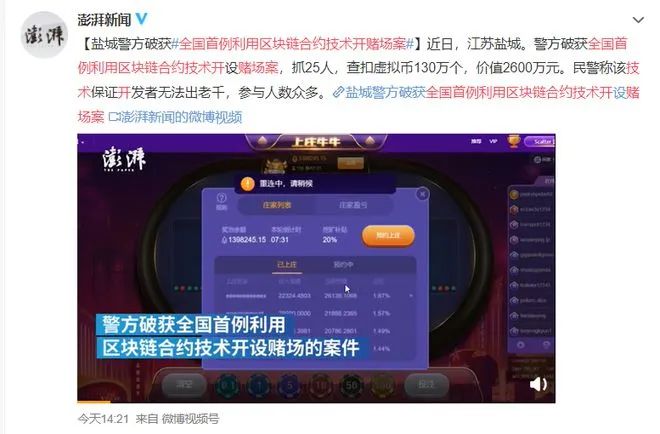
What Makes a Game Gambling?
Chinese law does not explicitly define which online games constitute gambling crimes. However, we can derive guidance through relevant regulations and policies.
According to the 2020 Notice on the Key Points for Supervision and Enforcement of Virtual Currency in Online Games issued by the General Office of the Ministry of Culture, the main differences among ordinary prediction-based online games, online games promoting gambling, and actual online gambling games are as follows:
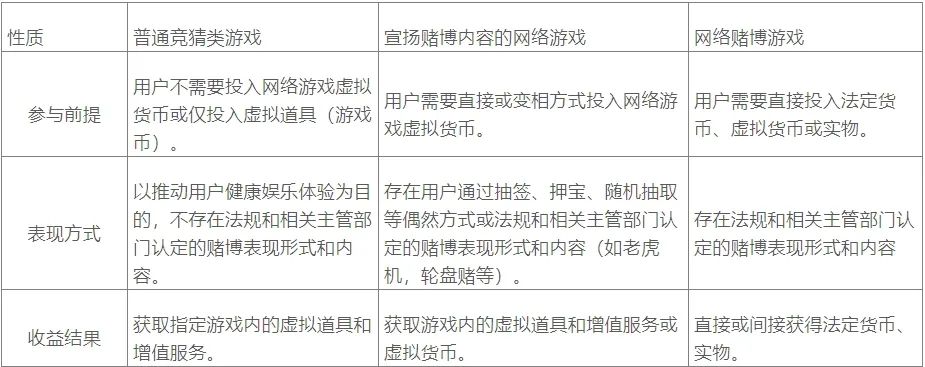
From this table, we can summarize that a game may be considered gambling if it meets three criteria simultaneously:
1. Participation prerequisite: Users must pay to purchase in-platform items or game currency
2. Operational form: Gameplay involves chance, allowing users to participate via “small stakes for potentially large rewards,” with a possibility of loss
3. Outcome: Users can directly or indirectly cash out and obtain fiat currency
How to Determine Whether a Blockchain Game Involves Gambling?
Applying the above three criteria, let us analyze based on the features of blockchain games.
1. Pay-to-purchase in-platform items or game currency
Most blockchain gaming platforms require users to purchase in-game items or tokens using real money. The typical process is: First, users buy cryptocurrency with fiat currency via exchanges (e.g., Binance, OKX); then download a crypto wallet (e.g., TokenPocket, MetaMask) and transfer the purchased cryptocurrency into the wallet; finally, connect the wallet to the blockchain game and use it to buy in-game items or tokens.
Even when some blockchain games initially claim to be free, this is often just a promotional tactic to attract users. To enhance gameplay experience, users eventually need to spend money.
2. Direct or indirect cash-out capability to obtain fiat currency
For overseas blockchain game projects, users can withdraw their NFTs or in-game tokens from the platform and trade them on exchanges for cryptocurrency. In China, however, due to existing policies on virtual currencies—whereby virtual currencies are not legal tender but treated as virtual commodities—and according to gaming regulations[1]: “Game积分 trading, redemption, or any service enabling conversion into cash or physical goods via ‘virtual currency’ is prohibited.”
Therefore, for blockchain games operating in China, if the issued in-game tokens can be exchanged for cryptocurrency (“cashing out”), combined with criterion 1 (“topping up”), this constitutes the key characteristic of gambling offenses—having both deposit and withdrawal functionality.
3. Gameplay: Chance-based, “small stake for big reward,” and potential for losses
Current types of blockchain games mainly include: raising/simulation games, management simulation, sandbox games, card games, mining games, and competitive games. The category alone cannot determine whether a game involves gambling; the specific mechanics implemented by the platform are what matter.
For example, gameplay involving blind boxes or lotteries carries high uncertainty regarding outcomes. If the value of in-game items obtained through paid draws varies significantly and users face potential losses, the risk of being classified as gambling is high.
ManQin Law Firm Recommendations
Given that laws and regulations related to blockchain and the metaverse in China remain underdeveloped, and given the government’s negative stance toward cryptocurrencies and mining activities, project teams planning to launch blockchain games domestically must rigorously manage legal risks before and after product launch.
Prior to launch, conduct thorough risk assessments of the game mechanics to prevent gambling-related issues;
After launch, regularly monitor product data to prevent users from exploiting platform vulnerabilities for gambling;
Additionally, take user complaints and reports seriously. Once any gambling-related behavior is detected, promptly optimize and improve the product.
Join TechFlow official community to stay tuned
Telegram:https://t.me/TechFlowDaily
X (Twitter):https://x.com/TechFlowPost
X (Twitter) EN:https://x.com/BlockFlow_News










