One Year After The Merge: Where Does Ethereum Stand?
TechFlow Selected TechFlow Selected
One Year After The Merge: Where Does Ethereum Stand?
This article will review the various changes that have occurred in the year since Ethereum's merger.
 Navigating Web3 tides with focused insights
The crypto world moves so fast that Ethereum's Merge already feels like ancient history. Yet, it has only been just over a year since the network fully transitioned to proof-of-stake (PoS). In terms of price, Ethereum trades at roughly the same level as it did in September 2022—just before the Merge, ETH was trading around $1,600. But this is merely the tip of the iceberg. Since Ethereum’s transformation, substantial changes have occurred across multiple dimensions. In this report, veDAO Research provides a comprehensive review of the developments over the past year since the Merge.
Energy Consumption
Prior to the transition, Ethereum used the same consensus mechanism as Bitcoin to validate on-chain transactions: proof-of-work (PoW). This required miners to compete in solving complex mathematical equations, earning rewards in exchange for participating in an energy-intensive process. However, when Ethereum shifted to PoS, validators—not miners—began securing the network by staking ETH and receiving rewards in return. One of the most significant impacts has been the drastic reduction in Ethereum's energy consumption. A report from the Crypto Carbon Ratings Institute (CCRI) found that Ethereum now uses approximately 99.99% less energy than before the Merge, effectively reducing the network’s carbon footprint by 99.99%.
Cryptocurrencies have gained notoriety in mainstream media for their high energy usage. As such, environmental factors including ESG ratings have become barriers to broader crypto adoption. Due to these environmental concerns, cryptocurrency initiatives from financial institutions—from BlackRock to Fidelity—have come under scrutiny. The Ethereum Merge, however, has rendered many of these criticisms obsolete.
Liquid Staking
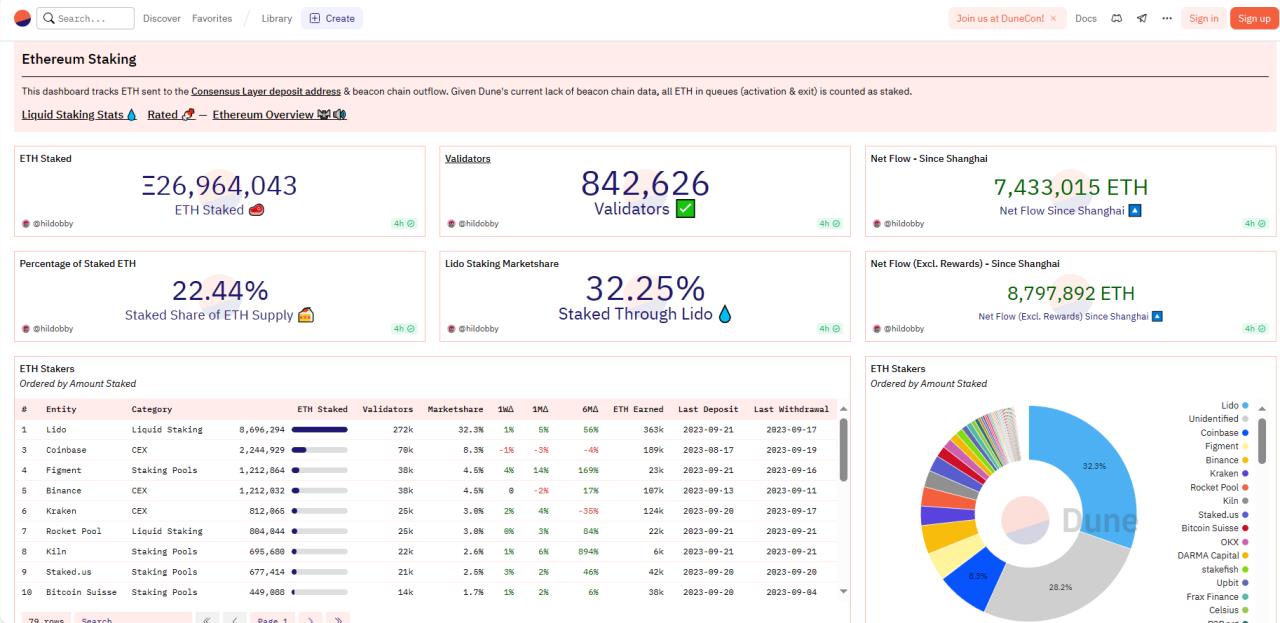
Since the Merge, the amount of staked ETH has nearly doubled. According to a dashboard created by Dragonfly data analyst @hildobby on Dune, more than 26.96 million ETH are now deposited in Ethereum’s deposit contract, representing a staking ratio of 22.44%.
However, the upgrade also sparked concerns about centralization and censorship. There is fear that control over transaction validation could become concentrated among a few entities—whether centralized companies like exchanges or projects that make it easier for users to pool funds and earn staking rewards. Before the Merge, some were particularly concerned about exchanges like Coinbase participating in staking due to U.S. sanctions on the mixer service Tornado Cash, especially after Coinbase funded a lawsuit by a group of Tornado Cash users against the U.S. Treasury and OFAC (Office of Foreign Assets Control). Worries grew that centralized entities might censor transactions to remain compliant, making decentralized alternatives like Lido Finance a more favorable option.
Yet today, Lido accounts for approximately 32.3% of all staked ETH and is now seen as a potential vulnerability to Ethereum’s decentralization, raising concerns among community members. Critics argue that Lido’s growing influence undermines Ethereum’s core principle of decentralization.
According to CoinGecko data, STETH leads in the liquid staking token space with a market cap of $13.8 billion. RETH (Rocket Pool ETH), the second-largest liquid staking token by market cap on Ethereum, stands at $912 million.
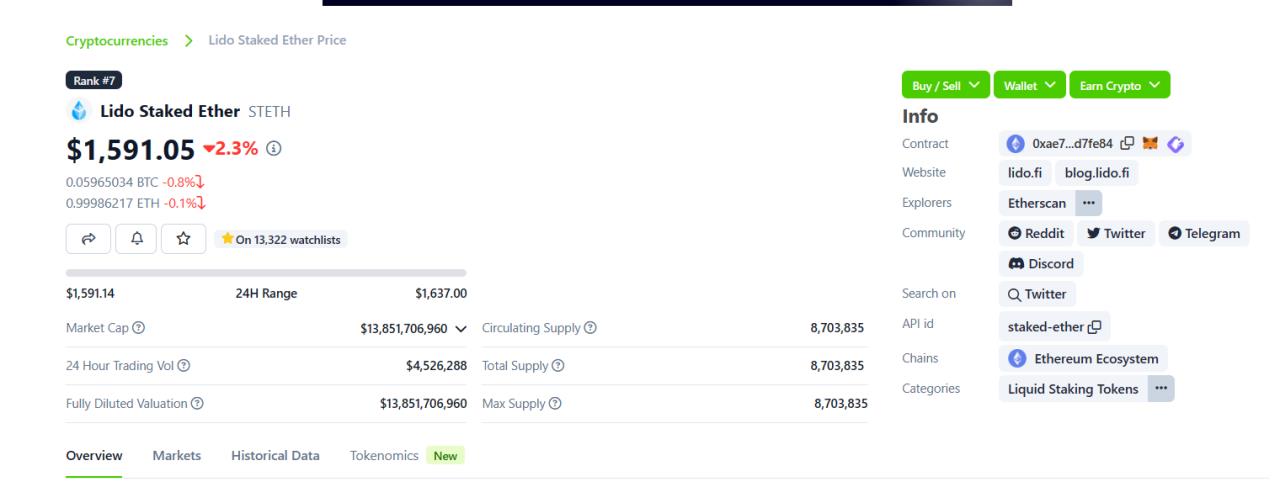
Nevertheless, liquid staking has remained a key driver of growth in decentralized finance (DeFi). It enables ETH holders to stake their tokens for rewards while still utilizing their value through derivative tokens pegged to ETH’s price. Despite a decline in total value locked (TVL) across decentralized exchanges since the Merge, liquid staking continues to thrive.
Scaling Solutions
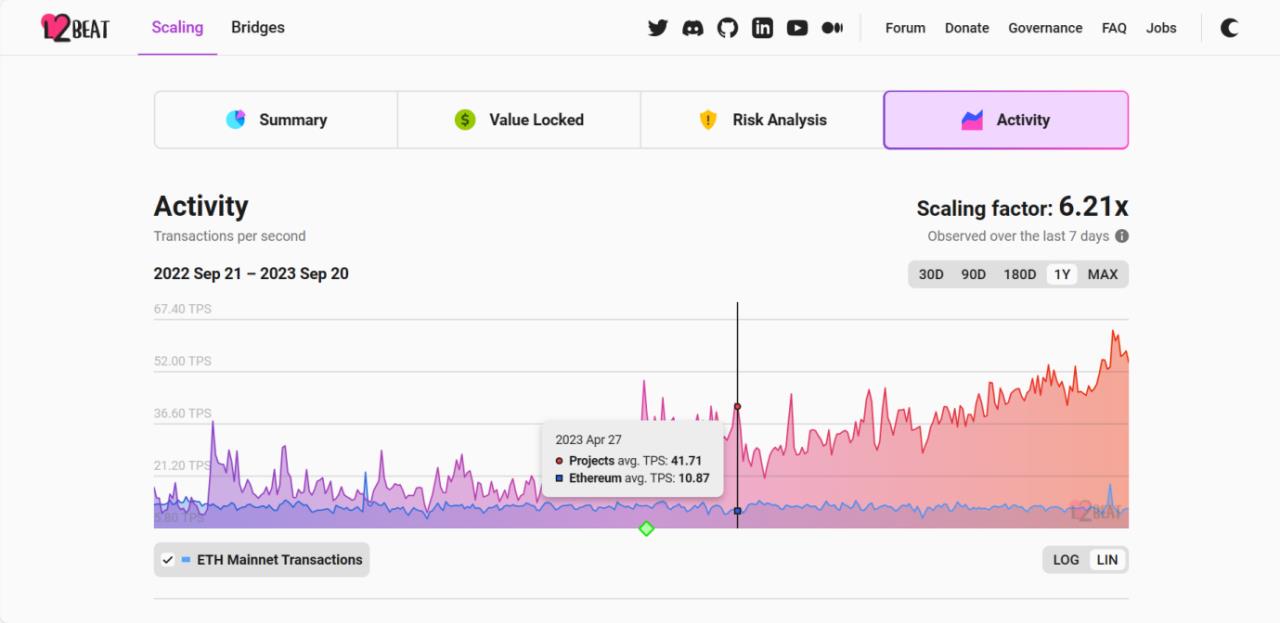
The Merge was not designed to increase Ethereum’s speed. As such, according to analytics site L2Beat, Ethereum’s average TPS (transactions per second) has mostly hovered around 10 since last September. Nonetheless, it laid the groundwork for what comes next. As Vitalik Buterin outlined in his vision for Ethereum’s roadmap prior to the July 2022 Merge, the upcoming “Surge” represents a series of planned upgrades expected to significantly improve scalability.
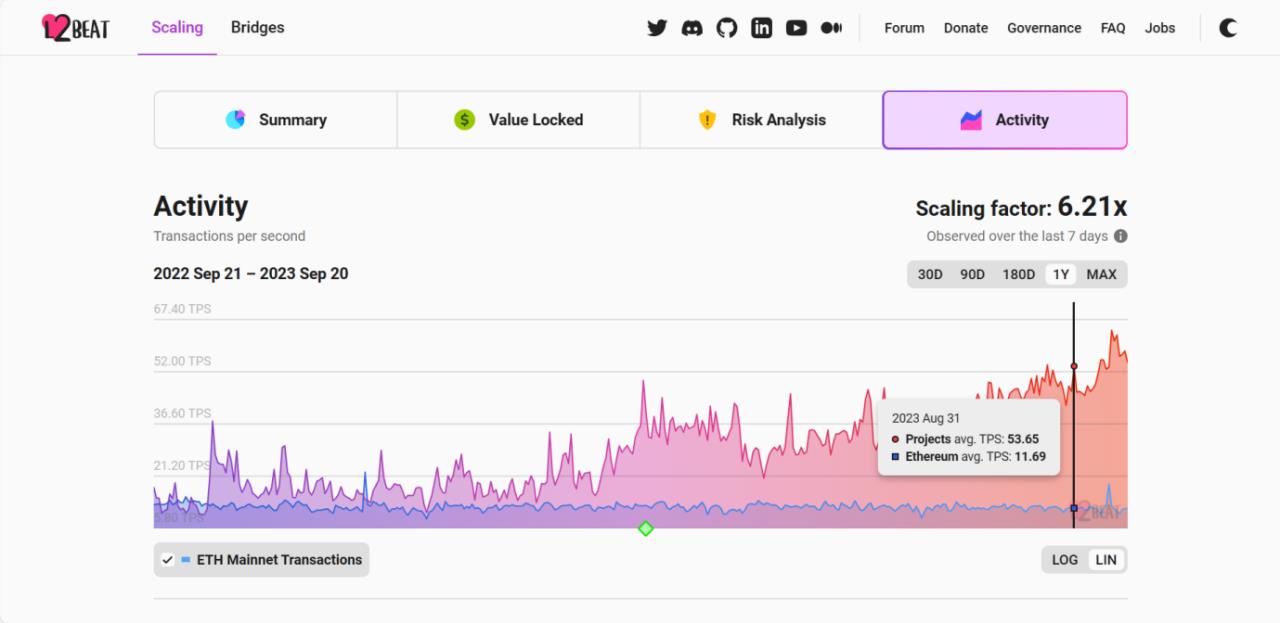
Meanwhile, scaling solutions aimed at addressing Ethereum’s current limitations continue to proliferate. Data from L2Beat shows that the combined average TPS across all Ethereum Layer-2 (L2) networks now exceeds 50—a significant improvement from last year.
Collectively, major L2 networks zkSync Era, Optimism, and Arbitrum Nova processed over 61 million transactions in the past 30 days—more than double the number of transactions on Ethereum mainnet during the same period. The enhanced base-layer security provided by the Merge has fueled recent advancements in L2 technologies. Overall, the Merge has indeed set the stage for further scalability improvements.
U.S. Securities and Exchange Commission (SEC)
At the same time, staking has become a regulatory flashpoint in the United States, with the SEC targeting several cryptocurrency exchanges offering services that help users earn staking rewards.
In February, Kraken reached a settlement with the SEC, paying a $30 million fine because its “staking-as-a-service” program constituted an unregistered securities offering. Similar allegations were made in lawsuits against Coinbase and Binance regarding their respective staking products. While the SEC cited certain tokens involved in the cases against Binance and Coinbase as examples of unregistered securities, some observers have questioned why the regulator has not classified PoW-based tokens as illegally issued assets.
There remains disagreement within U.S. regulatory circles on how to classify Ethereum. This has led to a clear turf war between the two largest financial regulators: the SEC and the Commodity Futures Trading Commission (CFTC). In March, CFTC Chair Rostin Behnam stated that ETH is a commodity; in contrast, SEC Chair Gary Gensler said in February that “everything other than Bitcoin” qualifies as a security, yet he avoided answering direct questions about Ethereum in April.
Conclusion
Ethereum’s core developers are actively working on the next major upgrade, known as the “Dencun Upgrade.” It includes the introduction of a feature called proto-danksharding, which, once fully implemented, is expected to scale Ethereum to over 100,000 transactions per second. Other features in development, such as account abstraction, will make managing crypto wallets as simple as managing email accounts. Earlier this month, Vitalik spoke at the Korea Blockchain Week about a feature called “Stateless Clients,” which could enable running an Ethereum node directly on a smartphone.
Looking back, compared to the turbulence and corporate collapses in the crypto market in 2022, the Merge may seem like a quiet footnote in crypto history. But looking ahead, it may well be the lighthouse illuminating Ethereum’s long-term trajectory—reaffirming belief that Ethereum can deliver transformative technological upgrades and achieve ambitious goals. While Ethereum may move slower than we’d like, it continues to progress steadily, staying true to its values.
About veDAO
veDAO is an AI-powered Web3 investment decision platform that leverages sentiment indicators and on-chain/off-chain metrics to analyze big data, identify trends, and precisely capture alpha. By building AI advisors, veDAO helps users invest efficiently and profitably.
Join TechFlow official community to stay tuned
Telegram:https://t.me/TechFlowDaily
X (Twitter):https://x.com/TechFlowPost
X (Twitter) EN:https://x.com/BlockFlow_News
 @TrendX_official