Money and the Sociology Experiment of World Citizens
TechFlow Selected TechFlow Selected
Money and the Sociology Experiment of World Citizens
Sam Altman and Elon Musk both want to do the same thing—identity + payments—but their implementation paths differ.
 Navigating Web3 tides with focused insights
Author: CloudY, Jam
This article uses the Zuzalu sociology experiment as a starting point, comparing Elon Musk's and Sam Altman's visions for technological ecosystems, to understand and analyze the feasibility of blockchain technology and cryptocurrency in future identity verification and payment systems—especially in developing nations.
Summary
-
Karl Marx【1】might have liked ETH, Dogecoin, and Worldcoin.
Vitalik’s sociological experiment, Zuzalu. Through ZuPass and zero-knowledge proofs, Zuzalu provides registered participants with an "identity registration certificate" and establishes a town hall system to promote democratic governance. Some have likened it to “Ethereum in its abstract early phase.” While both are naturally linked through Vitalik, they differ: Zuzalu is metaphysical, whereas Ethereum is concrete. Ethereum's programmability enables developers to implement custom identity authentication via smart contracts. Its payment system operates through smart contract execution, supporting ERC20-compliant tokens, primarily ETH.
-
Elon Musk’s Mars colonization plan. Musk’s “Starlink” terms state Mars is a free planet that does not recognize Earth laws【2】.
Since his vision involves bringing humans to Mars, human identity and payment systems on Earth must be reestablished there. Acquiring Twitter and integrating cryptocurrencies like Dogecoin into his product suite has become a crucial component of Musk’s Mars colonization strategy.
-
Sam Altman’s vision of “global citizenship”【3】.
Altman observed that many people worldwide—particularly citizens of developing countries—lack legal identification, and their nations’ financial infrastructure remains underdeveloped, making basic banking access difficult. Worldcoin aims to create a new digital identity and currency system by scanning individuals’ iris patterns globally for identity verification, with $WLD serving as its native token.
The ventures envisioned by these three individuals share the following commonalities:
1) They all focus on and explore issues related to identity verification and digital payments.
2) They aim to address (1) by building global-scale platforms.
Note 【1】: Marx advocated for the unity of the proletariat against exploitation and oppression, striving for the liberation of humanity and social progress.
Note 【2】: From Starlink’s initial consumer service testing terms at launch.
Note 【3】: Typically refers to individuals who see themselves beyond national borders and ethnic identities, identifying instead with humanity as a whole.
Zuzalu: Exploring a Borderless Nation
Zuzalu’s Vision and Technical Requirements
Zuzalu is a real-world crypto community, also described as a summer camp focused on cryptography, longevity, and philosophy. Participants register via ZuPass and gain identity verification using zero-knowledge proofs. This experiment explores Ethereum’s programmability and smart contracts to enable customizable identity verification and digital currency payments【4】.
At Zuzalu, participants—including researchers, scholars, and founders—spend two months deeply discussing topics such as longevity, public goods, zero-knowledge proofs, artificial intelligence, coordination, and network states. Zuzalu seeks to explore how blockchain technology can be applied to urban governance and operations, enhancing transparency, trustworthiness, and verifiability. Longevity is one of Zuzalu’s key themes, with blockchain seen as capable of improving data management, intellectual property protection, trial transparency, and fundraising in life sciences. Additionally, Zuzalu examines how blockchain might mitigate extreme risks posed by AI—such as superintelligence—by providing safeguards against uncontrollable AI development.
According to multiple attendees, Zuzalu aims to build a borderless digital nation where every digital citizen enjoys fairer, more transparent identity verification and customizable digital payment systems.
In summary, Zuzalu is a unique and ambitious experiment combining blockchain, cryptocurrency, life sciences, AI, and philosophy. It seeks innovative ways to improve society—from city governance to scientific research and AI safety. Participants co-envision a future where technology fosters inclusivity, transparency, and global collaboration in the digital realm.
Note 【4】: Source: Shuyao (Twitter @hotpot_dao)
Elon Musk’s Matrix: Xeet for Digital Identity and Dogecoin for the Future of Digital Payments
Musk’s Matrix
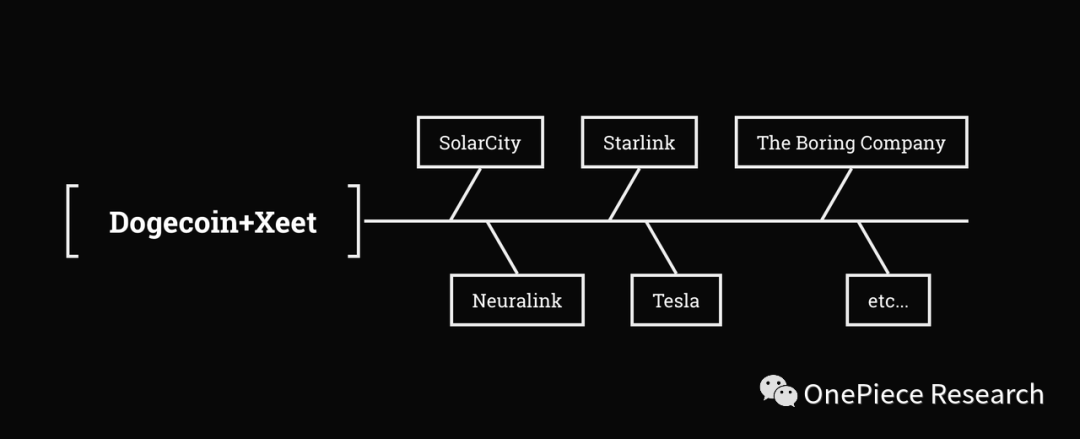
Xeet (formerly Twitter) and Dogecoin form the foundational matrix linking Musk’s broader ecosystem.
As a globally recognized social media platform, Xeet boasts a massive user base. It offers Musk a powerful platform to promote digital payments and cryptocurrencies. By integrating digital payment functions into Xeet, cryptocurrency adoption could accelerate, enabling users to conduct transactions directly within tweets.
Moreover, Musk has repeatedly endorsed Dogecoin, signaling his interest in cryptocurrencies. Though Dogecoin began as a meme coin, it gained legitimacy and attention due to Musk’s support. By advancing Dogecoin’s development and use cases, he can further explore and promote crypto as a viable payment method across broader commercial contexts.
Xeet and Dogecoin integrate seamlessly with Musk’s other ventures—Tesla (public), SpaceX, SolarCity, and The Boring Company (private)—to form a vast, interconnected digital ecosystem. These companies could leverage Xeet to promote crypto-enabled services; users might pay in cryptocurrency for Tesla vehicles or SpaceX spaceflights. Neuralink, Musk’s neurotechnology firm, could also play a role: future brain-computer interfaces may allow direct neural signal-based authentication for digital payments, enhancing convenience and security.
(Source: OP Research)
Note 【5】:
【1】Tesla, Inc.: A leading electric vehicle manufacturer and energy company.
【2】SpaceX (Space Exploration Technologies Corp.): A private aerospace company founded in 2002 aiming to reduce space exploration costs and enable human settlement on Mars. SpaceX developed Falcon 1, Falcon 9, and Falcon Heavy rockets, becoming the first company to vertically land and reuse orbital rockets. Within Musk’s matrix, SpaceX supports Starlink deployment.
【3】SolarCity: A solar energy services company founded in 2006.
【4】Neuralink: A neuroscience company founded in 2016 developing brain-machine interface technology to treat neurological disorders and enhance human cognition.
【5】The Boring Company: A tunnel construction company founded in 2016 aiming to alleviate urban traffic congestion through underground tunnel networks.
Musk’s Passion for Digital Payments
Musk has long harbored ambitions in digital payments, continually integrating them into his business matrix.
He states his mission is to advance technology and create a better future, with digital payments being one of the key technological innovations he values. His founding of X.com (later PayPal), an online payment company, demonstrates his passion for digital payment solutions. Musk originally created PayPal to establish a global payment method simplifying cross-border transactions and overcoming limitations of traditional systems. Although eBay later acquired PayPal, Musk never abandoned his interest in digital currencies. In fact, renaming Twitter to Xeet and changing its logo to “X” can be seen as a tribute to PayPal.
Throughout his entrepreneurial journey, he continued exploring projects involving digital currencies and cryptographic technologies. With Dogecoin’s rise and his acquisition of Twitter, Musk’s digital payment ambitions have returned to the forefront and may soon play a pivotal role in his ecosystem.
Additionally, Musk praised WeChat for its powerful functionality, noting it does everything without spam【6】. He admires its integration of messaging, voice/video calls, social media, food delivery, mobile payments, gaming, and news. Musk likely appreciates WeChat because he sees its success in social interaction, payments, and services, recognizing its multifunctionality and user experience as inspirational for digital payments.
Note 【6】: https://hypebeast.com/zh/2022/6/elon-musk-wants-twitter-to-be-more-like-tiktok-and-wechat
Musk’s Web3 Ambitions
Xeet accounts could serve as digital ID, even digital wallets; Dogecoin may just be the beginning of his ‘new digital payment’ matrix.
Xeet accounts play a crucial role—not only as digital IDs but also as digital wallets. Leveraging social graphs, Xeet accounts can efficiently define and authenticate user identities, making digital verification more secure and convenient.
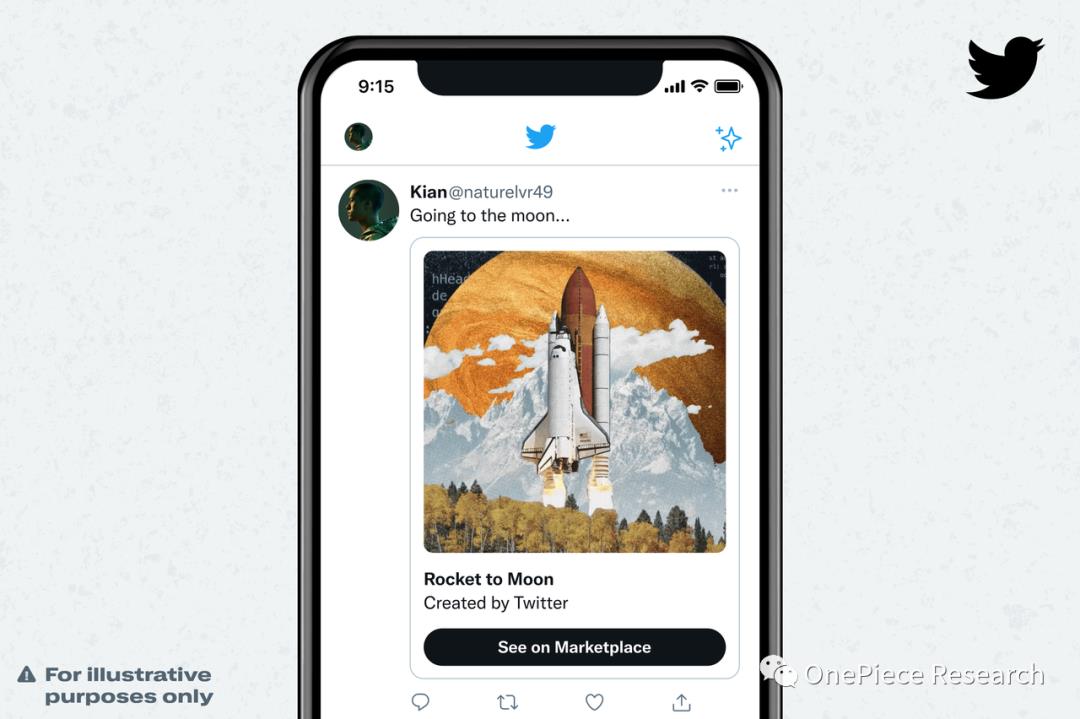
Specifically, Xeet accounts can use social graphs to verify identity, link profile pictures to NFT PFPs, and utilize NFT Tweet Tiles. “Tweet Tiles” is an official Twitter feature allowing customizable formats attached to tweets, enabling user interaction with content including text, images, videos, or other elements, making timelines more dynamic and visual.
Twitter expanded this function into the NFT market, allowing NFT projects and creators to showcase their NFTs in tweets, offering supporters a platform to display and share digital collectibles.
According to a January report by the Financial Times, under Musk’s leadership, Twitter was exploring introducing payment services as a new revenue stream. Esther Crawford, a core member of Twitter, was designing the payment architecture aimed at offering financial services such as “peer-to-peer transactions and savings accounts.” Musk envisions transforming Twitter into an “everything app” integrating messaging, payments, and commerce. Twitter has already registered with the U.S. Treasury as a payment processor and is seeking necessary regulatory approvals.
Thus, Musk’s payment vision can be realized through Xeet, Dogecoin integration, and synergy across his business portfolio. Such a comprehensive ecosystem would bring innovation to digital payments, drive widespread cryptocurrency adoption, and advance payment methods. We may soon witness a digital ecosystem built around Xeet and Dogecoin, revolutionizing how we transact and interact financially.
Such a future may not be far off.
(Source: Twitter development team @XDevelopers)
Worldcoin and the Developing World
How Does Worldcoin Physically Prove That I Am “Me”?
Worldcoin claims its goal is to solve identity verification through privacy-first, self-sovereign, and decentralized approaches.
According to the World Bank ID4D database, nearly 1 billion people lack any legally recognized identity. Another 3.4 billion possess some form of legal ID but struggle to use it in the digital world.
This “digital identity” refers to the ability to verify identity through digital channels, unlocking access to banking, government benefits, education, and other critical services. Digital IDs not only empower individuals socially but also enable genuine, inclusive economic gains.
Worldcoin’s vision is to become the largest, most inclusive public good for identity and finance, belonging to all humanity.
The Worldcoin protocol currently includes:
-
World ID is a privacy-preserving digital identity designed to prove individual uniqueness using biometrics.
-
Worldcoin (WLD) is a cryptocurrency freely distributable to verified individuals where legally permitted.
-
World App is the first application compatible with World ID, supporting digital assets and fiat-backed stablecoins for global payments, purchases, and transfers.
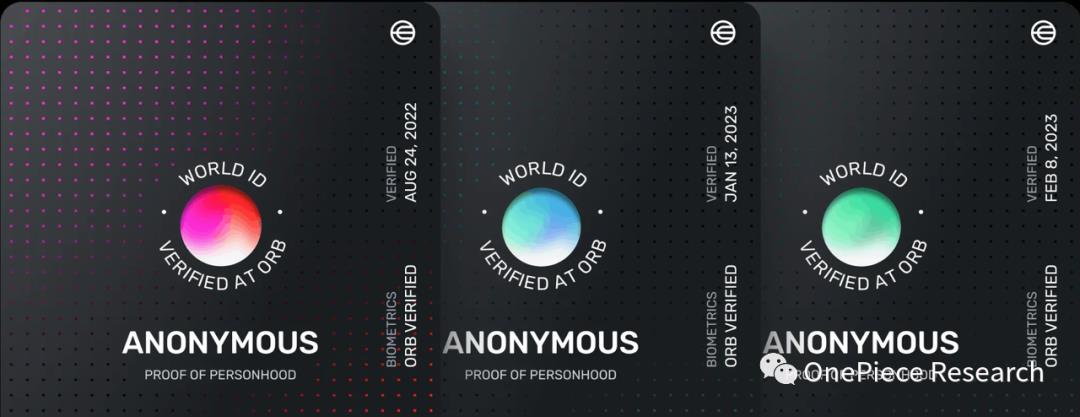
As of July 13, Worldcoin reported over 2 million registered World IDs—reaching the second million in less than half the time of the first—with over 40,000 new verified registrations per week. Registrants from cities including Barcelona, Berlin, Buenos Aires, New York, Seoul, and Tokyo used Tools for Humanity’s (TFH) Orb device for iris and biometric scanning, receiving 25 WLD tokens as rewards. Alex Blania, Worldcoin co-founder and CEO of Tools for Humanity, said: “Worldcoin aims to enable anyone in the world, regardless of background, location, or income, to access the growing digital and global economy in a privacy-preserving and decentralized way.”
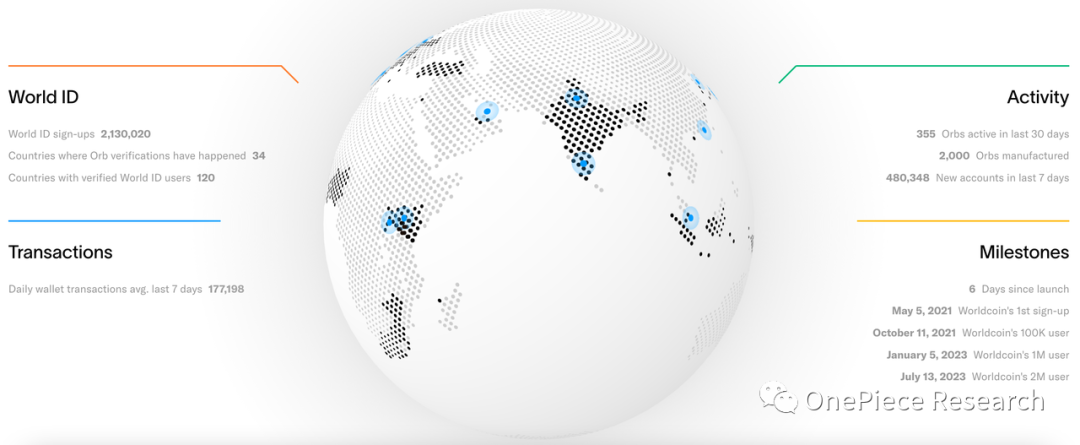
Worldcoin’s Technology and Applications
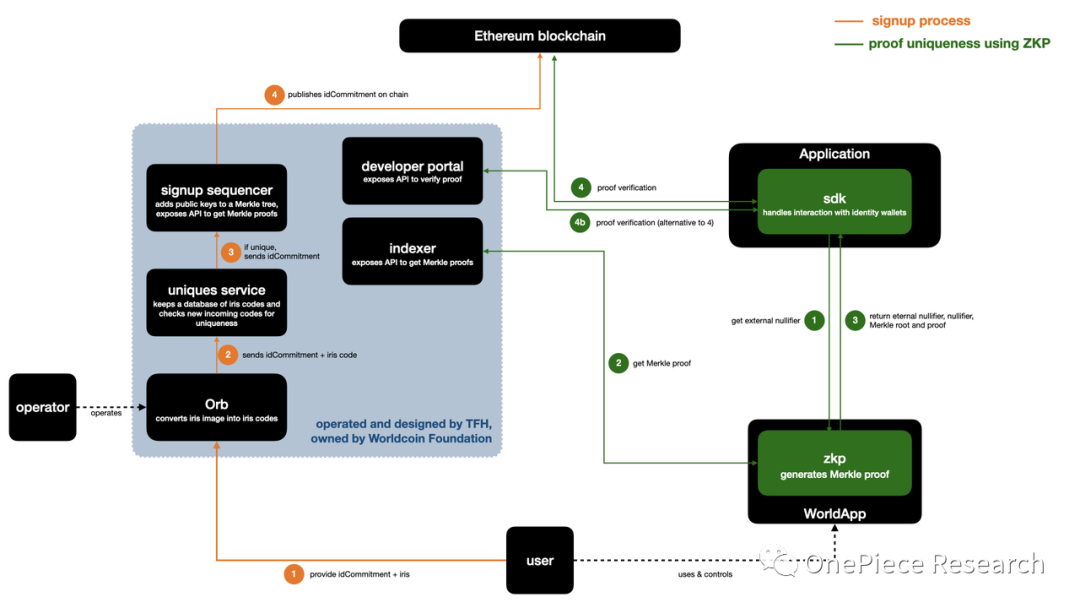
As shown, to obtain a World ID, users first download the World App to store it. Then they schedule an iris scan via the website. Once verified via the Orb, individuals receive a World ID.
This World ID can be used on-chain via zk-proofs to verify identity across protocols and chains. Where legally allowed, users can claim weekly allocations of WLD tokens. The World App allows users to connect via WalletConnect on Optimism to interact with apps—for example, trading on DEXs.
Importantly, developers can freely use the World ID SDK to integrate World ID into their applications, simplifying interactions between Web3 and Web2 platforms.
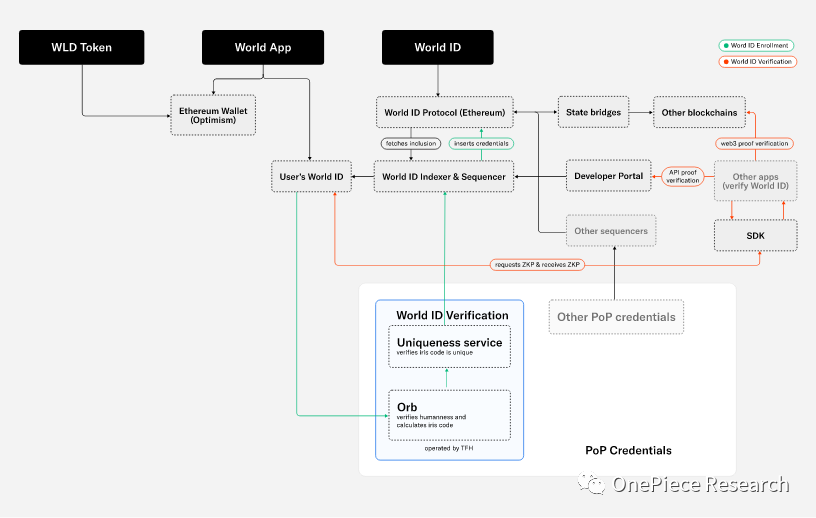
Worldcoin’s Technical Architecture
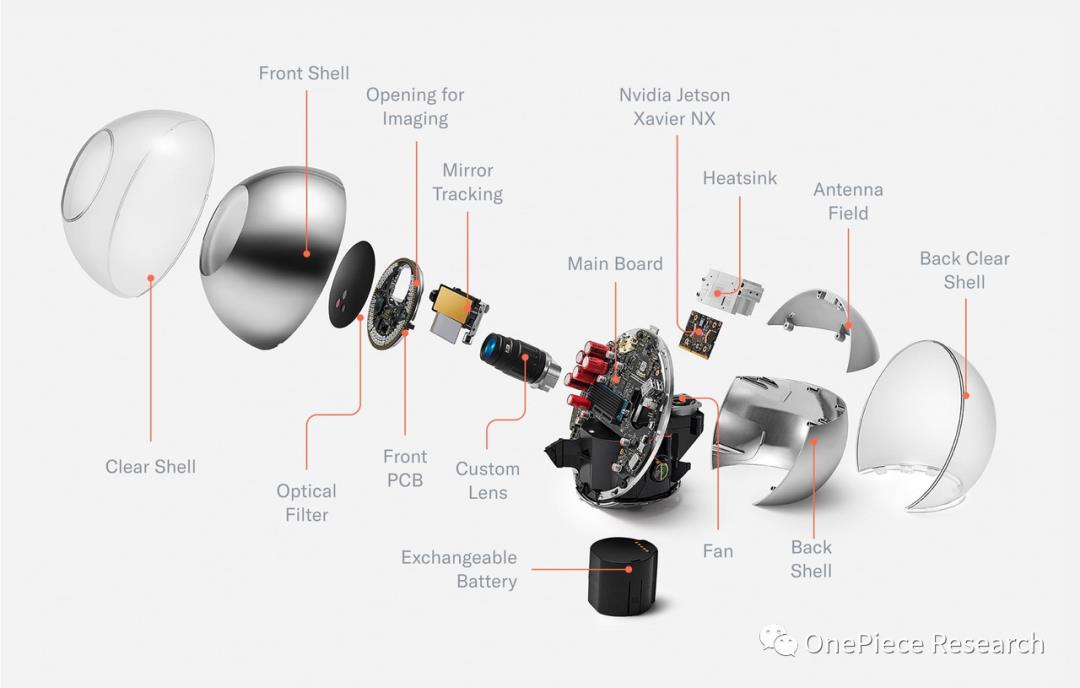
During personhood verification, the Orb first uses sensors to confirm the subject is human. It then captures, processes, and—by default—immediately deletes a series of iris images to generate an “iris code,” a digital representation of iris texture.
Although the Orb normally deletes iris images immediately, individuals may opt to back up their images, sharing them with Worldcoin to train its iris detection, segmentation models, and related algorithms.
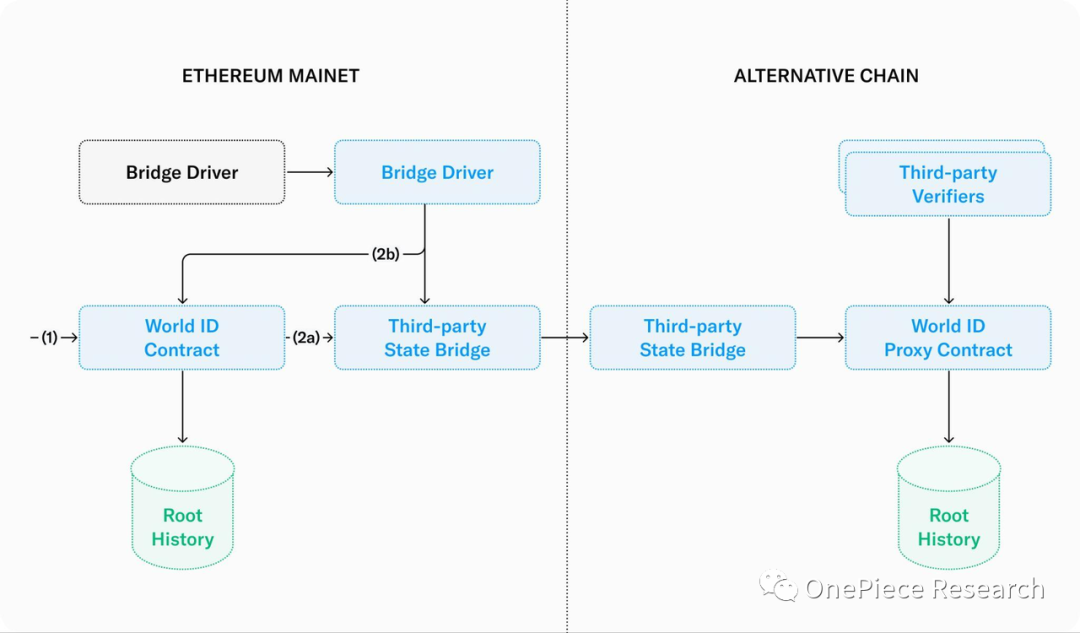
Worldcoin plans to build its own chain based on the OP Stack, inheriting Ethereum’s account anonymity and transaction transparency. As illustrated, after creating a World ID via the Orb, the data is published on-chain via the Worldcoin Protocol and can be verified by other apps via zk-proofs in the WorldApp. The built-in cross-chain SDK enables identity sharing across Ethereum mainnet, Layer2s like Optimism and Arbitrum, and non-EVM chains like Solana and Sui.
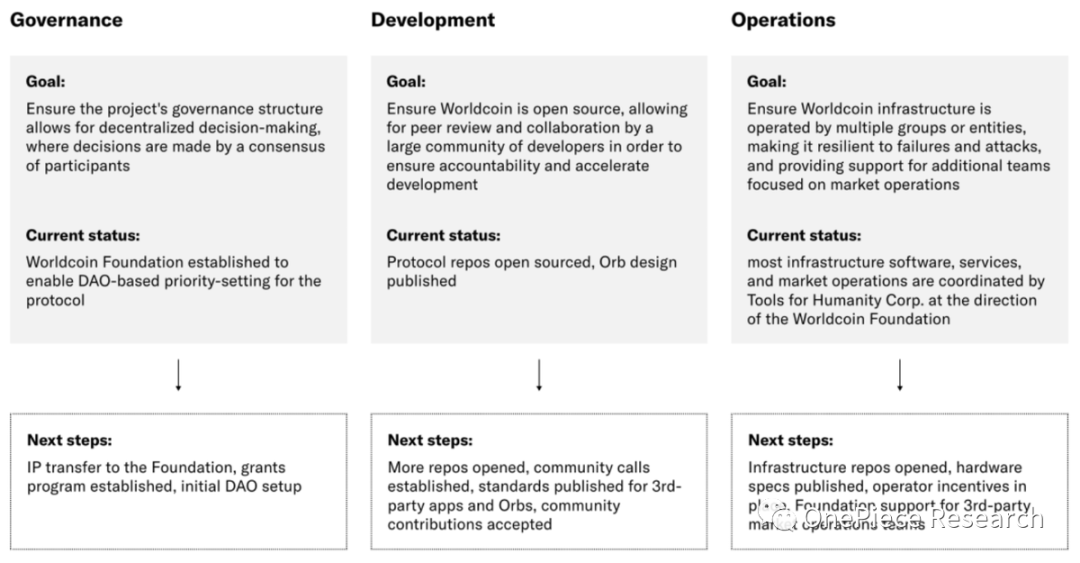
Worldcoin emphasizes decentralization across governance, development, and operations:
- Governance: DAO-based foundation management
- Development: Open-source protocol and public hardware design
- Operations: Diversified operational entities
Applications of Worldcoin
Worldcoin aims to enable everyone, everywhere, to participate in the global digital economy via DeFi and DID, achieving global opportunity equality. The more advanced the network, the greater its impact. In essence, by establishing a personal identity system (World ID) and a global wallet (WorldApp), Worldcoin becomes a gateway to Web3, enabling universal participation in the global economy and addressing inequality—especially in developing nations.
This explains why Worldcoin distributes WLD tokens freely to one billion people—to rapidly expand its financial network and capture a compelling crypto narrative. According to Worldcoin, its applications include:
-
Identity
Human Verification: Bots, spam, and robocalls on Twitter stem from inadequate digital identity systems. Advancing AI models exacerbate this, bypassing CAPTCHAs and generating convincing “human” content. Hence, Worldcoin’s identity solution is vital as public infrastructure. If every message or transaction carried a “verified human” attribute, much digital noise—and especially Sybil attacks—could be filtered out.
Currently, collective decision-making in Web3 largely relies on token-based governance (“one token, one vote”), though mechanisms like Gitcoin’s quadratic voting limit whale dominance—they remain vulnerable to Sybil attacks. Introducing real-world identity into digital systems raises challenges of resource allocation and incentive misalignment. Thus, reliable, Sybil-resistant identity proofs like World ID open new paths for global democratic governance and equitable resource distribution, making broad participation increasingly essential.
-
Financial Applications Based on Identity
Corporate Incentive Alignment: Coupons, loyalty programs, referral systems, and other value-sharing mechanisms are prone to Sybil attacks and internal fraud due to low attack costs and high rewards. Frictionless, fraud-resistant digital identity helps align incentives, benefiting both consumers and businesses. It enables users to engage with and even partially own companies beyond stock ownership.
Equitable Distribution of Social Resources: Subsidies and welfare programs are crucial in emerging economies, where false identities often lead to unfair resource extraction and misallocation due to outdated identity systems. In 2021, India saved $5 billion in subsidy programs by implementing a biometric anti-fraud system. Decentralized personhood protocols can extend similar benefits globally. As AI advances, rights to fair distribution and value created via universal basic income could help offset economic concentration. World ID ensures each person registers only once, guaranteeing fairness.
-
A Leapfrog Opportunity for Developing Nations
Worldcoin’s platform—built on personhood proof, on-chain credit systems, and crypto payments—offers a solution to current challenges faced by developing nations. Today’s global monetary system, compounded by climate change, pandemics, and war, continues to deteriorate economic conditions in the Global South. These nations urgently need breakthrough strategies to reverse decline. Modern infrastructure and mature blockchain technologies now provide the means, while demand for digital identity and new monetary systems provides the motivation. Africa serves as a prime example:
1) Current Economic Conditions in African Nations
The April 2023 edition of the *Africa Pulse* report indicates that sub-Saharan Africa’s economic growth remains sluggish due to global uncertainty, poor performance by major economies, high inflation, and sharply slowing investment—insufficient to reduce extreme poverty. Growth is projected to slow from 3.6% in 2022 to 3.1% in 2023.
In December last year, Ghana’s inflation surged to 54.1%, the highest in nearly 22 years. In January, Nigeria’s inflation rose from 21.34% to 21.82%, the highest since September 2005.
-
Governments face rising debt servicing and liquidity pressures linked to high borrowing costs and dollar strength following Western bank collapses.
-
Africa’s natural resource wealth holds immense untapped economic potential, requiring sound sectoral governance, appropriate taxation to capture higher resource rents, and regional cooperation and investment.
-
Containing inflation remains central to macroeconomic stability. African governments have room for internal reforms to restore stability and better prioritize spending.
-
Economic performance varies significantly across sub-regions of sub-Saharan Africa.
-
Investment growth has declined sharply across all sub-regions, resource-rich and resource-poor nations, and among public, private, and foreign investors.
2) Infrastructure
In recent years, internet and mobile internet infrastructure in Africa has expanded rapidly. According to the GSMA’s *2022 Mobile Economy Report Sub-Saharan Africa*, over 500 million people subscribed to mobile services in sub-Saharan Africa by end-2021, with a penetration rate of 46%. The report forecasts 613 million subscribers by 2025, reaching 50% penetration. Over 84% of internet connections in Africa occur via smartphones. Nigeria’s Federal Communications Commission reports over 150 million mobile internet users as of June 2022, with internet penetration nearing 70%.
Fintech and e-commerce have emerged as popular sectors in Africa. DataSparkle shows that despite economic headwinds in 2022, both sectors maintained strong growth. Financial mobile app active users in Africa grew 26% from January to December 2022, exceeding 73 million. Shopping app users increased 6% over the same period, surpassing 36 million.
3) Blockchain Technology
Blockchain has evolved from Bitcoin’s peer-to-peer cash system to Ethereum’s “world computer.” Smart contracts enabled numerous new technologies and concepts, offering mature solutions to improve today’s monetary system:
1. Different Solutions Under One Standard: Layer2/Rollup
Nations run customized systems under a unified standard, harmonizing “metrics” to reduce systemic friction in multilateral cooperation.
2. Identity and Credit System: DID
On-chain identity and credit replace traditional banks in credit assessment, enabling mutual compatibility among national identity systems and optimizing border control.
3. Asset and Data Ownership: Wallet + RWA + zk
Blockchain-based account systems protect individual asset ownership while ensuring state and citizen data security via zk-proofs, lowering financial transaction barriers and granting economic participation rights to all.
4) International Monetary System
From the Bretton Woods system established by 44 countries (including the U.S., UK, France, West Germany, Canada, Italy, Japan) to the Jamaica Agreement offering developing nations greater exchange rate flexibility, developed nations and international institutions have dominated. This has limited developing countries’ influence in policy-making and international financial rule-setting. Coupled with challenges in financial systems and technical capacity, their full participation in the global monetary system remains constrained. Thus, throughout its evolution, the international monetary system has offered little opportunity for developing nations. Blockchain-based identity verification and cryptocurrency-powered instant cross-border payments may offer developing nations a chance to create and deeply participate in a new global monetary order.
5) Demand for Digital Identity and New Monetary Systems:
Unlike developed nations and large economies, developing countries rely heavily on cash, lack mature credit systems, are only beginning to adopt mobile payments, and have no robust banking infrastructure. Therefore:
-
High borrowing costs and difficulty attracting foreign investment.
-
Limited scope and types of economic activity.
-
Few historical obstacles when adopting digital currency systems.
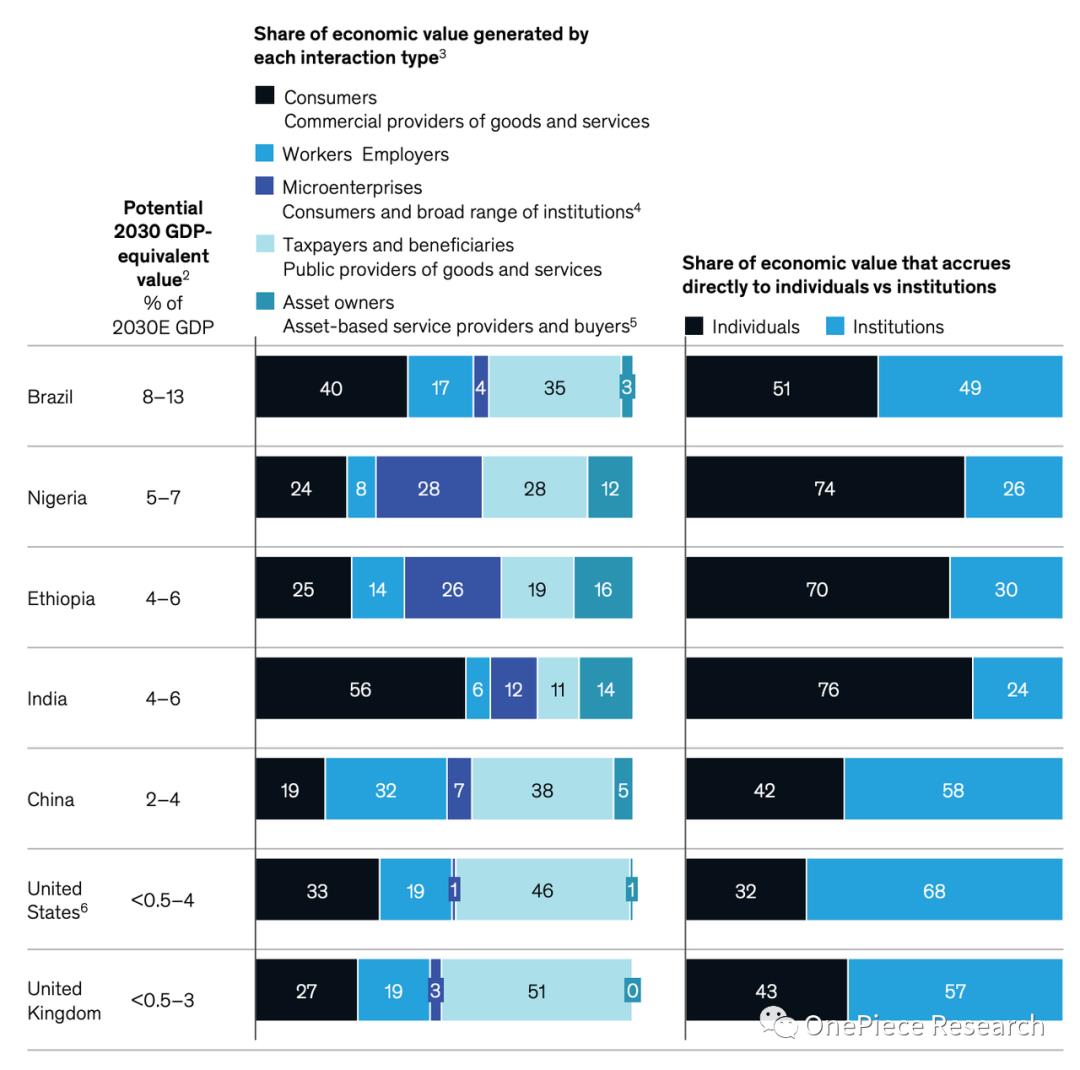
Many citizens still lack digital identity or fail to benefit from it. As shown below, developing nations have significant potential for GDP growth through digital identity adoption, with individuals potentially capturing over 50% of the generated value. For example, in Nigeria, where 81% of the workforce is self-employed, digital identity could facilitate micro-entrepreneurship and investment, enabling access to government support and helping recover lost tax revenue from income fraud. In Ethiopia, digital identity could unlock 41 million potential financial users by enabling remote identity verification, opening access to financial services and enabling $2.5 billion in new investments. Thus, the economic value created by digital identity in emerging economies far exceeds that in mature ones.
The Significance of Global Platforms
These global platforms represent a new narrative and a vast potential market—because their users are all of humanity. This is what DeSoc aims to achieve, and what Satoshi Nakamoto envisioned.
Currently, global platforms include major tech and internet giants from the United States, China, Europe, Southeast Asia, and Africa.
In the U.S., companies like Google, Microsoft, Amazon, and Apple offer global services in search engines, cloud computing, e-commerce, and smart devices. Chinese counterparts include Baidu, Tencent, Alibaba, and Huawei, covering search, social media, e-commerce, cloud services, and telecommunications equipment. Europe lacks giants on par with the U.S. or China but hosts notable firms like SAP, Spotify, and ARM.
Additionally, influential platforms exist in Southeast Asia and Africa, such as Grab and Transsion. Grab is Southeast Asia’s largest mobility platform, offering ride-hailing, food delivery, and courier services. Transsion, headquartered in China, dominates Africa’s mobile market with brands Tecno, Infinix, and Itel.
These global platforms have massive user bases and extensive reach in their regions. With the rise of emerging technologies like blockchain, digital identity, and digital payments, new global platforms may emerge, reshaping competitive dynamics and driving global digital economic growth.
DeSoc and Satoshi’s Bitcoin both aim to break the monopoly of traditional internet industries, using decentralized technology to offer users safer, more autonomous, and privacy-protected digital identity and payment methods. This aligns with the goals of Zuzalu, Worldcoin, and Musk’s ecosystem vision. All are exploring digital identity and payments, attempting to build global platforms driven by users, giving individuals greater control and privacy.
The potential market for these global platforms is enormous, as their target users are all of humanity—not just highly developed regions like the U.S., China, and Europe, but also developing regions like Southeast Asia and Africa. In developing countries, digital identity and payment systems are critical, as many lack legal identification and financial infrastructure. These global platforms aim to fill this gap, bringing greater convenience and opportunity to underserved populations.
However, building such platforms globally faces significant challenges—technical hurdles, legal and regulatory issues, privacy, and data security. Nevertheless, these emerging technologies and platforms are reshaping the current internet landscape, expanding user rights and choices.
Conclusion
Sam Altman and Elon Musk want to achieve the same thing—identity + payments—but through different paths.
1) Altman starts by verifying each individual’s identity, distributing tokens, and gradually guiding users to use built-in wallets—building an ecosystem from the ground up, akin to a rural encirclement of cities.
2) Musk leverages Twitter’s existing social graph to build digital identity, integrating Web3 projects and assets to transform Web2 into Web3—a constitutional monarchy-style transformation of an existing ecosystem.
By comparing Worldcoin, Twitter (now Xeet), and Vitalik’s sociological experiment (Zuzalu), we draw the following conclusions:
-
Worldcoin: Worldcoin aims to establish digital identity via biometric verification (e.g., iris scans) and distribute cryptocurrency ($WLD) to one billion people. It builds the ecosystem top-down, gradually guiding users to adopt built-in wallets, forming a global identity and payment system. It primarily addresses identity and financial infrastructure gaps for global citizens.
-
Twitter (Xeet): Twitter aims to leverage its social graph and existing network for digital identity and crypto payments. Musk plans to use Xeet’s user base and social graph to build digital identity, integrating Web3 projects to transform Web2 into Web3—upgrading the existing ecosystem into a new digital payment platform. This approach reformulates and integrates current platforms to introduce digital identity and payments into social networks.
-
Zuzalu (Vitalik’s Sociological Experiment): Zuzalu is a sociological experiment using ZuPass and zero-knowledge proofs for identity verification, exploring Ethereum’s customizability and smart contract scalability to enable tailored identity and digital payments. Zuzalu explores how blockchain can govern city operations, enhancing transparency, trust, and verifiability. It focuses on applying digital identity and payments to urban governance and social operations.
In conclusion, these three projects differ in goals and implementation. Worldcoin targets identity and financial infrastructure challenges in developing nations, building ecosystems across multiple layers. Twitter (Xeet) aims to introduce digital identity and payments via existing social networks, upgrading the current platform into a new digital payment ecosystem. Zuzalu is experimental, exploring applications of digital identity and payments in future city governance and social operations.
Join TechFlow official community to stay tuned
Telegram:https://t.me/TechFlowDaily
X (Twitter):https://x.com/TechFlowPost
X (Twitter) EN:https://x.com/BlockFlow_News