Why are proof of personhood important for Web3?
TechFlow Selected TechFlow Selected
Why are proof of personhood important for Web3?
Proof of Humanity provides an early example of a potential solution, demonstrating how blockchain technology can offer traceability, anonymity, and security in addressing the challenges posed by artificial intelligence.
 Navigating Web3 tides with focused insights
Author: Rarimo
Compiled by: TechFlow
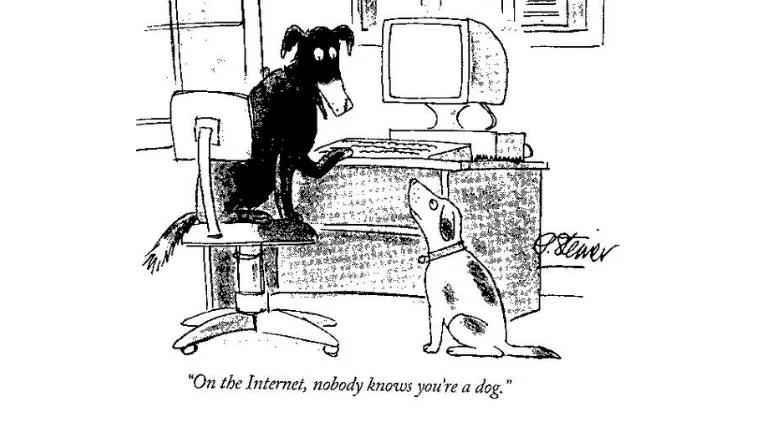
In 1993, when the World Wide Web entered the public domain, The New Yorker published a now-iconic cartoon: "On the Internet, nobody knows you're a dog." The sketch depicted a computer-savvy dog introducing his companion to the possibilities of online identity, and was quickly reproduced as a warning about how people in the anonymous corridors of the internet might not be who they claim to be.
Yet despite late-20th-century internet users' efforts to remain vigilant, today’s most dangerous threat comes not from other humans but from bots. These autonomous programs are dangerous not because they represent one-to-one, personalized deception like a traditional dog or human opponent, but because of their ability to replicate infinitely—overwhelming entire systems through sheer volume.
Take the 2016 U.S. presidential election, where allegations circulated that Russian operatives used bots to flood Twitter with pro-Trump content, fueling widespread distrust in democratic processes. While this incident was never fully resolved, it highlighted how bots can act as force multipliers, enabling a single individual or organization to assemble an army from nothing. This risk has steadily escalated over the years, recently reaching a critical peak following the release of generative AI models.
Blockchain as Anti-Bot Infrastructure
Fortunately, preventing such attacks has been central to blockchain design. As permissionless networks, blockchains allow anyone to participate—including adversaries who may try to gain control by impersonating multiple participants. The Bitcoin whitepaper from 2009 caused a sensation in computer science because its proof-of-work mechanism demonstrated that an open network could be maintained as long as there was an honest majority. If you want to impersonate a thousand people, you must do the work of a thousand people—and the cost scales up a thousandfold.
As a result, some of the most promising defenses against bot attacks are emerging within Web3. Of particular importance are Proof of Humanity (POH) solutions, also known as Proof of Personhood (POP). These provide cryptographic evidence that a user is human rather than a bot, while revealing no additional information about the user. This emphasis on privacy distinguishes POH from real-world and Web2 identity solutions, which typically require personal details such as addresses or birth dates.
The range and number of applications and platforms that could leverage POH—from social media to DAO voting, from managing airdrops to gating reward programs—is virtually limitless.

Vitalik's View on POH
In his recent blog post titled "My thoughts on biometric-based proof of personhood," Ethereum founder Vitalik Buterin wrote that POH solutions are “one of the most valuable tools that people in the Ethereum community have been trying to build,” yet also among the “trickiest.” This is because POH solutions must not only offer undeniable proof while preserving privacy, but also adhere to other Web3 principles such as user ownership and decentralization.
A variety of solutions already exist, but the Web3 community remains divided on which is most robust. To fully understand the nuances between different approaches, we recommend reading Vitalik’s blog, where he compares biometric and social graph-based methods—but in summary, his perspective can be distilled as follows:
There is no ideal form of proof of personhood. Instead, we have at least three distinct methodological paradigms, each with unique strengths and weaknesses.
To some extent, POH solutions resemble ice cream flavors—personal preference often plays a decisive role. Biometric solutions like Worldcoin, which uses a spherical, futuristic-looking hardware device called the "Orb" to scan users’ irises, feel dystopian to some. However, the Orb only computes and stores hash values of iris scans, meaning that even in the highly unlikely worst-case scenario, the amount of personally identifiable data that could be exposed is negligible. Thus, for others, these privacy safeguards make the Orb remarkably non-invasive.

Why POH Solutions Need Aggregation
Given the many trade-offs among different types of proof-of-personhood solutions, it is unlikely—and undesirable—that any single verification method becomes universally dominant. If one method became too widespread and became the sole gateway to services we know and love, users would face a forced choice between compliance and exclusion. Choice is key to freedom, allowing users to retain control over their identities.
For this reason, Rarimo has chosen to aggregate the four largest identity providers in the space—Worldcoin, Unstoppable Domains, Gitcoin Passport, and Civic—into the world’s first proof-of-personhood plugin for dApps. This enables applications and platforms seeking protection against bot attacks to automatically integrate with multiple providers, avoiding the time and resources required to partner individually with each one, while allowing users to choose their preferred provider.
Privacy
After selecting a provider, users generate an on-chain proof verifying that they meet criteria only real humans can satisfy. These proofs leverage zero-knowledge (ZK) technology, making it possible for one party (the user) to prove to another (the platform) that a statement (e.g., “I am human”) is true without revealing any additional information.
For example, if a user selects Unstoppable Domains as their provider, Rarimo enables them to generate a proof based on complex steps such as owning and making payments from a bank account—actions bots cannot perform—while not disclosing even the domain name itself.
Why We Need Multi-Chain POH
As an interoperability protocol, Rarimo also makes all proofs immediately multi-chain and available across all networks. This allows dApps and smart contracts on any chain to interact with the plugin, ensuring users are free not only to choose their preferred provider but also their preferred network.
Just as having multiple providers is crucial to the health of the digital identity ecosystem, so too is having multiple chains vital to the health of Web3. Chains involve trade-offs—no single chain can provide all the infrastructure the ecosystem needs. For instance, the more decentralized a blockchain, the lower its scalability; the more secure, the fewer its smart contract capabilities. By enabling seamless switching between platforms or networks, Rarimo again promotes diversity and preserves user choice.
Among potential solutions, proof of personhood represents an early blueprint—a valuable example of how blockchain technology’s traceability, anonymity, and security can address the challenges posed by artificial intelligence.
With proof of personhood, we can ensure that participants in the online world are real humans, not bots. The traceability of this verification means we can track and verify the origin and authenticity of each proof. Anonymity protects user privacy, allowing verification without disclosing personal identity information. Furthermore, the security provided by blockchain technology ensures the immutability and anti-counterfeiting nature of these proofs.
Over the past year, AI-generated music, poetry, and images have flooded the internet. The ability to distinguish content created by humans from that generated by machines is crucial in the fight against misinformation.
Proof of personhood offers an early glimpse into possible solutions, demonstrating how blockchain technology can provide traceability, anonymity, and security to counter the challenges brought by AI. It paves the way for next-generation infrastructure and plays a central role in ensuring that proof of personhood serves a positive function in Web3.
Join TechFlow official community to stay tuned
Telegram:https://t.me/TechFlowDaily
X (Twitter):https://x.com/TechFlowPost
X (Twitter) EN:https://x.com/BlockFlow_News
 @Rarimo_protocol