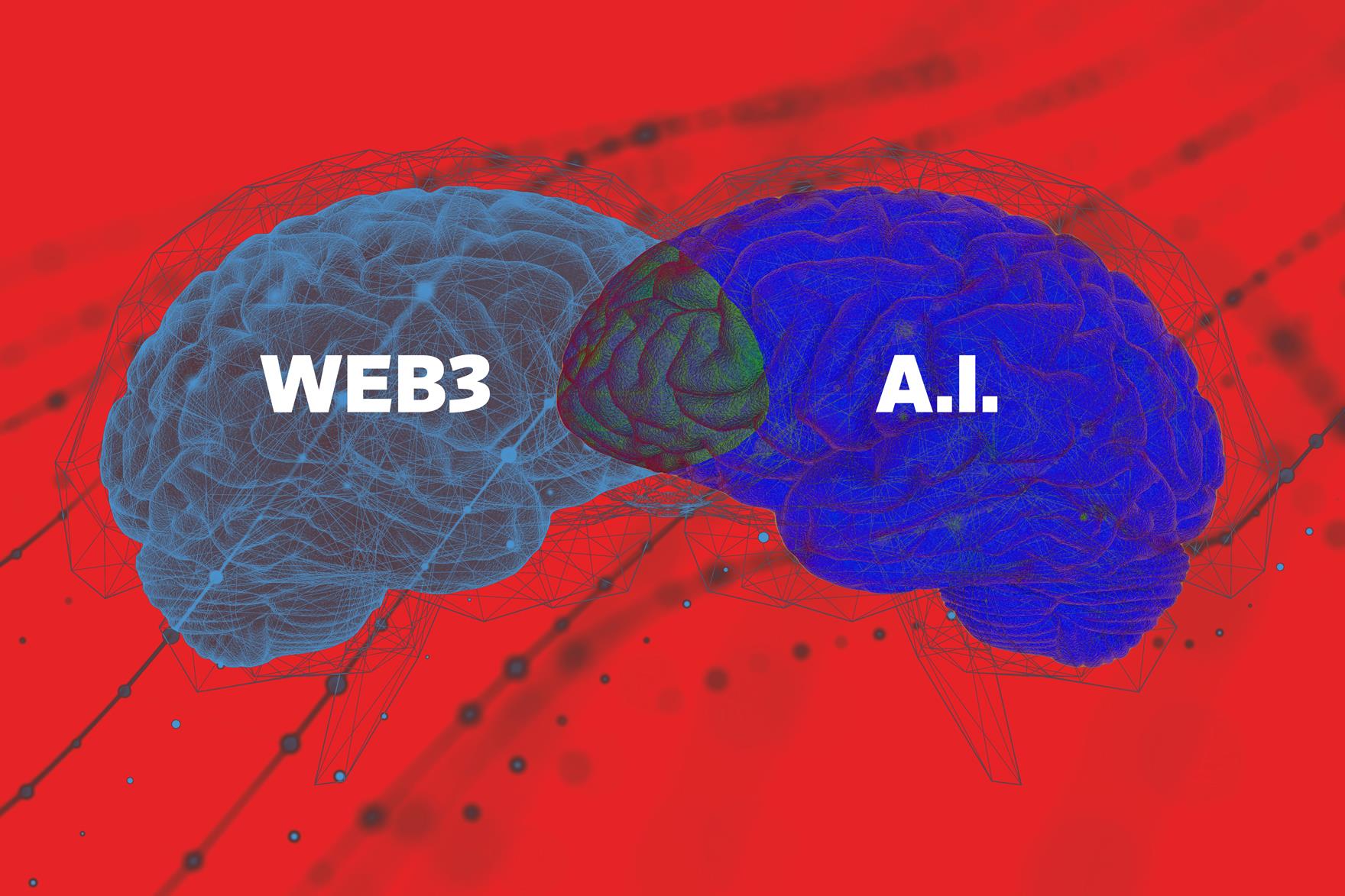
AI and Web3 are blocking the old ways to make money—so how can we "strike gold" in the future?
TechFlow Selected TechFlow Selected
AI and Web3 are blocking the old ways to make money—so how can we "strike gold" in the future?
Web3 is an essential requirement for the continued development of AI; it's highly likely that AI cannot advance without Web3.
 Navigating Web3 tides with focused insights
By Mu Mu
For over two decades, the internet has been one of the most profitable industries. People successively discovered core business models such as "traffic is king" and "content is king," with different profit logics evolving from Web1.0 to Web2.0. Just when everyone thought mastering these models would guarantee long-term success, along came Web3.0—promising to rebuild the internet—and recently AI nearly flipped the entire table.
Now we must confront a very basic question: the old tricks may no longer work as effectively. So what will drive profitability in the future?
From Web1.0 to Web3.0: A Brief History of Internet Gold Rushes
Before the internet, various profit models existed throughout human history—such as arbitrage based on information asymmetry or “selling shovels” during gold rushes. The internet changed how people access and transmit information, giving rise to entirely new monetization strategies.
In the Web1.0 era, valuable information was uploaded online for users to retrieve, significantly lowering barriers created by information gaps. For example, Alibaba’s early web directory moved business opportunities onto the internet. At that time, there were few “netizens,” but conversion rates were high—wherever users went, money followed. Internet pioneers focused heavily on user acquisition. Grassroots entrepreneurs (some now industry giants) piled content onto websites and earned their first fortunes by capturing traffic through search engines. Back then, “traffic is king” was truly accurate.
With Web2.0, application ecosystems exploded. Platforms accumulated massive user bases, competition intensified, and simply driving traffic wasn’t enough to ensure conversions. It became clear that traffic alone could no longer reliably generate income—similar to handing out business cards without knowing if they’d be tossed, or pushing users to add WeChat contacts only for them to delete later. Retention became key. To keep users engaged, platforms began leveraging UGC (user-generated content) to offer diverse content tailored to individual preferences, enhancing stickiness. User data was then analyzed and used for targeted advertising, creating new revenue streams.
Major tech companies shifted from producing content in-house to becoming content platforms. Public accounts, Baijiahao, Toutiao, Sohu accounts—and even banks and Alipay—launched their own content channels. Content creators could focus solely on quality output, relying on algorithmic recommendations and ad revenue sharing from platforms. Thus emerged the idea of “content is king.”
By Web3.0, the internet had become crowded and chaotic. After years of turmoil, users grew wary of commercial messages and ads across platforms, and increasingly suspicious of big tech firms profiting from collecting and selling personal data. Even retaining users no longer guarantees trust or transactions. What if users could become an inseparable part of the platform—an aligned community where everyone shares in its success? By distributing equity via tokens, every user becomes a stakeholder, reclaiming ownership over their data and assets, forming a win-win ecosystem. Value stems from consensus—one of the deepest realizations for anyone entering the crypto world. Perhaps this phenomenon can be briefly summarized as “consensus is king.”
Earlier this year, ChatGPT sparked a whirlwind, making people realize AI is flipping the table—directly challenging established profit models like information arbitrage, traffic dominance, and content supremacy. In fact, AI has been involved since the Web1.0 era, exemplified by increasingly intelligent search engines enabling ordinary individuals to quickly access expert-level information, gradually breaking down information asymmetry. Meanwhile, AIGC poses a serious threat to “content is king,” as human creators now compete with AI for livelihoods...
To summarize:
-
Web1.0 – Traffic is King: Websites provide content and attract users
-
Web2.0 – Content is King: Users create content; platforms distribute traffic and share revenue, aiming to retain users
-
Web3.0 – Consensus is King: Platforms belong to users who co-create and become inseparable stakeholders—"family"
AI flips the table: Start over?
Gold Rush Trends in the Age of AI and Web3
As outlined above, the evolution from Web1.0 to Web3.0 follows a distinct logic. But what happens when Web3.0 and AI develop simultaneously? How might they interact? Internet thinking isn't static—it quietly evolves with technological advancements. We just need to identify the main trends and follow accordingly:
(1) Convergence of AI and Web3
AI is undoubtedly powerful, but its disruptive impact presents significant challenges. Web3 is already offering solutions. WorldCoin, currently a hot topic, was founded by OpenAI CEO Sam Altman based on deep concerns about AI's potential societal risks. As AI progressively replaces human labor, large numbers of displaced low-income workers could trigger social unrest (e.g., widespread looting). Despite controversies, WorldCoin proposes a borderless UBI (Universal Basic Income) using Web3 principles—fair, transparent, privacy-preserving—which may be the best available solution today. Regardless of outcome, it represents a forward-looking social experiment.
Beyond employment, AI’s immense capabilities are likely to be monopolized by tech giants. Those controlling vast datasets will wield unprecedented power, leaving ordinary people with little counterbalance. Privacy and individual rights become harder to protect—prompting global regulators to closely monitor AI, data, and privacy issues. Currently, Web3 offers the most promising path forward, inheriting from crypto the principles of decentralization and privacy-preserving computation—directly addressing AI’s core weaknesses.
Additionally, AI’s enormous demand for computing power presents a major challenge—one that Web3 addresses through affordable, distributed compute resources.
Conversely, AI also helps solve Web3 problems. For instance, “Sybil attacks” by bounty hunters during early token distributions have long plagued startups. Some teams now use AI to analyze big data and filter out malicious addresses, ensuring fairer token allocation and cleaner founding communities. Web3 middleware like Chainlink is exploring AI to improve oracle data quality, enhance smart contract decision-making, and increase overall trust and transparency in critical infrastructure and economic systems.
Overall, the mutual reinforcement between AI and Web3—or blockchain—is a major emerging trend and opportunity.
(2) Entertainment and the Metaverse Gain Importance
In the future, AI will take over most human jobs—or at least drastically improve productivity—leaving people with increasing amounts of free time. As the saying goes: “When you’re hungry, you have one problem; when you’re full, you have endless problems.” Diverse entertainment industries will be needed to fulfill growing spiritual demands. Moreover, physically demanding outdoor jobs will be handed to AI robots, while most people choose to work comfortably within the metaverse—a natural evolution of how tools reshape human life.
(3) AI + Web3 Internet Platforms
As autonomous vehicles, drones, industrial robots, and service robots in restaurants and hotels become smarter and more widespread, tech giants controlling both hardware and software can cut labor costs and scale infinitely—leading to excessive concentration of power. This is unacceptable to regulators and the public, prompting intervention. Such constraints lay the foundation for Web3-based DAOs to build new forms of “shared economy” platforms. Even existing internet giants may be forced to restructure—decentralizing power, transforming into tool providers or participants in open, co-created platforms.
Imagine a Web3 DAO launching a “Meituan-like” company. A foundation manages the food delivery platform, onboards merchants, purchases delivery robots—all financial flows transparent and publicly auditable. Every DAO member is both a user and a shareholder.
Similarly, car owners with self-driving vehicles could join a Web3 ride-sharing platform. When not in use, their cars autonomously accept ride requests and earn income—working while the owner rests at home.
Internet companies could also offer personalized lifestyle assistant robots tailored to individual habits, handling various daily needs. This resembles TikTok’s recommendation algorithm, which knows exactly what videos each user likes and keeps serving them endlessly.
However, it would be terrifying if highly intelligent robots were fully controlled by traditional tech giants. They must operate securely on Web3-based platforms, safeguarding each user’s private data and digital assets.
(4) Opportunities for Ordinary People
In the past, internet giants like Microsoft, Apple, Tencent, Meta, and Alibaba started small—but ordinary individuals rarely had the chance to invest early and reap tens of thousands of times returns. Today, Web3 remains in its early stages. Its open, decentralized structure means anyone can participate from the beginning.
Indeed, the crypto community has already seen legendary cases of ordinary people achieving extraordinary success. How many more such rags-to-riches stories will emerge as trillion-dollar Web3 platforms arise? Keep watching and experimenting with new tech applications. Whenever a promising new app gains traction, don’t hesitate to try it—even at low cost. You might discover unexpected rewards. This kind of fair opportunity was simply unavailable during Web1.0 and Web2.0 eras. That said, greater opportunities also come with higher risks for ordinary users.
(5) In the Era of “Consensus is King,” Community is Key
Any transaction begins with reaching consensus. Future Web3 communities possess a unique magic—the ability to unite members like “family,” working together toward shared goals. While this cohesion offers clear advantages, community governance remains a major unsolved challenge amid all the talk of “decentralization.”
Observing past successes reveals that thriving Web3 projects typically boast strong, vibrant communities. Conversely, projects with weak community engagement—even those led by star teams—quickly collapse, their ecosystems fragmenting like loose sand.
DAOs inherently lack the decision-making efficiency of traditional companies. Therefore, Web3 founders must prioritize community building. Once this door is opened, staying true to the original vision becomes essential—it’s the source of long-term vitality and sustainable growth for any Web3 project.
It’s already the Web3 era, yet many entrepreneurs still blindly follow “traffic is king.” No doubt traffic and content matter—but the real challenge lies in converting visitors into loyal fans. Ultimately, communities must establish a strong foundation of consensus to mobilize collective productivity, using Web3 incentive mechanisms to continuously motivate contributions toward shared goals.
(6) Old Logics Still Apply—But Need Upgrades
With every new trend comes anxiety—and new business opportunities. Tutorials, tools, AI courses, GPT wrappers appear everywhere. AWS and NVIDIA are classic examples of “selling shovels”—they just do it at scale. With slight upgrades to old models and by identifying emerging needs, one can capture additional value.
Although AI enables ordinary people to access professional knowledge, it requires knowing how to use the tools effectively. Remember Baidu CEO Robin Li repeatedly emphasizing the importance of writing good “prompts”—meaning understanding how to interact with AI. For most people lacking these skills, early adopters still hold a huge informational advantage and can profit from it. Merely observing gets you nowhere. Jump in and experiment—new paths may reveal themselves.
Conclusion
AI and Web3 each have their strengths and complement each other in serving humanity. Web3 is becoming a necessity for AI’s continued development—AI will likely not advance far without it. We shouldn’t fear being replaced by AI or intimidated by its capabilities. Instead, we should strive to adapt and embrace it. Each wave of new technology brings rule changes and uncovers fresh demands.
Reflections on AI and Web3 continue. Let’s stay curious and uncover more emerging trends and opportunities together.
Join TechFlow official community to stay tuned
Telegram:https://t.me/TechFlowDaily
X (Twitter):https://x.com/TechFlowPost
X (Twitter) EN:https://x.com/BlockFlow_News
 白话区块链
白话区块链