
Interview with Xiangma, Founder of FIBJS: Borderless and Trust-Based Protocols Are Attributes of the Next-Generation Internet
TechFlow Selected TechFlow Selected
Interview with Xiangma, Founder of FIBJS: Borderless and Trust-Based Protocols Are Attributes of the Next-Generation Internet
Users don't care about the underlying technology; they simply want products that are straightforward and easy to use, not necessarily the most perfect ones.
 Navigating Web3 tides with focused insights
Interviewee: Xiangma, founder of fibjs
Author: cynic, contributor at Geek Web3

Introduction: Xiangma, founder of FIBJS, has been engaged in software development since 1992 and now boasts 30 years of experience. He first encountered internet-related technologies in 1994. In 1998, he founded Xici Hutong—the first large-scale comprehensive community website in the Chinese-speaking world. In 2012, he launched Spore Community, entered the EOS ecosystem in 2018, and is currently focused on developing underlying infrastructure related to fibjs and EOS.

This interview begins with Xiangma’s reflections on EOS and expands into the political philosophy behind blockchain. His key points include:
-
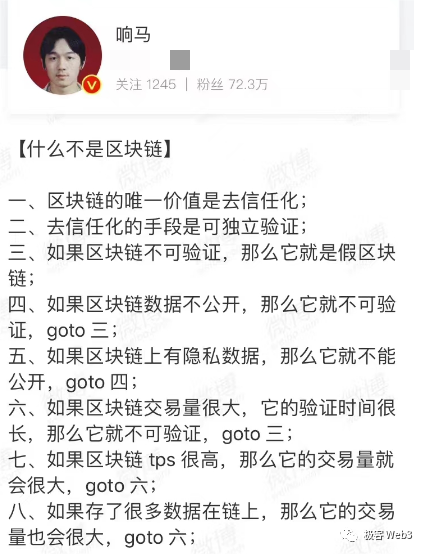
Pursuing extreme TPS leads to pseudo-blockchains; high performance is actually the least important aspect;
-
The core of PoS lies in how elders are selected, which inherently trends toward consortium chains. EOS allocates block-producing rights through governance, raising questions about the source of public governance authority;
-
The equity-based model in PoS chains involves exploitation—native token holders have governance rights, while holders of other assets do not. This is a problem introduced by smart contracts. Ethereum-led smart contract blockchains have shifted from protecting private rights to managing public assets, creating a series of complex, ambiguous, and hard-to-solve issues, such as an unbalanced structure where upper-layer assets become too heavy.
-
Ethereum, supporting smart contracts and DeFi, governs public assets, but the allocation of relevant powers lacks clarity and fairness—for instance, why should lending protocols adopt and trust certain oracles? Permissionless deployment and adoption of contracts grant individuals significant power without sufficient oversight, triggering a chain reaction of problems.
-
Users don’t care about underlying technology—they want simple, intuitive products, not necessarily perfect ones.
-
Ethereum today is essentially a centralized trust center built using decentralized technology.
-
DID + verifiable credentials may point to the future, enabling connection across fragmented networks without requiring trust or boundaries.
-
As long as there is a chain, there is consensus; where there is consensus, there are boundaries; and with boundaries, interoperability becomes impossible. What we need is a boundaryless, trustless protocol—that’s the nature of the next-generation internet.
Full Interview Transcript
1. Cynic: Let’s start our discussion on EOS and newer public chains with a question. As we all know, EOS was incredibly hyped in 2018. Its ICO raised $4.2 billion, shocking both the blockchain and traditional finance worlds, making countless listed companies pale in comparison. But four years later, the EOS ecosystem has significantly declined, with its market cap shrinking by 98%, gradually fading into obscurity.
With that context, could you, drawing from your memories of that “summer of 2018,” briefly share your recollections and reflections on EOS’s rise and fall?

Xiangma: My experience reflects that of many who moved from traditional tech into blockchain. Back then, we were constantly told: Bitcoin is slow and expensive to use, yet its price keeps rising. So naturally, we wanted blockchain to support broader business applications and larger markets, which meant increasing throughput.
Against this backdrop, EOS proposed an astonishing metric: one million TPS, though we now know it couldn't come close to achieving that on a single chain. Still, at the time, it offered people something to dream about: Could EOS really solve blockchain efficiency? Can blockchains become fast enough to accommodate more applications and create bigger markets?
For a period, EOS performed well within its single-chain ecosystem. In terms of performance alone, after optimization, we achieved up to 30,000 TPS. EOS was indeed a strong project, both technically and ecologically. But I believe the essence of blockchain isn’t performance—and EOS overemphasized transaction speed and throughput. My view on high-performance blockchains began shifting around 2019.
2. Cynic: I recall you once said, "EOS blocked the path for high-performance public chains in just six months." Was that the moment your thinking changed?
Xiangma: How did this shift happen? Working with EOS revealed technical flaws. Compare it with BTC: Bitcoin's data size remains relatively stable—even historical data can be verified within hours. But syncing just the 2018–2019 portion of EOS history takes a very long time, even on a full node. This contradicts the fundamental principle of blockchain and cryptography: Don’t trust, verify. You should verify data yourself, not rely on others. However, excessively long sync times raise the barrier for running full nodes, meaning most users cannot quickly verify transactions themselves and ultimately must long-term trust third-party node validation results.
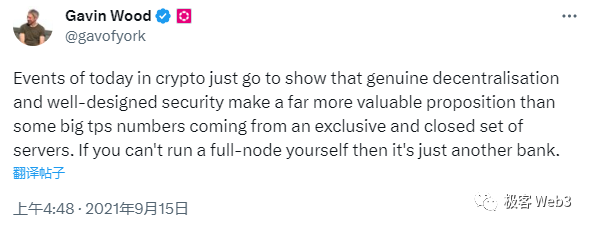
(Gavin Wood's comment after Solana's first outage, emphasizing that low-barrier full node operation is the true essence of blockchain)
We found that in more and more blockchain projects, users can only verify ledger data via cloud service providers.
This led us to reflect—what is the first principle of blockchain? Which applications should use blockchain, and which shouldn’t? Should we sacrifice security for higher TPS? Should we trade verifiability for high performance? If we lose data verifiability and asset verifiability, what distinguishes blockchain from Alipay? Why would I use blockchain instead of Alipay?
Later, I realized that chasing extreme TPS creates pseudo-blockchains. Blockchain must balance efficiency and security—high performance is actually the least important element.
3. Cynic: BM, EOS’s founder, previously created two other chains, both using DPOS consensus like EOS. What are your thoughts on DPOS and its underlying philosophy? The “D” in DPOS—Delegate—seems to give EOS inherent on-chain governance capabilities.
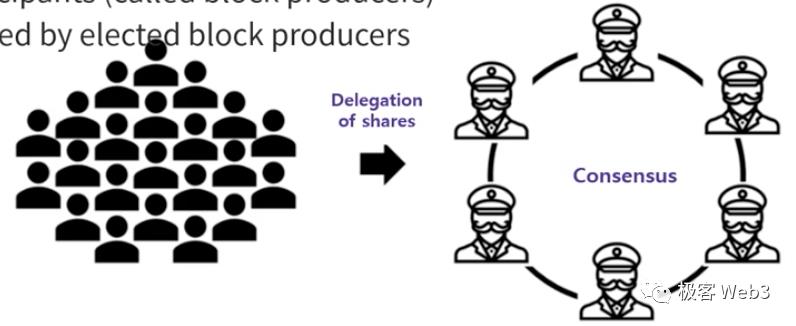
Xiangma: In my view, there are only two types of consensus mechanisms: PoS and PoW. PoW stems from computational power, while PoS originates from ownership stakes. PoW is more permissionless, whereas the core of PoS lies in selecting elders—it inherently leans toward consortium chains.
Among PoS-based public chains, Ethereum simply uses staking and random selection of consensus nodes to minimize subjective human intervention. EOS, however, focuses more on allocating block production rights through open governance.
But PoS always raises a critical issue: Where does public governance authority originate? In PoS, tokens are the source of power—governance rights are determined by token stake, forming an equity-based system. This differs from national governance, where government authority comes from the delegation of human rights—a rights-based system.
The equity-based model creates exploitation: native token holders have governance rights, but those holding other on-chain assets do not. This is a major challenge introduced by smart contracts themselves. Smart contract blockchains like Ethereum have shifted from protecting private rights to managing public assets, inevitably encountering more problems.
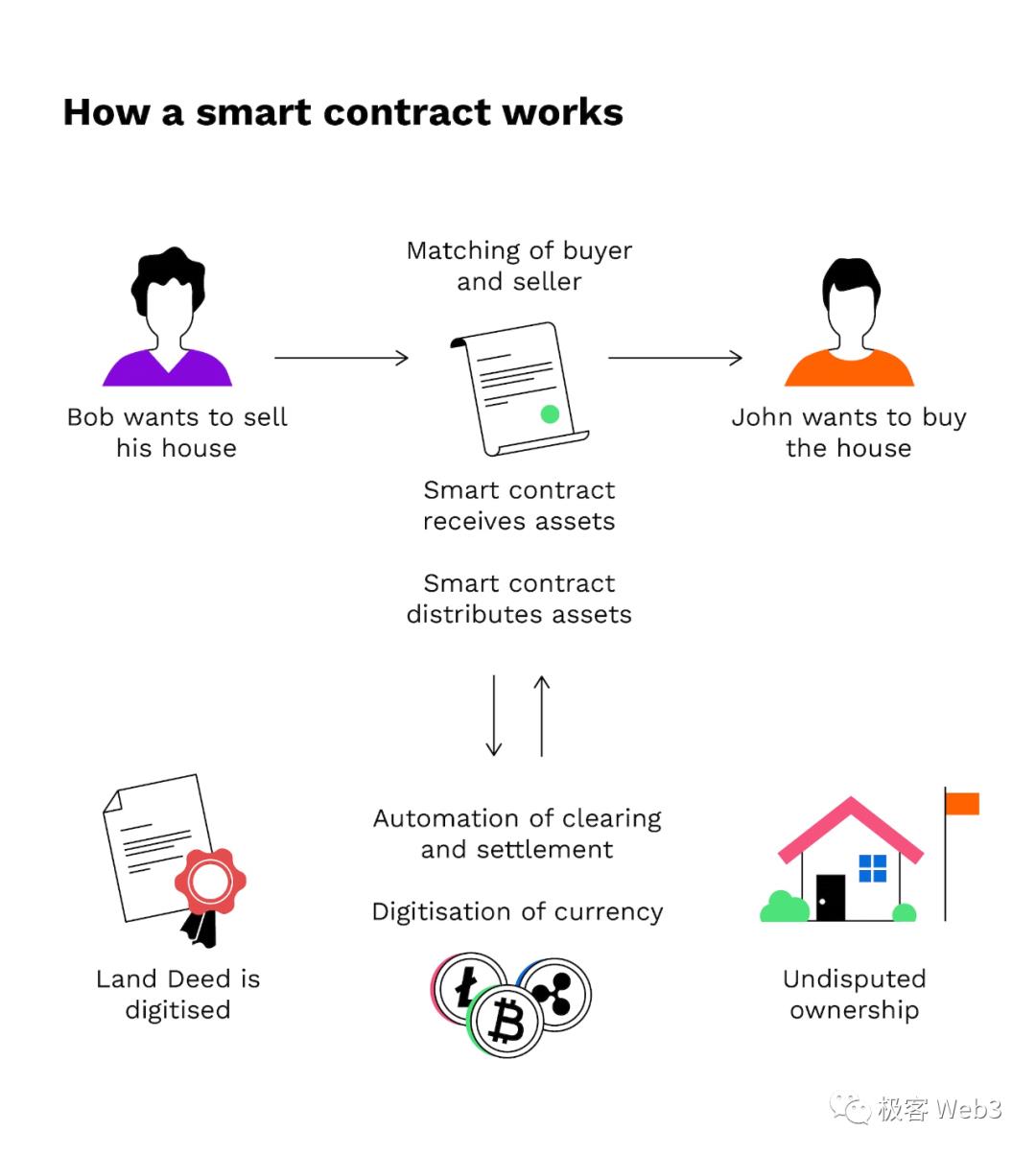
4. Cynic: When you say “introducing smart contracts brings huge problems,” what exactly do you mean?
Xiangma: Think of it this way: Bitcoin is merely a ledger—no smart contracts—so it functions solely as an accounting tool, recording transfers of private property involving only private rights. It’s simple and its power model is coherent. But once Ethereum introduced smart contracts, it effectively became a decentralized cloud service.
Ethereum, by supporting smart contracts, actually governs public assets—not just private property like Bitcoin—leading to a host of extremely complex, ambiguous, and difficult-to-resolve issues.
First, Ethereum hosts native assets (ETH) alongside numerous circulating assets (or “parasitic assets”). These “parasitic assets” have usage rights but no governance rights over the base layer. As these off-native assets grow in volume, Ethereum risks becoming top-heavy—the security of the base layer becomes mismatched against the massive value it supports. After transitioning from PoW to PoS, this imbalance worsened, concentrating governance power even further.
More importantly, smart contracts confer public asset management attributes onto Ethereum. DeFi transactions involve redistribution of rights tied to public assets, extending into governance. For example:
A DeFi lending protocol relies on a group of oracle node operators to provide price feeds, determining which users’ collateral ratios are insufficient and require liquidation. This effectively grants oracles public asset management authority. But why should we trust these oracles as secure and reliable? Why delegate public power to them? Often, users have no say in the matter—power is quietly handed over to individuals who aren’t sufficiently supervised or transparent. Given frequent oracle manipulation attacks in the past, this is a serious concern. Power that is neither supervised nor authorized is inherently untrustworthy.
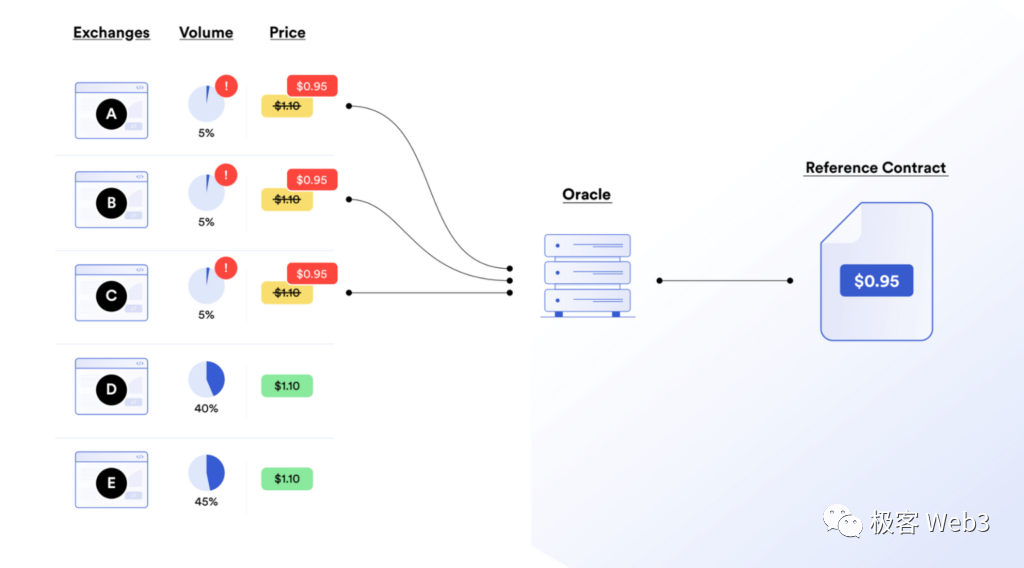
Whenever public asset management is involved, thorough supervision and transparency are required—but currently, there are no robust mechanisms regulating smart contract projects.
Ultimately, I believe permissionlessness should apply only to private rights, not public ones. Permissionless contract deployment and adoption grant unchecked power to many individuals, triggering cascading issues. Multichain’s cross-chain bridge incident might be an even clearer example.
EOS’s approach to governance rights is relatively clear in terms of distribution and origin. However, for DeFi protocols and other smart contract projects, the source of power is unclear—or even absent. If we were to implement clear, open governance like EOS to properly allocate public power, it would drastically increase development complexity and overhead. That’s a real challenge.
So whenever management of public assets is involved, questions about power boundaries arise—like how Germans’ affairs shouldn’t be managed by the French. Introducing smart contracts means Ethereum effectively governs public assets, not just private property like Bitcoin, leading to a host of complex, ambiguous, and unresolved problems.
5. Cynic: EOS introduced a unique resource model, mimicking computer allocation of network bandwidth (NET), computing power (CPU), and memory (RAM). What impact did this design have on EOS?
Xiangma: The bank-ledger model used by Bitcoin and Ethereum is simpler and more popular, but faces state bloat (state explosion) issues. In contrast, EOS continuously consumes resources (similar to gas) when storage space is occupied, preventing state bloat. This computer-like resource billing design makes the user experience closer to cloud services.
Although this resource model may be fairer for service providers, its complexity exceeds most users’ comprehension and is difficult to accept. Users don’t care about underlying technology—they usually want simple, intuitive products, not necessarily the most perfect ones.
6. Cynic: EOS plans to switch to HotStuff consensus. What do you think is the purpose of this change? (Note: HotStuff is a pipelined implementation of PBFT, where each block undergoes a round of confirmation by 2/3 of block producers before the next block is generated.)
Xiangma: EOS’s original design didn’t prioritize immediate transaction finality—transactions took up to three minutes to finalize. (Note: To accelerate block production and reduce inter-node communication complexity, new blocks could be produced before 2/3 of nodes confirmed the prior block, and validators didn’t immediately broadcast their confirmations. This extended finality time. A new block wasn’t finalized until 355 subsequent blocks were added.)
Changing the consensus algorithm aims to improve transaction finality. This change has limited overall impact because the basic architecture remains unchanged—block production still follows the original DPoS process. HotStuff simply enables faster consensus, essentially adding finality features on top of existing DPoS.
7. Cynic: Could you introduce your current technical work related to EOS?
Xiangma: We’ve implemented native EVM smart contracts on EOS and upgraded its cross-chain functionality. The official EOS EVM implementation runs EVM atop the WASM virtual machine, which is not only slow but also fails to reuse existing infrastructure.
EOS’s RPC (remote procedure call) design also has flaws. Write-RPC wraps Ethereum transactions and submits them to EOS. Read-RPC, for convenience, directly syncs EOS.evm data to a standalone Ethereum node—making the architecture overly complex. Few can offer API services; only the project team itself provides support.
Our EVM is natively implemented—nodes can directly access EOS assets and it’s compatible with web3.js, ethers.js, and other development tools, offering an experience close to Ethereum. Our modified project will be gradually open-sourced.
8. Cynic: You've witnessed a mainstream narrative evolve—from inception to hype to quiet decline. From your perspective, where is the industry headed?
Xiangma: I’ve always said web3.0 and web3 are not the same thing. Web3.0 represents the collective set of problems the next-generation internet aims to solve, while web3 is an attempt by some to use blockchain to fix all internet problems.
But the real issue facing today’s internet is the legacy trust mechanism of the old internet. In the traditional internet, users can’t escape the assumption of trusting central servers, leaving everyone hostage to centralized institutions.
Can we transform the internet back into a trustless, distributed network? That’s the key—not replacing one trusted center with another built using decentralized technology. Ethereum today is essentially a centralized trust center formed through decentralized technology.
IPFS is another example. We once said data stored in central institutions leaves us vulnerable—so we aimed to decentralize data storage. But IPFS isn’t truly decentralized storage; it’s a centralized storage system built using decentralized techniques. It’s still a service—and any service is inherently centralized.
We must return to the essence of the internet, rather than place trust in new (decentralization-technology-built) centralized networks. DID + verifiable credentials may represent a future direction, connecting fragmented networks without requiring trust or boundaries.
DID itself isn’t an identity—it’s an identity protocol. There’s no universally accepted mechanism in DID—you generate your own public key, and your DID exists, without needing anyone else’s approval. The key is how we use DID to solve real-world problems through verifiable credentials.
A crucial breakthrough is that data sharing is no longer between institutions, but driven by the individual—the data subject. You’ll find that although there’s no consensus, no so-called decentralization, no blockchain, it feels highly decentralized, involving only three parties: the data controller, the recipient, and the data subject.
When we initially designed this protocol, we included a chain. But repeatedly asked: Who built the chain? Who can build a chain acceptable to everyone? Any chain implies consensus; consensus implies boundaries; and boundaries prevent interoperability. We aim to build a boundaryless, trustless protocol—that’s the nature of the next-generation internet.
Join TechFlow official community to stay tuned
Telegram:https://t.me/TechFlowDaily
X (Twitter):https://x.com/TechFlowPost
X (Twitter) EN:https://x.com/BlockFlow_News
 @godrealmx