








A Brief Analysis of Friend.tech, the Rising Star in the SocialFi Sector: How to Monetize Through Tokenized Influence?
TechFlow Selected TechFlow Selected
A Brief Analysis of Friend.tech, the Rising Star in the SocialFi Sector: How to Monetize Through Tokenized Influence?
If we return to the social product itself, failing to truly connect fans with KOLs means limited growth potential and unsustainable development.
 Navigating Web3 tides with focused insights
Author: Jill, LD Capital
1. Introduction
Friend.tech is a decentralized social platform built on Base, Coinbase’s Layer 2 blockchain. The product leverages strong integration with Twitter to obtain users’ Web2 identities and monetize them. In this system, every user can be tokenized, allowing their influence to be directly priced by the market.
2. Product
At its core, friend.tech operates on the fan economy. Before using the app, users must deposit 0.01 ETH, which serves as the primary in-app currency for purchasing shares of other users. Shares represent the tokenization of a user's influence. For buyers, owning shares grants access to direct messaging (friend slots). Once a purchase is completed, one-on-one chat becomes available. To prevent spam, each holder can send up to three messages before needing a reply from the recipient to reset the limit.
Upon entering the app, users see the most popular individuals on the homepage and can search for specific accounts via the Explore button to buy their shares. Each user's initial share price is determined by their Twitter data, and there is no cap on share supply. Share prices fluctuate based on market supply and demand—meaning the more popular someone becomes, the more shares they sell and the higher their value climbs.
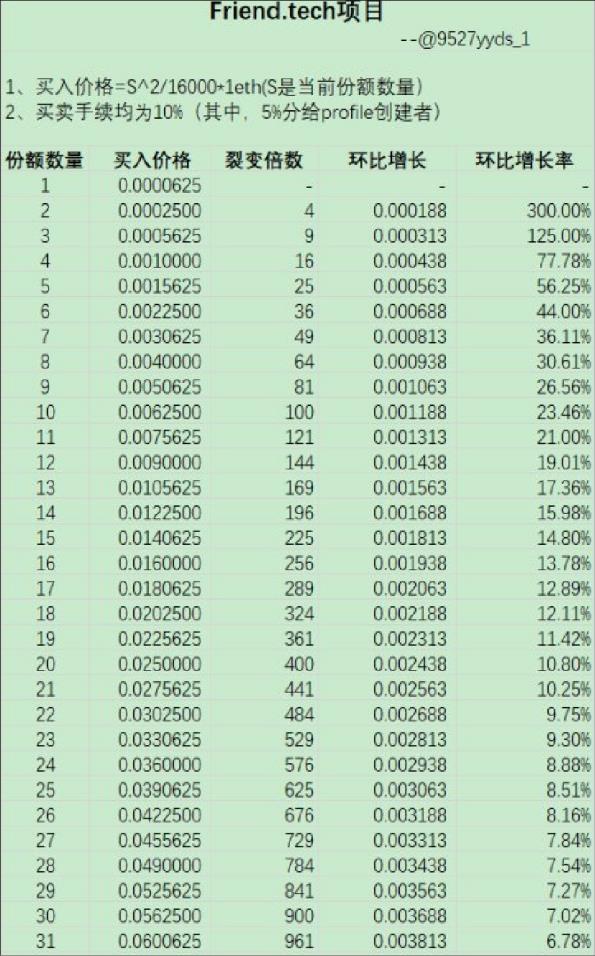
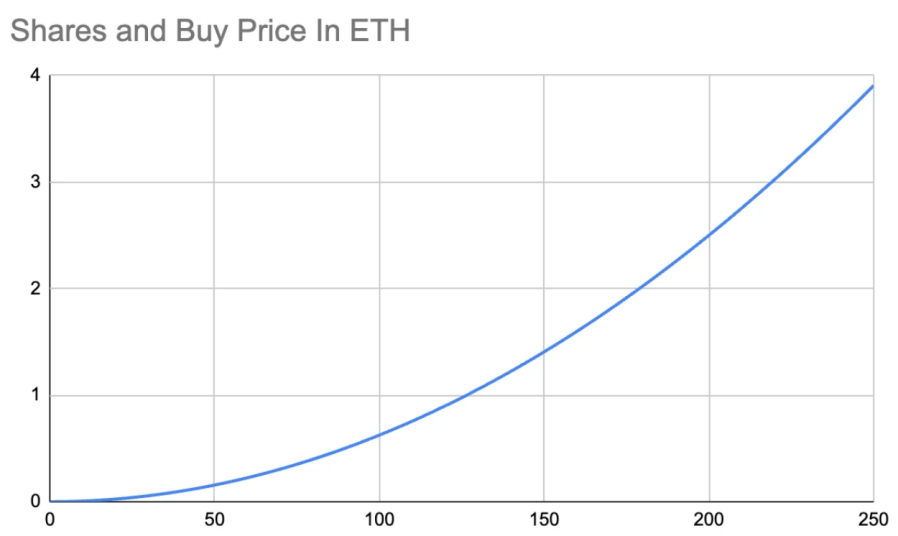
Twitter users @functi0nZer0 and @9527yyds_1 analyzed the product’s pricing model, revealing that share prices increase exponentially as more shares are sold.
The chart below illustrates a steep slope, indicating that token prices can rise sharply in a short period. Conversely, once selling begins, prices may also drop rapidly.
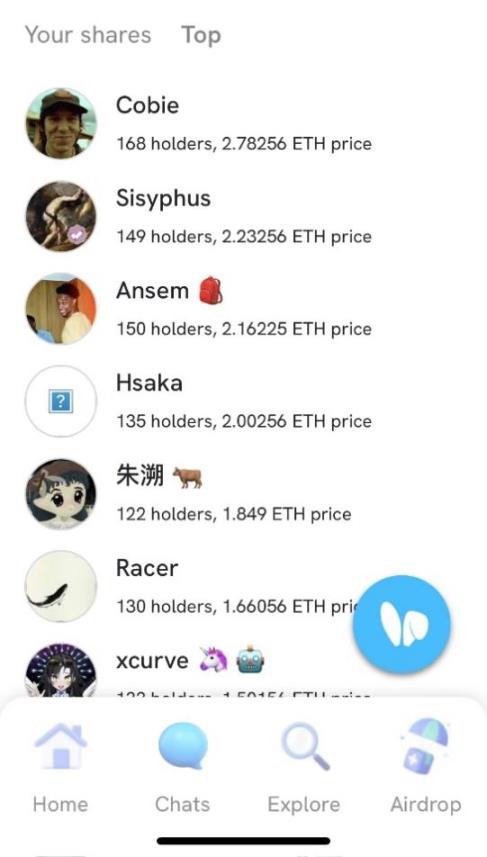
For social influencers (KOLs) whose shares are traded, they receive a 5% “subject fee” on every transaction involving their shares. To maximize earnings, KOLs need high trading frequency. Given the exponential pricing model, higher turnover drives prices up faster. However, this creates a challenge: without underlying value or strong fan loyalty, personal influence tokens quickly reach a point where growth stalls. Currently, the top influencer token has only 168 holders but already trades at 2.78 ETH.
3. Funding
Friend.tech announced on Twitter that Paradigm participated in its seed round, though the amount raised was not disclosed. Additionally, friend.tech has collaborated with Paradigm this year to develop new online social interaction tools.

Source: Twitter
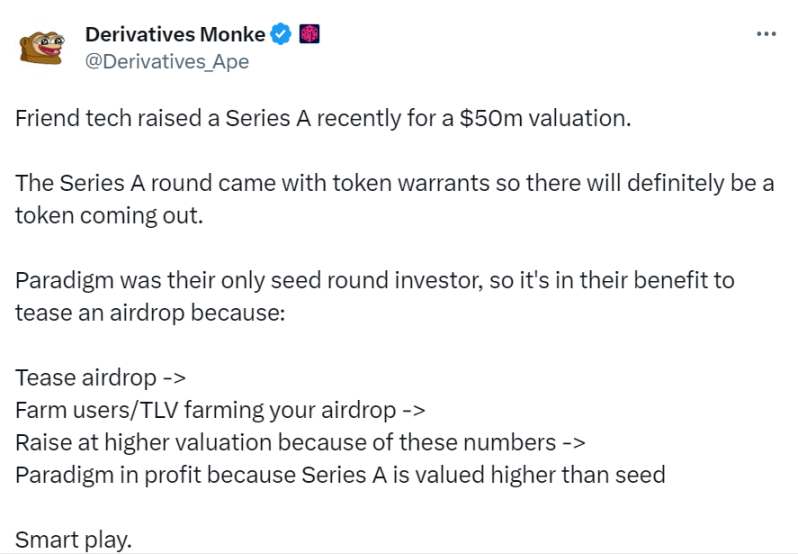
A Twitter user claimed that friend.tech has completed its Series A funding round at a $50 million valuation. This round reportedly included token allocation, suggesting that friend.tech will launch its own token.
Source: Twitter
4. Business Metrics
1. Users
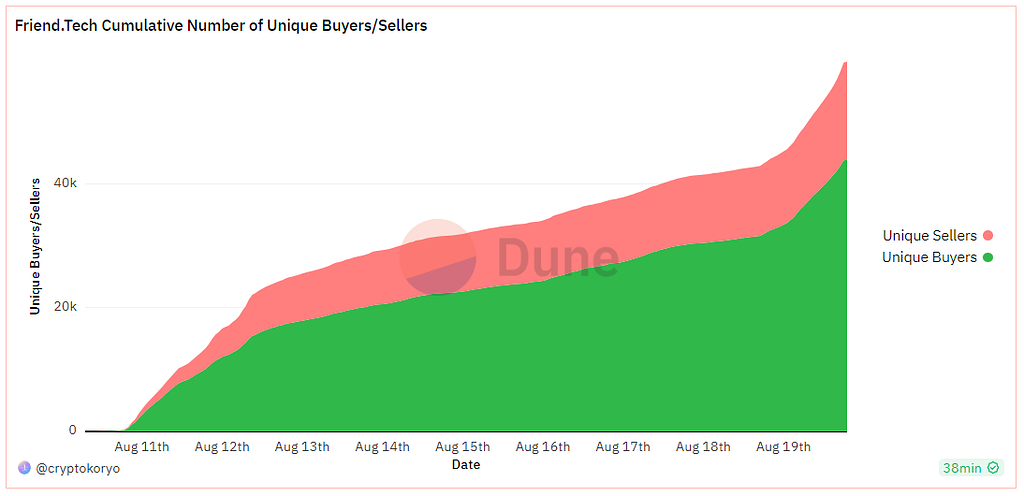
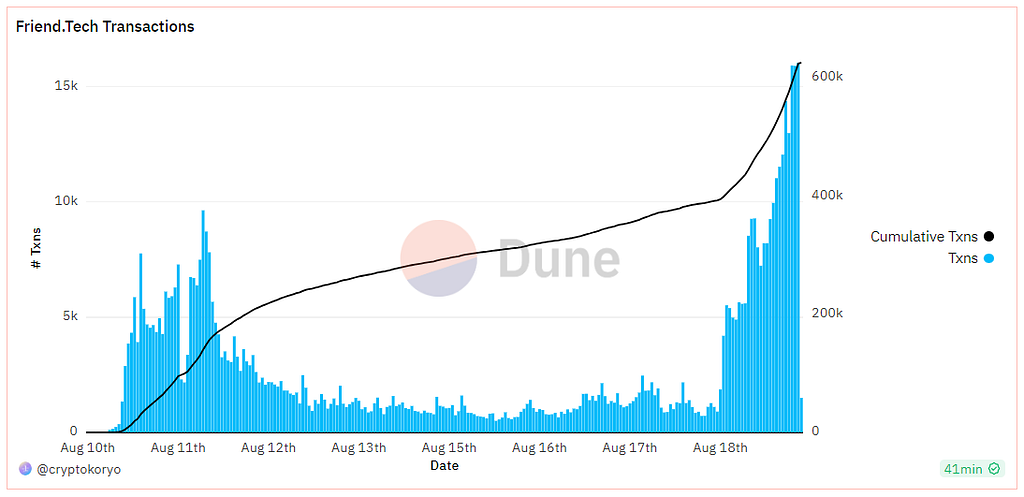
According to Dune analytics, Friend.tech has recorded approximately 626,000 total transactions, with around 44,000 buyers and 16,000 sellers. On August 18, after friend.tech distributed its first weekly points airdrop, both buyer and seller counts surged significantly.
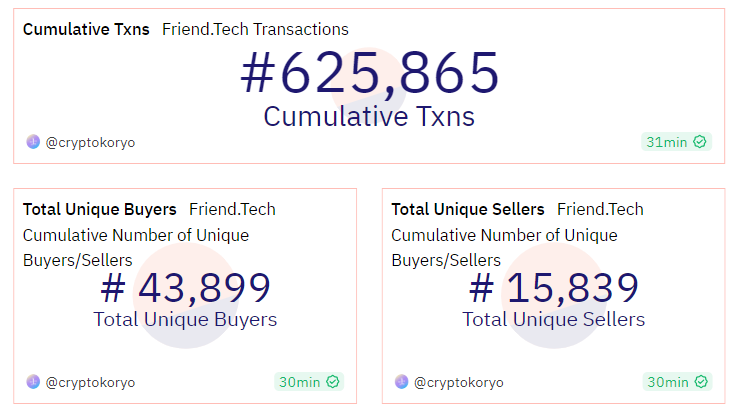
Source: Dune Analytics
Transaction volume clearly shows increased on-chain activity after August 18.
2. Trading Volume
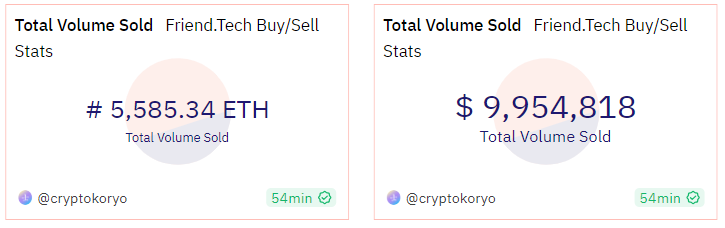
The chart below shows buyer/seller transaction data: buyer volume reached 8,623 ETH (~$15 million), while seller volume was 5,585 ETH (~$9.95 million).
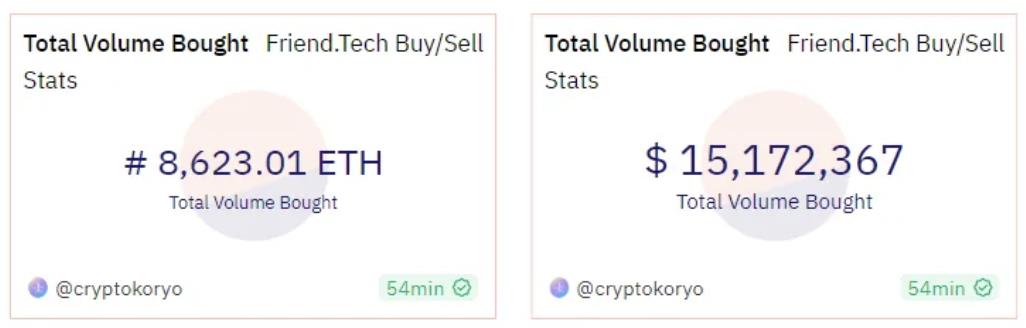
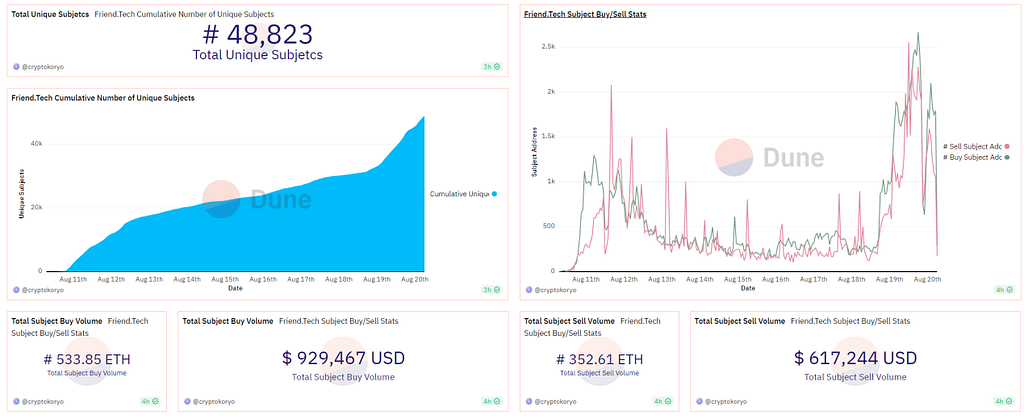
In terms of share trading, about 49,000 unique subjects have been traded, with 533.9 ETH in buying volume and 352.6 ETH in selling volume.
3. Protocol Value
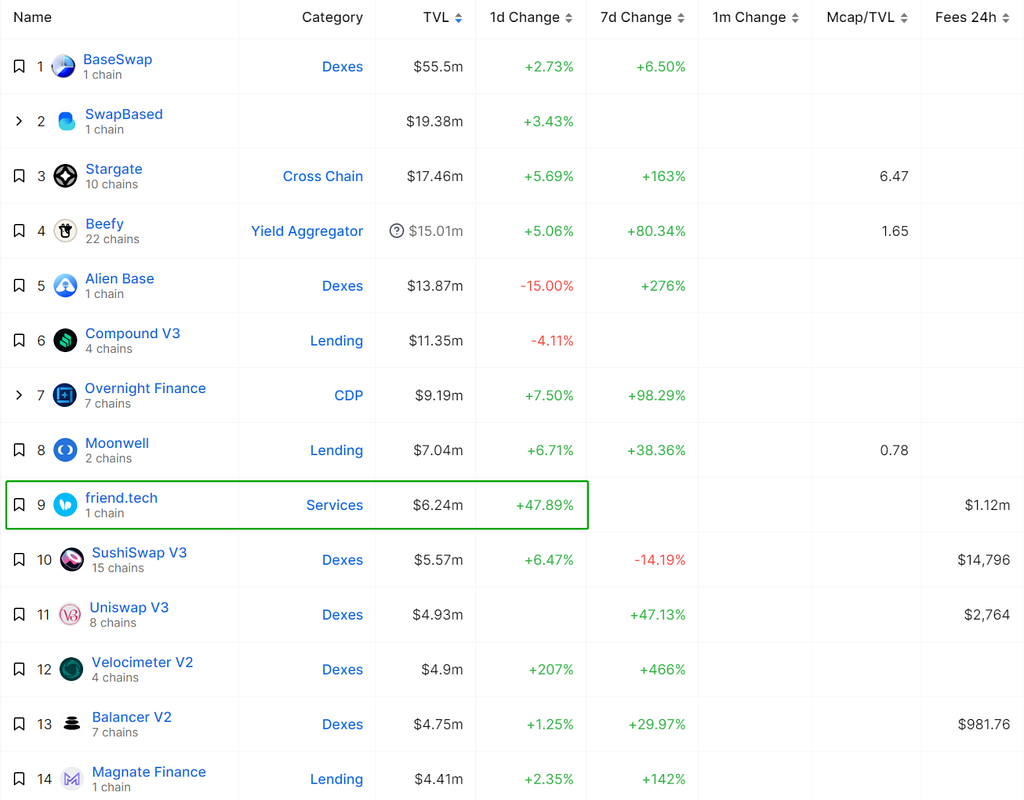
Base chain currently has a total value locked (TVL) of $178 million, with friend.tech accounting for $6.24 million—ranking 9th on the chain and representing 3.5%. As a newly launched social application, this growth rate is relatively fast.
Source: Defillama
According to Dune analytics, friend.tech has accumulated over 21,000 ETH in trading volume (~$35 million). A 10% transaction fee is charged when personal influence tokens are traded: 5% goes to the subject (the influencer), and 5% to the protocol. So far, protocol revenue has reached 973.5 ETH (~$1.63 million).

Source: Dune Analytics
5. Project Updates
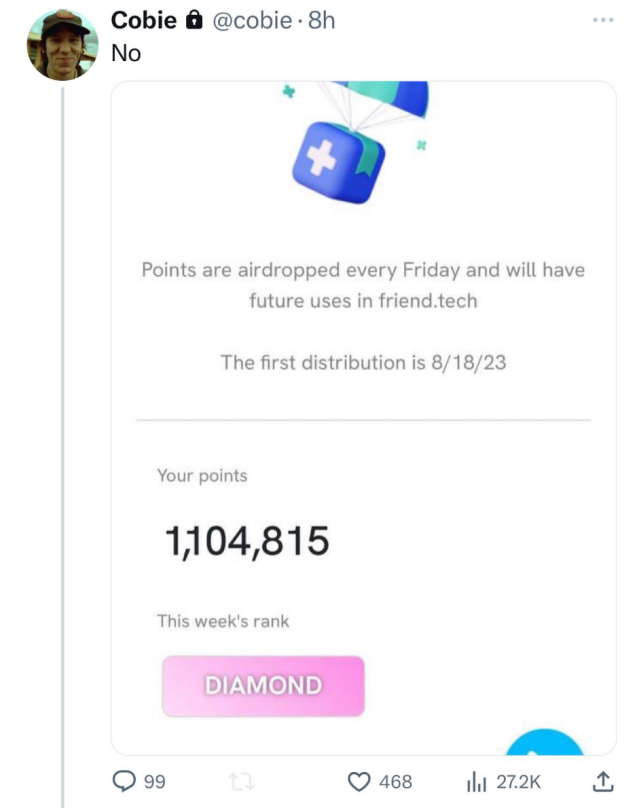
On August 18, friend.tech officially announced the distribution of its first points airdrop to 44,000 users. The team stated that during a six-month test phase, 100 million points will be distributed, with weekly airdrops every Friday. Points are recorded off-chain and will have special utility after the testing period ends.
Friend.tech noted that airdrop allocations will be based on user activity prior to each Thursday, with criteria updated weekly. Users are advised against gaming the system, and friend.tech reserves the right to adjust previously distributed points if necessary.
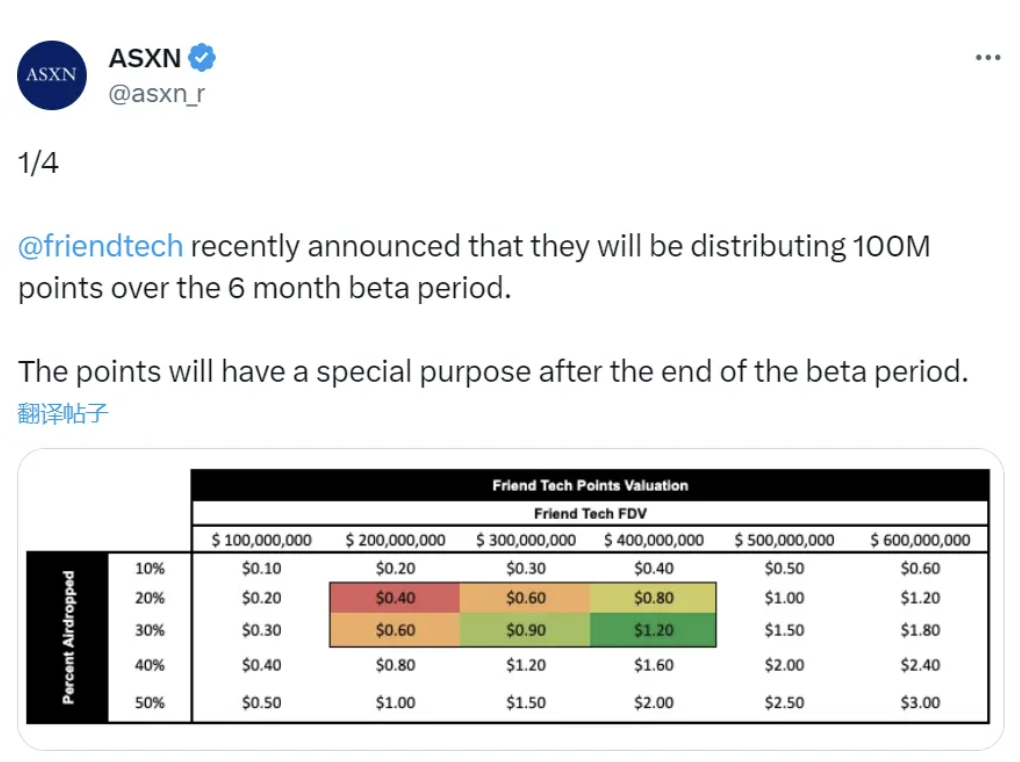
Based on speculation regarding point allocation percentage and fully diluted valuation (FDV), some users estimate point value. If FDV reaches $20 million with 10% allocated to airdrops, each point could be worth $0.2.
Source: Twitter
Taking @Cobie—the top holder of personal influence tokens—as an example, he received 1.1 million points in the first airdrop. Assuming a $50 million valuation (Series A) and a 10% airdrop allocation, each point would be worth $0.5, giving Cobie an airdrop value of $550,000.
Conclusion
Friend.tech is a fan-economy-driven social application with relatively limited functionality so far. Its token pricing mechanism exhibits strong FOMO characteristics. Driven by favorable airdrop expectations, current热度 continues to rise. Active addresses and on-chain locked value are growing rapidly. However, if evaluated purely as a social product, its ability to foster genuine connections between fans and KOLs remains unproven. Without deeper engagement mechanisms, long-term growth potential appears limited.
Join TechFlow official community to stay tuned
Telegram:https://t.me/TechFlowDaily
X (Twitter):https://x.com/TechFlowPost
X (Twitter) EN:https://x.com/BlockFlow_News
 Cycle Capital Research






