Ethereum: From Digital Assets to Multiplayer Online Games
TechFlow Selected TechFlow Selected
Ethereum: From Digital Assets to Multiplayer Online Games
All products, services, and experiences built on the chain use this gaming environment as their primary backdrop.
 Navigating Web3 tides with focused insights
Written by: Ben Roy
Compiled by: TechFlow
People describe Ethereum in many different ways.
It's a smart contract platform, an asset ledger, a perpetually online financial system, a massive multiplayer online money game, and so on.
The gaming analogy has always resonated with me the most. It helps unify my entire interaction with this blockchain into a single experience—much like that of a video game player.
Think about it.
We have different "levels," starting with the mainnet, then branching out into other environments such as Layer 2s and their associated scaling solutions.
Within these environments are different "players"—traders, speculators, investors, collectors. Some are retail, others are institutional, each with varying levels of skill, knowledge, and experience.
There are also different areas of specialization where players can "play," including NFTs, DeFi, memecoins, infrastructure, or other more niche domains.
And there are different "game modes." There are periods of PvP (player versus player), where participants compete for the same liquidity to make profits. Then there are periods of PvE (player versus environment), where trading becomes easier because new users (and capital) enter the ecosystem and drive its growth.
There's even the beginning of a "game score," with on-chain transaction histories being converted into NFT credentials like wallet Degen Scores or POAPs (Proof of Attendance Protocol). Trackers like Nansen even classify wallet addresses based on their activity as "whales" or "smart money."
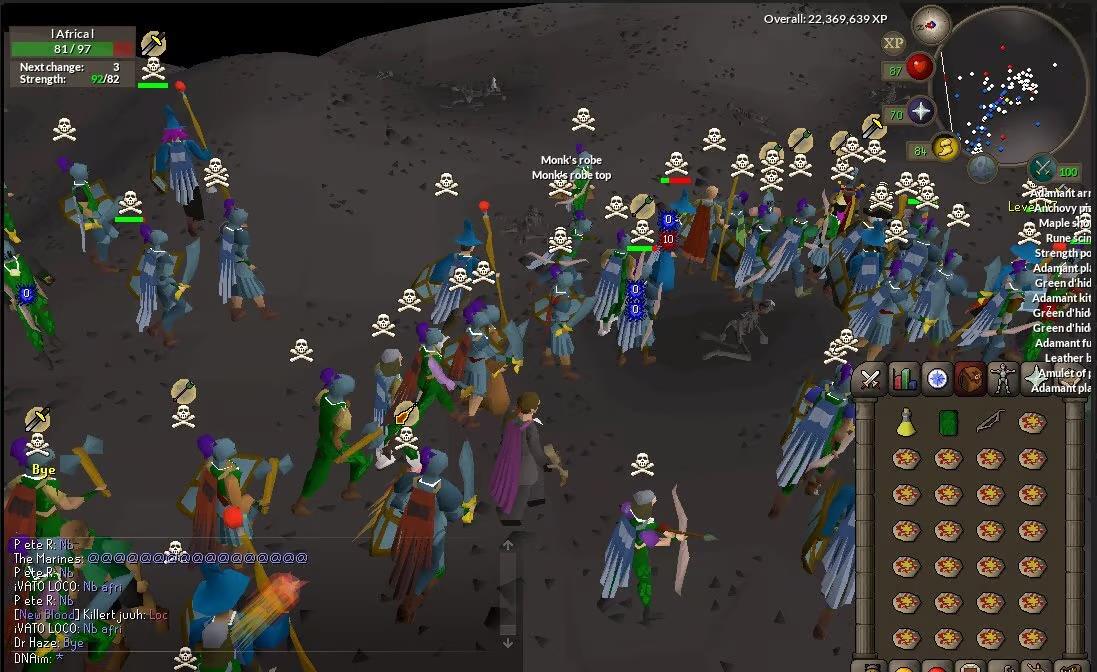
We see both the game's unit of currency (i.e., Ether) and identity symbols tied to its subculture (e.g., CryptoPunks)—both reminiscent of massively multiplayer online role-playing games like RuneScape.
Ethereum also shares similarities with mainstream games like Fortnite or Roblox due to its reliance on user-generated content (UGC). People naturally have incentives to create "content"—ranging from art to applications and game assets—because building expansions of the game can be profitable.
All of this is tied together through Ethereum’s "user interface," which I understand as a patchwork of block explorers (Etherscan), analytics platforms (Arkham), wallets (MetaMask), marketplaces (OpenSea), and related social media apps (Twitter, Discord, Telegram)—tools all players use to operate and interact within the ecosystem.
Thinking about Ethereum in this way has significant implications. To me, the most important one is that every product, service, and experience built on-chain must take this gaming environment as its primary context.
People are drawn to this global, open-source game we've created, and they behave in specific ways within it. Every builder, every artist, every team should design with these norms and behaviors in mind.
Join TechFlow official community to stay tuned
Telegram:https://t.me/TechFlowDaily
X (Twitter):https://x.com/TechFlowPost
X (Twitter) EN:https://x.com/BlockFlow_News
 @benroy__