Franklin FOBXX vs Ondo Finance: The RWA Battle Between Traditional Finance and DeFi
TechFlow Selected TechFlow Selected
Franklin FOBXX vs Ondo Finance: The RWA Battle Between Traditional Finance and DeFi
Supporters believe that tokenization and moving to blockchain can save traditional finance significant costs.
 Navigating Web3 tides with focused insights
Author: Florence
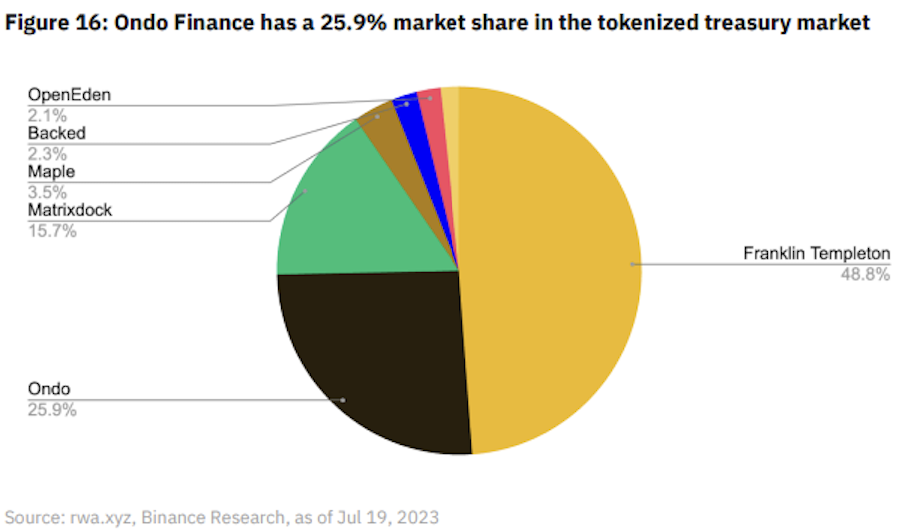
Tokenized real-world assets (RWA) have drawn significant attention this year, with the tokenized U.S. Treasury market accounting for $603 million. The largest player in this space is traditional financial firm Franklin Templeton. Meanwhile, decentralized investment platform Ondo Finance has been rapidly gaining ground since January and currently manages an estimated $156 million in assets.
Franklin OnChain U.S. Government Money Fund FOBXX
Franklin Templeton is a California-based asset management company serving clients across 155 countries globally. As of March 31, 2023, it managed approximately $1.4 trillion in assets.
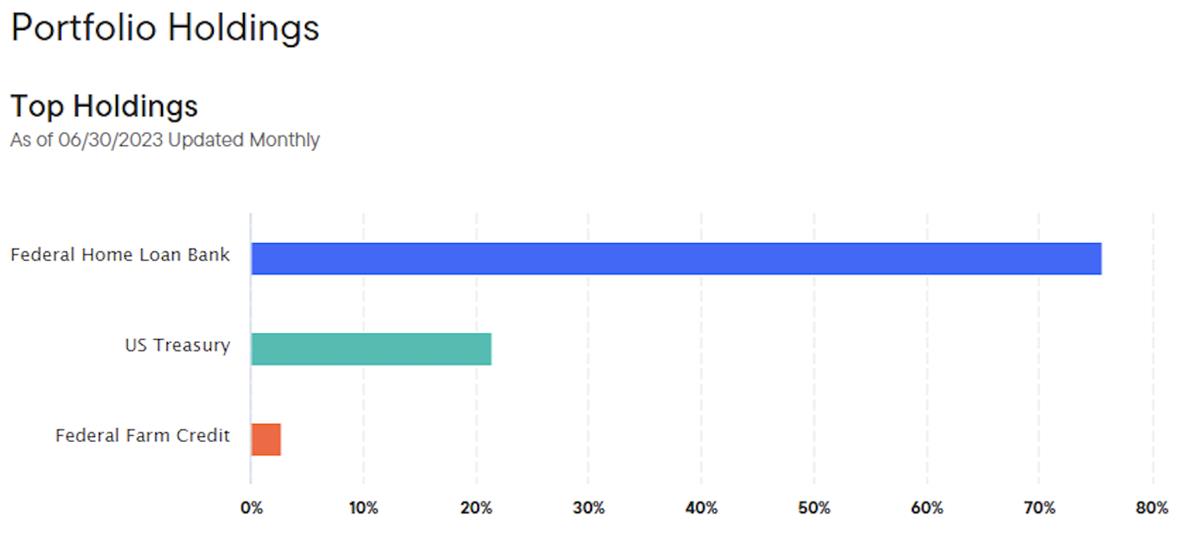
The Franklin OnChain U.S. Government Money Fund FOBXX was established on April 6, 2021. The fund allocates 99.5% of its total assets to U.S. government securities, cash, and repurchase agreements fully collateralized by U.S. government securities or cash. By the end of June, its total assets neared $300 million, with a net expense ratio of 0.20%.
FOBXX is the first registered U.S. mutual fund to use public blockchain technology for transaction processing and recording share ownership. It was initially issued on the Stellar blockchain. In April of this year, it expanded to Polygon, with future plans to launch on Avalanche, Aptos, and Ethereum Layer 2 solution Arbitrum.
To invest in FOBXX, one must possess a dedicated on-chain wallet created by the fund’s transfer agent during account setup. Investors can check their fund balance through the Benji Investments app. Only this wallet has the authority to purchase, redeem, and hold fund shares. The private keys associated with investor wallets are held by the fund’s transfer agent.
Concerned that blockchain complexity might deter investors, Franklin Templeton has offered fee subsidies to make the tokenized fund more attractive. Without subsidies, the fee would be 0.89%, but it is currently capped at 0.2%. The fund's annualized return over the past year stands at 3.75%.
Decentralized Investment Platform Ondo
Decentralized investment platform Ondo Finance, led by Nathan Allman, a former Goldman Sachs employee, has received backing from prominent investors including Peter Thiel’s Founders Fund, Coinbase Ventures, and Tiger Global. In January, Ondo launched tokenized treasury products enabling stablecoin holders to invest in U.S. Treasuries and investment-grade corporate bonds via its tokenized funds. According to Binance reports, these products offer annualized returns exceeding 4.5%, outperforming Franklin Templeton’s FOBXX at 3.75%. Currently, Ondo manages approximately $156 million in tokenized assets—about half the size of FOBXX.
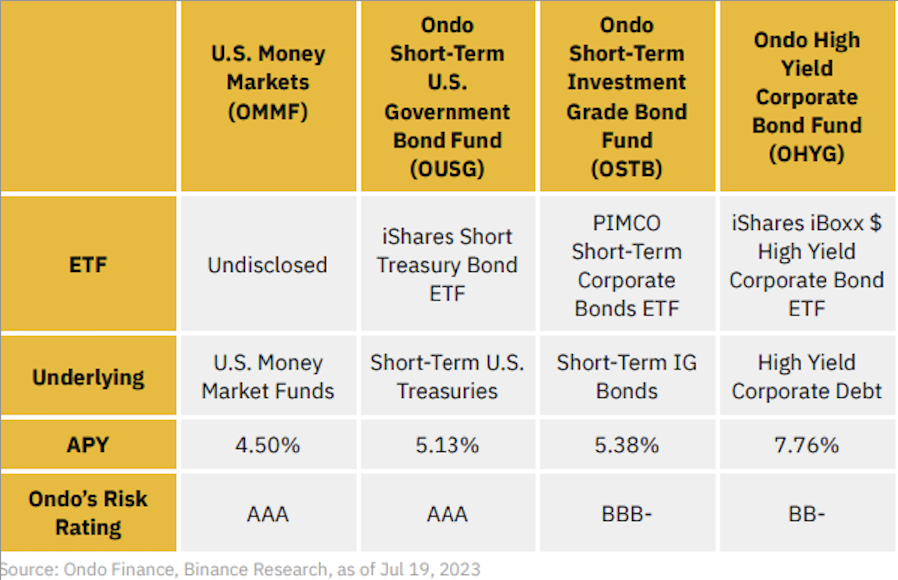
Ondo partners with regulated U.S. exchange Coinbase, which also serves as a partner for the stablecoin USDC. Investors who pass KYC verification on Ondo Finance can invest their USDC into Ondo’s products. Taking OUSG as an example, the process works as follows:
Investor connects wallet on Ondo website → Invests USDC (minimum $100,000) → Coinbase converts USDC to USD → Transfers funds to Clear Street (custodian and prime broker) → Fund manager executes trades in BlackRock iShares ETFs listed on NASDAQ (ticker SHV) per instructions → Tokenized OUSG shares are sent back to investor’s wallet address.
Ondo Finance operates as a DeFi protocol and is not regulated by the SEC.
RWA Cannot Be Fully Controlled by Blockchain Technology Alone
Traditional financial systems have long relied on numerous intermediaries—including brokers, compliance officers, and regulators—to ensure a certain level of security and oversight in transactions. While these roles enhance control, they also bring high costs. Proponents argue that tokenization on blockchain could significantly reduce such expenses. Despite media reports highlighting record-high RWA market values and emphasizing that the sector is still in its early stages, the dominant players remain traditional financial institutions. Franklin Templeton, for instance, uses blockchain only for transaction processing and share ownership records; other processes still rely heavily on human involvement and cannot achieve full automation as envisioned by DeFi advocates.
Well-known assets such as real estate, gold, stocks, bonds, and even today’s popular carbon credits can all be tokenized and brought onto the blockchain. However, their operations still depend extensively on manual processes. Take the previously introduced Mitsui Digital Asset Platform: Mitsui & Co. leverages its expertise in real estate to select suitable projects (including properties and infrastructure), handles complex tasks like management fees, utilities, and taxes, and then directly distributes earnings to investors—similar to traditional real estate investment trusts (REITs), except blockchain technology ensures full transparency throughout the process. Blockchain plays only a partial technical role here; many critical functions such as project selection, legal compliance, and management cannot be replaced by smart contracts.
Moreover, RWAs are not without risk. Beyond the technical barriers and vulnerabilities inherent in blockchain itself, the underlying asset quality plays a crucial role. For example, decentralized stablecoin protocol MakerDAO recently decided to stop providing additional loans to one of its RWA vaults, Harbor Trade, due to $2.1 million worth of assets being in default. RWAs are not risk-free; in this case, the protocol’s risk management capability becomes key, much like how banks still face credit risks despite rigorous lending standards.
Join TechFlow official community to stay tuned
Telegram:https://t.me/TechFlowDaily
X (Twitter):https://x.com/TechFlowPost
X (Twitter) EN:https://x.com/BlockFlow_News
 @ABMedia_Crypto