a16z, Paradigm, and other VCs have sold all their MKR—MakerDAO's tumultuous relationship with venture capitalists
TechFlow Selected TechFlow Selected
a16z, Paradigm, and other VCs have sold all their MKR—MakerDAO's tumultuous relationship with venture capitalists
Major VCs have exited their positions, what new landscape will MakerDAO face in the future?
 Navigating Web3 tides with focused insights
Written by: TechFlow Janitor
As a DeFi OG, MakerDAO has returned to center stage in the crypto world this year, riding the RWA narrative.
Yet observers are witnessing a peculiar sight: MakerDAO’s core investor, Silicon Valley legend a16z, is continuously selling MKR, while Rune Christensen, MakerDAO's founder, is steadily buying more MKR—pitting project founder against investors in a dramatic long-short showdown.
Rune began selling LDO in November 2022 to fund buybacks of his own token. His most recent purchases were made using ETH and DAI. As of July 17, two addresses under his control hold a total of 123,893 MKR, representing 12.6% of MKR’s circulating supply (977,631 MKR).
Now, the VC sell-off has reached its end.
Recently, a16z finally sold off its last remaining balance in MakerDAO. With that, a16z, Paradigm, and Dragonfly have fully exited their MKR positions—freeing MKR from VC influence.
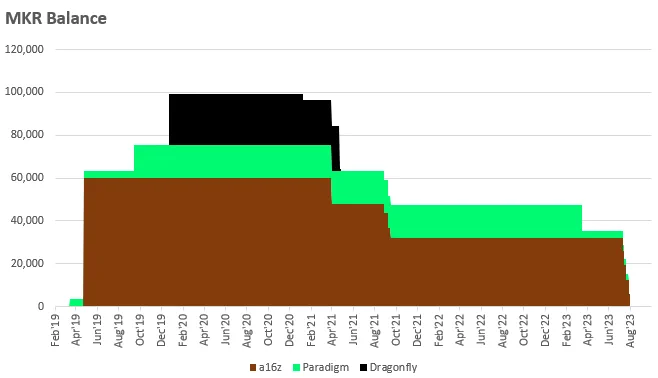
According to data compiled by crypto researcher 0xRamen, these three VCs once collectively held about 11.5% of Maker tokens:
a16z:
-
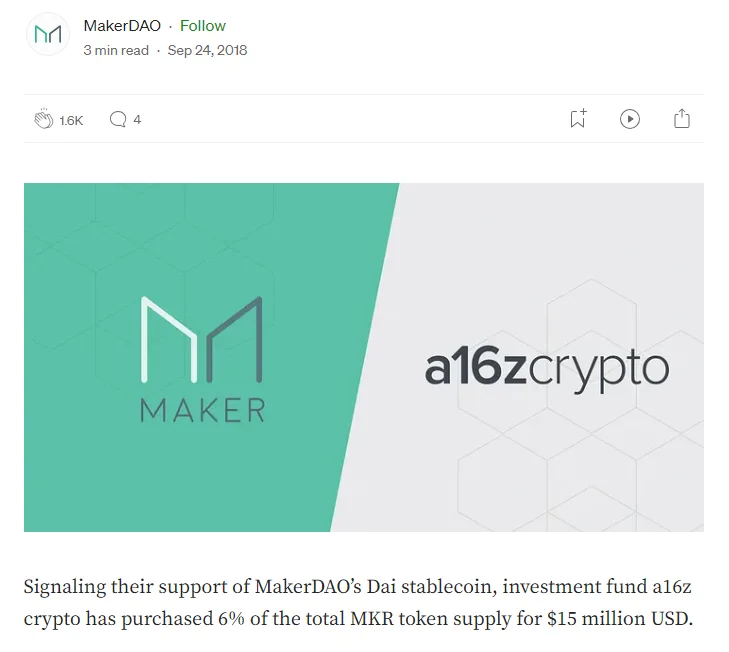
Purchased $15 million worth in September 2018;
-
Accounted for 6% of total supply;
-
Average price: $250.
Paradigm + Dragonfly:
-
Purchased $27.5 million worth of tokens in December 2019;
-
Accounted for 5.5% of total supply;
-
Average price: $500.
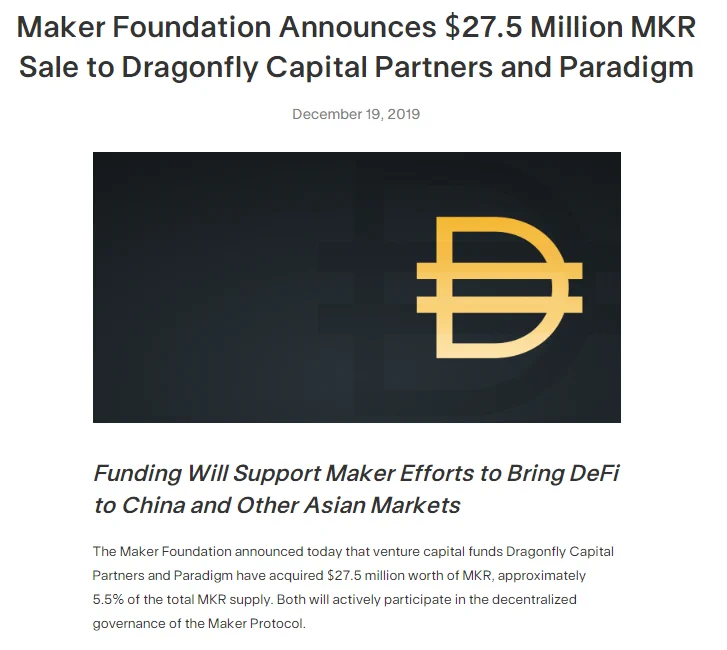
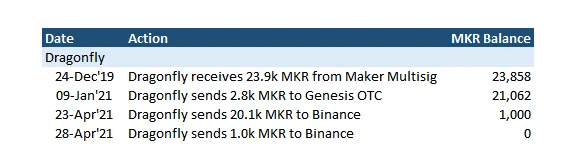
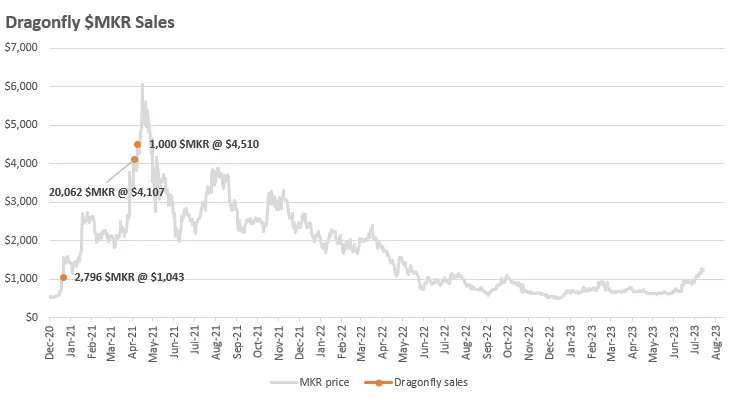
Dragonfly was the first to begin selling its tokens in January 2021, but most sales occurred in April 2021 when MKR neared its all-time high of $6,000.
Result: Average sale price of $3,800 per MKR—7.6x its initial investment—performing exceptionally well with a slow exit during price appreciation.
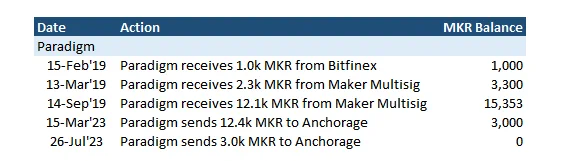
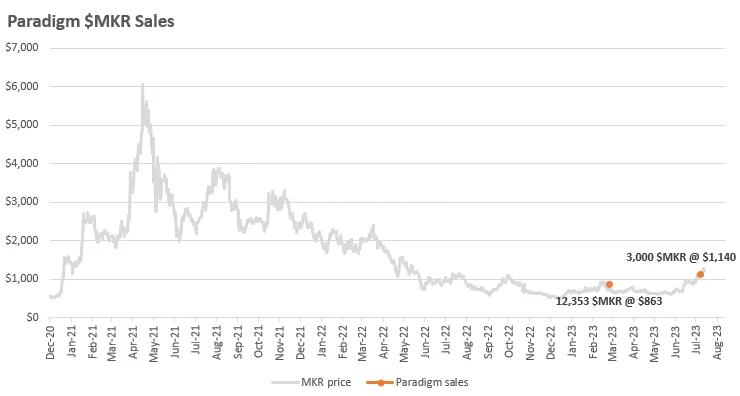
Paradigm was the latest among the three to start selling, beginning in March 2023, disposing of 80% of its holdings at prices above $800. The remainder was recently sold at around $1,100.
Result: Average sale price of $900 per MKR—1.8x its initial investment—essentially exiting at lower prices.
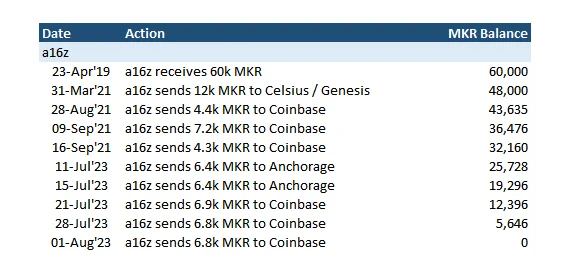
To date, a16z has conducted three major waves of selling:
-
March 2021: Sold 20% of its holdings;
-
August–September 2021: Sold 26% of its holdings;
-
July 2023: Sent its remaining 32,000 MKR to exchanges for sale.
Result: Average sale price of $1,800 per MKR—7.2x its initial investment.
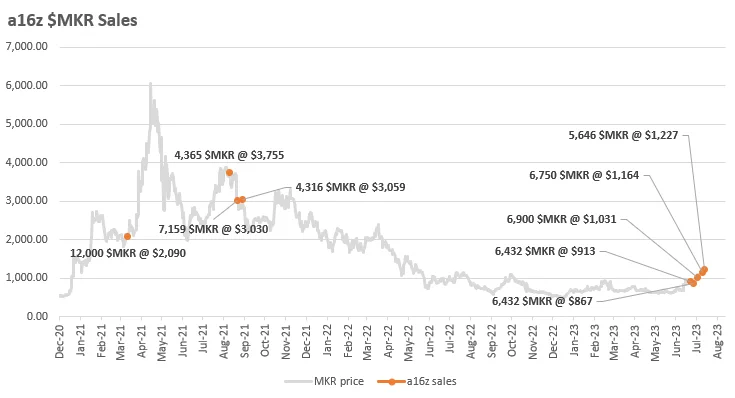
The combined 32,000 MKR from a16z and recent sales by Paradigm represent nearly $40 million in sell-side pressure. Yet despite this, MKR’s price still rose over 30%.
So why are a16z and others rushing to completely liquidate their MKR now?
A key reason is that a16z opposes MakerDAO founder Rune’s “Endgame” plan.
In June 2022, MakerDAO founder Rune introduced the Endgame Plan, which includes four main components: achieving full decentralization of MakerDAO; improving Dai’s liquidity and stabilizing its interest rate; enhancing protocol sustainability and reducing systemic risk; and improving decentralized governance and DAO operations.
Rune plans to break MakerDAO into smaller, allegedly more decentralized units called MetaDAOs, aiming to bring real-world assets such as bonds and government securities into the Maker reserve through MetaDAOs, separating them from core protocol decision-making.
Initially, the Endgame Plan intends to launch six MetaDAOs, each issuing its own Sub Token.
Although this proposal received support from over 80% of the community, investment firm a16z strongly opposed it. Previously holding a large amount of MKR, a16z wielded significant voting power and influence over whether proposals passed.
a16z partner Porter Smith stated in a memo advocating for reforms to enhance MakerDAO’s decentralization without sacrificing growth or violating existing legal and regulatory frameworks—rather than fragmenting the protocol’s governance into smaller units known as MetaDAOs.
“The core unit structure may already be legally decentralized; introducing MetaDAOs may not change that and does not necessarily result in greater organizational resilience from a strict legal perspective.”
It wasn’t just the Endgame Plan—tensions between MakerDAO’s founder and VCs became fully public in 2022, culminating in a governance battle.
In June 2022, a governance vote was held on whether to approve the establishment of a Maker loan oversight core unit (called LOVE).
Approximately one-third (~294,000 tokens, worth ~$300 million) of the circulating MKR voted in favor of LOVE, with the top three “yes” votes coming from VCs: a16z, Paradigm, and ParaFi.
However, the “no” side ultimately won with about 60% of the vote—representing the camp led by founder Rune.
Within the Maker community, this struggle was described as a carefully orchestrated coup by a group of ruthless venture capitalists. Ultimately, the alliance between Maker’s founder and community members successfully defeated the VCs, marking a comprehensive victory for decentralization.
While this narrative simplifies things, the governance war behind MakerDAO has also become an obstacle to its development. Now that major VCs have fully exited, what new chapter lies ahead for MakerDAO?
Join TechFlow official community to stay tuned
Telegram:https://t.me/TechFlowDaily
X (Twitter):https://x.com/TechFlowPost
X (Twitter) EN:https://x.com/BlockFlow_News
 深潮TechFlow