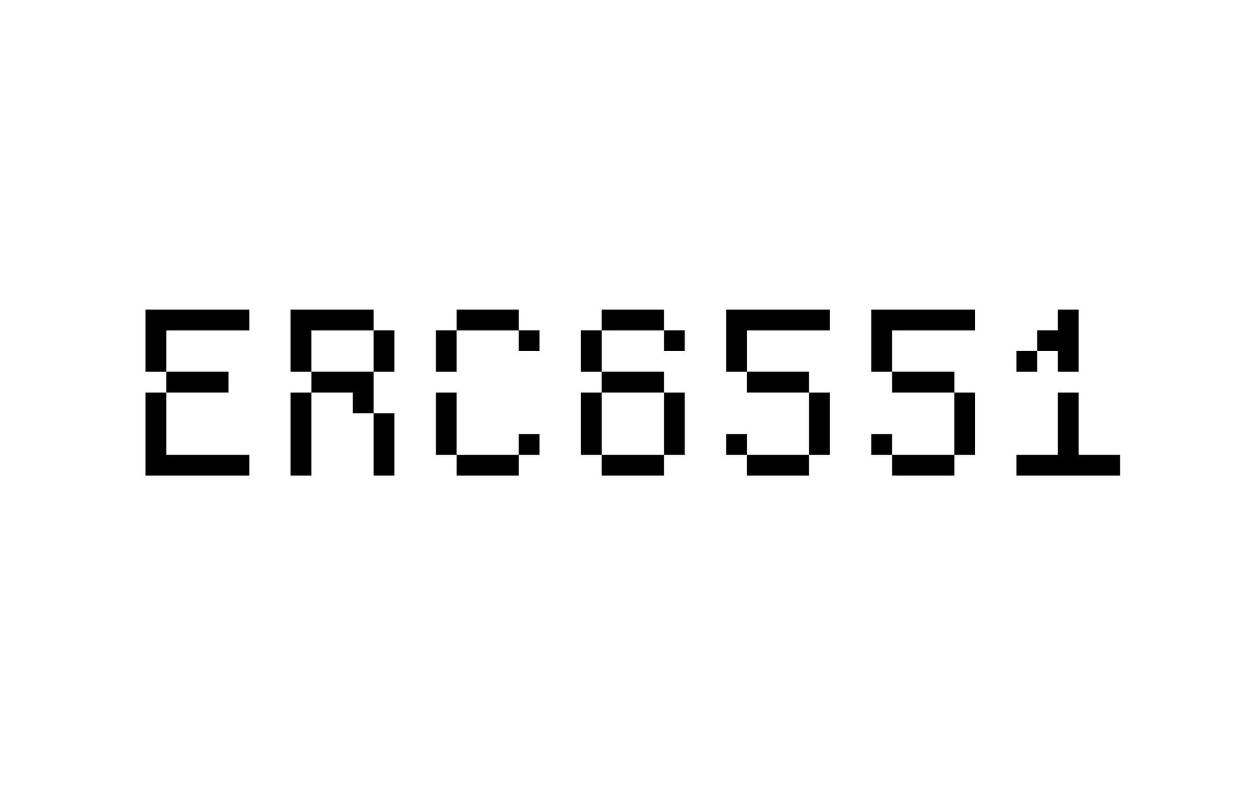
Interview with the ERC6551 Creator: Use Cases, Innovation Drivers, and the Challenges and Opportunities of NFTs
TechFlow Selected TechFlow Selected
Interview with the ERC6551 Creator: Use Cases, Innovation Drivers, and the Challenges and Opportunities of NFTs
"The large-scale breakout of blockchain gaming will occur in native domains."
 Navigating Web3 tides with focused insights
On July 10th, Wanwu Island had the privilege of hosting Benny, founder of ERC6551, for a discussion with six founders on NFTs' challenges and opportunities, as well as open topics such as AI and on-chain gaming. Notably, Benny is also a founding member of CryptoKitties and ERC721. Below is the translated transcript of key highlights from this event. You can scan the poster at the end to watch the replay and join the ERC6551 community for deeper engagement with Benny.
CoachDAO Simon from Wanwu Island: Please briefly introduce yourselves
Benny: Six years ago, I was part of the ERC721 team that launched CryptoKitties. After that, we developed NBA Top Shot, which led us into collaborations with fashion brands. Eventually, we launched our own project SAPIENZ—an NFT focused on digital fashion—where we envisioned NFT characters owning clothes and accessories. To enable this, we created ERC6551. That’s my story.
Boyu: I’m co-founder of RE:DREAMER. We focus on tokenizing real-world assets, especially physical consumer goods. We work closely with manufacturers and supply chains, aiming to record real-life behaviors and data onto blockchain via NFTs. We’re currently integrating ERC6551 with our own standard, ERC6672.
Kekos: I’m co-founder of Createra. We’re building a Web3 game engine. We think ERC6551 is brilliantly designed and are exploring ways to integrate it into games, particularly in the DID space.
Shawn: I’m co-founder of Parami Protocol. We’ve developed ERC5489, a protocol that transforms creator economies on the internet by turning NFTs into gateways for content discovery in Web3.
Kaiyang: I’m co-founder of xBank. We aim to bridge demand and supply in the NFT market, offering more leverage to buyers to lower their entry barriers.
Timmy: I’m co-founder of Furion. We’re advancing NFTs into DeFi by fractionalizing them from ERC721 into ERC20 tokens, then empowering these ERC20 tokens in various ways to enhance usability.
What drove the innovation behind ERC6551? Could Benny share its background and creation journey?
Benny: For the past six years, I’ve been an advocate for NFTs. I traveled to Shanghai, Hong Kong, Taipei to attend gaming conferences and share ideas about NFTs and CryptoKitties. I still remember people staring at me strangely, completely baffled by what I was talking about. As everyone knows, ICOs were all the rage back then, so niche concepts like NFTs received little attention.
Later, Dapper Labs—the company I worked with—decided to build its own blockchain, Flow, and launched NBA Top Shot on it. As a result, we missed out on Ethereum and other EVM-compatible chains. When I left Dapper Labs and returned to the Ethereum ecosystem, I found that NFTs had evolved dramatically over four years—projects like BAYC, Azuki, Doodles emerged. I had to catch up quickly, almost like a student learning where NFTs were being used and their potential across industries. So ERC6551 didn’t come out of nowhere recently; similar resource-oriented models already existed in ecosystems like Flow. In that sense, ERC6551 is native to blockchains but not originally to Ethereum.
ERC6551 wasn't born from a brainstorming session among a few people in a room—it emerged from actual needs we encountered during project development. SAPIENZ was a collaboration between Future Primitive and Jeff Staple, a renowned streetwear designer with 25 years of experience and partnerships with over 100 brands including Nike. During this process, we came up with an exciting idea: What if NFT characters could change clothes directly on-chain, without gas fees?
Solving this proved extremely difficult. Fortunately, we studied how projects like Doodles were moving in this direction. At a hackathon in San Francisco, we used XMTP technology to build a prototype allowing NFTs to send messages and "talk" to each other. Over breakfast, I asked my team: If NFTs can talk, can they also have their own accounts to interact with DApps or hold other assets?
This idea was thrilling. We spent significant time researching existing standards and projects but found no one had implemented it yet—so we decided to do it ourselves.
First, ERC6551 is not a token standard. Many get confused and compare it to ERC721, but in fact, ERC6551 simply links each individual NFT to its own dedicated account. It's highly open-ended. Here are five key points to understand it:
First, ERC6551 applies to all NFTs on Ethereum, Polygon, and other EVM chains, with backward compatibility—meaning even pre-existing NFTs like CryptoKitties can bind to their own accounts.
Second, your NFT can hold ETH, USDC, and other tokens under ERC20, ERC721, and ERC1155 standards.
Third, there’s no wrapping contract—no need to send your NFT to a specific contract address.
Fourth, NFTs and their bound accounts are compatible with existing infrastructure like OpenSea, MetaMask, and Etherscan.
Fifth, it’s fully decentralized. Previous solutions relied on centralized approaches, but we strictly follow decentralization principles—your NFT is the sole owner of its account. We cannot steal user assets or act maliciously.
What are the main application scenarios for ERC6551? How will it transform gaming, social, and other fields?
Benny: The most obvious use case is gaming—creating a decentralized inventory system, which is crucial for games. We're in talks with many game teams who are considering using ERC6551 to drive innovation.
The second scenario is DAOs. Many DAOs issue NFT membership cards, but reputation and loyalty matter. Before ERC6551, you’d receive points, SBTs, etc., stored separately in MetaMask. When selling your membership card, those associated items remain in your wallet. ERC6551 structures all these assets together. A DAO can embed reputation-linked assets directly into the membership card.
The third area is infrastructure. Projects like Rabbit Hole are already adopting ERC6551. We’re also exploring data indexing and working with platforms like Zora and OpenSea on standard integration.
The fourth is social. We’re actively engaging with Lens Protocol because users currently hold multiple unstructured NFT assets (handles, followers) on the same layer—chaotic and hard to interpret. ERC6551 can create relational networks among them, which has drawn strong interest from Lens.
Founders from Wanwu Island, how do you think ERC6551 will impact different sectors?
Boyu: I believe ERC6551 holds great potential. Specifically, we’re excited about NFTs owning real-world intellectual property rights. Previously, we thought about bringing physical-world people into digital ownership—but now, digital assets can own real-world assets. While discussing with brands, we see vast potential here, especially regarding membership systems.
Kekos: I agree it will first impact gaming and social. An NFT-bound account gains identity and assets on-chain, enabling direct interaction with DApps through ERC6551, increasing composability and interactivity within games.
Shawn: As part of Parami Protocol, I'm a firm believer in NFTs. In social contexts, NFTs have proven effective in expressing identity, culture, and trends. ERC6551 aligns perfectly with our vision of tokenizing influence and online interactions.
Kaiyang: Let’s go back to 2017 when smart contracts first appeared—they lacked practical use cases. Today, they power countless applications. Similarly, now that we have NFT accounts, I believe wide-ranging applications will emerge. For xBank, a lending platform, imagine users entering with an NFT as their account, accumulating credit and rewards over time—unlocking new gameplay possibilities. We’ll actively explore integrating ERC6551 into our services.
Timmy: I strongly support Benny’s views on ecosystem building around ERC6551. First, trading is essential—how to integrate ERC6551 with ERC20 and ERC721 trading standards matters greatly since tradability defines asset value. Second, community building—buying a BAYC automatically connects you to a community. Membership communities are vital, especially for PFP NFTs, and strong communities foster better ecosystems.
Benny: Timmy’s two points are fascinating. When creating a DAO, you typically need a multisig wallet to manage community funds and add signers. Every NFT project is essentially a DAO—if there are 10,000 NFTs, you have 10,000 wallet addresses. Issuing an NFT becomes equivalent to launching a DAO. But adding all 10,000 addresses to a multisig and requiring 5,000 votes creates massive inefficiencies. I believe someone will develop new DAO tools—this is a promising direction worth exploring.
Second, many are exploring DeFi integrations. I know a lot about NFTs and DAOs, but honestly, I’m new to DeFi—I lost money putting funds into DeFi products. Regarding ERC6551, two perspectives exist:
One view suggests it makes NFTs more non-fungible and unique, harder to price. On Blur, you can trade based on floor prices, but ERC6551 allows NFTs to accumulate diverse assets and on-chain data, making valuation far more complex than traditional NFTs, thus reducing liquidity.
Another view sees ERC6551 enabling new DeFi paradigms. Though I’m inexperienced in DeFi, I imagine an NFT acting as an LP on Uniswap or other protocols, earning yield, holding a basket of assets—like an on-chain hedge fund—and being tradable on OpenSea.
What are Benny’s future plans for ERC6551? How can we help it gain broader adoption?
Benny: In the near future, we might see something like an extension store, where developers can build plugins installable directly onto NFTs. Imagine owning an Azuki—you currently wait for the team to deploy new contracts to add features. With an ERC6551-powered extension marketplace, developers could release functionalities anyone could attach to their NFTs independently of the original creators.
Second, combining AI with ERC6551 excites me. In games, NPCs give quests and chat with players. In future metaverses, NPCs will populate virtual worlds. But once humans log off, these worlds become ghost towns. Our goal is to fill them with AI-driven, programmable NFT NPCs—each action recorded on-chain, possessing identities and owning assets. This prospect truly thrills me.
How secure is ERC6551?
Benny: We consider it relatively secure. The code has undergone two audits and will continue to be audited. However, as you know, smart contracts can never be 100% safe. I’ll do my best through audits and bug bounties to ensure security. But interacting with smart contracts always carries some risk—it’s unavoidable. Nothing is 100% guaranteed.
Second, if your NFT holds other NFTs, ultimately everything traces back to a wallet—MetaMask, Ledger, etc. If you leak your seed phrase, your assets are vulnerable.
Third, suppose your NFT holds valuable assets and you list it on OpenSea. Someone offers a price reflecting the full bundle. You transfer away the underlying assets before accepting the offer—leaving the buyer with just an empty shell.
Possible mitigations include time locks—locking assets inside the NFT for a set period. Buyers seeing locked assets may trust you won’t pull a rug pull, but this also prevents you from accessing your own assets normally. So it’s imperfect—a temporary fix.
Another solution involves close collaboration with OpenSea. They’ve assigned a dedicated engineer to monitor asset presence and token ownership changes, blocking suspicious transactions. This is a more effective, long-term approach.
Simon: How might ERC6551 combine with AI?
Benny: This question excites and frightens me. Today, ChatGPT only converses—it doesn’t own assets or wallets. Despite its intelligence, it can’t do harm. But imagine NPCs powered by AI, capable of flash loans earning millions, attacking blockchains, or even hiring real people after acquiring funds. On September 20th in New York, we’ll host an event inviting friends from OpenAI, NVIDIA, artists, and others to discuss ethics. In a way, we’re unleashing an unstoppable force—it could lead to humanity’s end. Perhaps we can coordinate and establish ethical frameworks.
Like Elon Musk’s concerns about AI, if NPCs gain AI “souls,” own assets, wallets, and interact freely in a decentralized blockchain world, they could become Skynet-like entities. I wonder if anyone has solutions for risks posed by decentralized AI models—perhaps that’s why current AI models aren’t open-sourced.
Our conversation today in 2023 feels much like discussions about NFTs in 2018—we’re still very early. But I believe transformative change won’t come from today’s blue-chip NFTs, but from entirely new projects deeply rethinking this space.
I’ve studied psychology—Dunbar’s number, or the Rule of 150, suggests humans maintain meaningful relationships with around 150 people. I ask: How many objects can humans form deep connections with? If my house caught fire, what would I save? A photo with parents? An engagement ring? There’s no research on how many meaningful object-relationships humans can sustain—let’s assume 100. Currently, 99% are physical. But in 5–10 years, many cherished items will be digital. NFT ownership gives digital objects meaning. In the physical world, space limits what you keep meaningful. Digitally, you can own millions. NFTs break human constraints on space and quantity of owned items. Moreover, physical objects are static, while digital NFTs can be programmed, interactive—and combined with AI, may even gain consciousness. That’s profoundly exciting.
Founders from Wanwu Island, how will you integrate ERC6551 into your products?
Timmy: Community building is crucial. Contributors earn reputation tokens like points and SBTs, granting voting rights or product discounts. I believe ERC6551 can support this model effectively.
Kaiyang: A more rational pricing model is critical. We’ll analyze how protocols like ERC6551 affect NFT valuation and adapt accordingly.
Shawn: Benny’s vision aligns closely with Parami Protocol. We believe personal brand, influence, and culture can be tokenized—forming DAOs whose value is quantified on-chain. We see strong synergy between ERC6551 and Parami. We’ve already built a Chrome extension enhancing NFT interactivity and extensibility.
Kekos: As mentioned earlier, I’ll experiment with integrating ERC6551 into our game’s DID system—stay tuned.
Boyu: Given our focus on manufacturer and supply chain integration—which involves complex roles and permissions per entity—we’re also managing a community ambassador program with multiple roles and badges. We plan to trial ERC6551 internally for this system.
How does ERC6551 handle cross-chain issues?
Benny: The TBA (Token-Bound Account) enabled by ERC6551 is inherently cross-chain compatible. Suppose you own a Moonbird whose bound account on Ethereum mainnet is 0x123—that same address serves as its account on Polygon, Optimism, Arbitrum, and other EVM chains. When transferring your NFT across EVM chains, the corresponding account remains yours. The challenge arises when your Moonbird holds assets on Optimism—how can your mainnet Moonbird control them?
We’re developing an "account guardian" using cross-chain solutions like LayerZero, enabling cross-chain operations. But we’re unsatisfied—it still relies on a centralized provider. We’re building a newer, more automated, native version allowing NFT accounts to perform cross-chain signatures. The catch: you must pay gas from the main chain to target chains. We’re researching feasible alternatives and collaborating with Optimism to explore executing transfers via signatures alone—without paying mainnet gas or relying on cross-chain providers. This would be more decentralized. No one’s done it before, so it’s still in research, but we estimate an 80% chance of success.
Ultimately, if you launch an NFT or on-chain game, you can choose Ethereum mainnet for its large NFT user base, then issue points, badges, and related assets on Layer 2s—proving mainnet ownership suffices. This requires extensive research and testing—about 2 to 4 months.
What do you think is most important as a founder?
Benny: As a founder, whether you're based in Asia or Europe doesn’t matter. What matters most is our responsibility to educate and evangelize—helping more people understand your project. Although today’s discussion focuses on ERC6551, I want to emphasize: Founders should constantly ask themselves—why am I doing this? Look beyond the tech—what problem are you solving? And is today’s technology the best way to solve it?
I often see debates about ERC6551—some say it’s not good, others call it a copy of old ideas. But arguing over technical superiority isn’t the point. Everything is open-source—I don’t profit from it. More importantly, constant competition, arguments, and attacks won’t help achieve greater goals in blockchain. Whether Ethereum or any ecosystem, progress comes from collaboration and contribution. We must cooperate and grow together—not waste energy on infighting, which brings no real industry advancement.
My six years with CryptoKitties and Dapper Labs originated from Ethereum, where I learned deeply about decentralization. Dapper Labs grew into a billion-dollar centralized company. As an early member expanding to 600 people, I witnessed cultural erosion—the respect for decentralization and noble mission faded, leading to poor decisions. In contrast, decentralized open-source organizations allow you to prevent such decay. So as a founder, prioritize decentralized governance and openness—this ensures longevity.
Could cross-chain gaming see breakthroughs next year?
Benny: My predictions may not be accurate—I can hardly foresee tomorrow. But I’ve met some innovative game teams. Back in 2018, I attended gaming conferences in China, Korea, and Japan, meeting major game studios with strong IPs interested in Web3. Yet six years later, none succeeded. Policy and other factors may explain this, but I believe on-chain games must be fully decentralized—no central servers. Their breakout moment should come from more native, grassroots innovations, not big IP licensing. At Dapper Labs, we partnered with NBA and others but didn’t achieve mass success. Even Disney-level IPs may not work. Centralized IPs tend to act centrally, burdened by bureaucracy, limiting creative freedom. The next big hit will likely emerge from decentralized, bottom-up, native IP—like Nouns or BAYC. I see many teams chasing established centralized IPs, but true innovation lies elsewhere.
Join TechFlow official community to stay tuned
Telegram:https://t.me/TechFlowDaily
X (Twitter):https://x.com/TechFlowPost
X (Twitter) EN:https://x.com/BlockFlow_News