









Crowdsourced Intelligence in Security—Community-Driven Bounty and Audit Markets
TechFlow Selected TechFlow Selected
Crowdsourced Intelligence in Security—Community-Driven Bounty and Audit Markets
What are bug bounty and audit contests? Why do we need them?
 Navigating Web3 tides with focused insights
Author: Ray, IOSG Ventures
Introduction
As large-scale computing systems, blockchains today have reached a level of complexity far beyond what they were five years ago. Infrastructure has become more modular, application-layer smart contract logic is increasingly sophisticated, and interactions between contracts are frequent. More importantly, blockchain systems now manage vast amounts of assets. As a result, discussions around the security lifecycle within the blockchain security community have intensified—unlike in 2017, when people thought about security only in terms of developers writing contracts and asking friends at the Ethereum Foundation to do basic checks.
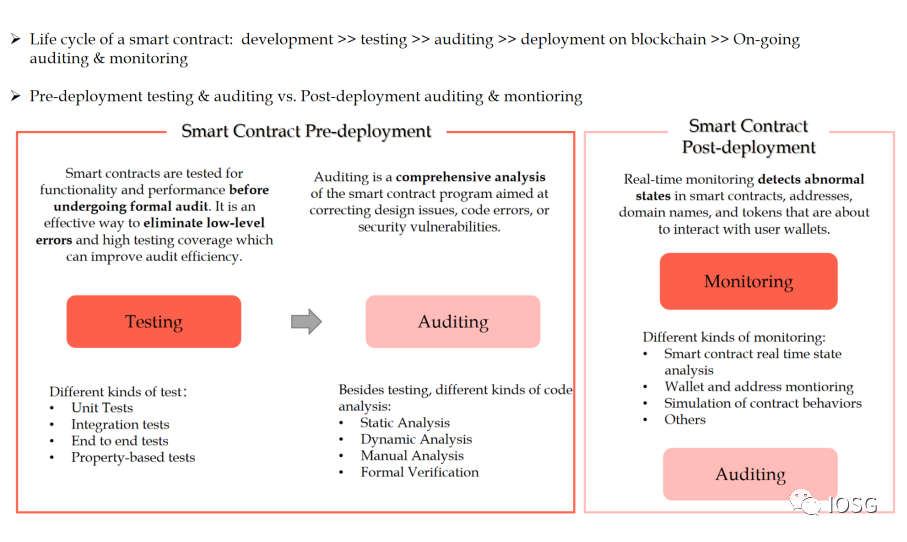
Throughout the entire blockchain software security lifecycle—from testing and third-party audits to post-deployment monitoring and re-auditing—the bug bounty community acts like a safety net, attracting white hats through game theory and crowd collaboration to conduct final code reviews for projects. Some smart contract security professionals view bug bounties as the last line of defense. However, I believe that bug bounties and audit contests have the potential to play a much larger role in the future—serving as an integral part across the entire security lifecycle and enhancing overall system security.
In traditional cybersecurity, there are also bug bounty programs (Bug Bounty or Vulnerability Rewards). Major tech companies such as Facebook, Google, and Microsoft run their own bounty programs targeting internal products and teams. Since around 2015, third-party platforms like HackerOne and Bugcrowd have emerged. Today, these two leading firms generate annual revenues of nearly $50 million and $20 million respectively, primarily by taking commissions from bounty payouts. In the blockchain world, bounties represent an even more intriguing topic frequently discussed in security circles. This is mainly because open-source blockchain code lowers the cost and improves the efficiency of attacks. Combined with crypto’s strong emphasis on collective work, creator ownership, and open contribution models, this makes an open white-hat economy particularly valuable.
What Are Bug Bounties and Audit Competitions? Why Do We Need Them?
Security is a dynamic process of博弈 between attackers and defenders. As computer security expert and cryptographer Bruce Schneier said, “Security is a process, not a product. It's a way of thinking that must permeate every aspect of software development.” In the blockchain world—an open, transparent dark forest where all code is public—a project aiming for long-term survival inherently demands perpetual attention to its product/contract security. Most blockchain products carry financial attributes, and trust is the most critical asset in finance—and user trust can only be earned once.
So what are the shortcomings of traditional audits? And how can community-driven bug bounties and audit competitions address these gaps?
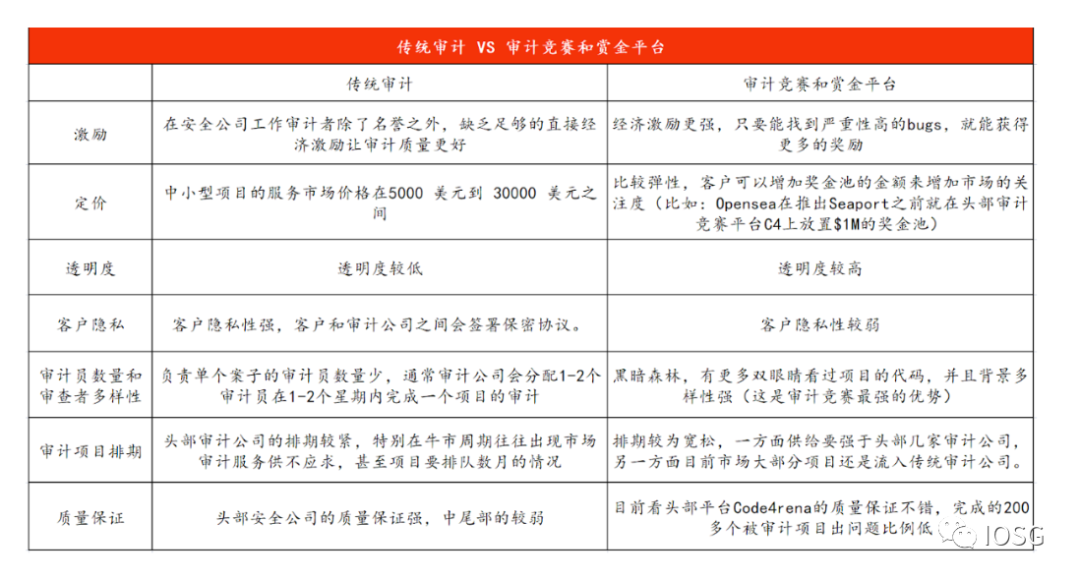
Developers using audit services often find:
-
Even after purchasing third-party audit services and undergoing formal audits, vulnerabilities still appear in the code. While reasons vary—technical and non-technical—it ultimately shows that relying solely on one audit firm isn't fully reliable. The quality of code audits depends heavily on the auditor’s skill, yet clients often lack the ability to judge who is better.
-
Bounty platforms and audit competitions act as more open "sandboxes," allowing white hats from diverse backgrounds—including professionals from audit firms or independent security analysts—to freely examine project code with unrestricted toolkits. All clients need to do is set reasonable rewards and pay contributors when valid issues are found.
-
Typically, clients submit the code they want reviewed, define vulnerability severity levels (usually tied to potential economic loss—the higher the direct financial risk, the higher the severity), set bounty budgets, specify code scope, and even outline testing procedures.
How Big Is the Market?
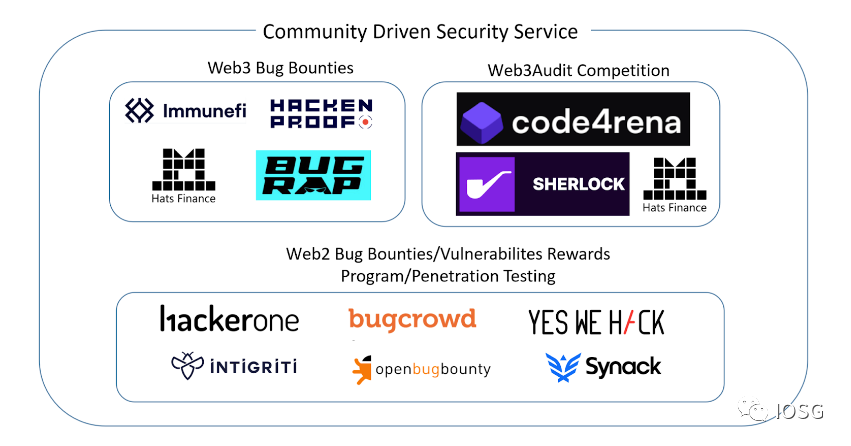
The business model for bounty and audit competition platforms typically involves taking a percentage cut from the total reward pool funded by clients. Clients (project teams) with auditing needs announce their programs on these platforms based on specific requirements—such as which code needs coverage, how vulnerabilities are classified, and how much bounty they're willing to offer. White hats then search for bugs according to these criteria. Once a valid issue is identified and confirmed, the bounty is paid out, and the platform takes a commission as service fee.
In the Web2 cybersecurity space, bug bounty platforms are relatively new (emerging after 2012). The largest ones today are HackerOne and Bugcrowd. In 2022, HackerOne achieved $58 million in annual revenue, valued at approximately $500 million, having cumulatively paid out $230 million in bounties (with $150 million paid in 2021–2022 alone), discovering over 65,000 software vulnerabilities, hosting more than 1 million registered hackers, and serving over 1,000 active clients monthly. Its competitor Bugcrowd surpassed $20 million in revenue in 2022.
In the Web3 security domain, all Web3 bug bounty and audit competition platforms collectively distributed $50 million in bounties to white hats in 2022. These platforms generally charge 10%–30%, leading to a conservative market size estimate of $5 million to $15 million—still a very nascent market.
Interestingly, an increasing number of clients are opting directly for decentralized security community-based auditing services. A notable example is OpenSea, which before launching its new platform Seaport chose not to hire a traditional third-party auditor but instead partnered with Code4Rena—the largest decentralized audit competition platform—and established a $1 million prize pool. In today’s increasingly competitive traditional audit market—where competition spans human resources, technical tools, and sales outreach—could decentralized security services become a significant growth vector? (With 56 audit firms currently operating, top players generating $10–40 million annually, I believe the potential for decentralized security markets is enormous.)
Bug Bounty Platforms vs. Audit Competition Platforms
While bug bounty platforms have existed in Web2 for about a decade, audit competition platforms are a native Web3 innovation. Audit competitions serve projects preparing to launch new products or features, leveraging decentralized communities to complete comprehensive audits within a fixed timeframe (typically two weeks or longer). From this perspective, audit competitions pose a real commercial threat to traditional audit firms.
Below, I compare these two types of platforms across three dimensions: participation model, reward structure, and test coverage:
Participation Model
On bug bounty platforms (e.g., Immunefi), projects are usually open-ended, allowing anyone to participate at any time. Participants independently explore and report vulnerabilities for rewards. If two people discover the same bug, the first to submit gets rewarded.
Community-driven audit competition platforms (e.g., Code4rena, Sherlock) operate within strict time limits, with participants competing during a defined period. Unlike bounty platforms, these competitions involve some degree of teamwork—for example, each project assigns a Lead Senior Auditor and Lead Judge responsible for consolidating and reviewing all findings into a final audit report delivered to the client. These leadership roles are selected through community elections and competitive meritocracy. Additionally, if multiple auditors find the same vulnerability during the contest window, both may receive rewards.
Reward Structure
Both platforms base rewards primarily on the severity of discovered vulnerabilities.
A key difference is that community-driven platforms like Code4Rena allocate a fixed portion (5%–10%) of each project’s prize pool to the Lead Senior Auditor and Lead Judge, recognizing their role similar to project leads in traditional audit firms.
Another interesting point: while some projects offer their own tokens as bounties on bounty platforms, many white hats express preference for stablecoins like USDC or USDT rather than volatile project tokens.
Coverage and Focus
Bug bounty platform projects tend to have broad scopes, whereas audit competition projects are typically more focused, targeting specific functions or aspects of software and requiring concentrated effort over short periods.

Projects Focused on Audit Competitions
Code4Rena – A community-driven audit competition platform akin to esports
Code4Rena features three main roles:
1. Auditors (Wardens): Review code. Anyone—from seasoned security engineers to novice developers seeking experience—can register and join public audit competitions.
2. Judges: Typically the most skilled engineers in the C4 community. They assess the severity, validity, and quality of reported vulnerabilities and evaluate auditor performance.
3. Sponsors: Project teams such as Opensea, Blur, ENS, Chainlink, etc., who create prize pools to attract auditors. Sponsors can also opt for private, invite-only competitions to enhance confidentiality.
One of the most interesting aspects of Code4Rena is its emerging culture encouraging collaboration. Unlike traditional bug bounty programs, Code4Rena pays all auditors who report valid vulnerabilities—even if duplicates. This fosters healthy competition, incentivizing auditors to uncover high-severity and common flaws. On this platform, auditors often form temporary teams to hunt bugs together.
Business Model:
Any project can launch an audit program on Code4rena and fund a base prize pool in USDC or ETH (typically ranging from $40,000 to $100,000). Code4rena charges 20% of the base pool as a service fee for organizing the competition, providing judges, and compiling the final audit report. Projects may also add a secondary token-based prize pool, from which Code4rena takes a 40% cut.
Sherlock – Community-driven audit with smart contract insurance backing
Similar to Code4rena, Sherlock includes auditors, sponsors, and judges. Its unique feature is the insurance layer. Users can invest in Sherlock’s insurance pool by depositing USDC. Protocol clients purchase coverage to hedge against smart contract hacks. Investors earn income from client premiums, interest generated by deploying funds into DeFi protocols (like Aave or Compound), and Sherlock token incentives. However, investors also bear the risk of paying out claims.
Another distinction lies in reward distribution. Compared to Code4rena, Sherlock has rules enabling the Chief Senior Auditor and Chief Judge to receive fixed percentages (5%–10%) from the prize pool to fairly compensate and incentivize senior experts. Leadership positions are also determined through selection and competitive processes.
How to Build a Hacker Community? What Matters Most to Web3 White Hats?
After observing various decentralized security communities (ImmuneFi, Hats Finance, Code4Rena, Sherlock, etc.) and speaking with several security entrepreneurs, we believe all decentralized platforms aim to build healthier, more efficient communication and collaboration ecosystems. Bounty platforms function as marketplaces connecting hackers and projects—they must consider hacker needs (see table below) while also addressing project concerns (especially audit quality).

Source:《Bug Hunters’ Perspectives on the Challenges and Benefits of the Bug Bounty Ecosystem》
Beyond common needs, in the Immunefi white-hat community (the liveliest white-hat Discord I’ve seen), I noticed some fascinating discussions.
For example:
A white hat named Rappie wanted to publicly disclose previously discovered vulnerabilities and asked about community guidelines: (1) Only disclose already patched vulnerabilities. (2) Ensure disclosed information does not harm the protocol or its users. Keep confidential details private—for instance, don’t publish full database dumps even after fixing an SQL injection. (3) Always message the project team privately before disclosure.
Noam Yakov raised questions about how a bounty program defines vulnerabilities—a common issue since only severe issues usually qualify for rewards. How projects classify vulnerability severity deeply affects white hats' interests, and disputes arise frequently. He questioned Uniwhales’ classification of MEV impact as a critical vulnerability. After discussion, the consensus was that such definitions don’t apply universally—e.g., toxic order flows capable of draining protocol liquidity clearly constitute serious incidents. Thus, standardized severity frameworks aren't enough; platforms often need arbitrators to handle case-by-case judgments.
Regarding the question, “What do you expect from bounty platforms like Immunefi?” white hat ckksec responded: (1) Help clarify legal status for anonymous crypto white hats, including invoice issuance. (2) Platforms should rate not only white hats but also project quality, since hunters spend time assessing legitimacy. (3) For white hats willing to reveal profiles, platforms should showcase their workflows and ideally provide greater transparency into submitted security reports.
What Tools Can Help White Hats?
With the rise of LLMs and GPT, I've recently heard frequent debates about whether AI could replace human auditors. Experienced security practitioners I've spoken with generally agree that GPT cannot fully replace human intelligence. While low-hanging fruit (easy-to-detect issues) might be caught by language models, medium-to-high-risk vulnerabilities still require expert involvement. For instance, one senior expert noted that complex tests involving data analysis and dynamic analysis require humans to pre-define security testing goals aligned with actual protocol logic. The hardest part is crafting proper properties and defining correct test domains. Based on experiments, they concluded that GPT currently cannot fully replicate this human judgment.
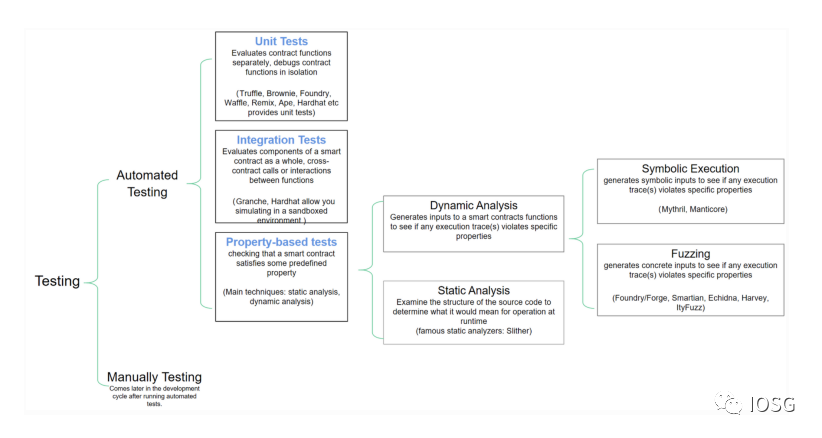
That said, promising results show LLMs can significantly boost the efficiency of security tools and reduce false positives:
https://twitter.com/HatforceSec/status/1671758690808913922
https://www.researchgate.net/publication/371758506_Do_you_still_need_a_manual_smart_contract_audit
From another non-technical angle: security is a dynamic game between attackers and defenders. Could AI similarly empower attackers?

Security Is Human-Centric
People often assume software is cold, mechanical, and purely logical—believing improved system security requires only better analysis techniques and defenses. But they overlook economic incentives and human behavior. In the open-code dark forest, we need incentive structures aligned with rational agent assumptions—positive, virtuous economic models that attract more individuals willing to contribute long-term to blockchain security.
The traditional security audit market is stable, with brand reputation being the most important intangible asset. Over time, top-tier brands have steadily strengthened their influence and client trust. Yet traditional audits face inherent challenges: business models rely heavily on labor, making scalability difficult; balancing growth with audit quality becomes harder, and some firms have hit bottlenecks that even erode brand value.
Community-driven audit competitions represent an innovative business model. With over 300 clients served, the two major platforms are gradually achieving product-market fit. Meanwhile, bounty platforms serve as valuable complements throughout the security lifecycle. Although decentralized platforms haven't yet developed effective tokenomics, we remain highly optimistic about their potential for scalable growth—because collective intelligence aligns perfectly with the adversarial dynamics of security markets.
Will community-driven audit platforms threaten centralized firms? We see them as coexisting in a healthy competitive and complementary relationship. In the short term, platforms like Code4rena—once they achieve network effects and demonstrate solid track records (low post-audit hack rates)—may pressure mid-to-lower tier centralized firms. But long-term, this could push centralized platforms to collaborate with community-driven ones, expanding their client base and improving audit quality—similar to how large Web2 companies initially ran internal bounty programs before partnering with third-party platforms like HackerOne.
Although community-driven security platforms strive toward DAO-like decentralization (Forta could also fall into this category), practical operations still face challenges: making workflows and economic distributions more transparent, balancing project privacy and security needs, clarifying team versus individual contributions, and resolving利益 disputes fairly and professionally. These are ongoing challenges for security DAOs.
Join TechFlow official community to stay tuned
Telegram:https://t.me/TechFlowDaily
X (Twitter):https://x.com/TechFlowPost
X (Twitter) EN:https://x.com/BlockFlow_News
 IOSG Ventures







