The Art of User Growth: Building High-Value Growth Teams and Strategies in the Web3 Era
TechFlow Selected TechFlow Selected
The Art of User Growth: Building High-Value Growth Teams and Strategies in the Web3 Era
Bear markets are better for refining core product features, while bull markets are ideal for aggressively pursuing growth.
 Navigating Web3 tides with focused insights
In the early days of the internet, there was no real concept of "user growth." During an era of market expansion, large numbers of users were constantly flowing into a relatively limited number of websites and applications, so companies didn't have to obsess over traffic competition or suffer from extreme internal pressure. However, as the internet evolved from its pioneering phase into a period of rapid development, growth began to plateau. Companies were then forced to fight for users within a saturated market.
Behind products lies a complex ecosystem shaped by monopolies on discourse, battles for traffic entry points, capital博弈, and commercialization pressures. DAU/MAU, as one of the most direct metrics for evaluating product valuation and monetization potential, has pushed internet companies to elevate user growth to a more strategic priority. As traditional marketing methods—such as word-of-mouth, brand campaigns, and community operations—become less effective, building dedicated user growth teams to identify breakthroughs in business expansion has become an urgent challenge.
The Web3 space is no different—new user acquisition, retention, and active user counts are crucial for product valuation and revenue. Over the past two years, explosive growth in games like Axie Infinity and the mainstream breakout of NFTs brought a wave of new users into the crypto market, fueling the rise of "x-to-earn" trends and the NFT Summer, which became key drivers behind the last bull cycle.
During periods of strong inbound user flow, user growth rarely causes anxiety (at such times, core user retention and DAU/WAU/MAU may be more important). Moreover, Web3 users are highly self-motivated, constantly exploring new experiences. Organic community-driven word-of-mouth alone can bring tens of thousands of MAUs to a product, and even simple growth strategies can attract sufficient audiences. However, as the overall market cools down, user growth becomes increasingly difficult. Many founders burn through their confidence and funding amid poor retention, collapsing just before dawn breaks.
Note¹: Coinbase reported 9 million monthly transacting users (MTUs) and $217 billion in trading volume in Q2 2022, while Uniswap V2 & V3 during the same period had only around 400,000 MTUs but achieved approximately $172 billion in trading volume. This suggests that maintaining tens of thousands of stable MAUs already makes for a solid Web3 product. It also raises questions about whether focusing solely on user count growth is too narrow, and whether transaction volume should be factored into user growth evaluation—especially for DeFi and gaming products.
Even though different Web3 products emphasize different priorities at various stages, user growth remains an unavoidable function. From the value chain of creation → dissemination → conversion, products create value, user growth delivers it, and ultimately enables value conversion. User growth must also take responsibility for value conversion. Successful growth strategies go beyond increasing numbers—they incorporate the total lifetime value of users. The Web3 market is still relatively nascent and uniquely distinct, making traditional growth tactics prone to misalignment. Yet some fundamental methodologies remain applicable. How to localize Web2 growth frameworks or PMF indicators for Web3 will be explored further later.
Defining User Growth
First, we need to define user growth clearly: User growth means leveraging all available resources to get more users to frequently engage with core product features. There are three key elements here: "more users," "high frequency," and "core product functionality."
-
“More users” refers to user acquisition. But equating “user growth” solely with “user acquisition” is overly simplistic. The latter two elements are equally critical—ultimately, user growth should aim to maximize the total lifetime value of users (LTV = number of users × average value per user).
Note: When acquiring users in Web3, it’s essential to guard against Sybil attacks. Projects must use data analysis to detect fake accounts and implement anti-Sybil measures. Most Web3 users interact with real money—therefore, segmenting addresses by type is crucial. High-quality, independent active addresses represent the core user base, whose trust must never be compromised.
-
“High frequency” manifests differently depending on product type: either “save time” or “kill time.” For utility tools like DEXs, the goal is to help users complete transactions as quickly as possible, shortening conversion paths and boosting efficiency (“save time”). For games or social platforms, the objective shifts toward encouraging users to spend more time engaging with the product (“kill time”).
-
“Core product functionality” is often overlooked. Take DEXs again—their core feature is trading; launchpads serve only as auxiliary tools to boost trading frequency and volume. If acquired users don’t experience the core functionality, the strategy fails to drive proper retention and conversion, resulting in loss for the product.
For most Web3 products, I believe the definition of user growth should be tightly linked to value conversion: “Leveraging all available resources to get more users to frequently engage with core product features, thereby increasing transaction volume.” Here, transaction volume includes Token/NFT trading activity, as well as TVL for DeFi and blockchain protocols. Web3 is a space where conversion effects are immediately visible—strategies that increase user count without driving transaction volume cannot be considered successful. With a clear definition of user growth, setting goals and reverse-engineering implementation paths becomes straightforward.
Building a User Growth Team
For any user growth team, establishing a sound organizational structure is critical. Given variations across products and companies, typical growth team structures include:
-
A team handling growth part-time. In traditional internet companies, this is often the product team taking on growth tasks. A major drawback is scheduling conflicts between product development and growth initiatives.
-
A dedicated growth team responsible for designing and executing growth strategies, acting as project managers to drive implementation. The main challenge here lies in efficiently coordinating cross-functional resources and gaining cooperation from other departments.
-
A lean, specialized growth team granted significant authority to execute strategies, supported by Business Partners (BPs) assigned from product, engineering, operations, PR/brand/marketing teams.
-
A fully autonomous growth team with its own product, engineering, operations, and marketing staff. While enabling the fastest iteration speed, this model risks siloed collaboration with other departments.
One transformative aspect Web3 brings is the “massive liberation of labor productivity”—Uniswap improved trading efficiency compared to CEXs, and Aave's human efficiency story needs no repetition. Since Web3 remains in its infancy, most projects operate with small teams (excluding exchanges). For early-stage Web3 startups, the ideal structure would be: appointing a high-authority user growth expert focused entirely on growth, with BPs seconded from each department to collaborate under this lead—even department heads serving as BPs given the small team size. Key departments needing BP representation include:
-
Product: Feature-based growth strategies require product support to integrate new functionalities. These growth features are deeply tied to product design and demand timely, close collaboration. Routine growth features like sharing or viral loops should be led by the product team.
-
Engineering: Both functional and marketing-driven growth strategies rely on engineers—for new landing pages, websites, H5s, and promotional assets.
-
Design: Great design is the soul of any product. Consistent visual identity forms the first impression and enhances recognizability. New UI/UED for growth features and promotional materials require close coordination with design and UX teams.
-
Operations / Brand / Marketing: Even great wine fears deep alleys. Whether pursuing strategic, integrated, or functional growth, these teams must work closely to ensure broad reach to target audiences.
Across industries like internet and consumer goods, growth leadership varies based on product type. In FMCG, brand and marketing teams typically lead activities including research, concept development, positioning, media buying, and channel expansion. In tech, growth might be driven by operations or product teams depending on sector (e-commerce vs. social). When selecting a Web3 growth lead, emphasis should vary according to candidate strengths relevant to specific contexts.
Focus Areas for Web3 Growth Strategies Across Stages
We can broadly categorize Web3 growth strategies into two types: functional and communicative. Functional strategies involve adding new features to achieve growth objectives, while communicative strategies are typically led by marketing, branding, or PR. In practice, however, they often combine into integrated strategies.
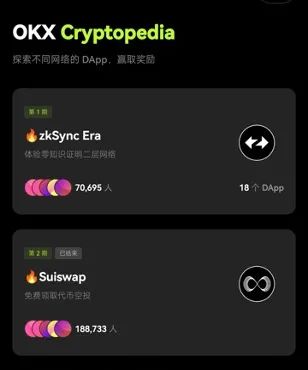
We can analyze recent market trends using the AARRR framework to reverse-engineer goals and execution plans for functional Web3 product growth. OKX recently invested heavily in promoting its wallet product, OKX Wallet, launching the Cryptopedia module—an embedded tool allowing Web3 users to easily interact with various protocols. This initiative proved highly effective, with nearly 200,000 participants in its second Suiswap campaign.
AARRR corresponds to five stages in the user lifecycle:

-
Acquisition: OKX Wallet added a Cryptopedia entrance on its homepage and promoted the campaign across multiple channels. Through Cryptopedia, users could interact with pre-token public chains and Web3 projects. The campaign tapped directly into Web3 users’ motivation to perform interactions for potential airdrops, streamlining the process by curating target dApps and interaction logic. Essentially, Cryptopedia acts as an interaction aggregator—easy to use, meeting user needs while educating them on how to use OKX Wallet effectively. This required tight coordination among product, engineering, design, and marketing teams. Unified visuals and smooth UX, combined with concentrated exposure, brought nearly 250,000 active addresses to OKX Wallet over two campaigns.
-
Activation: After completing one round of Cryptopedia, how do you maintain engagement? By running multiple rounds, ensuring the strategy has sustainable momentum. As long as promising new projects emerge, OKX can partner with them, leveraging anticipated airdrops to convert users.
-
Retention: OKX Wallet continues rolling out supplementary functional incentives and reward programs to train, educate, and habituate users. Ultimately, retention depends on core functionality—wallet smoothness and security—which marketing and ops teams must reinforce through consistent content to build brand perception.
-
Revenue: As a Web3 gateway, wallets offer multiple monetization models once user scale is achieved—transaction fees (MetaMask Swap earned over $250M in 2021, per Dune Analytics), ads, etc.—all contingent upon widespread usage.
-
Referral: Web3 users actively search for projects, and unique community culture fosters powerful organic sharing. The wealth-generation potential of Cryptopedia naturally encourages self-propagation.
Every growth strategy should be evaluated across these five dimensions to ensure a closed loop. Cryptopedia exemplifies a functional growth tactic whose success stems from precise understanding of user needs. Beyond airdrop marketing, creating product-integrated growth features aligned with user motivations is vital.
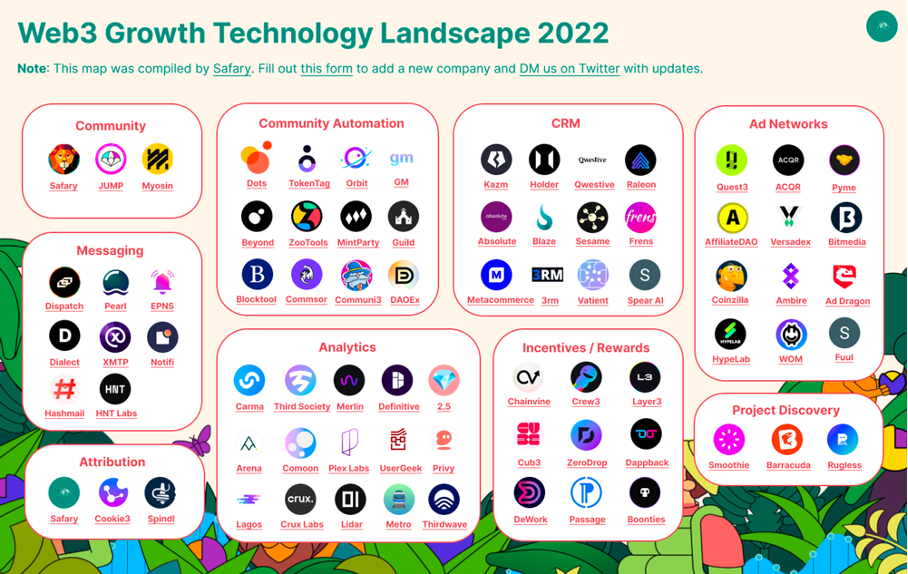
In operation-led growth strategies, leveraging native Web3 tools (e.g., Galxe, Quest3, Zealy) to achieve short-term targets is a valuable approach. Operations test team execution capability. Having an operations lead capable of planning short-, mid-, and long-term initiatives—and leading high-quality execution in alignment with growth—is essential. Native Web3 growth tools can rapidly boost user numbers, but long-term retention and conversion depend on solid core functionality. Long-term community management focuses more on enhancing existing user value, making nurturing high-quality core users especially important. Startups should prioritize maintaining relationships with their first 100 core users and start with grassroots word-of-mouth.
Market-driven user growth is a long-term game, requiring continuous content output to educate users, shape mindsets, and strengthen product recognition. This involves clearly explaining product functions and advantages so users understand what’s offered, while also telling compelling stories that resonate emotionally and attract like-minded individuals.
Web3 content dissemination sits between B2C and B2B. The audience possesses self-awareness, with longer decision cycles (each interaction incurs gas costs), resembling B2B behavior—users gather information, self-educate, and make deliberate decisions. Hence, every post-interaction experience matters. Strong initial experiences combined with ongoing content reinforcement improve retention and gradually build trust.
A Few Tips on Communication:
-
Twitter is likely the most efficient social platform in Web3 (except in regions like South Korea, where Kakao dominates), making Twitter management vital. Beyond native Web3 tools, hosting regular Twitter Spaces is another effective way to grow followers. Founders/team members can share vision, professionalism, and future plans via AMAs.
Note: Unless facing serious compliance risks, Chinese markets (both simplified and traditional Chinese regions) shouldn’t be neglected despite international focus. Maintaining WeChat Official Accounts, localized websites, and Chinese media presence is essential.
-
Google SEO, including multilingual SEO optimization or SEM, deserves attention. In closed-language markets like Korean or Japanese, basic SEO/SEM can yield surprising results. Due to Web3 users’ tendency to independently discover and try projects, organic spread can be strong. Additionally, SEO helps prevent users from landing on phishing sites via search engines, reducing wallet theft risks.
-
Don’t underestimate B2B power. Projects should leverage ecosystem momentum—actively seek partnerships with blockchains, big brands, other projects, communities, and DAOs for mutual referral. Strong B-side collaborations lend credibility; influential partners create demonstration effects that attract more users. Projects should showcase clients or partners as proof points. Co-marketing with major brands also helps audiences grasp what the product does. Ongoing collaboration announcements enhance user confidence and maintain trust.
-
Simplify complexity. Products often contain vast amounts of information, but brand messaging cannot carry everything. Brands excel at distilling complex ideas. Project teams must deliver focused, simplified messages centered on “core product functionality,” clarify communication goals, and master the art of subtraction to convey information precisely.
-
Maintain good relationships with KOLs. Some KOLs possess deep industry insights. Regular communication, listening to feedback, and timely updates improve collaboration quality. When co-creating content or visuals, ensure alignment with the KOL’s personal style to boost efficiency. For copywriting, ChatGPT can sometimes be an efficient tool (making prompt engineering skills valuable).
Note: Founders can consider becoming KOLs themselves, but must remember their primary role is founder first, KOL second.
-
Transform yourself into an industry media outlet—that’s the ultimate goal of content growth. As domain experts, sharing professional knowledge inherently attracts users and promotes your product. Content marketing means standing in customers’ shoes, delivering relevant, useful, and genuinely interesting information. Through consistent research and insights, position yourself as an influential voice in the space—a standard a16z excels at in the VC world.
-
Align with trending topics: Participate in or host industry events and gatherings, linking your project to broader industry momentum (start from the industry, end with brand amplification). Become part of the conversation. ETH Shanghai, led by Mask Network, is a great example of integrating project visibility with industry movements.
-
Build a corporate IP. Events like Baidu World Conference or Apple Developer Conference have become shared learning and discussion platforms. Even traditional B2B players like AWS now run Web3-focused event series. Niche projects can aim to turn their signature events into recognized IPs within their domains.
-
Community引流: For Web3, where community culture reigns, every communication channel must include a plan to引流 users into communities. Direct users to WeChat, Telegram, or Discord groups—each platform hosts distinct user profiles: TG users favor secondary markets, Discord users tend to be better product testers. Managing communities effectively is another topic altogether.
For market-led growth, the key is recognizing the three values carried by external communications (branding): tool, media, and consensus. All content efforts aim to reach more users and solve their problems—this is how products express themselves and ultimately guide users toward shared understanding. Content is king—and always will be. There will always be demand for insightful, high-quality content.
The High-Value Growth Curve
Why dedicate a section to HVA (High Value Action)? Because HVAs can trigger quantum leaps in a product’s user growth curve.
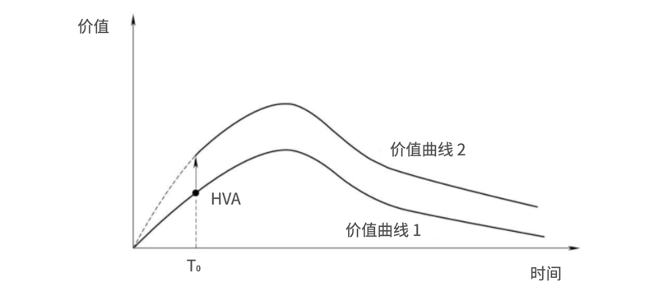
Note¹: The higher the HVA’s value, the greater the leap in the value curve;
Note²: Clear guidance and onboarding for HVA are foundational prerequisites;
Increasing LTV (Lifetime Value) is central to user growth. We aim to maximize user value throughout their lifecycle. In Web3, this translates directly to metrics like TVL and trading volume. Actions that cause a user’s value trajectory to jump—not just grow linearly—are called HVAs (High Value Actions).
For instance, when OKX Wallet first launched, it ran a campaign subsidizing gas fees for NFT trades—an HVA. This subsidy enabled users who had already tried the product to leap forward in value, delaying lifecycle decline (OKX Wallet is cited due to its recent abundance of activities). Some tactics consistently work; others fail. For example, if a DEX’s launchpad repeatedly offers low-quality projects, it erodes trust—such an HVA could backfire.
Therefore, in user growth, continuously invent new high-value actions. Aim to design sustainable HVAs. When multiple HVAs accumulate, user LTV grows exponentially rather than linearly. Never rely on a single HVA to become a viral hit and sustainably drive users and value. Virality brings short-term spikes in user count, but total user value equals user count multiplied by individual value. HVA design requires ongoing development and operational effort. Proactive lifecycle management is necessary to achieve desired outcomes.
Riding the Wave: Timing Matters
In a highly cyclical market, timing is everything. Growth strategies during bullish phases can yield amplified returns, while those during bearish periods may offer poor ROI. Different strategies suit different market conditions.
During downturns, focus on refining core product features, emphasizing market/operations-led growth:
-
Users who stay during bear markets typically have stronger conviction. Converting these users into core users positions them as potential KOCs when sentiment improves. Bear-market users deserve special care.
-
Bear markets filter out noise. Bull markets overflow with content. Consistent output during downturns stands out and maintains core user confidence. Also, search engines factor in content freshness—bear-market content has a higher chance of appearing in search results during the next bull run.
-
Conserve costs during bear markets—minimize marketing and operational spending to prepare for the next cycle.
During upturns, execute aggressively with continuous new growth initiatives:
-
Fire your bullets (budget) at the right moment as a new cycle approaches. A clear sign of warming markets is dormant addresses reactivating.
-
Stay agile with trends. Markets generate daily hot topics. Keep pace, find synergies, and launch product HVAs around current themes.
In summary, bear markets are ideal for refining core functionality; bull markets call for aggressive growth.
Under favorable regulatory conditions in certain countries and regions, Web3 will undoubtedly attract more users. Infrastructure improvements may also shift product forms, altering growth strategies. Methods suited for mass-user adoption may gain relevance. This article merely outlines preliminary thoughts on early-stage Web3 product growth. Behind every growth strategy lies immense effort. Every successful case combines perfect capture of user needs, precise emotional resonance, efficient execution, and sharp trend awareness. We look forward to seeing more outstanding examples of Web3 user growth.
Join TechFlow official community to stay tuned
Telegram:https://t.me/TechFlowDaily
X (Twitter):https://x.com/TechFlowPost
X (Twitter) EN:https://x.com/BlockFlow_News
 @ZonffPartners