








Autonomous Worlds: The Future of On-Chain Gaming
TechFlow Selected TechFlow Selected
Autonomous Worlds: The Future of On-Chain Gaming
Autonomous Worlds reside on the "fully on-chain" side of the gaming spectrum, where the game's logic and state are entirely stored on-chain.
 Navigating Web3 tides with focused insights
Author: WILLIAM M. PEASTER
Compiled by: TechFlow
In the world of cryptocurrency, "onchain" has two distinct meanings.
The newer, broader sense refers to using blockchains in general. "Putting your music onchain," for instance, means releasing your songs as NFTs on platforms like sound.xyz.
But remember, you can create a token on Ethereum while storing the associated artwork or other assets offchain—on private servers or external storage systems like IPFS.
Thus, the second, earlier, and more technical meaning of "onchain" refers to fully storing all content of an NFT collection or blockchain-based project directly on the chain itself—for example, directly on Ethereum.
While this form of onchain storage is relatively expensive compared to offchain alternatives, it offers remarkable permanence and openness. As long as Ethereum exists, onchain projects will persist indefinitely and remain open for continued development and innovation.
There's also a spectrum here. At one end are projects with minimal reliance on blockchains; in the middle are hybrid models combining offchain and onchain storage; at the far end are projects that go fully onchain. This same spectrum applies to blockchain gaming.
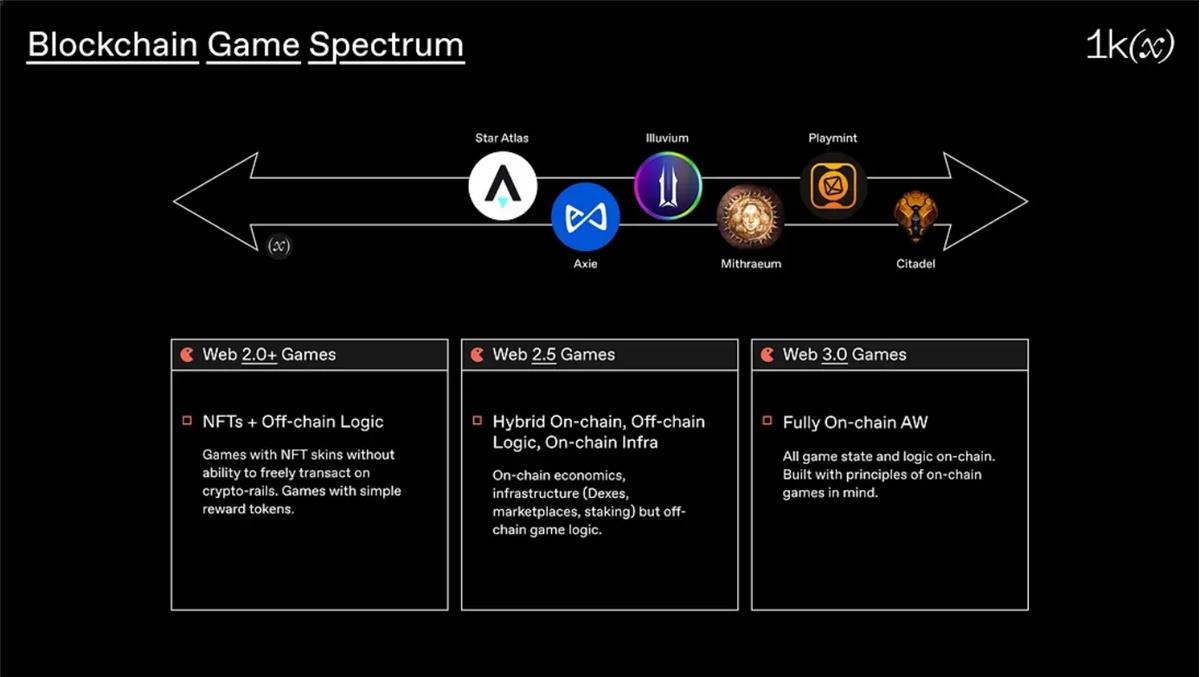
Autonomous Worlds sit at the "fully onchain" end of the gaming spectrum. In these projects, both game logic and state are entirely stored onchain—meaning their rules and progress are tracked via smart contracts, with all game data residing on the blockchain, enabling true interoperability.
As such, Autonomous Worlds are also client-agnostic, meaning anyone can build their own interface to interact with the underlying game.
The Importance of Autonomous Worlds
Autonomous Worlds can be open games—running independently of their creators, accessible to anyone, and capable of evolving over time. These games become protocols and self-contained worlds in their own right, inviting users to build upon them freely.
As a result, they dramatically enhance interoperability through open, persistent systems—a fundamental shift from the closed, creator-controlled models of traditional gaming. In Autonomous Worlds, players can create their own expansions on their own terms, leading to continuously evolving, bottom-up ecosystems.
Moreover, games built entirely onchain can themselves function as economic systems. They can have their own currencies, markets, and economic rules, creating new forms of economic organization that coexist with traditional economies. Thus, these games are not just entertainment—they represent pathways toward new economic and social structures within the metaverse.
Autonomous World Game Engines
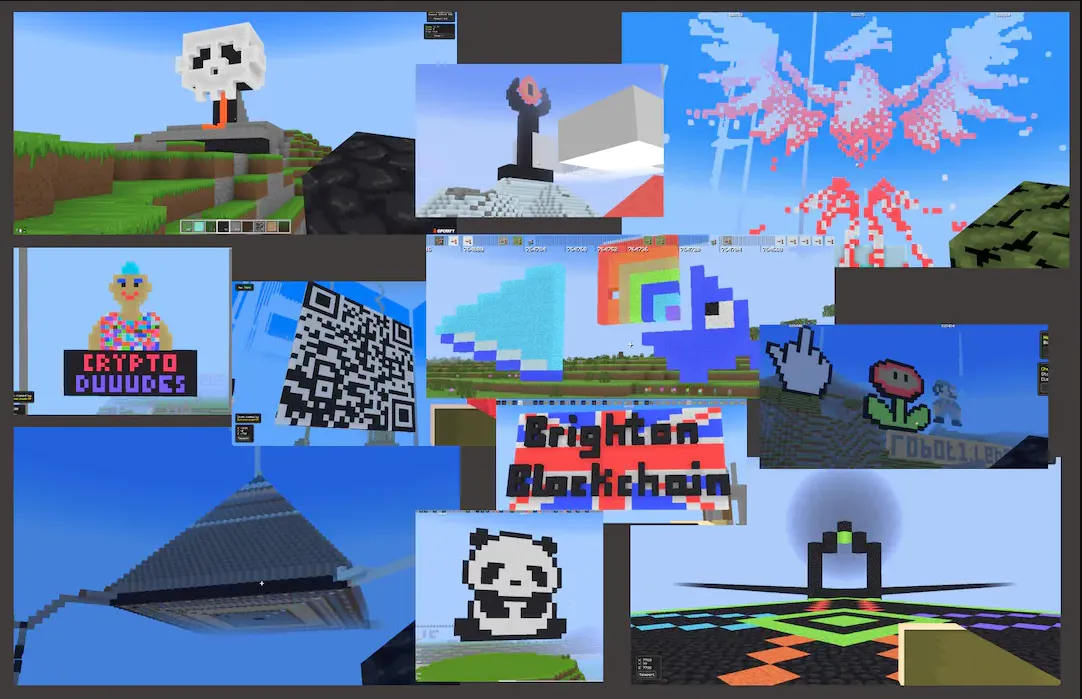
Currently, the Autonomous Worlds space remains relatively small but is poised for significant growth over the next decade. Among the most important early efforts underway are the development of "onchain game engines"—frameworks for launching your own Autonomous World or building around one.
Here are several onchain game engines worth watching now:
-
MUD — Developed by the Lattice team, this "Multi-User Dungeon" framework simplifies building complex onchain applications on EVM networks. You might recall it was used last year to create OPCraft, an onchain voxel game on Optimism.
-
Keystone — Built by the Curio team, this framework is an Optimism-based L2 chain featuring a built-in game engine specifically designed to parallelize gameplay activities. For context, Curio is currently using this tech stack to build their own onchain diplomacy game, Treaty.
-
Dojo — An onchain game engine and "toolchain" built on StarkNet, supporting Rust and Cairo programming languages.
-
Argus — A game publisher developing its own onchain game creation studio stack—World Engine—an L2 with sharding capabilities that enables games to scale horizontally across the network.
Looking Ahead
In a December 2022 issue of Zora Zine, writer and entrepreneur Yancey Strickler predicted the dawn of an "onchain era," defined as "a period in which much of the world’s creative cultural output, shared history, and information infrastructure will be built, stored, and accessed onchain."
I wholeheartedly agree with Strickler, and I believe the rise of Autonomous Worlds as a game genre is part of this flourishing onchain era.
Ten years from now, we’ll look back and see these kinds of games as obvious—but right now, we’re standing at the very beginning of this frontier.
Join TechFlow official community to stay tuned
Telegram:https://t.me/TechFlowDaily
X (Twitter):https://x.com/TechFlowPost
X (Twitter) EN:https://x.com/BlockFlow_News
 Bankless






