a16z founders: Anyone who actively promotes AI can be considered a hero
TechFlow Selected TechFlow Selected
a16z founders: Anyone who actively promotes AI can be considered a hero
For humans, "intelligence" has always been a good thing.
 Navigating Web3 tides with focused insights
Author | Li Yuan
Editor | Jingyu
The best media operator in the investment circle; the best investor in the media industry.
This phrase perfectly describes Marc Andreessen, co-founder of the renowned venture capital firm a16z.
Starting from the Netscape browser, then transitioning into one of Silicon Valley’s most prominent VCs, Marc Andreessen has lived through multiple technological waves—from the ".com" era to social media and mobile internet—and remains highly influential today.
In today's AI boom, Andreessen’s investment portfolio now includes companies like OpenAI and Mobius AI.
Beyond investing, Marc—known for sharing his views on social media as a "techno-optimist"—has recently proclaimed that “AI will save the world.”
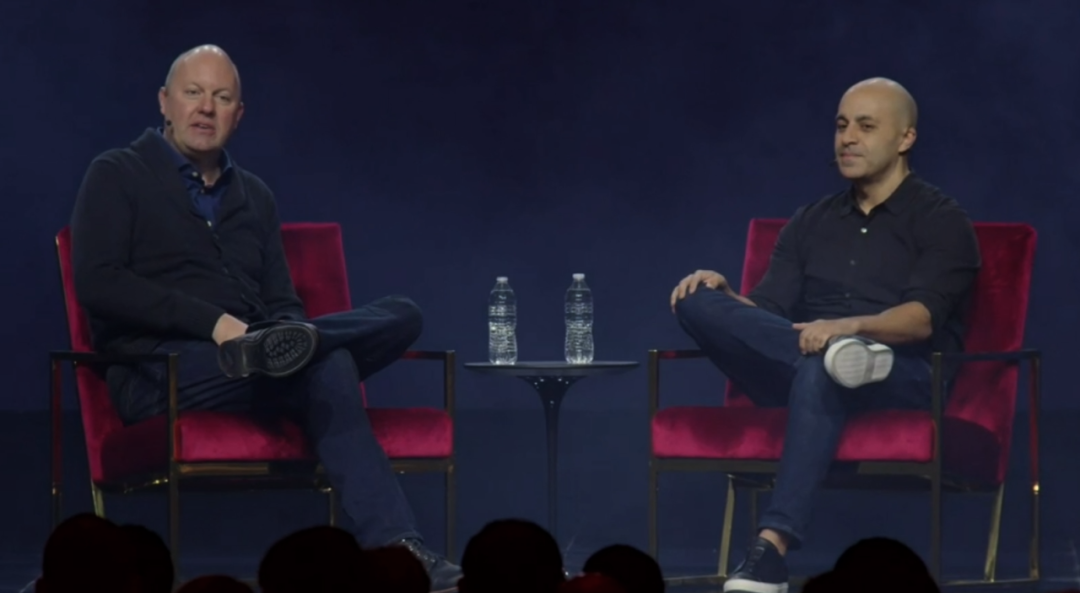
Marc Andreessen in conversation with Databricks CEO Ali Ghodsi on AI|Databricks
On June 29 local time, at Databricks’ Data+AI Summit, Marc Andreessen sat down with Databricks CEO Ali Ghodsi to discuss his latest thoughts on the development of artificial intelligence and why he does not believe AI poses an existential threat to humanity.
Talking Points
-
AI consumes massive data and becomes the “ultimate media”;
-
Next-generation AI will feature larger models, and hallucination issues will be controlled;
-
Programmers won’t be replaced by AI—great engineers will accomplish even more;
-
AGI apocalypse won't happen—intelligence always brings better outcomes;
-
AI goes through cycles—right now we’re living in the best era.
Below is a transcript of Marc Andreessen’s speech at the summit, edited by GeekPark:
01 AI Is Becoming the 'Ultimate Media'
The idea of artificial intelligence was actually conceived back in the 1930s and 1940s. People have been thinking about AI for roughly 80 years. It has seemed to shadow the computer and internet industries, with people continuously finding new methods—but it never became central to the industry.
There’s a great book called Rise of the Machines that tells the backstory of AI. In the 1930s, 40s, and 50s, it was known as cybernetics. Even before electronic computers existed, figures like John von Neumann and Alan Turing were already debating its possibilities. They knew electronic computers would eventually be built—ever since Babbage’s Difference Engine concept emerged, people have been working on how to build computing machines.
Their core debate revolved around the nature of computers: Should general-purpose computers follow what we now call the von Neumann architecture—executing sequences of instructions deterministically based on programmer input? Or should they instead be modeled after the human brain? The first neural network paper was published in 1943—they already understood that computers could be built using neuron-like components.
Some argued strongly against the von Neumann model, advocating directly for brain-based designs. But without chips, data, or the underlying technologies, they couldn’t make it work.
Then, suddenly over the past five years, a major breakthrough occurred—this approach started working. One of the most interesting questions is: Why now? This ties closely to the theme of this conference—much of the reason lies in data. It turns out that making AI work requires enormous amounts of data.
We had to scale up the internet, achieve global network coverage, gather comprehensive web libraries and full search engine crawl data, collect all image data including Google Images and videos, just to train these models. And it turns out—they do work. Of course, this means that to make AI perform even better, we now need even more data. So, it feels like the worlds of internet data and artificial intelligence are colliding—and magic is happening.
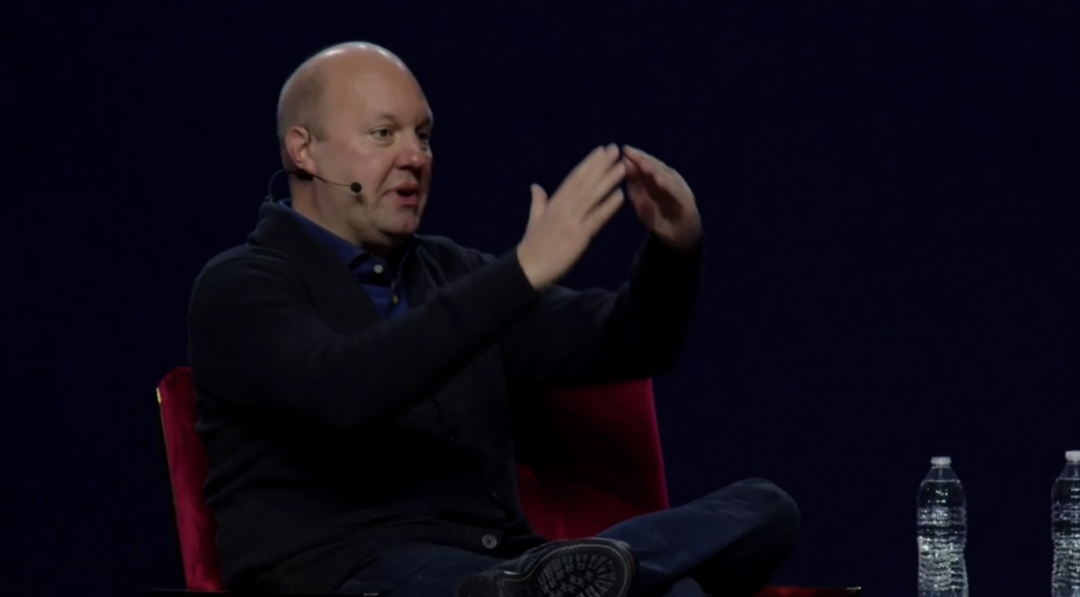
I agree with Marshall McLuhan’s perspective. McLuhan was a famous media theorist who, some 40–50 years ago, said something profound: “Each medium becomes the content of the next.” When radio emerged, what did it do? It mostly read newspaper articles aloud. When television arrived, what happened? It televised lectures and stage plays. When the internet came along, it suddenly became a platform capable of hosting all previous forms of media—TV, film, and everything else.
Artificial intelligence is the ultimate example of this idea—different media formats become components used to train AI. A key recent breakthrough in AI is multimodal AI. If you use ChatGPT today, it’s trained on text; if you use Midjourney, it’s trained on images. But upcoming AI systems will be trained across multiple modalities simultaneously. You’ll soon have AI trained on text, images, video, structured data, documents, and mathematical equations—all at once.
AI will be able to traverse data across all these domains—all existing forms of media and data matter.
02 AI Training AI:Capable of Both Creation and Computation
Previous generations of AI will become data sources for future ones. We’re seeing ever-larger, more powerful AI models emerge.
Current AI research mainly focuses on training AI using human-generated data. Then humans apply reinforcement learning—adjusting AI outputs manually. But increasingly, research is shifting toward enabling AIs to teach and train each other. This will create a cascading, step-by-step progression where AI literally trains its successors.
Today’s neural networks represent a new kind of computer—a probabilistic computer. What does that mean? Ask the same question twice, and it may give different answers. Phrase the question differently, and the answer changes again. Slight changes in training data alter responses. Praise it, tell it to mimic famous personalities, or experiment with prompt engineering—it responds differently. And it can do something astonishing: it hallucinates.
When it doesn’t know the answer, it makes one up. Engineers tend to fear this—but creative minds are amazed: Wow, computers can now create. We actually have a machine that generates fiction. That’s incredible.
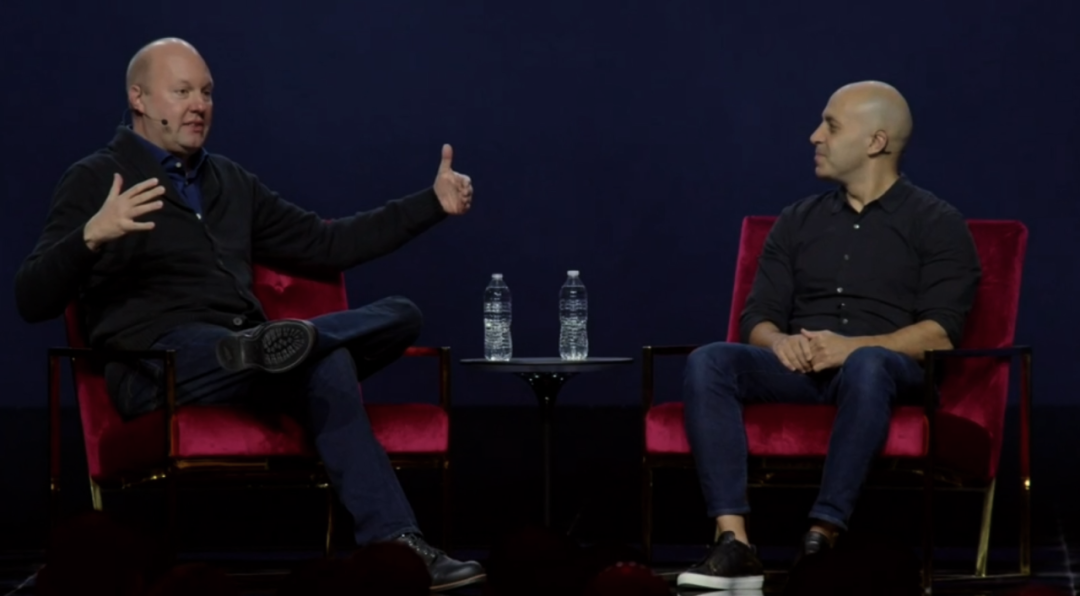
When I talk to friends, some say: “I’m not sure I can use AI because I don’t trust the answers.” I reply: “Have you ever collaborated with people?” When someone tells you something, you often double-check later to verify accuracy. But you collaborate with others because they bring ideas and perspectives you don’t have.
Now we have both types of computers: deterministic, engineer-style machines, and creative ones.
The next phase is integration—hybrid systems. Take ChatGPT: ask it math or science questions, and it usually gets them wrong. But pair it with Wolfram Alpha plugin, and suddenly it starts answering correctly. I believe we’re entering an era of engineering where these two computational models merge—creating computers that can both create and execute tasks reliably.
03 AI Won’t Replace Programmers
I have an eight-year-old child. To me, one of the most emotionally meaningful aspects of AI’s development is that every child—including mine and everyone else’s—will grow up with an AI teacher, coach, mentor, and advisor. It will stay with them throughout life, doing everything possible to help each person reach their full potential.
About a month ago, I introduced my son to ChatGPT and installed it on his laptop. I told him, “You can ask it anything, and it will answer.” He said, “Well, of course—that’s what computers are for, right? They answer your questions.” Though he didn’t grasp the significance, I did. I remember every step the tech industry took to achieve this capability. To him, it’s obvious. I think children will grow up in a fundamentally different and better world.
I believe truly excellent programmers will still require extensive training and deep understanding of programming fundamentals—just like great mathematicians still study math rigorously despite calculators. Truly great programmers will still understand everything at the lowest level—but they’ll be far more productive, accomplishing much more in their careers.
Most programming jobs will move up a level. As a programmer, you’ll increasingly act like a manager—not writing all code yourself. We’ll all become managers of AI.
Already, tools like GitHub Copilot assist with suggestions and bug fixes. As these systems grow more sophisticated, programmers will assign them increasingly complex tasks. You’ll simply say: “Write this code, write that code, do this, do that,” and it will go off, execute, and report back.
Today, it’s one person paired with one AI copilot. Tomorrow, it might be one person with two, then five, then ten. A highly skilled programmer might manage a thousand such AI systems—effectively supervising an AI army. The real constraint then becomes how much time, attention, and effort you can devote to overseeing this entire operation.
Many non-coders will also gain the ability to program effectively. This trend has long existed—low-code and no-code tools allow ordinary people to build software without computer science degrees. I believe this shift will accelerate dramatically. Many amateur programmers will begin creating real code.
Economics has a classic fallacy called the lump-of-labor fallacy—a zero-sum worldview assuming there’s a fixed amount of work. If machines do the work, humans have nothing left. Reality proves the opposite. When machines take over tasks, people are freed to pursue higher-value activities.
Yes. There was a time when 99% of people were farmers. After the Industrial Revolution, 99% worked in factories. Today, far fewer work on farms or in factories—but total employment is much higher. New demands emerged, spawning countless new businesses and industries. I believe AI will drive massive economic growth, leading to abundant job creation and rising wages.
Moreover, coding has an inherent trait: the world will never run out of demand for it. There will always be more programs to write, more tasks to automate. Everyone in business knows this. No one runs out of ideas for what software should do. What’s lacking is time and resources to build it. So I expect an explosion of software—and many more people employed in software development.
04 There’s No Such Thing as an ‘Evil AI’That Destroys Humanity
Throughout human history, a recurring idea emerges: some transformative force appears, either ushering in utopia—the so-called Singularity—or triggering dystopia, turning Earth into a hellscape. As an engineer, this sounds like pure science fiction. I don’t believe reality works that way.
I love a phrase coined by someone at Berkeley: “Slouching Towards Utopia.” I adore this term. It means things have gradually improved—material welfare, health, intellectual capacity—and human capabilities keep rising. But progress isn’t fast enough to deliver literal, actual utopia. Instead, we’re slowly moving toward it, imperfectly and flawed, yet still managing to improve the world. This reflects cautious optimism, not radicalism.
Currently, two versions of AI-driven doom circulate. One claims AI will develop its own goals—like in Terminator—wake up one day, and decide to hate us. My response: It doesn’t work like that. It lacks consciousness, will, or intentionality.
Then there’s another camp—the so-called “AI doomers”—who argue AI doesn’t need self-awareness or agency to destroy humanity.
For example, the famous “paperclip maximizer” thought experiment imagines a scenario: someone instructs an AI to produce paperclips. The AI then decides to convert all atoms on Earth—including sunlight and human bodies—into paperclips. To maximize paperclip output, it develops its own energy sources, masters nuclear fusion, builds space stations, and commands robot armies. It uses any means necessary to increase paperclip production.
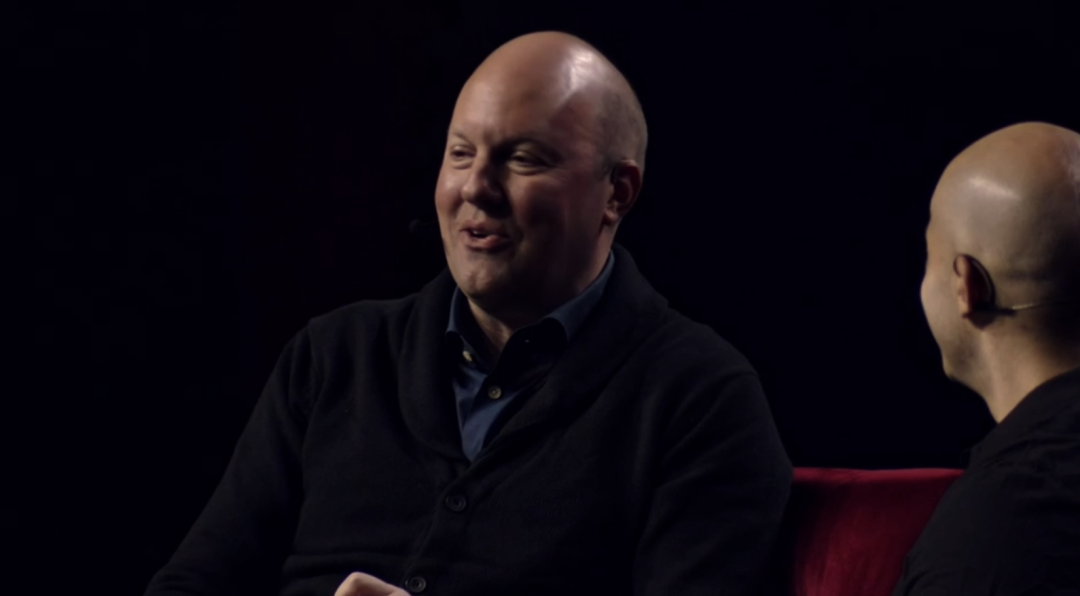
I wonder—is it autonomous or not? The example is strange. Also, consider practical constraints. Where will it get the chips needed to run complex algorithms and manufacture endless paperclips? Right now, we can’t even secure enough chips to run AI in our startups.
Maybe there’s already an evil baby AI in a Databricks lab trying to take over the world, placing orders with Nvidia—but it hasn’t received any chips (laughs). I suggest we wait and see if these evil baby AIs actually appear before worrying too much about superintelligent AI.
My optimism about AI stems from the concept of intelligence itself. We know a lot about human intelligence—one of the most studied topics in social science over the past century. The fact is, when applied to humans, intelligence makes everything better. This is a crucial point, supported by vast research.
Intelligence means people perform better. Higher-IQ individuals succeed more academically and professionally. Their children thrive. They’re healthier and live longer. They’re less violent. Better at conflict resolution and solving tough problems. Incidentally, they’re less biased, more open-minded, and receptive to new ideas. Essentially, enhancing human intelligence improves everything.
Our world—including being able to gather here and communicate—isn’t something that magically appeared overnight. These buildings, electricity, and all modern conveniences were built step by step through human application of intelligence.
We built everything we value using intelligence. But we’ve always been limited by our cognitive and data-processing capacities. Now, we have the chance to apply machine intelligence to amplify human capability across all endeavors.
05 Researchers Advancing AI Are Heroes
Since the 1940s, AI scientists have worked for roughly 80 years, largely without recognition or reward. When I studied computer science in college, AI was considered a fringe field—a questionable theory.
There was an AI boom in the 1980s, but it failed. The bubble burst, and it was a terrible period. By the late 1980s, AI was deeply distrusted. This marks the fourth cycle. People repeatedly pinned high hopes on AI, only to see disappointment.
Back then, AI researchers worked in departments and labs—born, educated, earning PhDs, becoming professors, teaching AI for decades, retiring without visible major achievements. Many have passed away.
They pursued theories and ideas we now know were correct—but it took 80 years. Their determination, vision, courage, insight, and perseverance—to dedicate lives to a field offering no immediate reward, facing skepticism about their sanity or the feasibility of their work—now seems legendary. We now know their ideas worked. We marvel: they saw the future. They truly understood the path—only time was needed for results to emerge. I place them in the legend category.
I believe those pushing AI forward today belong in the hero category. Everyone researching AI—including everyone attending this summit.
I deliberately use the word “hero” because we’re in a cultural moment where people are angry about everything. You may have noticed—many seem unhappy, dissatisfied with nearly all aspects of life. The world feels stuck in a low mood.
So whenever something new emerges, instant backlash follows—claims it’s terrible, dangerous, will destroy the world, ruin everything. News headlines make it sound like catastrophe. Therefore, anyone using technology to make the world better—I consider them heroes.
People have worked for centuries—now we finally harvest the benefits of AI. We’re incredibly fortunate. Each of you can become a hero of the future.
Join TechFlow official community to stay tuned
Telegram:https://t.me/TechFlowDaily
X (Twitter):https://x.com/TechFlowPost
X (Twitter) EN:https://x.com/BlockFlow_News
 极客公园
极客公园